


A Parent's Guide to Sensory Toys for Autism in Australia

Sensory toys aren't just for play. They're thoughtfully designed tools that help autistic and neurodiverse people find balance, focus, and calm in a world that can often feel overwhelming. Things like weighted blankets, fidgets, and visual lamps are far more than simple toys; they provide specific, targeted input that can soothe an overstimulated nervous system or gently awaken an under-responsive one.
This makes navigating daily life a whole lot more manageable.
Why Sensory Toys Are More Than Just Play
Ever tried to have a quiet chat while a dozen different radios are blasting at full volume? For many people on the autism spectrum, that's what a typical day can feel like. This is what's known as sensory overload. Sensory toys in Australia work like a master volume knob for the nervous system, helping to turn down that distracting "noise" or, on the flip side, dial up the focus when it’s needed most.
At their core, these tools are all about self-regulation—the crucial skill of managing your emotions and actions in response to what's happening around you. When the world feels too loud, too bright, or just too much, a good sensory toy offers a predictable and grounding input that can bring a person back to a place of calm.
Understanding the Core Sensory Systems
We usually talk about the five senses, but our bodies are actually processing information from the world in much more complex ways. Sensory toys are designed to support several of these key systems:
- Tactile System (Touch): This is all about textures, pressure, and temperature. Toys like squishy Needohs or soft Palm Pals Australia give busy hands satisfying feedback to hold onto.
- Visual System (Sight): This system takes in light, colour, and movement. A mesmerising Jellyfish lamp can create a gentle, calming focal point in a room, drawing the eyes away from visual chaos.
- Auditory System (Sound): This is how we process and interpret noise. While some toys make pleasant sounds, others, like a good pair of noise cancelling earmuffs for kids, are brilliant for blocking out overwhelming auditory input.
- Proprioceptive System (Body Awareness): Often called our "sixth sense," this is our awareness of our body's position, coming from feedback in our muscles and joints. The deep pressure from a Neptune blanket or a firm hug from a weighted animal toy gives incredibly calming proprioceptive input.
- Vestibular System (Balance): This system, located in our inner ear, manages our sense of balance and where we are in space. The gentle rocking motion of a sensory swing can be profoundly regulating for the vestibular system.
The goal isn't just to keep someone occupied. It's about providing the exact sensory input they need to feel safe, regulated, and ready to engage with the world. This is the foundation for learning, building relationships, and emotional wellbeing.
The need for these kinds of supports is growing fast here in Australia. In 2022, the Australian Bureau of Statistics found there were an estimated 290,900 Australians with autism, which is a massive 41.8% jump since 2018. For the nearly three-quarters (73%) of those individuals who face significant challenges linked to sensory processing, these tools are nothing short of a lifeline. This isn't just about fun and games; it's about giving people the right tools to lead a more regulated and engaged life.
Finding the Right Tool for Every Sensory Need
Every child is different, which means their sensory needs are just as unique. The world of sensory toys can feel overwhelming at first, but it gets a lot easier once you understand the why behind each tool. It’s less about just finding a "toy" and more about discovering the right support for a specific need—whether that's helping a child calm down, focus their attention, or safely explore the world around them.
Think of it like this: some nervous systems are constantly on high alert and need tools to help them soothe and dial things down. Others might be a bit under-responsive, needing a gentle nudge of stimulation to feel present and engaged. The trick is to match the tool to the need.
Tactile Tools for Busy Hands
The need for tactile input is incredibly common. For a child who is always touching things, picking at their skin, or has hands that just won't stay still, tactile toys offer a safe and productive outlet.
These tools provide satisfying textures and pressures that can help ground a busy mind and bring a sense of focus.
- Squeezable and Stretchy Toys: Things like soft, pliable Needohs or stretchy animals give great deep pressure feedback when squeezed. This simple action can be incredibly calming, especially during moments of high stress or anxiety.
- Fidgets for Focus: For older kids in a classroom, discreet tools like Kaiko fidgets are brilliant. They allow for quiet, repetitive movements that can boost concentration without distracting anyone else.
- Textured Surfaces: Toys with different surfaces—bumpy, smooth, ridged, or soft—are fantastic for satisfying a craving for new and interesting textures.
Visual and Auditory Soothers
Sometimes, the world can feel like a sensory assault, with too much to see and hear. In these situations, the right tools can either create a predictable, calming focal point or help block out some of that overwhelming background noise.
A gentle, mesmerising light, for example, can pull attention away from a chaotic environment and provide a single, soothing thing to focus on. This is a game-changer when creating calming sensory spaces at home or in the classroom. The slow, graceful movement of a Jellyfish lamp or the gentle flow of bubbles in a bubble tube can create an instant sense of serenity.
Of course, managing what we hear is just as important. Noise cancelling earmuffs for kids are an essential piece of kit for loud places like the supermarket or a noisy school assembly. They are fantastic sleeping aids as well, helping to create a peaceful environment for rest.
This image perfectly illustrates how a sensory toy can help turn down the volume on sensory overload, paving the way for calm.
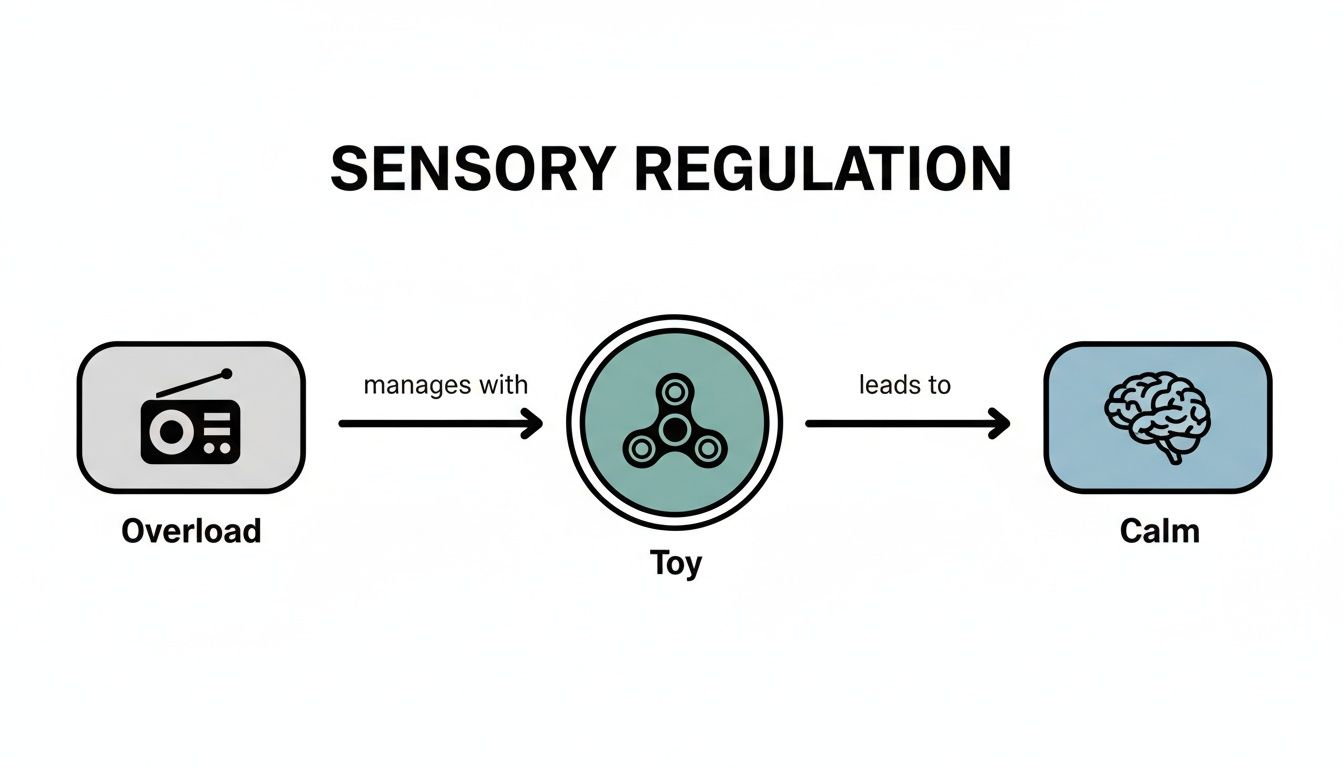
It’s a simple but powerful process: a sensory toy can act as a bridge, helping to transform a state of being overwhelmed into one of feeling regulated and at peace.
Tools for Body Awareness and Movement
Sometimes, the sensory input a child needs isn't something they can hold in their hands—it’s something that engages their whole body. This is where tools for the proprioceptive and vestibular systems really shine.
Proprioceptive input, or deep pressure, feels like a firm, reassuring hug for the nervous system. It sends signals to the brain that help create feelings of security and calm.
This is exactly why weighted blankets and cuddly weighted animal toys are so effective. They provide consistent, gentle pressure that can help a child settle down for sleep or simply relax after a big day. In the same way, a sensory swing engages the vestibular system with its smooth, rhythmic motion, which can be both organising and incredibly calming for the mind and body. Another fantastic option for whole-body engagement is a set of Airtoobz, which encourages creative construction and movement.
Connecting Behaviours to Sensory Solutions
To make choosing the right tool a little easier, it helps to connect the behaviours you're seeing with the type of sensory input a child might be looking for. Thinking about it this way ensures you find a tool that will be genuinely useful, not just another toy left in the box.
This table is a quick reference guide to help you get started.
Matching Sensory Needs to Toy Types
| Sensory Need or Behaviour | Primary Sensory System Involved | Recommended Toy Categories | Example Products |
|---|---|---|---|
| Fidgeting, restless hands | Tactile, Proprioceptive | Fidgets, stress balls, textured items | Kaiko Fidgets, Needohs, Palm Pals |
| Seeking quiet, covering ears | Auditory | Noise-reducing or sound-dampening tools | Noise cancelling earmuffs |
| Visually overwhelmed or distracted | Visual | Calming visual lamps, tents | Jellyfish aquarium lamp, Sensory tent |
| Constantly moving, rocking, spinning | Vestibular, Proprioceptive | Swings, wobble boards, deep pressure items | Sensory swing, weighted blankets |
| Chewing on non-food items | Oral Motor, Proprioceptive | Safe chewable toys and jewellery | Chewelry, textured chew toys |
| Craving hugs or tight spaces | Proprioceptive | Weighted toys, compression clothing, sensory tents | Weighted animal toys, Neptune blanket |
By observing and understanding these underlying needs, you can provide sensory toys that do so much more than just entertain. You can offer effective, practical tools for self-regulation, helping your child feel more balanced, in control, and comfortable in their world.
How to Choose Sensory Toys That Actually Get Used
The best sensory toy isn't always the flashiest or most expensive one—it’s the one a child or teen genuinely connects with and reaches for time and time again. To find that perfect fit, you have to do a little bit of detective work. It’s all about observing their unique sensory profile to make sure your choice becomes a trusted support, not just another toy gathering dust on a shelf.
The secret is to match the tool to the person, their specific need, and the environment they’re in.
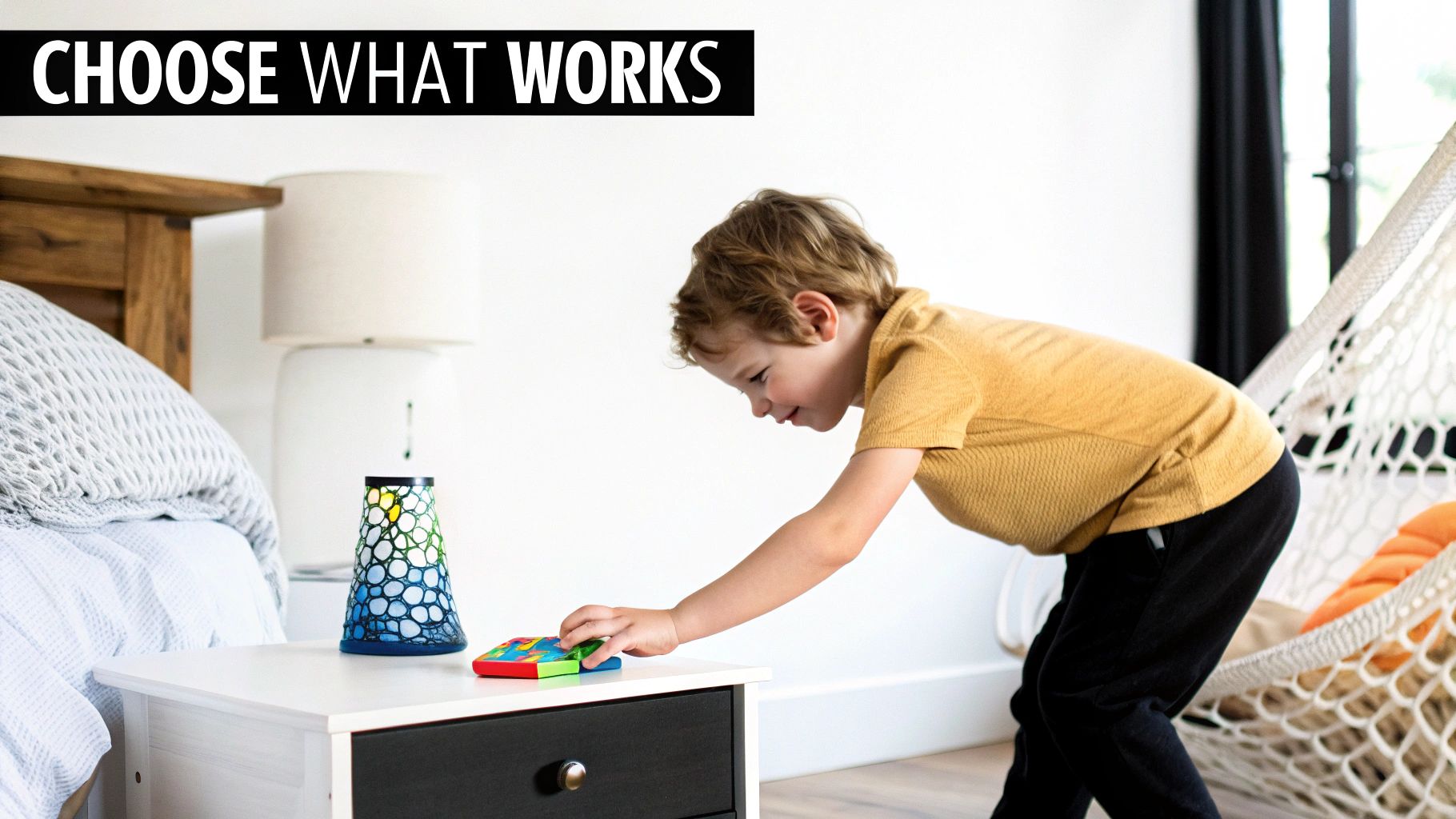
It all starts with getting to know their sensory preferences. Do they constantly seek out new sensations, or do they tend to feel overwhelmed and withdraw? Knowing the answer is the first step toward making a choice that helps rather than hinders.
Are They a Seeker or an Avoider?
Everyone processes sensory information differently. While it’s a spectrum, most people lean towards one of two main profiles. Figuring out which one sounds most familiar is a fantastic starting point for choosing the right tools.
- Sensory Seekers: These are the individuals who crave intense input. They might be constantly on the move, touching everything in sight, making noise, or loving bright colours and strong flavours. For a seeker, a quiet, calm environment can feel under-stimulating and even lead to dysregulation.
- Sensory Avoiders: On the other hand, avoiders are highly sensitive to their surroundings. Everyday sounds, lights, or textures can feel overwhelming, jarring, or just plain uncomfortable. An avoider often retreats from noisy places, might be particular about the feel of their clothes, and may cover their ears when things get too loud.
A seeker might thrive with a dynamic toy like a sensory swing or a complex building set like Gravitrax that provides a high level of engagement. In contrast, an avoider may find comfort in calming tools like a mesmerising Jellyfish aquarium lamp or the deep pressure from a Neptune blanket, which can offer a safe retreat from a world that feels too intense.
Matching the Toy to the Person and Place
Once you have a handle on their sensory profile, the next piece of the puzzle is context. A fantastic sensory tool for calming down at home might be a complete distraction in the classroom. The goal is to provide the right support, right when it’s needed.
The real key to success is simple: observation. Pay close attention to what your child naturally does to self-regulate. Do they chew on their shirt collar? A chewable necklace could be a game-changer. Do they rock back and forth when concentrating? A wobble cushion could provide that same feeling in a more focused way.
This kind of observation helps you find tools that work with their existing strategies, making them far more likely to be embraced and used. Many parents find success with character-themed items like Bluey merchandise or even collectibles like Snoopy figures, which blend therapeutic benefits with familiar fun.
Age-Appropriate and Environment-Specific Choices
The right tool also changes over time and depends on the situation. What a toddler needs is very different from a teenager, and what works in a dedicated sensory space at home might not fly in a quiet learning environment.
For Toddlers and Young Children:
- Safety and durability are non-negotiable. Look for toys built to withstand enthusiastic play, with no small parts that could be a choking hazard.
- Engage multiple senses at once. Items like Numberblocks offer brilliant visual and tactile feedback, while magical kits from Little Potion Co encourage imaginative, hands-on play.
- Encourage whole-body movement. Things like play tunnels, therapy balls, and soft floor tiles are fantastic for developing gross motor skills.
For School-Aged Children:
- Discretion is key. In a sensory classroom, quiet, unobtrusive tools are a must. Fidgets like those from Kaiko are designed to be silent and fit neatly into a pocket or hand, helping with focus without disrupting others.
- Promote structured, focused play. Building sets such as Magnatiles are wonderful for developing fine motor skills, planning, and concentration.
- Provide options for calming breaks. A portable, microwavable plush toy like a Warmie can offer comforting warmth and weight during quiet time at school or home. Fun showbags and blind boxes can also serve as exciting rewards.
For Teens and Adults:
- Aesthetics and subtlety matter. Fidgets made from sleek metal or smooth stone often feel more like cool gadgets than therapeutic tools.
- Support focus during study or work. A weighted lap pad or a simple stress ball can be an effective way to maintain concentration during long stretches of sitting.
- Offer tools for emotional regulation. A journal, a soothing night light for their room, or a high-quality weighted blanket can become essential parts of a self-care toolkit.
By thoughtfully considering who the toy is for, where it will be used, and what specific sensory need it meets, you can move past the guesswork. You start making intentional choices that truly empower them with effective, well-loved tools for navigating their world.
Building a Calming Corner at Home or School
Beyond just having sensory toys on hand, creating a dedicated sensory space can be a genuine game-changer for emotional regulation. This safe haven, often called a 'calming corner', is a predictable retreat from the sensory overload of the world. It’s a low-demand space designed to help a child feel grounded and secure when they start to feel overwhelmed.
It's important to remember this isn't a time-out spot. Think of it as a positive, accessible sanctuary where a child can either co-regulate with a trusted adult or learn to self-regulate independently. By thoughtfully combining elements like soft lighting, comfy seating, and specific sensory tools, you build an environment that proactively supports calm and focus. Ultimately, you're helping build essential skills for emotional resilience.
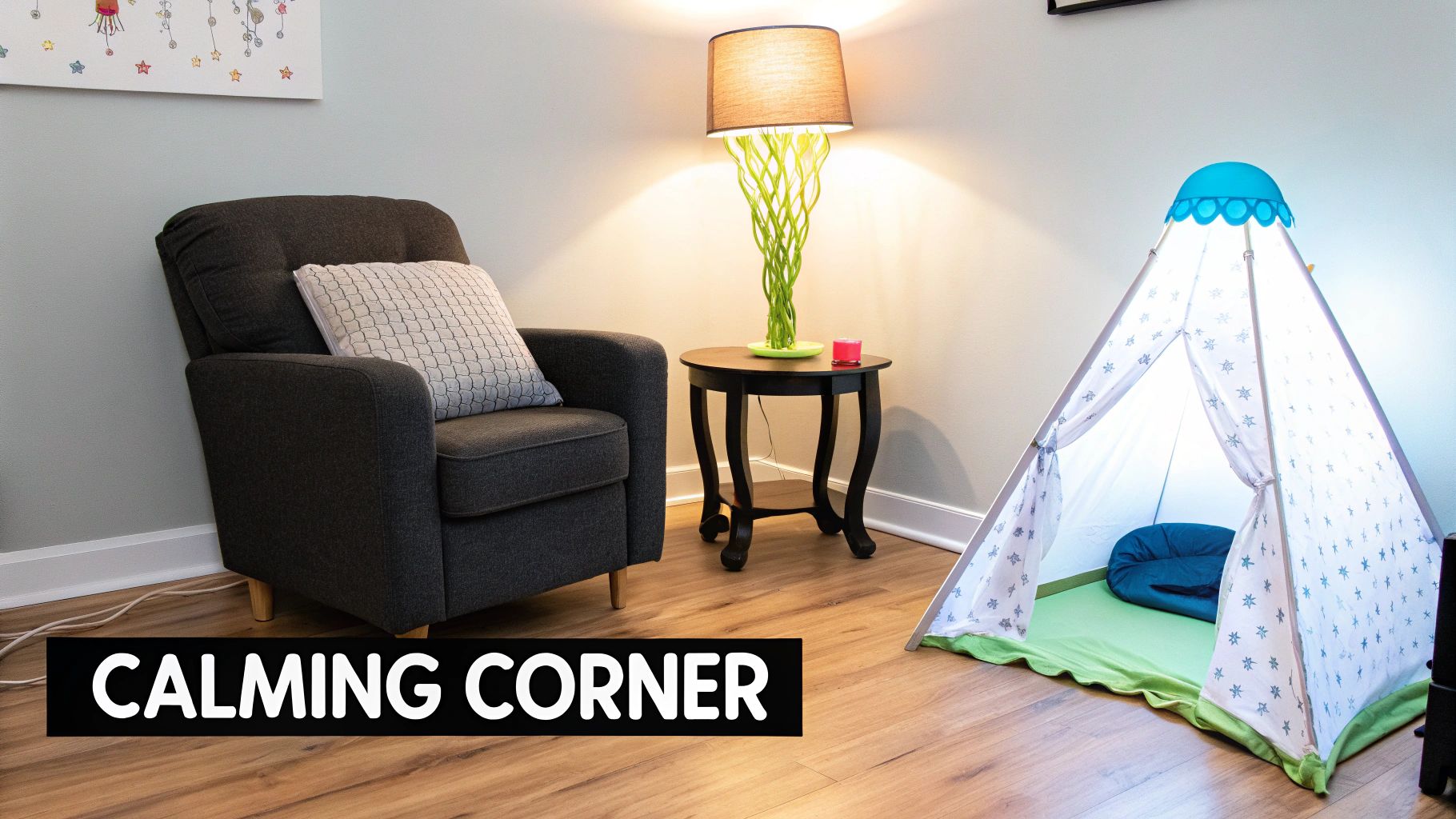
Core Components of a Successful Calming Corner
A calming corner doesn’t need to be huge or expensive. The real secret is filling it with items that provide gentle, regulating sensory input. Consistency is what makes this space feel so safe and reliable.
Here are a few essential elements to think about:
- A Safe Enclosure: For many neurodivergent kids, creating a sense of being enclosed feels incredibly secure. A sensory tent is perfect for this, as it instantly dials down visual distractions and carves out a defined, personal space.
- Comfortable Seating: Soft furnishings are a must. Think big cushions, a beanbag, or even a therapy peanut ball that allows for gentle, rhythmic rocking.
- Soothing Lighting: Harsh overhead lights can be jarring and overstimulating. Try swapping them for gentle, mesmerising options like a Jellyfish aquarium lamp or a bubble tube. The slow, predictable movement gives the eyes a calming anchor.
- Deep Pressure Tools: One of the most effective tools is deep pressure input. This is where incorporating weighted blankets can make a massive difference. Weighted lap pads or cuddly weighted animal toys also provide this comforting, grounding sensation.
- A Box of Fidgets: Keep a small, curated collection of their favourite fidgets right there in the corner. Having access to familiar tools like Needohs or Kaiko Fidgets gives busy hands a quiet, productive outlet.
Adapting a Calming Corner for a Sensory Classroom
The need for supportive sensory spaces is especially critical in schools. A recent La Trobe University study screening 13,511 Victorian children found that 3.3%—or 1 in 31—were autistic. With at least 3.2% of all school-aged children in Australia being autistic, it's clear that many face significant sensory barriers that directly impact their ability to learn. Creating these dedicated spaces is a practical way to foster more inclusive classrooms.
A classroom calming corner, or even a broader sensory classroom setup, benefits all students by providing a designated area for emotional regulation.
The purpose of a classroom calming corner is not to remove a child from learning, but to give them the tools to regulate so they can return to learning. It's a proactive strategy, not a reactive one.
When setting up a space in a school, you'll need to make a few adjustments:
- Prioritise Quiet Tools: Make sure any items are silent or near-silent to avoid distracting other students.
- Use Visual Timers: A sand timer or a visual countdown clock can help structure the break. It makes the transition back to classwork feel predictable and much more manageable.
- Include Noise-Cancelling Earmuffs: A good pair of noise cancelling earmuffs for kids is essential for blocking out the overwhelming sounds of a busy classroom.
- Establish Clear Expectations: Use visual aids to explain the purpose of the corner and how to use it respectfully. For example, a sign could show "1. Take three deep breaths. 2. Squeeze a stress ball. 3. Return to your desk when calm."
Whether it's at home or school, a well-designed calming corner is so much more than a collection of sensory toys. It's a powerful statement that it’s okay to feel overwhelmed and, more importantly, that there are healthy, effective ways to find your way back to calm.
Using Your NDIS Plan for Sensory Tools in Australia
Figuring out the National Disability Insurance Scheme (NDIS) can feel like a massive undertaking, but it's one of the best ways to get your hands on essential sensory toys in Australia. Once you get the hang of it, your NDIS plan can open up the funding you need for tools that genuinely improve day-to-day life.
The first step is understanding where sensory items fit into your plan. It usually comes down to two main categories, which are mostly separated by cost and complexity.
Consumables vs Assistive Technology
Most of the sensory tools you'll use every day can be claimed under your Consumables budget, which is part of your Core Supports. This bucket of funding is designed for lower-cost, everyday items that help you manage your disability-related needs. We're talking about things like fidgets, therapy putty, or chewable toys—basically, items that get a lot of use and might need to be replaced over time.
For bigger ticket items or more specialised equipment, you’ll likely need to look at your Assistive Technology (AT) budget. This is for gear that helps you do things you otherwise couldn't. A purpose-built sensory swing or a large, calming bubble tube would be perfect examples. The good news is that simpler items under $1,500 generally don’t require a formal assessment from an OT, which makes the whole process a lot smoother.
The golden rule for any NDIS purchase is that it has to be considered ‘reasonable and necessary’. This just means the item needs to directly relate to your or your child’s disability, offer good value for money, and clearly help you work towards the goals outlined in your NDIS plan.
So, for instance, grabbing some Kaiko fidgets could be tied to a goal of improving focus and participation at school. In the same way, a weighted Neptune blanket could be directly linked to a goal around getting better sleep or managing emotional regulation at home.
Linking Your Purchase to NDIS Goals
To make sure your purchase gets the green light, you have to be able to draw a clear line between the item and one of your NDIS goals. These goals are often centred on things like building social skills, managing emotions, gaining independence, or getting out into the community more.
Here’s a practical way to think about it:
-
Goal: To improve emotional regulation and reduce anxiety in busy places.
- Tool: A pair of noise cancelling earmuffs for kids is a great solution for reducing auditory overload when you're out and about.
-
Goal: To develop fine motor skills and build concentration for school.
- Tool: Hands-on toys like Magnatiles or Numberblocks sets are perfect for supporting focus and skill development.
-
Goal: To create a safe, calming space at home to prevent meltdowns.
- Tool: A sensory tent or a mesmerising Jellyfish aquarium lamp can help you build the perfect calming corner.
The need for this kind of support is huge. It's estimated that at least 1 in 40 Australians is autistic, and that number continues to climb as we get better at diagnostics. In fact, autistic participants now account for 35% of the entire scheme. When you consider that 77% of autistic school-aged children face learning difficulties, NDIS funding for sensory tools becomes a crucial link in creating environments where they can truly thrive. You can read more about this growing need over at Aspect Australia.
Having a letter of support from an occupational therapist (OT) or another allied health professional can make a world of difference, especially for more expensive items. Their professional recommendation provides that formal link between the tool and your child's therapeutic needs, building a rock-solid case that your purchase is both reasonable and necessary.
Your Questions on Sensory Toys Answered
As you start exploring sensory tools, it's completely normal to have questions pop up. Finding the right supports can feel like a bit of a journey, and getting clear, practical answers makes all the difference. Here, we'll tackle some of the most common questions from parents, carers, and educators to help you feel more confident in choosing and using sensory toys for autism.
It really comes down to understanding the "why" behind these tools. Once you have that, you can make choices that genuinely support regulation, comfort, and engagement.
How Should I Introduce a New Sensory Toy?
The best way is almost always a gentle, no-pressure approach. High expectations can create anxiety, so rather than presenting a new toy as something they must use, just model how it works yourself. Then, simply leave it in a place where they can easily see and access it.
For instance, you might quietly fiddle with a Kaiko fidget while watching a movie together or place a new weighted animal toy on the couch in their calming corner. This gives them the power to discover it in their own time and on their own terms.
This method of self-directed discovery feels much more natural. It empowers your child to explore the item when they feel ready, which dramatically increases the chances of it becoming a genuinely helpful and well-loved tool.
Are These Toys Only for Autistic Children?
Not at all. While these tools are an essential support for many autistic people, their benefits reach much further. Sensory toys like fidgets, weighted blankets, and visual soothers are incredibly helpful for anyone dealing with anxiety, ADHD, or general sensory processing differences.
Think of them as universal tools for focus and calm. In a busy classroom, for example, a tub of quiet fidgets can help all students stay on task during independent work. Likewise, a Neptune blanket can offer that comforting deep pressure to anyone who struggles to unwind at the end of a long day.
The need for sensory regulation is a human need. These tools simply offer a direct and effective way to meet that need, making them valuable for a wide range of neurotypes and situations.
Will My Child Become Too Dependent on a Sensory Toy?
This is a really common and understandable worry. It often helps to reframe how we see the toy's purpose. It’s less of a crutch and more of a support—the same way glasses help someone see clearly or a wheelchair helps with mobility.
These tools don’t create dependence; they enable independence.
For someone who is easily overwhelmed by noise, a pair of noise cancelling earmuffs for kids isn't a weakness. It's a clever tool that allows them to join in on a school assembly or a family gathering that would otherwise be unbearable. The sensory toy empowers them to navigate situations that would be completely overwhelming without that support.
How Do I Know if a Sensory Toy Is Working?
Watching your child’s behaviour is the best way to tell if a toy is hitting the mark. You’re looking for those subtle but significant shifts that show they're feeling more regulated.
Key signs that a tool is helping include:
- Increased Calmness: You might notice less fidgeting, a decrease in anxious behaviours, or a longer attention span.
- Improved Focus: In a classroom setting, you might see them stay on task for longer when using a quiet fidget.
- Faster Recovery: After an overwhelming moment, they might reach for a specific toy and find their way back to a calm state more quickly.
- Voluntary Engagement: This is the most telling sign. When they seek out the toy on their own, without any prompting, you know it's meeting a need.
Can We Use Too Many Sensory Toys at Once?
Yes, it's definitely possible to have too much of a good thing. An environment cluttered with dozens of sensory items can become visually chaotic and distracting, which completely defeats the purpose.
The key is to be intentional. Instead of leaving everything out all the time, try rotating items or creating a curated "sensory toolkit" with a few carefully chosen options that meet specific needs.
For example, a calming corner might have one visual item (like a Jellyfish aquarium lamp), one deep pressure tool (like a weighted lap pad), and a small basket with three or four favourite fidgets. This keeps the space organised, ensures each tool can be used effectively, and stops the items from losing their novelty.
At The Sensory Poodle, we know that finding the right sensory tools is a personal journey. As a family-owned Australian store, we're dedicated to providing high-quality, effective, and safe sensory solutions to support your family, classroom, or clinic. Explore our full range of tried-and-tested products and find the perfect tools to help your loved ones thrive. Visit our online store today to discover calming aids, engaging fidgets, and everything in between.