


A Guide to Stress Ball Toys for Sensory Needs in Australia

Ever feel like you need a personal pressure release valve for those moments of stress or sensory overload? That’s the beauty of a stress ball toy—it's a simple yet incredibly effective tool that gives you the tactile feedback you need to ground your nervous system and find a bit of calm.
Your Guide to Stress Balls and Sensory Regulation
At its heart, a stress ball is a tool for sensory regulation. The simple, repetitive action of squeezing, pulling, and squishing helps redirect that overwhelming energy into a focused physical movement. It’s a small thing that can make a big difference, helping to improve concentration and restore a sense of control for both kids and adults. As a leading provider of sensory toys in Australia, we've seen how these simple tools can transform daily challenges.
Think of it this way: when your brain is swamped with too much information or big emotions, it's easy to feel completely overwhelmed. Squeezing a stress ball gives your brain a straightforward, tangible task to latch onto. This is what we call proprioceptive input—it sends signals to the brain that help organise and calm the entire nervous system.
Why Tactile Feedback Matters
The actual feel of the ball in your hand—its texture, how much it pushes back, even its temperature—provides vital tactile feedback. This sensation is a powerful grounding technique, helping to pull your awareness back into your body during moments of high anxiety or sensory overload. Plus, the physical release of clenching and unclenching your hand muscles has a direct calming effect on the body.
For many, this is a cornerstone of managing emotions day-to-day. You can find out more about how these tools work in our detailed guide on self-regulation in children.
Here in Australia, the need for effective calming aids is more apparent than ever. Anxiety disorders affect over 5 million people, and with around 1 in 70 children diagnosed with autism, the demand for accessible sensory tools is clear. Stress balls, alongside other aids like noise cancelling earmuffs for kids, offer a simple, practical solution for managing daily challenges at home, in the classroom, or during therapy sessions.
Grounding Through Gentle Pressure
The magic of a stress ball is closely tied to the principles of deep pressure. The firm but gentle pressure you apply when you squeeze can help activate the parasympathetic nervous system—the part of your body responsible for the "rest and digest" response. This, in turn, helps lower your heart rate and encourages a state of relaxation.
If you're interested in the "why" behind it, learning about the science of deep pressure therapy can offer some fantastic insights into how sensory tools provide comfort and relief.
Whether it's a child trying to focus in a noisy classroom or an adult coping with pressures at work, these little sensory toys offer a discreet and effective way to handle those overwhelming moments. They’re a foundational tool for anyone building a collection of sensory toys in Australia, helping to pave the way for better focus and emotional balance.
How Stress Balls Help Achieve Therapy Goals
Occupational therapists often see stress balls as much more than just a simple toy for distraction. They're actually a really effective tool for hitting specific therapy goals, turning abstract concepts into real, tangible progress. In a therapy setting, they become a bridge to help people develop crucial life skills in a way that feels practical and, dare I say, even fun.
The simple act of squeezing a stress ball is a fantastic workout for the small muscles in the hand and wrist. This repetitive action is brilliant for building fine motor strength – the very same strength needed for everyday things like gripping a pencil, using a fork, or doing up buttons. For a kid who finds handwriting a real struggle, a few minutes with a stress ball can feel like play, but it’s actually targeted muscle training in disguise, similar to the fine motor skills developed when playing with Numberblocks.
Developing Coordination and Sensory Processing
But it’s not just about building strength. These little toys are also powerhouses for improving hand-eye coordination. Tossing, catching, and manipulating the ball helps the brain and hands learn to communicate more effectively.
This action also provides a dose of something called proprioceptive input, which is basically your brain's sense of where your body is. This deep pressure feedback is incredibly grounding for the nervous system, helping to calm and focus a busy mind. It's especially helpful for anyone with sensory processing differences, ADHD, or anxiety, as it provides a solid physical anchor when the world feels overwhelming.
By channelling restless energy into a controlled, repetitive squeeze, a stress ball helps filter out distracting sensory 'noise.' This allows the user to quiet their mind and concentrate, making it an invaluable tool in the classroom, at home, or during a therapy session.
The Role of Stress Balls in Australian Therapy
Here in Australia, you’ll find stress balls in almost every occupational therapist’s toolkit, particularly when working with clients who have sensory processing differences. The numbers really back this up. The 2023 NDIS Quarterly Report revealed that sensory aids, which include stress balls, accounted for 12% of all approved supports—that's over AUD 1.2 billion in funding.
With more than 25,000 occupational therapists across the country, it's telling that they recommend these tools for a staggering 65% of their neurodiverse clients to improve fine motor skills and help manage anxiety.
Managing stress and anxiety is a huge piece of the puzzle for overall well-being and even has a knock-on effect on things like improving the connection between sleep and mental health.
For families trying to find the right supports, knowing which tools work for specific challenges is everything. If you're looking for more ideas, our guide on sensory tools for autism is a great place to start. At the end of the day, using therapist-endorsed tools like stress balls helps turn lofty therapy goals into achievable steps through simple, purposeful play.
How to Choose the Right Stress Toy for Your Sensory Needs
With so many stress balls and fidgets out there, how do you find the one that’s just right? The secret is tuning into the specific kind of tactile feedback that feels most calming or helps you focus.
Every material, texture, and level of resistance offers a completely different sensory experience. It’s all about matching the tool to the need.
Someone who finds gentle, rhythmic squeezing soothing might absolutely love a slow-rising foam squishy. That predictable, slow rebound provides soft, low-resistance input that’s both visually and physically calming. On the other hand, someone craving more intense feedback might get a lot more out of a bead-filled ball that gives a satisfying "crunch" with every squeeze.
Matching the Sensation to the Goal
Before you start browsing, take a moment to think about what you're actually looking for. What's the main sensation you or your child needs?
Is it a smooth, pliable squish? A rough, spiky texture for a big sensory hit? Or maybe the cool, weighted feel of a metal fidget for discreet focus?
Pinpointing this preference is the first and most important step. It helps you zero in on a tool that will genuinely be used and loved. For example, the squishy, dough-like feel of a classic Needoh is worlds away from the smooth, gliding motion you get from Kaiko Fidgets. Both are fantastic, but they serve very different sensory appetites.
If you need more tips on picking tools for different ages, our guide to choosing the right sensory toys is a great place to start.
Thinking about the end goal is also incredibly helpful. This little decision tree can help you connect a therapy goal with the right kind of sensory input.
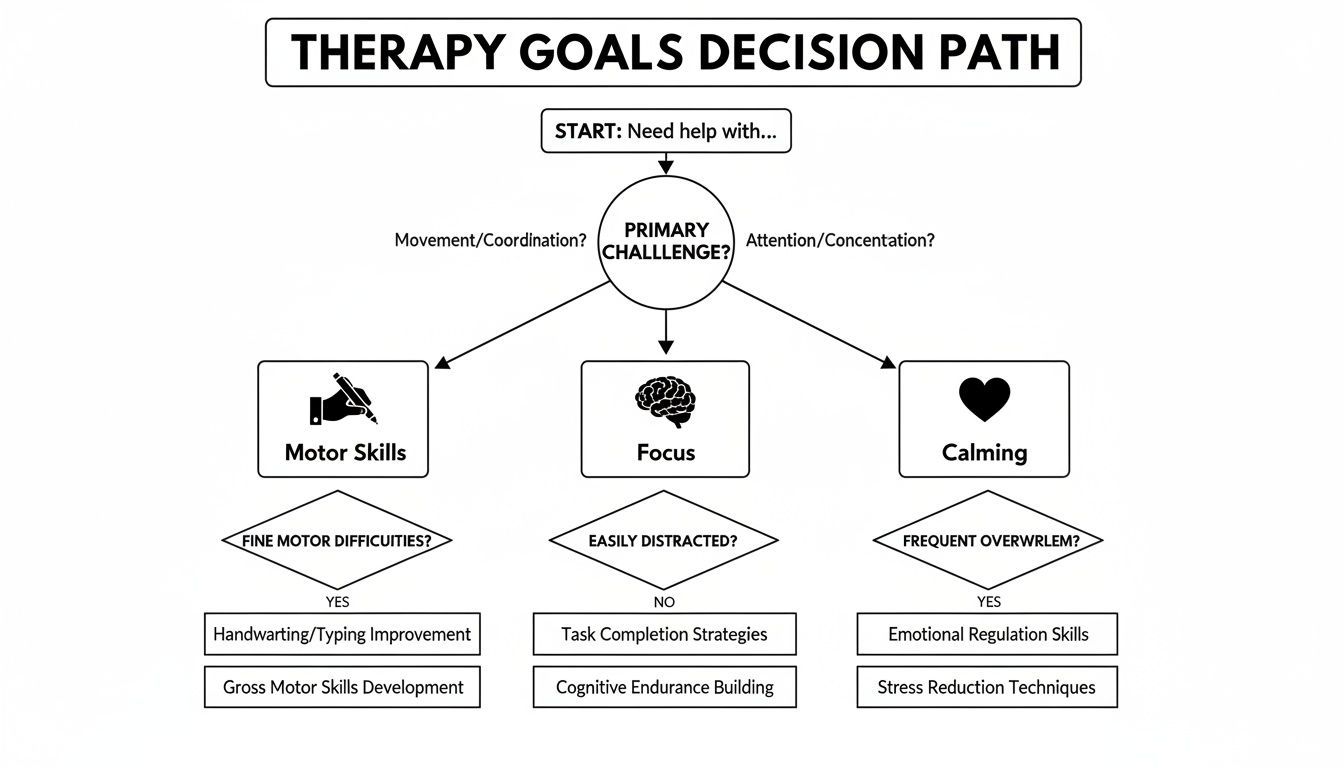
It’s a simple visual that clarifies whether you’re aiming to build motor skills, sharpen focus, or find a moment of calm.
Stress Toy Selector Guide
To make things even easier, we've put together this quick comparison table. It breaks down some of the most common types of stress toys and what they’re best for, helping you find the perfect match for your needs.
| Toy Type (Example) | Primary Sensation | Best For | Examples from Our Store |
|---|---|---|---|
| Gel-Filled Squeeze Ball | Smooth, squishy, pliable | Gentle calming, low-resistance hand strengthening | Find your favourite in our Needohs collection. |
| Bead-Filled (Dough Ball) | Crunchy, textured, mouldable | Satisfying auditory/tactile feedback, moderate resistance | Explore the fun textures of NeeDoh Dohjees. |
| Slow-Rising Foam (Squishy) | Soft, airy, slow rebound | Visual and tactile calm, anxiety reduction | Check out the adorable designs of Palm Pals Australia. |
| Metal Fidgets | Cool, smooth, weighted | Focused repetitive movement, discreet fidgeting | Discover durable options in our metal fidgets range. |
At the end of the day, the "right" stress toy is a very personal choice. It's the one that feels good in your hand and gives your nervous system that little bit of help exactly when you need it most.
Weaving Stress Toys into Daily Life at Home and School

The true value of stress balls shines when they become a seamless part of daily life. By weaving these simple tools into routines at home and school, we can help kids and adults navigate overwhelming moments more effectively. It’s about turning a potential meltdown into a quiet, manageable pause and making self-regulation a natural, accessible skill.
At home, this can be as straightforward as setting up a dedicated calming space. It doesn't have to be anything elaborate—a quiet corner with a comfy cushion, a basket of favourite stress ball toys, and maybe some soft lighting is often all you need.
This special spot gives someone a safe place to retreat to when emotions feel too big. It becomes their personal regulation station, ready and waiting.
Creating a Calming Corner at Home
A well-stocked calming corner can be a complete game-changer. It’s a physical space that sends a clear message: it’s okay to take a break and reset.
Here’s what you might include:
- Tactile Tools: A variety of stress balls and other fidgets is a great start. Offering different textures and resistance levels gives a person choice, which is empowering in a moment of distress.
- Deep Pressure Input: Consider adding things like soft weighted animal toys or a cosy, heavy blanket like the Neptune Blanket. The gentle, firm pressure these provide is incredibly grounding for an overstimulated nervous system.
- Gentle Movement: If you have the space, a sensory swing can offer soothing vestibular input through gentle rocking or swaying. It's a fantastic way to regulate through movement.
By exploring these calming corner ideas, you can build a personalised sanctuary that supports emotional regulation and teaches invaluable self-soothing skills for life.
Bringing Stress Toys into the Classroom
In a school setting, the aim is to use stress balls to boost focus without creating distractions. A quiet fidget kept in a pocket or on a desk can make a world of difference for a student who struggles to stay seated or pay attention during a lesson.
A quiet, handheld stress toy allows a student to channel restless energy into a small, controlled movement. This can free up their mind to better listen, learn, and take part in what’s happening in class.
Teachers can set clear expectations for using these tools to ensure they remain helpful. A simple rule like, "Fidgets are for your hands, not for your eyes," helps students understand their purpose. A well-managed sensory classroom empowers students to take ownership of their own learning and regulation needs.
This simple addition can turn homework from a battle into a more focused session. Similarly, having a familiar stress ball in a pocket can make navigating a noisy playground or a busy school assembly feel far less intimidating. It’s all about providing a portable anchor for calm, wherever the day takes them.
Looking After Your Sensory Toys: Safety, Care, and NDIS Funding
Bringing a new stress ball into your home or classroom is a great first step, but knowing how to look after it—and how to fund it—is just as important. A little bit of care will keep your sensory tools hygienic and working for longer, while a few simple safety checks provide that all-important peace of mind. For many families in Australia, the final piece of the puzzle is figuring out how NDIS funding fits into all this.
Keeping your stress balls clean is straightforward but essential, especially if they’re getting a lot of love or being shared. Most silicone, rubber, and plastic toys can be washed easily with warm, soapy water. Just give them a gentle scrub, rinse them well, and let them air dry completely before they’re ready for action again. If you have a foam or fabric-covered toy, a quick wipe-down with a damp cloth is usually all it needs.
Keeping Your Sensory Tools Safe and Sound
Beyond a good clean, it’s a smart habit to do regular safety checks. Before handing a toy over, especially to a young child, take a quick moment to inspect it for any signs of wear and tear. You’re looking for small cracks, tears, or any leaks—a damaged toy can quickly become a choking hazard if bits break off or the filling comes out.
It’s also crucial to choose toys that are right for the user’s age and made from non-toxic, sturdy materials. Any reputable supplier will make safety a priority, ensuring their products are free from nasty chemicals.
Remember, even the most well-loved stress ball won’t last forever. Once a toy starts showing significant wear or just doesn't feel right anymore, it's time for a replacement. This ensures it remains a safe and effective tool for regulation.
Navigating NDIS Funding for Sensory Items
For families across Australia, the National Disability Insurance Scheme (NDIS) can be an incredible help for getting the sensory tools you need. Stress balls and similar items often fall under the 'Consumables' or 'Assistive Technology' categories in an NDIS plan. This is especially true if they support therapy goals linked to self-regulation, sensory processing, or building fine motor skills.
To use your funding, the item just needs to be considered 'reasonable and necessary' for achieving your plan goals. It’s always a brilliant idea to chat with your occupational therapist or support coordinator first. They can provide professional recommendations and the right wording to justify your purchases.
Choosing an NDIS-registered provider or an NDIS-friendly supplier makes life so much easier. As an Australian, Melbourne-based online store, The Sensory Poodle simplifies everything by accepting NDIS payments. This allows you to easily purchase items like weighted blankets or a calming Jellyfish lamp using your plan funds. Getting the right tools without the fuss means you can focus on building a sensory toolkit that truly makes a difference.
Of course! Here is the rewritten section, designed to sound completely human-written and natural, with the expertise of a seasoned professional.
Got Questions About Stress Balls? We've Got Answers
When you're new to the world of sensory tools, it's natural to have a few questions. Let's clear up some of the most common ones so you can feel confident you're choosing the right tool for the job.
Aren't Stress Balls Just for Kids?
Not at all! It's a common misconception, but stress balls are fantastic for adults, too. While they’re brilliant for helping kids regulate in the classroom, they’re just as effective for grown-ups.
Think about it – a discreet squeeze under the desk during a stressful meeting or a moment of focus while on a long phone call. The calming, tactile feedback works wonders at any age. That's why our range includes options like the sleek Kaiko Fidgets, which are perfect for teens and adults who want something that doesn't look like a toy.
How Do I Know if a Stress Ball Is Safe and Durable?
This is such an important question, especially for anything that will be squeezed, stretched, and potentially chewed on. The key is to look for high-quality, non-toxic materials like 100% food-grade silicone or tough thermoplastic rubber (TPR). Good Australian suppliers will always be transparent about safety standards.
A quick daily check is the best habit you can get into. Before handing it over, give the toy a quick once-over. Look for any small cracks, tears, or signs of leaking. This is a must for preventing choking hazards, particularly with little ones.
Here at The Sensory Poodle, we’ve already done the hard work for you. Our entire collection of sensory toys in Australia comes from trusted brands that we know meet high safety and durability standards, giving you peace of mind.
What's the Real Difference Between a Stress Ball and Other Fidgets?
Great question! It really comes down to the kind of sensory feedback a person needs in that moment.
- Stress Balls: These are all about resistance-based input. The act of squeezing provides deep pressure that can be incredibly grounding and is fantastic for releasing pent-up physical tension. It’s also a great way to build hand strength.
- Other Fidgets: These offer a whole world of different sensory experiences. Something like a fidget spinner is more about visual stimulation and fine motor control. A Mario electronic pop it game, on the other hand, gives that satisfying 'pop' sound and tactile feedback.
So, a stress ball is your go-to for releasing tension through strength and pressure. Other fidgets cater to different sensory needs like spinning, clicking, or popping. Often, the best approach is to have a small kit with a few different options, so there’s always the right tool for the right mood.
At The Sensory Poodle, we're here to help you find the perfect sensory tools to support your family's needs. Explore our full collection of therapist-approved stress balls and fidgets today at https://sensorypoodle.com.au.