


A Guide to Sensory Tools for Autism

Sensory tools aren't just toys. They are specifically designed items that help an autistic person manage their sensory world, bringing a sense of calm and focus when things get overwhelming. When you're searching for sensory toys Australia has a wide variety, and understanding their purpose is key. Think of them as a bridge, helping to make unpredictable environments feel a little more manageable.
So, Why Are Sensory Tools So Important?
To really get why these tools can be a game-changer, we need to talk about sensory processing. For most neurotypical people, the brain is brilliant at filtering the world around us. It dials down the hum of the fridge, ignores the itchy tag on a shirt, and dims the glare of fluorescent lights without us even noticing.
For many autistic people, however, that internal filter works quite differently. Sensory information can come in at a much higher or lower intensity, turning everyday experiences into something chaotic and overwhelming. It's not a behavioural choice; it’s simply a different way of being wired.
Hypersensitivity: Feeling Way Too Much
Hypersensitivity, or being over-responsive, is like having the volume dial on your senses cranked all the way up. A light touch might feel painful, a normal conversation can sound like a rock concert, and the smell of someone's lunch from across the room can be completely overpowering.
For someone experiencing this, the world can feel like a constant sensory assault. This often leads to anxiety, distress, and a powerful need to escape places that are too busy, bright, or loud.
Analogy: Try to imagine reading your favourite book while multiple TVs are blasting different shows at full volume, strobe lights are flashing, and someone is tapping you on the shoulder over and over. That's a tiny glimpse into what daily life can feel like with sensory hypersensitivity.
Hyposensitivity: Needing More Input
At the other end of the scale is hyposensitivity, which means being under-responsive. This is like having the sensory volume turned way down. The brain isn't getting enough information to feel grounded, so the person might not have a clear sense of where their body is in space.
To make up for this, they might actively seek out really intense sensory experiences. You might see this as:
- Constant movement: Spinning in circles, jumping, or even crashing into furniture.
- Seeking deep pressure: Craving bear hugs or piling heavy blankets on top of themselves.
- Touching everything: Needing to run their hands over different textures to get feedback.
- Making loud noises: Vocalising or banging things to get the auditory input they need.
These aren't random behaviours; they're a clever way of "waking up" the sensory system to find a comfortable, balanced state.
Sensory Profiles at a Glance
Recognising these sensory responses is the first step. This table gives a quick summary of what to look for and what might help.
| Sensory Response Type | Common Behaviours You Might See | Examples of Supportive Tools |
|---|---|---|
| Hypersensitive (Over-Responsive) | Covers ears in noisy places, avoids certain textures (food/clothing), sensitive to bright lights, dislikes being touched unexpectedly. | Noise cancelling earmuffs for kids, sunglasses, seamless clothing, a quiet corner or sensory tent. |
| Hyposensitive (Under-Responsive) | Seeks movement (spinning/jumping), enjoys rough play, touches objects/people constantly, has a high pain tolerance, chews on non-food items. | Sensory swing, wobble cushion, chewy necklaces, weighted vests or lap pads. |
| Sensory Seeking | Engages in repetitive movements (rocking/stimming), craves intense flavours or smells, fascinated by flashing lights or spinning objects. | Fidgets, a Neptune Blanket, aromatherapy diffusers, spinning tops or light-up toys. |
This is just a starting point, of course. Many people can be a mix of these profiles, being hypersensitive to sound but hyposensitive to touch, for example.
The Role of Sensory Tools in Self-Regulation
This is exactly where sensory tools come in. They are functional aids that provide targeted, predictable sensory input to help someone self-regulate—which is just the ability to manage your emotions and energy levels to cope with what’s happening around you.
For a child who is hypersensitive to sound, a pair of earmuffs can turn the world’s volume down, making a trip to the shops bearable. For a hyposensitive child, a sensory swing provides that intense movement they crave in a safe, controlled way. To understand this in more detail, you can explore our guide on how sensory needs are covered with the right approach.
By providing the right input at the right moment, these tools make the world feel safer and more organised. They empower autistic people to manage their sensory environment, which in turn helps reduce anxiety, improve focus, and allows them to engage more fully in the world.
A Practical Guide to Different Types of Sensory Tools
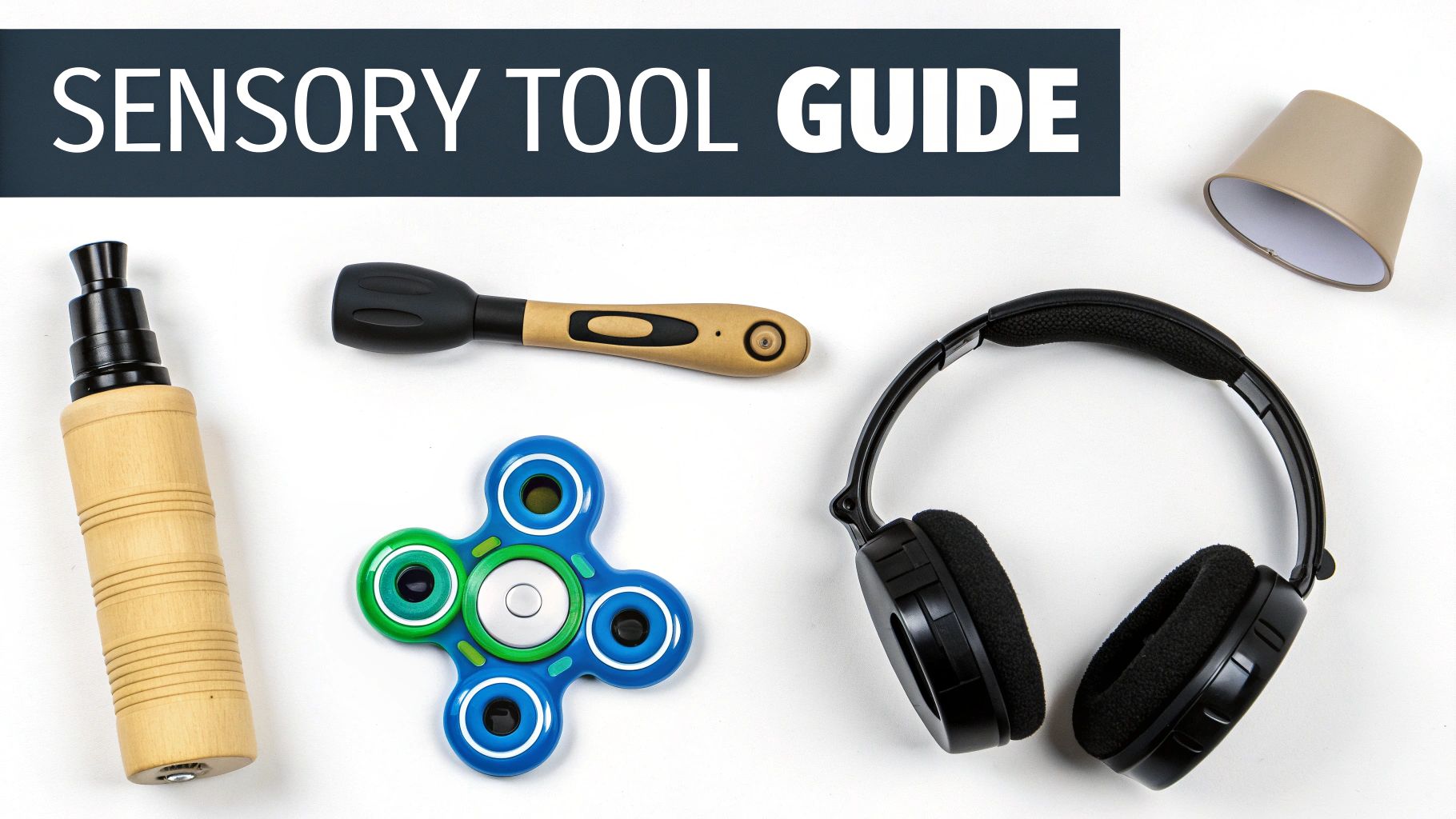
Stepping into the world of sensory tools can feel a bit like learning a new language. To make sense of it all, it helps to think about them based on which sensory system they speak to. Every tool has a specific job—some are designed to calm an overstimulated system, while others provide the intense input a child might be craving.
Think of it as putting together a personalised toolkit. You wouldn't use a hammer for a screw, and in the same way, the right sensory tool has to match the specific need. Let's explore the main categories so you can find the perfect fit.
Tactile Tools for Touch and Texture
Our tactile system is how we process the world through touch. For some kids, certain textures can feel overwhelming. For others, there’s a constant need to touch and feel everything around them. Tactile tools offer a safe and appropriate way to explore those sensations.
These tools are brilliant for hands that always need to be busy. They can help sharpen focus in the classroom, ease anxiety in a new place, or simply satisfy that need to fidget without distracting others.
- Needohs and Stress Balls: These squishy, satisfying balls are fantastic for squeezing away tension. The resistance they offer gives great feedback to the hands and muscles.
- Kaiko Fidgets: Often designed for more discreet use, these provide silent clicking, rolling, or spinning motions that are perfect for a sensory classroom or other quiet settings.
- Little Potion Co Kits: These kits are all about hands-on exploration. Kids can mix and experiment with different textures and ingredients, turning sensory play into a truly magical experience.
- Palm Pals Australia: These are soft, weighted plush toys that offer both a comforting texture and gentle pressure. They make wonderful companions for those quiet, calming moments.
Proprioceptive Tools for Body Awareness
Proprioception is often called our "sixth sense" or our sense of body awareness. It’s what tells us where our body parts are in space without us having to look. If a child seems a bit clumsy, seeks out rough-and-tumble play, or loves a really tight hug, they’re likely seeking proprioceptive input to feel grounded and organised.
These tools give the body deep, steady pressure through the muscles and joints. This input has a powerful soothing effect on the nervous system—much like a firm hug—helping a child feel secure and centred in their own body.
One of the most common ways to deliver this deep pressure is with weighted items. These products use evenly distributed weight to create a gentle, calming sensation that feels like a big, warm hug.
- Weighted Blankets: A Neptune Blanket is a perfect example of how deep pressure can help with relaxation and even lead to better sleep, making them excellent sleeping aids.
- Weighted Animal Toys: These double as a comforting friend and a localised source of pressure, perfect for resting on a child’s lap.
- Sensory Swing: While it engages other senses too, the snug, cocoon-like feeling of a deluxe sensory swing provides incredible deep pressure input.
Vestibular Tools for Balance and Movement
Our vestibular system, located in the inner ear, is our internal GPS—it manages our balance and tells us where we are in relation to gravity. Kids who are constantly spinning, rocking, or hanging upside down are often seeking that vestibular input to help them regulate.
It's amazing how powerful controlled movement can be for either calming down or waking up the nervous system.
- Sensory Swings: A gentle, back-and-forth swing can be incredibly calming. For more of an alert, a bit of spinning can do the trick.
- Wobble Cushions: These are a lifesaver for kids who need to move while they sit. They allow for those subtle wiggles that improve focus without anyone having to leave their chair.
- Gravitrax: Building a complex track and then watching the marbles run through it offers fantastic visual engagement alongside a sense of controlled, predictable motion.
Auditory Tools for Sound Sensitivity
For a child who is hypersensitive to sound, the world can feel painfully loud. Everyday noises, like a vacuum cleaner or a busy shopping centre, can be completely overwhelming. Auditory tools are designed to manage this by turning down the volume on the world.
Giving a child a way to control their soundscape can transform a stressful environment into a manageable one and help prevent sensory overload. You can dive deeper into how different sensory toys in Australia can support various needs in our detailed guide.
One of the most straightforward and effective solutions is a good pair of noise cancelling earmuffs for kids. They are specially designed to dampen loud, jarring noises without blocking out everything, so a child can still hear a conversation while the background chaos fades away.
Visual Tools for Calming and Focus
Just like sound, visual input can be either overwhelming or wonderfully engaging. Visual sensory tools use gentle light, colour, and predictable motion to create a focal point that can soothe an anxious mind. They are a core part of creating calming sensory spaces.
- Jellyfish Lamp: A Large Jellyfish Sensory Lamp creates a mesmerising, silent ballet of light and movement that is incredibly calming to watch. The slow, gentle drift of the jellyfish provides a soothing visual anchor.
- Jellyfish Aquarium Lamp: The Brand New Jellyfish Aquarium Lamp offers that same tranquil effect but in a more compact size, making it perfect for a desk or bedside table.
- Bubble Tubes: Watching bubbles slowly rise through colourful, illuminated water is a classic for a reason. It’s a gentle visual stimulus that can help improve focus and ease anxiety.
- Airtoobz: These interactive tubes are fantastic because they let kids control the airflow and watch objects float, combining visual engagement with a hands-on lesson in cause and effect.
- Sensory Tent: A pop-up block out sensory tent is like a personal retreat. It offers a break from all the visual noise, creating a dark, quiet space where a child can rest and reset.
Creating Calming Sensory Spaces at Home and School
While individual sensory tools are fantastic, creating an entire environment designed for sensory regulation can be a total game-changer. A dedicated sensory space isn’t about needing a huge room or a flashy, expensive setup. It’s simply about carving out a predictable, calming corner where a child can go to decompress and reset their nervous system.
This safe haven could be a small nook in their bedroom, a quiet spot in a sensory classroom, or even a portable kit you can take with you. The goal is to build a retreat that dials down the overwhelming input from the outside world and provides just the right kind of stimulation. It’s a place where a child feels in control, which is so crucial for self-regulation.
By transforming a simple corner into a supportive space, you’re giving them a physical anchor to manage big feelings before they escalate.
The Key Ingredients for a Calming Corner
Building a successful sensory space is all about thoughtfully combining a few key elements. Think of it like creating a personalised comfort menu where your child can pick and choose what their nervous system needs in that exact moment. Often, the best spaces are simple, uncluttered, and tailored to what works for them.
Here are the essential components to think about:
- A Private Retreat: A sense of enclosure is vital. It provides a real break from visual and auditory chaos, helping a child feel safe and protected. Something like a pop-up block out sensory tent can be a brilliant, instant solution.
- Gentle Visuals: Soft, predictable lighting can do wonders for an overstimulated mind. Calming visual tools like bubble tubes or mesmerising night lights offer a gentle focal point that can help slow a racing heart.
- Comforting Textures: Think soft blankets, plush cushions, and tactile toys. These provide comforting, grounding input. Items like Warmies are great because they offer both softness and a gentle, soothing warmth.
- Deep Pressure Options: Tools that offer deep pressure are incredibly grounding for the nervous system. This could be as simple as a pile of cushions to snuggle under or a dedicated weighted blanket.
Bringing Your Sensory Space to Life
You absolutely don't need a massive budget to create an effective space. The most important thing is to understand your child's unique sensory profile and choose items that meet their specific needs.
For instance, a child who seeks movement might love a gentle swing in their space, while a child who is sensitive to light will need a darker, cosier area. For a centrepiece that’s both visually engaging and calming, an item like Airtoobz can be fantastic. It allows for interactive play, letting a child control the airflow to watch scarves dance and float—a really satisfying cause-and-effect activity that can help focus an anxious mind.
The real power of a sensory space often lies in the control it gives back to the child. When they can choose the lighting, the sounds, or the textures they interact with, it helps them learn what their body needs to feel calm and organised.
This isn’t just anecdotal, either. Research into Multi-Sensory Environments (MSEs) right here in Australia backs this up. Studies have shown that when autistic children can control the sensory equipment themselves, they show a measurable increase in attention span and a decrease in repetitive behaviours. It really highlights how giving a child agency within their environment creates better conditions for both learning and regulation.
Sensory Spaces at Home vs. School
The core principles are the same, but how you set things up will naturally look a bit different depending on the setting.
| Aspect | At Home | In the Classroom |
|---|---|---|
| Location | Can be a corner of the bedroom or living room, a walk-in wardrobe, or even a large closet. | Usually a designated 'calm-down corner', a reading nook with sensory cushions, or a separate quiet room if available. |
| Tools | Can be highly personalised with their favourite blankets, specific night lights, and beloved plush toys like Snoopy. | Should include a variety of tools to suit different needs, like noise-cancelling earmuffs, a small selection of fidgets, and items that are easy to clean. |
| Access | Freely available whenever the child feels they need a break. | Accessible with clear rules. A visual cue card system can be great, allowing a student to request to use the space without disrupting the class. |
Ultimately, a sensory space is so much more than just a collection of tools. It's a deliberate act of creating an environment that says, "It's okay to feel overwhelmed, and here is a safe place to find your calm." Whether you’re using a simple pop-up tent or designing a more elaborate room, a thoughtfully created sensory space provides the foundation for emotional and sensory well-being.
How to Choose the Right Sensory Tools
With a whole world of sensory tools out there, how do you figure out which ones will actually help? The biggest challenge isn't the shopping; it's knowing what to shop for. The secret is to stop thinking about buying toys and start thinking like a sensory detective.
It’s all about learning to read the clues in your child’s behaviour. Once you start observing them through a sensory lens, you’ll begin to understand the specific needs they're trying to meet. This simple shift in perspective is what turns a random purchase into a genuinely supportive tool for their regulation and well-being.
Become a Sensory Detective
First things first, just watch. What does your child do when they're getting overwhelmed? What about when they seem bored, or a bit anxious? Pay attention to the things they seem drawn to and the things they actively try to get away from.
Thinking like a detective helps you connect a behaviour to a potential solution. It’s about figuring out the ‘why’ behind the ‘what’.
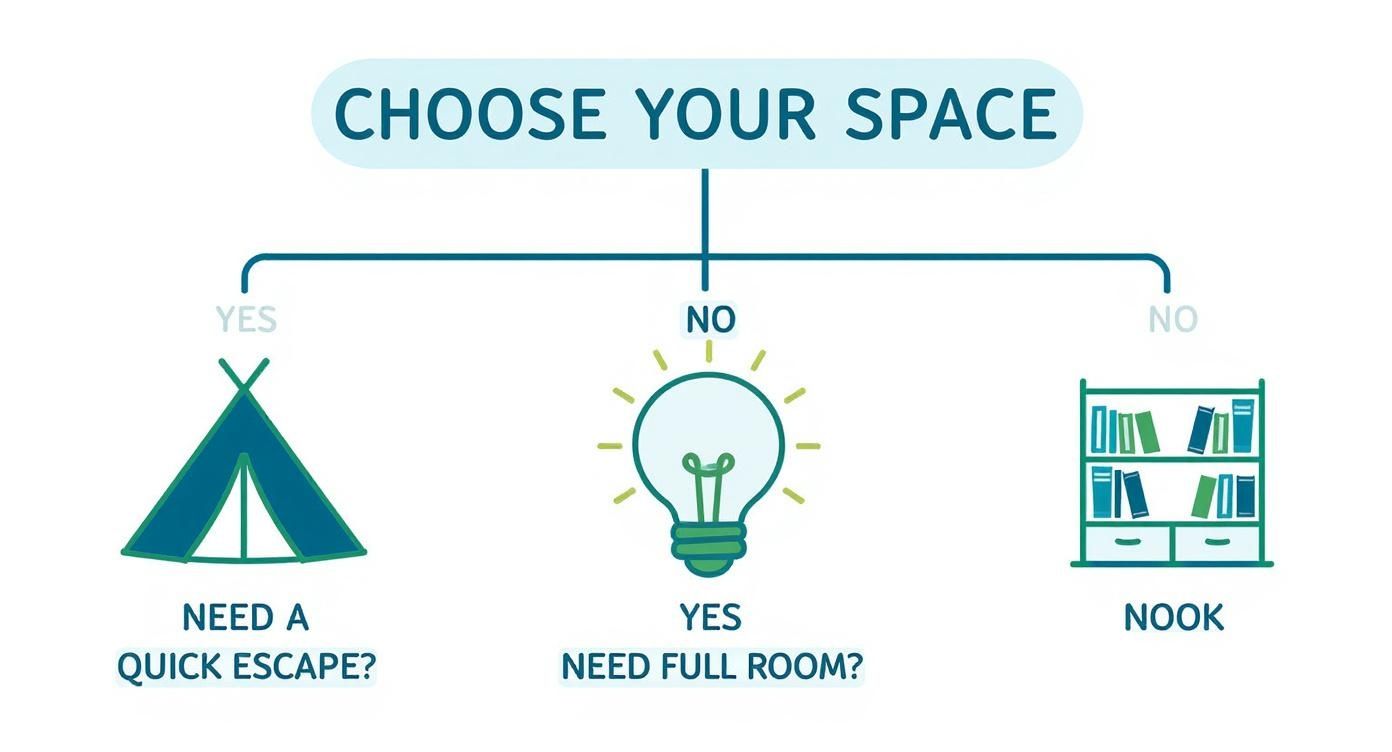
The flowchart above is a great example of this detective work in action. It shows how identifying the core need—a quick retreat versus a fully immersive environment—is the very first step in creating a space that actually works.
Let’s break it down with a few common scenarios:
-
The Behaviour: Your child is constantly chewing on their shirt collar, pencils, or even their own fingers.
- The Need: This is a classic sign they're seeking oral motor input. That sensation through the jaw is incredibly calming and organising for the nervous system.
- The Solution: A safe, durable chewable necklace or a handheld chewy tool can be a fantastic substitute.
-
The Behaviour: They just can't sit still. They're always rocking, bouncing, or even crashing into the furniture.
- The Need: This tells us they're likely craving intense proprioceptive (deep pressure) and vestibular (movement) input to feel grounded in their body.
- The Solution: A wobble cushion on their chair, a deluxe sensory swing, or a simple weighted lap pad can deliver that input in a much safer, more controlled way.
-
The Behaviour: In noisy places like the shops or a school assembly, they clamp their hands over their ears and look distressed.
- The Need: This is a clear indicator of auditory hypersensitivity—everyday sounds are just too much.
- The Solution: A quality pair of noise cancelling earmuffs for kids can be an absolute game-changer, letting them turn the world’s volume down to a manageable level.
When you start reframing behaviours as communication, everything changes. They stop being 'problems' you need to fix and become clues you need to solve. This compassionate approach is the true foundation of effective sensory support.
The Invaluable Role of an Occupational Therapist
While playing sensory detective at home is a brilliant skill to develop, you absolutely don't have to do it alone. This is where an Occupational Therapist (OT) comes in. An OT is a professionally trained expert who can conduct a comprehensive assessment to map out your child’s unique sensory profile.
They have the specialised knowledge and formal tools to build a detailed picture of what makes your child tick, sensorially speaking.
In Australia, these kinds of sensory screening tools are a vital part of the diagnostic and support process. A study at one community hospital, for instance, found that 26% of children screened were later confirmed to have autism spectrum disorder. The screening tool itself was over 95% accurate at flagging sensory differences, especially for kids who were either strong sensory seekers or avoiders. You can dig deeper into how these sensory profiles are identified in Australian clinical settings on the National Center for Biotechnology Information website.
An OT can give you personalised recommendations that are perfectly matched to your child. They'll suggest specific tools and strategies you can use at home, at school, and out in the community. Their professional guidance takes the guesswork out of the equation, ensuring the 'sensory diet' you create is both safe and effective, which ultimately leads to much better outcomes.
Weaving Sensory Tools into the Magic of Play
The most effective sensory tools don't feel like tools at all. They naturally become part of a child's world, and there’s no better way to do that than through play. Play is how children learn, explore, and figure things out. It's their work.
When we mix sensory tools for autism into playtime, we're not just distracting them; we're helping them build critical life skills in a fun, no-pressure environment. Regulation stops being a chore and becomes a natural part of discovery and imagination. A child lost in play is often far more receptive to new sensory experiences, making it the perfect time to build skills and confidence.
Play That Builds Brains and Skills
Many sensory toys are secretly fantastic learning tools, especially for building early STEM skills like problem-solving and understanding cause and effect. They offer that much-needed sensory feedback while also giving a child's brain a gentle workout.
Here are a couple of brilliant examples:
- Magnatiles: That satisfying click as the magnetic tiles snap together is a great bit of tactile and auditory feedback. As kids build castles and towers, they’re getting a hands-on lesson in geometry, balance, and what makes a structure strong.
- Gravitrax: Putting together a marble run with Gravitrax is all about planning and logic. Watching the marble zip through the track they designed provides predictable visual input—a fantastic reward for their engineering efforts.
Nurturing Social and Emotional Skills
Play is also the training ground for social interaction. We can make tricky social ideas feel much more real and less intimidating by bringing in familiar, friendly faces from their favourite shows.
Think about Bluey merchandise. The show is famous for how it explores family life and big feelings. Acting out scenes with Bluey and Bingo figurines is a fantastic way to practise taking turns, thinking about what others feel, and seeing things from a different point of view. In the same way, Numberblocks toys transform maths into a social game with friendly characters, making numeracy feel less like a lesson and more like a fun get-together.
Play creates a safe rehearsal space for social skills. When children use character-based toys, it builds a bridge from their inner world to the social situations they're trying to figure out, making the whole process feel more natural and a lot less scary.
Creativity, Comfort, and Connection
Sometimes, play is just about feeling connected and secure. Soft, tactile toys often become trusted friends during imaginative play, offering a steady sense of calm and safety. Other times, the excitement of showbags and blind boxes brings an element of surprise and delight to playtime.
Cuddling a warm Warmies plush toy can give a child that lovely, soothing deep pressure and warmth, helping them settle into a quiet moment of play. The soft, weighted feel of Palm Pals Australia makes them just right for small hands to squeeze, providing grounding tactile input during story time or a big imaginative adventure.
By folding sensory tools into playtime, they become so much more than just aids for regulation. They become key ingredients in a rich, joyful childhood filled with learning and discovery.
Navigating NDIS Funding for Sensory Tools in Australia
For many Aussie families, the National Disability Insurance Scheme (NDIS) is the key to accessing the right sensory tools for autism. It can feel like a maze at first, but figuring out how to use your funding is much simpler once you know the basics. The whole point of the scheme is to support participants in reaching their goals, and sensory tools are often a huge part of that journey.
When you start looking at products, your top priorities should always be safety, durability, and whether it’s a good fit for your child. Make sure you’re choosing items made from non-toxic, high-quality materials – this is especially important for oral motor tools or anything that’s going to see a lot of action. A great starting point is to read reviews and stick with reputable Australian suppliers who genuinely get the sensory needs of neurodiverse people.
How NDIS Funding Can Be Used
Most sensory products slot into either the 'Consumables' or 'Assistive Technology' categories within an NDIS plan. The golden rule is that the item must directly address a need related to the participant's disability and help them move towards their goals, whether that’s better self-regulation, improved focus, or being able to join in with daily life.
Here are a couple of common ways funding is used:
- Low-Cost Assistive Technology: This is for items under $1500 that support mobility, communication, or participation. This could easily cover something like a deluxe sensory swing, a Neptune Blanket, or other helpful sleeping aids.
- Consumables: This budget is for everyday items you might need to buy regularly. It’s perfect for smaller sensory tools like Kaiko fidgets, therapy putty, or other tactile things that help with regulation.
The NDIA needs to see every purchase as 'reasonable and necessary'. This just means the tool has to be clearly linked to a goal in the participant's plan and be a good value-for-money solution.
It’s easy to get swept up in popular trends, but it's vital to choose tools based on what actually works. Extensive reviews in Australia have found that while some sensory strategies show great results, others, like weighted vests, don't have enough solid evidence to back up their widespread use. This is a good reminder that just because a tool is popular doesn't mean it's effective for everyone. It really comes back to making careful, individual choices.
If you want to dig into the research yourself, you can find a great breakdown in this report from the Autism Hub.
The best way to make sure you’re on the right track is to connect your purchase to a specific goal. Better yet, get a recommendation from an allied health professional, like an Occupational Therapist. Their expert advice is often the justification you need to ensure the sensory tools you choose are funded, appropriate, and genuinely going to make a difference.
Got Questions? We’ve Got Answers.
When you're diving into the world of sensory tools for autism, it’s natural for questions to pop up. Let's tackle some of the most common ones we hear from parents, carers, and teachers around Australia.
Are Sensory Tools Just Fancy Toys?
It's a great question, and the answer really comes down to purpose. While a toy is mostly about fun and entertainment, a sensory tool is chosen for a specific job: helping a person regulate their nervous system.
Think of it this way: a toy car is for imaginative play. But a sensory tool like a Neptune Blanket provides calming deep pressure, and a Kaiko fidget gives busy hands a specific, repetitive action to focus on. The intention is to provide targeted input that helps someone feel grounded, focused, or calm. Sometimes the lines blur—building with Magnatiles is a blast, but it also gives that satisfying tactile and auditory feedback that can support focus.
What's the Best Way to Introduce a New Sensory Item?
The golden rule is low-pressure and positive. The best time to introduce something new is during a quiet, happy moment, not when things are already tense or overwhelming.
Let them lead the way. You can model how it's used—maybe you calmly squeeze a Needoh ball yourself or rest a weighted animal on your own lap to show it's safe and enjoyable. The goal is for the item to become a trusted friend, not another demand.
If they're not interested right away, that's completely fine. Don't force it. Just leave the tool in their sensory space or play area. This gives them the freedom to discover it on their own terms when they feel ready.
How Do I Keep Our Sensory Tools Clean?
Good hygiene is a must, especially for anything that gets a lot of handling or ends up in the mouth. Always start by checking the manufacturer's cleaning instructions, because materials can be very different.
- Hard Plastic & Silicone: Things like fidgets and chewelry are usually the easiest. A good wash in warm, soapy water or a cycle on the top rack of the dishwasher often does the trick.
- Weighted Blankets & Toys: Check the label. Most have removable covers that you can pop in the washing machine. The inner weighted part might need to be hand-washed or spot-cleaned.
- Plush & Fabric Items: Soft toys like Warmies or Palm Pals Australia usually need a gentle surface clean to protect what’s inside and keep them feeling soft.
It's also a good habit to give everything a quick check for wear and tear, especially chewable items. If something looks damaged, it’s best to replace it to make sure it's safe.
When Should We See an Occupational Therapist?
While your own observations are incredibly valuable, an Occupational Therapist (OT) brings a professional lens that can make a huge difference. They take the guesswork out of the equation.
It’s probably a good time to reach out to an OT if:
- You're feeling a bit lost and don't know where to start.
- Your child's sensory needs are complex or are really getting in the way of daily activities.
- You need a formal assessment to help with an NDIS plan or to get the right supports in place at school.
An OT can help create a personalised "sensory diet"—a routine of activities and tools perfectly matched to your child’s nervous system, helping them feel and function at their best.
Ready to build your sensory toolkit? Sensory Poodle offers a curated selection of high-quality, therapist-approved sensory tools to support your child's needs. Explore our full range of products.