


Unlocking Potential With Fine Motor Toys

At their heart, fine motor toys are simply tools that help little ones build strength and coordination in the small muscles of their hands, fingers, and wrists. Think of them as a personal gym for tiny hands, getting them ready for all the important jobs ahead, like holding a crayon, doing up a button, or using a fork.
These toys cleverly disguise repetitive, muscle-building practice as pure, engaging fun. Kids get to build dexterity and confidence, all without it ever feeling like a chore. As a leading provider of sensory toys in Australia, we see firsthand how the right tools can unlock a child's potential.
Why Tiny Hands Need Fine Motor Toys
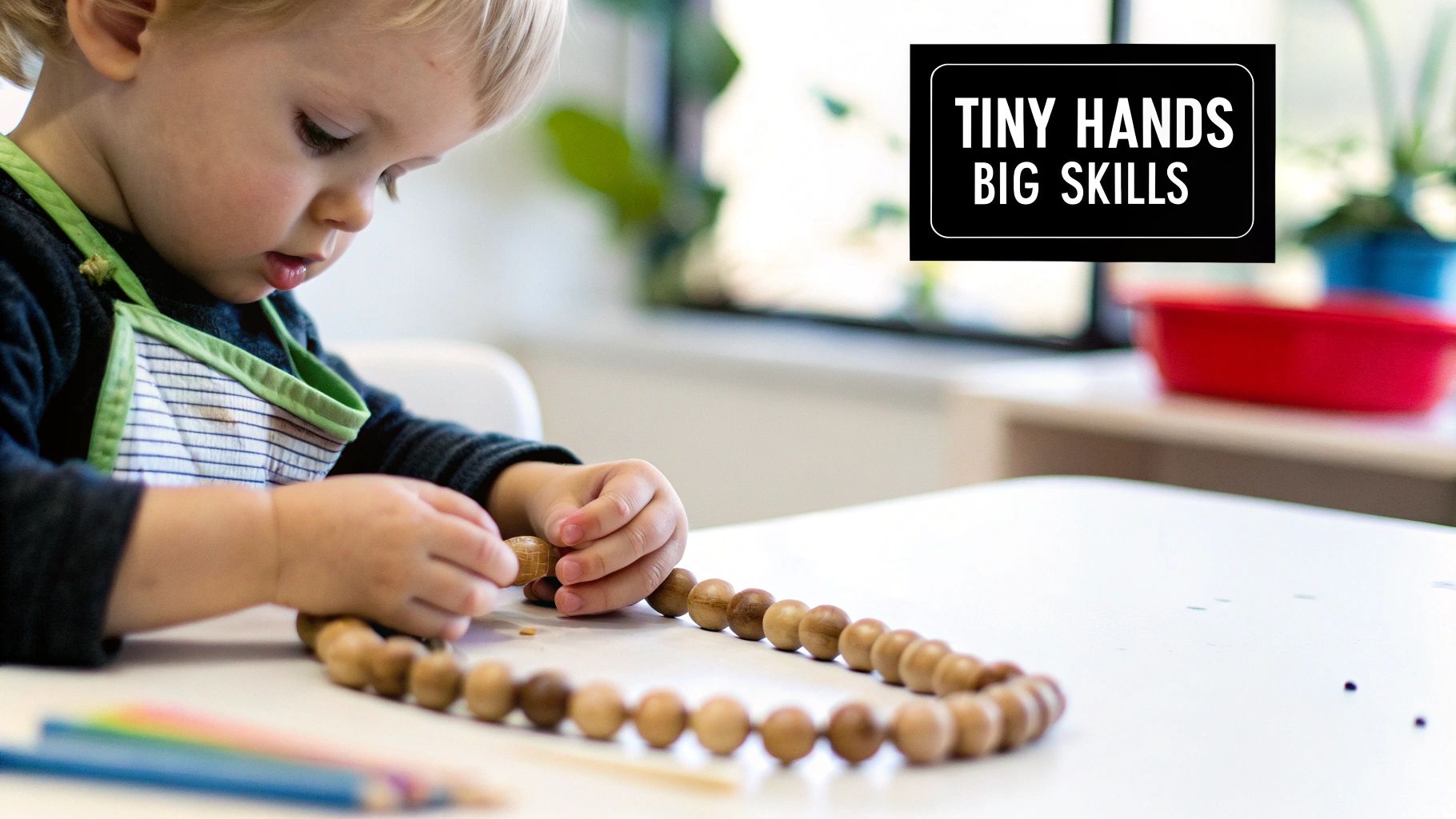
That incredible moment a baby first wraps their tiny fingers around yours? That’s the start of their fine motor journey. These skills are all about the complex teamwork between the small hand muscles and the eyes, and mastering this connection doesn’t happen overnight. It takes heaps of practice and strengthening, just like an athlete training for their sport.
Fine motor toys offer this essential training in a way that’s playful and perfectly suited to their developmental stage. They turn a potentially frustrating task into a rewarding game, building not just muscle strength but also firing up those all-important neural pathways in the brain.
The Building Blocks of Independence
Just picture a typical morning. A child needs to zip their jacket, maybe even attempt to tie their shoelaces, squeeze toothpaste, and hold a spoon to eat cereal. Every single one of these actions depends on solid fine motor skills. Without them, simple daily tasks can feel like climbing a mountain, leading to frustration and reliance on others.
When we give kids a chance to practice these precise movements through play, we’re handing them the keys to independence. This growing ability to "do it myself" is a massive confidence booster.
More Than Just Muscle
The magic of fine motor toys goes way beyond just physical skill. When a child manages to thread a tricky bead or finally gets a building block to connect, they’re also sharpening other vital skills:
- Hand-Eye Coordination: This is the brain's ability to use what the eyes see to guide what the hands do.
- Bilateral Integration: The art of using both hands together, where one hand might hold something steady while the other does the tricky work.
- Problem-Solving: Working out how to fit puzzle pieces together or how to stop a tower of blocks from toppling over.
- Concentration and Patience: The grit to stick with a task, even when it gets a bit tough.
This all-round development is particularly powerful for neurodiverse children. Many fine motor toys, like fidgets or weighted animal toys, also provide calming sensory input. This can be a game-changer for improving focus, easing anxiety, and supporting self-regulation.
It all connects. For example, a good pencil grip doesn’t just appear out of nowhere; it starts with the hand strength built from squeezing play-dough or picking up pom-poms with tongs. If you're curious about this, you can learn more about the different types of pencil grips and how they help with writing.
Matching Fine Motor Skills to Fun Toys
To make it easier to see the connection, here’s a quick guide matching common fine motor skills with the types of toys that support them.
| Fine Motor Skill | Description | Example Fine Motor Toys |
|---|---|---|
| Pincer Grasp | Using the thumb and index finger to pick up small objects. | Tongs and pom-poms, threading beads, play-dough, Magnatiles. |
| In-Hand Manipulation | Moving an object around within one hand (e.g., from palm to fingertips). | Needohs, theraputty, small figurines like Palm Pals Australia. |
| Bilateral Coordination | Using both hands together in a coordinated way. | Lacing cards, building with Numberblocks, Airtoobz. |
| Wrist Strength & Stability | Developing the muscles that support hand movements for writing and drawing. | Drawing on a vertical surface (easel), screwing/unscrewing jars, hammering toys. |
This table is a great starting point for thinking about which toys might best support your child's specific developmental needs right now.
How Play Builds Better Brains
It’s easy to see a child threading a bead or clicking two Magnatiles together and think they’re just keeping busy. But what’s really happening is far more profound. With every pinch, twist, and placement, they are physically constructing a stronger, faster, more connected brain.
Think of it like this: each tiny movement helps forge and strengthen neural pathways. These are the brain's information highways. The more a child uses them through play, the wider and more efficient those highways become, speeding up the messages between their brain and their hands.
From Simple Stacks to Complex Skills
Building a tower of blocks looks simple on the surface, doesn't it? But underneath that playful exterior, a whole lot of brainpower is at work. Piecing together a creation with Numberblocks, for instance, is a fantastic mental workout that hones several critical skills.
- Motor Planning: First, the brain has to come up with a plan ("I want to put the red block on top of the blue one"). Then, it has to figure out the precise sequence of muscle movements to actually pull it off.
- Problem-Solving: What happens when the tower starts to wobble? The child has to think on their feet, analyse the problem, and adjust their strategy. Maybe a wider block is needed at the base, or perhaps the next piece needs a gentler touch.
- Spatial Relationships: This is all about understanding how objects fit together in the world. It’s what allows a child to judge the distance, position, and angle needed to place a block just right.
These aren’t just playroom skills. They are the absolute bedrock for learning to write, navigating a busy classroom, and even grasping mathematical concepts down the track.
The Power of Two Hands Working Together
So many fine motor activities demand something we call bilateral integration—a fancy term for using both hands together to get a job done. Think about one hand holding a lacing card steady while the other threads the string, or one hand gripping the paper while the other uses scissors.
This coordination between the left and right sides of the body is fundamental for many complex tasks, from tying shoelaces and catching a ball to playing a musical instrument. Fine motor play provides a natural and engaging way to practice and master this crucial skill.
This teamwork between the hands actually strengthens the part of the brain connecting the two hemispheres, boosting overall brain function and coordination.
Cultivating Concentration and Persistence
Fine motor toys also teach incredibly valuable lessons in focus and resilience. You can’t finish a tricky puzzle or build an intricate model without sustained attention. Through this kind of play, a child learns to tune out distractions and keep going, even when a piece won’t fit or a tower tumbles.
They’re essentially building their 'concentration muscle,' which is vital for succeeding at school and, frankly, in life. Every small win—a bead threaded, a puzzle piece clicked into place—delivers a little jolt of accomplishment, fuelling their confidence to tackle the next challenge.
It seems Aussie parents are catching on. Educational toys, especially those that develop fine motor skills like stacking rings and pegboards, are a huge driver in Australia's toy market. The market itself was valued at USD 2,278.8 million in 2024 and is set to keep growing, showing a real shift towards toys that foster cognitive growth and motor precision. You can explore more details on this growing market trend to see the full picture.
Choosing the Right Toy for Every Stage
Walking into a toy store or browsing online can feel overwhelming. With so many options, how do you pick the perfect one that will not only capture your child's attention but also genuinely support their development? The real secret is matching the toy to their current abilities, making sure it’s challenging enough to be interesting but not so hard it causes frustration.
Think of it like finding the “Goldilocks” zone. A toy that’s too simple will quickly lead to boredom, while one that’s too advanced can shut a child down before they even start. The goal is to find that sweet spot where play feels both successful and exciting, inspiring them to try again and again. For some great ideas on this, check out this ultimate learning gift guide for skill-building toys.
Toys for Infants: Birth to 12 Months
In that incredible first year, a baby’s whole world is about discovery—learning about their own body and how it connects with everything around them. Fine motor skills begin with the most basic, foundational movements: reaching out, grasping an object, and bringing it to their mouth to explore.
For this age, toys need to be safe, easy for little hands to hold, and full of interesting textures to wake up their senses.
- Grasping and Reaching: Look for toys that are lightweight and perfectly sized for tiny fingers to wrap around. Soft, plush toys like Warmies are a beautiful choice, offering a comforting texture and just enough weight to encourage a baby to hold on tight.
- Sensory Exploration: Toys with varied textures, gentle sounds, or soft, glowing lights are fantastic for building those crucial neural connections in the brain. Calming night lights can provide gentle visual stimulation, making them excellent sleeping aids for a settled nursery environment.
Toys for Toddlers: 1 to 3 Years
Toddlers are like little scientists, full of energy and ready to experiment. Their fine motor skills are really starting to blossom now, moving beyond a simple grasp to more complex actions like stacking, sorting, and using objects with real purpose. This is where you’ll see hand strength and hand-eye coordination take a huge leap forward.
The best toys for this stage are built to last and encourage lots of hands-on problem-solving.
- Hand Strength: Squishy, squeezy toys are brilliant for building up those small but mighty muscles in the hands. The vibrant colours and deeply satisfying resistance of Needohs make them an ideal tool for strengthening a toddler’s grip.
- Stacking and Building: Large, chunky blocks or classic stacking rings help toddlers practise placing objects with intention. It’s their first real lesson in balance, spatial awareness, and cause-and-effect (what happens when the tower gets too tall!).
Toys for Preschoolers: 3 to 5 Years
By the time they reach preschool, children are ready for more detail and precision. Their pincer grasp—using the thumb and forefinger together—is becoming much more refined, which is a critical step for developing pre-writing skills. They can also follow more complex instructions and love activities that let their imagination run wild.
At this stage, look for toys that challenge their dexterity and invite creative expression.
- Precision and Pouring: Scooping, pouring, and mixing activities are fantastic for honing fine motor control. The enchanting Little Potion Co kits offer a magical way for preschoolers to practise these very precise, controlled movements.
- Early Construction: Things like interlocking blocks, lacing beads, and simple puzzles demand more intricate hand movements. They also quietly teach valuable skills like patience and problem-solving.
As this infographic shows, this kind of purposeful play is what lays the groundwork for key areas of brain development.
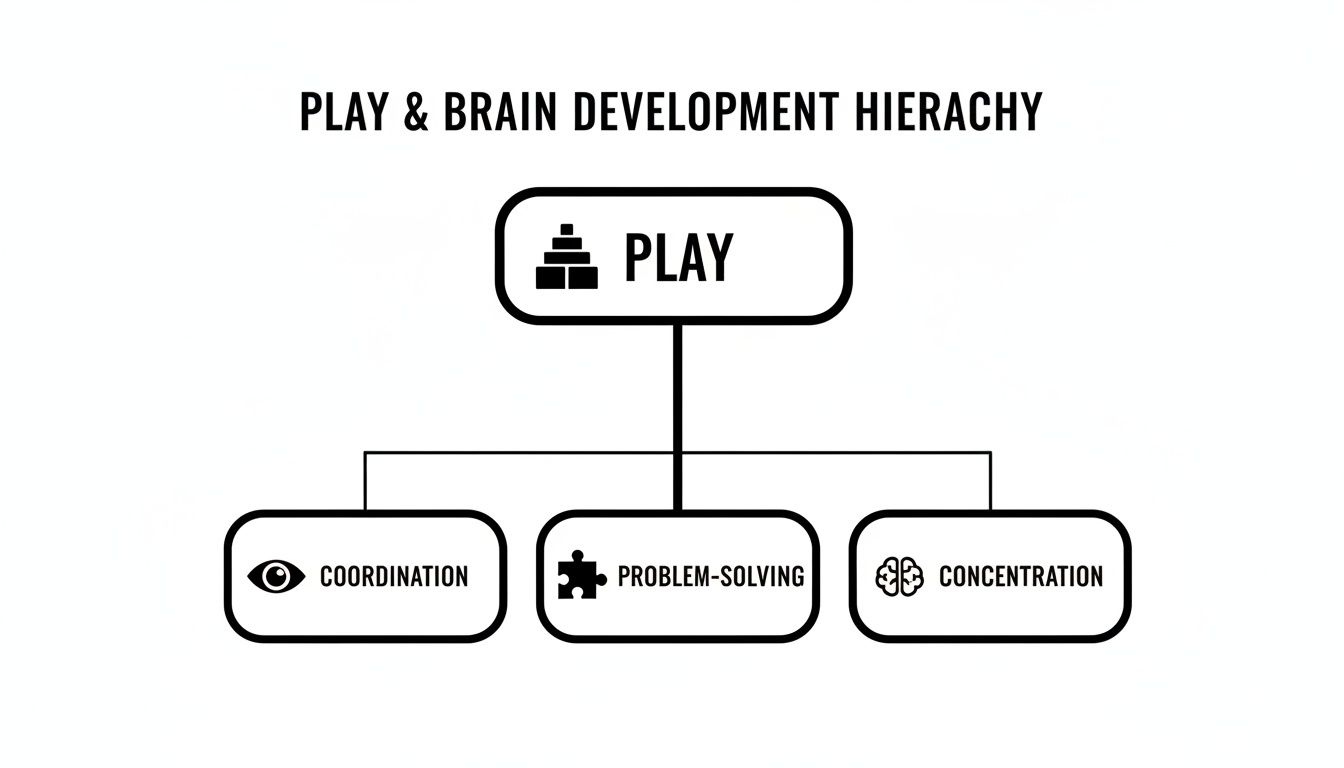
The diagram makes it clear: engaging play isn't just fun; it's the foundation for building essential cognitive skills like coordination and concentration.
Toys for Older Kids: 5+ Years
Once kids start school, their fine motor skills become much more specialised. They now need the hand endurance to write, the precision to cut accurately with scissors, and the dexterity to manage small, complex pieces in construction sets.
Toys for this age group can be far more intricate, calling on logic, planning, and advanced manual dexterity.
A well-chosen toy for an older child not only refines their motor skills but also supports higher-level thinking, such as strategic planning and cause-and-effect reasoning. It bridges the gap between physical manipulation and cognitive execution.
Complex building sets are perfect for this. An advanced system like Gravitrax challenges older kids to design, plan, and build elaborate marble runs, an activity that requires both immense precision and foresight.
For an even deeper dive, our complete guide by age group for choosing the right sensory toys has more specific suggestions for every stage of your child’s journey.
Weaving Skill-Building into Daily Life
While fine motor toys are fantastic tools, the real magic happens when we realise that opportunities to build these skills are everywhere. Mastery isn't just about playtime; it’s about weaving practice into the very fabric of your child's day, turning simple routines into powerful moments for growth.
When you start spotting these everyday opportunities, you can consistently support your child’s journey toward greater independence and confidence. Skill-building becomes a natural, ongoing part of their world, not just something that happens at the activity table.
The Kitchen Classroom
Believe it or not, the kitchen is one of the richest environments for fine motor practice. Simple, supervised tasks can do wonders for developing hand strength, coordination, and precision. Next time you're preparing a meal, think about how your little one can get involved.
These aren't just chores; they are targeted workouts for tiny hands.
- Stirring and Whisking: That circular motion of stirring batter or whisking eggs is brilliant for building wrist stability and strength. This is exactly what they'll need for controlled handwriting down the track.
- Pinching and Sprinkling: Asking a child to pinch herbs, sprinkle cheese, or place pepperoni on a pizza is the perfect way to practice their pincer grasp.
- Pouring and Scooping: Transferring ingredients like rice from one bowl to another with a scoop, or pouring water into a measuring cup, sharpens hand-eye coordination and control.
Dressing for Success
Getting dressed and undressed is a daily masterclass in fine motor skills. I know it’s often faster to just do it for them, but letting your child tackle these challenges is a direct investment in their dexterity and self-esteem.
Every button fastened or zipper pulled is a small victory. It builds not only fine motor precision but also a child's sense of accomplishment and autonomy. These are the foundational moments of self-care.
To avoid overwhelming them, focus on one skill at a time. You could start with big, chunky buttons before moving to smaller ones, or practice zipping a jacket while it’s lying flat before they try it on. The finger strength they develop from using tools like Kaiko Fidgets directly translates into the grip and coordination needed for these tricky tasks.
Connecting Play to Everyday Tasks
One of the most powerful things you can do is help your child see the connection between their play and real-world actions. The skills they gain from their favourite fine motor toys aren't isolated; they are the direct building blocks for all those "big kid" tasks they're so eager to master.
Here’s how those playtime skills translate into daily life:
| Play Activity (The Toy) | Life Skill (The Task) |
|---|---|
| Squeezing squishy Needohs balls. | Squeezing a toothpaste tube or a glue bottle for crafts. |
| Threading beads onto a string. | Pulling a zipper up a jacket or threading a belt through loops. |
| Using tongs to pick up pom-poms. | Using cutlery like forks and spoons to pick up small pieces of food. |
| Building with Magnatiles or blocks. | Holding a pencil correctly for drawing and writing. |
| Playing with fidgets that twist and turn. | Opening screw-top lids on bottles and jars. |
When you see your child struggling with a task, you can gently remind them, "This is just like when we play with the lacing cards! You can do this." This simple connection helps them transfer their confidence from the playroom straight into the real world.
Sensory Support During Seated Activities
Sometimes, the real challenge isn't just the motor skill itself—it's the ability to sit still and focus long enough to get it done. This is where sensory tools can make a world of difference, especially for seated activities like homework, colouring, or craft.
For a child who needs a bit of extra sensory input to feel calm and organised, a tool like a weighted lap toy can be a game-changer. The gentle, deep pressure it provides helps to soothe a busy nervous system, freeing up the brain to concentrate on the fine motor task at hand. It's a simple addition that can transform a frustrating homework session into a calm, productive one, allowing those developing skills to truly shine.
Creating Supportive Sensory Classrooms
For any educator or therapist, the classroom is a living, breathing space where every child deserves the chance to truly shine. Fine motor toys aren't just for play—they're fundamental tools for creating inclusive learning environments. By weaving these resources into the daily fabric of the classroom, we can build supportive sensory spaces and calming corners that help every student feel settled, focused, and ready to learn.
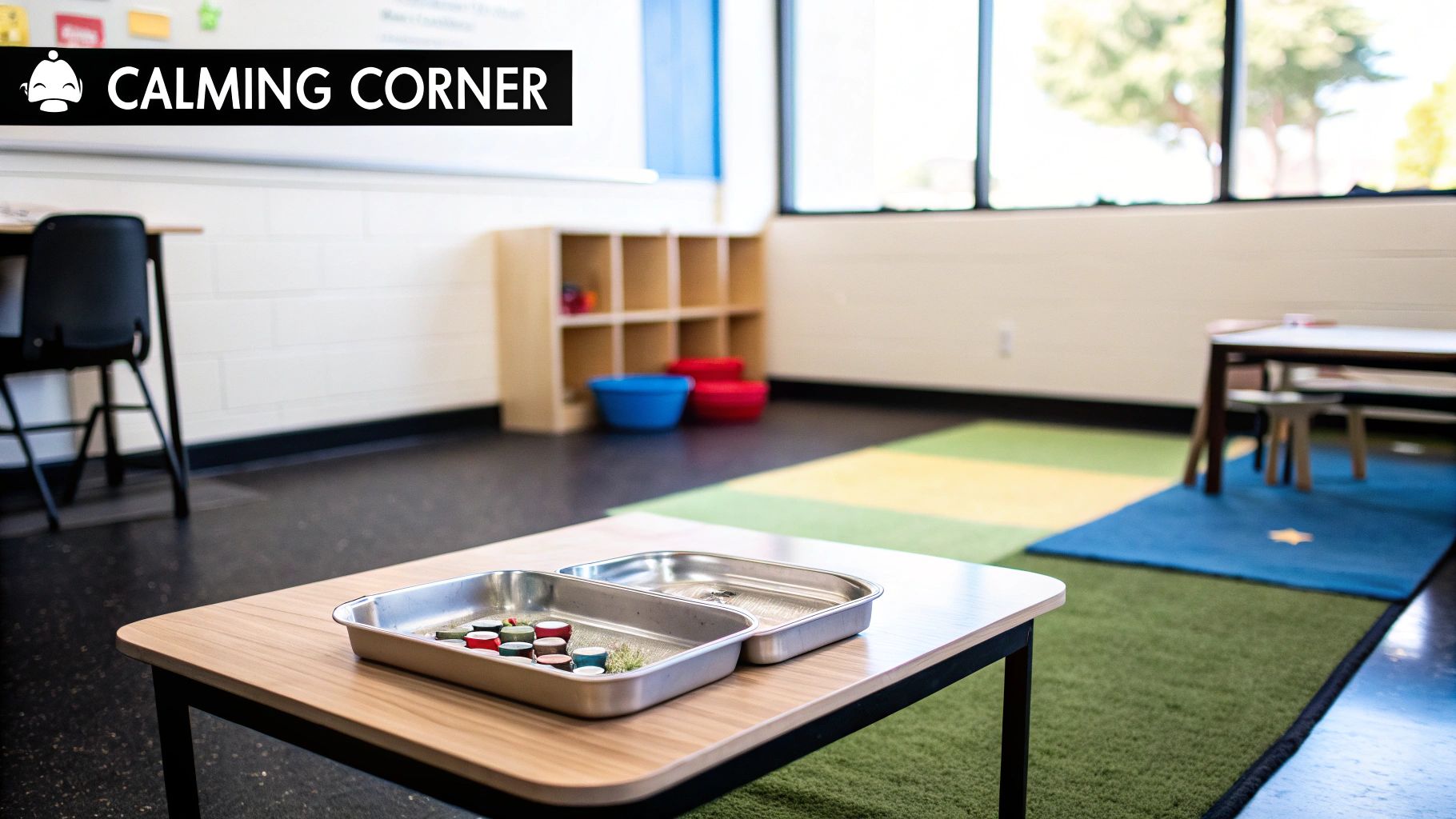
A thoughtfully designed sensory classroom or calming corner offers a safe haven where kids can learn to self-regulate. When a child feels overwhelmed, anxious, or just can’t seem to focus, having access to the right tools can make all the difference. Purposeful fidgeting isn't a distraction; it's a vital strategy for getting back on track.
Purposeful Fidgeting for Better Focus
The old idea that a quiet, still student is a focused one is long outdated. For so many children, especially those who are neurodiverse, fidgeting is actually essential for concentration. It gives just enough sensory input to keep the restless part of the brain occupied, which frees up the mental space needed to tune into the lesson.
This is exactly why having a good selection of quiet, effective fidgets is a game-changer.
- Tactile Fidgets: Tools like cool-to-the-touch metal fidgets or smooth stones can offer discreet tactile input that is incredibly grounding.
- Movement Fidgets: Items that can be twisted, bent, or squeezed allow for quiet movement, helping to release that pent-up energy without disrupting others in the class.
By providing these tools, educators are empowering students to manage their own sensory needs. The result? Better engagement and a calmer, more productive atmosphere for everyone.
Building a Sensory-Rich Learning Space
Beyond individual fidgets, the entire classroom can be enriched to support both fine motor and sensory development. Thoughtfully chosen items can transform a standard room into a space that actively promotes learning and emotional wellbeing. It’s also about more than just toys; incorporating engaging sensory activities for preschoolers is crucial for building those foundational motor skills and helping little ones regulate their emotions.
This shift in understanding is showing up in market trends, too. In Australia, the construction toy market—a powerhouse for fine motor skills—hit USD 283.4 million in 2023 and is expected to more than double by 2030. This boom shows just how much parents and educators are prioritising toys that build the essential hand skills needed for everyday life. You can explore more data on the construction toys market growth to see the full picture of this significant trend.
Creating a sensory-friendly classroom isn't about adding distractions; it's about removing barriers to learning. Tools like a Jellyfish lamp or sensory tiles provide calming visual and tactile input that helps regulate the nervous system, making it easier for students to focus on academic tasks.
A few items that can make a huge impact include:
- Sensory Floor Tiles: These are perfect for a movement break or a calming corner, providing gentle visual and tactile feedback underfoot.
- Bubble Tubes: The slow, mesmerising drift of bubbles and soft colour changes offer a powerful visual anchor for students feeling overwhelmed.
- Calming Corner Essentials: A dedicated calming corner with soft seating, a sensory tent, and a curated selection of fine motor toys gives students a safe place to reset.
Supporting Schools and Educators
We know firsthand that outfitting a classroom requires careful planning and budgeting. Here at The Sensory Poodle, we're committed to helping Australian schools create these supportive spaces. We gladly accept school purchase orders and can provide quotes to help you secure the resources your students need.
Our curated classroom bundles are designed to offer a well-rounded selection of tools that cater to a wide variety of sensory and developmental needs. From Bluey merchandise for imaginative play to noise cancelling earmuffs for kids for focus, we aim to ensure these tools become a seamless and supportive part of the learning journey for every single student.
Your Guide to Finding Toys in Australia
Choosing the right fine motor toys is one of the best investments you can make in your child's confidence, independence, and future skills. But with so many options out there, how do you find high-quality, effective tools that actually work?
This guide is all about giving you practical advice to purchase with confidence. I'll also explain the real-world benefits of choosing a specialised, family-owned Australian store over a big-box retailer.
When you shop with a dedicated provider like The Sensory Poodle, you’re not just buying a product. You're getting access to a hand-picked collection where every single item has been tried and tested for its real-world effectiveness. We get the specific needs of neurodiverse children and their families because we live it, ensuring our range of sensory toys in Australia is safe, durable, and genuinely helpful.
The Benefits of Shopping Local and Specialised
As a family-owned Australian business based right here in Melbourne, we’re deeply connected to the community we serve. Unlike large, impersonal retailers, we offer expert advice grounded in lived experience, helping you find the perfect tool for your child's specific journey.
Plus, all our orders ship directly and quickly from our Melbourne warehouse, which means you get the support you need without any frustrating delays. Fast, reliable shipping across Australia is a core part of our promise to you.
The market for toys and games in Australia—which includes those vital fine motor toys like building sets—is huge. It hit USD 3.45 billion in 2024 and is only expected to grow, with our home base in the Eastern region leading the charge. For neurodiverse kids, these tools aren't just toys; they're often game-changers recommended by occupational therapists to boost dexterity.
Navigating NDIS Funding for Your Purchases
We truly believe that getting your hands on supportive tools should be simple and stress-free. As an NDIS-friendly provider, The Sensory Poodle makes it easy to use your funding for fine motor toys and other sensory aids.
Many of our products, from weighted blankets like the popular Neptune Blanket to tactile fidgets, may be claimed under 'Consumables' or 'Low-Cost Assistive Technology' in an NDIS plan. This is especially true when an occupational therapist has recommended them to help your child reach their developmental goals.
We work directly with self-managed and plan-managed participants every day, providing clear invoices and support to make the whole process as smooth as possible. Our goal is to empower you to get the most out of your NDIS plan, making sure your child has the resources they need to thrive.
Got Questions? We've Got Answers
Stepping into the world of developmental toys can feel a bit overwhelming, so let's clear up some of the common questions we hear from parents, teachers, and therapists.
When Should I Start Using Fine Motor Toys?
You can start right from the very beginning! For newborns and young infants, think about soft toys that invite them to reach out and grasp, like a cuddly Warmie. These are a beautiful, gentle first step.
As they grow into toddlers, you can gradually bring in things like stacking blocks, simple puzzles with big knobs, and chunky crayons. The trick is to match the toy to where they are right now, developmentally speaking. This keeps it fun and builds their confidence instead of causing frustration.
Are Fidgets Actually Fine Motor Toys?
They absolutely are. Fidgets like the ones from Kaiko Fidgets or a squishy Needoh are fantastic for building hand strength. All that squeezing, pulling, and twisting is a great little workout for their muscles.
For many kids, especially our neurodivergent friends, these fidgets also serve a crucial sensory purpose. They can be a game-changer for focus, helping to soothe anxiety and regulate their bodies so they can concentrate on things like schoolwork.
How Can I Tell if My Child is Struggling With Fine Motor Skills?
You might start to notice little clues in their everyday routines. Maybe they find it really tricky to do up buttons or zippers, struggle to hold a fork or spoon correctly, or can't quite get the hang of using scissors. Some kids might hold a pencil in an awkward way or just seem to avoid any activity that requires nimble fingers.
If you're worried about your child's progress, having a chat with their teacher, a trusted GP, or an occupational therapist is always a brilliant idea. They can offer a professional perspective and guide you on the next steps.
Can We Use Our NDIS Funding for These Toys?
Yes, you certainly can. The Sensory Poodle is proud to be an NDIS-friendly provider. Fine motor toys and other sensory tools often fit into the 'Consumables' or 'Assistive Technology' categories in an NDIS plan. This is especially true when an occupational therapist has recommended them to help your child work towards their specific goals.
We work hard to make this process as easy as possible for both self-managed and plan-managed participants, so you can get the resources you need without the hassle.
Here at The Sensory Poodle, we're passionate about sourcing the very best fine motor toys and sensory tools to support your child's journey. From showbags and blind boxes to Snoopy themed fun, come and explore our full collection of tried-and-tested favourites. https://sensorypoodle.com.au