


A Parent's Guide to the Types of Pencil Grips

It's so easy to overlook something as simple as how a child holds their pencil. But that one little skill? It’s the very bedrock of confident learning. A functional pencil grip is about so much more than just neat letters on a page—it's what allows a child to write comfortably, keep up with their classmates, and get their brilliant ideas down without their hand getting tired or sore.
Think of it this way: a good, efficient grip prevents hand fatigue and really does set the stage for academic success. Finding the right support, from specialised grips to engaging sensory toys in Australia, can make all the difference.
Why Your Child's Pencil Grip Matters More Than You Think
The way your child holds their pencil is directly tied to their fine motor skill development. It’s like laying the foundation before building a house; if that base isn't solid, everything you try to build on top of it will be a bit shaky. An effective pencil grip is what allows for those fluid, controlled movements, turning writing into a natural extension of their thoughts.
On the flip side, an inefficient or awkward grip can quickly lead to frustration and even avoidance of writing altogether. When a child has to work overtime just to hold their pencil, their hand muscles tire out fast. This can cause real discomfort, slow down their writing speed, and make it incredibly hard to focus on what they're actually trying to learn.
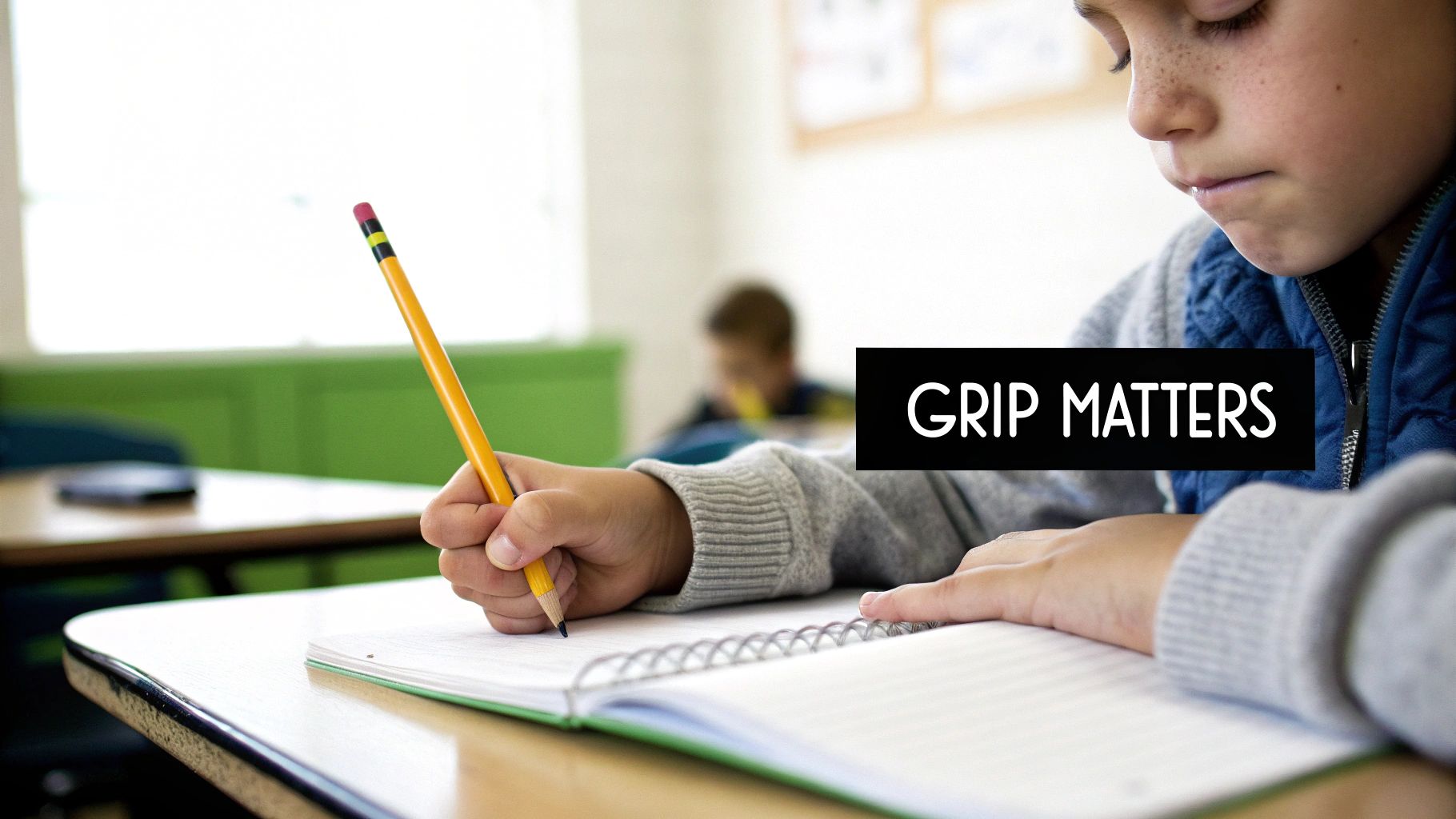
The Foundation for Academic Confidence
A proper pencil grasp isn't just about achieving tidy handwriting; it's about endurance and ease. It's what lets a child finish their homework without their hand cramping up, join in fully with classroom activities, and ultimately, feel good about their own abilities.
Nailing these foundational skills early on is a massive part of getting ready for school. You can dive deeper into this with our guide on school readiness activities.
Here in Australia, developing fine motor skills is a huge focus in early education for good reason. Research shows that by ages six to seven, about 90% of children have settled into a mature pencil grip like the dynamic tripod. This type of grip is consistently linked to better handwriting control and comfort. This guide will walk you through the different types of pencil grips out there and show you how to best support your child on their developmental journey.
A Child’s Pencil Grip: The Natural Journey from Fist to Fingers
A child’s pencil grip doesn’t just happen overnight. It’s a fascinating developmental journey that follows a fairly predictable path, unfolding in stages as their hand muscles get stronger and their coordination sharpens. It all kicks off with those first clumsy, joyful attempts to hold a chunky crayon.
One of the very first grips you'll spot is the Palmar Supinate Grasp, which usually shows up between 12 and 18 months. Picture a toddler clutching a crayon in a tight fist, much like they'd grab a dagger. At this stage, all the movement comes from the shoulder, resulting in big, bold, sweeping marks across the page. It's the perfect starting point for their creative adventures.
From Whole-Hand to Fingertip Control
As they grow, you'll see their grip start to change. Between the ages of 2 and 3, many toddlers shift to the Digital Pronate Grasp. Now, you'll see all their fingers and thumb wrapped around the pencil, with their palm pointing down towards the paper. Movement is still coming from the bigger joints like the elbow and shoulder, but it's a definite sign that their fine motor skills are starting to wake up.
Next up, usually around 3 to 4 years old, kids often adopt a Static Tripod or Quadrupod Grasp. This is a huge milestone! It’s the first time their fingers really start to lead the way. In a static grip, the fingers hold the pencil in a fixed position, and the movement for drawing or writing comes from the wrist and forearm. It might look a bit stiff, but it shows those small hand muscles are building the strength needed for more detailed work later on.
Remember, this progression is completely natural. Trying to force a child into a "perfect" grip before they're developmentally ready can do more harm than good. The real goal isn't textbook perfection; it's helping them find a functional, comfortable, and pain-free way to write and draw.
Finding a Functional Grip for the Long Haul
Finally, between the ages of 4 and 5, many children naturally find their way to the Dynamic Tripod Grasp. This is what most people picture as the "correct" grip, where the pencil is controlled by the thumb and index finger while resting gently on the middle finger. What makes it "dynamic" is that the small, precise movements for writing come directly from the fingers themselves. This allows for fantastic control and helps prevent their hand from getting tired.
But it's important to know that a "perfect" tripod isn't the only way to write well. Lots of kids and adults use a Dynamic Quadrupod Grasp (using four fingers instead of three) and write just as beautifully and comfortably. The true test of a good grip is simple: does it allow for clear, legible writing without causing pain or fatigue?
Understanding these stages helps you appreciate the incredible journey your child is on, allowing you to support their development without putting on any unnecessary pressure.
Before we move on, here’s a quick table summarising how these milestones typically unfold. It's a handy reference, but remember that every child develops at their own unique pace.
Pencil Grip Developmental Milestones
| Age Range (Approx.) | Grip Type | Description |
|---|---|---|
| 12–18 months | Palmar Supinate Grasp | The pencil is held in a fisted hand, like holding a dagger. Movement comes from the shoulder. |
| 2–3 years | Digital Pronate Grasp | All fingers are wrapped around the pencil with the palm facing down. Movement is led by the elbow. |
| 3–4 years | Static Tripod/Quadrupod | The pencil is held with 3-4 fingers, but the fingers are held rigidly. Movement comes from the wrist. |
| 4–5+ years | Dynamic Tripod/Quadrupod | The pencil is controlled by the fingertips, allowing for precise and fluid movements for writing. |
This table gives you a great bird's-eye view of the developmental sequence. Seeing how a child progresses from a whole-hand grasp to refined finger movements really highlights the amazing fine motor development happening in those early years.
The Common Pencil Grips We See Every Day
As toddlers move beyond those early, full-fisted scribbling stages, their grasp starts to look more like the one they'll use for years to come. This is when we begin to see a few common pencil grips emerge. The goal isn't to label one as "right" and another as "wrong," but to understand what makes a grip work for the child using it.
The Dynamic Tripod: The Classic Grip
Most of us were taught the Dynamic Tripod Grip. It's often seen as the go-to standard for a reason. With this grip, the pencil rests comfortably between the thumb and index finger, supported by the middle finger underneath. This creates a perfect little tripod, giving the writer both stability and the freedom to make tiny, precise movements with their fingertips. It's an efficient hold that generally leads to neat handwriting without tiring the hand out too quickly.
The Dynamic Quadrupod: An Equally Good Four-Finger Grip
But the tripod isn't the only star of the show. Many kids naturally settle into a Dynamic Quadrupod Grip, where they use the thumb and three fingers to hold the pencil. Think of it as adding an extra leg to the stool for a bit more support. For many children, this four-finger grip is just as effective and comfortable, still allowing those all-important fine finger movements needed for smooth letter formation.
The most important thing to remember is that function trumps form. If a child is writing happily and clearly with a quadrupod grip, there's absolutely no reason to force them into a tripod.
A functional grip is simply one that works. It allows a child to move their fingers to control the pencil, write neatly, and do so without pain or getting tired. Comfort and efficiency are what we're aiming for, not a picture-perfect ideal.
This image beautifully shows the natural progression kids often take, from a whole-hand grasp to a much more refined, finger-driven grip.
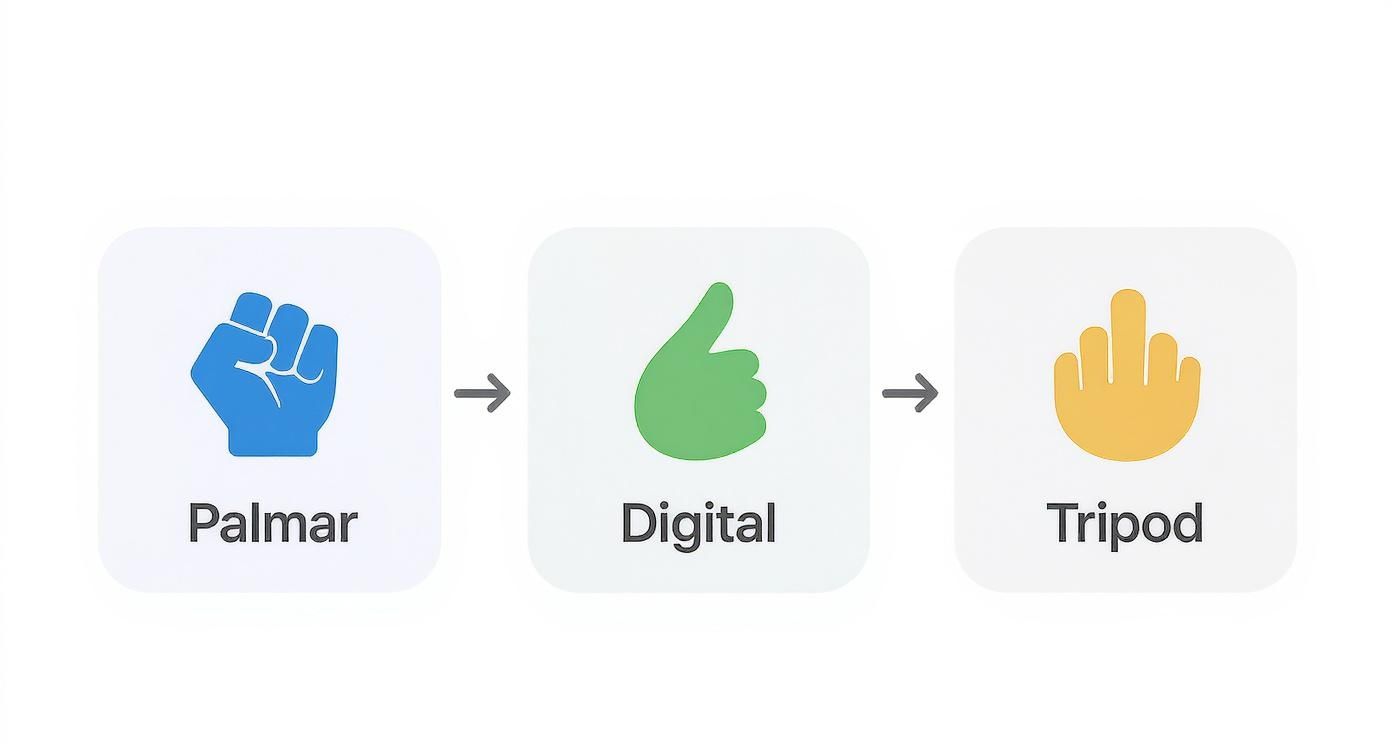
You can really see the shift from big arm movements in the palmar grasp to the delicate control needed for the mature tripod grip.
Common Grips That Can Be Less Efficient
While we focus on function, some common grips can cause problems down the road. It helps to know what they look like.
- Lateral Tripod Grip: Here, the thumb crosses over the pencil to brace against the side of the index finger. This simple shift can lock the thumb joint, making it harder for the fingers to move freely and often resulting in a much tighter, more tiring hold.
- Thumb-Wrap Grip: This is a very tight grip where the thumb wraps all the way over the index finger. It severely restricts finger movement, which means the wrist and even the whole arm have to take over. This can lead to hand cramps and fatigue in no time.
What makes these grips less effective really comes down to biomechanics. A proper analysis of movement shows that efficient writing relies on small, dynamic finger adjustments. Inefficient grips stop these movements from happening. Instead of the fingers doing the delicate work, the bigger muscles in the wrist and arm are forced to compensate. It’s a bit like trying to paint a tiny detail with a house-painting roller—it’s just not the right tool for the job, and the result is often messy, laboured writing and a very sore hand.
Not every unusual pencil grip is a cause for alarm. The real question isn't "Does it look right?" but rather "Does it work?". The true test is whether the grip allows a child to write comfortably and clearly without getting in their way.
Knowing what to look for can help you figure out when a little extra support is needed and when it might be time to call in an expert.
The most straightforward sign of a problematic grip is physical discomfort. If a child often complains about their hand, wrist, or fingers aching after writing for a short time, that’s a clear red flag. You might also notice their knuckles turning white from gripping the pencil too tightly.
Key Signs of an Inefficient Grip
Beyond outright pain, there are other, more subtle clues that a grip isn't working as well as it could. An inefficient grip often makes the body compensate in ways that just aren't sustainable for long writing sessions. Understanding the long-term health implications, and knowing how to prevent repetitive strain injury, is vital for catching and correcting these habits early on.
Keep an eye out for these tell-tale signs:
- Excessive Pressure: The child presses down so hard that the pencil lead snaps, or they rip right through the paper. This usually means they're using their whole arm to apply pressure instead of relying on their fingers for fine control.
- A "Hooked" Wrist: You'll see the wrist bent at an odd angle, almost curled inwards. This posture puts a lot of strain on the wrist and restricts the smooth, fluid movements needed for good handwriting.
- Slow or Laboured Writing: The child writes very slowly and carefully, but their letters still look shaky or uncontrolled, no matter how hard they try.
- Quick Fatigue: They tire out after writing just a few words or sentences. This often leads to them avoiding writing tasks altogether.
When to Observe and When to Act
Seeing one or two of these signs doesn't mean you need to panic. A child's hand muscles are often still developing, and sometimes all they need is more time and some fun, hands-on activities to build strength.
However, if these issues stick around and start to knock their confidence or impact their schoolwork, it might be time to intervene. Handwriting skills are a huge focus in Australian schools, a fact reflected in the local market. Schools make up nearly 48% of sales for pencil grips and related tools, showing a widespread effort to support children facing these exact challenges.
If you consistently notice several of these red flags, especially if your child is at school and struggling to keep pace, consulting an occupational therapist is a really smart move. They can offer a professional assessment to pinpoint any underlying issues, like weak fine motor skills or sensory processing difficulties.
Finding the Right Adaptive Pencil Grip and Tools
When a child’s grasp on a pencil isn't quite clicking, an adaptive pencil grip can be a brilliant little tool. It's designed to gently guide their fingers into a more comfortable and effective position, making the whole act of writing feel a lot more natural.
Think of these grips as training wheels for handwriting. They’re not about forcing a single “correct” hold but offering temporary support. The real magic happens as they help build muscle memory, encouraging a functional grip that works for the child long-term. The trick is to match the grip to the specific challenge your child is facing.
Choosing Grips That Solve a Problem
Adaptive grips aren't a one-size-fits-all solution. Each one is engineered to tackle a particular handwriting hurdle. By figuring out the root of the struggle, you can pick a tool that offers precisely the right kind of support. This makes the grip a helpful guide, not just another thing to get in the way.
Here’s a look at some common types and the issues they help with:
- For Finger Placement: Grips like the Tripod Grip or Stetro Grip are fantastic for this. They have moulded spots that show a child exactly where their thumb, index, and middle fingers should rest. They’re perfect for kids who are just getting the hang of a tripod or quadrupod grasp.
- For Thumb-Wrapping: If you see a thumb crossing over the index finger, the Crossover Grip is a game-changer. It has a special "wing" that physically blocks the thumb from wrapping, encouraging that open web space needed for fluid letter formation.
- For Too Much Pressure: For kids who grip the pencil with white knuckles, a soft, squishy grip like a Foam Grip can work wonders. It provides gentle sensory feedback and cushions the fingers, often helping them relax their hold and reduce hand fatigue.
Grabbing a simple pack of varied pencil finger grips is often a great way to start. It lets you and your child experiment to see what feels most comfortable and actually helps.
The goal of an adaptive grip is to make writing more comfortable so the child can focus on their ideas, not on how their hand feels. It's a supportive tool, not a long-term fix, designed to build confidence and skill.
Beyond Grips: Creating a Supportive Writing Environment
Helping a child with their handwriting often means looking beyond the pencil itself. Creating a calm, focused environment can make a world of difference, especially for children with sensory sensitivities. A holistic approach looks at the child’s overall comfort and regulation, which frees them up to learn.
Think about bringing in other tools to build a complete support system. These aids can help with posture, focus, and sensory needs—all of which are the bedrock of successful writing.
- Weighted Lap Toys: For kids who find it hard to sit still, a weighted animal toy on their lap can provide calming deep pressure. This grounding input often improves focus and body awareness during seated activities like writing.
- Slant Boards: Simply writing on an angled surface can naturally improve wrist position and posture. It's a simple adjustment that can reduce strain on the arm and hand, leading to better pencil control.
- Fidgets: For restless hands, a quiet fidget tool can offer just enough sensory input to keep the brain engaged without becoming a distraction. This is particularly helpful for children who need to move a little to concentrate.
Fun Activities to Build Strong Handwriting Skills
The best way to improve a pencil grip often has nothing to do with a pencil at all. It might sound a bit backwards, but before a child can master those fine, controlled movements for writing, they need to build up strength in the tiny muscles of their hands and fingers. Play-based activities are the perfect, low-pressure way to develop this crucial foundation.
Engaging in fun, hands-on tasks helps build the pincer grasp (that all-important pinch between the thumb and index finger) and boosts overall hand strength. These skills translate directly into better pencil control and the stamina they'll need for writing in the classroom. The real goal is to support their development in a way that just feels like play.
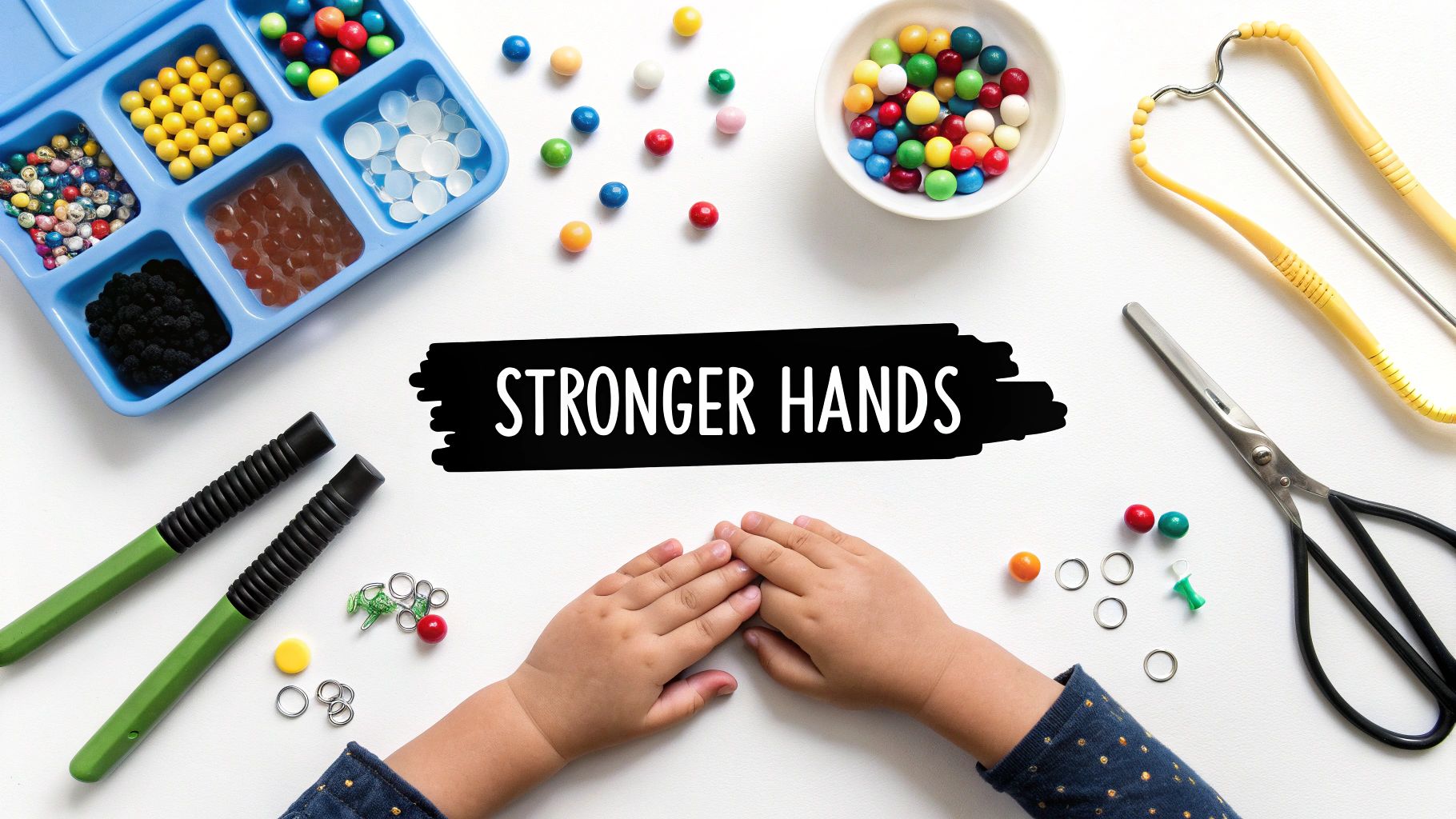
Playful Ways to Boost Fine Motor Skills
Turning muscle-building into a game is the secret to keeping kids motivated. Activities that get them squeezing, pinching, and carefully handling small objects are incredibly effective.
For instance, squeezing and rolling therapy putty is a fantastic way to strengthen the entire hand. You can find excellent options for hand exercise putty that come in different resistance levels, so you can perfectly match it to your child's needs.
Here are some other simple yet powerful ideas:
- Tweezing and Sorting: Hand your child a pair of kid-safe tweezers and a bowl of pom-poms or chunky beads. Ask them to sort the items by colour into an ice cube tray. This action directly mimics and strengthens the pincer grasp.
- Threading and Lacing: Threading beads onto a string or using lacing cards is brilliant for precise finger movements and hand-eye coordination.
- Building with Blocks: Creating towers with blocks like Magnatiles encourages a whole range of different grasps and really develops dexterity as kids carefully place each piece.
- Playdough and Clay: Kneading, rolling, and pinching playdough is a classic for a reason! It works all the small muscles in the hands and fingers, preparing them for the demands of writing.
By focusing on these foundational activities, you're not just distracting your child with a fun task. You are actively building the neuromuscular pathways and physical strength required for a comfortable and efficient pencil grip.
Integrating Strengthening into Daily Routines
The great news is you don't need to carve out special "therapy time" to work on these skills. Opportunities to build hand strength are woven into everyday life.
Simple household chores can be fantastic for fine motor development. Let your child help spray and wipe a table—squeezing the trigger is great for hand strength! Or, get them to use pegs to hang up socks on a clothesline. Even simple things like helping to tear lettuce for a salad or knead dough for baking contribute to stronger hands.
When these activities become a natural part of your daily routine, your child builds those essential skills without even realising they're "working" on them.
Your Pencil Grip Questions, Answered
Let's clear up some of the common questions that pop up when you're trying to find the right way to support a developing writer. We hear these a lot from parents and teachers, so you're not alone in wondering!
At What Age Should My Child Have a Tripod Grip?
There really isn't a "magic number" when it comes to age. Instead of watching the calendar, it's far more useful to think in terms of a developmental timeline.
Most kids start to naturally figure out an efficient tripod or quadrupod grip sometime between four and six years old. But remember, everyone gets there at their own speed. The real goal is a functional grip—one that allows for comfortable and readable writing without causing hand cramps. As long as they're heading in that direction, they're doing just fine.
Is It Possible for an Adult to Change Their Pencil Grip?
Absolutely, but it’s a commitment! An adult’s writing style is a deeply ingrained habit, locked into muscle memory after decades of use. Trying to change it means consciously retraining those muscles, which will almost certainly feel strange and even slow things down at first.
If your current grip isn't causing any pain, strain, or fatigue, there’s usually no compelling reason to change it. If you do want to make a switch, adaptive grips and hand-strengthening exercises can make the process smoother.
Are Specialised Pencil Grips a Cure-All?
Pencil grips can be brilliant tools, but they’re not a one-size-fits-all solution. They work best when the problem is purely about finger placement—for example, guiding a child away from wrapping their thumb over the pencil or tucking their fingers under.
But if the root cause is weak hand muscles or shaky fine motor skills, a grip is just a band-aid. In that situation, you’ll see much better results from building foundational strength through play. Activities like squishing therapy putty, threading beads, or even using quality fidgets do wonders for strengthening the small muscles in the hand. A stronger hand can hold a pencil correctly, with or without a special grip.
At Sensory Poodle, we know that helping a child thrive is a journey, not a race. We've curated a collection of sensory tools and educational toys designed to build those foundational skills, creating strong, confident writers for life.