


A Parent's Guide to Baby Noise Cancelling Headphones

The world is a loud, bustling place. For adults, most of it is just background noise, but for a baby's sensitive, developing ears, it can be completely overwhelming. This is where baby noise-cancelling headphones, or ear defenders, come in. They’re a simple but brilliant tool designed to shield your little one from stressful sounds, creating a peaceful bubble that prevents sensory overload and protects their delicate hearing right from the start.
Why Your Baby's Hearing Needs Protection
A baby’s world is a whirlwind of new sights and sounds, but their auditory system is still under construction. Their ear canal is much smaller than an adult's, which actually amplifies sound. This means everyday noises—the vacuum cleaner, a busy café, even a cheerful family get-together—can sound far more intense to them than they do to you.
This heightened sensitivity makes them incredibly vulnerable to auditory stress. It's not just about the long-term risk of hearing damage from loud environments. In the short term, too much noise can lead to sensory overload. When a baby gets overstimulated, they become fussy, agitated, and find it hard to settle or sleep. It’s their only way of telling you, "This is too much for me."
The Rise of Auditory Safety Awareness
Understanding this vulnerability is the first step. Thankfully, more and more parents are realising that protecting their baby's hearing is a vital part of their overall wellbeing. This shift in awareness has led to a huge growth in the market for children's hearing protection.
Globally, the children’s headphone market is expected to jump from USD 1.2 billion in 2023 to around USD 2.9 billion by 2032, with noise cancelling earmuffs for kids at the forefront of this trend. Here in Australia, parents are looking for ways to create calm, undisturbed environments for sleeping or learning, even when out and about on noisy public transport. You can learn more about the growing market for kids' headphones and its drivers.
Grasping how different stimuli affect babies is key. For example, parents who deal with their own sensory challenges are often especially tuned in to their baby's needs. Diving into topics like sensory issues in parenting can offer some really valuable perspectives and reinforces just how important a calm auditory space is.
A Proactive Tool for Comfort and Calm
It helps to think of baby ear defenders as an essential piece of your parenting kit, right up there with a car seat or a sun hat, rather than just an optional accessory. They offer a straightforward, effective solution to a complex sensory challenge.
By managing the auditory environment, you aren't just preventing discomfort; you are actively nurturing a sense of security and calm for your child. This supports their emotional regulation and helps make new experiences feel positive instead of intimidating.
At Sensory Poodle, we know that protecting your little one is your number one priority. That’s why we’re so passionate about tools that support your child’s sensory journey from day one. These simple earmuffs give you the confidence to navigate the world together, knowing your baby feels safe and secure, no matter where your adventures take you. Taking this proactive approach helps build a foundation of comfort that can make a world of difference in their early development.
How Do These Headphones Actually Work?
Figuring out how baby noise cancelling headphones protect your little one’s ears isn't as complex as it sounds. It’s not high-tech wizardry, but rather simple, effective science. Think of it more like a well-built, cosy fortress for their ears. The goal is simply to turn down the volume of the outside world before it reaches those tiny, sensitive eardrums.
There are two main ways headphones can create that pocket of peace and quiet: passive noise isolation and active noise cancellation (ANC). When it comes to babies and toddlers, one of these methods is the clear winner for both safety and effectiveness.
This little flowchart sums up the basic idea behind hearing protection for our littlest ones.
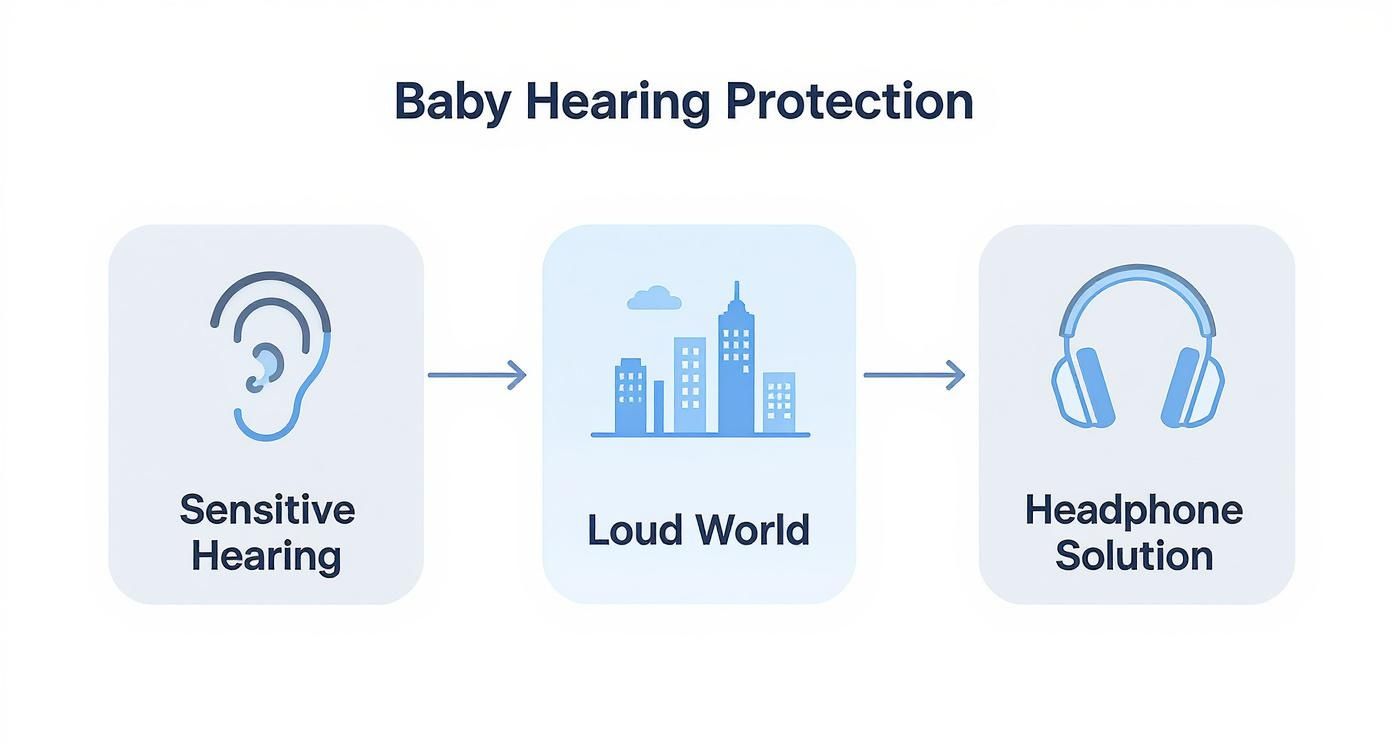
It maps out the simple journey: we know babies have sensitive hearing, we know the world is loud, and we know headphones offer a direct solution.
Passive Noise Isolation: The Soundproof Wall
Passive noise isolation is the technology you’ll find in almost all earmuffs designed for babies and kids. The concept is refreshingly simple.
Imagine building a soundproof wall around your baby’s ears. That’s precisely what passive earmuffs do. They rely on physical materials to create a solid barrier that literally blocks sound waves from getting through.
Here’s what makes them work:
- Solid Ear Cups: The hard outer shells act as the first line of defence, physically deflecting a huge chunk of noise.
- Soft, Dense Foam: Tucked inside the cups are layers of sound-absorbing foam. They act like a sponge, trapping and muffling any sound waves that manage to sneak past the outer shell.
- A Snug Seal: The soft, padded cushions are designed to fit snugly around the ear, creating an airtight seal that stops sound from leaking in around the edges.
This whole process requires no batteries, no electronics, and no complicated bits and pieces. It’s a purely physical solution, which is exactly why it’s the safest and most recommended choice for infants. Simple, reliable, and always ready to go.
Active Noise Cancellation: The Noise-Eating Pac-Man
Active Noise Cancellation (ANC) is a completely different kettle of fish. If passive isolation is a wall, think of ANC as a tiny, noise-eating Pac-Man living inside the headphones.
ANC headphones use tiny microphones to listen to the ambient noise around you. A small computer chip then instantly creates an opposite sound wave—a sort of "anti-noise." When these two sound waves meet, they cancel each other out, essentially erasing the sound before you even hear it. It’s fantastic technology for dealing with consistent, low-frequency sounds like the drone of an aeroplane engine or the hum of an air conditioner.
However, ANC is less effective against sudden, sharp noises like a dog barking or a firework going off. Critically, it also needs batteries to power all that electronic wizardry. While it’s generally safe for older kids and adults, most parents prefer the simplicity and electronic-free design of passive earmuffs for their babies.
Deciding between the two can feel technical, but it really comes down to your child's specific needs and environment. This table breaks it down.
Passive vs Active Hearing Protection: A Quick Guide for Parents
| Feature | Passive Noise Isolation (Earmuffs) | Active Noise Cancellation (ANC) |
|---|---|---|
| How It Works | Uses physical materials (foam, solid cups) to block sound. | Uses electronics (mics, speakers) to create "anti-noise" to cancel sound. |
| Power Source | None required. Always on and ready to go. | Requires batteries or a rechargeable power source to function. |
| Best For... | Blocking sudden, loud, and high-frequency noises (e.g., sirens, fireworks, crowds). | Reducing consistent, low-frequency background hum (e.g., plane engines, air con). |
| Safety for Babies | The safest option. No electronic components or batteries near the head. | Generally considered safe, but parents often prefer a non-electronic solution for infants. |
| Cost | Typically more affordable and budget-friendly. | Generally more expensive due to the complex internal technology. |
Ultimately, while ANC is a great feature for an adult's daily commute, a baby's needs are best met with the robust, physical barrier of passive earmuffs.
For infants, the most reliable and safest choice is passive noise isolation. It provides excellent protection against the sudden, loud noises that are most likely to startle them, without any electronic components near their developing heads. This approach is fundamental to creating secure sensory spaces for little ones.
Understanding this distinction is the key to choosing with confidence. This physical-barrier method is also perfect for focused environments like a sensory classroom, where blocking out distracting, sharp sounds is absolutely crucial for learning and comfort.
Your Safety and Comfort Checklist
When it comes to choosing the right hearing protection for your little one, how well the earmuffs block sound is only half the story. The other, equally important half is safety and comfort. After all, if the earmuffs pinch, squeeze, or just feel weird, your baby isn't going to wear them. Simple as that.
Let’s walk through the essential things to look for so you can feel completely confident you’re making the right choice.
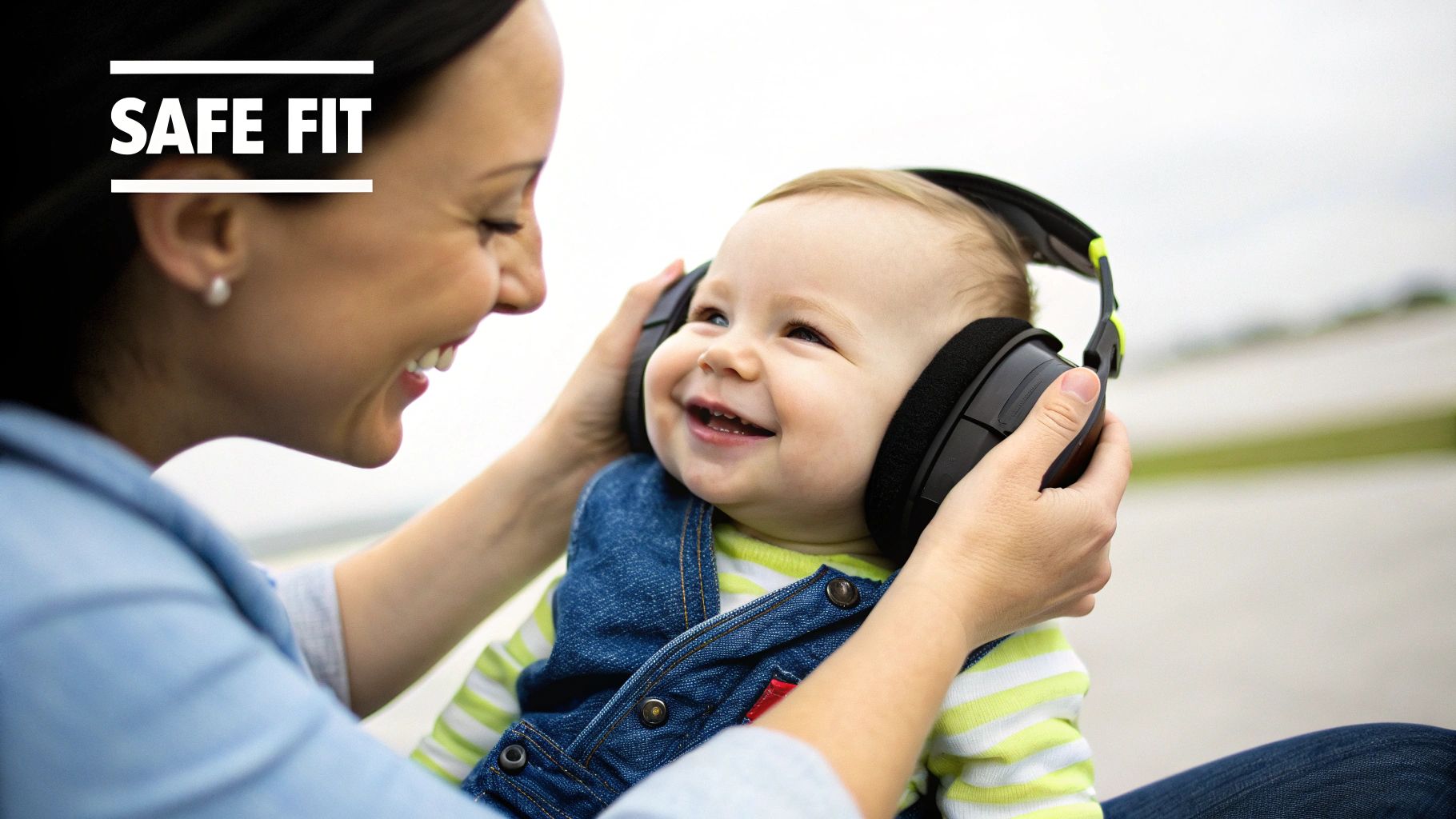
This focus on both protection and comfort is a big reason why the market for noise-cancelling headphones in Australia is growing so quickly. In fact, it's projected to expand at a rate of about 13.47% each year between 2025 and 2033. Parents are becoming more aware of the impact of urban noise and are actively seeking out comfortable, effective solutions for their kids.
Decoding Safety Certifications
Flipping over a product box and seeing a string of letters and numbers can feel like you're trying to decipher a secret code. But those certifications are your single best clue that a product is legitimate and safe. They're a non-negotiable seal of approval, telling you the earmuffs have been properly tested by independent experts.
Here are the key ones to keep an eye out for:
- CE Mark (Conformité Européenne): This is a big one. It means the product meets the European Union’s strict standards for safety, health, and environmental protection. It's a globally recognised benchmark for quality.
- ANSI S3.19 (American National Standards Institute): This is the American standard for hearing protection. It confirms that the product’s claimed Noise Reduction Rating (NRR) is accurate and that it actually performs as promised.
- EN 352-1 (European Standard): Think of this as the European version of the ANSI standard, specifically for earmuffs. It guarantees the product has passed tough tests for build quality and sound-blocking ability.
- BPA-Free Materials: This is crucial. Always make sure the materials are non-toxic and free from Bisphenol A (BPA), so you know nothing harmful is touching your baby’s delicate skin.
Looking for these labels should be your first step. It's proof that the manufacturer has gone the extra mile to get their product independently verified. It’s your peace of mind in a label.
The Perfect Fit: A Gentle but Secure Seal
Once you've ticked the safety certification box, it's time to focus on fit. A pair of earmuffs that fits just right provides the best possible sound protection and, most importantly, will actually be worn by your baby without a fuss.
Here's what to look for to get that perfect, comfy fit:
- An Adjustable Headband: Babies grow at an incredible pace. A soft, padded headband that’s easy to adjust is a must. It means the earmuffs can grow with your child, giving you months or even years of use.
- No Unnecessary Pressure: The headband should rest gently and distribute its weight evenly across the top of the head, carefully avoiding the soft spot (fontanelle). Many baby-specific designs, like the SoftSounds Earmuffs, use a wider, softer band specifically to achieve this gentle fit.
- Deep Ear Cups: The cups should be roomy enough to fit completely over the ear, not press against it. This creates a comfortable little pocket of space for your baby’s ears.
- Soft, Pliable Cushions: The foam or gel cushions that sit against your baby’s head need to be soft. They create the seal that blocks out the noise, but they have to do it without squeezing or pinching.
When and Where to Use Baby Ear Defenders
Knowing all the technical bits and safety checks for baby noise cancelling headphones is a great start. But the real magic happens when you know exactly when to pop them on. This is what transforms them from just another piece of baby gear into an absolute must-have in your daily toolkit.
Think of them as creating a little bubble of peace for your baby in a world that’s often just too loud. Let's look at some of the common, and not-so-common, places where they can be a total lifesaver.
Everyday Outings Made Easy
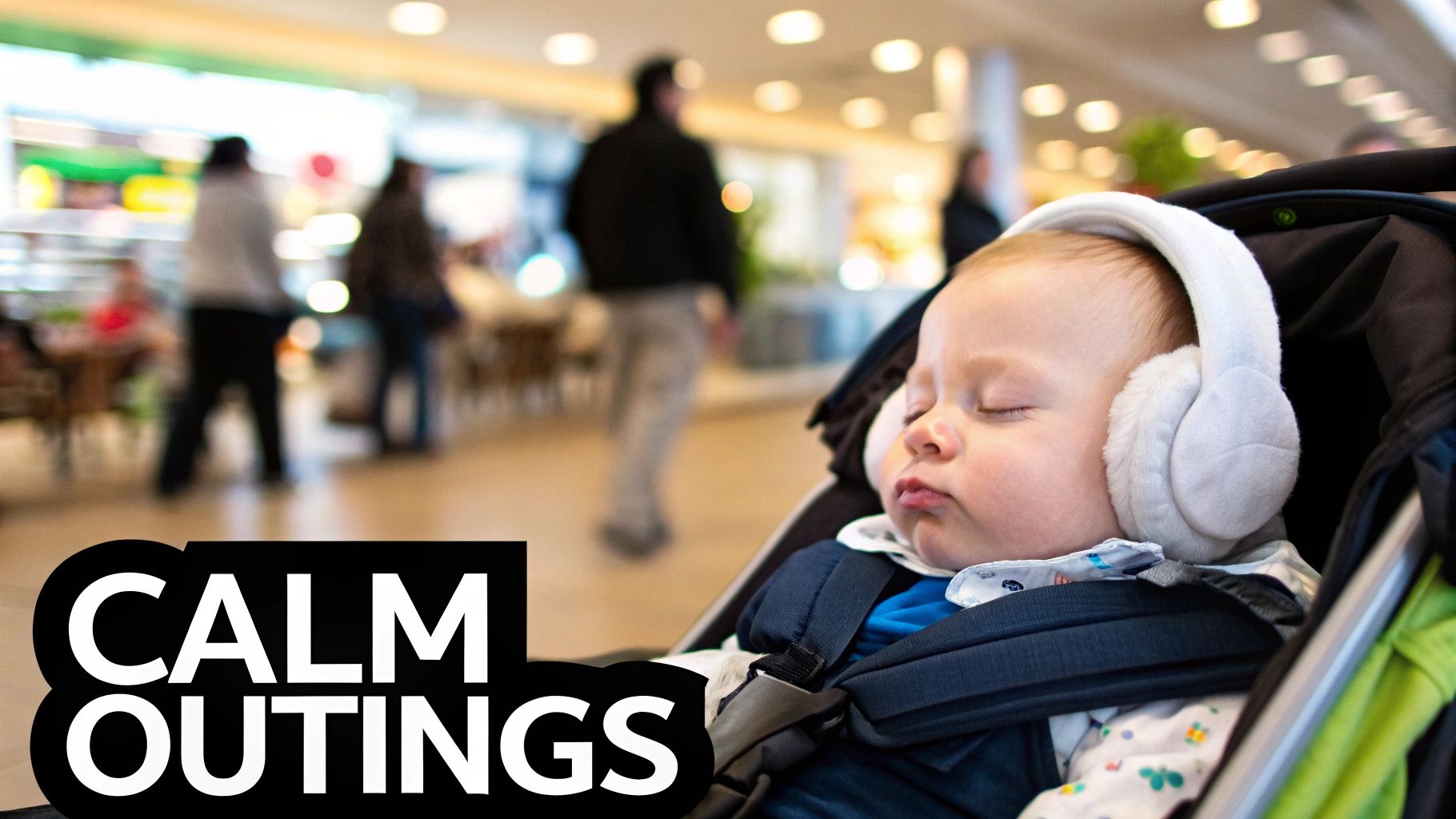
Take a moment to listen to the soundtrack of your next trip out. The screech and clatter of trolleys at the supermarket, the sudden roar of a coffee grinder at your favourite café, the sheer buzz of a busy shopping centre – it can be a lot, even for us. For a baby’s developing brain, which can't filter these sounds out yet, it can be completely jarring.
- The Supermarket Run: Those unexpected checkout beeps, loud PA announcements, and rattling trolleys can easily cause sensory overload. A simple pair of earmuffs can turn a potentially stressful errand into a nice, calm experience.
- Cafes and Restaurants: The constant clinking of cutlery, booming conversations, and background music can make it nearly impossible for a little one to relax or nap. With ear defenders on, your baby can snooze peacefully while you actually get to enjoy your coffee.
- Public Transport: The sudden squeal of a train's brakes or the deep rumble of a bus engine can really startle an infant. The headphones act as a consistent buffer against these unpredictable interruptions.
Big Events and Family Gatherings
Life is full of celebrations, and there’s no reason you and your baby should have to miss out. From weddings to birthday parties, these events are wonderful but also famously noisy.
A family wedding, for instance, is a classic example. You've got loud music, cheering, and dozens of people talking all at once. For a baby, that's a perfect recipe for overstimulation. Ear defenders let your bub be part of the fun without getting overwhelmed, so you can celebrate with your loved ones without constantly searching for a quiet corner.
The same goes for major public events. Think about fireworks displays – they're exciting for older kids, but the sudden, explosive sounds can be downright terrifying for a baby. In situations like that, protecting their sensitive ears is simply non-negotiable.
Travel Adventures Near and Far
Travelling with a baby comes with its own set of challenges, and managing their sound environment is a big one. Aeroplanes are a prime example; that constant, loud drone of the engines is incredibly unsettling and can make it almost impossible for a baby to sleep.
Slipping on a pair of ear defenders can be a great cue for nap time, blocking out the engine hum and making the flight more comfortable for everyone on board. If you're planning any trips, adding ear defenders to your infant travel packing list is a smart move for protecting those little ears.
"A calm baby is a happy baby. By proactively managing their sensory input in loud places, you're not just preventing a meltdown; you're teaching them that the world is a safe, manageable place."
Supporting Sensory Sensitivities
For neurodivergent children or any little one with sensory processing sensitivities, the value of ear defenders is even greater. Everyday sounds that most people barely notice can feel intensely uncomfortable, sometimes even painful.
In these situations, ear defenders become a vital tool for self-regulation. They help prevent the auditory overwhelm that can trigger meltdowns, which allows a child to stay calm and engaged in environments that might otherwise be completely intolerable. They offer a reliable sense of control in a world that can feel very unpredictable.
Keeping Your Headphones Clean and Safe
A little bit of care goes a long way in making sure your baby noise-cancelling headphones stay hygienic, effective, and safe for years. Just like any other piece of baby gear, regular cleaning stops germs and dirt from building up, and a quick check-up ensures they’re still providing the best possible hearing protection.
Think of it as part of your routine. A clean, well-maintained pair of ear defenders becomes a trusted tool you can rely on. This simple upkeep means they're always ready to create a peaceful bubble for your little one, whether you're at home or out and about.
Simple Cleaning Steps
Keeping the headphones clean is refreshingly simple. You won't need any harsh chemicals or complicated cleaning kits—a gentle touch is all it takes to keep them in top shape.
- Wipe Down Surfaces: Grab a soft, damp cloth with a tiny bit of mild, baby-safe soap (or even a simple mix of water and white vinegar). Gently wipe down the headband and the outside of the ear cups.
- Clean the Cushions: Give the ear cushions some extra attention, as this is where sweat and natural oils can gather. Wipe them thoroughly, but be careful not to get them soaking wet.
- Air Dry Completely: After wiping them down, let the headphones air dry completely before you put them away. This stops any moisture from getting trapped, which could lead to mould or mildew.
A quick word of warning: never dunk the headphones in water. This can wreck the sound-dampening foam inside. For more handy tips, take a look at our guide with 4 tips for keeping sensory toys clean and hygienic.
Storage and Monthly Check-Ups
How you store the headphones is just as important as how you clean them. Simply tossing them into a jam-packed nappy bag can cause cracks in the ear cups or stretch out the headband, which reduces how well they work.
When they’re not being used, pop the ear defenders into a clean, dry bag or their original case. This protects them from dust, dirt, and being squashed, making sure they’re ready for your next adventure.
Try to set a reminder to give them a quick look-over once a month. It’s a simple habit that helps you spot any little issues before they become bigger problems.
Your Monthly Check-Up List:
- Inspect the Ear Cushions: Look for any signs of cracking, hardening, or flattening. The cushions need to stay soft and plump to create that all-important seal around the ear.
- Check the Headband: Does it still feel snug? Check for any loss of tension. The band should feel secure, not loose or stretched out.
- Examine the Ear Cups: Make sure there are no cracks or other visible damage on the outer plastic shell.
By following these straightforward cleaning and maintenance tips, you can be confident your baby’s ear defenders are providing consistent, reliable protection every single time. It's a small effort that adds lasting value and peace of mind.
Finding the Right Support at Sensory Poodle
Trying to find the right sensory tools can feel like a huge task, but we believe getting the support you need shouldn't be. Here at Sensory Poodle, we see ourselves as more than just a shop—we're here to walk alongside you on your child's sensory journey. We hand-pick solutions like our baby noise cancelling headphones because we’ve seen first-hand the incredible difference they can make to a child's comfort and well-being.
It all starts with quality. Every pair of kids’ earmuffs on our shelves has been chosen for its proven safety, durability, and, most importantly, comfort. Let's be honest, if they aren't gentle and easy for a child to wear, they just won't get used. That’s why so many Australian families trust our range to protect their little ones’ hearing, no matter where they are.
More Than Just a Product
As a family-owned business, we're woven into the sensory community ourselves. Our focus is on providing real, practical support for parents, carers, and therapists. We know the ins and outs of getting access to the right tools, which is why we've made our purchasing options as straightforward as possible, including easy NDIS funding for eligible participants.
We also have educators and clinicians in mind. For those building supportive spaces for children, we offer special packs for classrooms and clinics. It's our way of making it a little bit easier to create those essential calming corners and inclusive learning environments, ensuring every child has the tools they need to truly thrive.
Being a partner means understanding the whole picture. We recognise that hearing protection is often one piece of a larger sensory support system. A calm auditory environment works hand-in-hand with other tools that promote regulation and security.
Creating a Complete Sensory Toolkit
For many kids, layering different types of sensory support is what really works. The peace and quiet offered by noise-cancelling earmuffs can be beautifully complemented by other calming inputs. Imagine, for example, the gentle, deep pressure from one of our sensory swings helping a child feel grounded and secure after a busy, stimulating outing.
In the same way, our weighted blankets give that comforting, hug-like feeling that can soothe an overstimulated nervous system, making them a fantastic tool for winding down at the end of the day. By combining these resources, you're not just buying products; you're building a holistic support system that addresses your child's unique needs from all angles. For a deeper look at this, have a read of our article on how all sensory needs are covered here at Sensory Poodle.
This isn't just our observation; it's part of a bigger picture. The Australian headphones market hit around AUD 374.30 million in 2024, with a growing focus on health and safety really pushing that trend. As more parents look for ways to shield their babies from high decibel levels, the demand for quality hearing protection has become a key part of this market growth. At Sensory Poodle, we’re proud to provide trusted, high-quality solutions that meet this important need, helping you build a safer, more comfortable world for your child.
A Few Common Questions
When you're looking into something new for your little one, it's natural to have questions. We get it. Here are some of the most common things parents ask us about baby ear defenders, with straightforward answers to give you complete peace of mind.
At What Age Can My Baby Start Wearing Them?
Generally, most baby earmuffs are designed to be safe for infants from three months old. The real secret is finding a pair made specifically for babies. These will have a soft, adjustable headband that sits gently on their head without putting any pressure on their still-developing skull.
Before you buy, always check the manufacturer's age guidelines. When you try them on your baby, you're looking for a snug fit, but not a tight one. For newborns younger than three months, we always recommend having a quick chat with your paediatrician first.
Are These Headphones Genuinely Safe for My Baby?
Absolutely, as long as you're using the right kind and fitting them properly. The headphones we're talking about are what’s known as ‘passive noise-cancelling’ headphones, or more simply, ear defenders. They are incredibly safe.
They work by creating a simple physical seal around the ear to muffle sound—no electronics, no waves, nothing active. This purely mechanical approach is why they're the only recommended choice for babies. To be extra sure, look for earmuffs that meet Australian safety standards (like EN352-1) and are made from non-toxic, BPA-free materials. Think of them as a safety tool, like a car seat, but for their sensitive ears.
Can My Baby Sleep While Wearing the Headphones?
Yes, and many parents swear by them for helping their baby nap in noisy places, like on a plane or during a bustling family get-together. The golden rule, however, is that your baby must be supervised at all times while wearing them.
Make sure the fit is comfortable and doesn't restrict their movement. When it comes to unsupervised sleep, like overnight in their cot, it's crucial to stick to safe sleeping guidelines. That means removing all headwear, including any headphones.
How Do I Know if It’s Too Loud for My Baby?
Here’s a great rule of thumb: if you find yourself needing to raise your voice to chat with someone just a metre away, it’s probably too loud for your baby. Any noise over 85 decibels (dBA)—think of a loud vacuum cleaner or peak-hour city traffic—can be harmful to delicate ears over time.
If you're ever unsure, it’s always better to be safe than sorry and pop on their ear defenders. You can even grab a free decibel meter app for your phone to get a quick read of the noise levels around you.
At Sensory Poodle, we're all about finding practical tools that make life more comfortable for your child. We've handpicked our range of noise-cancelling earmuffs for their safety, comfort, and reliability, so you can focus on making memories, not worrying about the noise.
Feel free to explore our collection of sensory solutions at The Sensory Poodle.
2 Comments
Great guide on earplugs for small ears—very informative and practical. Before regular use, consider a Hearing Test Adelaide at Adelaide Hearing to ensure optimal ear health and proper protection. Comfort and correct fit truly make a big difference in long-term hearing care.
Great guide on earplugs for small ears—very informative and practical. Before regular use, consider a Hearing Test Adelaide at Adelaide Hearing to ensure optimal ear health and proper protection. Comfort and correct fit truly make a big difference in long-term hearing care.