


The Ultimate Guide to Kids Ear Muffs for Sensory Comfort

In a world that seems to be getting louder by the day, kids' ear muffs have become a non-negotiable part of the modern parenting toolkit here in Australia. They’re so much more than a simple accessory. Think of them as a portable quiet space, perfect for everything from navigating a noisy shopping centre to enjoying the school concert without a meltdown.
For many kids, these earmuffs are a game-changer, helping to head off sensory overload and reduce stress before it even starts.
Why Ear Muffs Are a Modern Parenting Essential
It's easy to forget that sounds we adults barely register can feel incredibly intense for a child. A sudden blast from a hand dryer, the roar of the crowd at a footy game, or even just the constant buzz of a classroom can be completely overwhelming for their developing ears.
This is where noise-cancelling earmuffs for kids step in to do two really important jobs.
First and foremost, they're a shield. A child's hearing is incredibly delicate and vulnerable to loud noises. High-decibel environments, like a fireworks display or a music festival, can cause permanent damage. I often tell parents to think of ear muffs like sunscreen for the ears—they provide a crucial layer of protection against an invisible but very real threat.
A Sanctuary from Sensory Overload
Beyond just protecting their hearing, ear muffs create a sanctuary for children with sensory sensitivities. For many kids, especially those on the autism spectrum or with Sensory Processing Disorder (SPD) and anxiety, the world can feel like a chaotic wall of sound. Their brains don't filter out background noise; instead, every little sound competes for attention, leading to serious stress and fatigue.
This is what makes ear muffs such a powerful tool. They simply turn down the volume of the world, allowing a child to feel more comfortable and actually engage with what's going on around them.
Picture these common situations:
- A trip to the supermarket can go from being a source of major anxiety to just another errand.
- A loud family gathering becomes far more enjoyable when a child has their own quiet bubble to retreat into.
- Focusing on homework is so much easier without the constant distraction of siblings playing or the TV in the next room.
It’s no surprise that the demand for these tools is on the rise. We're seeing huge growth in the market for kids' ear muffs in Australia, driven by parents becoming more aware of hearing protection. In fact, the Asia-Pacific region is on track for growth of over 10% CAGR by 2030, and it's the kids' segment that's really leading the charge. Parents are rightly concerned about noise exposure at school, events, and even during travel. If you want to dive deeper, you can explore more about these market trends and the growing focus on children’s auditory health.
At the end of the day, ear muffs give kids a sense of control over their own environment. This simple act reduces the chances of a sensory-triggered meltdown and helps them find a sense of calm. When used alongside other fantastic sensory toys Australia has available, parents can build a really supportive toolkit that helps their child not just cope with our noisy world, but truly thrive in it.
Decoding Decibels and Noise Reduction Ratings
When you're looking at a pair of kids ear muffs, the packaging can feel a bit overwhelming. You’ll see terms like "decibels" (dB) and "Noise Reduction Rating" (NRR) thrown around, but what do they actually mean for your child? Let's break it down simply.
Think of the Noise Reduction Rating (NRR) like the SPF rating on sunscreen. A higher number means more protection. It’s a straightforward way to see how much sound the ear muffs can block out when they’re worn properly. This rating is your best friend when it comes to choosing the right level of defence for different situations.
What Are Decibels?
Decibels (dB) are just the units we use to measure how loud a sound is. For a bit of perspective, a quiet library sits at around 30 dB, and a normal chat is about 60 dB. Things start getting risky for a child’s sensitive hearing with long exposure to anything over 85 dB—that's the level of a lawnmower or a noisy city street.
The right ear protection can make a world of difference, turning a stressful situation into a manageable one. It's a direct path to sensory calm and a happier, more regulated kid.
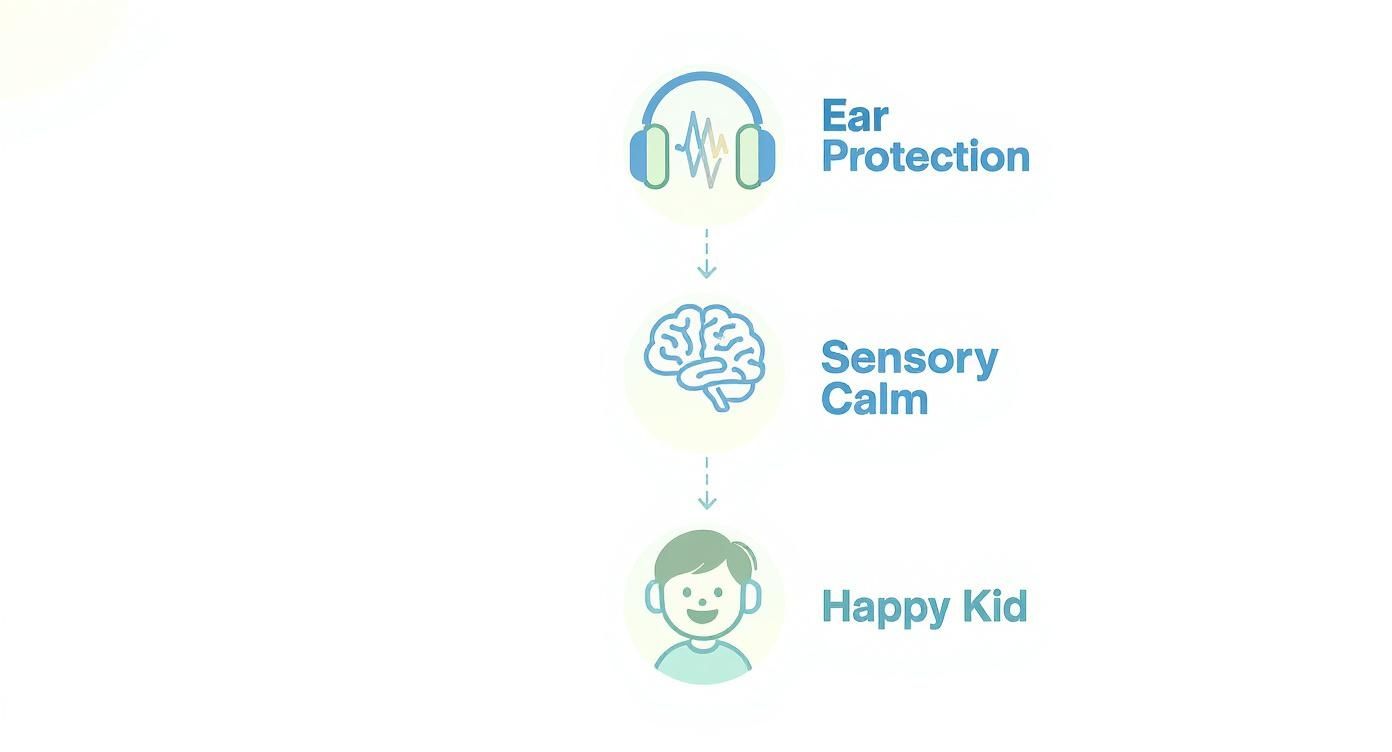
As you can see, it's a pretty simple flow: blocking overwhelming noise helps a child feel safe, which leads to a much better experience for everyone.
Putting NRR into Practice
So how does this NRR number actually work in the real world? It's basically simple maths.
If you’re at a fireworks display that’s booming at 150 dB, a pair of ear muffs with an NRR of 25 will reduce the sound your child hears to about 125 dB. It's still loud, of course, but that's a massive reduction that pulls the noise down from a dangerously painful level.
To give you a clearer idea, here's a look at some common sounds and how a standard pair of ear muffs can help.
Common Sounds and How Ear Muffs Can Help
This table shows how ear muffs with a typical NRR of 22dB can make everyday noisy environments much more manageable for a child.
| Environment/Event | Average Decibel Level (dB) | Perceived Level with 22 NRR Ear Muffs (Approx.) | Safety Recommendation |
|---|---|---|---|
| Busy Shopping Centre | 70-80 dB | 48-58 dB | Reduces overwhelming background noise. |
| Movie Theatre | 75-100 dB | 53-78 dB | Protects from sudden loud action scenes. |
| School Assembly/Cafeteria | 85-95 dB | 63-73 dB | Allows focus by dampening chaotic noise. |
| Live Sporting Event | 100-115 dB | 78-93 dB | Essential for protecting against crowd noise. |
| Fireworks Display | 140-160 dB | 118-138 dB | Absolutely critical to prevent hearing damage. |
As you can see, even a standard NRR provides a significant buffer against the most jarring sounds, making these experiences more enjoyable and less of a sensory assault.
For most loud events like parties or school concerts, an NRR somewhere between 22 and 27 is a great all-rounder. If you're looking for gear for the littlest ears, you can find more specific advice in our guide to baby noise cancelling headphones.
Australian Safety Standards Are a Must
This part is non-negotiable. When you’re choosing ear muffs, you absolutely must pick a pair that meets Australian safety standards. This certification is your guarantee that the NRR on the box is accurate and that the materials are safe and tough enough for kids.
It’s not just a nice-to-have; it's the only way to be sure the product will actually do its job and protect your child's hearing for life. When you see that compliance, you can trust the ear muffs have been properly tested and will perform as promised. It's all about peace of mind.
How to Choose the Perfect Ear Muffs for Your Child
Choosing the right pair of kids ear muffs is about more than just how much noise they block out. The real test? Finding a pair your child will actually want to wear. Getting the fit right is the first and most important step, because it affects both comfort and how well they actually work.
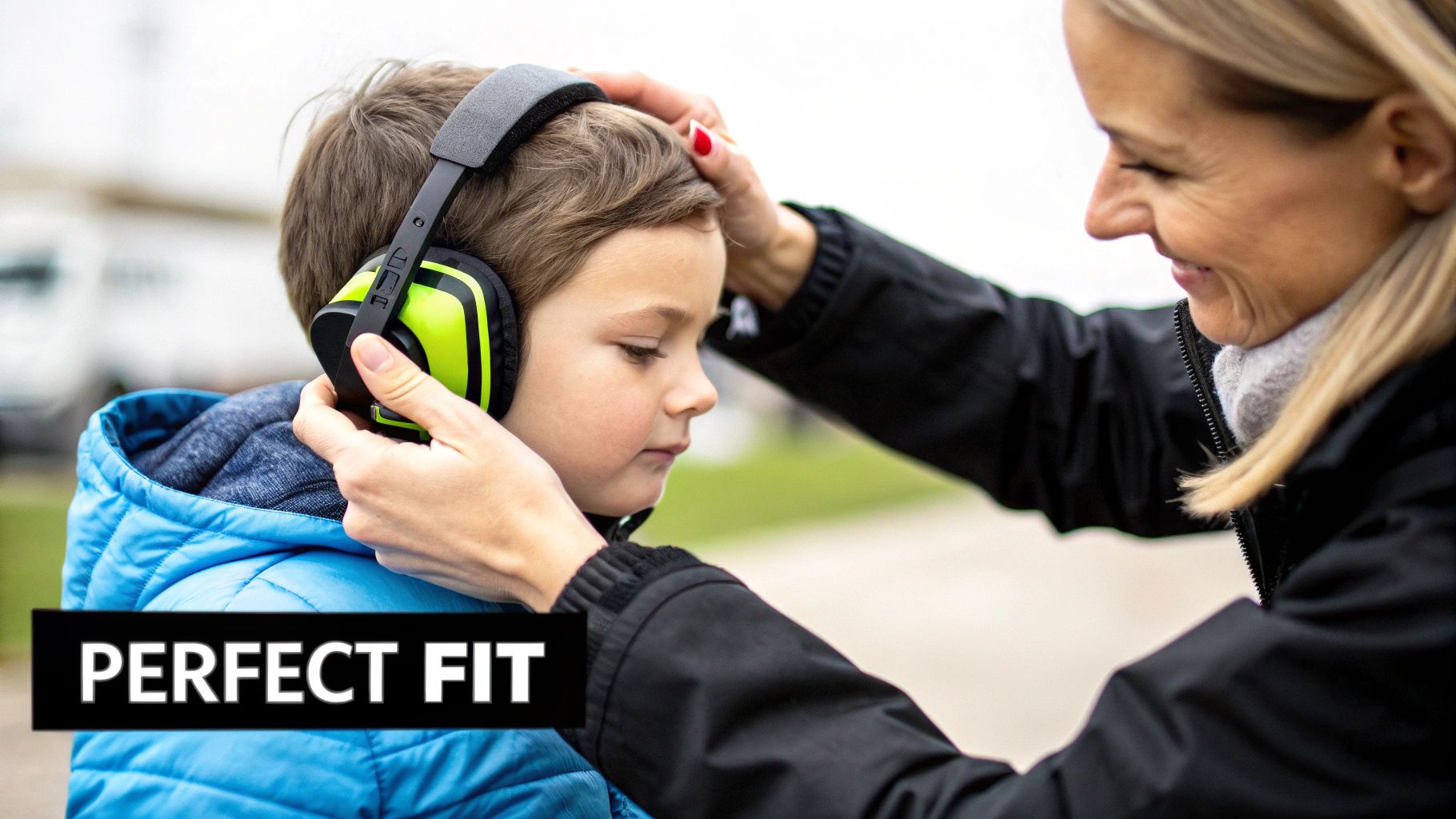
Look for an adjustable headband that can grow with your child, giving them a snug but gentle fit without clamping down on their head. The ear cups should be big enough to completely cover the ear, creating a nice seal all the way around. If there are any gaps, sound will sneak in, and the earmuffs won't be nearly as effective.
Materials and Durability
The materials are just as important as the fit, especially since they'll be sitting right against your child’s skin for extended periods.
- Ear Cushions: Go for soft, hypoallergenic foam cushions. They’re much gentler on sensitive skin and help create that comfortable, effective seal.
- Headband: A padded headband is a must. It helps spread the pressure evenly across the top of the head, so your child won't get sore spots after wearing them for a while.
- Construction: Let's be honest, kids are tough on their stuff. You need a durable design that can handle being dropped, squashed, and tossed in a backpack. Sturdy, kid-safe plastics are usually a safe bet.
The mindset is a lot like choosing other protective gear. The same logic you'd use when finding the best baby sun hat applies here—it all comes down to the right fit, safe materials, and proper protection.
Weight and Portability
Heavy, clunky earmuffs are a fast track to complaints and refusal. A lightweight design is key, because if a child barely notices they’re wearing them, they’re much more likely to keep them on. This is especially true for toddlers and kids with sensory sensitivities.
For busy families on the go, portability is also a huge plus. Many of the best kids ear muffs fold up into a compact little bundle, making them easy to tuck into a nappy bag, school backpack, or the car’s glove box. That way, they’re always on hand for those unexpectedly loud moments.
Parenting Tip: I always recommend keeping a foldable pair of ear muffs in your car or "go-bag." You never know when you’ll run into roadworks, a loud festival, or a sensory trigger that pops up out of nowhere. Being prepared can be the difference between a good day and a meltdown.
This focus on practical, high-quality gear for kids is something we're seeing more of across Australia. From Sydney to Melbourne, parents are increasingly looking for premium safety accessories that don't compromise on comfort, which reflects a bigger trend in the wearables market. If you're interested, you can explore the research on Australia's wearables market to see how the demand for these devices is growing.
Aesthetics and Kid Appeal
Never, ever underestimate the power of a cool design. Functionality is obviously the top priority, but the look and feel can be what seals the deal for your child.
Plenty of brands now offer a whole rainbow of fun colours, patterns, and even character-themed designs. Letting your child pick their own pair is a brilliant move. It gives them a sense of ownership and can turn the ear muffs from a "tool" into a cool accessory they’re proud to show off. When they've chosen it themselves, they're far more likely to embrace it. For some great examples of designs that are both fun and functional, take a look at these SoftSounds Earmuffs in various designs.
Ear Muffs as a Powerful Sensory Regulation Tool
Beyond just protecting delicate little ears, kids ear muffs are an absolute game-changer for sensory regulation. Imagine trying to listen to one person talk while ten radios are blaring around you. For many kids, especially those with Autism, Sensory Processing Disorder (SPD), ADHD, or anxiety, that’s what the world sounds like every day.
Ear muffs are one of the simplest yet most effective tools for helping them manage all that noise.
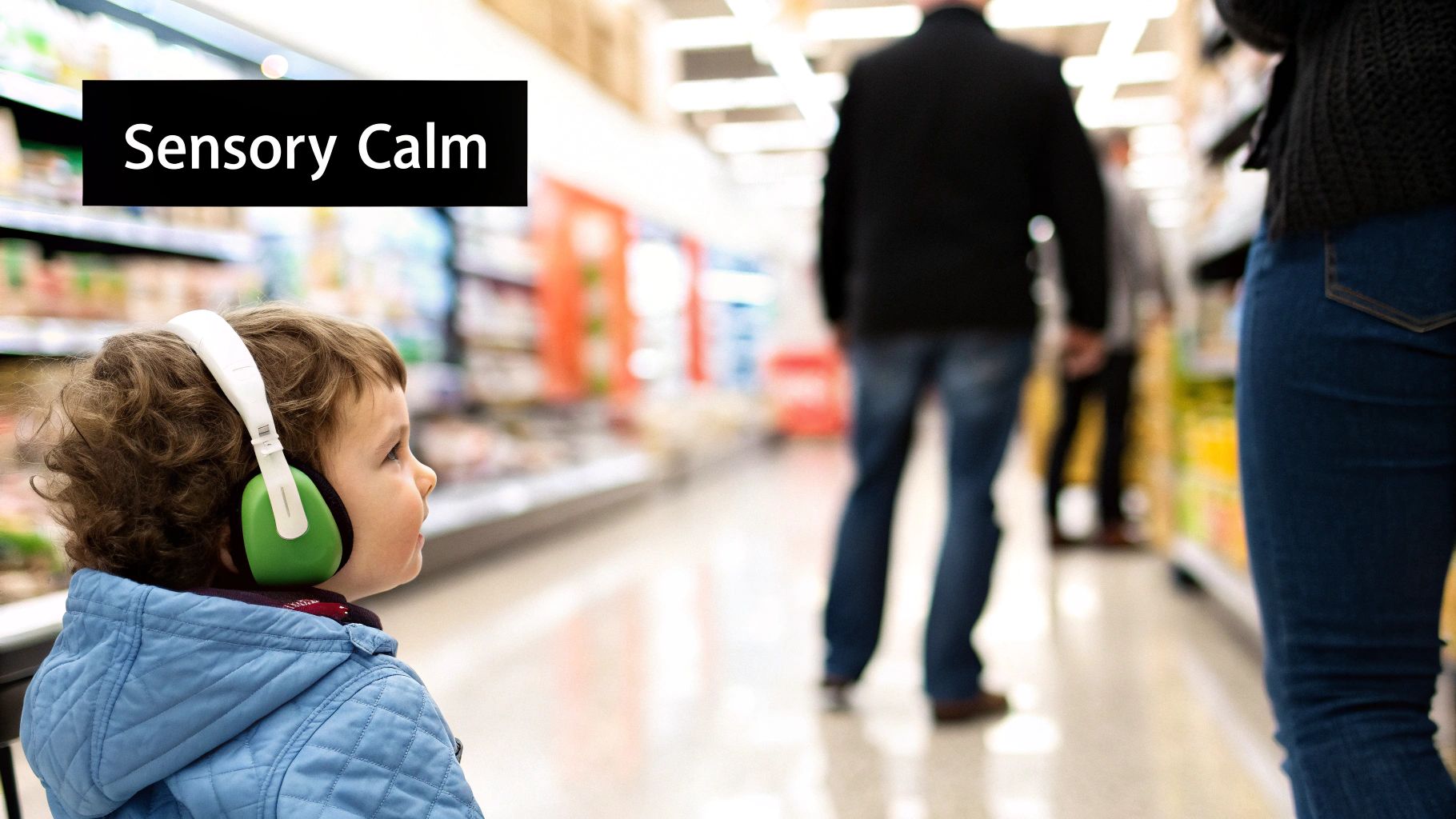
By dialling down the intensity of background sounds, they take a huge cognitive load off a child's brain. This frees up so much mental energy, helping them to focus better at school, stay calm on family outings, and join in without getting distressed or shutting down completely.
From Overwhelmed to Empowered in Real-World Scenarios
The real magic of ear muffs happens in those everyday situations that can so easily become a source of stress. They give a child a tangible way to control their environment and, in turn, regulate their own sensory experience. It's incredibly empowering.
Just think about these common scenarios:
- The Supermarket Trip: The constant beeping scanners, rattling trolleys, and fuzzy overhead announcements can quickly push a child into sensory overload. A pair of ear muffs creates a personal bubble of calm, turning a frantic experience into a manageable one.
- A Birthday Party: As fun as they are, parties can be a sensory minefield. The loud music, kids shouting, and balloons popping can be far too much. Ear muffs let them stay and enjoy the celebration without feeling like they need to run and hide.
- Homework and Focus Time: At home, even everyday sounds—siblings playing, the TV, the whir of the dishwasher—can make it impossible to concentrate. By dampening these distractions, ear muffs help create the quiet space they need to learn and think.
In every case, the ear muffs don't block out sound completely; they just turn down the volume. This is key. It allows the child to stay present and engaged with what's happening, but on their own terms.
Integrating Ear Muffs into a Complete Sensory Toolkit
While ear muffs are fantastic on their own, they’re even better as part of a complete sensory support system. Think of them as a key player on a team of tools that create a sensory space or a personal toolkit to meet a range of sensory needs. The goal is always to give a child options to feel grounded and regulated.
A well-rounded sensory toolkit gives a child choices to meet their needs in the moment. Combining auditory tools like ear muffs with tactile or deep-pressure items provides a more complete approach to self-regulation, building confidence and independence.
This is where you can get creative and combine different tools for a truly comprehensive support strategy. While ear muffs manage the auditory side of things, exploring options like white noise machines and other child comfort instruments can be brilliant for creating a calming baseline environment at home.
Here’s how ear muffs can work alongside other popular sensory aids:
- Weighted Toys: While ear muffs tackle the noise, a comforting weighted animal toy provides that deep pressure input that has an incredibly grounding effect on the nervous system.
- Fidgets: When a child feels overwhelmed, having something to do with their hands can be a lifesaver. Pairing ear muffs with some quiet, tactile Kaiko fidgets gives them both an auditory and a physical outlet for that nervous energy.
- Sensory Swings: For a truly immersive break, a deluxe sensory swing offers vestibular input (all about balance and movement) and gentle, cocooning pressure. Using ear muffs while swinging can create a deeply calming and restorative retreat from the world.
By building a toolkit with varied options, you’re not just reacting to sensory overload—you're proactively giving your child the resources to navigate different environments with confidence. This helps them build resilience and participate more fully in the world around them.
Getting Started with Ear Muffs and Finding the Perfect Fit
Let’s be honest, getting a child to try something new—especially something that goes on their head—can be a bit of a negotiation. The trick is to introduce kids ear muffs as a cool, helpful tool, not a medical device or a chore. A little patience and a bit of fun can make all the difference.
The first step is simply making them familiar. Leave the ear muffs out where your child can see and touch them, with no pressure to put them on. Let curiosity do the work. This simple act of desensitisation can take the fear out of a new object.
Making a Positive First Impression
You want the first experience to be a good one. A great way to do this is by modelling the behaviour yourself. Pop on a pair and show them it’s no big deal. You can also link them to something your child already loves, like putting them on to watch a favourite movie or while playing with their beloved Numberblocks toys.
Here are a few gentle approaches that we’ve seen work wonders:
- Lead by Example: Wear a pair yourself. Talk about how comfy they feel or how quiet everything is. Kids are great mimics, and if they see you’re relaxed, they’re more likely to be.
- Make it Fun: Give them a sense of ownership. Let them decorate the ear muffs with stickers of their favourite characters. Suddenly, they’re not just ear muffs; they're their special ear muffs.
- Connect to an Activity: Bring them out during an activity that’s fun but a little loud. Try saying something like, “Let’s put our special headphones on so the music sounds even better!”
The aim is to position the ear muffs as an empowering tool, not a restriction. Frame it as something that helps them enjoy things more, and you’ll find they become a natural part of the routine.
How to Achieve the Perfect Fit
Once your child is ready to give them a go, a good fit is everything. If they’re not fitted correctly, sound can leak in, which defeats the whole purpose. Worse, if they’re uncomfortable, you can bet they won’t be worn for long.
Here’s a quick rundown on getting it just right:
- Extend the Headband First: Before putting them on, pull the ear cups all the way down. This makes it much easier to get them over your child’s head without a struggle.
- Position Over the Ears: Place the ear muffs on their head, making sure each cup completely covers the entire ear. The cushion needs to form a seal right around the ear, with no bits poking out.
- Adjust for a Snug Fit: Gently slide the headband up so it sits comfortably on top of their head. You're looking for a snug fit that holds the ear cups securely, but not so tight that it feels like a clamp.
- Do a Quick Seal Check: Run a finger around the edge of each ear cushion where it meets their head. You shouldn’t feel any gaps, especially behind the ears where they’re most common.
Getting that seal right is the single most important part of making ear muffs effective. Even a tiny gap can dramatically lower the noise reduction, so it's well worth taking a moment to check the fit each time.
Troubleshooting Common Fitting Issues
You might hit a couple of snags, but they’re usually easy to sort out.
What about glasses? Just place the ear muffs on right over the arms of the glasses. The foam cushions are designed to be soft enough to mould around them while still keeping a decent seal. If your child says they feel too much pressure, the headband is probably a bit too tight. Try readjusting it for a looser fit, as long as that seal stays intact.
With these simple tips, you can make sure the ear muffs are doing their job properly and feel great from the very first wear. When a child feels comfortable and secure, they're much more likely to ask for their ear muffs themselves. Feel free to explore our collection of noise cancelling earmuffs for kids and find the perfect pair for your little one.
A Little TLC: Ear Muff Care and NDIS Funding
Getting the most out of your child’s ear muffs is all about a little bit of simple, regular care. Keeping them clean and storing them properly ensures they stay hygienic and effective, maintaining that crucial acoustic seal for years of reliable use.
On a similar note, knowing how to navigate funding options can make these essential sensory tools much more accessible. For Australian families, the National Disability Insurance Scheme (NDIS) is often a fantastic pathway, and it’s less complicated than you might think.
Keeping Your Ear Muffs Clean and Ready
A quick clean is all it takes to keep your ear muffs in top shape. You can gently wipe down the ear cushions with a damp cloth and a touch of mild, non-alcoholic soap. Just be sure to avoid harsh chemicals or completely soaking them, as this can break down the foam and ruin the seal.
How you store them is just as important as how you clean them.
- Keep Them Dry: Always let them air dry completely before putting them away. This simple step prevents any chance of mould or musty smells.
- Avoid Extreme Heat: Leaving them on a dashboard in a hot car or in direct sunlight is a no-go. The heat can warp the plastic headband and damage the cushions.
- Find a Safe Spot: When they’re not being used, pop them in a drawer or a dedicated bag. This protects them from getting dusty, squashed, or accidentally damaged.
How NDIS Funding Can Help
For so many families across Australia, kids ear muffs aren't just for blocking noise—they're a vital sensory tool. They can be the key to helping a child regulate, focus at school, and feel comfortable enough to join in with community activities. Because of this, they are often a perfect fit for NDIS funding.
Generally, ear muffs fall under a couple of NDIS categories:
- Low-Cost Assistive Technology: This covers helpful aids and equipment that support a person's disability-related needs, usually without needing a formal assessment.
- Consumables: If you have funding in your Core budget, this can often be used for everyday, low-risk items like ear muffs that help with sensory regulation.
The best first step is usually a chat with your child's occupational therapist or support coordinator. They're brilliant at connecting the dots between a tool like ear muffs and your child’s NDIS goals, like ‘improved community participation’ or ‘support for sensory needs’.
With their recommendation in hand, you can purchase from an NDIS-registered provider, which simplifies things whether you are self-managed, plan-managed, or NDIA-managed. To get a better sense of how this works, take a look at our guide on sensory tools for autism and how they fit into a support plan.
Your Questions Answered: A Kids' Ear Muff FAQ
When you're looking into sensory tools and hearing protection for your little one, it’s only natural to have a few questions. We get asked about kids' ear muffs all the time, so we've put together some straightforward answers to the most common queries we hear from parents.
At What Age Can My Child Start Wearing Ear Muffs?
You might be surprised to learn that many ear muffs are designed for infants as young as three months old. These models typically feature super-soft headbands and are incredibly lightweight to suit a baby’s delicate head.
The golden rule is to always check the manufacturer's age recommendations. For newborns under three months, it’s always best to have a quick chat with your paediatrician first. But for most babies and toddlers, a quality, age-appropriate pair of ear muffs is perfectly safe for protecting their sensitive hearing at noisy events.
Can My Child Wear Ear Muffs for Long Periods?
Absolutely. A good pair of kids' ear muffs is built for comfort over the long haul, which makes them perfect for things like a long flight or an all-day festival. The secret lies in the design—look for features like plush, padded headbands and deep, soft ear cushions that don't put too much pressure on their little ears.
If they're wearing them for several hours straight, it's a good idea to encourage a short 'ear break' every hour or so, just to let their skin breathe. At the end of the day, a comfy, well-fitting pair is the key to happy, extended wear.
Will Ear Muffs Block Out All Sound?
This is a fantastic question and a really common misconception. Ear muffs are all about noise reduction, not complete silence. They are specifically designed to bring loud, overwhelming, or even dangerous sounds down to a much safer and more manageable level.
Think of it like turning down the volume on the world. Your child will still be able to hear you speak and be aware of what’s happening around them, but the harmful edge of the noise is taken off. This is actually a critical safety feature, as it keeps them connected to their environment.
Are Ear Muffs Only for Children with Sensory Needs?
Not at all! While they are an absolute game-changer for kids with sensory sensitivities, ear muffs are a smart choice for all children as a general hearing protection tool.
Audiologists warn that long-term exposure to any noise over 85 decibels (think of a loud hairdryer or a busy restaurant) can cause permanent hearing damage. Many everyday events—like concerts, fireworks, monster truck shows, and even using power tools in the shed—can easily soar past that level.
Popping a pair of ear muffs on in these situations is a simple, proactive way to protect your child’s hearing for life, whatever their sensory profile might be. They’re a universal safety tool for little ears.
Here at Sensory Poodle, we're passionate about helping Australian families find sensory solutions that are high-quality, effective, and genuinely comfortable. From noise-cancelling ear muffs to calming weighted toys, we've carefully selected every item in our collection to support your child's well-being and help them feel their best. Come and explore our full range of tried-and-tested products to build your perfect sensory toolkit.
Find the ideal sensory tools for your child at Sensory Poodle.