


A Guide to Sensory Biting Toys for Calming and Focus

Sensory biting toys, often called chew toys or "chewelry," are specifically designed tools that offer a safe and appropriate way for someone to get the oral sensory input they need. Far from being simple playthings, these items are crucial for self-regulation, helping to soothe anxiety and sharpen focus by satisfying a fundamental sensory drive.
Why Sensory Biting Toys Are More Than Just Toys
Have you ever seen a child chewing on their shirt collar, the end of a pencil, or even their own fingernails? It’s easy to mistake this for a simple bad habit, but it’s often a clear signal that their brain is searching for a specific kind of input to feel calm, organised, and grounded. A sensory biting toy isn't just a distraction; it’s a purpose-built tool that redirects this need into a safe and effective activity.
Here’s an analogy: think about a child with sound sensitivity. A good pair of noise cancelling earmuffs for kids acts as a filter, helping them cope with an overwhelming auditory environment. A sensory biting toy works in exactly the same way for oral sensory needs. It delivers targeted, consistent pressure to the jaw and mouth, which can be incredibly calming and organising for the nervous system. This is a core component of the wide range of sensory toys Australia has to offer.
Decoding Oral Sensory Needs and Solutions
To better understand the "why" behind chewing, it helps to see the connection between the behaviour and the underlying need. This table breaks down common reasons for chewing and shows how sensory toys provide a constructive, safe solution.
| Reason for Chewing | Common (Unsafe) Behaviours | Safe Alternative with Sensory Toys |
|---|---|---|
| Anxiety & Stress Relief | Nail-biting, chewing on knuckles, grinding teeth. | A discreet chewable pendant or bracelet offers a calming outlet during stressful moments. |
| Focus & Concentration | Chewing on pen caps, pencils, or shirt collars during tasks. | A handheld chew toy or pencil topper provides the necessary input to help maintain focus. |
| Sensory Seeking | Mouthing non-food objects like toys, remotes, or clothing. | Durable, textured silicone chew toys offer varied sensory experiences that are safe and hygienic. |
| Teething Pain | Biting on hard, potentially harmful objects or fingers. | Specially designed teething toys provide gentle, soothing pressure on sore gums. |
By reframing the behaviour, we can see that chewing is a form of communication. It’s a sign that the nervous system is asking for help, and sensory toys are the answer.
Understanding the Need for Oral Input
The powerful urge to chew is deeply connected to our proprioceptive system—the sense that tells us where our body is in space. The act of chewing provides intense, deep-pressure feedback to the jaw muscles, which has a remarkably calming and organising effect on the entire nervous system. It's the same reason why many of us, neurodivergent or not, find that chewing gum or crunching on a snack helps us concentrate or de-stress.
For kids and adults with Sensory Processing Differences, Autism, or ADHD, this need for oral input is often much more intense. Without a proper outlet, they might resort to chewing on anything available, which can lead to:
- Damaged clothing, like stretched-out collars and soggy sleeves.
- Broken pencils, ruined stationery, and other damaged belongings.
- Potential dental problems or safety hazards from chewing on non-food items.
Sensory biting toys are a game-changer. They transform a behaviour that could be problematic into a positive, effective self-regulation strategy. They give individuals a hygienic, durable, and purpose-built solution designed specifically for their sensory needs.
The Therapeutic Role of Safe Chewing
Offering a safe alternative, like a chewable necklace or a handheld silicone fidget, does more than just save clothes from being ruined. It empowers individuals by giving them a discreet and socially acceptable way to manage their sensory needs, whether they're at home, in the classroom, or out and about. Recognising their multifaceted benefits, these toys can be a vital component of holistic strategies for living with ADHD.
This shift in perspective is crucial. When parents, teachers, and therapists see chewing as a signal for support rather than a behaviour to be stopped, we can respond with empathy and provide effective tools. The growing demand for these tools in Australia is a positive sign of a broader understanding of neurodiversity. In fact, the Australian toys market is projected to grow from USD 2,278.8 million in 2024 to USD 3,033.6 million by 2033, with specialised sensory products being a key driver.
To get a better sense of how different tools can support various needs, have a look at our guide on understanding sensory seeking toys. This trend isn't just about market growth; it's about a fundamental shift towards providing the right therapeutic tools to help every child regulate, learn, and thrive.
Finding the Perfect Sensory Biting Toy for Your Needs
Choosing the right sensory biting toy can feel a bit overwhelming at first, but it gets much easier when you know what to look for. The real goal is to find a tool that clicks with the user's specific sensory preferences and fits into their daily life. That’s the secret to making sure it’s a helpful tool they’ll actually want to use.
The best place to start is simply by observing. How do they chew? Are they a gentle nibbler who likes to use their front teeth, or do they crave that deep, satisfying pressure on their back molars? Understanding this is the foundation for making a great choice.
Matching Chew Strength to Biting Intensity
Not all sensory chews are built the same. They come in different durability levels to match how intensely someone chews. Getting this right is a big deal for safety and making sure the toy lasts, which saves you from having to replace it constantly.
- Light Chewers: These are the gentle gnawers and nibblers. They do best with softer, more flexible toys that offer just a bit of resistance without being too firm. Think thin pendants or softer handheld chews.
- Moderate Chewers: This is the most common group. They chew with a firm, steady pressure but aren't trying to destroy things. They need a durable tool that can handle regular use, like a standard chewable necklace or a moderately thick handheld toy.
- Tough or Avid Chewers: These individuals chew with a lot of force and can tear through less durable toys in no time. They need the strongest, most resilient options available, often labelled 'tough' or 'extra tough'. Look for thick, solid shapes like chew bricks or robust pendants made from a denser grade of silicone.
A good rule of thumb: if a toy is showing signs of wear and tear quickly, it's a clear signal to level up to a stronger option. Always check toys regularly to keep things safe.
Considering Oral-Motor Preferences
Beyond just strength, the texture and shape of a sensory toy play a huge part in how satisfying it is. Everyone's oral-motor preferences are different, so what works for one person might not be right for another.
Think about the kind of sensory input the user is looking for. Do they prefer smooth, consistent surfaces, or do they like something with a bit more going on? Some people find nubs, ridges, and bumps incredibly organising and stimulating. For example, someone who needs a lot of tactile feedback might love a chew with multiple textures, while someone else might find that totally overwhelming and prefer a simple, smooth design.
The shape is important, too. A long, skinny chew is fantastic for reaching the back molars, while a wider, flatter shape gives more of that broad jaw pressure.
This flowchart helps visualise the process of identifying a chewing need and redirecting it towards a safe, therapeutic solution.
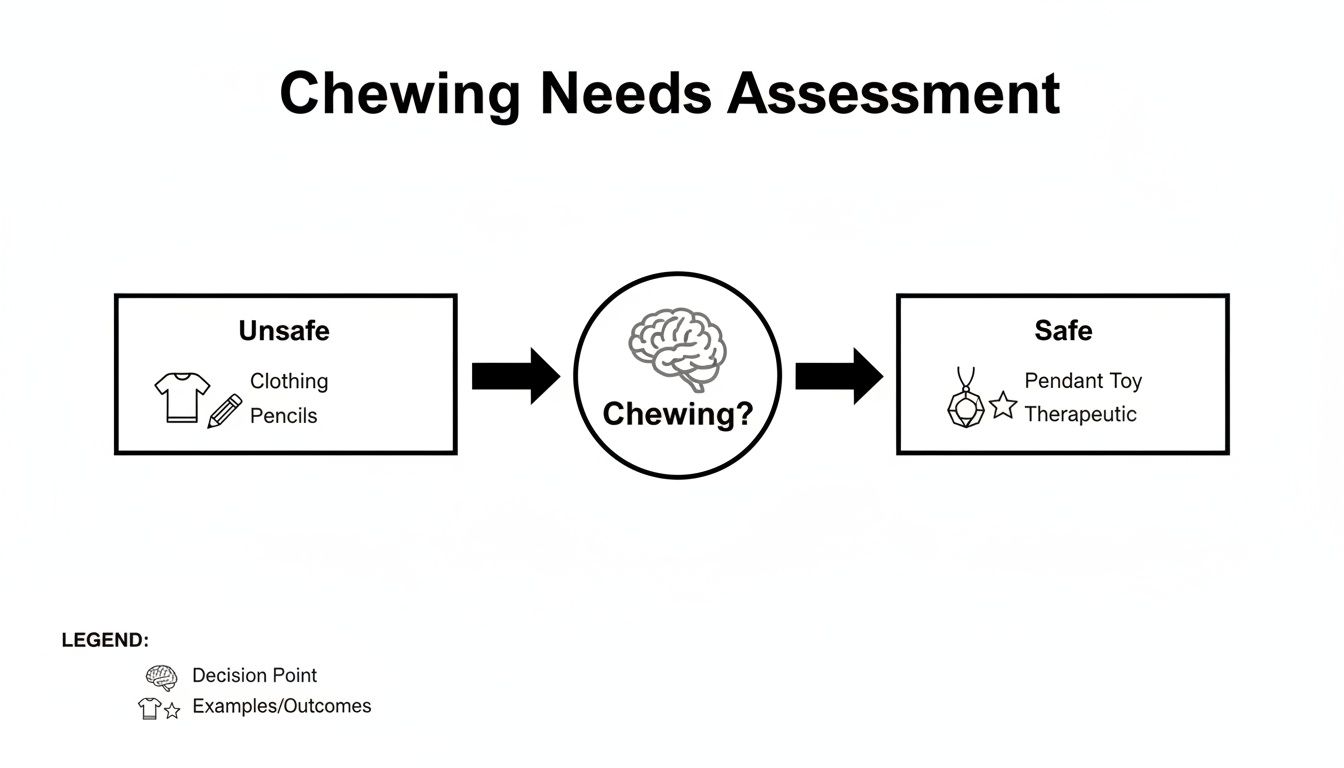
The key takeaway here is that we’re not trying to stop the chewing. Instead, we’re redirecting that natural impulse away from unsafe things like shirt collars or pencils and towards tools that are specifically designed to help.
Selecting a Toy for the Right Context
Finally, think about where and when the sensory toy will be used. The perfect tool for quiet time at home probably isn't the best fit for a busy classroom or a trip to the shops. The environment is just as important as the person’s chewing style.
The most effective sensory tool is one that is accessible when it's needed most. Matching the toy's design to the environment ensures it will be a reliable support, not a source of distraction or stress.
Here’s how you might think about different styles for different situations:
-
For School or Work (Discreet Options): Wearable "chewelry" like necklaces and bracelets are brilliant for situations where you need to be subtle. Chewable pencil toppers are another fantastic option for the classroom, moving chewing from the pencil itself to a safe, designated tool. Many of these look just like regular jewellery, allowing older kids, teens, and adults to self-regulate without drawing unwanted attention.
-
For Home or Therapy (Robust Options): In a more private setting like home, handheld sensory biting toys are an excellent choice. These often come in larger, more solid shapes like bricks or textured tubes that can stand up to more intense chewing. They are perfect for focused sensory sessions or for winding down after a long day. Sometimes, handheld fidgets like Kaiko Fidgets are a great companion to chew toys, offering extra tactile input for busy hands.
-
For On-the-Go (Portable Solutions): Look for toys that can easily clip onto a backpack, belt loop, or lanyard. Smaller pendants, bracelets, or keyring-style chews are great for travel, appointments, and errands. Having a calming tool always within reach can be a game-changer when anxiety or overstimulation pops up unexpectedly.
By carefully considering these three things—chew strength, oral-motor preferences, and the setting—you can confidently pick a sensory biting toy that is safe, effective, and truly suited to the individual. This turns what could be guesswork into a really empowering way to provide support.
Your Guide to Material Safety and Durability Ratings
When you’re choosing a sensory tool that’s designed to go into someone’s mouth, safety and durability aren’t just features—they’re everything. Getting your head around the materials, safety standards, and chew ratings will give you the confidence to pick a high-quality sensory biting toy that’s both effective and completely safe for your loved one.
This is a big deal here in Australia, where we have strong consumer safety laws. As more and more people discover the benefits of sensory tools, there's been a much-needed focus on compliance and quality from reputable suppliers.
What Does Food-Grade Silicone Really Mean?
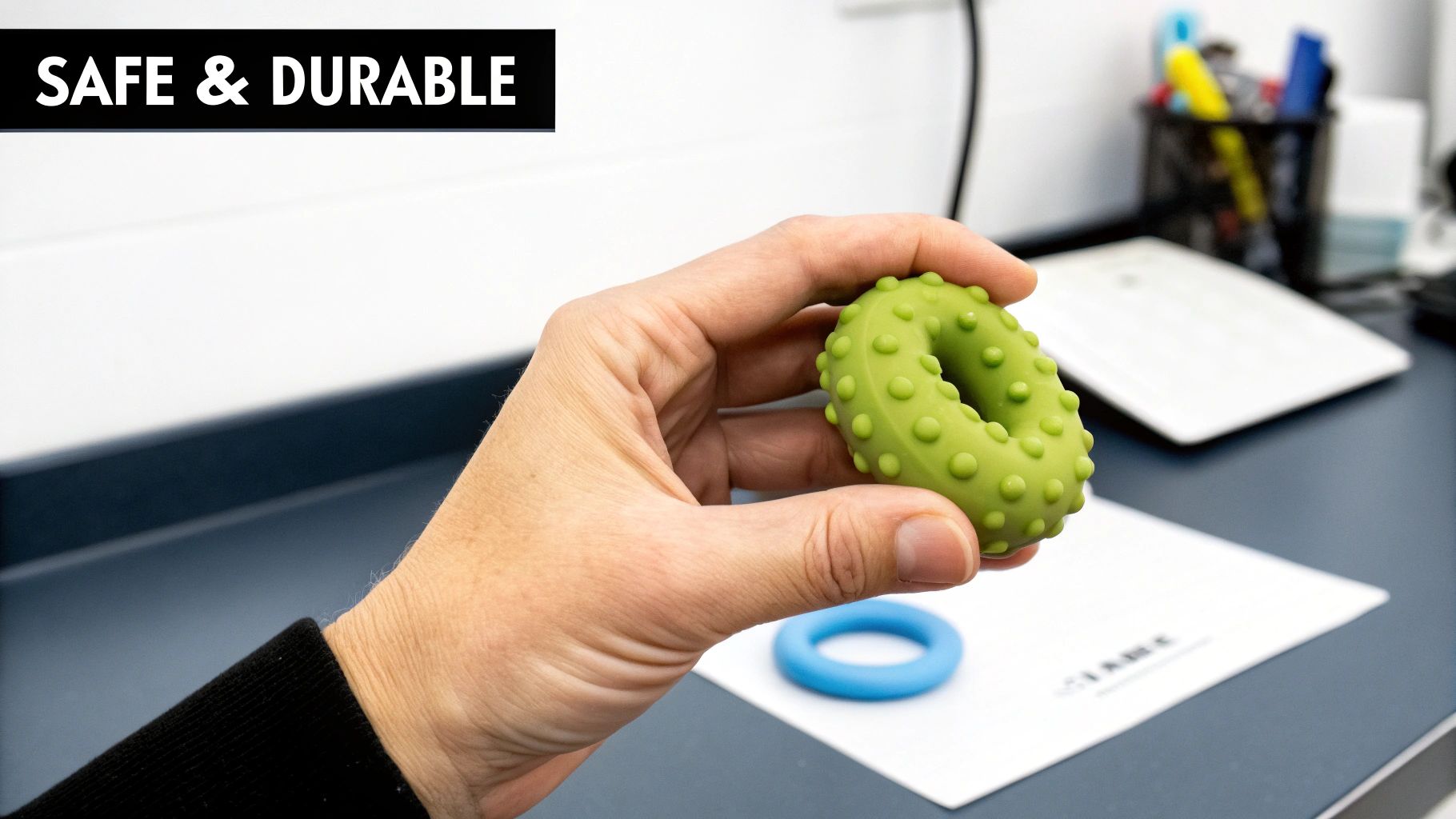
You’ll see the term “food-grade silicone” on just about every high-quality sensory biting toy, and for very good reason. This isn’t just clever marketing; it’s a non-negotiable safety standard. It means the silicone is non-toxic and has been rigorously tested to make sure it doesn’t contain harmful chemicals like BPA, phthalates, lead, or PVC.
Put simply, it's the same quality of material used for things like baby bottle teats and kitchen spatulas. This makes it the gold standard for chew toys because it's tough, resists bacteria, is a breeze to clean, and is hypoallergenic. When you choose a toy made from 100% food-grade silicone, you’re choosing a product designed with oral safety as the absolute top priority.
A key takeaway here is that not all plastics or rubbers are safe for chewing. Purpose-built sensory toys are made from specific materials to ensure they won't leach chemicals or break apart into dangerous pieces, unlike makeshift items like pen caps or regular toys.
How to Interpret Chew Durability Ratings
To prevent a chew toy from being destroyed in minutes and becoming a hazard, you’ve got to match its durability to the user's biting intensity. Thankfully, most manufacturers make this easy by categorising their products with simple chew ratings.
- Light or Standard: Perfect for mild chewers or those who just prefer a softer, more flexible feel. These are great for gentle gnawing and exploring different textures without much force.
- Tough (XT - Extra Tough): Built for moderate to firm chewers. This level offers a lot more resistance and is made from a denser silicone to withstand consistent, strong biting.
- Extra Tough (XXT - Extra, Extra Tough): This is the highest level of durability you can get. It’s created for avid or aggressive chewers who apply serious force and need maximum resilience.
If a toy starts showing signs of wear and tear—like cracks, tears, or little pieces breaking off—it's a clear signal that a tougher rating is needed. Checking the toy regularly is a crucial part of using it safely. For a deeper dive, you can explore our detailed guide on chewable sensory toys.
Crucial Design Features for Enhanced Safety
Beyond the material and durability, smart design plays a huge role in the safety of a sensory biting toy. These features might seem small, but they make a massive difference.
- Single-Piece Construction: The safest chew toys are moulded from one solid piece of silicone. This clever design eliminates the risk of small parts breaking off and becoming a choking hazard. You should always steer clear of toys with glued-on bits or multiple pieces joined together.
- Breakaway Clasps: For any wearable chewelry like necklaces, a breakaway clasp is a non-negotiable safety feature. These clasps are designed to pop open automatically when pulled with force, preventing any risk of snagging or choking.
- Appropriate Size and Shape: The toy needs to be large enough that it can't be put fully in the mouth and swallowed. The shape also matters; long, thin designs are fantastic for reaching back molars, but they must be designed in a way that prevents gagging.
The demand for safe sensory biting toys has grown significantly in Australia, mirroring the expansion of our nation's toy market, which is expected to hit USD 1.68 billion by 2030. With this growth, adherence to strict safety standards from bodies like the ACCC has become paramount, pushing families towards trusted, therapist-recommended products. You can learn more about the trends shaping the Australian toys and games market.
Weaving Chew Toys Into Daily Routines
Handing a child a sensory biting toy is a good first step, but the real magic happens when you thoughtfully weave it into their daily life. The aim is to frame it as a positive, helpful tool, not a replacement for a "bad habit." This approach helps normalise its use, turning it into a reliable support they can reach for whenever they need it.
Success often boils down to good timing and easy access. A calming tool isn't much use if it's tucked away in a drawer when overwhelm hits. By making sensory biting toys a predictable and accepted part of their routine, you empower your child to self-regulate more effectively.
Practical Tips for Home and School
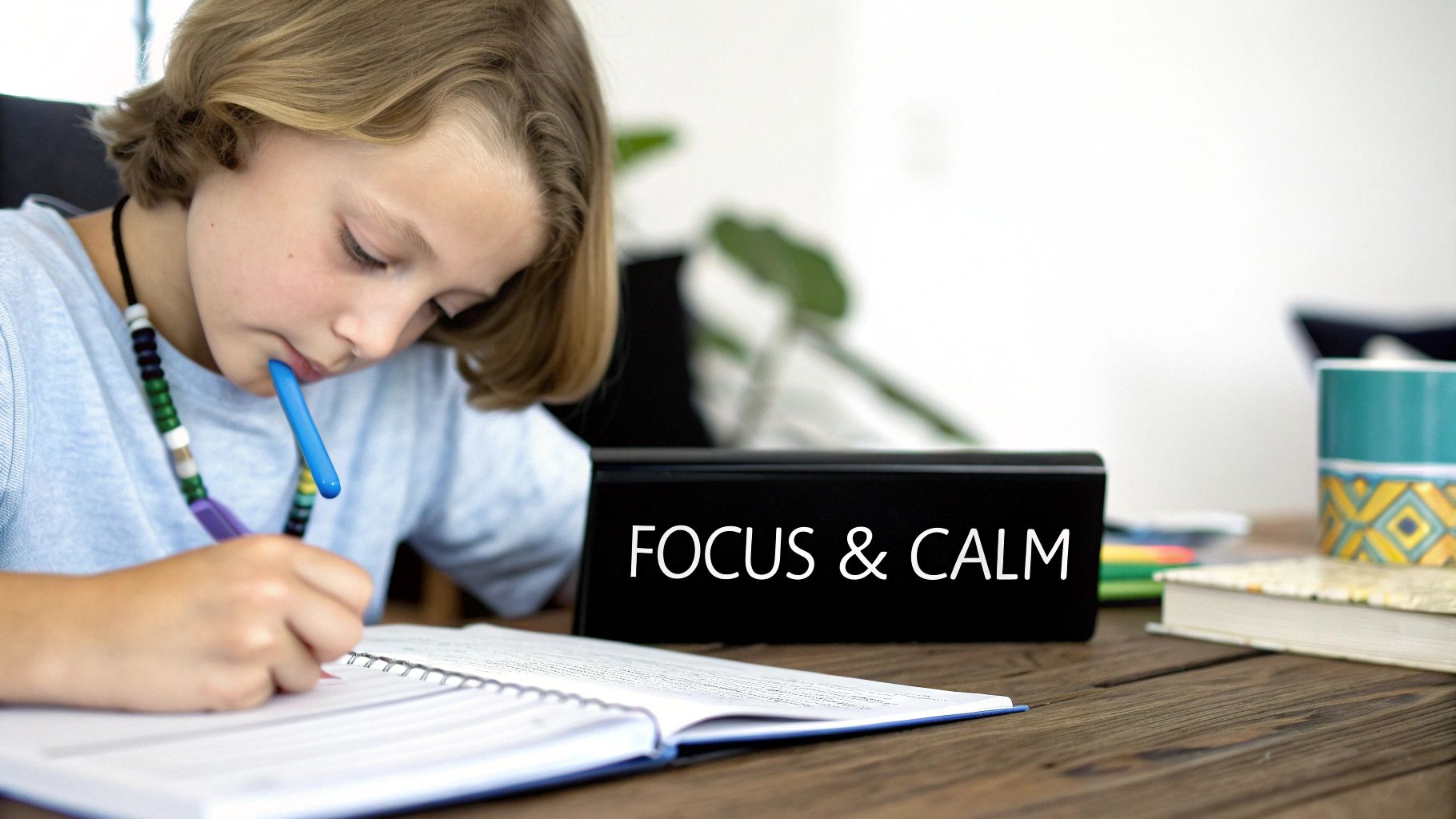
The best way to integrate a chew toy is to link it to specific situations or times of day. Rather than waiting for a moment of crisis, you can proactively offer the tool during activities you know are often challenging. This helps build a positive connection, teaching your child that the chew toy is a resource for focus and calm.
Try thinking in terms of scenarios:
- Homework or Focus Time: Keep a chewable pencil topper or a discreet necklace at their desk. You can introduce it as a "focus tool" that helps their brain get switched on for learning. This can be especially helpful alongside educational toys like Numberblocks to maintain concentration.
- Car Trips and Outings: For travel, pack a durable handheld chew toy. It can be a real game-changer for easing the anxiety that often comes with new places or unpredictable environments.
- Screen Time or Quiet Time: Offer a chew toy as a calming companion during more passive activities. This can help prevent mindless chewing on other things, like the TV remote or their shirt collar.
- Bedtime Routines: For some kids, a few minutes of chewing before bed provides just the right amount of organising oral input to help them wind down and get ready for sleep. Combining this with sleeping aids like a Neptune Blanket can create a powerful calming routine.
If you'd like to dive deeper into structuring daily activities to support sensory needs, check out our guide on creating an effective kids' routine chart.
Normalising Sensory Tools in the Classroom
Teachers play a huge part in creating an inclusive space where every student feels supported. When we normalise sensory tools like chew toys, we ensure no child feels singled out or different.
When introducing a sensory classroom tool, it helps to explain its purpose to the whole class in simple, relatable terms. You could say something like, "Some of us wear glasses to help us see better, and some of us use special tools to help our bodies feel calm and ready to learn."
By framing sensory biting toys as just another type of helpful tool—like a pencil grip or a reading guide—educators can foster a culture of acceptance and understanding. This simple shift in perspective makes a world of difference for a child's confidence.
It's also a great idea for teachers to have a small, sanitised collection of chew toys on hand for any student who might benefit. Keeping them in a designated "calm-down corner" or sensory kit makes them an accessible resource for everyone in the class.
Cleaning, Maintenance, and Replacement
Proper hygiene and regular safety checks are non-negotiable for anything that goes in a child's mouth. Keeping a sensory biting toy clean and in good shape is crucial for it to be used safely and effectively.
Cleaning and Maintenance Routine
- Daily Washing: Most food-grade silicone toys can be easily washed with warm, soapy water at the end of each day.
- Dishwasher Safe: For a deeper clean, many high-quality chews are top-rack dishwasher safe. Just be sure to check the manufacturer's instructions first.
- Regular Inspection: Before every use, give the toy a quick visual check and a gentle tug. Look for any signs of wear and tear, like cracks, splits, or weak spots.
- Immediate Replacement: If you spot any damage, throw the toy away immediately. A compromised chew toy can quickly become a choking hazard.
Knowing when to replace a toy is just as important as knowing how to clean it. If a toy is getting damaged quickly, it’s a clear signal that you need a more durable option with a higher chew rating. While no toy is indestructible, choosing the right strength level makes a huge difference in its lifespan, ensuring it remains a safe and reliable tool.
Getting Sensory Tools Paid For: NDIS and School Funding in Australia
Figuring out how to pay for essential sensory resources in Australia can feel like a maze, but it doesn't have to be. Whether you're a parent, carer, or teacher, knowing your way around the National Disability Insurance Scheme (NDIS) and school funding options can make all the difference. Let's break down how you can get the sensory biting toys and other tools your child needs to thrive.
These tools aren't just toys; they are often the key to creating a supportive environment at home and in the classroom. When you can get them funded and put them to good use, you'll often see a real improvement in a child's self-regulation, focus, and overall well-being.
Using Your NDIS Plan for Sensory Tools
The NDIS is all about funding "reasonable and necessary" supports that help people reach their goals. Sensory tools, including chew toys, almost always fit the bill, especially when they help with things like emotional regulation, taking part in community activities, or building new skills.
How you go about buying them really depends on how your NDIS plan is managed:
- Self-Managed: This gives you the most freedom. You can buy sensory tools from any supplier you like (such as The Sensory Poodle), pay upfront, and then claim the money back through your NDIS portal. Simple.
- Plan-Managed: Here, your plan manager takes care of the bills. You just need to choose the items you need, send the supplier's invoice to your plan manager, and they'll pay the supplier directly from your NDIS funds.
- NDIA-Managed: This is the most structured option. You must buy from an NDIS-registered provider, ensuring that every purchase is made through a supplier that meets the NDIA's standards.
Here's a pro tip: Always tie the purchase directly to your child's NDIS goals. For instance, if a goal is to "improve my ability to stay calm in noisy places," a sensory biting toy is a perfect tool to help achieve that. Making that connection clear makes the whole process much smoother.
A Simple Checklist for Purchasing Sensory Toys with NDIS
To make sure everything goes smoothly, it helps to have a clear plan. Follow this checklist to navigate the process of using your NDIS plan to purchase sensory biting toys and other essential tools.
| Step | Action Required | Key Tip |
|---|---|---|
| 1. Review Your Goals | Look over your child’s NDIS plan and find the goals that sensory tools can help with. | Keep an eye out for keywords like "self-regulation," "managing emotions," "focus," or "community access." |
| 2. Get a Quote | Ask your chosen supplier (like The Sensory Poodle) for a detailed quote for the items you need. | A formal quote makes life much easier for plan managers and speeds up the payment process. |
| 3. Link to Core Supports | Sensory tools are usually paid for out of your Core Supports budget, under the "Consumables" category. | This is the standard and most appropriate bucket of funding for items like sensory chew toys. |
| 4. Place Your Order | Finalise your purchase by following the correct process for your plan type (Self, Plan, or NDIA-Managed). | Always keep copies of all receipts and invoices, especially if you're self-managing. |
This simple process ensures you've ticked all the right boxes before you buy, avoiding any potential headaches down the line.
How Schools Can Fund Sensory Tools
Schools across Australia are working hard to create more inclusive classrooms, and sensory tools are a huge part of that. They are essential for building a proper sensory classroom where every student has the chance to succeed.
For schools, getting these resources is often as simple as using a purchase order. Educators or school administrators can get a formal quote from a supplier, submit it for approval, and issue a purchase order. The items are then shipped straight to the school.
This is a fantastic way to set up calm-down corners or give individual students the tools they need to stay focused and engaged in their learning. For schools looking to expand their resources, exploring grant writing for schools can also unlock more funding opportunities to better support every student.
Your Questions Answered: A Practical Guide to Sensory Chews
Even after you've done your research, bringing a new sensory tool into the mix can bring up a few questions. That’s completely normal. Let's walk through some of the most common queries we get from parents, teachers, and therapists, so you can feel confident you’re on the right track.
Are Sensory Chews Safe for All Ages?
Safety is always the number one concern, and the short answer is yes—as long as you choose the right one. Sensory biting toys are not a one-size-fits-all solution; they’re designed with specific age groups and chew strengths in mind.
For babies and toddlers, the biggest risk is choking. The best choice is always a toy made from a single, solid piece of silicone, large enough that it can't be swallowed. This design avoids any small parts that could potentially break off.
With older kids, teens, and adults, the focus shifts more to durability. It’s all about matching the chew's rating (light, moderate, or tough) to the person’s biting intensity. An avid chewer needs a tough tool to prevent it from being damaged. No matter the age, it's crucial to give every chew toy a quick inspection for cracks or weak spots before each use. If you see any damage, throw it out immediately.
How Do I Keep a Sensory Chew Toy Clean?
Good hygiene is non-negotiable for anything that goes in the mouth. The good news is that quality sensory tools are built for easy cleaning.
Most food-grade silicone chews can be washed simply with warm, soapy water. For a more thorough clean, many are also top-rack dishwasher safe.
If you’re out and about and need a quick fix, antibacterial wipes can do the trick in a pinch. We recommend washing the toy at least once a day, and more often if it’s been dropped. Always have a look at the manufacturer's cleaning instructions just to be safe.
What if My Child Chews Through Their Toys Really Quickly?
If a sensory chew is getting destroyed in just a few days or weeks, it’s a crystal-clear sign that you need something tougher. It doesn't mean the product is bad—it just means there’s a mismatch between the chewer’s needs and the tool's durability.
In this situation, you’ll want to look for chews specifically labelled as ‘tough,’ ‘extra tough,’ or designed ‘for avid chewers.’ These are made from a much denser, more robust grade of silicone, engineered to withstand some serious, focused chewing.
Remember, the goal is to find a tool that can stand up to the user's needs. While no chew toy is completely indestructible, matching its durability to the individual's chew strength is the most effective way to ensure it lasts as long as possible.
You might also find that chunkier, more solid shapes like chew bricks hold up better than thinner designs with lots of angles. Having a few different "tough" options to rotate can also help spread the wear and tear.
Can Adults Use Sensory Chews Too?
Absolutely! The need for oral sensory input doesn’t just disappear when we grow up. Many adults find sensory biting toys are a fantastic tool for managing anxiety, navigating a stressful workday, or staying focused during a long meeting or study session.
Adults often seek out that deep pressure to the jaw for the same reasons children do: it feels grounding, organising, and incredibly calming for the nervous system.
Sensory tools for adults are often designed to be a bit more discreet. You can find beautiful pendants that look just like modern jewellery, subtle pen toppers for the office, or small, handheld fidgets that can be used quietly without anyone noticing. The benefits are just as powerful for adults, especially for neurodivergent individuals or anyone with sensory processing differences.
At The Sensory Poodle, we know that finding the right sensory tools is a journey, not a destination. As a family-owned, Melbourne-based store, we're here to support you with a hand-picked range of high-quality, safe, and effective sensory biting toys and other calming aids. Come and explore our collection to find the perfect tools to help with focus and regulation.
Discover our range of sensory solutions at The Sensory Poodle