


How to Create a Kids Routine Chart That Actually Works

A kids routine chart is essentially a visual map of the day. It lays out tasks and activities in a clear sequence, helping a child see exactly what's coming next. For neurodiverse children, this isn't just about being organised. It's a powerful tool that offers predictability, dials down anxiety, and fosters a real sense of independence.
Why Traditional Routines Often Fail Neurodiverse Kids
Let's be real for a moment. The old 'just get it done' approach to routines simply doesn't fly for many kids. You've probably been there yourself—you print a generic checklist off the internet, stick it on the fridge, and it's met with a wall of resistance, a meltdown, or is just completely ignored.
This isn't your child failing. It's the tool failing your child.
Standard routine charts miss the mark because they're often too rigid, filled with words instead of pictures, or they just don't get the unique sensory and processing needs of neurodiverse children. They operate on the assumption that a simple list is enough to get things moving. But for a child grappling with executive functioning challenges, sensory overload, or anxiety, that list can feel like an impossible mountain of demands. It's missing the visual clarity, flexibility, and personal touch that makes a routine feel supportive rather than bossy.
The Modern Challenge of Screens and Shifting Habits
Today's world throws a few extra curveballs into the mix when we're trying to build solid routines. The whole landscape of an Australian childhood has changed, and with it comes a greater need for structured, visual supports. One of the biggest shifts? Screen time.
Recent stats tell a pretty stark story. According to the Australian Bureau of Statistics, 24% of children aged 5–14 were spending more than 20 hours a week on screen-based activities in 2021–22. That's a big jump from 16% in 2017–18. At the same time, participation in creative pursuits like drama or singing dipped from 63% to 59%. It shows a growing imbalance where screens are edging out the hands-on, creative activities vital for a child's development. You can dig into these trends further over on the ABS website.
This isn't about demonising screens, but we do need to understand their impact. The constant pings and bright lights of digital devices can make it so much harder for kids to switch gears, manage their big feelings, and tackle tasks they don't love. It jacks up their baseline for stimulation, which means "boring" stuff like brushing teeth or putting on socks suddenly feels ten times harder. A well-designed kids routine chart can act as a steady anchor in this fast-paced, digital world.
Beyond a To-Do List: A Tool for Regulation
For neurodiverse kids, a routine chart is so much more than a schedule. It's a cornerstone for self-regulation and feeling safe and secure. Here’s a closer look at why a generic, one-size-fits-all chart often backfires:
- It Lacks Predictability: Neurodiverse children thrive on knowing what’s happening next. A visual schedule takes the plan out of their head and puts it right in front of them, lightening the mental load of trying to remember and guess what the day holds.
- It Increases Anxiety: When a child feels overwhelmed, their brain can flip into fight-or-flight mode. A standard chart doesn't leave room for this. A customised one, however, can build in calming breaks and sensory inputs to head off meltdowns before they start.
- It Ignores Sensory Needs: A child might not be "defying" you about putting on their shoes; they might be completely overwhelmed by the scratchy texture of their socks. A great routine chart integrates sensory preparation right into the steps.
Think of a routine chart as a shared language between you and your child. It turns abstract ideas like 'getting ready' into concrete, bite-sized steps, which gives them a powerful sense of control over their own world.
Getting to the heart of why a routine is breaking down is the first real step. When we can see that resistance is often a child's way of communicating an unmet need, we can stop spinning our wheels with frustrating, cookie-cutter solutions.
Instead, we can start building a visual support system that truly responds to them. For those wanting to explore this further, our guide on sensory tools for autism offers more context on how specific aids can support daily regulation. The ultimate goal is to create a chart that feels less like a demanding boss and more like a helpful teammate.
Designing a Routine Chart Your Child Will Love
So, you're ready to create a routine chart that actually works? One that doesn't just become another piece of colourful fridge clutter? The secret is to move beyond generic, one-size-fits-all templates and design something that truly speaks to your child and their unique way of seeing the world. We’re aiming for a friendly, visual guide—not just another list of chores.
Getting the format right from the very beginning is a game-changer. What feels motivating and interactive for one child can be completely overwhelming for another. It’s all about matching the chart to your child's personality and the natural rhythm of your family life.
Choosing the Right Chart Format
The physical form of the chart can make or break its success. Some kids need that hands-on, tactile feedback, while others just need a simple, clean visual to follow. Let’s look at a few popular options.
A quick comparison can help you pick the perfect chart format for your child's personality and your family's lifestyle.
Choosing the Right Routine Chart Format
| Format Type | Best For | Pros | Cons |
|---|---|---|---|
| Interactive Whiteboards | Tactile and visual learners who love a hands-on approach. | Flexible and reusable. The physical act of moving a magnet or ticking a box is very satisfying and reinforces completion. | Higher initial cost. Can be bulky. |
| Printable Checklists | Families who need a simple, portable, and low-cost solution. | Inexpensive and easily customisable. Great for specific routines (e.g., a list taped to the bathroom mirror). Laminate for reusability. | Can feel less engaging. May require frequent reprinting if not laminated. |
| Digital Apps | Older, tech-savvy kids who are motivated by screens. | Can include timers, alarms, and digital rewards. Portable on a tablet or phone. | Introduces more screen time. Lacks the sensory feedback of physical charts. |
Ultimately, the best routine chart is one your child feels a real connection with. It has far less to do with how fancy it looks and everything to do with how much ownership they feel over it.
This is a huge shift from the old-school charts that often led to frustration. Modern, supportive methods are designed to empower kids, not just command them.
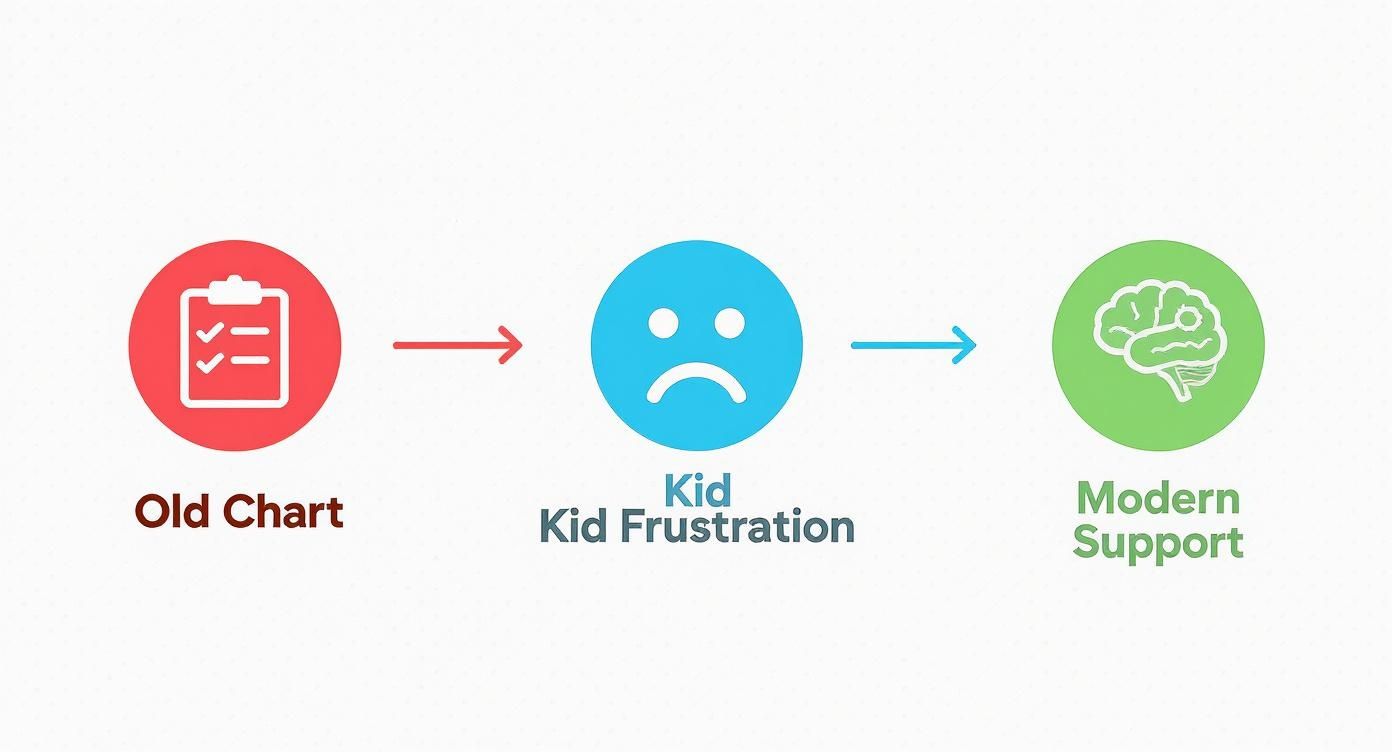
As you can see, the real progress comes from moving away from basic checklists and toward tools that genuinely account for a child's cognitive load and potential frustrations.
Make It Personal and Visual
For many kids, especially pre-readers or those with language processing challenges, a wall of text can feel abstract and stressful. This is where visual cues become your most powerful tool.
Instead of writing "Brush Teeth," snap a photo of your child grinning with their toothbrush. Instead of "Get Dressed," use a picture of them in their favourite superhero costume or simple icons of a t-shirt and shorts. Personal photos forge an instant, powerful connection. If that’s not practical, clear icons or drawings of their favourite characters doing the tasks work wonders, too. For instance, incorporating beloved characters from Bluey merchandise can make tasks feel more like a fun game.
This simple change turns the chart from a list of demands into a familiar, visual story of their day.
If you’re looking for a great starting point, a pre-made visual system like this magnetic morning and evening routine set can be fantastic. It offers clear, tactile picture tiles that kids can physically move as they complete each step.
Let Your Child Help Create It
This is the one step you absolutely can't skip. When you create a chart for your child, it’s just another set of rules. But when you create it with them, it becomes a shared plan. That collaboration is what builds the buy-in you need for the routine to actually stick.
Find a calm, relaxed moment to sit down together. Chat about which parts of the day feel a bit tricky and which parts feel easy. Let them have a say in choosing the pictures, deciding the order of tasks (wherever you can be flexible), and even decorating the chart with stickers.
You can empower them by asking questions like:
- "What's the very first thing we need to do to get our bodies ready for school?"
- "After we finish our homework, what’s a good way to relax our brains for 10 minutes?"
- "Do you think 'pack your bag' should come before or after 'put on your shoes'?"
When you do this, you hand them a sense of control. The chart becomes theirs, not just yours.
Break the Day into Manageable Chunks
Looking at a single, long list of everything that needs to happen from sunrise to sunset is enough to make anyone feel overwhelmed. A much better approach is to break the day down into logical, bite-sized segments. This makes the whole day feel more predictable and far less intimidating.
I like to think of them as "missions" or "phases":
- Morning Launch: This covers everything needed to get out the door, from waking up and getting dressed to having breakfast and grabbing their backpack.
- After-School Recharge: This is all about the transition from a busy school day to being back at home. It could include having a snack, a calming sensory break, and then tackling homework.
- Evening Wind-Down: This phase is the gentle sequence of events leading to bedtime, like tidying up toys, having a bath, and reading a story together.
By segmenting the day, you create clear beginnings and endings for each mini-routine. This helps your child switch gears more smoothly and gives them a clearer understanding of what's expected during each part of their day.
Weaving in Sensory Breaks for a Calmer Day
A brilliant routine chart does more than just tick off a list of tasks—it actively builds in those crucial moments for a child to regulate. This is where the real magic happens for neurodiverse kids. By strategically scheduling sensory and calming activities, you can get ahead of meltdowns and create a day that feels predictable, manageable, and genuinely supportive.
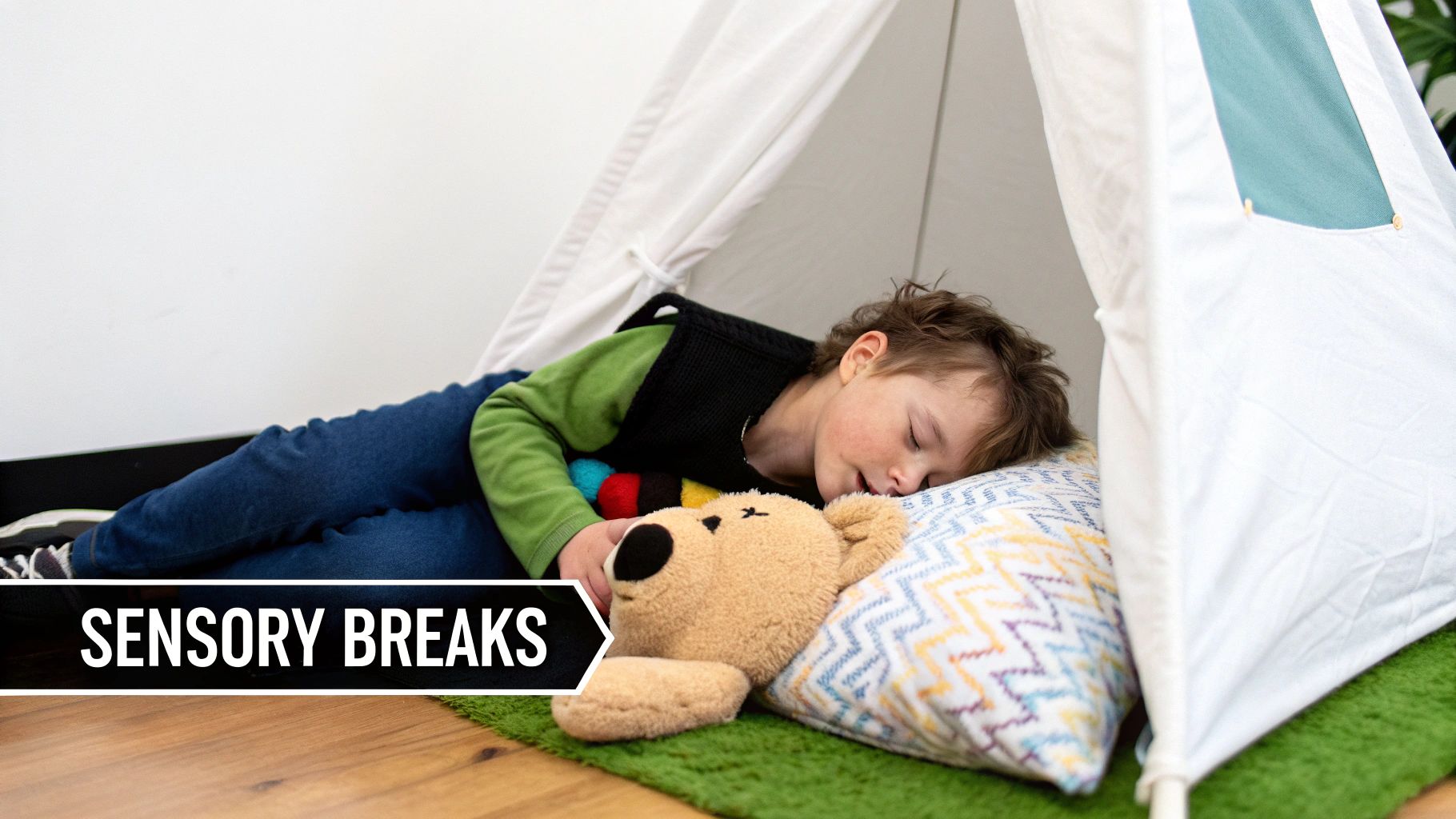
This approach is all about being proactive. Instead of just reacting to distress, you're building a foundation of calm right into the visual schedule. It creates a rhythm that helps your child feel safe, understood, and regulated from breakfast to bedtime.
Why Sensory Breaks are Genuinely Non-Negotiable
For a neurodiverse child, the world can feel like a constant sensory assault. The low hum of the fridge, a scratchy tag on their shirt, or the bright, flickering lights at the shops can quickly fill their "sensory cup" to overflowing. When that cup spills, it often looks like overwhelm, a total shutdown, or a full-blown meltdown.
Sensory breaks are the release valve. They are dedicated moments that give a child's nervous system a chance to reset and find its balance again. When you schedule them on a routine chart, they become an official, protected part of the day—just as vital as brushing teeth or packing a school bag.
The need for these intentional, screen-free breaks is more critical than ever. As screen time for Australian children continues to climb, teachers are seeing the impact firsthand. The Gonski 2021 report, ‘Growing up Digital in Australia’, found that 78% of teachers saw a decline in students’ ability to stay on task, while a huge 80% noticed reduced empathy. This really drives home how urgent it is to build calming, regulating activities into our kids' daily lives.
Spotting the Perfect Time for a Reset
Timing is everything. A sensory break is always going to be most effective when it’s offered before a child is completely overwhelmed. You know the tricky parts of your child's day, so think about those common stress points and plan the breaks to head off trouble.
Here are some prime opportunities to schedule a sensory reset:
- Straight After School: That transition from a noisy, structured school environment back to home is a massive one. A planned break right as they walk in the door can prevent that all-too-common "after-school collapse."
- Before Homework: Asking a child to focus on schoolwork when their sensory system is already overloaded is a recipe for frustration. A 15-minute break beforehand can make all the difference.
- During Tough Transitions: If you know the switch from playtime to dinnertime is always a battle, schedule a five-minute calming activity right in between.
- As Part of the Bedtime Routine: A sensory-focused activity is a brilliant way to signal to the brain and body that it's time to slow down and prepare for sleep. Many parents find that incorporating effective sleeping aids into this part of the routine can be a game-changer.
A sensory break isn't a reward to be earned; it's a fundamental tool for regulation. By scheduling it on the chart, you validate its importance and teach your child to recognise their own need for a reset.
Building a Sensory Toolkit for Your Routine Chart
The best sensory breaks are the ones tailored to your child’s unique needs. Do they need to calm their body down (think deep pressure and gentle movement) or wake their system up (with tactile or oral motor activities)? Having a few different tools on hand means you can match the activity to their energy level in the moment.
Imagine adding a visual icon for "quiet time" to the chart right after homework. This could mean 10 minutes snuggled up with a cosy weighted animal toy, which provides that deep, soothing pressure that can calm an anxious nervous system right down.
Here are a few more ideas for activities and tools you can integrate directly into your kids' routine chart:
- Quiet Corner Time: Designate a special calm-down space. A pop-up sensory tent creates an instant sanctuary, giving them a break from overwhelming light and sound.
- Movement Breaks: For the child who needs to move, schedule time on a sensory swing. The gentle, rhythmic swinging provides incredibly calming vestibular input.
- Visual Wind-Downs: As part of the bedtime routine, an icon for "lamp time" could mean watching the mesmerising, slow dance of a Jellyfish Aquarium Lamp. It’s a gentle, hypnotic visual that helps to quiet a busy mind.
- Heavy Work Activities: Tasks that involve pushing, pulling, or carrying, like helping with the groceries or jumping on a crash mat, provide powerful regulating input. You can see how a sensory crash mat provides a safe outlet for this essential sensory need.
- Fidget Focus: For tasks that require concentration, like homework, build in a "fidget break" with tactile items like Kaiko Fidgets.
By making these sensory supports an official, visual part of the daily plan, you're doing so much more than just managing behaviour. You are empowering your child with the tools they need to understand and regulate their own body, setting them up for a calmer, more confident day ahead.
Making the New Routine Stick (Without a Fight)
So, you’ve created a beautiful, personalised routine chart. That's a huge win! But let's be honest, the real work begins when you try to put it into practice. Getting a new routine to stick is about more than just hanging a chart on the wall; it’s about using smart reinforcement, staying consistent, and knowing when to bend the rules.
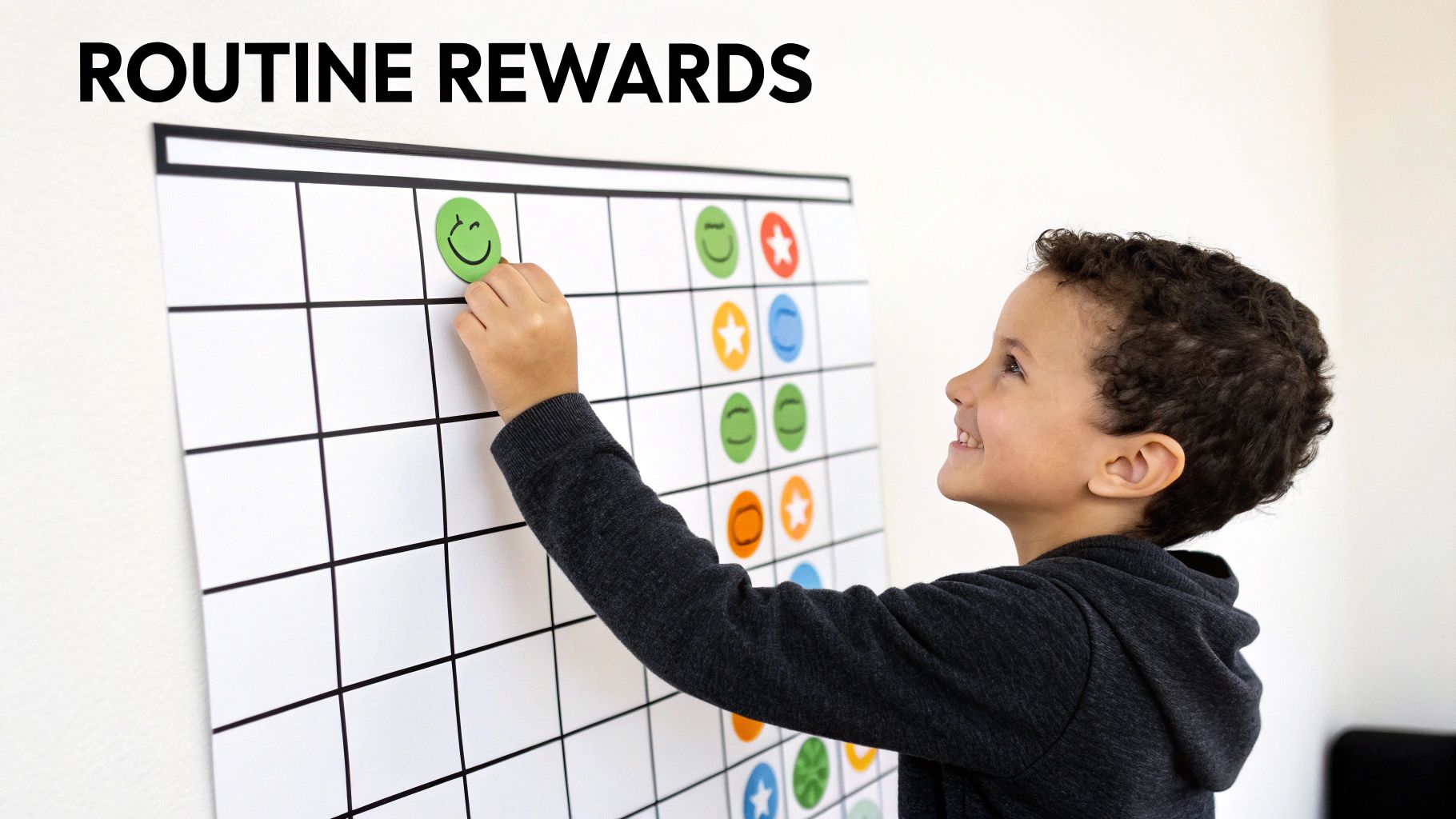
The ultimate goal isn’t to create a dependence on external rewards. It's about nurturing an internal sense of pride and accomplishment. You're aiming for that positive feedback loop where your child feels great about what they've done, which makes them want to do it again.
Finding Rewards That Genuinely Motivate
Positive reinforcement is your best friend here, but only if the "reward" actually means something to your child. A generic sticker chart might hold their interest for a few days, but real motivation comes from rewards that tap into what they love.
Think beyond simple prizes. The most powerful rewards are often experiences, connection, or access to a favourite activity. This approach cleverly links their effort with something they genuinely enjoy, making the routine feel less like a list of chores and more like a pathway to fun.
Here are a few ideas that work wonders:
- Activity-Based Rewards: Earning 15 minutes of screen time to play a game they love, like Numberblocks, can be a massive motivator. The goal is clear, desirable, and directly tied to their effort.
- Token Systems: This is a classic for a reason. For each task they complete, they get a token. Once they’ve collected a set number, they can cash them in for something bigger, like choosing the family movie for the night or an extra bedtime story.
- Progress Trackers: Go beyond basic stickers. Find a picture they love and divide it into sections. For every successful day, they get to colour in one section. It creates a visual, tangible record of their hard work that they can be proud of.
If you’re looking for a simple tool to get started, something like a free printable habit tracker can be a great visual aid to help monitor progress and celebrate every small win along the way.
The Secret Ingredient? Flexibility
Life with kids is messy and unpredictable. There will be sick days, school holidays, and mornings where everything just goes wrong. A routine that’s too rigid is doomed to fail, leaving everyone feeling frustrated.
The key to long-term success is building flexibility into the system from day one.
This doesn’t mean you just toss the routine out the window. It means you teach your child that routines can adapt. On a sick day, the chart might be simplified to just "rest," "drink water," and "cuddle." You're still providing that comforting structure, but you're also acknowledging that today is different.
Think of your routine chart as a living document, not a stone tablet. Look at it together every week or two. Be ready and willing to make changes as your child grows and their needs evolve.
Troubleshooting Common Roadblocks
Even with the most amazing chart, you're going to hit some bumps. That's okay! Resistance isn't just defiance; it's often your child's way of telling you that something about the routine isn't working for them.
Hurdle 1: The Morning Meltdown
- The Problem: Your child just won't get out of bed or start their morning tasks, and the whole house descends into a stressful rush.
- The Solution: Break it down even further. Instead of one big task like "Get Dressed," use separate visuals for "Put on shirt," "Put on pants," and "Put on socks." Critically, make the very first step of the day a calming sensory one. A few minutes of snuggling with a Warmie can be a gentle, comforting way to ease into the demands of the morning.
Hurdle 2: The After-School Shutdown
- The Problem: They walk in the door from school and instantly push back against any mention of homework or chores.
- The Solution: This is almost always a sign that their sensory cup is empty and they're completely overwhelmed. Schedule a non-negotiable "Recharge Break" as the very first thing on the after-school chart. This isn't a reward; it's a necessity. Let them have 15 minutes with their favourite Kaiko fidgets or just some quiet time in their room with a calming light before you ask them to do anything else.
By anticipating these challenges and having a plan, you can navigate the adjustment period with far more confidence and less conflict. Before you know it, that new chart will become a positive, predictable habit for the whole family.
When your child’s world feels predictable and safe across different environments, their anxiety naturally lowers, and their confidence has a real chance to soar. One of the best ways to support a neurodiverse child is to create consistency between home and school, turning two separate worlds into one cohesive, supportive landscape. Bridging this gap doesn't have to be complicated; it all starts with open communication and a shared plan.
If you’ve found a routine chart that works well at home, that’s a fantastic starting point. The next step is to chat with your child's teacher and share what you’ve learned. This isn't about telling them what to do, but about creating a genuine partnership. You could explain which visual cues your child responds to best or how you schedule sensory breaks to help them avoid feeling overwhelmed.
Bridging the Gap with Practical Tools
In my experience, teachers are usually incredibly receptive to strategies that will help a student succeed. The key is to make it as easy as possible for them to implement. A simple idea is to suggest a portable, mini-version of your child's routine chart that can sit right on their desk—maybe a small, laminated card with key transition points for their school day.
This simple tool acts as a familiar anchor in a busy classroom. It empowers your child to independently check what’s coming next, which can reduce their reliance on verbal prompts from the teacher and lighten their cognitive load.
You can also champion broader supports that benefit the entire classroom. Suggesting a designated 'calming corner' within the sensory classroom is a great example of this. This space, perhaps kitted out with soft cushions, noise-cancelling earmuffs, and a few quiet fidgets, provides a safe retreat for any student needing a moment to regulate. When this space is shown as an option on a visual schedule, it becomes a proactive strategy, not just a reactive measure.
Consistency is the cornerstone of comfort for an anxious child. When the visual language and structure of their routine chart are echoed at school, it sends a powerful message that they are safe, understood, and supported, no matter where they are.
For families navigating multiple households, keeping this consistency in place requires even more collaboration. Looking into different Parenting Schedules for Co-Parenting can provide some excellent frameworks for keeping daily rhythms predictable and stable for a child moving between homes.
Protecting Time for Active Play
One of the most crucial parts of any routine is also one of the most easily forgotten: dedicated time for physical movement. In the rush of school, homework, and therapy appointments, active play can get squeezed out. But for a child’s regulation and learning, it's absolutely essential.
Scheduling outdoor and active play directly onto the routine chart gives it the same importance as any other task. It fences that time off, making it a non-negotiable part of the day. This could look like a 30-minute block labelled "Park Play" after school or "Backyard Trampoline" before starting homework.
This is more important now than ever. The Active Healthy Kids Australia Report Cards gave Australian children a D– for physical activity, showing that most don't get the recommended 60 minutes per day. With preschoolers now averaging 107 minutes of sedentary screen time—well over the 60-minute guideline—intentionally scheduling movement is a vital defence against these sedentary habits.
Making movement a visual, scheduled part of the day ensures your child gets the physical input their body needs to focus, regulate, and learn effectively. It’s a simple tweak to a kids' routine chart that can deliver profound benefits for their overall well-being.
Still Have Questions? Let’s Talk Through Some Common Ones
Even the best-laid plans can hit a snag. When you’re introducing something new like a routine chart, it’s completely normal for questions to pop up along the way. Let’s tackle some of the most common queries we hear from parents.
How Long Does It Really Take for This to Stick?
This is the big one, isn't it? While there’s no magic number, you can generally expect a new routine to start feeling like second nature within one to four weeks. The key ingredient here is consistency, day in and day out.
My best advice is to start small. Don’t try to overhaul the entire day at once. Pick just the morning or evening routine to begin with, and make a big deal out of every little win. A quick high-five after brushing teeth goes a long way! Going over the chart together each morning or evening also helps cement the new flow.
If you’re met with a wall of resistance, that’s usually a sign to investigate. Often, it just means a task is too big and needs to be broken down into smaller, less intimidating pieces.
What if My Child Flat-Out Refuses to Follow the Chart?
It’s easy to see refusal as defiance, but it’s almost always a form of communication. Your child might be telling you they feel powerless, that a task is too overwhelming, or simply that they don't feel connected to this new plan.
First, take a step back and ask yourself: were they genuinely involved in creating it? When kids have a hand in the design, they feel a sense of ownership that makes them far more likely to get on board.
If they were involved and are still pushing back, look at the routine together. Maybe a task is too vague ("Clean room" is huge, but "Put books on the shelf" is doable). Or perhaps the reward you chose just isn't hitting the mark. A great strategy is to offer small, controlled choices within the routine.
For instance, try saying, "Okay, the chart says it's time to brush teeth. Do you want to use the sparkly toothpaste or the strawberry one?" This gives them a little bit of control while still guiding them toward the non-negotiable task.
This tiny shift can completely change the dynamic.
Should We Have a Different Routine for the Weekend?
Absolutely! In fact, I highly recommend it. Having a separate, more relaxed chart for weekends and school holidays is a brilliant way to teach an essential life skill: that routines can be flexible.
A weekend chart might have fewer "must-dos" and more space for fun things like family outings, screen time, or just unstructured play. You could even use a different colour or theme for the weekend chart. This provides a clear visual cue that the pace is different, helping your child transition smoothly from the weekday hustle to a more relaxed rhythm.
Can a Visual Chart Genuinely Help with My Child's Anxiety?
For many anxious kids, a visual routine chart can be a total game-changer. Anxiety often feeds on the unknown, and a chart takes away that uncertainty by making the day predictable. It clearly lays out what’s happening now and what’s coming next, which can quiet a lot of those "what if?" worries.
It also takes the schedule out of your head and puts it onto the wall. This usually means you’re giving fewer verbal prompts, which can be a huge source of tension for everyone. Best of all, you can build regulation right into the day by adding in specific calming activities. Scheduling in things like quiet time in a sensory tent or a cuddle under a Neptune Blanket ensures they have guaranteed moments to reset. That predictability is incredibly comforting.
At The Sensory Poodle, we know that a calm, predictable environment is the foundation for a thriving child. We are a leading provider of sensory toys in Australia and are here to help you build that. Explore our range of sensory tools and visual supports designed to bring more peace and confidence to your home. Discover the perfect sensory solutions for your family at The Sensory Poodle today.