


A Parent's Guide to the Sensory Crash Mat

A sensory crash mat is a special kind of soft landing pad designed for kids to safely jump, roll, and, well, crash! It’s so much more than a big cushion. Think of it as a dedicated space for your child to get the crucial sensory feedback they need to help manage their energy levels and big feelings in a safe, controlled way.
What's a Crash Mat Actually For?
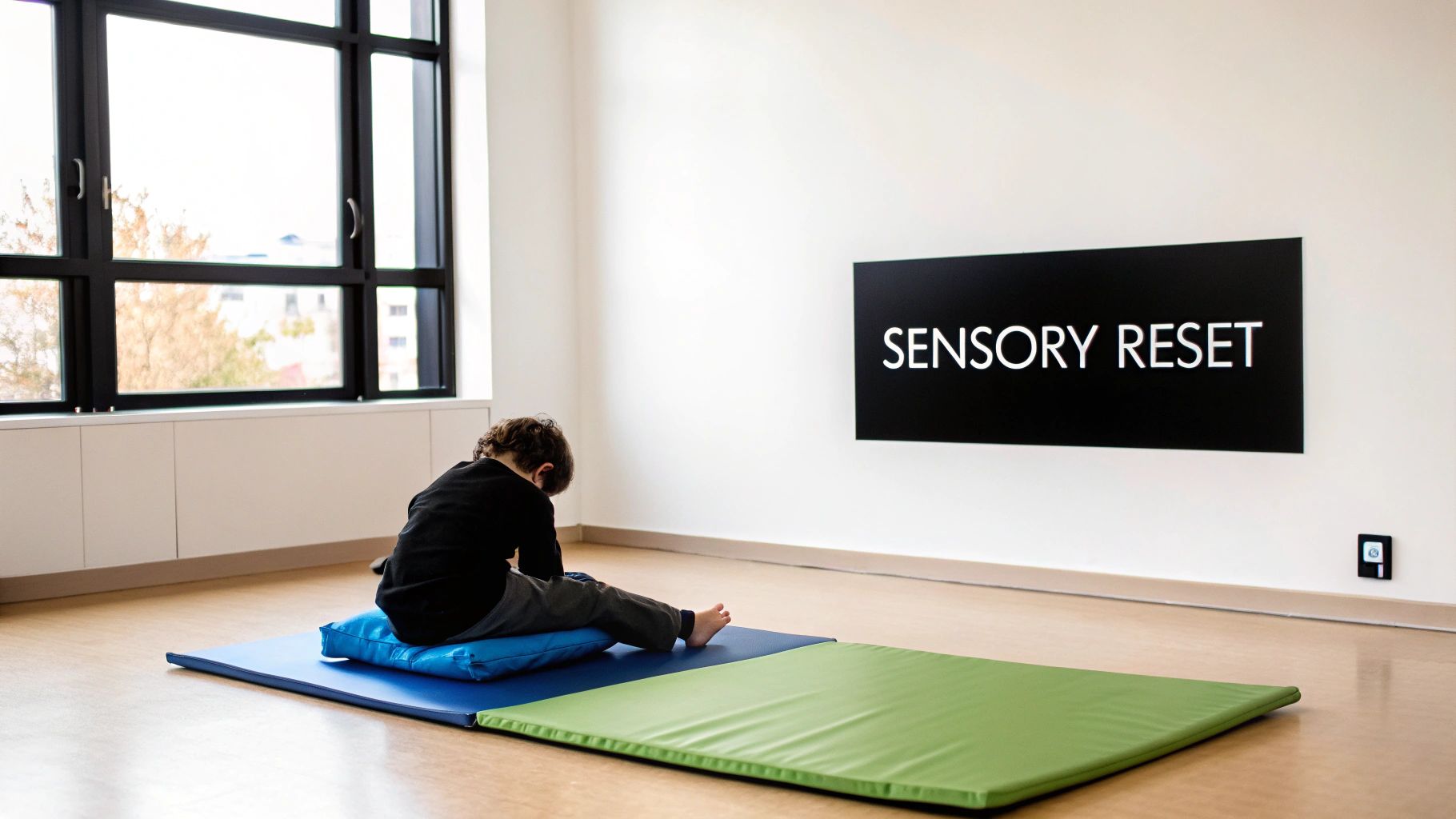
Picture a sensory crash mat as a big, physical ‘reset button’ for a child’s nervous system. It’s a purpose-built tool that provides a safe outlet for all that pent-up energy, sensory-seeking behaviour, and overwhelming emotions.
For many kids, particularly those navigating sensory processing challenges, autism, or ADHD, the world can sometimes feel like too much. A crash mat offers a predictable and secure spot where they can get the intense physical input their bodies are often craving.
This simple piece of equipment can become a game-changer, helping to create calmer homes and more effective learning spaces all across Australia. It quickly turns a corner of any room into a dedicated zone for play and self-regulation, making it a go-to solution for parents, teachers, and therapists who provide sensory toys in Australia.
The Science Behind Crashing and Calming
The real magic of a sensory crash mat is in the kind of sensory input it delivers. This isn't just about letting kids run wild; it’s about providing targeted therapeutic activity that supports their development.
When a child jumps or lands on the mat, their body receives two vital types of sensory feedback:
- Proprioceptive Input: This is the deep pressure sensation you feel in your muscles and joints. It’s what helps the brain understand where the body is, and this has a powerfully calming and organising effect on the nervous system.
- Vestibular Input: This sense is all about balance and movement. Activities like rolling, tumbling, and jumping stimulate the vestibular system, which is essential for building coordination, good balance, and spatial awareness.
For children who have a tough time processing sensory information, getting these inputs can be incredibly regulating. If you’d like to dive deeper, you can learn more in our guide on what is sensory processing disorder.
A crash mat provides a controlled way for a child to meet their sensory needs. This can reduce the chance of them seeking that input in less safe ways, like jumping off the lounge or running into walls. It channels their energy into something productive and safe.
Who Gets the Most Out of a Sensory Crash Mat?
While just about any child will have a blast on a crash mat, it’s an especially powerful tool for kids who show certain behaviours or have specific diagnoses.
It's a fantastic resource for children who:
- Are always on the go, fidgeting, or seem to have boundless energy.
- Seek out sensory input by crashing into things, jumping on furniture, or loving rough-and-tumble play.
- Often have emotional meltdowns or find it hard to calm down when they feel overwhelmed.
- Have a diagnosis like Autism Spectrum Disorder (ASD), Attention Deficit Hyperactivity Disorder (ADHD), or Sensory Processing Disorder (SPD).
By giving them a designated place for these activities, a sensory crash mat helps children learn how to self-regulate. It empowers them to recognise what their body needs and gives them a safe way to meet that need. This can lead to better focus, improved emotional control, and stronger motor skills, making it an invaluable addition to any sensory classroom, clinic, or home.
How Crash Mats Help Regulate the Nervous System
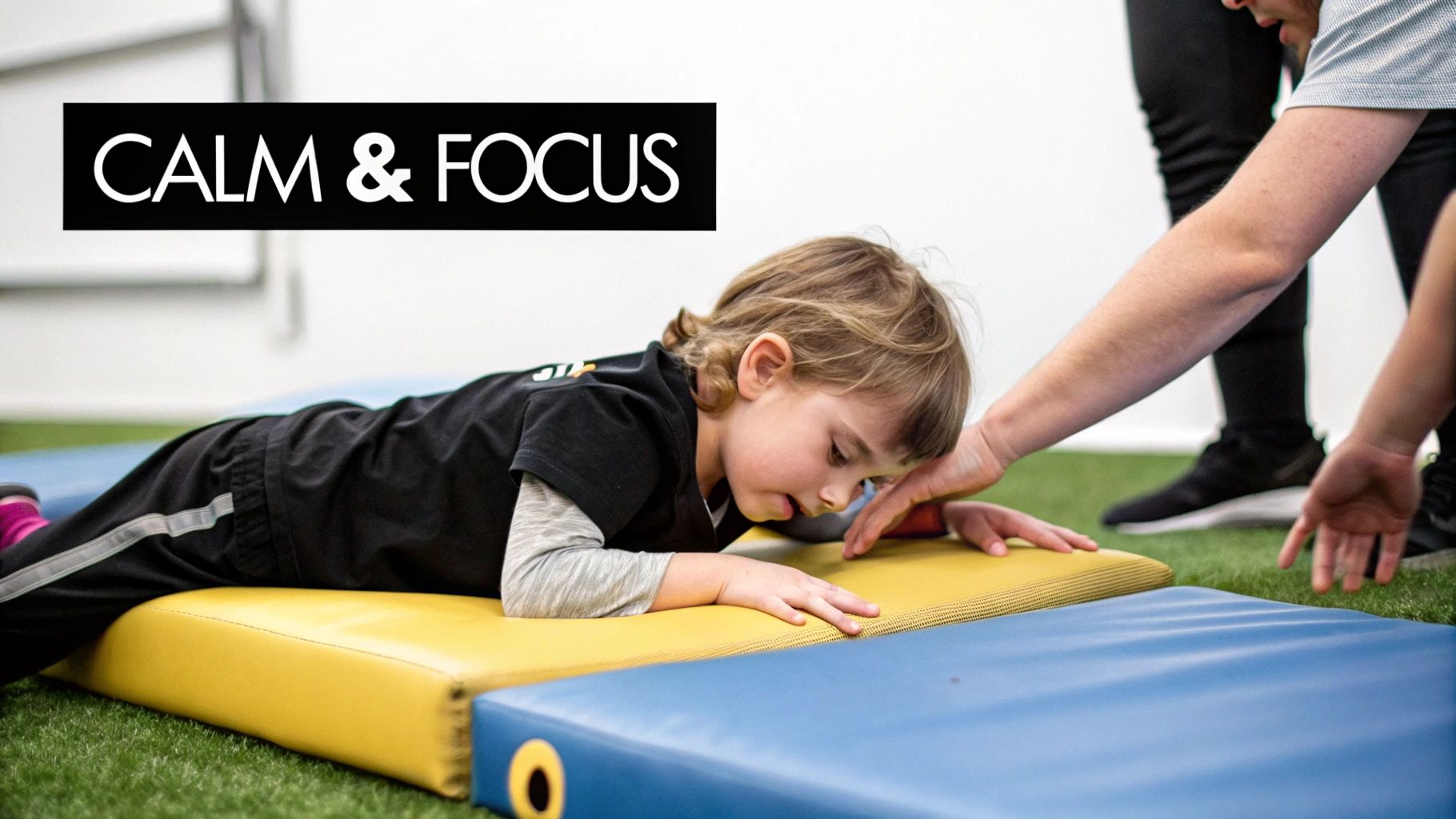
To really get why a sensory crash mat is such a game-changer, we have to look at how our brains and bodies talk to each other. For a lot of kids, particularly those with sensory processing differences, that internal communication line can get a bit fuzzy or scrambled. A crash mat, often found in play mats collections, steps in as a sort of translator, delivering clear, powerful messages that help the nervous system feel organised and calm again.
The magic happens through two key sensory channels: proprioceptive and vestibular input. When a child jumps, lands, or rolls on the mat, they’re feeding their body the exact kind of feedback it craves to sort itself out. It turns what looks like simple play into a deeply therapeutic experience.
The Power of Proprioceptive Input
Think of proprioception as your body's built-in GPS. It's the silent sense that tells you where your arms and legs are without you even having to look. This information comes from tiny receptors in our muscles and joints, and it's what makes us feel grounded and secure in our own skin.
When a child crashes onto the mat, that firm landing provides a huge dose of proprioceptive input. This sensation of deep pressure sends calming signals straight to the brain, working almost like a firm, reassuring hug that envelops the whole body.
This deep pressure input helps to organise the central nervous system. It's like turning down the volume on sensory static, allowing a child to feel more centred, focused, and in control of their body and emotions.
This powerful calming effect is precisely why a few minutes of crashing can head off a potential meltdown or help a child decompress after a stimulating day at school. For kids who struggle with sensory processing, sometimes diagnosed as a sensory integration disorder, crash mats offer a safe and wonderfully effective way to get that much-needed input and find a sense of calm.
Mastering Movement with Vestibular Input
Our vestibular system, tucked away in the inner ear, is our personal control centre for movement, gravity, and balance. It tells us if we’re moving, how fast we’re going, and which way is up. Activities that engage this system are absolutely vital for developing good coordination and body awareness.
A sensory crash mat creates the perfect safe space for this kind of exploration. Simple things like rolling, doing somersaults, or even just trying to balance on the mat's soft, uneven surface fire up the vestibular system. This helps children:
- Improve their balance and coordination, which builds confidence for all sorts of physical activities.
- Develop better spatial awareness, meaning they can navigate their surroundings without constantly bumping into things.
- Feel more secure during movement, reducing the anxiety that can come with things like swinging or climbing.
By giving kids this input in a controlled and predictable way, the mat helps their brain learn to process movement more efficiently. That's a skill that translates to everything from having fun on the playground to being able to sit still in the classroom.
The Crash Mat in a Sensory Diet
A "sensory diet" isn't about food. It's a carefully planned schedule of activities designed to give a child the specific sensory input they need to stay regulated throughout the day. A crash mat is a brilliant cornerstone ingredient in any sensory diet.
It's a reliable, on-demand source of both calming deep pressure (proprioception) and organising movement (vestibular input). Occupational Therapy practitioners across Australia recognise crash mats as an essential tool for this very reason. 'Crashing' provides that essential sensory feedback that helps settle the nervous system, which in turn helps children learn better and cope with everyday demands. Pairing this activity with quieter tools like fidgets can create a well-rounded sensory plan.
At the end of the day, a sensory crash mat is much more than just a big cushion. It's a fundamental tool for helping a child's nervous system find its equilibrium, leading to very real, positive outcomes: better focus, fewer meltdowns, less anxiety, and a happier, more regulated kid.
The Ultimate Guide to Choosing the Right Crash Mat
Picking out the right sensory crash mat can feel like a pretty big decision, but it doesn’t have to be overwhelming. If you focus on a few key things, you can confidently find a mat that’s a perfect fit for your child’s needs, your home, and your budget. Think of it less like a purchase and more like an investment in a dedicated tool for calm, regulation, and pure, joyful movement.
The aim here is to find a mat that's not just effective therapeutically, but also safe, built to last, and easy to look after. Let’s walk through the most important factors to consider, so you can find the ideal match for your home, classroom, or clinic in Australia.
Size and Thickness Considerations
First things first: grab a tape measure. You need to know exactly how much space you're working with. A crash mat needs a clear 'landing zone' around it, so make sure you factor in a buffer zone that’s well away from hard furniture or sharp corners.
- For smaller spaces, like a city apartment or a cosy corner in a bedroom, a more compact mat will do the trick nicely.
- For larger areas, such as a dedicated playroom, a classroom ‘calm-down corner’, or a therapy clinic, you can go for a bigger mat. This gives kids more room for expansive movements like log rolling or building into an obstacle course.
Thickness is just as vital because it dictates how well the mat absorbs impact. A thicker mat offers more cushioning, which is fantastic for kids who love energetic jumping and crashing. On the other hand, a slightly thinner mat can still provide that wonderful deep pressure feeling while being a bit easier to move around and tuck away.
Foam Density and Cover Materials
What’s on the inside of the mat is just as crucial as the outside. The foam's density determines how the mat feels and reacts to pressure.
A higher-density foam creates a firmer surface, giving more support for activities like standing and balancing. This is a great choice for kids who need a stable yet forgiving surface for high-impact play. In contrast, a lower-density foam will be much softer and plusher. It creates a cosy, enveloping sensation that’s perfect for calming down, snuggling up with a book, or gentle rocking.
The cover material is all about three things: safety, hygiene, and durability. You'll want to look for covers that are:
- Non-toxic and certified safe for children.
- Durable and tear-resistant to stand up to years of enthusiastic use.
- Easy to clean with a simple wipe-down, because spills and messes are just part of the fun.
- Soft and comfortable to the touch, making it an inviting space your child will naturally gravitate towards.
When selecting sensory equipment, safety certifications provide real peace of mind. They are a guarantee that the product has been properly tested and is free from harmful substances, making it a trustworthy addition to your child's environment.
If you’re wondering how a crash mat fits into a bigger sensory toolkit, our guide with tips for choosing the right sensory toys can help you pull it all together.
To help you weigh up the options, here’s a quick comparison of the key features to look for.
Sensory Crash Mat Feature Comparison
This table breaks down what to look for in a crash mat and explains why each feature matters for your child's safety and sensory experience.
| Feature | What to Look For | Why It Matters |
|---|---|---|
| Size | A mat that fits your space with at least 50cm of clear buffer zone around it. | Ensures there is enough room for safe movement and play without bumping into furniture or walls. |
| Thickness | 15-30cm for high-impact jumping and crashing; 10-15cm for deep pressure and calmer activities. | Matches the cushioning level to the intended use, protecting joints during active play and providing comfort for relaxation. |
| Foam Density | High-density for firm support (balancing); low-density for soft, plush comfort (calming). | The foam's feel directly impacts the sensory input. Firmer foam is alerting, while softer foam is calming and regulating. |
| Cover Material | Durable, tear-resistant, non-toxic, and wipe-clean fabrics like vinyl or commercial-grade polyester. | A high-quality cover ensures longevity, hygiene, and safety, making it suitable for frequent use in any environment. |
| Safety Features | Non-slip base, reinforced stitching on seams, and hidden or protected zippers. | Prevents the mat from sliding during use and ensures there are no sharp or hard parts that could cause injury. |
| Certifications | Look for Australian standards like GECA or international ones like OEKO-TEX® STANDARD 100. | Provides independent verification that the materials are free from harmful chemicals and safe for children. |
Ultimately, the best mat is one that aligns with your child's specific sensory needs while being practical for your home or clinic.
Safety Certifications and NDIS Funding in Australia
When you’re investing in a tool for your child’s wellbeing, safety is absolutely non-negotiable. Here in Australia, keep an eye out for certifications that guarantee the product is free from harmful chemicals. A great example is The Funsquare® Crash Pad, an Australian-made option measuring 120cm x 120cm x 30cm. It’s specifically designed with water-resistant, easy-clean foam and holds certifications like GECA (Good Environment Choice Australia) and OEKO-TEX® STANDARD 100, ensuring it’s non-toxic. You can find out more about this popular Australian sensory product and what makes it such a trusted choice for families and therapists.
For many Australian families, a sensory crash mat is seen as essential therapeutic equipment. This means it may be possible to purchase one using your child’s NDIS funding, as it typically falls under 'Consumables' or 'Assistive Technology' in an NDIS plan.
The best way to navigate this is to have a chat with your occupational therapist, plan manager, or support coordinator. They can provide a letter of recommendation that explains how a crash mat will help your child work towards their specific NDIS goals, which really helps to streamline the purchase and claiming process.
Unlocking Developmental and Therapeutic Benefits
A sensory crash mat is so much more than just a soft place to land. Think of it as a dynamic tool that actively supports a child's growth. It turns what looks like simple, boisterous play into a powerful therapeutic activity, where every jump, roll, and crash helps build a stronger, more confident, and better-regulated child.
The most obvious benefit you'll see right away is the development of gross motor skills. Because the mat’s surface is both unstable and forgiving, it creates a natural challenge. To stay balanced while jumping or landing, a child has to constantly fire up their core muscles, which leads to better strength, stability, and posture over time.
This constant physical feedback also helps sharpen their coordination and balance. As kids experiment with different ways to move and land, their brain and body learn to communicate more effectively. This builds the foundational skills they need for everything from having fun on the playground to joining in on team sports.
A Safe Space for Big Feelings
Beyond the physical wins, a crash mat is an incredible outlet for emotional and sensory release. For a child who feels overwhelmed, anxious, or just full of pent-up energy, the mat offers a safe and totally acceptable place to let it all out. Instead of crashing into the couch or having a meltdown, they can channel that intense energy into purposeful, physical action.
This process is absolutely crucial for developing emotional regulation. It gives kids a healthy coping mechanism, teaching them to recognise when their body needs a reset and providing the perfect tool to do it themselves. The result? Often, fewer meltdowns, less anxiety, and a much better ability to focus during quieter times. This dedicated area often becomes part of a home's calming corner ideas.
Thinking about which mat will deliver these benefits? This little decision tree can help you picture the key things to consider.
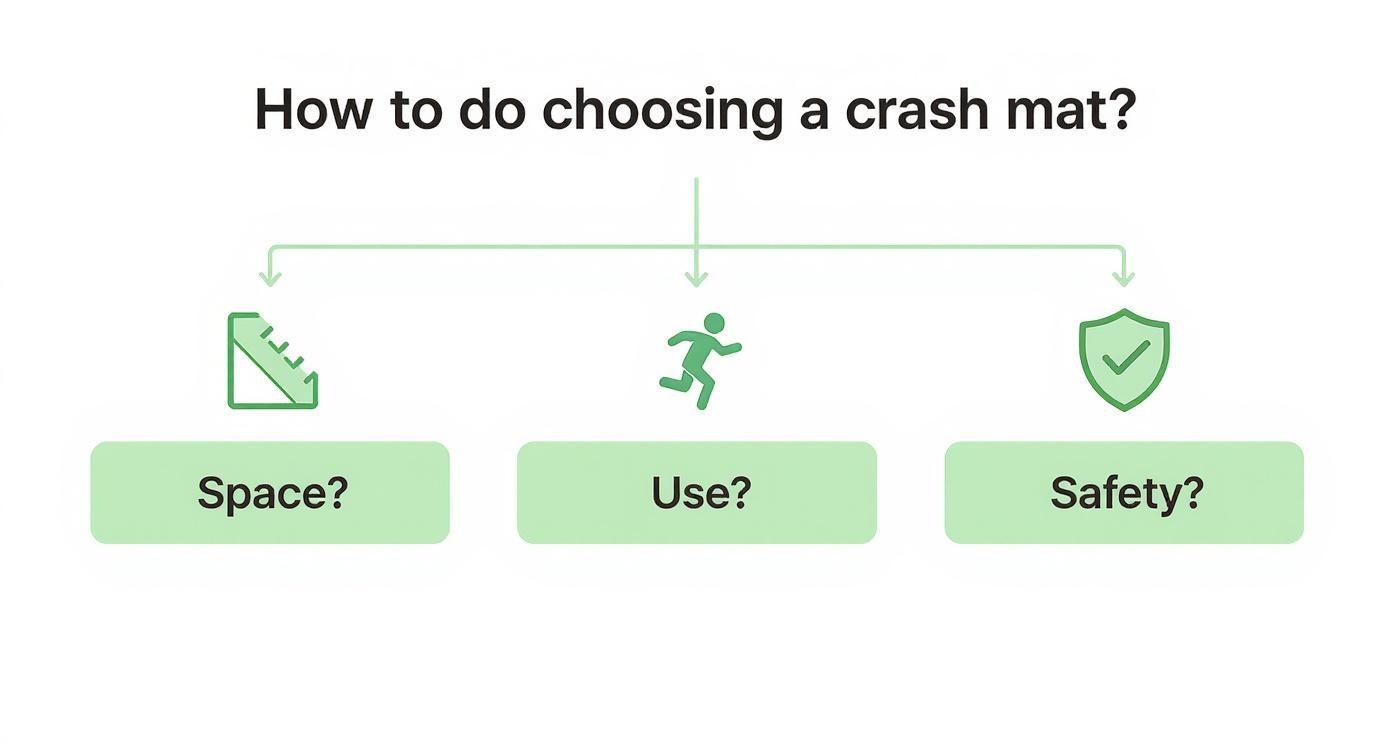
As the infographic shows, matching the mat's features—like its size to your space, the foam density to its intended use, and making sure it has safety certifications—is the first step. This ensures it’s perfectly suited to your child's specific therapeutic needs.
Building Body Awareness and Confidence
All that crashing and jumping provides powerful feedback that builds a child’s body awareness (the technical term is proprioception) and their sense of space. This internal "map" helps a child understand where their body is in relation to everything around them, which can reduce clumsiness and build the physical confidence they need to move through their world safely.
This newfound confidence often spills over into other parts of life. A child who feels secure and capable in their own body is far more likely to try new things, engage with friends on the playground, and participate more fully in the classroom. The simple act of mastering their own movements can have a massive impact on their self-esteem.
Here in Australia, sensory crash mats are becoming recognised as essential tools in occupational therapy. In clinics, we see children who regularly use these mats show real, measurable improvements in their motor skills, balance, and self-regulation. The deep pressure from landing helps calm the nervous system, which in turn improves focus. Kids in ABA therapy have also shown they can better tolerate sensory input, leading to better social interaction.
Fostering Social and Collaborative Skills
A sensory crash mat can also become a fantastic hub for social interaction. It’s a natural magnet for collaborative play, creating chances for kids to learn and practise vital social skills in a fun, low-pressure setting.
Here are just a few ways it helps with social development:
- Turn-Taking: Simple games like "who can jump the highest?" or taking turns doing somersaults are brilliant for teaching patience and sharing.
- Cooperative Play: Kids can work together to build a fort using the mat as a base or make it part of a bigger obstacle course, sometimes incorporating toys like Magnatiles.
- Communication: Playing together on the mat naturally encourages them to talk, negotiate rules, and share ideas, both verbally and non-verbally.
It turns what could be a solitary activity into a shared experience, helping children build friendships and learn the give-and-take of social life. At the end of the day, a crash mat is an investment in a child's whole development, offering a unique mix of physical, emotional, and social benefits that support them at home, in the classroom, and everywhere in between.
Fun and Creative Ways to Use Your Crash Mat
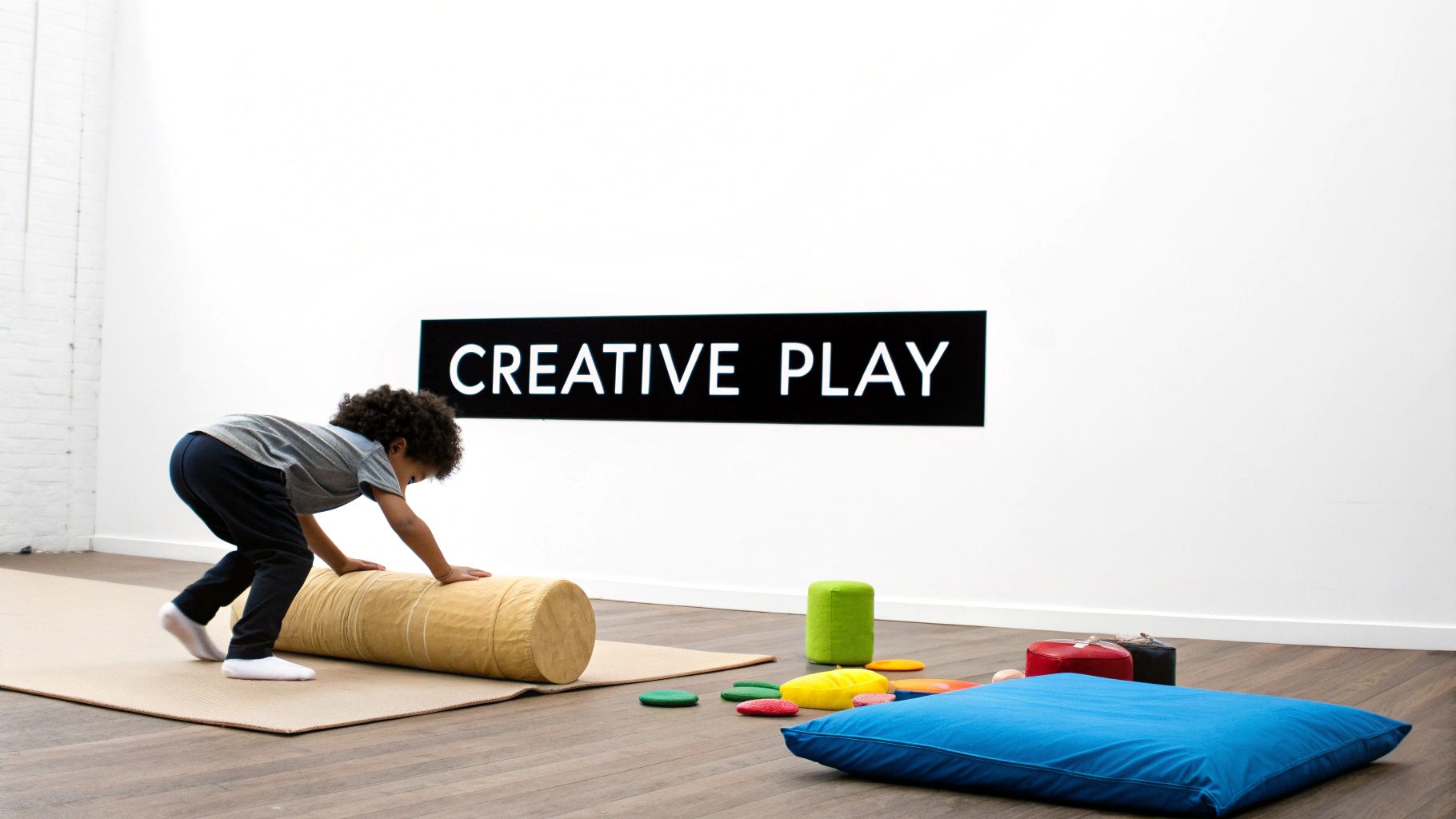
While jumping is the first thing that comes to mind, a sensory crash mat is so much more than a landing pad. Think of it as a blank canvas for therapeutic play. It can become a calming sanctuary, an energetic playground, and a developmental powerhouse, all in one. Moving beyond simple crashing unlocks a whole world of play that keeps kids engaged, regulated, and genuinely excited to take part.
These activities aren't just for fun, either. They're therapist-approved strategies for delivering targeted sensory input. By having a few different ideas up your sleeve, you can easily match an activity to what your child needs in the moment—whether it's burning off steam, calming their system, or building new skills.
Energising Activities for Sensory Seekers
Got a child who craves movement and intense physical feedback? The crash mat can be the star of the show. These activities are all about providing powerful proprioceptive and vestibular input in a safe, controlled way.
You can’t go wrong with a classic obstacle course. Set up a course that involves crawling through a tunnel, stepping over cushions, and walking along a line of tape on the floor. The crash mat waiting at the end offers the perfect grand finale—a satisfying, full-body sensory reward that completes the circuit.
Log rolling is another brilliant one. Have your child lie down at one end of the mat and roll their body all the way across. It’s such a simple movement, but it provides consistent deep pressure along their entire body and gives fantastic vestibular input, which is great for building body awareness and coordination.
Calming Activities for Regulation
When energy levels are through the roof or big emotions are bubbling over, the crash mat can instantly transform into a cosy, calming retreat. These activities are designed to provide gentle, organising deep pressure that helps the nervous system settle right down.
The "cushion sandwich" is a firm favourite among occupational therapists for good reason. Just have your child lie on the crash mat, then gently place large cushions or even another soft mat on top. Applying firm, steady pressure creates a comforting, cocoon-like feeling that is deeply regulating. For an extra layer of calm, you could add some weighted animal toys to the mix.
Gentle rocking is another simple but powerful technique. With your child lying on the mat, gently push down and rock it from side to side. That rhythmic, predictable movement is incredibly soothing for the vestibular system and can really help a child decompress after a busy day. These activities make the mat a cornerstone of effective sleeping aids.
A crash mat's versatility allows it to meet a child's changing sensory needs. It can be a high-energy outlet one moment and a safe, quiet space the next, empowering children to learn self-regulation.
Motor Skill and Imagination Builders
A sensory crash mat is also a fantastic platform for building core motor skills and sparking imaginative play. These games challenge balance, strength, and coordination, all while encouraging a bit of creative thinking.
- Animal Walks: Challenge your child to move across the mat like different animals. A bear walk (on hands and feet), a crab walk (belly up!), or a series of frog jumps are all great options. The soft, slightly unstable surface makes their muscles work that much harder to stay balanced.
- Balancing Challenges: See how long they can stand on one foot on the mat. It’s much trickier than it sounds and is fantastic for building core strength and stability.
- Fort Building: A crash mat makes the perfect soft floor for a cosy den or a safe landing pad just outside a sensory tent.
- Perfect Landings: Try positioning the mat underneath a sensory swing. This combo is the ultimate sensory experience, allowing for safe, high-input swinging and jumping that delivers a double dose of vestibular and proprioceptive feedback.
By getting creative with how you use it, you can easily turn your crash mat into one of the most versatile and effective therapeutic tools in your home, classroom, or clinic.
Building a Complete and Balanced Sensory Space
A sensory crash mat is a brilliant centrepiece for a sensory space, but it truly shines when it’s part of a bigger picture. When you surround it with other thoughtfully chosen tools, you can turn a simple corner into a balanced, multi-sensory environment that gives your child exactly what their nervous system is craving.
Think of it as putting together a personalised sensory toolkit. The crash mat is your go-to for heavy-duty proprioceptive and vestibular input, but a really great space will cater to all the senses. Combining different elements lets a child learn to self-regulate by exploring and choosing the sensory experience that feels right for them in that moment.
Creating a Multi-Sensory Environment
To design a space that really works, you want to offer a menu of sensory inputs. This variety ensures that whether a child needs to ramp up their energy or find a moment of calm, the right tool is always within easy reach.
Here’s how you can start layering in different sensory experiences:
- Soothing Visuals: Gentle, captivating lights can completely change the mood of a room. A mesmerising Jellyfish Lamp or the slow, rhythmic drift of a bubble tube offers predictable, calming visual input that can help a child focus and de-escalate.
- Auditory Calm: For kids who get overwhelmed by noise, a pair of noise-cancelling earmuffs for kids can create an instant pocket of peace. This simple tool puts them back in control of their auditory world, which is incredibly empowering.
- Constant Deep Pressure: A crash mat delivers intense bursts of deep pressure, but sometimes what's needed is something more sustained. Weighted blankets and toys provide a gentle, constant pressure that feels like a reassuring, full-body hug.
Designing a Functional and Inviting Space
A successful sensory space isn't just about what's in it, but how it's all arranged. Good organisation makes the space feel safe, predictable, and easy for a child to navigate independently. For more inspiration, you can explore some brilliant sensory room ideas for home that show how to incorporate and complement your crash mat beautifully.
The goal is to create an environment where the child feels in control. By offering choices—the bouncy crash mat, the snuggly weighted animal, the quiet of earmuffs—you are teaching them invaluable self-regulation skills.
Looking for another fantastic tool that offers deep pressure and a wonderful sense of enclosure? You can learn more about the benefits of a sensory body sock in our detailed guide.
By thoughtfully combining these elements, your sensory crash mat moves from being just a piece of equipment to becoming the heart of a supportive space that truly meets your child’s unique needs.
Got Questions About Sensory Crash Mats? We’ve Got Answers.
Stepping into the world of sensory tools can feel a little overwhelming, and it’s natural to have questions. We hear from parents, teachers, and therapists all over Australia, so we’ve put together answers to some of the most common queries to help you get started.
How Often Should My Child Use a Crash Mat?
There's no one-size-fits-all answer here; it really comes down to your child’s unique sensory profile. Some kids thrive with short, scheduled 'crash breaks' throughout the day, maybe for 10-15 minutes at a time, just to keep their systems in check.
Others might only gravitate towards the mat when they’re starting to feel wound up or have a burst of energy they need to get out. An occupational therapist is the perfect person to help you build a personalised 'sensory diet' that uses the mat to support your child's specific needs and goals.
Can Adults Use a Sensory Crash Mat Too?
Of course! While they’re often seen as a tool for kids, a good quality sensory crash mat provides the exact same calming, grounding benefits for teenagers and adults. It can be an incredible way to decompress after a stressful day, offering that deep pressure input that helps soothe anxiety and manage sensory overload.
What’s the Best Way to Clean a Crash Mat?
Keeping your mat clean is actually pretty straightforward. Most well-made crash mats have a tough, non-porous vinyl or polyester cover that makes wiping them down a breeze.
For a quick clean:
- Just grab a soft cloth with a bit of mild soap and water and give the whole surface a wipe.
- If you have a more stubborn mark, a gentle, non-abrasive cleaner will do the trick.
- The most important step is to make sure the cover is completely dry before it’s used again to stop any mould or mildew from forming.
It’s best to steer clear of harsh chemicals or bleach, as they can wear down the cover over time. A little regular cleaning will keep the mat a safe and inviting sensory space for years to come.
Ready to create a safe space for play and regulation? Explore the range of high-quality, durable sensory tools at The Sensory Poodle and find the perfect addition to your home, classroom, or clinic.
Discover our full collection of sensory space essentials today.