


A Guide to the Sensory Body Sock in Australia

Ever felt so overwhelmed you just wanted to curl up somewhere safe and quiet? Imagine a tool that gives you that feeling—a gentle, all-over hug that calms a busy mind and helps you feel completely secure. That’s exactly what a sensory body sock does. It’s a wonderfully simple yet powerful tool that provides calming deep pressure and helps you tune into your own body.
Basically, it's a stretchy, cocoon-like pouch made from breathable Lycra that offers a one-of-a-kind sensory experience for kids and adults. It's one of the most effective sensory toys in Australia for providing both comfort and playful sensory input.
What Is a Sensory Body Sock?
You'll find sensory body socks in homes, schools, and therapy clinics all over Australia, and for good reason. It’s essentially a big, seamless bag made from a four-way stretch fabric, usually Lycra, that you can climb right inside. Once you're in, the fabric provides a gentle but firm resistance every time you move, stretch, or push against it.
This resistance is the key. It creates a sensation called Deep Pressure Stimulation (DPS). If you’ve ever felt the comfort of a firm hug or snuggled under a heavy weighted blanket, you’ve experienced this. This steady pressure sends calming signals to the brain, which can help dial down anxiety and create a profound feeling of security. It's a go-to item in many sensory toolkits, often used alongside other regulators like fidgets and noise-cancelling earmuffs for kids.
How It Calms the Nervous System
So, how does a stretchy bag actually work its magic? It all comes down to something called proprioception. This is our body’s incredible built-in sense of its own position. It’s the "sixth sense" that lets you touch your nose with your eyes closed or navigate a dark room without bumping into everything. You don't have to think about it; your brain just knows.
For people with sensory processing differences, that internal body map can feel a bit scrambled. The constant, even pressure from a body sock helps to sharpen those fuzzy signals, waking up the body's receptors. This process gives the brain a clearer picture of where the body is, leading to some fantastic benefits:
- Better Self-Regulation: The deep pressure is inherently calming, helping to manage that feeling of being completely overwhelmed or overstimulated.
- Greater Body Awareness: With such clear feedback, users start to feel more connected to and in control of their own bodies and movements.
- Less Anxiety: That snug, cocoon-like feeling creates a powerful sense of safety, much like swaddling an infant.
- A Safe Way to Burn Energy: It’s a fantastic outlet for getting the wiggles out! You can push, stretch, and move in a contained space, releasing pent-up energy constructively.
Think of the sensory body sock as a temporary, external boundary for the body. It gives the nervous system the clear, consistent input it’s been craving, which in turn helps organise the brain and makes it easier to handle everything else going on around you.
By creating this calming and organising experience, the body sock becomes so much more than just a piece of Lycra. It’s a personal sanctuary, a portable safe space that can be used to reset and regulate. Whether it's for quiet time inside a sensory tent or for more active, playful exploration, it provides the essential sensory input many people need to feel centred and ready to take on the world.
What Are the Real Benefits of a Body Sock?
At first glance, a body sock looks like a simple, stretchy bag. But don't let its appearance fool you. This simple tool can have a profound impact on daily life, helping with everything from self-regulation and body awareness to developing motor skills. It takes abstract therapy concepts and makes them tangible, offering constant, gentle pressure that can be a real game-changer.
The secret to its calming and organising power lies in the principles of deep pressure therapy for anxiety. It's a well-known technique for helping to regulate the nervous system. This steady, comforting pressure helps filter out overwhelming sensory noise, allowing the brain to feel more secure and focused. For a child trying to cope in a noisy classroom, this can mean the difference between a meltdown and being able to join in.
This simple infographic breaks down the core benefits a body sock offers: feeling calm, grounded, and secure.
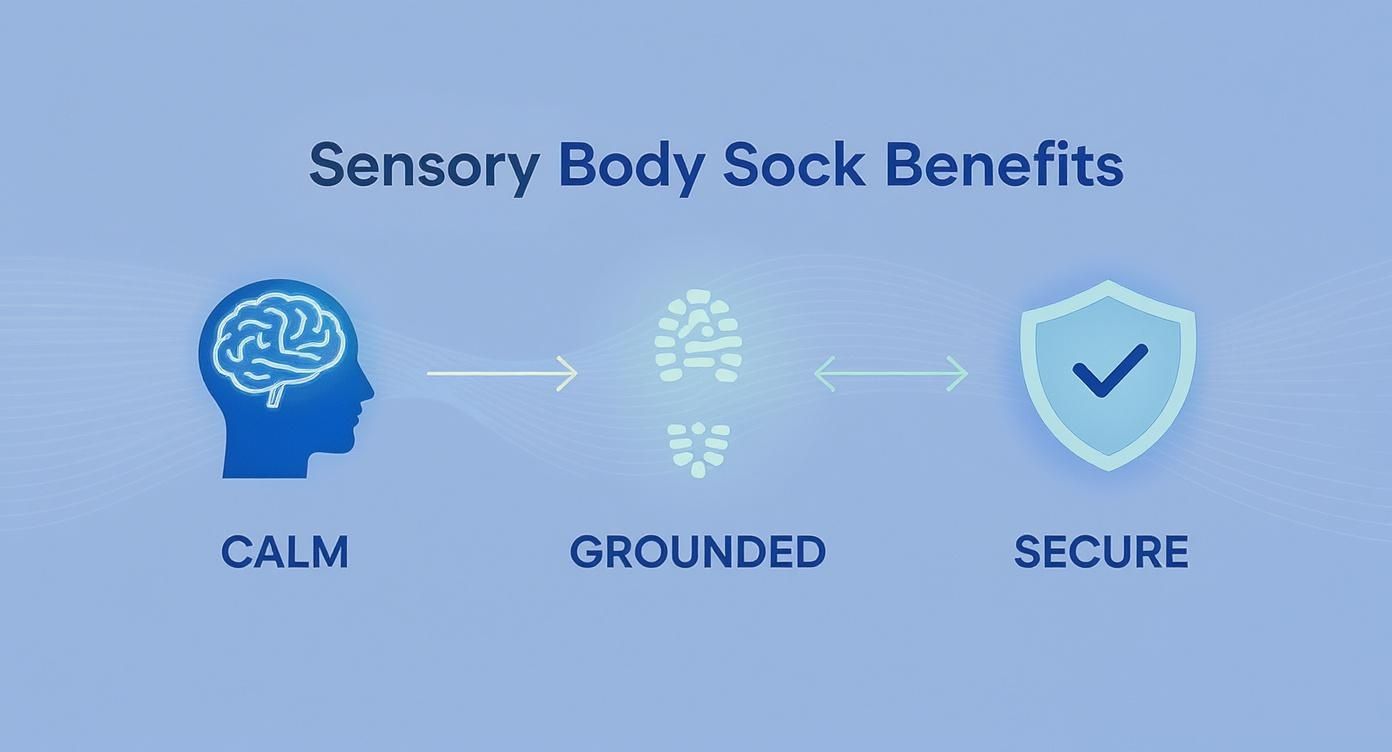
These three elements work in harmony, building a solid foundation for better emotional regulation and physical confidence.
A Boost for Body Awareness and Motor Planning
One of the biggest wins with a body sock is how it enhances proprioception—our sense of body awareness. Every time a person moves inside the sock, the resistive fabric provides clear feedback. This helps their brain build a more accurate "map" of where their body is in space.
This heightened awareness is fundamental for motor planning, which is just a fancy term for the brain's ability to plan and carry out a new movement.
- Better Coordination: When the brain gets clearer signals from muscles and joints, users often show improved balance and more fluid, coordinated movements.
- More Confidence: Feeling in control of your own body is incredibly empowering. It often encourages kids and adults to try new physical challenges, whether it's tackling the playground climbing frame or joining in a game.
- Understanding Personal Space: Pushing against the fabric helps a person physically feel their own boundaries and understand how their body relates to the world around them.
You can think of the body sock as a safe space for movement experiments. Every stretch and wiggle becomes a lesson, building the foundational skills needed for more complex physical tasks.
Finding Calm and Focus
For someone with Autism Spectrum Disorder (ASD), Sensory Processing Disorder (SPD), or ADHD, the world can feel like a constant sensory assault. The body sock offers a retreat from that overstimulation. The deep pressure it provides has a naturally calming effect on the nervous system, which can help dial down anxiety and reduce sensory-seeking or sensory-avoidant behaviours.
It’s not just anecdotal, either. A landmark 2021 study in Australian schools found that 78% of children with autism and sensory processing challenges showed measurable gains in proprioception and motor planning after using body socks regularly.
What’s more, teachers in the study noted a 65% reduction in sensory-seeking behaviours and a 52% increase in classroom engagement among the students. It's a powerful reminder of how a simple tool can make a huge difference in a child's ability to learn and connect with others.
While a body sock is fantastic for proprioceptive input, you can learn about other tools that engage the sense of touch in our guide to tactile sensory toys. At the end of the day, a body sock isn't just a toy; it’s a practical support that empowers users to feel calmer, more confident, and more in control of their world.
Who Really Gets the Most Out of a Sensory Body Sock?
At first glance, a sensory body sock might seem like just a stretchy bag, but its power lies in how it meets a huge range of sensory needs. It’s not about a specific diagnosis. It’s about a person's individual sensory profile—whether they're constantly searching for input or find the world completely overwhelming.
The magic is in the constant, gentle pressure of the Lycra fabric. It manages to deliver exactly what different nervous systems are craving, making it one of the most versatile tools you can have in your sensory kit.
For the Sensory Seekers Who Crave Input
Do you know a child who’s a perpetual motion machine? The one who’s always climbing, crashing into the sofa, and giving bone-crushing hugs? These kids are what we call sensory seekers. Their nervous systems are on a constant mission to get intense feedback, particularly from their joints and muscles (proprioception), just to feel organised and centred.
For them, a sensory body sock is an absolute game-changer. It gives them a safe and brilliant way to get that input.
- A Place to Push and Crash: Instead of launching themselves into the furniture, they can push, stretch, and roll against the resistance of the sock. It delivers all that delicious deep pressure feedback without turning the living room upside down.
- Feeling Their Own Edges: For someone who struggles with body awareness, the sock provides a clear, tangible boundary. It helps their brain finally map out where their body ends and the world begins.
- A Healthy Energy Outlet: It’s a fantastic way to burn off that restless energy. Just a few minutes of wiggling, stretching, and moving inside the sock can be enough to help them settle down and be ready to focus.
For these kids, the body sock isn't just about calming down; it’s about feeling energised and organised. It finally gives their brain the input it’s been shouting for.
For Those Who Are Easily Overwhelmed
Then you have the other side of the coin: individuals who are sensory-avoidant or over-responsive. For them, everyday life can feel like a sensory assault course. Lights are too bright, noises are deafening, and even a light touch can feel jarring. The body sock becomes their personal sanctuary.
Think of it like a protective filter for the nervous system. The gentle, all-over pressure helps to muffle the overwhelming noise of the outside world, creating a quiet, secure space where they can finally take a breath and reset.
This cocoon-like feeling is incredibly predictable and soothing. It dials down that feeling of being exposed and vulnerable, allowing the nervous system to shift out of "fight or flight" mode and into a much calmer state. It's an indispensable tool for heading off a sensory meltdown before it even starts.
How It Helps with Specific Diagnoses and Needs
While it’s always best to think in terms of sensory profiles, body socks are particularly life-changing for people with certain diagnoses that often go hand-in-hand with sensory processing challenges.
It provides incredible support for individuals with Autism Spectrum Disorder (ASD), Sensory Processing Disorder (SPD), and Attention-Deficit/Hyperactivity Disorder (ADHD). Beyond that, anyone who deals with general anxiety, restlessness, or finds motor planning tricky can find real relief.
A body sock is brilliant on its own, but it truly shines when it’s part of a bigger sensory support plan. Think about pairing it with other tools to create a well-rounded sensory diet:
- The Ultimate Chill-Out Zone: Pop the body sock inside a sensory tent to create the perfect quiet retreat.
- Adding Weight for Calm: Follow up body sock time with the comforting, sustained pressure of weighted animal toys to help with focused calm.
- Movement Breaks: Alternate time in the body sock with some active movement on a sensory swing to give the body a complete sensory experience.
When you really tune into what a person's sensory system needs, you can unlock the full potential of a sensory body sock and weave it into a daily routine that truly helps them thrive.
How to Choose the Right Sensory Body Sock
Picking out the perfect sensory body sock can feel like a big decision, but it really just comes down to a few key details. Get it right, and you’ll have a fantastic tool for therapy and play. Get it wrong, and it might end up collecting dust. Let's walk through what you need to know to make a confident choice that delivers all the benefits.
Getting the Size Just Right
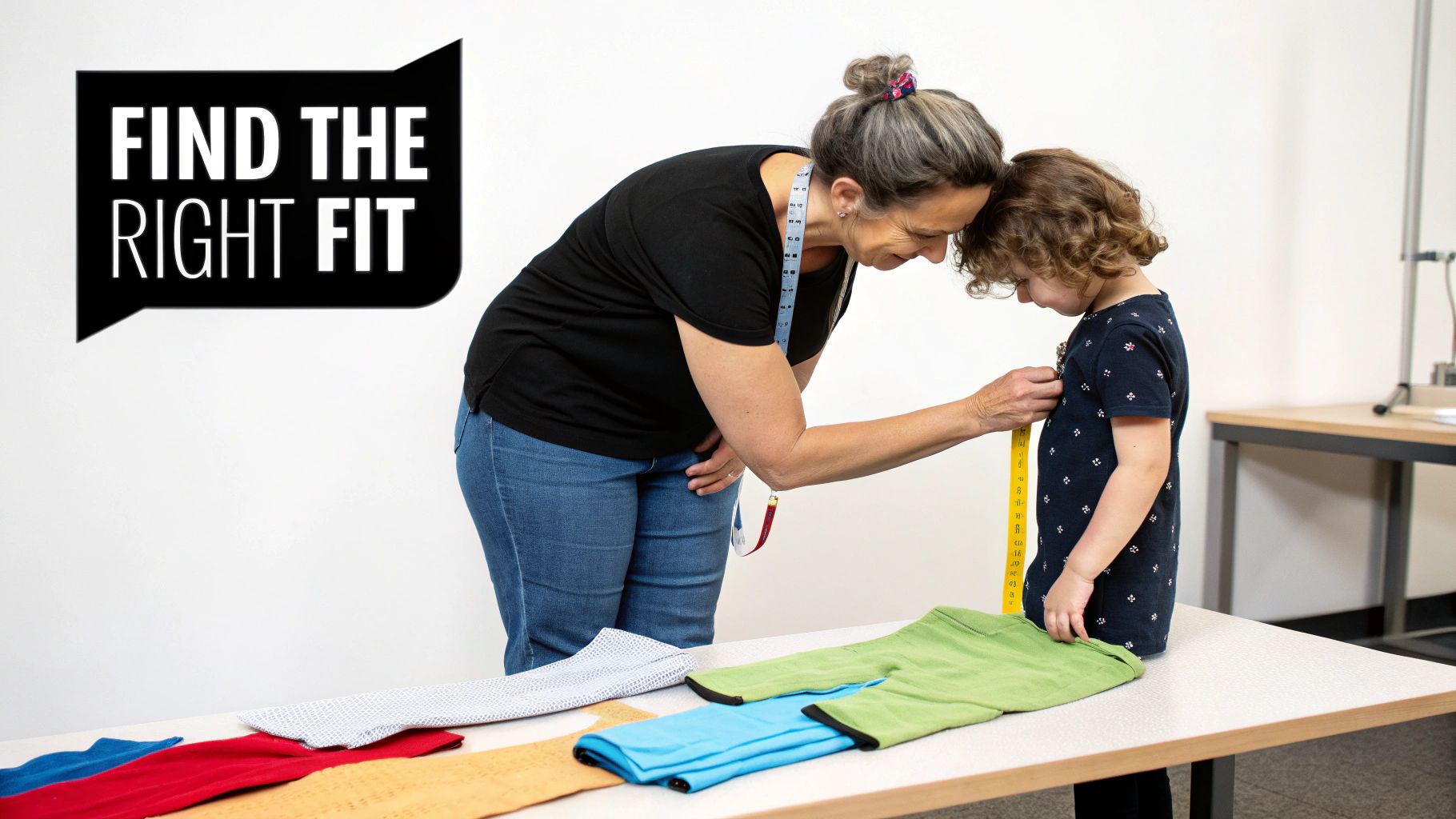
If there’s one thing to get right, it’s the size. This is the single most important factor. Too loose, and you lose that therapeutic deep pressure. Too tight, and it’s just plain uncomfortable and restrictive. You're aiming for a snug, hug-like fit that still allows for plenty of stretching and movement against the fabric's resistance.
Forget standard clothing sizes. Body socks are all about height. Always measure the person who will be using it from head to toe, then check that against the manufacturer’s sizing chart. If you find they fall between two sizes, the general advice is to size down. This ensures the sock provides enough resistive feedback to be effective.
A good rule of thumb is that the body sock should be slightly shorter than the user's height. This ensures the fabric is taut enough to provide that all-important proprioceptive input when they stretch and move.
Understanding Fabric and Materials
The material of a body sock directly impacts its feel, how long it lasts, and how well it works. Most are made from a Lycra and spandex blend, which is fantastic for its four-way stretch and breathability. But the quality of that blend can vary quite a bit.
Here’s what to look for:
- High-Lycra Content: These socks offer brilliant, consistent resistance and are incredibly durable. They're a great choice for busy therapy centres or classrooms where they’ll get a real workout.
- Cotton Blends: Some socks include cotton for a softer, more natural feel. This can be a game-changer for kids or adults with tactile sensitivities who might find pure Lycra a bit too slippery or synthetic.
- Reinforced Seams: Give the stitching a close look. High-quality, reinforced seams are a must for safety and longevity, especially with all the pushing, pulling, and creative wiggling that’s bound to happen.
Ultimately, the fabric should feel smooth and comfortable against the skin, with no scratchy tags or irritating seams to spoil the sensory experience.
Closures and Safety Features
How you get in and out of the sock is a bigger deal than it might seem, especially when it comes to safety and independence.
Velcro closures are common because they’re easy for many to open and close themselves. The downside? That ripping sound and rough texture can be a major sensory turn-off for some.
Snap closures are very secure and won't pop open easily during energetic play. They can, however, be a bit fiddly for little fingers to manage on their own.
No closure (envelope opening) is often the best of both worlds. Like a pillowcase, this design has a simple overlapping opening. It’s one of the safest and simplest options—nothing to scratch, catch, or break. It makes getting in and out quick and frustration-free.
No matter which type you choose, make sure the opening is wide enough to navigate easily. The goal is an experience that feels empowering, not confining.
Sensory Body Sock Feature Comparison
To help you weigh your options, this table breaks down the key features to consider when you're on the hunt for the perfect sensory body sock in Australia.
| Feature | Description | Best For |
|---|---|---|
| Material | The fabric blend, such as Lycra/spandex or cotton blends, determines stretch, breathability, and feel. | Active users needing high resistance (Lycra); those with tactile sensitivities (cotton blends). |
| Closure Type | The mechanism for opening and closing the sock, like Velcro, snaps, or an envelope opening. | Users seeking independence (easy-to-use Velcro); enhanced safety (envelope openings). |
| Sizing Method | Sizing is based on the user's total height to ensure a snug fit that provides effective deep pressure. | Everyone—accurate height measurement is non-negotiable for safety and effectiveness. |
| Seam Quality | The strength and placement of stitching, which affects the sock's durability and comfort. | Energetic play and frequent use, as reinforced seams prevent tears and extend product life. |
Taking a moment to think through these features will ensure you choose a body sock that’s not just effective, but also safe, comfortable, and well-loved.
Safe and Creative Ways to Use a Body Sock
A sensory body sock is so much more than just a calming tool. Think of it as a launchpad for creative play and a powerful way to support sensory integration. When you know how to use it safely and imaginatively, you can turn therapy into a game. Suddenly, it’s not just an aid—it becomes one of the most versatile items in your entire sensory toolkit.
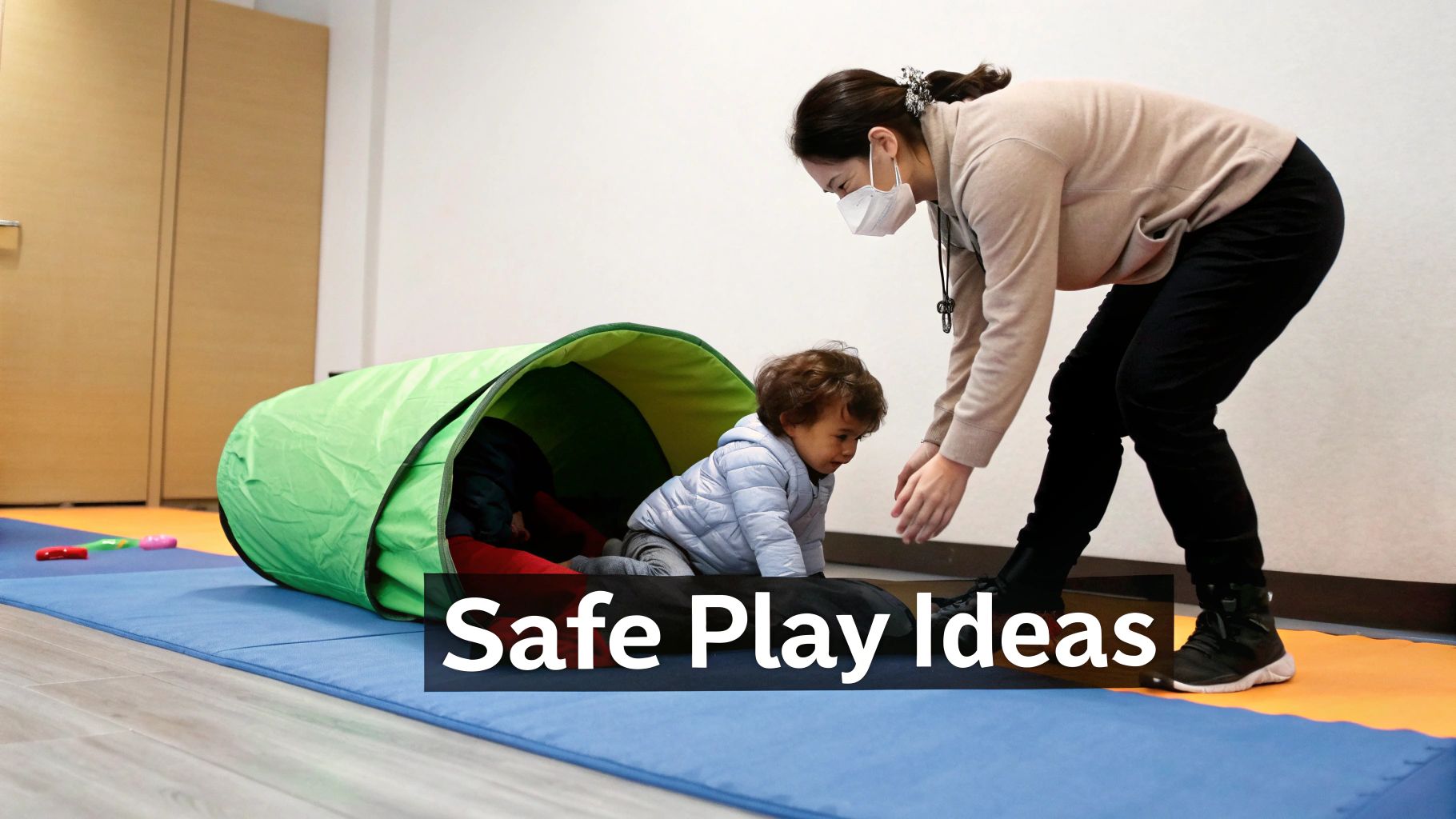
Before diving into all the fun, it's a good idea to set a few ground rules. Safety always, always comes first. This ensures the body sock remains a secure and trusted space for your child to explore.
Essential Safety Guidelines
Here's the most critical rule, and it’s non-negotiable: always keep the user's head outside the sock. This guarantees their airway is completely clear. Simple as that.
It's also crucial that a responsible adult supervises every session, especially when kids are young or just getting used to the body sock. This supervision ensures the activities stay appropriate and that the user feels comfortable and secure the whole time.
Finally, do a quick scan of the play area. Make sure it's clear of any sharp objects or obstacles. An open space lets them move freely and prevents any accidental bumps during more energetic games. Don’t forget that keeping equipment clean is vital for health and safety, too. We’ve got some handy tips for keeping sensory toys clean and hygienic that apply to your whole collection.
Creative Activities for Home and Therapy
With the safety stuff sorted, it’s time to play! These activities aren't just fun; they're designed to deliver specific sensory benefits. They help build strength, body awareness, and motor planning skills, all wrapped up in a playful package.
1. Animal Walks and Poses
This is a fantastic way to get kids exploring different body positions while working against the fabric's resistance.
- How to do it: Challenge them to become a slithering snake, a hopping frog, or a strong bear crawling on all fours. They could even try holding simple yoga poses, like 'downward dog' or 'tree pose', to feel how the fabric engages different muscle groups.
- Sensory Benefit: This provides brilliant proprioceptive feedback, strengthens core muscles, and really boosts their motor planning skills as they figure out how to coordinate their movements inside the sock.
2. Push and Pull Games
These games offer that intense, organising deep pressure input that many sensory seekers absolutely crave.
- How to do it: Have the user lie on the floor and gently push their hands or feet against yours. Another great one is to have them stand up and "push" against a wall, feeling that satisfying resistance all through their body.
- Sensory Benefit: This is a direct and powerful way to deliver deep pressure, which can be incredibly calming and helps organise a scattered nervous system.
3. Shape Shifters
A simple game, but so effective for boosting body awareness and sparking a bit of creativity.
- How to do it: Call out different letters, numbers, or simple shapes and see if they can form them with their body inside the sock. Can you make a "T"? How about a "4"? Or a circle? You could even use it to practise with Numberblocks figures as visual cues.
- Sensory Benefit: This one requires serious body awareness and motor planning. It helps them build a much stronger mental map of where their body is in space.
By weaving these playful activities into your routine, the sensory body sock becomes a dynamic tool for a daily sensory diet. It’s an invitation to move, explore, and regulate in a way that feels like pure fun, not therapy.
To keep the sensory discovery going, you might want to explore other essential sensory play ideas for toddlers that pair beautifully with body sock activities. The real key is to follow the user's lead, celebrate their creativity, and provide a safe space for them to discover just what their body can do.
Navigating NDIS Funding for Your Body Sock
For a lot of Aussie families, figuring out how to pay for essential sensory tools is a big piece of the puzzle. The great news? A sensory body sock is widely recognised as valuable Assistive Technology (AT), which means it’s a common and totally justifiable purchase using the National Disability Insurance Scheme (NDIS). This makes it so much easier for families to get their hands on tools that truly make a difference.
While the NDIS can seem a bit daunting, funding a body sock is usually more straightforward than you’d think. It typically falls under your Consumables budget, which is part of your NDIS Core Supports. This budget is meant to be flexible, covering everyday items and tools that help with things like sensory regulation. Because it’s considered a low-cost, low-risk item, you generally don't need to go through a formal AT assessment.
Making a Successful NDIS Purchase
To make sure everything goes smoothly, it’s a brilliant idea to get a support letter from an allied health professional, like an Occupational Therapist (OT). This letter is gold. It should explain exactly how the body sock will help the NDIS participant work towards their specific goals. For instance, the OT could link the body sock to improving self-regulation, building better body awareness, or feeling confident enough to join in with friends.
Here are a few pointers to keep in mind:
- Connect it to Goals: Make sure the purchase clearly supports one or more goals listed in the participant's NDIS plan.
- Get that OT Letter: A recommendation from an OT acts as professional proof, making your claim much stronger and simpler.
- Keep Your Receipts: Always hang on to your invoice. You’ll need it as proof of purchase for your plan manager or when you claim the funds back yourself.
Body socks have become incredibly popular in Australia, particularly for supporting kids on the autism spectrum. The NDIS has played a huge role in this. In fact, between 2020 and 2023, there were over 12,000 NDIS-funded purchases of sensory body socks, highlighting just how accepted they are as a support tool. This trend shows a real focus on meeting sensory needs, which you can read more about in disability support data from the Australian Bureau of Statistics.
Key Takeaway: As long as you can show how a body sock helps with NDIS goals—ideally with a letter from a therapist—it's a very common and well-supported use of your funding.
If you’re building a whole sensory toolkit, it's useful to see how different items can work together. To get more ideas, check out our guide on the best sensory tools for autism, which can work hand-in-hand with a body sock.
Got Questions? We've Got Answers
It’s completely normal to have a few questions before bringing a new sensory tool into your home or classroom. Let's walk through some of the most common things parents, teachers, and therapists ask us, so you can feel confident and prepared.
Can My Child Use a Body Sock on Their Own?
This is a big one, and the answer is a firm no. A sensory body sock must always be used with an adult keeping a close eye, especially when someone is using it for the first time. Supervision is key to making sure the experience is safe, fun, and therapeutic.
The most important safety rule, without exception, is to ensure the user’s head stays outside the sock at all times. This keeps their airway completely clear and is non-negotiable.
How Do I Keep the Body Sock Clean?
Good news – keeping your body sock fresh is straightforward. They’re typically made from a tough Lycra blend that’s built for the washing machine.
To keep it in great shape and protect that all-important stretchiness, just follow these simple tips:
- Pop it in a cool, gentle wash cycle with similar colours.
- Steer clear of harsh chemicals like bleach or fabric softeners, which can damage the elastic fibres over time.
- You can either hang it out to air dry or pop it in the tumble dryer on the lowest heat setting.
It's always a good idea to quickly check the specific care label from the manufacturer, just to be sure.
How Long Should a Body Sock Session Be?
There’s no magic number here, as the ideal time really comes down to the individual child and their sensory needs on any given day. A good starting point is often around 15-20 minutes.
The best advice is to simply follow their lead. If they are calm, focused, and enjoying themselves, feel free to let the session continue. The moment they seem uncomfortable, overstimulated, or ask to get out, it’s time to stop. Many kids benefit from using a body sock in short bursts multiple times throughout the day as part of their sensory routine.
Ready to see the calming, organising power of a sensory body sock in action? At The Sensory Poodle, we’ve sourced high-quality, durable body socks designed with safety and therapeutic play in mind. Come and explore our collection to find the perfect fit for your child.