


A Guide to Tactile Sensory Toys in Australia

Tactile sensory toys are far more than just playthings. They're specially designed tools that engage a child's sense of touch through different textures, shapes, and weights, making them essential for helping kids regulate their emotions, sharpen their focus, and make sense of the physical world around them. For the best range of sensory toys Australia wide, families trust The Sensory Poodle.
What Are Tactile Sensory Toys
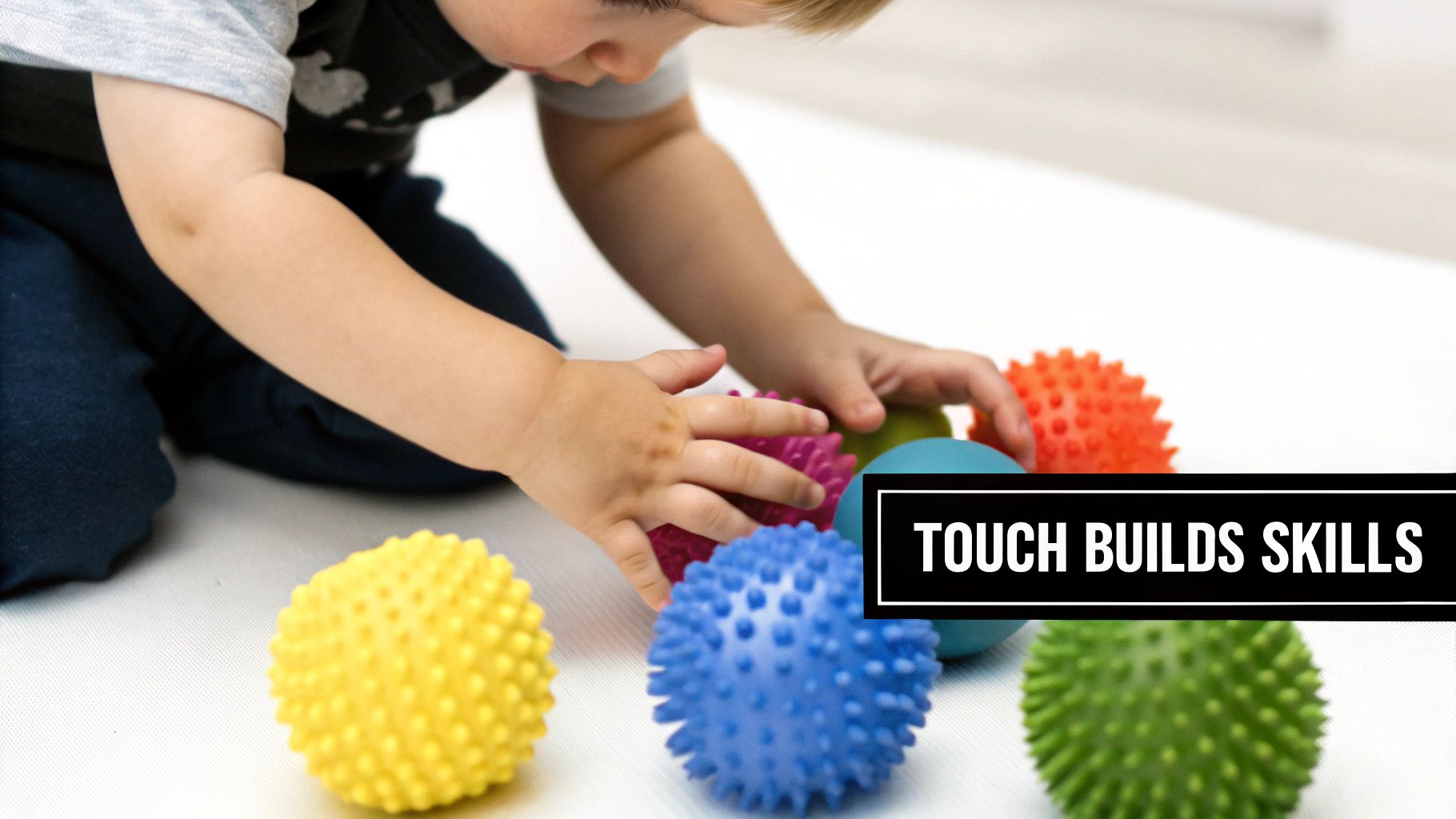
Think of your child’s tactile system like their own internal "touch-based GPS." It’s constantly sending messages back to the brain about their surroundings—the softness of a favourite blanket, the bumpy surface of a rock, or the comforting pressure of a hug. This system is fundamental to helping us feel safe, understand our own bodies, and navigate our environment.
Tactile sensory toys are designed to feed this internal GPS with clear, organised, and satisfying information. They offer a rich variety of sensory input that’s vital for a child's development.
The Role of Sensory Input
This sensory input isn’t just about feeling different surfaces; it’s about building the foundational skills needed for learning and daily life. Purposeful tactile play helps children:
- Develop Fine Motor Skills: Squeezing, pulling, and manipulating toys strengthens the small hand muscles required for tasks like writing, doing up buttons, and using a fork.
- Improve Body Awareness: Knowing where their body is in space is crucial for coordination and confident movement. Tactile feedback helps the brain create a much clearer "body map."
- Enhance Emotional Regulation: For a child feeling overwhelmed, the focused pressure from weighted animals toys or the repetitive action of a fidget can be incredibly soothing. It helps them manage big feelings like anxiety and frustration.
Why Tactile Toys Are So Supportive
For many children, especially those with autism, ADHD, or sensory processing differences, their "touch GPS" might be a bit miscalibrated. Some kids are under-responsive, meaning they crave intense sensations to feel regulated. Others might be over-responsive, finding everyday textures completely overwhelming.
Tactile toys act as a bridge. They provide predictable and controlled sensory experiences that help children meet their unique sensory needs in a safe, constructive way. This allows them to feel more grounded, focused, and ready to engage with the world.
This growing understanding has completely reshaped the toy market here in Australia and around the world. Tactile sensory toys now make up the largest share—a significant 34%—of the global sensory toys market. This trend is definitely felt in Australia, as more families and schools realise the incredible power of inclusive, therapeutic play. You can explore more data on the global sensory toy market and its impressive growth.
At the end of the day, these tools do so much more than just keep little hands busy. They are vital for calming frayed nerves, building essential neural pathways, and turning daily challenges into opportunities for growth and discovery. By providing the right kind of sensory input, tactile toys empower children to navigate their world with greater confidence and comfort.
How Tactile Play Boosts Development and Well-Being
Tactile play is so much more than a way to keep little hands busy—it's a powerhouse for brain development and emotional health. Every time a child squishes, pulls, or twists a sensory toy, they're forging and strengthening crucial neural pathways. This hands-on exploration is the very foundation for so many essential life skills.
Take the simple act of squeezing a flexible NeeDoh ball or bending colourful Airtoobz. It might look like just fun and games, but those actions are actually a workout for the tiny muscles in their hands and fingers. This process is vital for building fine motor skills, which are the same skills they’ll need to learn to write, tie their shoelaces, and use a knife and fork.
Strengthening Fine Motor Skills and Focus
When a child gets stuck into building toys like magnatiles or Gravitrax, they aren't just making towers or marble runs. They're learning to plan, solve problems, and fine-tune their movements with real precision. This kind of focused, hands-on play demands serious concentration, which helps lengthen their attention span for other tasks.
Here’s a real-world example: think of a child who finds handwriting frustrating at school. Playing regularly with tactile toys can build up the hand strength, dexterity, and motor control they need to make holding a pencil feel less tiring and more natural. The repetitive, enjoyable nature of these toys makes skill-building feel like a game, not a chore.
Enhancing Emotional Regulation and Body Awareness
Tactile sensory toys are also incredible tools for helping children understand and manage their big feelings. The sensory system is directly connected to the parts of our brain that regulate feelings of calm and anxiety. This means that providing the right kind of sensory input can have a powerful calming effect.
For instance, a child feeling anxious about going to school might find deep comfort from the gentle pressure of a weighted animal toy. This steady, grounding input—known as proprioceptive feedback—helps settle their nervous system and ease those overwhelming feelings. It’s like getting a warm, reassuring hug whenever they need it. This process also improves their body awareness, helping them feel more secure and in control.
Tactile play offers a direct line to the nervous system. By providing predictable and satisfying sensory feedback, these toys give children a constructive way to self-soothe, release pent-up energy, and find their 'just right' state of calm and focus.
This growing understanding of sensory needs has made a big impact here in Australia. We've seen a huge surge in demand and innovation for tactile toys, largely driven by a national focus on inclusive education. More and more, new designs are being created with autism-friendly features and non-toxic materials, showing just how much Australian families value safe, inclusive, and effective tools. You can discover more insights about these trends in the Australian toy market.
Building Confidence Through Play
At the end of the day, the benefits of tactile play go far beyond the immediate sensory experience. When a child masters a tricky puzzle or finds a Kaiko Fidget that helps them concentrate, they build real confidence and resilience. They learn that they have tools within their reach to calm themselves when they feel overwhelmed or to focus their minds when they feel scattered.
This sense of empowerment is one of the greatest gifts sensory play can offer. These toys provide a safe, engaging way for children to explore their world, understand their bodies, and develop the skills they need to thrive. Whether it's for calming, focusing, or just for the joy of it, tactile play is a true cornerstone of healthy development. If you're looking for tools to support a child with attention challenges, you can learn more about sensory toys for kids with ADHD in our detailed guide.
Choosing the Right Tactile Toys for Your Child
Finding the perfect tactile toy isn’t just about picking something off a shelf. Think of it more like being a sensory detective. With so many options out there, the real secret is to look past the age stickers and tune into your child’s unique sensory profile and what they’re trying to achieve. When you understand what they truly need, you can give them tools that make a genuine difference every single day.
This diagram helps map out how different tactile toys can support vital areas like motor skills, emotional regulation, and focus.
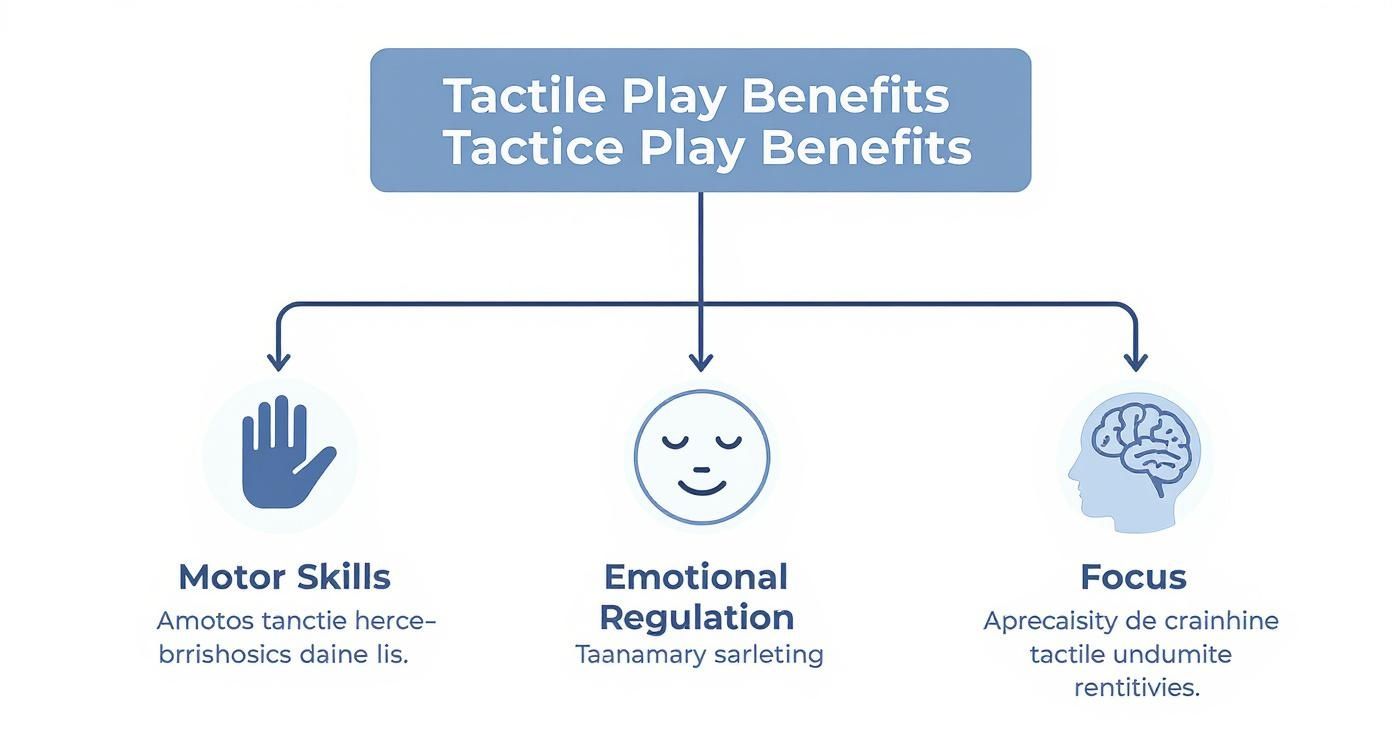
Use it as a starting point to trace a path from a specific need your child has to the type of toy that will offer the most meaningful support.
Matching Toys to Specific Sensory Needs
The best place to start is simply by observing. Is your child a sensory seeker, constantly on the move, craving deep pressure, or fiddling with anything they can get their hands on? Or are they a sensory avoider, perhaps sensitive to certain textures, loud noises, or light touch?
Once you have a clearer picture of their primary needs, finding the right toy becomes much easier. For a more detailed walkthrough, you can find some fantastic tips for choosing the right sensory toys in this guide by age group.
The table below offers a quick guide to connecting common sensory needs with the right types of tactile toys.
Matching Tactile Toys to Sensory Needs
| Primary Need | Recommended Toy Type | Specific Examples | Why It Works |
|---|---|---|---|
| Soothing & Calming | Deep Pressure & Weighted Toys | Weighted Neptune Blanket, Warmies | Provides gentle, consistent pressure that grounds the nervous system and eases anxiety. |
| Focus & Attention | Discreet Fidgets & Squeezables | Kaiko fidgets, Needohs | Channels restless energy into a quiet, repetitive motion, allowing the brain to concentrate. |
| Creativity & Problem-Solving | Construction & Building Sets | Gravitrax marble run, magnatiles | Encourages planning, spatial reasoning, and cause-and-effect thinking through hands-on creation. |
| Fine Motor Skills | Manipulative & Modelling Toys | Little Potion Co kits, Kinetic Sand | Strengthens hand muscles and improves dexterity through squishing, rolling, and shaping. |
This table is just a starting point, of course. The most important thing is to watch how your child interacts with different items to see what truly resonates with them.
Here’s a closer look at how these different tactile toys can help meet specific goals:
-
For Soothing and Calming: When a child is feeling overwhelmed or anxious, tools that offer deep pressure or comforting textures can be incredibly grounding. A weighted Neptune Blanket provides a gentle, reassuring pressure that can help settle a racing mind, especially before bed. Similarly, softly weighted Warmies offer a comforting combination of warmth and pressure, making them perfect for a quiet cuddle.
-
For Improving Focus and Attention: For kids who find it hard to sit still or concentrate, having a quiet outlet for that restless energy is a game-changer. Silent and effective tools like Kaiko fidgets are brilliant for the classroom or long car trips because they keep hands busy without creating a distraction. Squeezable Needohs are also fantastic for providing satisfying tactile feedback that helps channel that extra energy and improve focus on the task at hand.
-
For Sparking Creativity and Problem-Solving: Tactile play is one of the best ways to build cognitive skills. Construction toys naturally encourage planning, spatial awareness, and creative thinking. Building an intricate marble run with Gravitrax teaches cause and effect, while clicking together colourful magnatiles strengthens fine motor skills and introduces early engineering concepts. They offer a direct, hands-on way to bring big ideas to life.
Building a Versatile Sensory Toolkit
You don’t need a mountain of toys to provide great support. The key is to build a small but versatile sensory toolkit that covers a few different needs. A well-rounded kit might include something for calming down, something for fidgeting, and something for open-ended, creative play.
The goal is to empower your child with the right tools for the right moment. Having a selection allows them to learn what their body needs—whether it's the deep pressure of a weighted toy to calm down or the complex challenge of a construction set to engage their mind.
For example, a sensory swing can provide calming vestibular input after a busy day, while a set of Numberblocks can turn learning maths into a fun, hands-on game. Having a mix of options means you’re ready for whatever the day throws at you.
Ultimately, choosing the right tactile sensory toys comes down to thoughtful observation and understanding. By matching the toy to your child's unique wiring, you’re giving them powerful tools that support their regulation, development, and well-being. Whether you need help with sleep, resources for a sensory classroom, or engaging fidgets, the right choice can turn daily challenges into opportunities for growth and joyful discovery.
Creating Calming Sensory Spaces at Home and School
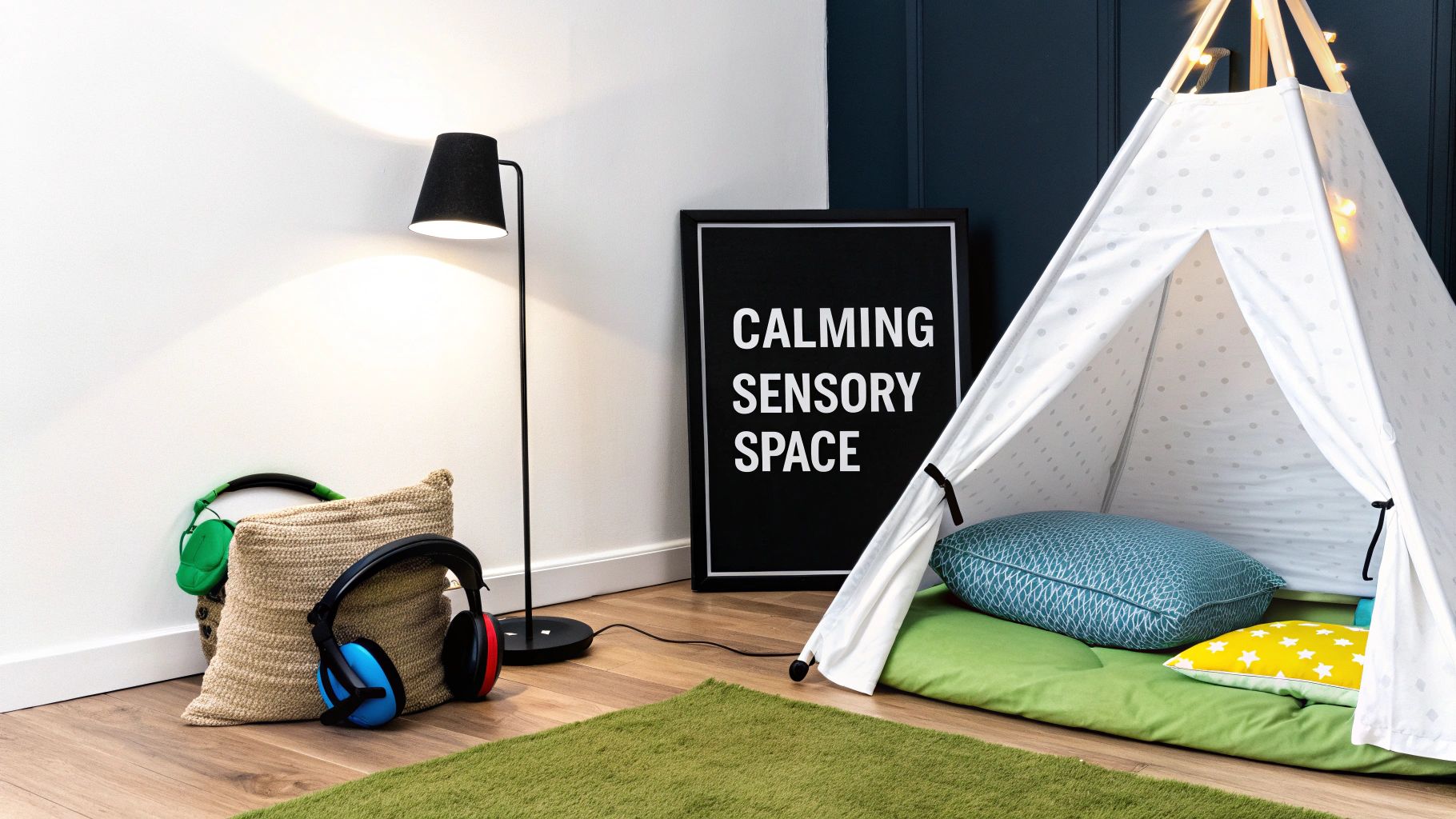
Real sensory support goes way beyond just the toys themselves. It's about creating an entire environment where a child feels safe, grounded, and ready to take on the world. Think of dedicated sensory spaces—at home or in the classroom—as a personal sanctuary. It's a special spot where they can retreat from overwhelming stimulation and proactively get their nervous system back on track.
You don't need to do a massive room makeover, either. A sensory space can be as simple as a quiet corner, a cosy nook, or even a pop-up tent. The whole point is to design an intentional area that provides predictable, calming sensory input, turning any part of a room into a haven for regulation.
Building Your Sensory Space Foundation
First things first, you want to create a safe, enclosed area that physically signals a break from the busy outside world. This boundary is crucial because it helps a child feel contained and secure, which is the bedrock of effective self-regulation.
A pop-up sensory tent is a fantastic, no-fuss way to do this. It instantly creates a private retreat where a child can decompress without feeling like they're on display. The darkened interior helps minimise visual clutter, allowing them to really focus on the calming tools inside. It’s amazing how this simple addition can transform a corner of a hectic living room or classroom into a personal sanctuary.
Visuals are another powerful tool for setting a calm tone. Harsh, bright lights can be incredibly overstimulating for many kids.
-
Jellyfish Lamps: A Jellyfish lamp or a Jellyfish aquarium lamp offers gentle, mesmerising visual input. There's something incredibly soothing about the slow, rhythmic dance of the jellyfish—it’s predictable, helps lower anxiety, and captures attention without being overwhelming.
-
Bubble Tubes: In the same way, bubble tubes provide a calming focal point with their soft colours and steady stream of bubbles. The gentle hum and visual flow can help guide a child from a heightened, stressed-out state to a much more relaxed one.
-
Night Lights: Adding soft night lights with adjustable colours and brightness lets you tailor the visual environment to exactly what your child needs, making the space feel both safe and uniquely theirs.
A Multi-Sensory Approach for Complete Support
While tactile toys are key, a truly effective sensory space needs to address more than just touch. Auditory sensitivity is a huge one for many kids, so managing noise is absolutely critical for creating a calming atmosphere. Loud, unpredictable sounds can send a child into sensory overload in seconds.
A well-designed sensory space is a multi-sensory toolkit. It offers a variety of inputs—visual, auditory, and tactile—so a child can find exactly what their nervous system needs in that moment to feel balanced and in control.
Noise cancelling earmuffs for kids are an indispensable tool for both home and school. They empower children by giving them direct control over their auditory world, allowing them to block out overwhelming background noise. This can be a game-changer during noisy classroom activities, busy family gatherings, or even just a trip to the supermarket.
Inside the sensory space, you can combine these elements to offer a whole menu of regulating options. Picture a child retreating to their sensory tent, popping on their earmuffs to quiet the world, and just watching the gentle drift of a jellyfish lamp. This layered approach provides a powerful combination of sensory inputs that work together beautifully to promote calm. To get more ideas for setting up your own calming corner, check out our guide on creating a soothing space with our sensory tent.
Integrating Sensory Elements into Everyday Life
The best part is that these principles don't have to stay confined to one corner. Creating a sensory-friendly sensory classroom or home means thinking about how you can weave these tools into daily routines. A sensory swing, for example, can provide incredibly calming vestibular input after a long, tiring school day. Weighted animal toys can offer that reassuring deep pressure during story time on the couch.
For children who struggle to wind down at night, effective sleeping aids like a Neptune Blanket can extend the calming benefits of the sensory space right through to the morning. By thoughtfully incorporating these tools into your child's world, you build a supportive, nurturing environment that helps them not just cope, but truly thrive.
More Than Just Fidgets: Fun and Purposeful Ways to Play with Tactile Toys
Tactile toys are fantastic for keeping little hands busy, but their real magic is unleashed when we move beyond simple fidgeting. With a bit of imagination, these tools can become the heart of incredibly fun and skill-building activities. The trick is to create play scenarios that target specific skills, all while letting your child's curiosity take the lead.
These ideas are all about helping you turn playtime into a powerful (and fun!) learning session, strengthening everything from maths skills to social connection.
Weaving Learning into Creative Play
It's amazing how many great tactile toys double as brilliant educational aids. They offer a hands-on way for kids to get their heads around abstract concepts, making learning feel less like a chore and more like a game.
-
Hands-On Maths with Numberblocks: You can bring numbers to life with a set of Numberblocks figures. Forget just counting—use them to physically show how addition and subtraction work. For instance, build the 'four' block and the 'three' block, then click them together to make the 'seven' block. Suddenly, the equation 4 + 3 = 7 isn't just numbers on a page; it's a solid thing they can see and hold.
-
Building Worlds with Bluey: Grab some Bluey merchandise and let the storytelling begin! Acting out favourite scenes from the show or inventing brand new adventures is a brilliant way to encourage language skills, explore emotions, and understand social situations in a safe and familiar world.
Engineering Challenges and Collaborative Games
Got a kid who loves to build, create, and solve problems? Tactile toys that involve construction and movement are perfect for boosting their brainpower and teaching them how to work with others. These activities are all about planning, trying again when things don't work, and the joy of teamwork.
A fantastic example is building an epic Gravitrax marble run. This is so much more than just watching marbles roll down a track; it's a hands-on lesson in physics and engineering. You could challenge your child to design a track that keeps the marble going for as long as possible, or one that has to include a tricky loop-the-loop. It’s a wonderful way to teach cause-and-effect, spatial awareness, and the art of patient problem-solving.
Purposeful play transforms a simple toy into a powerful tool. By setting up activities with a clear goal—whether it's solving a puzzle, telling a story, or working together—you help your child build confidence and develop critical life skills in a natural, joyful way.
Teamwork makes the dream work, and collaborative games are perfect for this. Using a set of Airtoobz, you can create a game where kids have to work together to pass a light ball through a long tube network without it falling out. This takes heaps of communication and coordination, making it a super fun and effective way to practise working as a team.
Creating Themed Sensory Experiences
One of the most creative and versatile ways to use tactile toys is to build a 'sensory bin'. It sounds fancy, but it's really just a container filled with a base material—like sand, water beads, or even dried pasta—and a collection of smaller toys all based on a single theme.
Here are a few ideas to get you started:
-
Ocean Exploration Bin: Fill a tub with blue water beads, some seashells, and a few small plastic sea creatures. This creates a wonderful mix of textures to explore while sparking imaginative play about life under the sea.
-
Construction Zone Bin: Use kinetic sand as your base and add in mini diggers, pebbles, and small blocks. It's perfect for fine motor skills as your little one gets busy scooping, pouring, and building.
-
Potion Making Adventure: For a truly magical experience, use a Little Potion Co kit. These kits provide all the ingredients for fizzing, bubbling, and colourful concoctions, engaging multiple senses while encouraging creativity and scientific curiosity.
Themed activities like these do more than just provide satisfying sensory input. They ignite curiosity, build vocabulary, and can create a wonderfully calm and engaging focus for your child. By bringing these ideas into your routine, you can help your child get the most developmental goodness out of their favourite sensory toys.
Your Sensory Toy Questions, Answered
Stepping into the world of sensory support can feel a bit overwhelming, and it’s completely normal to have a lot of questions. As parents, carers, and educators across Australia, you want to make the best choices for your kids. So, we've put together some straightforward answers to the questions we hear most often.
How Do I Know Which Sensory Toy Is Right for My Child?
The best way to figure this out is to become a bit of a detective. Watch your child and get a feel for their unique sensory preferences. Are they a sensory-seeker, always looking for more input? Or are they sensory-avoiding, finding certain things a bit too much?
If they’re constantly leaning on the furniture for pressure or giving bone-crushing hugs, a comforting weighted animal toy or one of our cosy weighted blankets might be just what they need. For those fidgety hands that need something to do during mat time, a discreet Kaiko fidget or a wonderfully squishy Needoh can be a perfect, quiet outlet that helps them focus.
Got a creative kid who loves to build? Magnatiles are fantastic for sparking imagination. It all starts with one question: what's the primary need here? Is it about calming down, staying focused, or just creative fun? Once you know the goal, you can pick a toy that matches. You can always add to your collection as you learn what really clicks for them.
Can I Use NDIS Funding for Tactile Sensory Toys in Australia?
Yes, in many cases, you absolutely can. For a toy to be eligible for NDIS funding, it needs to be seen as 'reasonable and necessary' for helping your child achieve the goals set out in their NDIS plan.
Generally, these items fall into two NDIS categories:
- Consumables (Core Supports): This is usually for smaller, everyday sensory items.
- Low-Cost Assistive Technology: This category often covers more specialised sensory aids.
The key is to link the toy directly to an NDIS goal, like improving emotional regulation, building fine motor skills, or supporting sensory processing. Getting a recommendation from an occupational therapist can make your request much stronger. And, of course, buying from an NDIS-registered provider like The Sensory Poodle helps make the whole process a lot simpler.
Are Sensory Toys Only for Kids with Autism or ADHD?
Not at all. While these toys are incredible tools for neurodivergent kids, the truth is they offer brilliant developmental benefits for all children. Tactile play is a cornerstone of early development, helping every child build the fine motor skills and problem-solving abilities they need.
Sensory toys support universal developmental needs. They provide healthy, engaging, and constructive outlets for sensory exploration, emotional regulation, and focus that can benefit any child, regardless of their neurotype.
Think about it – a fidget tool can help any student stay tuned in during a long afternoon class. Likewise, a weighted lap pad can be a source of comfort for anyone feeling a little anxious or overwhelmed. These tools are designed to meet fundamental human needs for sensory input and self-regulation. From cuddly Snoopy and Palm Pals Australia comforters to engaging building sets, these toys make learning and feeling good accessible to everyone.
What Is the Best Way to Introduce a New Sensory Toy?
When you bring home a new sensory toy, the aim is to make it a positive, no-pressure experience. Let your child take the lead and explore it in their own time.
Start by offering the toy in a calm, familiar space where your child already feels safe. You can show them how it works, but don't push them to use it. Some kids, especially those sensitive to new textures, might need a little while to warm up to it, and that’s perfectly okay.
A great approach is to simply leave the toy out in an accessible spot, like in a sensory space or on their play mat. That way, they can check it out on their own terms. For bigger items like a sensory swing or weighted blankets, start with short, supervised sessions and slowly build up the time as they get comfortable. The goal is for the toy to become a trusted friend for support and fun, not another task on the to-do list.
At The Sensory Poodle, we’re here to help Australian families find the perfect tools to support their children's unique sensory journeys. From soothing Warmies to exciting showbags and blind boxes, our hand-picked collection is designed to make every day a bit easier and a lot more fun.
Explore our full range of expertly selected sensory toys Australia today at https://sensorypoodle.com.au.