


A Parent Guide to Sensory Seeking Toys in Australia

Sensory seeking toys are thoughtfully designed tools that give children the specific sensory feedback they crave. This isn't just about keeping them busy; these items provide a safe, constructive way for kids to get the input they need to calm their bodies, sharpen their focus, and manage big feelings. They're a bridge to helping a child engage their senses, whether that’s through touch, movement, sound, or sight.
Getting to Grips with Sensory Seeking Behaviour
Ever noticed a child who just can’t seem to sit still? Maybe they’re constantly spinning, jumping, or compelled to touch every single texture they pass. This isn't just random energy—it’s often a clear sign of sensory seeking. It’s a completely natural way a child’s brain tries to make sense of the world and their place in it.
Think of it like trying to tune an old radio that’s full of static. For a sensory seeker, their brain needs the volume turned way up to get a clear signal from their surroundings. This isn't "naughty" behaviour; it's a child actively trying to get the sensory feedback they need to feel grounded and organised.
So, when a child deliberately crashes into the sofa cushions or gives you a bone-crushing hug, what they’re really doing is seeking out that deep pressure. They’re instinctively trying to feel secure and aware of their own body in space.
Why Do Some Kids Crave So Much Input?
Every single one of us processes sensory information in a slightly different way. For some children, the world can feel a bit muted or blurry. To feel truly present and alert, they need more intense sensations.
This powerful drive for extra input is deeply connected to how their unique nervous system is wired. Their actions—the constant movement, the chewing, the humming—are a form of communication. They are telling us, in the only way they know how, what their body needs to find its balance.
When we understand this, we can shift our perspective. Instead of seeing a "problem" that needs to be fixed, we can see a unique way of learning and interacting with the world. They’re simply experts at gathering the data they need through their senses.
A child’s sensory system is the foundation for all learning. When they seek out intense sensations, they are building pathways in their brain that support focus, emotional regulation, and physical coordination. Providing the right input is crucial for their development.
The Different Kinds of Sensory Input
Sensory seeking is rarely about just one sense. More often than not, a child might be looking for input from several different sensory systems all at once. Learning to spot these signals is the first, most important step toward providing real support with tools like sensory seeking toys.
Let's break down a few of the key sensory systems involved:
- Vestibular (Movement): This is all about our sense of balance and where we are in space, managed by the inner ear. Kids seeking vestibular input are the ones who absolutely love swinging, spinning until they’re dizzy, and hanging upside down.
- Proprioceptive (Body Awareness): This powerful sense comes from feedback in our muscles and joints. It’s what tells us where our body parts are without us having to look. Children who need this input thrive on deep pressure, lifting heavy objects, and giving tight, squeezy hugs.
- Tactile (Touch): This system takes in all the information we get through our skin. A child with a strong tactile drive might crave messy play, fidget with different textures, or be very particular about the feel of their clothes.
By figuring out which senses a child is trying to fire up, parents and caregivers in Australia can make much better choices about the right tools to help them thrive. Finding a specialist supplier like Sensory Poodle for sensory toys in Australia can make all the difference in getting it right.
Why Sensory Toys Are Popping Up Everywhere in Australia
It wasn't that long ago that you'd only find sensory tools tucked away in an occupational therapist's office. Now, it's not unusual to see things like a sensory swing in a backyard or Kaiko fidgets in a classroom pencil case. This isn't just some passing fad; it’s a sign of a much deeper, more empathetic shift in how we understand childhood development and neurodiversity here in Australia.
Aussie parents and teachers are really leading the charge. They're actively looking for resources that help kids regulate and learn, moving well beyond what we used to think of as "just play." There's a growing realisation that a child who needs to fidget isn't trying to be disruptive—they're trying to focus. A child who loves a big, tight hug isn't just being boisterous; their body is telling them it needs that deep pressure to feel calm.
This wave of awareness is completely changing the Australian toy industry. Toys aren't just for fun anymore; they're now being recognised as vital tools for supporting a child's development. It all comes from a shared desire to give every child the support they need to feel settled, focused, and truly understood.
A Market Fuelled by Understanding
The numbers really paint a clear picture of this changing mindset. As more people learn about sensory processing and neurodiversity, the demand for the right tools has skyrocketed, turning what were once niche products into everyday essentials.
The Australian baby toys market—which now has a huge sensory element—was valued at a massive USD 1.55 billion in 2024 and is expected to climb to USD 1.91 billion by 2030. That growth is a direct result of parents and educators choosing toys that have a real developmental purpose. In fact, it's estimated that 67% of parents and therapists now actively choose sensory toys to support kids with specific needs, a trend that's easy to see right across the country. For a closer look, you can explore more data on the Australian baby toys market.
More Than Just Toys—They're Tools for Life
The real heart of this movement is the shift in thinking, from seeing these items as "toys" to understanding them as "tools." A Neptune Blanket isn't just a heavy blanket; it's a tool that uses deep pressure to help an anxious nervous system settle down for sleep. That captivating Jellyfish lamp isn't just a funky bit of decor; it's a visual anchor that can help a child find their calm after a moment of overwhelm.
Sensory toys have become a bridge between a child’s internal needs and their external world. They provide a safe and acceptable language for children to communicate what their bodies require, empowering them to self-regulate in a healthy way.
This is precisely why sensory toys in Australia have become so fundamental to creating inclusive and supportive spaces. Whether it's a simple Needoh ball in a school bag or a fully kitted-out sensory classroom, these tools are helping kids navigate their world with more confidence. The focus has finally moved from just managing behaviour to actually meeting a child's needs, and for families across Australia, that change has been life-altering.
Choosing the Right Toys for Your Child’s Sensory Needs
Walking into the world of sensory toys can feel a little overwhelming. With so many options, where do you even begin? The secret isn’t to grab one of everything, but to become a ‘sensory detective’ for your own child. By tuning into their unique behaviours, you can pinpoint exactly what their nervous system is asking for and find the perfect tool to help.
Instead of taking a wild guess, start by looking for patterns. Is your child the one who’s always crashing into the sofa or wrapping themselves up as tightly as possible in a blanket? That’s a classic sign they’re craving deep pressure, or what we call proprioceptive input. For them, tactile and weighted toys like a cuddly Warmies or a heavy weighted animal toy can deliver that deeply calming, grounding sensation they need.
Then there are the children who seem mesmerised by spinning fans or the way light shimmers through a window. They’re clearly seeking visual input. A captivating Jellyfish Lamp or colourful bubble tubes can meet that need in a safe and focused way, helping them settle their bodies and minds.
Matching Toys to Specific Sensory Systems
Understanding the 'why' behind what your child is doing is the most powerful tool you have. Every action is a message, a clue telling you what their nervous system needs to feel organised and balanced. When you connect their behaviours to a specific sensory system, you can choose toys that are not just fun, but truly effective.
This simple flowchart can help you decide whether your child needs something to help them focus or something to bring a sense of calm.
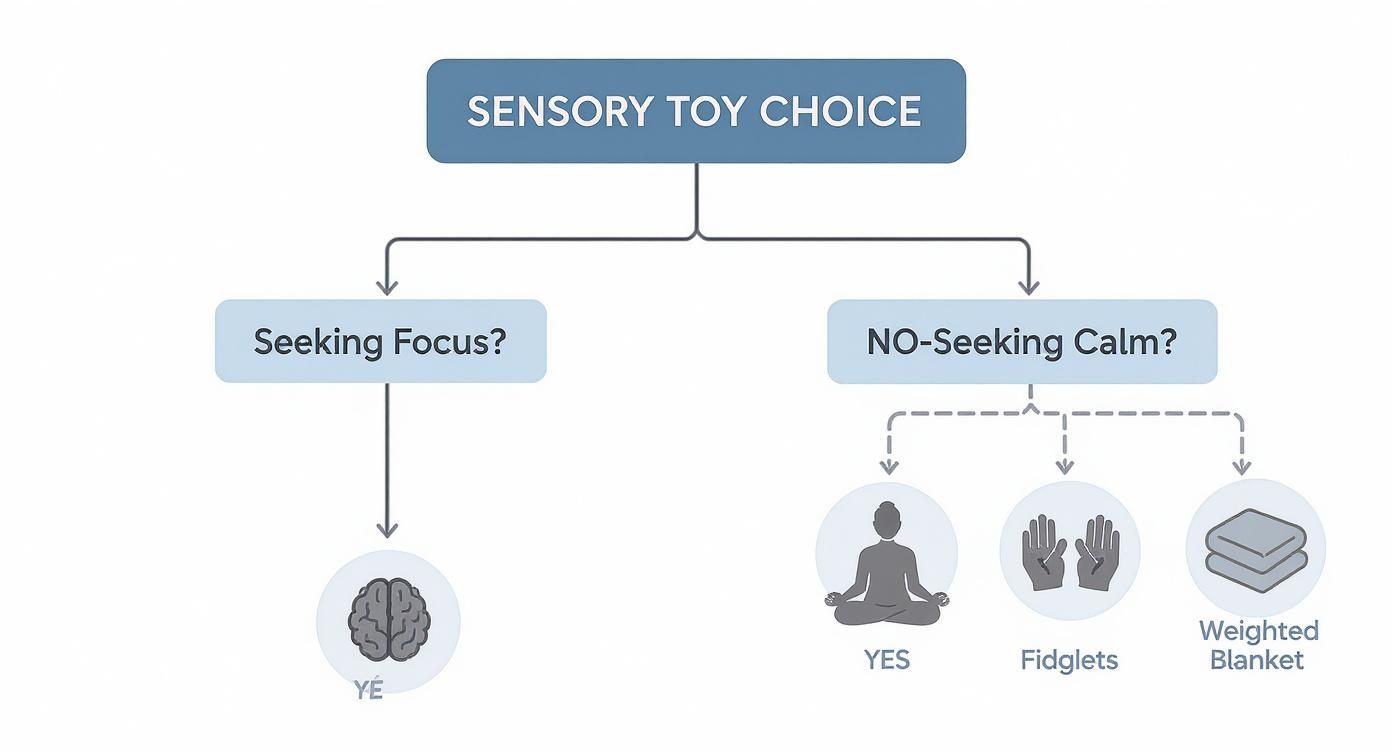
As the visual guide shows, just identifying that immediate need—focus or calm—is a great first step in narrowing down the best type of sensory tool for the moment.
To help you put on your sensory detective hat, here’s a quick guide to common seeking behaviours and the types of toys that can offer the right kind of support.
Matching Sensory Toys to Sensory Needs
This table breaks down how specific actions often link to a sensory system, making it easier to find a toy that really hits the mark.
| Sensory System | Common Seeking Behaviours | Examples of Supportive Toys |
|---|---|---|
| Vestibular (Movement) | Loves spinning, swinging, rocking, and being upside down. | A sensory swing provides calming linear movement, while a spinning chair offers more intense input. |
| Proprioceptive (Pressure) | Enjoys deep hugs, jumping, pushing heavy items, and crashing. | Weighted blankets like the Neptune Blanket, weighted animal toys, and compression clothing. |
| Tactile (Touch) | Needs to touch everything, loves messy play, or fidgets constantly. | Squishy Needohs, textured Kaiko fidgets, or creative kits like Little Potion Co. |
| Visual (Sight) | Is fascinated by lights, colours, patterns, and moving objects. | A hypnotic Jellyfish aquarium lamp, vibrant bubble tubes, or dynamic Gravitrax marble runs. |
| Auditory (Sound) | Hums, makes repetitive noises, or is sensitive to loud environments. | Noise cancelling earmuffs for kids can create quiet, while musical toys offer controlled sound. |
Thinking like this helps you see that every behaviour has a purpose. The goal is simply to find safe and appropriate ways for your child to get the sensory input their body is craving.
The right toy at the right time can turn a moment of dysregulation into an opportunity for calm and focus.
Of course, every child is different, and their needs can change from one day to the next—or even one hour to the next! A great strategy is to build a small, accessible toolkit of different sensory toys in Australia that they can turn to whenever they need that extra support. For more tailored advice, you can explore helpful tips in our guide for choosing the right sensory toys by age group.
How to Weave Sensory Tools into Your Daily Routines
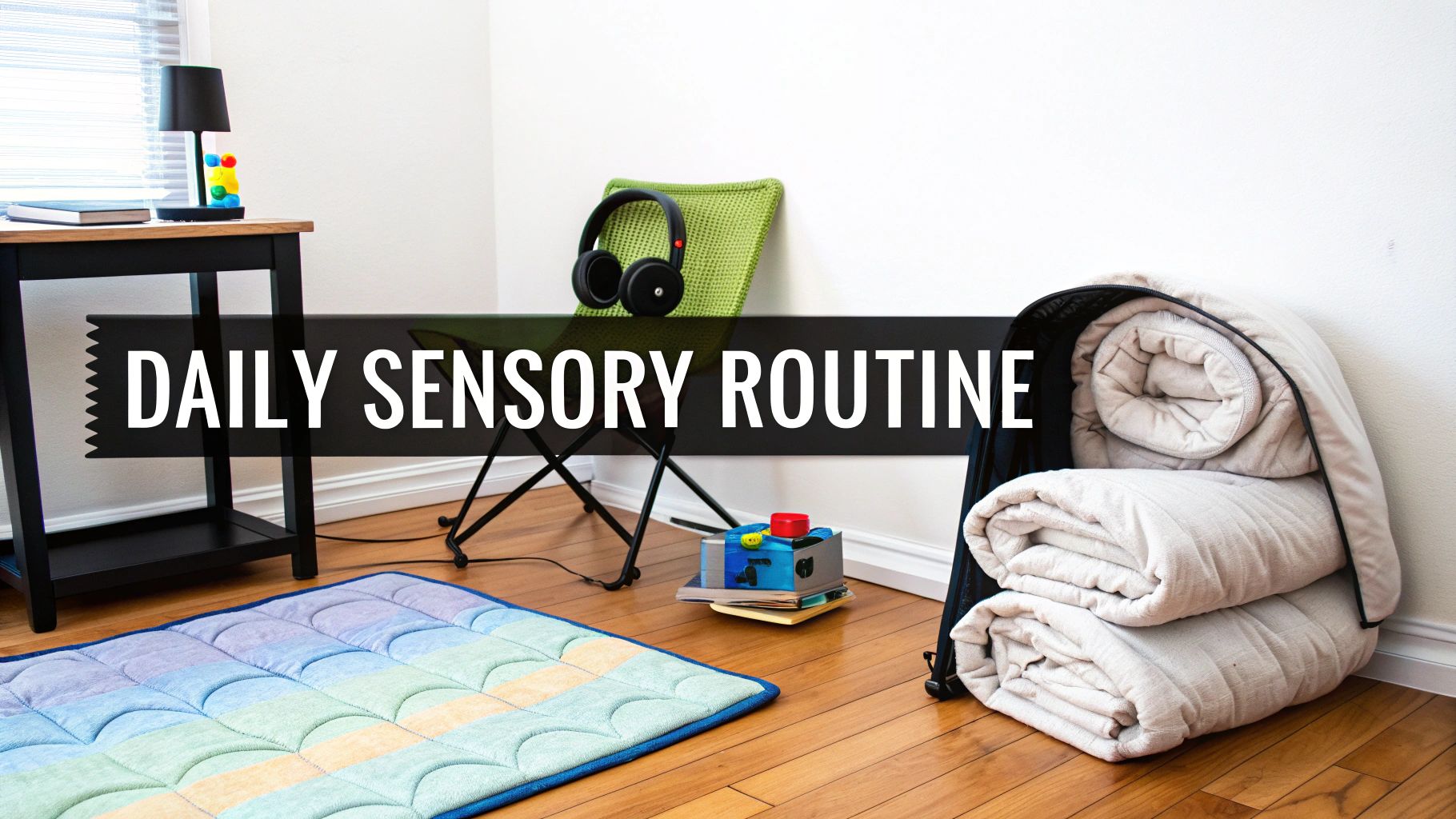
The real magic of sensory toys happens when they become a natural part of everyday life, not just pulled out for special occasions. When we weave these tools into established routines, they provide consistent, predictable support. This isn't about adding more to your plate; it’s about making your existing routines work smarter for your child’s nervous system.
Think about those tricky transition times. A hectic morning can feel much smoother with just a few minutes in a sensory swing before heading out the door. That gentle, linear movement helps a child’s body feel organised and ready for whatever the day holds. The same goes for those after-school meltdowns – having a dedicated quiet space ready to go can make all the difference.
Creating Calming Rituals
Building sensory support into key parts of the day, like homework or bedtime, is a game-changer. These little rituals offer predictable comfort and, over time, help a child learn to self-regulate more effectively on their own.
-
Homework Focus: Is your child struggling to concentrate with all the household noise? A pair of noise cancelling earmuffs for kids can create an instant bubble of quiet. This simple tool removes those distracting sounds, freeing up their brain to focus on the task at hand.
-
Bedtime Wind-Down: Sleep can be a huge hurdle for sensory seekers. A heavy Neptune Blanket can become the centrepiece of a calming bedtime routine. It uses deep pressure to send signals to the nervous system that it’s time to rest. You could even pair this with a gentle night light or a mesmerising bubble tube as part of your toolkit of sleeping aids.
A predictable sensory routine helps a child’s body feel safe. When their nervous system knows what to expect, it’s less likely to enter a state of fight-or-flight, making emotional regulation easier for everyone.
Designing a Safe Retreat
Let’s be honest, sometimes the world just feels like too much. Creating designated "calm-down corners" or sensory spaces gives a child a safe retreat they can choose to go to when they feel overwhelmed. It’s a space to reset without judgement.
This doesn't have to be anything elaborate. A pop-up sensory tent filled with soft cushions and a few favourite fidgets, like Needohs, can be incredibly effective. This cosy nook offers a much-needed break from visual and auditory overstimulation, allowing a child to regulate at their own pace. Adding familiar items, perhaps from popular ranges like Bluey merchandise, can make the space feel extra welcoming.
As these tools become a well-loved part of your routine, it's also a good idea to know the best ways to keep them fresh. You can learn about 4 tips for keeping sensory toys clean and hygienic. By weaving these sensory seeking toys into daily life, you empower your child with the tools they need to navigate their world with greater confidence and calm.
Navigating School and NDIS Support in Australia
Figuring out how to get the right support for your child's sensory needs can feel like a maze. But once you understand how systems like the NDIS and Australian schools operate, you'll have the key to unlocking consistent, effective help.
The trick is to shift the conversation. Whether you're in an NDIS planning meeting or chatting with your child’s teacher, it’s about framing sensory seeking toys not just as playthings, but as essential tools that help with learning and development.
When you’re talking to an NDIS planner, everything needs to tie back to your child’s goals. Funding is usually approved for items that directly help your child hit specific milestones, whether that’s building their capacity for self-regulation, getting more involved in community life, or improving their fine motor skills.
Advocating in the School Environment
Thankfully, schools are becoming more aware of sensory needs, but clear communication from you is still so important. When you work together with the teacher, you can completely change how they see things like Kaiko fidgets or a pair of noise cancelling earmuffs for kids.
Instead of viewing them as distractions, you can help the teacher see them as tools that actually help your child focus and stop them from feeling overwhelmed.
Try framing the conversation around proactive support. You could explain that a fidget helps your child’s brain stay “switched on” during a lesson, in the same way glasses help another child see the board. Suggesting a trial run can be a great way to show the positive difference it makes.
You could also float the idea of a sensory classroom approach. This doesn't mean the whole room needs a makeover. It could be as simple as setting up a small 'calm-down corner' with a sensory tent or allowing different seating options for kids who need to move.
Tying Sensory Tools to NDIS Goals
For anyone with an NDIS plan, linking sensory products to your established goals is the most powerful thing you can do. You need to think about how a specific tool helps your child build skills and become more independent.
Here’s a simple way to connect common sensory toys in Australia to NDIS goals:
-
Goal: Improve emotional regulation.
- Tool: A Neptune Blanket isn't just a blanket; it's a therapeutic tool providing deep pressure to help your child manage anxiety and reduce the likelihood of a meltdown.
-
Goal: Enhance community participation.
- Tool: Portable fidgets are what can make a trip to the shops or a family outing manageable. They help your child cope with overwhelming input so they can actually participate.
-
Goal: Develop focus for learning.
- Tool: A Jellyfish Lamp can provide gentle, predictable visual input, creating a calm atmosphere that’s perfect for getting homework done without a fight.
When you can clearly explain the "why" behind each tool, you give planners and educators the information they need to see their real value. For a more personal look at this, you can read our story on how we navigated ADHD challenges using sensory toys in Australia.
With the right language and a clear focus on goals, you can build a brilliant support network that truly gets what your child needs.
Your Sensory Toy Questions Answered
When you first start exploring sensory support, it's natural to have a lot of questions. Let's tackle some of the most common ones that parents and teachers ask when bringing sensory seeking toys into a child's world.
Are Sensory Toys Just for Kids with a Diagnosis?
Not at all. While these tools are an absolute game-changer for children with diagnosed sensory processing differences, like those with autism or ADHD, their benefits are universal.
Every single child is navigating a world full of sensory information. These toys can help any child work through big emotions, stay focused on their homework, or just find a quiet moment to reset. Think of them less as a therapeutic item and more as a core part of any child's developmental toolkit.
For instance, a simple, squishy Needoh can be just the thing to help any student feel more grounded during a long lesson, not just a child with a formal diagnosis. You'll find a huge range of engaging items, from Numberblocks and Magnatiles to fun showbags and blind boxes.
How Can I Be Sure the Toys I Buy Are Safe?
Safety should always come first. Make a habit of checking the age recommendations and always opt for toys made from high-quality, non-toxic materials. This is especially important if your child is likely to put things in their mouth. When you're looking for sensory toys in Australia, stick with trusted suppliers who follow our national safety standards.
When it comes to products involving weight or movement, like a sensory swing or a Neptune Blanket, it’s vital to double-check the weight limits and follow the installation instructions to the letter. Choosing well-known, purpose-built brands means you're investing in something that’s not just safe, but also effective and designed to last.
The School Sees My Child’s Fidget as a Distraction. What Can I Do?
This is a really common challenge, but framing the conversation correctly can make all the difference. The key is collaboration. Ask for a meeting with your child's teacher and explain that the fidget is a ‘tool, not a toy’. You can use an analogy to help them understand—it helps your child’s brain focus in the same way glasses help someone to see clearly.
Coming prepared with a plan can also help get them on board. You could suggest:
- Setting Boundaries: Agree that the fidget needs to be silent. Brands like Kaiko fidgets are great for this.
- Keeping it Discreet: Suggest that your child can use it under their desk, so it doesn't become a visual distraction for other students.
- Proposing a Trial: A short trial period is often all it takes to show the teacher how much it positively impacts your child’s concentration.
If you have a report or a note from an occupational therapist, bringing that along can add a lot of weight to your request. It helps educators see the fidget for what it is: a therapeutic tool that belongs in a sensory classroom.
At Sensory Poodle, we’ve handpicked a range of safe, effective, and therapist-approved sensory tools to support children and adults across Australia. From building toys like Airtoobz to beloved characters like Snoopy and cute collectibles like Palm Pals Australia, you can explore our full collection of sensory seeking toys to find the perfect fit for your family.