


The Ultimate Guide to Chewable Sensory Toys

Ever found yourself wondering about a chewed-up shirt collar or the mangled end of a pencil? It's a surprisingly common sight, and it’s often a sign that the brain is trying to organise itself through oral sensory input. This is where safe, purpose-built chewable sensory toys come in. They are essential tools that channel this natural instinct into a productive self-regulation strategy, helping to calm the nervous system and sharpen focus.
Why We Chew: A Guide to Sensory Needs

The urge to chew is a powerful, almost primal behaviour that delivers a huge amount of sensory feedback straight to the brain. For many people, particularly those with sensory processing needs, autism, or ADHD, this action is a fundamental part of navigating daily life. It’s far from just a habit; it’s a way to find a sense of balance in a world that can often feel chaotic and overwhelming.
It's not so different from how an adult might jiggle their knee, tap a pen, or chew gum during a high-stakes meeting. We all use these small, repetitive actions to help us stay grounded and focused. Chewing serves exactly the same purpose.
The Power of Proprioceptive Input
At the heart of why chewing works so well is something called proprioceptive input. It’s a bit of a technical term, but it simply means the deep pressure signals our muscles and joints send to the brain. These signals tell our brain where our body is in space, which has a grounding effect.
When you chew, you engage the powerful muscles in your jaw, sending a flood of calming and organising information directly to the nervous system.
This intense feedback helps to:
- Reduce anxiety and stress: The steady, rhythmic pressure of chewing can have a profoundly calming effect, dialing down feelings of being overwhelmed.
- Improve focus and concentration: By giving the brain a consistent sensory input to tune into, it becomes easier to filter out distractions and concentrate on the task at hand.
- Regulate emotions: Chewing provides a safe, physical outlet for big feelings, which can help prevent meltdowns or emotional overload.
Without a safe option, many people instinctively turn to whatever is available—clothing, fingernails, or pencils. This is where chewable sensory toys become so vital. They redirect that natural urge onto a safe, durable, and purpose-built tool, shifting the perspective from seeing them as mere 'toys' to recognising them as crucial aids for daily functioning.
Chewing is a form of self-regulation that allows an individual to filter out overwhelming sensory information from their environment. It provides a grounding, repetitive action that helps the brain feel calm, organised, and ready to engage with the world.
The Growing Demand for Safe Sensory Tools
As the understanding of chewing as a valid sensory need has grown, so has the demand for safe and effective tools. This trend is especially noticeable for sensory toys in Australia, where awareness of sensory processing differences is on the rise.
The Australian fidget toys market was recently valued at USD 97.17 million, with chewable fidgets becoming the fastest-growing category. In fact, this specific segment is projected to grow at a compound annual growth rate (CAGR) of 8.7%. This really highlights how important these tools are becoming, not just for children with sensory challenges but also for adults looking for focus aids.
As more families, schools, and therapists across Australia integrate these tools, they're quickly becoming a standard part of a comprehensive sensory toolkit. By offering a safe and acceptable outlet for chewing, we empower people to better manage their sensory needs on their own terms. To get a better sense of how these tools fit into a wider support plan, you can check out our guide on how sensory needs are covered.
The Science Behind a Calmer, Happier Brain
There’s more to chewing than meets the eye. It's not just a fidgety habit—it’s a powerful, hardwired way to send calming signals straight to the brain's control centre, helping to dial down stress and sharpen focus almost instantly.
The magic starts in the jaw. At the heart of it all is the trigeminal nerve, one of the largest sensory superhighways in the head. Think of it as a direct line to the brain. When someone chews on a sensory toy, the steady, rhythmic pressure from their jaw muscles sends a flood of organising signals right up this nerve. This input essentially tells the nervous system it’s okay to turn down the volume on all the overwhelming sensory noise from the outside world.
You can see this neurological process play out in real life. For a child who just can't seem to sit still during homework, a chewable pencil topper can provide that consistent sensory input they need to filter out distractions and get the job done. In a chaotic environment like a birthday party or a crowded shopping centre, a discreet chew necklace can be a lifesaver, helping them stay grounded and preventing a full-blown sensory meltdown.
From Unsafe Habits to Safe Self-Regulation
When the brain needs that chewy, oral input, it will find a way to get it. This is why you’ll often see kids chewing on their shirt collars until they’re soggy, biting their nails down to the quick, or gnawing on the end of a pencil until it splinters. These aren't just "bad habits" that need to be stamped out; they're clear signs that a person's nervous system is desperately trying to regulate itself.
Giving them a purpose-built, safe chewable toy channels this natural instinct into a healthy outlet. It respects the brain's need for oral stimulation while protecting teeth from damage, saving clothes from ruin, and keeping unsafe objects out of their mouths.
By offering a safe substitute, you're not just stopping a behaviour; you're providing a solution. You're giving the user a tool to manage their own sensory needs, empowering them to take control of their state of arousal and focus. This is self-regulation in action.
Think about what this looks like in a classroom. A child who feels overwhelmed by all the noise and activity can quietly use their chewable pendant to find a sense of calm without disrupting the lesson. This small, simple action can be the difference between a productive day of learning and a stressful one filled with anxiety. It’s a simple adjustment that builds independence and confidence, and it’s a cornerstone of creating supportive sensory classroom environments.
More Than Just Calming a Busy Brain
Beyond the immediate calming effects, chewable sensory toys are fantastic for developing crucial oral motor skills. The resistance from chewing on a tough but safe silicone tool helps strengthen the muscles in the jaw, tongue, and lips. This isn't just about raw strength; it’s about fine-tuning coordination and building endurance for all sorts of essential tasks.
These oral motor skills are the foundation for so many daily functions:
- Clearer Speech: You need strong, coordinated mouth muscles to articulate sounds properly.
- Easier Eating: Tackling different food textures, from crunchy carrots to chewy steak, requires serious jaw strength and control.
- Reduced Drooling: Better muscle tone around the mouth helps with managing saliva and keeping shirts dry.
So, these tools really pull double duty. They act as a behavioural aid for emotional and sensory regulation while also serving as a therapeutic device to build the physical skills needed for clear communication and comfortable eating. This makes them an invaluable part of any sensory toolkit, working perfectly alongside other supports like cuddly weighted animal toys or a calming sensory swing.
How to Choose the Right Chewable Toy
Finding the perfect chewable sensory toy isn’t about picking the most popular one off the shelf. It’s more like being a sensory detective, figuring out exactly what a person needs by observing how they chew and what they gravitate towards.
With so many options out there, from necklaces to pencil toppers, it can feel a bit overwhelming. But when you dial in on the user's specific preferences, you find a tool that’s not just safe and durable but one they’ll actually want to use. A chew toy that doesn't feel right will just get tossed aside, so let's get this right.
Assess the Chewing Intensity
First things first: how hard does the person chew? This is the most critical factor because it dictates the toy's durability. You need something that can provide that satisfying resistance and deep pressure (proprioceptive feedback) without falling apart after five minutes.
Chewers generally fall into one of three camps:
- Light Chewers: These are the nibblers. They might gently mouth or test objects with their teeth but rarely cause any damage. For them, a softer, more flexible chewable usually does the trick.
- Moderate Chewers: This is where most people land. They chew with more purpose and can easily leave teeth marks on things or ruin a shirt collar or two. A standard-strength chew toy is typically the best fit.
- Aggressive Chewers: These users mean business. They chew with a lot of force and can tear through, break, or completely destroy objects in no time. For them, you need to bring out the big guns—toys labelled ‘Tough’, ‘XT’ (Extra Tough), or ‘XXT’ (Extra, Extra Tough).
If you’ve seen a child shred their cuffs, splinter pencils, or break plastic toys with their teeth, you’re almost certainly looking at an aggressive chewer. Giving them a tool that isn't tough enough isn't just a waste of money; it's a potential choking hazard if it breaks.
Consider Texture and Shape
Once you've nailed down the durability, it's time to think about the feel of the toy. The mouth is an incredibly sensitive part of the body, so getting the texture and shape right can make a huge difference.
Some people find smooth surfaces calming and grounding. They don't want any extra fuss, just simple, consistent feedback.
Others, however, are sensory seekers. They crave more intense input and will love toys with bumps, ridges, or different patterns. These textures provide an extra layer of stimulation that can be far more engaging and satisfying. The shape is important, too. Long, slender stick shapes are brilliant for reaching the back molars where the real chewing power is, while wider pendants are great for front-teeth chewers.
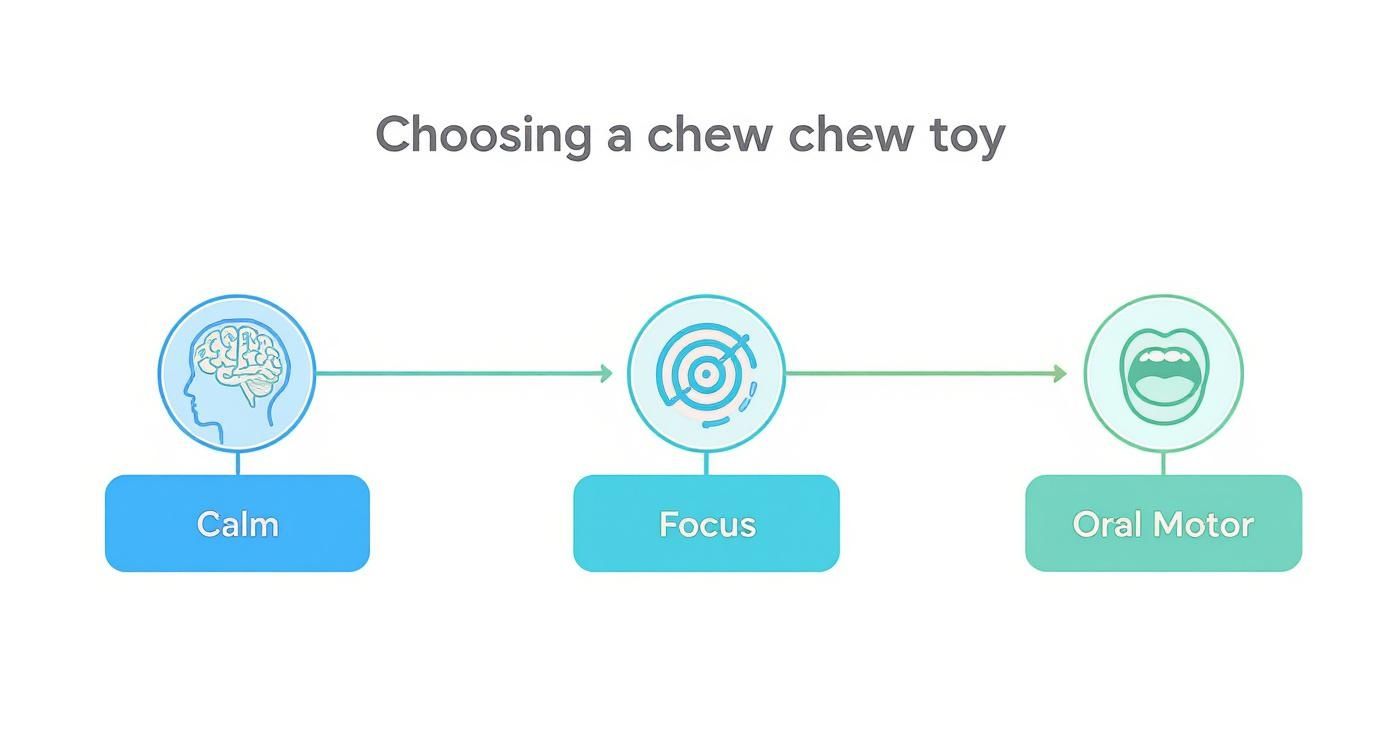
This simple guide helps connect the dots between a specific need—like calming down or focusing in class—and the features that will help achieve it.
Selecting the Best Chewable Sensory Toy for Your Needs
To make it even easier, here's a quick guide to match a person's chewing style with the right kind of toy.
| Chewing Style | Recommended Toy Type | Key Features | Best For |
|---|---|---|---|
| Aggressive/Forceful | Tough, XXT-rated pendants or sticks | High durability, dense materials, solid construction. | Users who quickly destroy other items and need maximum resistance. |
| Sensory Seeking | Textured necklaces, bracelets, or handhelds | Bumps, ridges, nubs, or varied patterns. | Individuals who crave intense tactile input and oral stimulation. |
| Anxious/Distracted | Smooth, discreet necklaces or bracelets | Non-distracting, smooth surfaces, wearable format. | Discreet calming on the go, especially at school or in public. |
| Molars/Back Teeth | Long, slender stick shapes ("chewelry" sticks) | Reaches back molars for powerful jaw input. | Heavy chewers who need to engage their strongest jaw muscles. |
| Gentle/Oral Fidgeting | Soft, flexible pendants or bracelets | Softer silicone, more give, less resistance. | Light chewers or those who use mouthing for gentle self-soothing. |
| Drool Management | Fabric or absorbent chews | Absorbent materials like cotton or terry cloth. | Individuals who produce excess saliva while chewing. |
This table should help you zero in on a few great options to start with. Remember, it might take a little trial and error to find the absolute perfect fit.
Select the Right Format for the Situation
Finally, think about when and where the chew toy will be used. A great tool is only useful if it's available when needed, so the format should suit the environment.
- Chewable Necklaces and Bracelets: Absolutely perfect for discreet, on-the-go support. The tool is always there when they need it, which is ideal for school, appointments, or navigating a busy shopping centre.
- Pencil Toppers: A non-negotiable for the classroom or homework station. They pop right onto a pencil or pen, offering a safe and appropriate alternative for kids who chew on their writing tools to concentrate.
- Handheld Fidgets: These are often a bit bigger and might have more interesting shapes. They work well for home use during quiet time, car rides, or while watching a movie, as they keep both the hands and mouth busy.
Some options, like the items in this absorbent sensory chew pack, are designed specifically to manage drool, making them a really practical choice for some users.
Ultimately, choosing the right chewable is about making a perfect match. A tough, bumpy necklace might be a game-changer for an aggressive chewer at school, while a smooth, handheld chew could be the ideal calming tool for a light chewer at home. It’s all about finding what works for their unique sensory system.
Understanding Safety Standards and Materials
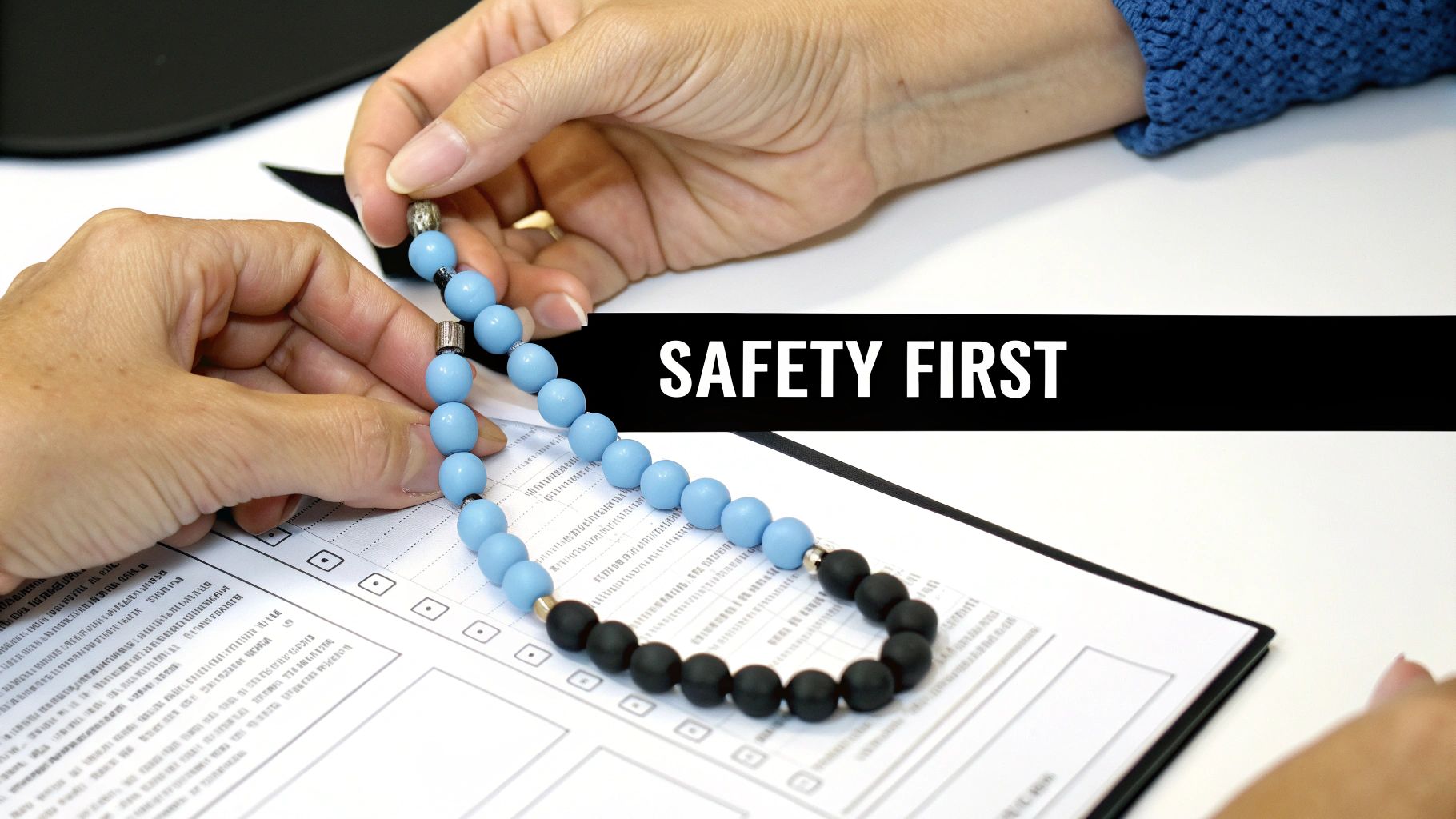
When a tool is designed to go directly into someone's mouth, safety isn't just a feature—it's the absolute foundation. For chewable sensory toys, the materials and construction are non-negotiable. They are what ensures someone is protected while getting the vital sensory input they need.
Choosing a high-quality, purpose-built chewable gives you peace of mind that it’s both effective and completely safe. It's so important to be able to tell the difference between a proper sensory tool and an unsafe object, as it can prevent real harm.
Non-Toxic Materials Are a Must
The golden rule for any chewable is simple: it must be made from 100% food-grade silicone. This is the same tough, high-quality material you'll find in baby bottle teats and kitchen utensils, specifically designed to be safe for chewing.
This also means the material has to be certified free from a whole list of harmful chemicals often found in cheap plastics.
A safe chewable sensory toy must be:
- BPA-Free: Bisphenol A is a chemical you definitely want to avoid as it can interfere with bodily functions.
- PVC-Free: Polyvinyl chloride can leach hazardous chemical additives.
- Phthalate-Free: These are used to make plastics flexible, but they come with significant health risks.
- Lead-Free: Lead is a highly toxic metal that is extremely dangerous if ingested.
Always double-check the product description to make sure these safety standards are clearly listed. It’s a critical step in picking a tool you can trust.
Smart Design for Safe Use
It’s not just about the material. Thoughtful design plays a huge part in how safe a chewable sensory toy really is. The best products have features that anticipate potential risks and build in protections right from the start.
One of the most important features, particularly for wearable chewies like necklaces, is a breakaway clasp. These clasps are designed to pop open under pressure, which is a vital safety mechanism to prevent any risk of entanglement or choking if the necklace gets snagged.
Another key design element is single-piece construction. When a toy is moulded from one solid piece of silicone, there are no small parts that can break off and become a choking hazard. This solid build also means the tool can withstand really intense chewing without falling apart.
A purpose-built sensory tool is engineered with safety as its primary function. From the non-toxic materials to the breakaway clasps, every element is designed to provide safe, effective regulation, distinguishing it from everyday items that are unsafe to chew.
Here in Australia, the demand for chewable sensory toys has grown right alongside a bigger focus on autism-friendly and inclusive products. In fact, a significant 46% of new sensory toy launches in Australia were specifically designed with autism-friendly certification and made from non-toxic materials, showing just how committed the industry is to safety. You can read more about these market trends and the focus on safety. This push ensures that parents and therapists can access tools that are not only beneficial but also rigorously tested.
Weaving Chewables into Daily Life
A sensory tool is only as good as its availability. For chewable sensory toys to make a real difference, they need to become a normal, reliable part of the day—at home, at school, and everywhere in between. It's about shifting the chewable from being a novelty item into a dependable support tool.
The trick is to be proactive, not reactive. Don't wait until stress levels are already hitting the roof to offer a chewable. Instead, bring it out during those moments you already know are tricky. This helps build a positive connection and gives the user a chance to regulate before things get overwhelming.
A Game Plan for School and Home
Consistency is everything. For a chewable to be truly effective, the support a child gets at home needs to extend into the classroom. This creates a predictable sense of calm that carries them through their entire day.
Working with your child's teacher to create a simple plan can be a game-changer.
- Frame it as a Tool, Not a Toy: Explain that the chewable is a "focus tool" or "helper," much like glasses help another student see the board. Its job is to help the student stay calm and engaged.
- Set Clear Boundaries: Agree on when and where it's okay to use. It might be perfect during quiet reading time or assemblies but might need to be put away during group activities.
- Choose a Classroom-Friendly Style: Discreet options are usually best. A chewable necklace or a pencil topper is far less distracting to other kids than a large, brightly coloured handheld chew, and it's always right there when needed.
At home, you can use chewables to smooth out those tough transition times. Offer one to ease the shift from playtime to dinnertime, or have one on hand to help with focus during homework. The aim is to make it an accessible, completely normal part of their routine.
Talking About it with Others
One of the biggest hurdles can be explaining the chewable to curious friends, classmates, or even family members. It really helps to arm your child with a simple, confident script they can use. This empowers them and takes the awkwardness out of the situation.
You can practise short, simple phrases they can easily remember:
- "This is my chew necklace. It helps my brain feel calm."
- "It helps me focus when things get a bit noisy."
- "It's just something that helps my body feel better."
Keeping the explanation straightforward and positive removes any potential stigma. It turns a moment of curiosity into a chance to build understanding and helps your child feel confident using their tool, no matter who is around.
By integrating chewable sensory toys into a wider 'sensory diet,' their benefits are magnified. They become one part of a holistic approach to regulation, working alongside other supports to create a balanced and calm nervous system.
This idea of a "sensory diet" is so important. A chewable toy isn't a magic fix; it’s one piece of a bigger puzzle designed to meet a person's unique sensory needs. Its calming effects are amplified when paired with other sensory inputs. For example, a bit of time on a sensory swing can provide calming movement, while a cuddle with a weighted animal toy offers that grounding deep pressure. When you combine these different strategies, you create a supportive environment that helps the user feel more regulated and ready to take on their world.
Keeping Your Chewables Clean and Safe
Chewable sensory toys spend a lot of time in the mouth, so keeping them clean isn't just a good idea—it's essential for health and safety. Good hygiene stops germs from building up, and regular safety checks make sure the chewable is still in one piece and doing its job properly.
Thankfully, looking after these tools is usually a breeze. Most chewables are made from food-grade silicone, which is incredibly easy to clean. A quick wash under the tap with some warm, soapy water is often all you need to get rid of the day's grime. For a more thorough sanitising, many are safe to pop on the top rack of the dishwasher. This simple care routine means the chewable is always ready to go when needed.
The Importance of Regular Inspections
Even the toughest chewable sensory toys won't last forever. How long they hold up really depends on the intensity of the chewing, which is why it's so important to inspect them before every single use. A quick daily once-over is the best way to spot a small problem before it turns into a real hazard.
When you're checking the toy, keep an eye out for these specific signs of wear and tear:
- Cracks or splits appearing in the material.
- Tears or holes, especially around the thinner parts of the design.
- Any areas that look stretched or noticeably worn down.
- Loose pieces that look like they could break off.
If you find any of these issues, it's time to throw the toy away and get a new one immediately. A damaged chewable is no longer a safe tool; it's a potential choking hazard.
Establishing a Simple Maintenance Routine
Setting up a simple routine makes it much easier to stay on top of a toy's condition. A system of daily and weekly checks helps you manage both cleaning and safety, extending the life of your chewables while putting wellbeing first.
For a bit more guidance, we've put together some practical advice on how to put these checks into practice. You can read our detailed guide with 4 tips for keeping sensory toys clean and hygienic.
This hands-on approach ensures the user always has a safe, clean, and effective tool for self-regulation. By making these quick checks a normal part of your day, you're providing consistent support and, just as importantly, peace of mind.
Your Questions About Chewables Answered
Diving into the world of chewable sensory toys often brings up some very practical questions. To help you feel completely confident in choosing and using them, we’ve put together answers to some of the most common queries we hear from parents, teachers, and users right across Australia.
Are Chewable Sensory Toys Safe for All Ages?
That's a really important question, and the short answer is no—not all chewables are right for every age. Matching the product to the user's age and chewing style is essential for safety.
For example, chewable necklaces are almost always not recommended for children under three years old. This is because of the potential strangulation and choking risks, even when they come with safety features like breakaway clasps. Always check the manufacturer's age and safety recommendations before buying. If you're ever unsure, the best thing you can do is have a chat with an occupational therapist who can point you to the safest and most effective tool.
How Often Should I Replace a Chewable Toy?
There’s no hard and fast rule here. The lifespan of a chewable really comes down to how often and how intensely it’s used. Someone who is a light nibbler might have their chewable last for months, while a more aggressive chewer could get through one in just a few weeks.
The most important habit you can build is inspecting the chewable before every single use. Check it over for any signs of damage – think cracks, holes, tears, or any weak spots that look like they could break off. If you notice any wear and tear, it's time to throw it out immediately to avoid any choking hazards. Regular, careful checks are the best way to keep things safe.
Can Adults Benefit from Chewable Toys?
Absolutely! The need for sensory input and regulation doesn't just vanish when we grow up. Heaps of adults find chewable sensory toys to be incredibly effective, discreet tools for managing stress at work, staying focused while studying, or breaking habits like nail-biting, pen-chewing, and teeth-grinding.
Chewables designed for adults are often much more subtle. You’ll find sleek pendants, simple bracelets, or pencil toppers that don't look out of place in an office or university. They offer the same calming oral sensory input that helps settle the nervous system, just in a more low-key package, making them a brilliant support tool for everyday life.
How Can I Introduce a Chewable Toy at School?
Working together with your child's school is the secret to making this a success. When you chat with the teacher or staff, try framing the chewable as a 'sensory tool' or 'regulation tool' instead of a 'toy'.
Explain that it helps your child concentrate and engage in class, much like how glasses help another child see the whiteboard. A letter from an occupational therapist can be a massive help here. It’s also a great idea to suggest a clear plan for how it will be used—maybe it stays at their desk for quiet work or comes out during assemblies. This shows it's there to support learning, not become a distraction.
At The Sensory Poodle, we know that finding the right tools is all about supporting individual needs with safe, high-quality products. Explore our carefully curated collection of chewable sensory toys and other calming aids designed for every member of the family. From Kaiko fidgets to Neptune blankets and even a mesmerizing Jellyfish aquarium lamp, we have your sensory needs covered. Find the perfect fit today at https://sensorypoodle.com.au.