


what is sensory processing disorder: signs you should know

Sensory Processing Disorder (or SPD) is a neurological condition that scrambles how the brain takes in and makes sense of information from the world around us. For someone with SPD, everyday sights, sounds, textures, and movements can feel intense, confusing, or even completely muted, turning what should be simple experiences into overwhelming challenges.
What Does Sensory Processing Disorder Actually Feel Like?
Think of your brain as the air traffic controller for your body. For most of us, sensory signals—the feeling of a soft jumper, the background hum of the fridge, the bright sunlight outside—are like planes coming in for a smooth landing. The controller guides them in effortlessly, and we respond appropriately without even thinking about it.
Now, imagine that same control tower during a storm. This is a bit like what happens in a brain with SPD. Some signals (like the scratchy tag on a shirt) come in too loud and fast, causing chaos and overwhelm. Others (like the feeling of being touched on the shoulder) might get lost in the storm and not even register. And some signals get jumbled, leading to a confused or unexpected reaction.
This sensory "traffic jam" can make daily life feel like a constant battle. A trip to the supermarket becomes an assault of bright lights and loud announcements. A friendly hug might feel painful. A noisy classroom can make it impossible to hear the teacher.
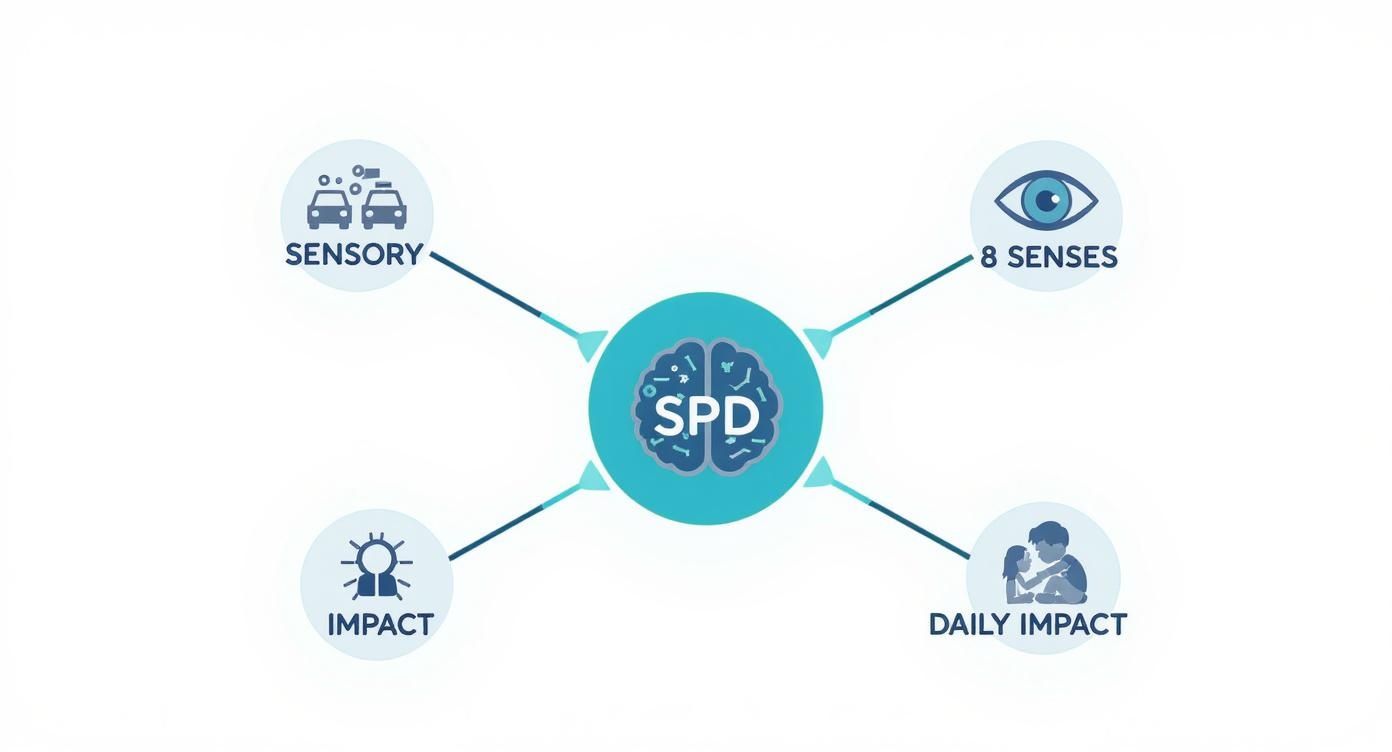
As this image shows, when the brain struggles to manage sensory input, it has a direct ripple effect on how a person can comfortably and effectively engage with their environment.
It’s More Than Just the Five Senses
To really get our heads around SPD, we need to go beyond the five senses we all learned about in primary school. We actually have eight sensory systems working together to help us navigate the world.
The five we know well are sight, sound, smell, taste, and touch. But there are three others that play a massive role in how we function.
The Eight Senses At a Glance
Here’s a quick rundown of all eight systems, including the "hidden" senses that are often at the core of sensory challenges.
| Sensory System | What It Helps Us Do | A Real-Life Example |
|---|---|---|
| Visual (Sight) | Interpret what we see, like light, colour, and movement. | Reading a book or recognising a friend's face. |
| Auditory (Hearing) | Process and understand sounds from our environment. | Listening to music or filtering out background noise in a café. |
| Olfactory (Smell) | Detect and identify different smells. | Enjoying the smell of freshly baked bread or knowing milk has gone off. |
| Gustatory (Taste) | Distinguish between flavours like sweet, sour, salty, and bitter. | Deciding if you like a new food. |
| Tactile (Touch) | Feel pressure, texture, temperature, and pain through our skin. | Knowing if a surface is rough or smooth, or if your coffee is too hot. |
| Vestibular (Balance) | Understand balance, movement, and where our head is in space. | Spinning around without falling over or enjoying a swing. |
| Proprioceptive (Body Awareness) | Know where our body parts are without looking at them. | Typing on a keyboard without looking down or climbing stairs. |
| Interoceptive (Internal Body) | Recognise and interpret signals from inside our body. | Feeling that you're hungry, thirsty, or need to go to the toilet. |
When the vestibular, proprioceptive, or interoceptive systems are part of that sensory traffic jam, it can lead to difficulties with coordination, clumsiness, and understanding internal body cues. Grasping how all eight senses work is key to understanding the full picture of SPD. For a deeper look, check out our guide on how to support different sensory needs.
How Common Is SPD in Australia?
SPD is far more common than most people think. Research in Australia suggests that between 1 in 20 and 1 in 6.25 children experience significant sensory processing difficulties.
That means roughly 5% to 16% of kids face challenges that can seriously affect their learning, social skills, and day-to-day family life. It’s not just a minor quirk—it's a real and significant issue for many families right across the country, highlighting the need for supportive sensory toys in Australia.
The Three Main Types of Sensory Challenges
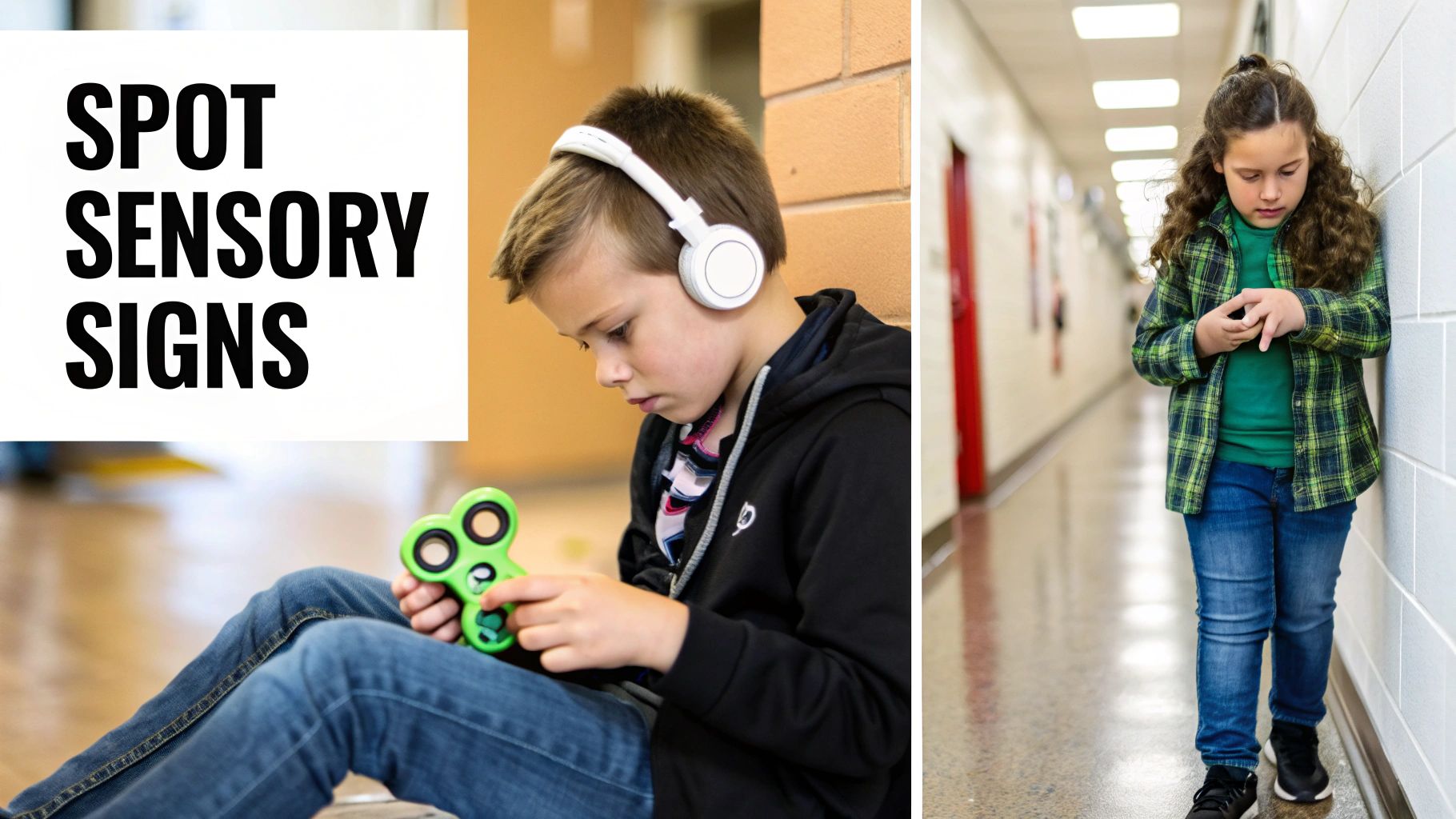
To really get what Sensory Processing Disorder is, you have to realise it doesn't look the same for every child. Just like that sensory traffic jam can cause different problems on different days, SPD shows up in a few distinct patterns. Occupational therapists generally group these challenges into three main categories, which is a massive help for parents and teachers trying to pinpoint specific behaviours and find the right support.
It's important to remember these categories aren't rigid boxes; a child can absolutely show signs from more than one. Think of them more as a helpful framework for making sense of a child's unique sensory profile.
1. Sensory Modulation Disorder
This is the one most people are familiar with. It’s all about how a child regulates their responses to the sensory information flooding in. Imagine the brain has a volume dial for sensations, but the dial is faulty. Sometimes it’s cranked up way too high, other times it’s barely on, and often the child is constantly trying to adjust it themselves to feel 'just right'.
This category breaks down even further into three specific types:
-
Sensory Over-Responsivity: For these kids, the volume dial is stuck on high. Everyday sensations that most people barely notice can feel overwhelming, triggering a "fight or flight" reaction. This is the child who is intensely bothered by the seam on their sock, can’t stand messy play, or claps their hands over their ears the second the vacuum cleaner turns on.
-
Sensory Under-Responsivity: Here, the aural dial is turned way down. These children need a lot more intense sensory input just to register that something is happening. They might not seem to hear you when you call their name, seem unfazed by bumps or scrapes, or can appear a bit passive and hard to engage, sometimes benefiting from engaging toys like Numberblocks.
-
Sensory Craving/Seeking: This child is actively trying to turn that volume dial up. They have an almost insatiable need for intense sensory experiences to feel organised and calm. This often looks like constant movement—crashing into things, jumping on the furniture, spinning in circles—or a love for loud noises and visually busy environments, like those created by a Jellyfish aquarium lamp. They are true sensory explorers, always on the hunt for more input.
Sensory modulation is simply the ability to produce a response that actually matches the intensity of the sensory input. When this system is out of whack, a child's reactions can seem completely out of proportion to what's happening around them.
2. Sensory-Based Motor Disorder
This pattern is less about the emotional reaction to a sensation and more about how the brain physically uses sensory information to control movement, balance, and coordination. The brain struggles to organise the feedback it gets from the muscles and joints (proprioception) and the inner ear (vestibular system) to create smooth, controlled actions.
This can show up in two main ways:
-
Dyspraxia: This is a real challenge with motor planning. A child with dyspraxia finds it incredibly difficult to come up with an idea, plan the steps, and then physically carry out an unfamiliar movement. Learning new skills like riding a bike, tying shoelaces, or using scissors can be a huge hurdle. They may come across as clumsy, but building toys like magnatiles can help improve motor planning.
-
Postural Disorder: This is all about challenges with maintaining stable body control. These kids might have weak core muscles, slump in their chair, get tired really quickly during physical activities, and struggle with balance. You might notice they prefer to lie on the floor rather than sit up because it just takes less physical effort.
3. Sensory Discrimination Disorder
The final category deals with the brain's ability to interpret the fine details of sensory information. The message gets through, but the brain has a hard time figuring out precisely what it means. It’s a bit like trying to read a blurry sign—you know there are words there, but you can’t quite make them out.
A child with sensory discrimination challenges might:
- Tactile: Struggle to feel the difference between a 10-cent and 20-cent coin in their pocket without looking.
- Visual: Have trouble spotting their favourite Bluey merchandise in a cluttered box or get confused between similar-looking letters like 'b' and 'd'.
- Auditory: Find it hard to distinguish between similar-sounding words (like 'cat' and 'cap') or filter out the teacher's voice from all the background chatter in a classroom.
Understanding these three types of sensory challenges is the first real step toward giving your child targeted, effective support. Whether it's providing the calming deep pressure of a Neptune blanket for an over-responsive child or using Gravitrax to help a child with dyspraxia practise their motor planning skills, knowing the 'why' behind the behaviour makes all the difference.
Recognising SPD Signs From Toddlers to Teens
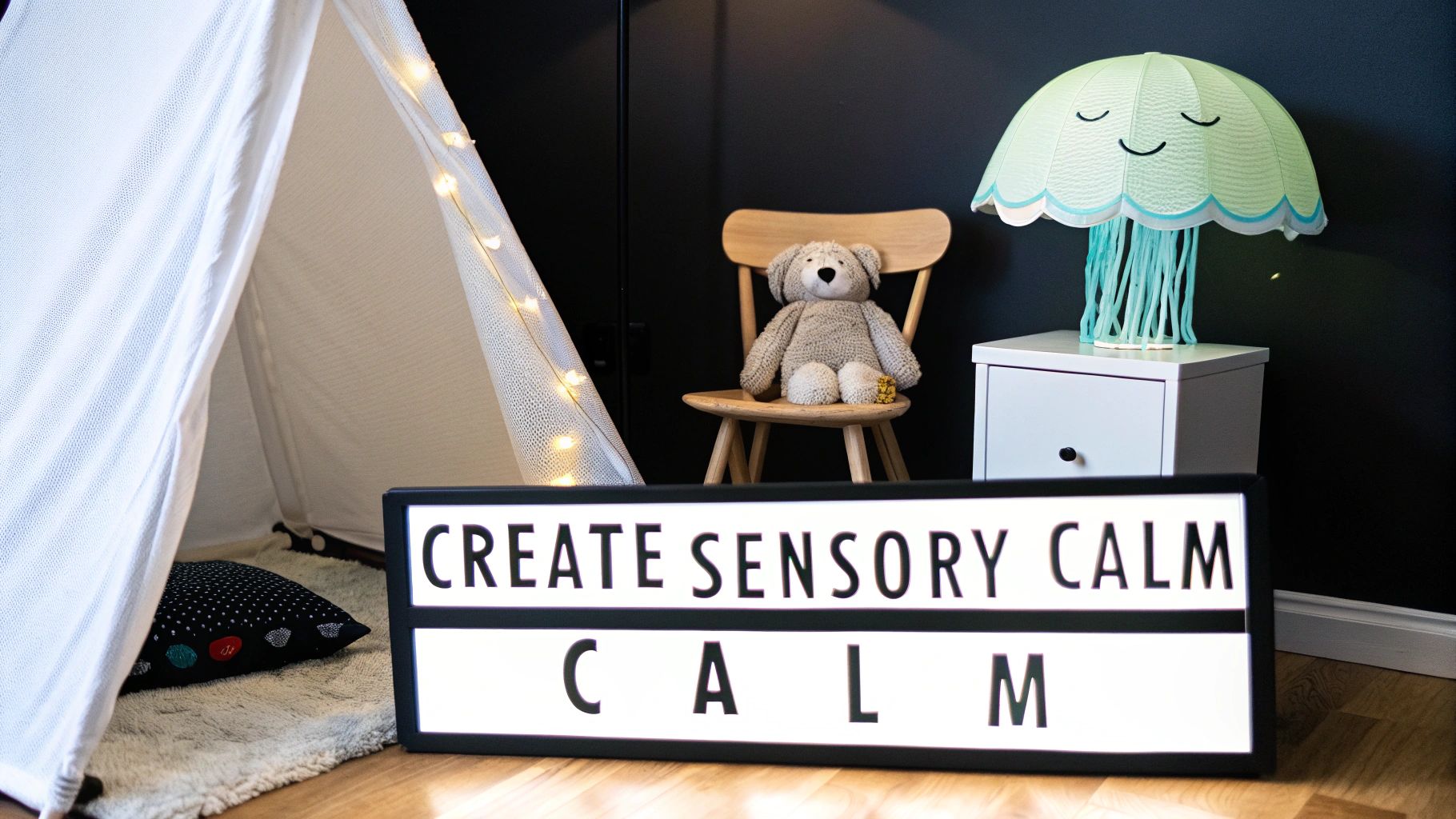
Sensory processing differences don't just pop up when a child starts school. The signs are often there right from the beginning, but they can be subtle. The key is knowing what you're looking for, because behaviours we might brush off as "just a phase" or "picky eating" could actually be a child's only way of telling us about their sensory needs.
When we understand how SPD can look at different ages, it completely changes our perspective. Instead of seeing 'bad behaviour', we start to see a child who is struggling to cope in a world that feels overwhelming or confusing. This shift from judgement to curiosity is the absolute first step in providing real, meaningful support.
Signs in Infants and Toddlers (Ages 0–3)
In these very first years, sensory-related behaviours are often tangled up in the daily routines of feeding, sleeping, and playing. An infant with SPD might be incredibly fussy and difficult to soothe, though sometimes comforting items like Warmies can help. Or, they might be the opposite—unusually calm and hard to engage with.
Keep an eye out for these common signs:
- Extreme reactions to touch: They might resist being held or cuddled, cry during nappy changes, or get really upset when you wipe their hands or face.
- Feeding difficulties: This goes beyond typical toddler fussiness. They might struggle to transition to solid foods or gag on certain textures.
- Sleep challenges: The child might find it incredibly hard to settle down for sleep or wake up constantly. Exploring gentle sleeping aids like soft toys can be beneficial.
- Aversion to movement: Some toddlers are genuinely fearful of swings, slides, or even being lifted in the air, which points to a sensitive vestibular system.
- Constant need for movement: On the flip side, you might have a toddler who is always on the go—crashing, bumping, and actively seeking out that intense physical feedback.
Signs in Preschool and School-Aged Children (Ages 4–12)
As a child's world gets bigger with preschool, school, and parties, sensory challenges can become much more noticeable and disruptive. This is often when difficulties with focus, making friends, and managing big emotions really come to the surface.
At this stage, you might start to see:
- Auditory sensitivity: The child gets easily distressed by loud or sudden noises like hand dryers, vacuum cleaners, or fire alarms. This is where tools like noise cancelling earmuffs for kids can be an absolute lifesaver.
- Tactile defensiveness: They might refuse to wear certain clothes because of scratchy tags or seams and steer clear of messy play involving paint, sand, or glue. Creative outlets like Little potion co kits can offer a gentler way to explore textures.
- Poor body awareness: The child might seem clumsy, always bumping into furniture or people. They may also struggle with activities needing coordination, like playing sports or even just using a knife and fork.
- High need for sensory input: This is the child who can't sit still in class. They might be constantly fidgeting, chewing on their shirt collar, or seeking deep pressure by leaning on others.
A child’s behaviour is often a direct message about their internal sensory experience. A meltdown in a busy supermarket isn't defiance; it's a nervous system screaming, "I'm overwhelmed!"
Signs in Teenagers (Ages 13+)
By the teenage years, some sensory challenges can become less obvious. Teens get very good at masking their difficulties or simply avoiding situations that cause them discomfort. But the underlying issues are still there, and they can contribute to anxiety, social withdrawal, and problems at school.
Common signs in teenagers can include:
- Social avoidance: They might actively avoid crowded places like school assemblies, parties, or busy shopping centres because the sensory overload is just too much to cope with.
- Difficulties with self-care: Everyday tasks like showering, brushing teeth, or styling their hair can be genuinely uncomfortable due to sensitivities to touch or smells.
- Poor organisational skills: A teen might struggle to keep their room or locker tidy—not because they're lazy, but because of challenges with executive function linked to sensory processing.
- Intense but narrow interests: They may gravitate towards predictable, solitary activities that provide just the right amount of sensory input, such as collecting favourite characters like Snoopy figures, while avoiding things like team sports or large group projects.
Recognising these signs across different age groups is crucial for getting early and effective support in place. As a child's needs change over time, so should the strategies and tools we use to help them thrive. For more guidance, you can explore our tips for choosing the right sensory toys by age group.
The Overlap Between SPD, Autism, and ADHD
If you're a parent navigating the world of neurodiversity, you’ve probably noticed that sensory issues rarely travel alone. It’s incredibly common to see the traits of Sensory Processing Disorder (SPD), Autism Spectrum Disorder (ASD), and Attention-Deficit/Hyperactivity Disorder (ADHD) show up together. This isn't just a coincidence; it creates a complex, intertwined picture of how a child experiences the world.
This overlap stems from shared wiring in the brain. While SPD can certainly exist on its own, its symptoms are now recognised as a core part of an autism diagnosis. In the same way, many people with ADHD also have significant sensory processing challenges that impact their ability to regulate attention and emotions.
Why Do They Overlap So Often?
At its core, the connection is all about how the brain processes information and regulates responses. Think of it like a "traffic control" system. In all three conditions, this system manages incoming sensory data, attention, and executive functions (like planning and impulse control) a little differently.
Let's take a real-world example. A child who can't stop fidgeting might be seen as hyperactive, a classic sign of ADHD. But that very same movement could be a form of sensory seeking—their body is craving proprioceptive input to feel grounded. Similarly, a meltdown in a busy supermarket could be chalked up to a tantrum, but it's often a sign of overwhelming sensory overload, a hallmark of both SPD and autism. Fun distractions like showbags and blind boxes can sometimes help manage these tough situations.
Understanding this overlap is the key. It helps us move away from seeing separate "problems" to seeing a whole child whose brain is simply wired to interact with the world differently. When we address their foundational sensory needs, we often see improvements across the board.
The research backs this up. A major Australian study found that between 69% and 95% of autistic children showed significant signs of sensory processing differences. Compare that to just 21.5% of typically developing children, and it's clear how deeply connected these experiences are. For those interested in the data, you can read the full research about these sensory findings.
Untangling the Behaviours
For parents and even professionals, figuring out what's driving a specific behaviour can feel like a puzzle. Is a child's inability to focus in class due to an attention deficit, or are they completely distracted by the hum of the fluorescent lights and the itchy tag on their school uniform? More often than not, it’s a bit of both.
This is exactly why a thorough assessment that looks at the whole picture is so crucial. An occupational therapist is trained to identify a child's unique sensory profile, offering insights that are incredibly valuable, regardless of any primary diagnosis. As one parent shared in their story about how they helped their autistic child self-regulate with sensory toys in Australia, learning to support these needs can be life-changing.
Ultimately, it doesn't matter if a child has a diagnosis of SPD, autism, ADHD, or all three. Bringing in sensory-based strategies is almost always a powerful and positive step. By helping a child feel safe, regulated, and comfortable in their own body, we create the perfect foundation for them to learn, connect, and thrive.
How SPD Is Diagnosed and Treated in Australia
If you’re starting to suspect your child might have Sensory Processing Disorder (SPD), figuring out what to do next can feel overwhelming. The good news is that Australia has a clear pathway for getting answers and support, led by professionals who live and breathe this stuff. Your journey starts with seeking an expert opinion.
Often, the best first step is a chat with your GP. They can give you a referral to see a paediatrician or, in many cases, point you directly towards an Occupational Therapist (OT). In Australia, OTs are the go-to allied health experts for anything related to sensory processing. They have deep, specialised training in this area and are perfectly equipped to help.
The Diagnostic Journey with an Occupational Therapist
Getting an OT assessment for SPD isn't about ticking a few boxes. It’s a deep dive designed to create a rich, detailed picture of your child’s unique sensory world. Think of it as detective work, where the OT gathers clues from a few key sources.
- Parent and Teacher Interviews: The OT will want to hear from the real experts on your child—you and their teachers. They’ll ask a lot of questions about your child's behaviour, their history, and the specific things you’ve noticed at home and in the classroom.
- Structured Observations: This is where the fun happens. The therapist will guide your child through specific, play-based activities in a sensory gym or clinic. It might look like just playing with items like soft Palm Pals Australia toys, but they are carefully observing how your child reacts to different sensations, organises their body, and plans their movements.
- Standardised Testing: To get the full picture, OTs use well-established assessment tools to measure sensory processing, motor skills, and how your child is managing everyday tasks. This gives them solid, objective data to see how your child compares to developmental norms.
Through this thorough process, the OT pieces together your child’s specific sensory patterns—whether they are over-responsive, under-responsive, a sensory seeker, or all of the above. While SPD isn't yet a standalone diagnosis in the official manuals, an OT can formally identify and document these significant sensory challenges, which is crucial for getting the right support.
And it’s not just kids. It’s vital to remember that sensory processing differences are a huge part of life for many autistic adults in Australia. In fact, research shows that between 77% and 95% of autistic adults face sensory challenges that significantly impact their daily lives and community participation. You can find more insights about these findings on sensory processing in adults.
Evidence-Based Therapies and Support
Once the OT has a clear understanding of your child’s needs, they'll work with you to create a personalised plan. The cornerstone of treatment is Sensory Integration (SI) Therapy. The goal isn't to "fix" SPD, but rather to help your child's brain learn to process sensory information more efficiently so they can navigate the world with more confidence.
SI therapy sessions often look like pure, unadulterated play. But behind the scenes, every single activity is carefully chosen by the therapist to provide specific sensory input. They create "just-right" challenges that help forge new neural pathways, improving how the brain organises and responds to the world. A child might be swinging, crashing into giant beanbags, or squishing their hands in therapeutic putty, all expertly guided to support their regulation and skill development.
The core idea of Sensory Integration Therapy is to provide controlled sensory experiences that help the child's nervous system mature, allowing them to respond to their environment in a more organised and successful way.
A huge part of this support system is creating a sensory diet. No, it has nothing to do with food! A sensory diet is a personalised daily schedule of activities designed to give your child the precise sensory input they need to stay calm, focused, and ready for whatever the day throws at them.
It's a proactive strategy—scheduling in sensory breaks before overwhelm hits. This could mean a few minutes of jumping on a mini-trampoline before school, having access to quiet fidgets during mat time, or snuggling under a weighted blanket for story time. Your OT will help you weave these activities seamlessly into your family’s daily rhythm, empowering your child to feel more in control of their sensory world.
Putting Theory into Practice: Building a Supportive Sensory World
Knowing what Sensory Processing Disorder is is one thing. But turning that understanding into practical, everyday support? That’s where the real change happens. Creating a supportive environment isn't about bubble-wrapping your child; it's about being a step ahead, thoughtfully managing sensory input to prevent a child’s nervous system from getting overwhelmed in the first place.
It’s all about making small, intentional adjustments at home and school that help a child feel safe, organised, and ready to take on their day. These changes don't need to be huge or expensive. Often, the simplest strategies that honour a child's unique sensory wiring are the most powerful, turning a potentially chaotic space into a predictable sanctuary.
Crafting a Calm-Down Corner at Home
A child’s home should be their safe harbour—the one place they can truly let their guard down and recharge. A dedicated sensory space, often called a "calm-down corner," gives them a predictable retreat when the world outside gets too loud, too bright, or just too much. This isn’t a punishment zone like a "time-out" spot. It’s a positive, safe space they can choose to use whenever they feel their engine revving too high.
Setting one up is easier than you might think. A simple sensory tent can instantly dial down the visual and auditory noise. From there, you can fill it with tools that speak directly to your child’s needs.
To soothe a busy mind, the gentle, predictable drift of a Jellyfish lamp or Jellyfish aquarium lamp can be utterly mesmerising. Visually engaging bubble tubes and other night lights also work wonders. For that deep, grounding input many kids crave, weighted blankets are incredible. The firm, gentle pressure from a Neptune blanket or a huggable weighted animal toy feels like a big, secure hug for the entire nervous system. These curated sensory spaces become personal comfort zones.
Designing a Sensory-Smart Classroom
Let’s be honest: the classroom is a sensory minefield. The scrape of a chair, the flickering fluorescent lights, the constant hum of chatter—it’s an incredibly demanding environment. A sensory classroom is one that recognises these challenges and builds support right into the learning space.
This often means creating a quiet corner, much like the one at home, stocked with tools that help with focus without creating a new distraction. This is where quiet fidgets shine. Instead of a noisy spinner, a discreet tool like a Kaiko fidget or a squishy Needoh provides just enough tactile feedback to help a child stay seated and engaged during mat time. For kids sensitive to noise, a pair of noise cancelling earmuffs for kids can be a game-changer, muffling the background chaos so they can tune into the teacher's voice.
Movement is another non-negotiable. Rather than fighting a sensory-seeker’s need to move, a sensory-smart classroom provides outlets for it. This could be scheduled "brain breaks" on a mini-trampoline or structured heavy-work activities using tools like Airtoobz.
By providing appropriate outlets for sensory needs, educators help children regulate their bodies, which is the foundation for being able to learn. A regulated child is an available learner.
To help you find the right tools for the right challenge, here's a quick-reference table matching common sensory needs with practical supports available to families and schools across Australia.
Sensory Tool Finder For Common Challenges
| If Your Child Seeks or Avoids... | Consider This Sensory Tool | Specific Product Examples |
|---|---|---|
| Loud, Unpredictable Noises | Auditory dampening tools to reduce overwhelming sounds and improve focus. | Noise cancelling earmuffs for kids can make assemblies or noisy classrooms manageable. |
| Constant Movement & Crashing | Deep pressure and heavy work items that provide calming proprioceptive input. | A sensory swing or a Neptune blanket offers consistent, soothing pressure. |
| Visual Overload & Distraction | Tools that provide a focused, gentle, and predictable visual stimulus to calm the mind. | The gentle motion of a Jellyfish lamp can help reduce anxiety. |
| Fidgeting & Restlessness | Quiet, discreet fidgets that allow for tactile input without distracting others. | Silent options like Kaiko fidgets or Needohs are perfect for the classroom. |
| The Need for a Safe Retreat | Enclosed spaces that reduce sensory input and offer a secure place to decompress. | A pop-up sensory tent can instantly create a personal calm zone. |
By building a supportive sensory environment, you are doing more than just managing behaviour. You're sending a powerful message to your child: their needs are real, they are valid, and you are there to give them the tools to navigate a world that wasn't always built with their nervous system in mind. This proactive approach makes life feel safer, more predictable, and a whole lot less overwhelming.
Your Questions Answered: A Guide to SPD
When you first dive into the world of Sensory Processing Disorder, it's natural to have a million questions. It can feel overwhelming, but you're not alone. We've put together some clear, straightforward answers to the questions we hear most often from parents, carers, and teachers.
Is Sensory Processing Disorder a Real Medical Diagnosis?
This is a really important question, and the answer isn't a simple yes or no. Right now, SPD isn't listed as a standalone condition in the big diagnostic manuals, like the DSM-5.
However, that doesn't mean it isn't real. Occupational therapists (OTs) across Australia and the wider neurodiversity community absolutely recognise SPD as a genuine condition. In fact, OTs are the go-to professionals for assessing and supporting sensory challenges. It's also worth noting that significant sensory differences are a key part of the diagnostic criteria for autism.
Ultimately, what matters most isn't the label, but the impact. Effective therapy and support—often incorporating weighted animals toys for comfort—can make a world of difference to a person's daily life, regardless of its official classification.
Can a Child Outgrow Sensory Processing Disorder?
Think of sensory processing as part of a person's fundamental wiring – it’s not something they simply "outgrow" like a pair of shoes. But that’s far from the whole story. While the underlying neurology might not change, a person's ability to manage it absolutely can.
With the right support from an OT and the development of smart coping strategies, children and adults can become incredibly adept at navigating their sensory world.
The goal is never to "fix" or erase sensory differences. Instead, it’s about building self-awareness and self-regulation skills that will last a lifetime. This is why early intervention is so powerful—it gives a child the tools to understand their own system and advocate for their needs as they grow.
How Can I Tell if a Fidget Toy Is Helping or Just a Distraction?
This is the golden question for any sensory tool! The whole point of a fidget is to help a person regulate their body and focus their mind so they can better engage with what's happening around them, whether that's a lesson in class or a conversation at the dinner table.
-
It’s helping if: The tool allows your child to stay seated longer, listen more attentively, or keep their cool in a noisy room. A quiet Kaiko fidget or a squishy Needoh might be the very thing that helps them filter out distractions and tune in.
-
It’s a distraction if: The toy becomes the main event. If all their attention is on the fidget itself, pulling them away from the actual task, then it's not doing its job.
If you find a tool is more distracting than helpful, it doesn't mean all fidgets are a write-off. It probably just means it’s not the right tool for that specific person or that particular situation. An OT is the perfect person to help you find what works best, whether that's different kaiko fidgets or another approach entirely.
Finding the right supports can be a game-changer. At The Sensory Poodle, we’ve carefully chosen a range of high-quality, effective sensory toys and aids designed to help your child feel calm, regulated, and ready to take on their day. You can explore our full collection of sensory toys in Australia to find the perfect fit for your family.