


Sensory Swings Australia: A Guide to Finding Calm and Focus

Sensory swings are so much more than just a piece of play equipment. Across Australia, they've become essential therapeutic tools, offering a safe haven of calming sensory input for both children and adults.
For anyone navigating sensory processing disorder, autism, or ADHD, these swings are a game-changer. They masterfully combine gentle movement with deep, soothing pressure, helping to regulate an overwhelmed nervous system, ease anxiety, and sharpen focus.
Why Sensory Swings Are Essential Therapeutic Tools
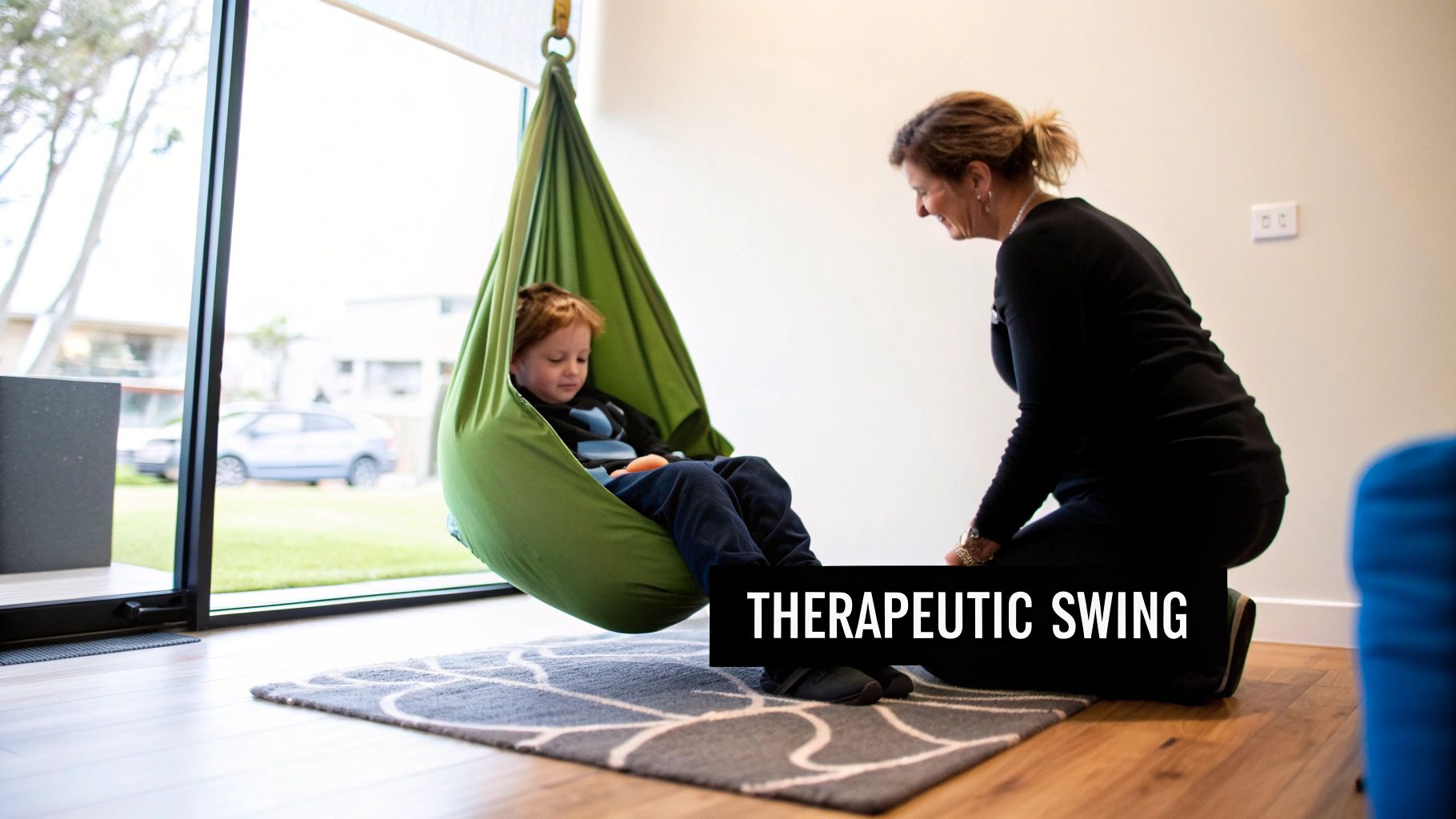
For many Aussie families, a sensory swing is the heart of their home’s regulation strategy. It’s a reliable source of comfort and calm. At its core, the magic lies in how it delivers two crucial types of sensory information: vestibular input (our sense of movement and balance) and proprioceptive input (the sensation of deep pressure that tells us where our body is).
These two inputs are fundamental for helping a disorganised or overwhelmed nervous system find its equilibrium.
Picture the snug, even pressure of a pod swing. It’s like a firm, all-encompassing hug that doesn’t let go. This consistent, gentle squeeze gives powerful feedback to the muscles and joints, helping the brain map out where the body is in space. This simple act can be profoundly calming, often turning a potential meltdown into a moment of quiet retreat.
Different Swings for Different Needs
In Australia, you'll find a few common types of sensory swings, and each one is designed to meet different needs. The right choice really comes down to what kind of sensory input the user is seeking.
- Pod Swings: These enclosed, cocoon-like swings create a secure, dark, and quiet space. They’re perfect for kids who get easily overstimulated and need a place to hide away from the world for a bit.
- Lycra Swings: Made from a stretchy, durable fabric, these offer a fantastic mix of deep pressure and dynamic movement. A child can push, stretch, and bounce against the material, which delivers a huge dose of proprioceptive feedback.
- Platform Swings: These are flat, stable swings that are brilliant for building balance and core strength. They support a wider range of movements—like gentle back-and-forth rocking or spinning—to really engage the vestibular system.
As more people realise their benefits, these swings have become a staple in homes, therapy clinics, and even a sensory classroom. They are far more than just another one of the many sensory toys in Australia; they're a dedicated space for finding calm and getting organised.
Accessibility Across Australia
The uptake of sensory swings has grown massively here, and a lot of that is thanks to government support. Australia is now one of the most progressive markets for sensory tools in the Asia-Pacific region, largely driven by the National Disability Insurance Scheme (NDIS).
Since NDIS funding became available, sensory spaces—which almost always feature tools like the Deluxe Sensory Swing—are popping up in more and more places. This is fantastic news, as it means more people can access these life-changing tools.
This guide is designed to walk you through everything you need to know—from choosing the right swing to installing and using it safely and effectively right here in Australia.
How Sensory Swings Calm the Nervous System
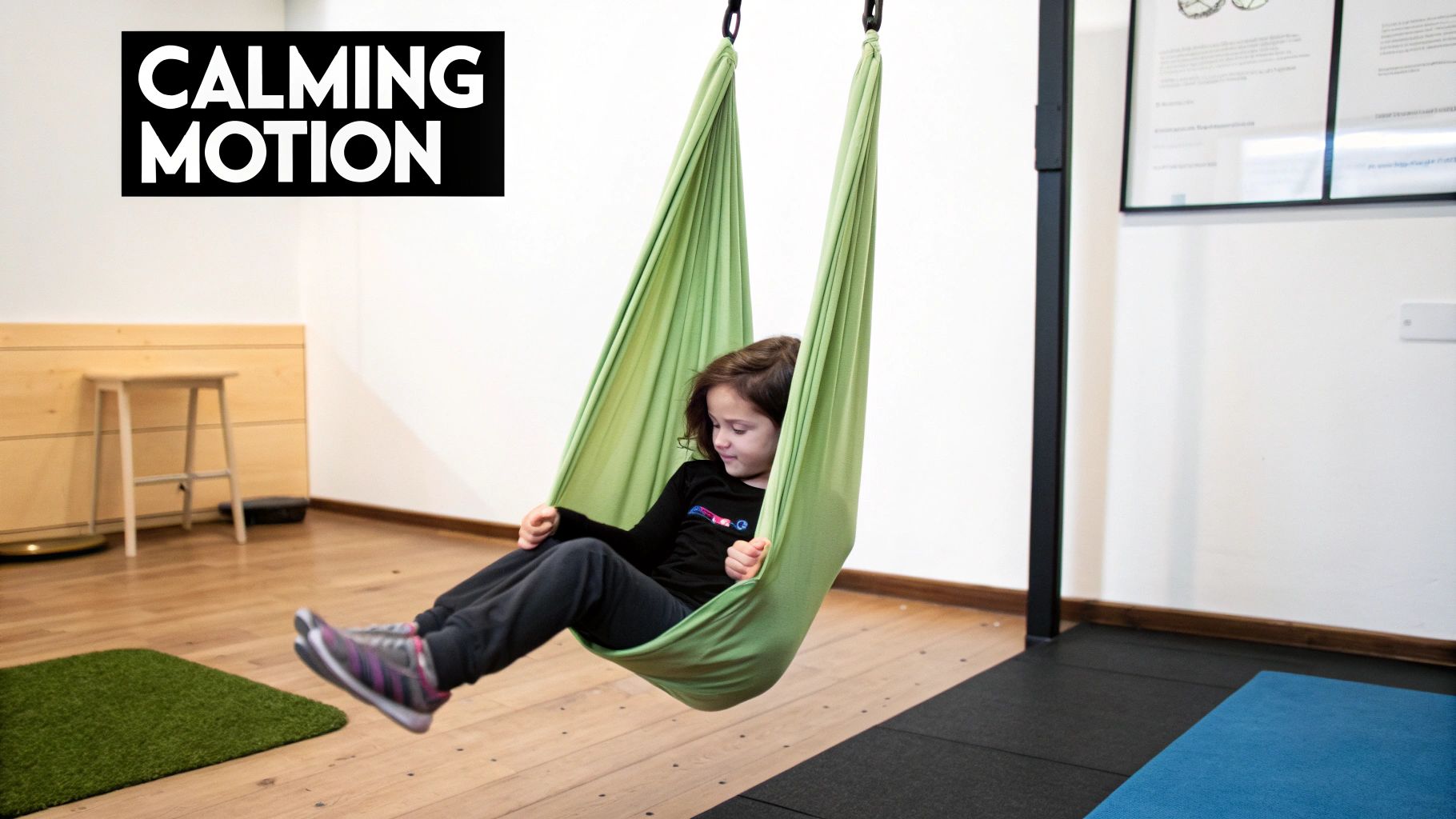
To really get why sensory swings work so well, you have to understand that they're not just for play. They're actually "speaking" directly to the body's internal wiring, giving the nervous system the exact feedback it needs to feel balanced and organised.
It all comes down to two specific kinds of sensory information.
The first is vestibular input. This is all about our sense of balance, movement, and where we are in space, and it’s managed by our inner ear. Think of it as your body's personal GPS. When this system is out of whack, which is common for kids with sensory processing differences, it can lead to anxiety or a relentless urge to keep moving.
A sensory swing provides a smooth, predictable, linear motion—that gentle back-and-forth rocking. This rhythmic movement is incredibly organising for the brain. It’s the same reason we rock a baby to sleep; that steady, consistent motion helps the nervous system filter out all the overwhelming noise and find a calm, centred feeling.
The Power of a Deep Pressure Hug
The second powerhouse here is proprioceptive input. This is the feedback our brain gets from our muscles and joints about where our body is and how much pressure it's feeling. It’s the sense that lets you touch your nose with your eyes shut. Proprioception is what makes us feel grounded and secure in our own skin.
A snug-fitting sensory swing, especially a lycra or pod swing, delivers a constant, deep pressure all over the body. It’s like getting a firm, reassuring hug that doesn't let go. This pressure sends calming signals straight to the brain, helping to lower cortisol (the stress hormone) and trigger the release of mood-boosters like serotonin and dopamine.
This one-two punch of gentle movement and deep pressure is the magic recipe for self-regulation. It gives the nervous system the precise feedback it needs to switch from a state of high alert or chaos to one of calm and focus.
From Overwhelmed to Organised
Let’s put this into a real-world scenario. Imagine a child who’s just come home from a noisy, busy day at school. They’re agitated, can’t sit still, and you can see a meltdown brewing. Instead of trying to reason with them, guiding them to their swing provides a physical solution for an internal storm.
As they settle in and begin to rock, a few things start to happen almost immediately:
- The vestibular input from the rhythmic swaying starts to organise their scattered thoughts and quiet that fight-or-flight response.
- The proprioceptive input from the swing’s fabric wraps them in a secure, cocoon-like pressure, helping them feel safe and contained.
- In a pod swing, the enclosed space also blocks out distracting sights and sounds, giving their overloaded brain a much-needed break.
This isn’t just a distraction—it's a full-on neurological reset. It works on the same principle as other brilliant sensory tools. The deep pressure from a swing is very similar to the calming effect of high-quality weighted blankets or the comforting heft of a weighted animal toy snuggled on a lap.
By offering this "sensory diet" of movement and pressure regularly, a sensory swing helps the brain build stronger neural pathways. Over time, this can lead to better body awareness, improved motor skills, longer attention spans, and a much greater ability to manage emotions day-to-day. It’s a tool that truly empowers a child to find their own sense of calm.
How to Choose the Right Sensory Swing
Feeling a bit lost in the sea of sensory swings available in Australia? You’re not the only one. The trick isn't to find the "best" swing out there, but to find the perfect match for the user's unique sensory profile. Let's walk through the most popular types so you can feel confident in your choice.
The first step is always observation. Are you buying for a sensory seeker—someone who’s always on the go, craving movement, crashing, and that deep-pressure feeling? Or are they a sensory avoider, who can get easily overwhelmed by noise and activity and needs a quiet, safe retreat? Getting this part right is the key to picking a swing that helps them regulate, rather than one that adds to the chaos.
Lycra Pod Swings: The Calming Cocoon
When you picture a sensory swing, the Lycra pod swing is probably what comes to mind. Made from a wonderfully soft and stretchy fabric, it wraps around the user to create a snug space that feels just like a full-body hug. This design is brilliant for delivering that consistent, deep-pressure input we call proprioception.
These swings are fantastic for:
- Sensory Avoiders: The cocoon-like space blocks out a lot of overwhelming visual and auditory "noise," creating a safe, dark, and quiet little world.
- Anxiety Regulation: That gentle, all-over squeeze has an incredible calming effect on the nervous system. It’s perfect for helping someone de-escalate when they're feeling stressed or overwhelmed.
- Body Awareness: Pushing against the stretchy fabric helps kids and adults get a better sense of where their body is in space, which is a big help for motor planning and coordination.
A pod swing is less about wild play and more about being a secure haven for self-regulation. It’s the go-to choice when the main goal is to help someone feel calm and grounded.
Hammock Swings: The Versatile Lounger
Hammock swings offer a much more open experience than the pod. They create a gentle, supportive cradle that’s perfect for sitting, lying down, or curling up with a book.
This style gives a really nice balance of sensory input. The gentle swaying offers soothing vestibular feedback (the sense of movement), while the fabric still provides a comforting bit of proprioceptive pressure. This makes them a great all-rounder, suitable for a wide range of sensory needs.
A hammock swing is an excellent choice for creating a relaxing reading nook or a gentle movement space. Its open design feels less restrictive than a pod swing, which can be preferable for some individuals.
Platform Swings: The Active Play Hub
For the sensory seekers who need more intense movement to feel settled, the platform swing is an absolute winner. These are typically flat, sturdy surfaces—often round or rectangular—that allow for a much bigger range of motion and activity.
They are built for more dynamic vestibular input, including:
- Linear Swinging: Classic back-and-forth motion.
- Rotary Spinning: Controlled spinning provides that intense feedback some kids crave.
- Balance Work: Standing or kneeling on the platform is a fantastic way to build core strength and balance.
Because they're so stable, platform swings can often hold more than one child and are a favourite in therapy settings for targeted balance and motor-skill activities. They're the perfect tool for getting the wiggles out in a safe and structured way.
It's clear these swings are making a difference, as their popularity is soaring. The global market for sensory swing pods was valued at USD 312 million in 2024 and is expected to nearly double to USD 612 million by 2033. This shows a worldwide recognition of their therapeutic benefits. In Australia, this growth is especially strong, thanks to frameworks like the NDIS that help families access this kind of essential equipment.
Sensory Swing Comparison for Australian Homes
To help you choose the best option based on sensory needs, space, and the person who'll be using it, here's a quick comparison of the most common sensory swing types.
| Swing Type | Primary Sensory Input | Best For | Space Required | Indoor/Outdoor |
|---|---|---|---|---|
| Lycra Pod Swing | Deep Pressure (Proprioceptive) | Calming, sensory retreat, anxiety relief. | Low | Indoor Only |
| Hammock Swing | Vestibular & Proprioceptive | Gentle regulation, relaxing, versatile use. | Medium | Both |
| Platform Swing | Intense Vestibular & Proprioceptive | Active play, balance, core strength. | High | Both |
Ultimately, the best sensory swing is one that will actually be used and loved. Think about the individual’s personality and what they're naturally drawn to.
Our versatile Deluxe Sensory Swing is a fantastic all-rounder for many Australian homes, as it blends the comforting pressure of a pod with the freedom of a more open design. When you match the swing to the need, you’re not just buying a piece of play equipment—you’re creating a powerful tool for daily well-being.
Your Essential Safety and Installation Guide
Bringing a sensory swing into your home or classroom is an exciting moment. You’re about to introduce a powerful tool for calm and regulation. But before anyone can enjoy it, we have to talk about something that is absolutely non-negotiable: installing it safely.
Getting the installation right from the very beginning means you can relax, knowing the swing is a secure, reliable space for your child. It's not just about hanging it up; it's about creating a foundation of safety.
This guide will walk you through how to properly install a sensory swing in a typical Australian home. We'll cover everything from finding the right spot in your ceiling to making sure the area around the swing is safe for play.
This simple diagram breaks down the process into three core steps you'll take before you even get the tools out.
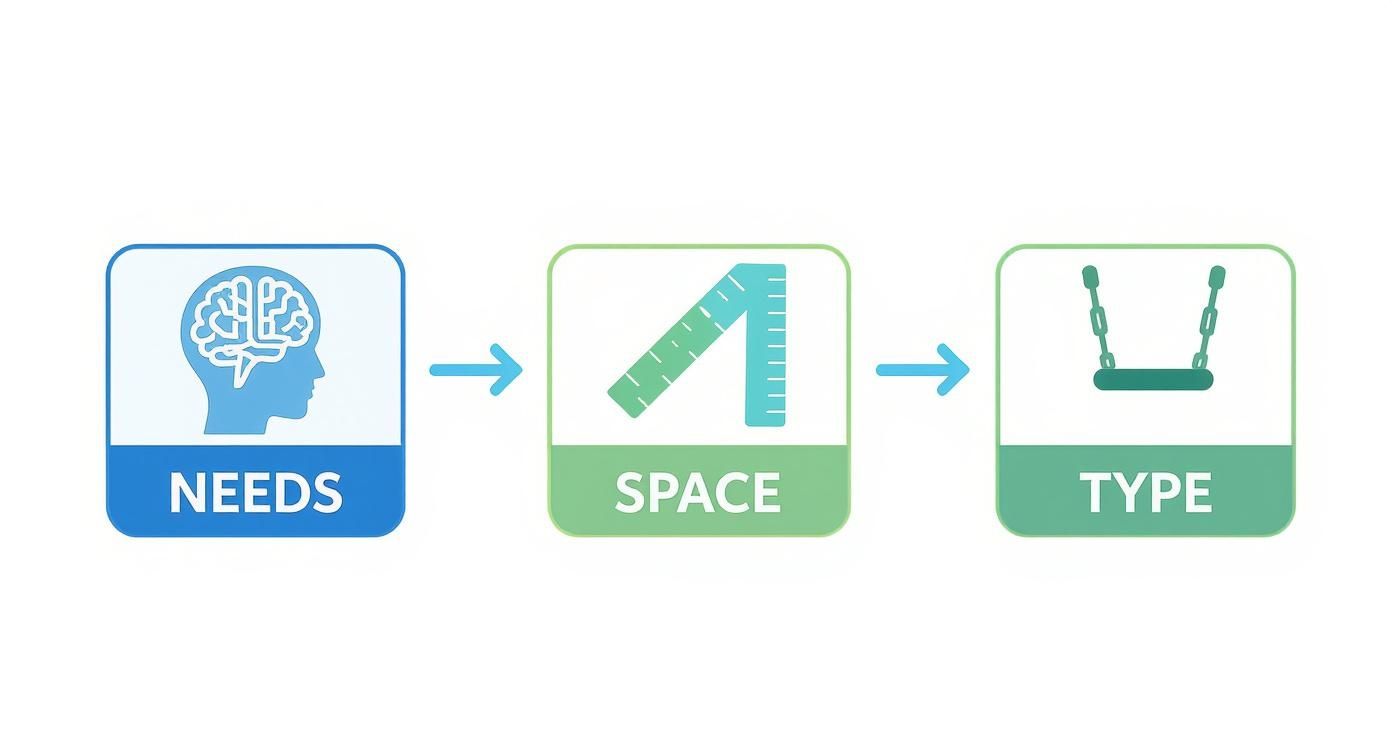
It all starts with thinking about the user's needs, then measuring your space, and finally, choosing the swing that fits both.
Finding the Right Spot
Here’s the golden rule for installing an indoor swing: you must anchor it to a structural ceiling joist. These are the strong timber beams running through your ceiling that hold everything up. Your ceiling plasterboard is never strong enough to support the dynamic weight of a person on a swing.
The easiest way to find a joist is with a stud finder—it’s a reliable little tool that takes out the guesswork. If you don’t have one, you can try tapping gently across the ceiling. You’re listening for a change from a hollow sound to a solid, dense thud, which tells you there’s a beam underneath.
Once you’ve found a solid joist, mark its centre. That’s your anchor point.
Choosing Your Hardware
The spot you choose is only half the battle; the hardware you use is just as critical. You need high-quality, weight-rated components to create a secure connection that you can trust.
A good hardware kit will generally include:
- An Eyebolt or Ceiling Hook: This is the piece that screws directly into the joist. Make sure its weight capacity is well above the maximum weight of anyone who will use the swing.
- A Carabiner or Swivel: A heavy-duty carabiner is used to connect the swing’s ropes to the eyebolt. I always recommend adding a swivel—it allows for smooth, 360-degree spinning without twisting and tangling the ropes.
- Rope or Straps: Your swing will come with its own suspension ropes or straps. Before you install it, give them a thorough check for any signs of fraying or damage.
For a really detailed breakdown on how to install a swing safely, including specifics on tools and techniques, this guide is an excellent resource to have on hand.
Creating a Safe Swing Zone
With the swing securely hung, your last step is to clear the area around it. Think of it as creating a "swing zone"—a dedicated space where movement is free and unrestricted, without any risk of bumping into things.
As a rule of thumb, aim for at least one metre of clear space in every direction: front, back, and to each side. Move away any furniture, especially items with sharp corners, and clear any general clutter to prevent accidents.
Safety First: If you have even the slightest doubt about finding a joist or installing the hardware correctly, please call a professional handyman or carpenter. The small cost is nothing compared to the peace of mind you’ll have knowing the swing is 100% secure.
Finally, think about what's underneath. Hard floors like tiles or timber don't offer much cushioning. Placing soft flooring, like high-quality play mats or a thick rug, under the swing can make a huge difference. It provides a much safer surface that helps absorb any impact from tumbles and makes the whole space feel more inviting.
Ongoing Safety Checks
Installation isn’t a "set and forget" task. True safety comes from regular, ongoing checks to make sure everything is still in perfect working order. I suggest running through a quick checklist every few weeks.
Your Regular Safety Checklist:
- Check the Anchor Point: Take a close look at the eyebolt in the ceiling. Is it still tight and flush? Do you see any cracking or stress marks in the plaster around it?
- Inspect All Hardware: Look over the carabiner, swivel, and any other metal parts. Check for rust, wear, or any signs of bending. Make sure every connection is still securely fastened.
- Examine Ropes and Fabric: Run your hands along the ropes or straps, feeling for any frayed sections. Check the swing’s fabric for any tears, thinning spots, or seams that look weak.
- Confirm the Clear Zone: Take a quick scan of the room. Has any furniture or clutter crept back into the swing zone?
By making these simple steps part of your routine, you’ll create a safe, effective, and well-loved sensory space that offers countless hours of joy and regulation.
Using NDIS Funding for Your Sensory Swing
For many Aussie families, the National Disability Insurance Scheme (NDIS) is the key to getting a sensory swing into their home. The whole funding process can feel a bit overwhelming at first, but once you know the steps, it’s much more straightforward than it seems.
The trick is understanding exactly where a sensory swing fits into an NDIS plan. Most of the time, they fall under either Assistive Technology (AT) or Core Supports. The most common route is through Assistive Technology, as the swing is seen as a specific piece of gear that helps a person work towards their goals.
Starting the Funding Process
To get a sensory swing funded, you need to be able to show exactly how it will help the NDIS participant with their specific goals. These goals could be anything from improving emotional regulation and self-soothing skills to building gross motor strength.
Generally, you'll need to follow these steps:
- Get a Quote: First things first, you'll need a formal quote for the swing you want from an NDIS-registered provider.
- Gather Supporting Evidence: This is the most important part of the puzzle. You'll need a letter of recommendation from an allied health professional—usually an Occupational Therapist (OT).
- Submit Your Request: Hand over the quote and the OT's letter to your NDIS planner, Local Area Coordinator (LAC), or plan manager.
The OT’s letter is your golden ticket. It needs to clearly connect the swing’s features to the participant's NDIS goals. For instance, it might say something like, "The deep pressure from this pod swing directly supports John's goal of reducing his anxiety when he feels overwhelmed."
Understanding Your NDIS Plan Management
How you actually buy the swing will depend on how your NDIS plan is managed.
- Agency-Managed: The National Disability Insurance Agency (NDIA) pays providers for you. You'll need to buy your swing from a provider who is registered with the NDIS.
- Plan-Managed: You have a plan manager who takes care of paying your bills. This gives you a bit more flexibility, as you can often buy from providers who aren’t registered with the NDIS.
- Self-Managed: You pay for your invoices yourself and then claim the money back from the NDIS. This option gives you the most freedom and control over who you buy from.
No matter how your plan is managed, the core requirement is the same. The swing has to be considered a "reasonable and necessary" support that helps the participant achieve their goals. Making that connection crystal clear is what gets a claim over the line.
A strong application connects the dots for the NDIS. It clearly shows that a sensory swing isn’t just a toy, but a calculated therapeutic investment in the participant's well-being and development.
There’s a growing push for better neurodiversity accommodation across Australia. Thanks to government programs like the NDIS, and a wider understanding of sensory needs, therapeutic tools like these are more accessible than they've ever been. To learn more about other supports, take a look at our guide on sensory tools for autism.
Building a Complete Calming Corner
A sensory swing is a fantastic anchor for regulation, but you can unlock its true power by making it part of a complete calming corner. Think of the swing as the cosy armchair in a library; it’s the main attraction, sure, but it’s the surrounding books, soft lighting, and quiet atmosphere that make the whole space work. When you layer in other complementary tools, you create a rich sensory environment that can meet a much wider range of needs.
If you're looking to design a truly comprehensive space, it’s a great idea to pair your sensory swing with other effective calm down corner ideas that foster emotional regulation. The goal is to build a multi-sensory retreat where someone can feel safe, grounded, and back in control.
Engaging the Senses Beyond Movement
A holistic sensory space should offer different ways to regulate. This approach ensures that no matter what a person’s nervous system is craving in that moment—whether it's visual focus, tactile feedback, or just some peace and quiet—there's a tool ready to help.
Here’s how you can start building out your space around the swing:
-
For Visual Soothing: When the world feels too bright and chaotic, mesmerising visuals can be incredibly grounding. Gentle, predictable motion helps the brain filter out distracting input. A slowly bubbling bubble tube or the silent, graceful dance of a jellyfish lamp can capture attention and quieten a busy mind. You can even find a compact jellyfish aquarium lamp for smaller spaces.
-
For Tactile Feedback: Busy hands often mean the brain is looking for input to help it focus. Providing safe and appropriate tactile tools is a great way to meet this need. Squishy, satisfying NeeDohs and other fidgets are a perfect outlet, channelling restless energy into a quiet, repetitive motion. For incredible full-body tactile input, a body sock is another brilliant tool—you can learn all about it in our guide to sensory body socks.
-
For Auditory Regulation: For anyone sensitive to sound, a noisy environment can be physically painful and completely dysregulating. A quality pair of noise cancelling earmuffs for kids is essential. They provide instant relief by muffling overwhelming background noise, creating an immediate sense of peace and control over what you hear.
Creating a Cohesive Sensory Retreat
The real key is to arrange these elements thoughtfully. You could place a small table or a soft basket near the swing with a few fidget options. Position a jellyfish lamp in a corner where its gentle light can be enjoyed without being intrusive. And keep the earmuffs on a hook where they are always easy to grab.
By offering a variety of sensory tools, you empower the user to choose what their body needs. This autonomy is a crucial part of learning self-regulation, turning the calming corner into a space of both comfort and skill-building.
Ultimately, a sensory swing is the centrepiece of a much larger strategy. By complementing its vestibular and proprioceptive input with visual, tactile, and auditory supports, you transform a single piece of equipment into a complete sanctuary. This thoughtful approach creates a reliable haven for anyone needing to find their calm.
Common Questions About Sensory Swings
Even with all the information out there, you probably still have a few lingering questions about bringing a sensory swing into your home or classroom. That’s completely normal! Let's run through some of the most common queries we get from parents, therapists, and teachers across Australia to clear things up.
Which Swing Is Best for My Child?
The honest answer is: it really depends on what your child needs from a sensory perspective. There's no single "best" swing for everyone.
Think about what you're hoping to achieve. If your child is constantly seeking deep pressure or loves to hide away in cosy, tight spaces to feel calm, a pod or lycra swing is a fantastic choice. The stretchy, cocoon-like fabric gives them that reassuring, hug-like feeling they're craving.
On the other hand, if you have a child who needs to move to feel organised—spinning, bouncing, and getting that big vestibular input—a platform swing is often a better fit. Always factor in their size, weight, and the space you have available. If you're stuck, a quick chat with your Occupational Therapist can point you in the right direction.
Can I Use NDIS Funding for a Sensory Swing?
Yes, you certainly can. Sensory swings are widely funded under the NDIS, typically falling into the 'Assistive Technology' budget in a participant's plan.
The process usually involves getting a formal quote from a registered provider. You’ll also need a support letter from an OT or another allied health professional. This letter is crucial—it needs to clearly outline how the swing will help your child work towards their specific NDIS goals, whether that's better emotional regulation, improved motor skills, or something else.
What Is the Safest Way to Hang an Indoor Swing?
Safety has to be the number one priority. The most secure way to hang a swing indoors is by anchoring it directly into a solid ceiling joist or beam using hardware that’s properly rated for the weight it will hold. Never, ever attach a swing directly to plasterboard; it simply isn't strong enough.
If you’re not confident finding a joist or you're a bit hesitant with a drill, we strongly recommend hiring a professional handyman. It’s a small price to pay for peace of mind. For a great non-permanent option, a sturdy, free-standing swing frame is a brilliant alternative that requires no drilling at all.
How Often Should a Sensory Swing Be Used?
There's no strict timetable here. The best approach is to let the child take the lead and weave the swing into their daily 'sensory diet'. Many OTs suggest that short, regular bursts of 10-15 minutes at a time can be more effective for regulation than one long session.
The key is that the swing should be an invitation, not a requirement. It's a safe space they can retreat to when they feel the need. Watch how they respond—you’ll quickly learn what frequency and duration works best for them.
At Sensory Poodle, we're passionate about helping Australian families find the right tools to support well-being and find a sense of calm. Take a look at our carefully selected range of high-quality sensory swings and other calming aids today.
Find the perfect sensory solution for your family at sensorypoodle.com.au.