


Weighted Blankets for Anxiety: An Australian Guide

Weighted blankets are a surprisingly simple tool for managing anxiety. They work by applying gentle, consistent pressure across your body, much like a firm, comforting hug. This pressure helps calm your nervous system, dial down stress hormones, and create a profound sense of security. It's a drug-free way to help your body and mind relax, making them an essential part of any collection of sleeping aids.
How Weighted Blankets Calm an Anxious Mind
Ever notice how a really good hug can melt away stress? That’s the feeling a weighted blanket aims to replicate. They're more than just heavy covers; they're therapeutic tools designed to tap into your body's natural relaxation responses.
The science behind this is called Deep Pressure Stimulation (DPS). When you snuggle under a weighted blanket, the evenly distributed pressure stimulates sensory receptors in your skin. This sends a powerful signal to your brain, telling it to switch from its high-alert "fight-or-flight" mode to a calm "rest-and-digest" state.
The Science of Calm Explained
This shift in your nervous system sets off a chain reaction of positive changes in your body. It's a natural process that guides you away from a state of high alert and towards one of tranquility. The pressure itself is grounding, helping to quieten both the physical jitters and the mental noise of anxiety.
Think of it this way: when you're anxious, you can feel untethered, like your thoughts are running a million miles an hour. The blanket acts as an anchor. It provides a constant, reassuring physical sensation that pulls your focus back to the present moment, which can be just what you need to break that cycle of spiralling thoughts. It's a key component in creating effective sensory spaces designed for relaxation.
Your Brain's Response to Deep Pressure
The real magic happens on a chemical level. Deep Pressure Stimulation actually encourages your brain to rebalance the neurotransmitters and hormones that govern your mood, stress levels, and sleep.
- Increases Serotonin: Often called the "happy chemical," serotonin is crucial for regulating mood and promoting feelings of well-being. A boost in serotonin helps you feel calmer and more emotionally stable.
- Boosts Dopamine: This is the neurotransmitter tied to pleasure, motivation, and focus. A gentle lift in dopamine can improve your mood and help clear the mental fog that so often comes with anxiety.
- Reduces Cortisol: Known as the body's main stress hormone, high levels of cortisol keep you in a state of constant alert. The calming pressure from the blanket helps lower cortisol, easing physical stress symptoms like a racing heart.
- Promotes Melatonin: As your body relaxes and serotonin levels rise, it has an easier time producing melatonin, the hormone that manages your sleep-wake cycle. This makes it easier to drift off to sleep.
The image below gives a great visual of how a weighted blanket can positively influence your brain chemistry.
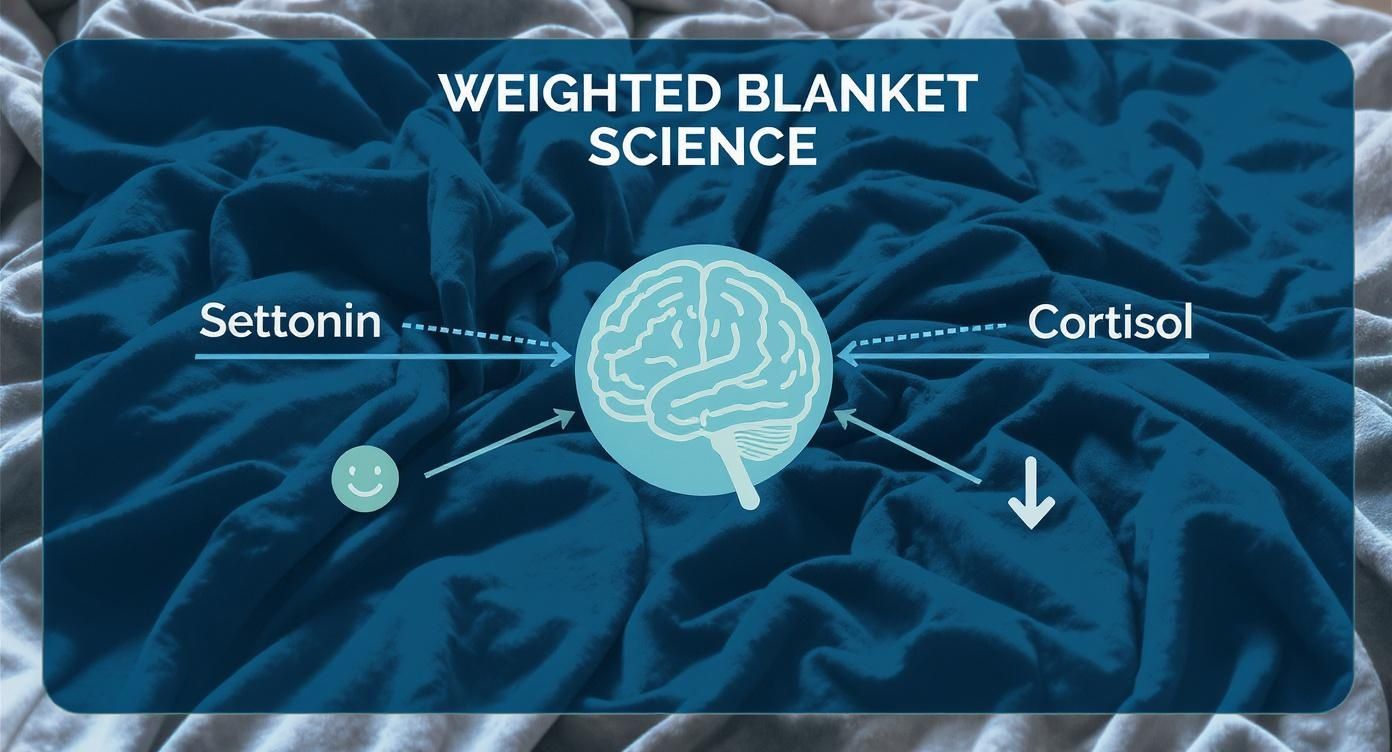
This process shows how a simple physical tool can trigger a significant, positive shift in your neurological state. It’s all interconnected, which is why exploring the connection between sleep and mental health can be so enlightening—what you sleep on and under really matters.
How Weighted Blankets Counteract Anxiety Symptoms
To see how this works in practice, let's look at some common anxiety symptoms and how deep pressure stimulation directly helps.
| Anxiety Symptom | How a Weighted Blanket Helps |
|---|---|
| Racing Heart | The calming pressure helps lower cortisol, which in turn can slow a rapid pulse and ease that 'panicky' feeling. |
| Restlessness / Fidgeting | The gentle weight provides grounding sensory input, reducing the need for constant movement and helping the body settle. |
| Spiralling Thoughts | By providing a constant, tangible sensation, the blanket helps anchor your awareness in the present, interrupting the mental chatter. |
| Insomnia or Poor Sleep | It encourages the production of serotonin and melatonin, the key hormones for relaxation and sleep onset. |
| Muscle Tension | Deep pressure can help relax tight, anxious muscles, releasing physical tension held in the shoulders, neck, and back. |
Ultimately, a weighted blanket provides a simple, direct counter to the physical and mental chaos of anxiety.
By simulating a firm, gentle hug, a weighted blanket provides a constant stream of sensory input that the nervous system finds calming and organising. This helps to slow down a racing mind and relax a tense body, creating an ideal environment for rest and recovery.
So, using weighted blankets for anxiety is about so much more than just feeling cosy. It’s about using a science-backed mechanism to help regulate your body's stress response. This gives you tangible relief from those overwhelming feelings, making them a fantastic addition to any sensory toolkit, from weighted animal toys to calming night lights.
The Science-Backed Benefits for Sleep and Wellness
The comfort a weighted blanket brings goes far deeper than just a fleeting sense of calm. That gentle, consistent pressure actually kicks off a whole cascade of positive changes in your body, and one of the most significant is a better night's sleep. If you're dealing with anxiety, you know that quality sleep is often the first thing to go, which just creates a vicious cycle of exhaustion and even more stress.
A weighted blanket gets right to the heart of the problem. It helps settle the restlessness and racing thoughts that keep you awake, encouraging your body to produce serotonin and melatonin—the very chemicals that tell your brain it's time to switch off. The result? You fall asleep faster and sink into deeper, more restorative sleep cycles. Instead of waking up groggy and on edge, you feel genuinely refreshed.
From Better Sleep to Better Days
That improvement in sleep quality has a powerful knock-on effect that you'll feel all day long. When you’re properly rested, your ability to handle stress and keep your emotions in check is so much stronger.
Here’s how that translates into real life:
- More Stable Moods: Good sleep is crucial for balancing the brain chemicals that regulate your mood, which means less irritability and fewer emotional highs and lows.
- Improved Daytime Focus: A rested mind can actually concentrate. Better sleep helps clear out that brain fog that so often comes with anxiety, making it easier to focus at work or uni.
- Increased Resilience to Stress: Think of sleep as charging your emotional battery. When it's full, you're much better equipped to deal with daily hassles without feeling completely overwhelmed.
This is why a weighted blanket isn't just a band-aid for anxious moments; it’s a proactive tool for building a solid foundation of rest that supports your mental health 24/7. It's a cornerstone of any effective sensory classroom or home environment.
Australian Research Confirms the Benefits
And this isn't just about how it feels—the benefits are backed by solid research, including some great work done right here in Australia. A major review from Flinders University looked at 18 different studies and found strong evidence that weighted blankets genuinely help adults with anxiety. The researchers noted that people didn't just report better sleep; they also showed a significant drop in their use of sleep medication. It’s a powerful sign that these blankets can be a fantastic non-drug alternative. You can read more about these local findings on improving sleep with weighted blankets.
"Weighted blankets seem to offer a tangible, non-drug intervention for improving sleep quality," noted the lead researcher, Dr. Suzanne Dawson. This research was so influential that it actually led to policy changes, with South Australian public mental health services officially updating their protocols to include weighted blankets.
Having this kind of local validation really cements the blanket's place as a legitimate therapeutic tool. It's a proven, evidence-based way to improve not just a single night's sleep, but your overall quality of life.
More Than Just a Sleep Aid
While getting a good night's sleep is a massive win, it’s really just one piece of a much bigger wellness puzzle. The same deep pressure that helps quiet an anxious mind can bring some other welcome relief, too.
For instance, many people find it helps ease chronic pain. The gentle, firm pressure can soothe an overstimulated nervous system and encourage tense muscles to finally relax. This makes it an incredibly valuable comfort tool, especially for anyone managing conditions where pain and anxiety go hand in hand. By tackling multiple symptoms at once, a weighted blanket becomes a versatile support for both physical and mental wellbeing in adults and children alike.
How to Choose the Perfect Weighted Blanket
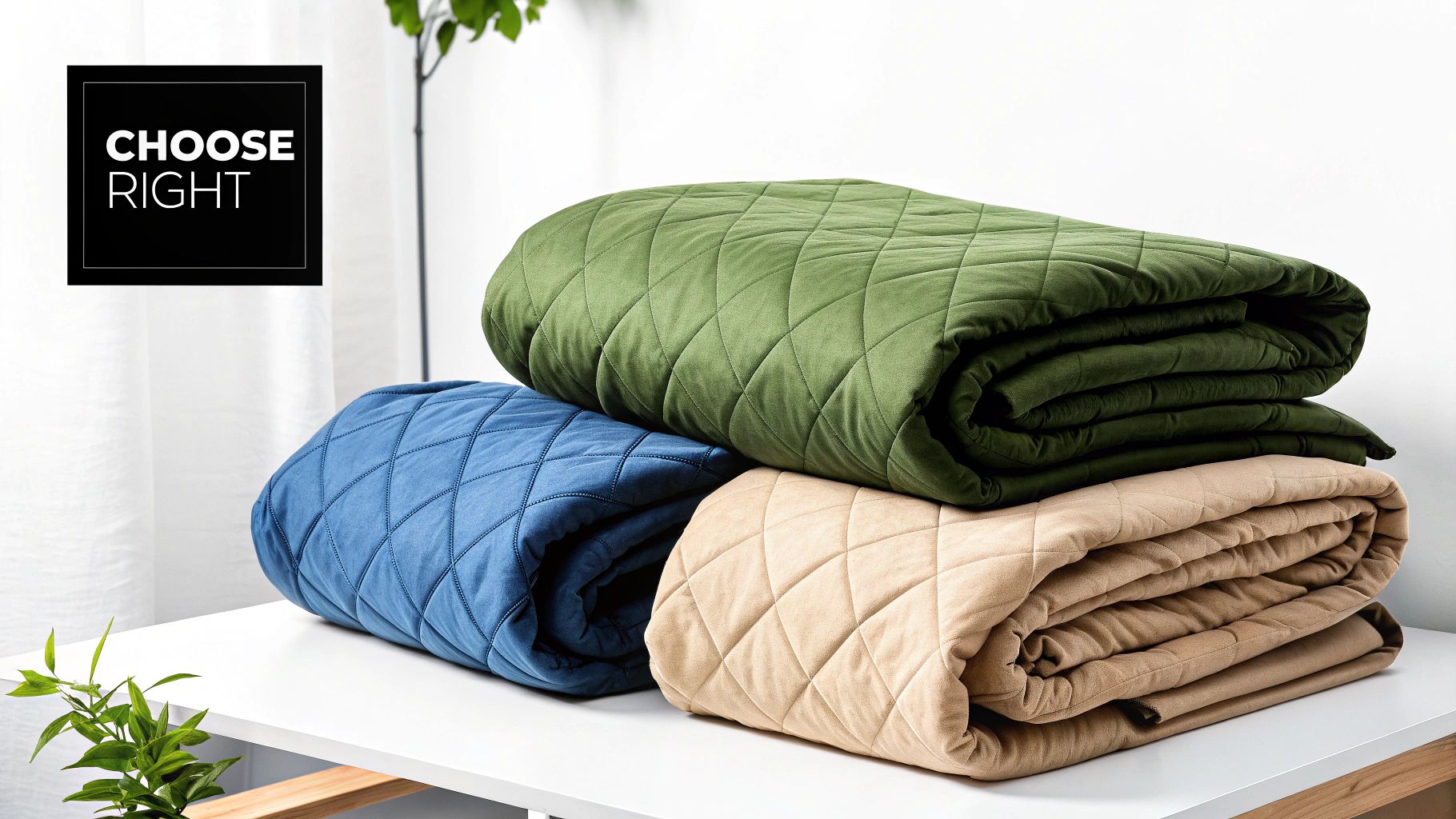
Picking the right weighted blanket isn’t just about buying a product; it’s about finding a tool that genuinely works for you. The difference between a blanket that calms your nervous system and one that just feels… heavy… comes down to a few key choices. A blanket that’s too light won’t give you that soothing pressure, while one that's too heavy can feel more stressful than comforting.
Let's walk through the four main things you need to consider to get it right: weight, size, fabric, and the filling inside. Nailing these details means you’ll end up with a blanket that feels like it was made just for you.
Finding the Right Weight and Size
Getting the weight right is probably the most critical step. The rule of thumb that experts and occupational therapists stand by is to choose a blanket that’s about 10% of your body weight. This simple formula hits the sweet spot, providing enough pressure to work its magic without feeling overwhelming.
For instance:
- If you weigh around 50kg, a 5kg blanket is likely your best bet.
- For someone who is 80kg, an 8kg blanket will probably feel just right.
Think of this as a starting point, not a hard-and-fast rule. If you’re in between sizes, it’s usually better to round down, especially if you’re new to the world of weighted blankets. Your personal preference and physical comfort are what matter most.
Now for size. Here’s a common mistake: people often try to match the blanket to their bed, like a doona. But a weighted blanket is designed to fit your body, not your mattress. You want the weight concentrated on you, so it shouldn't hang too far over the sides. This also stops it from sliding off the bed in the middle of the night.
If you share a bed, it’s often much better for each person to have their own individual blanket. The exception is a specially designed option like a King Super King weighted blanket, which is built to distribute the weight properly over a larger area. One popular choice in Australia is the Neptune Blanket, known for its quality construction.
Weighted Blanket Selection Guide
| Factor | Key Consideration | The Sensory Poodle Recommendation |
|---|---|---|
| Weight | Aim for 10% of your body weight. Round down if you're between sizes or new to weighted blankets. | Stick to the 10% rule, but listen to your body. Comfort is the top priority. |
| Size | The blanket should fit your body, not your bed, to keep the pressure on you. | For single users, a throw or single size is perfect. For couples, two individual blankets or a purpose-built large blanket works best. |
| Fabric | Consider your sensory needs and the climate. Do you run hot? Do you love soft textures? | Cotton is a great all-rounder. Minky is for those who love cosy softness, and Bamboo is a dream for hot sleepers. |
| Filling | The filling affects the feel and sound. Glass beads are smoother and quieter than plastic pellets. | We always recommend micro glass beads. They offer a superior, more even pressure and are virtually silent. |
This table gives you a snapshot, but let's dive a little deeper into the feel of the blanket itself—the fabric and filling.
Choosing Your Fabric
The material of your blanket has a huge impact on your experience, especially with Australia’s ever-changing weather. The right fabric can be the difference between a comforting hug and a sweaty, uncomfortable mess.
- Cotton: You can’t go wrong with cotton. It's natural, breathable, and great for sensitive skin. It’s a fantastic all-season choice, keeping you comfortable whether it's a humid summer night or a cool winter morning.
- Minky: If you’re all about that super-soft, velvety feel, Minky is for you. This plush polyester fabric is pure cosiness, making it a perfect companion for curling up on the couch during the cooler months.
- Bamboo: An absolute game-changer for hot sleepers. Bamboo fabric is incredibly breathable and wicks moisture away from your body. It has a silky-smooth feel and natural cooling properties that are a blessing during a classic Aussie summer.
Think about what feels good against your skin and what the temperature is like where you live. Pro tip: getting a blanket with a removable cover lets you switch up the fabric and makes washing a breeze.
Understanding the Filling Material
The final piece of the puzzle is what's on the inside. The type of filling determines how the blanket drapes over you, how noisy it is, and its overall texture. The main players are glass beads and plastic poly-pellets.
Choosing the right filling is about more than just weight; it’s about the sensory feedback you receive. A smoother, quieter filling can deepen the calming experience, making the blanket feel more like a seamless extension of your comfort zone.
Let’s break down the difference:
- Glass Beads (Micro-Beads): These are tiny, fine, and feel a bit like sand. Because they’re so small, they spread out evenly within the blanket's quilted pockets, giving you a smooth, consistent pressure. They're also practically silent, which is a massive plus for light sleepers or anyone sensitive to noise.
- Plastic Poly-Pellets: These are larger and more noticeable. You can sometimes feel the individual pellets, which can result in a slightly lumpier texture. They can also make a soft rustling sound when you move, which might be a distraction for some people.
From an environmental standpoint, glass beads are generally seen as a more eco-friendly and non-toxic option.
For a truly premium sensory experience, we believe high-quality, non-toxic glass beads are the way to go. They provide that smooth, quiet pressure that is so effective for anyone using weighted blankets for anxiety.
Creating a Calming Sensory Space at Home
A weighted blanket is a fantastic tool for taking the edge off anxiety, but you can really unlock its full potential by making it the centrepiece of a dedicated calming space. This little sanctuary, often called a 'calming corner', is more than just a place to sit—it’s a purpose-built retreat for the nervous system. It offers a much-needed break from the sensory chaos of the outside world.
You don't need a whole room or a massive budget. A quiet nook in a bedroom, a cosy spot in the living room, or even a designated area in a classroom can work wonders. The whole point is to create a safe, predictable environment where someone can go when they feel overwhelmed, using sensory tools to help them feel grounded and back in control. The weighted blanket lays the foundation with that all-important deep pressure, but adding a few other sensory layers can make the experience even more powerful.
Building Your Sensory Toolkit
A really effective calming corner speaks to more than one sense at a time. By pairing a weighted blanket with a few other carefully chosen items, you can build a comprehensive toolkit that caters to different moods and needs.
-
Visual Calm: Soft, slow-moving light has an almost hypnotic effect on a frazzled mind. A Jellyfish Lamp offers mesmerising visual input that’s repetitive and soothing without being over-the-top. The gentle glow and graceful dance of the jellyfish help create a peaceful vibe, perfect for unwinding. You might even consider a Jellyfish aquarium lamp for a different aesthetic.
-
Auditory Peace: Let's face it, the world is a loud place. For anyone sensitive to sound, a quality pair of noise-cancelling earmuffs for kids can be a game-changer. Muffling harsh background noise gives the nervous system permission to relax, which makes the deep pressure from the blanket feel even more effective.
-
Tactile Engagement: Sometimes that restless, anxious energy just needs somewhere to go. Having a few quiet, tactile tools within arm's reach can make all the difference. Kaiko Fidgets are brilliant for this; they’re designed to give satisfying sensory feedback, keeping restless hands busy in a focused and non-disruptive way. Other great options include soft Palm Pals Australia plushies or engaging Needohs.
When you bring these elements together, you create a multi-sensory retreat. Picture it: snuggled up under the comforting hug of a blanket, watching the gentle drift of a jellyfish lamp, as the noise of the world just fades into the background. It’s a holistic approach that supports self-regulation from every angle.
Designing Your Calming Corner
The best part of creating this space is that it's all about personalising comfort. Start with the weighted blanket as your anchor and simply build out from there. Think about the textures, sounds, and sights that feel most calming to you or your child.
The most successful sensory spaces are co-designed. Get the person who will be using it involved in choosing the items. That sense of ownership makes the space feel even safer and more inviting, encouraging them to use it proactively before stress starts to bubble over.
A pop-up sensory tent can be a fantastic way to define the space, creating a cosy, enclosed den that instantly dials down visual and auditory distractions. Inside, you can layer soft cushions, the weighted blanket, and a small basket of their favourite fidgets. For a more detailed look at setting up these kinds of environments, check out our guide on creating a soothing space with sensory toys in Australia.
The real key is to keep it simple and easy to access. It should be a welcoming retreat, not another cluttered corner. By placing a weighted blanket at the heart of a well-designed sensory space, you're not just offering a blanket; you're providing a reliable strategy for managing anxiety and nurturing well-being at home or in the classroom.
Safety Guidelines and Best Practices
A weighted blanket can be an incredible tool for calming anxiety, but getting the most out of it means using it safely and thoughtfully. Think of safety as the foundation – without it, the blanket can't do its job properly. Getting these basics right from the start ensures the blanket remains a source of comfort, not a cause for worry.
Before you even unfold your new blanket, it's important to know that they aren't right for everyone. While most healthy adults can use them without any issues, there are some really important exceptions to keep in mind.
The golden rule of weighted blanket safety is simple: The user must always be able to remove the blanket themselves, without any help. If they can't, the blanket is not safe for them to use.
This is the absolute number one thing to remember, especially when it comes to children or anyone with mobility challenges.
When to Consult a Professional
Some health conditions mean you absolutely need to have a chat with a GP or occupational therapist before diving in. The gentle pressure that so many people find calming can actually pose a risk for others.
It’s best to get medical advice if you or the person using the blanket has:
- Respiratory Issues: Things like sleep apnoea, asthma, or COPD can be made worse by extra weight on the chest.
- Circulatory Problems: Anyone with poor circulation or diabetes should check with their doctor to make sure the pressure won’t restrict blood flow.
- Limited Mobility: If someone can't easily move around or lift the blanket on their own, it's a serious safety hazard.
- Claustrophobia: For some, the pressure feels grounding. For others, it can feel trapping and trigger anxiety.
This isn’t about putting up roadblocks; it’s about making a smart, informed decision that puts wellbeing first. A quick conversation with a healthcare professional can give you the confidence to move forward safely.
Best Practices for Introducing a Weighted Blanket
Once you've gotten the all-clear, the next step is to introduce the blanket slowly. Just throwing it on for a full night can be a bit of a shock to the nervous system. A gentle, gradual approach helps the body get used to the new sensation.
Think of it like easing into a warm bath, not jumping into the deep end. Start with short, supervised periods of use.
- Begin with Short Sessions: First, just try draping the blanket over the legs or shoulders for 15-20 minutes while relaxing on the couch.
- Observe and Communicate: Pay close attention to how your body (or your child's) is reacting. Ask questions like, "How does that feel?" and keep an eye out for any signs of comfort or distress.
- Gradually Increase Duration: As you get more comfortable, you can start extending the time. After a few successful short sessions, maybe try it for the length of a movie or during a quiet afternoon read.
- Transition to Sleep: Only once the blanket feels completely familiar and comforting should you think about using it for a nap or overnight.
This mindful approach helps build a positive association, ensuring the blanket always feels like a safe and secure hug. It's a simple process, but it matters. Research from the Sleep Foundation shows that nearly 40% of adults struggle with high stress, and a huge 90% of them say it messes with their sleep. You can read more about how stress impacts sleep on their site. These numbers really drive home why safe, non-drug options like weighted blankets for anxiety are so crucial for our overall wellbeing.
Taking Care of Your Blanket and Accessing NDIS Funding
A weighted blanket is a real investment in your wellbeing, so looking after it properly is key to making it last. At the same time, figuring out how to pay for one can feel daunting. Let's walk through the simple steps for keeping your blanket in top shape and navigating the NDIS to make it more accessible.
Think of it this way: a good cleaning routine keeps your blanket a fresh, inviting part of your sensory toolkit. While you can wash the whole thing, the secret to easy maintenance is using a removable cover.
Keeping Your Weighted Blanket Fresh
Honestly, keeping your blanket clean is easier than it sounds. A removable cover is your best friend here—it's just like a doona cover. It takes all the daily use and can be popped straight into the wash whenever needed.
- Washing the Cover: Most covers are happy in the machine on a gentle, cold cycle with a mild detergent. You can tumble dry on low, but line drying is even better for the fabric.
- Washing the Inner Blanket: Always check the tag first! Most of the time, the weighted insert itself can be washed in a large, commercial-style machine on a gentle, cold setting.
- Drying the Inner Blanket: Air drying is the way to go. Drape it flat over several clotheslines or a sturdy drying rack. This distributes the weight evenly and stops the fabric from stretching out of shape. Just be sure not to hang it from one end.
Navigating NDIS Funding in Australia
For so many families in Australia, the National Disability Insurance Scheme (NDIS) is a lifeline for getting the right supports. The great news is that a weighted blanket can often be funded through your NDIS plan, as long as it’s considered 'reasonable and necessary' for helping you reach your goals.
In NDIS-speak, weighted blankets usually fit into either the Assistive Technology (AT) or Consumables budget. The trick is to clearly connect the blanket to your specific disability-related needs, like getting a better night's sleep, managing anxiety, or helping with emotional regulation.
The best first step? Chat with an occupational therapist (OT). An OT can properly assess what you need and write up a report or letter of recommendation. This professional advice explains exactly why a weighted blanket is a necessary support for you, which is golden when you’re talking to your plan manager or the NDIA. If you're looking at other supports, our article on different sensory tools for autism might give you more ideas to bring to your therapist.
When you can directly link the weighted blanket to one of your plan goals—for instance, 'improved community participation' because better sleep gives you more energy, or 'enhanced emotional regulation' to handle daily challenges—you build a really strong case for getting it funded.
For our friends over in New Zealand who are navigating similar systems, a guide on obtaining government quotes for essential furniture shares some really useful insights into getting financial help for essential wellbeing items. Armed with the right info, getting a tool like a weighted blanket can become a straightforward and achievable goal.
Got Questions About Weighted Blankets? We've Got Answers.
It's completely normal to have a few questions before you bring a new therapeutic tool like a weighted blanket into your home. We get it. To help you feel confident in your choice, here are some of the most common things people ask us.
How Quickly Does a Weighted Blanket Start Working?
For many people, the calming effect is almost instant. You’ll often feel a sense of relief and quietness settle in within the first few minutes of snuggling under the weight. That’s the Deep Pressure Stimulation getting to work straight away.
That said, we always suggest easing into it. Start with short sessions, maybe 15 to 20 minutes at a time, just to let your nervous system get used to the new sensation. It’s a great way to check in with your body and see how you feel before building up to longer periods.
Can I Sleep with a Weighted Blanket All Night?
Yes, for most adults, sleeping with a weighted blanket all night is perfectly safe and can lead to a much more restful sleep. The golden rule is to make sure you’ve chosen the right weight for your body (that 10% rule is key) and that you can move around comfortably underneath it without any trouble.
If you’re a hot sleeper, especially here in Australia, look for a blanket made from a breathable material like cotton or bamboo. Staying cool and comfortable is a huge part of getting that anxiety-busting deep sleep you're looking for.
Are Weighted Blankets a Good Idea for Kids?
Absolutely! Weighted blankets can be a game-changer for kids, particularly those dealing with anxiety, ADHD, or who are on the autism spectrum. The gentle, firm pressure gives them a soothing sensory input that can help calm a busy mind and body, making it much easier to settle down and drift off to sleep.
There's one safety rule that is non-negotiable: your child must be strong enough to lift and remove the blanket all by themselves. No exceptions.
When picking a blanket for a child, always go by their body weight, not their age. If you're after something a bit more portable and playful, you could also look into weighted animal toys. They provide that same comforting pressure in a cuddly companion. For educational fun, you might even pair quiet time with engaging toys like Numberblocks.
Can I Use My NDIS Funding to Buy a Weighted Blanket?
Yes, in many cases you can. Weighted blankets often fall under 'Consumables' or 'Assistive Technology' in an NDIS plan, as long as it's considered 'reasonable and necessary' to help you achieve your goals.
Your best first step is to have a chat with your occupational therapist. They can write a report explaining how the blanket directly supports your disability-related needs, which makes the funding approval process much smoother.
Here at Sensory Poodle, we're passionate about finding high-quality, effective sensory toys in Australia that genuinely support your wellbeing. Take a look at our carefully chosen range of weighted blankets and find the perfect calming solution for you or someone you care about.