


10 Essential School Readiness Activities for 2025

The transition to 'big school' is a monumental step for any child and their family. Ensuring they have the foundational skills not just to cope, but to thrive in a new learning environment is a primary goal for every parent and educator. School readiness is about much more than just academic knowledge; it encompasses a wide range of social, emotional, physical, and cognitive abilities that work together to create a confident and engaged learner. True preparation involves nurturing the whole child, from their ability to manage big feelings to their capacity to hold a pencil or follow multi-step instructions.
This comprehensive guide moves beyond basic ABCs and 123s, focusing on a holistic and sensory-inclusive approach to preparation. We've compiled 10 categories of engaging and evidence-informed school readiness activities designed to build essential skills, foster independence, and cultivate a genuine love for learning. Each activity is presented with practical, step-by-step instructions, learning goals, and specific adaptations to support neurodiverse children and varying sensory needs, making them suitable for home, clinic, or a sensory-friendly classroom setting.
Whether you're a parent supporting your child at home, an educator organising a classroom, or a clinician developing a therapy plan, this list offers actionable strategies. Let’s explore these practical, fun, and effective ways to help make your child's first day of school, and every day that follows, a resounding success.
1. Letter and Number Recognition Activities
Foundational literacy and numeracy skills begin with the simple ability to recognise letters and numbers. These early identification skills are a cornerstone of many school readiness activities, preparing children for reading, writing, and mathematics. By integrating playful, multi-sensory approaches, we can transform abstract symbols into tangible, meaningful concepts for young learners. This method, popularised by educators like Maria Montessori, focuses on hands-on exploration rather than rote memorisation, making learning feel like play.
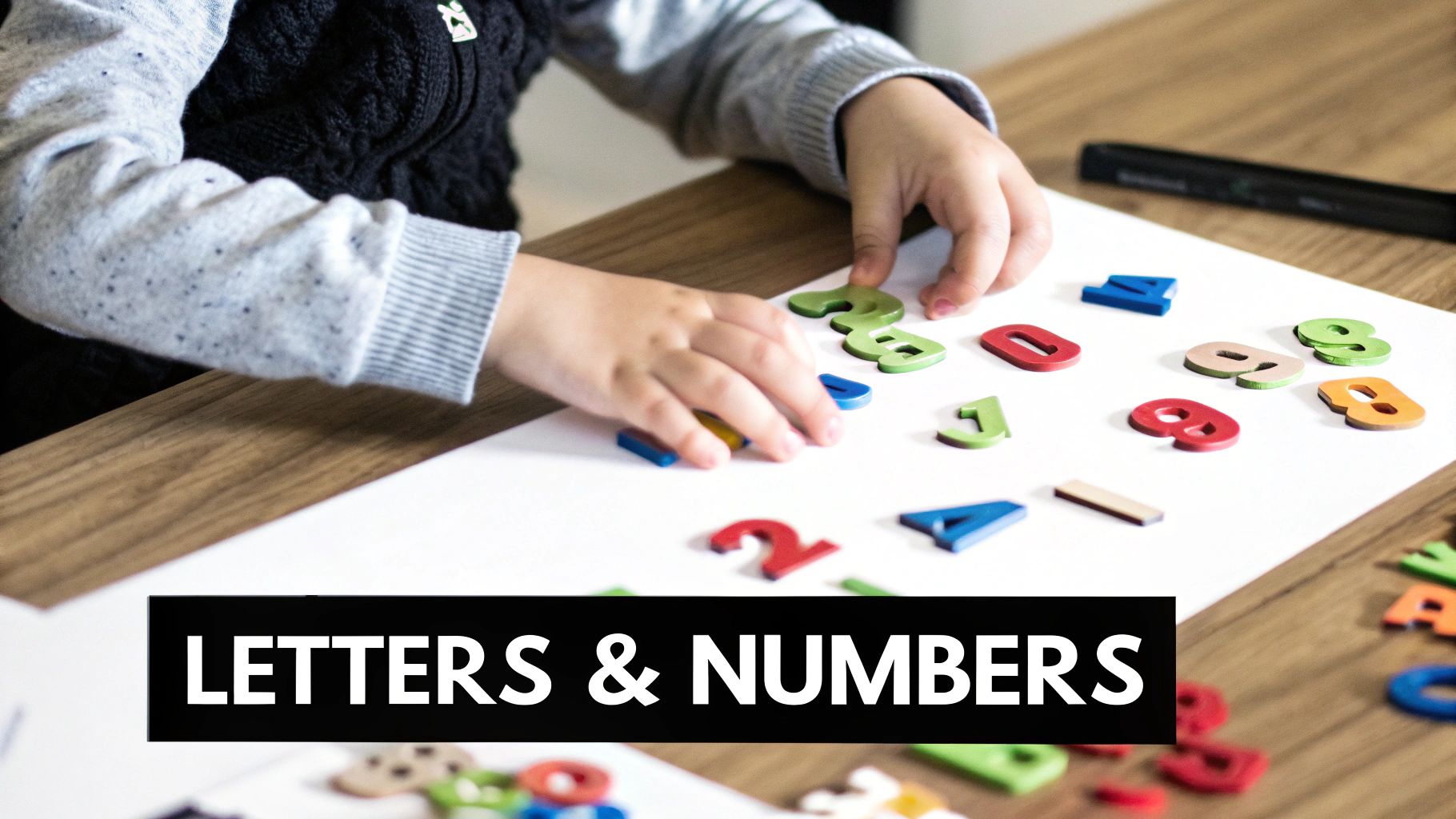
To make learning letters engaging and effective, incorporating playful activities is key. There are many fun letter games for preschoolers that move beyond worksheets, such as alphabet scavenger hunts or using magnetic letters on a fridge. These games build positive associations with learning.
For children who benefit from structured, character-based learning, resources like Numberblocks can be exceptionally effective. These tools use stories and personalities to make numbers more relatable and easier to grasp. You can explore a variety of engaging math resources in our Numberblocks collection.
How to Implement Letter and Number Activities
- Age Range: 3-5 years
- Primary Learning Goals: Visual discrimination, symbol recognition, one-to-one correspondence, pre-literacy, and pre-numeracy skills.
- Success Indicators: The child can identify most uppercase letters and numbers 1-10 out of sequence. They may begin to associate letters with sounds or connect a number to a quantity of objects.
Step-by-Step Guide
- Start with Personal Connection: Begin with the letters in the child's own name. This provides immediate relevance and motivation.
- Introduce Multi-Sensory Materials: Use sandpaper letters for tactile tracing, create numbers with playdough, or write in a tray of coloured sand or rice.
- Make it a Game: Organise a "number hunt" around the house, asking your child to find three of a specific item. Use magnetic letters to "fish" for the first letter of their favourite animal.
- Keep Sessions Short: Focus on 10-15 minute bursts of playful learning daily to maintain engagement and prevent overwhelm.
- Connect Symbols to the Real World: Point out letters on street signs and numbers on clocks or price tags during daily routines to reinforce learning in context.
2. Fine Motor Skill Development
Developing strong fine motor skills is a crucial element of school readiness. These skills involve the coordinated use of small muscles in the hands, fingers, and wrists, which are essential for tasks like writing, cutting with scissors, buttoning a coat, and turning the pages of a book. As emphasised by occupational therapists and programs like Handwriting Without Tears, focusing on these abilities provides the dexterity and control needed for countless classroom activities.
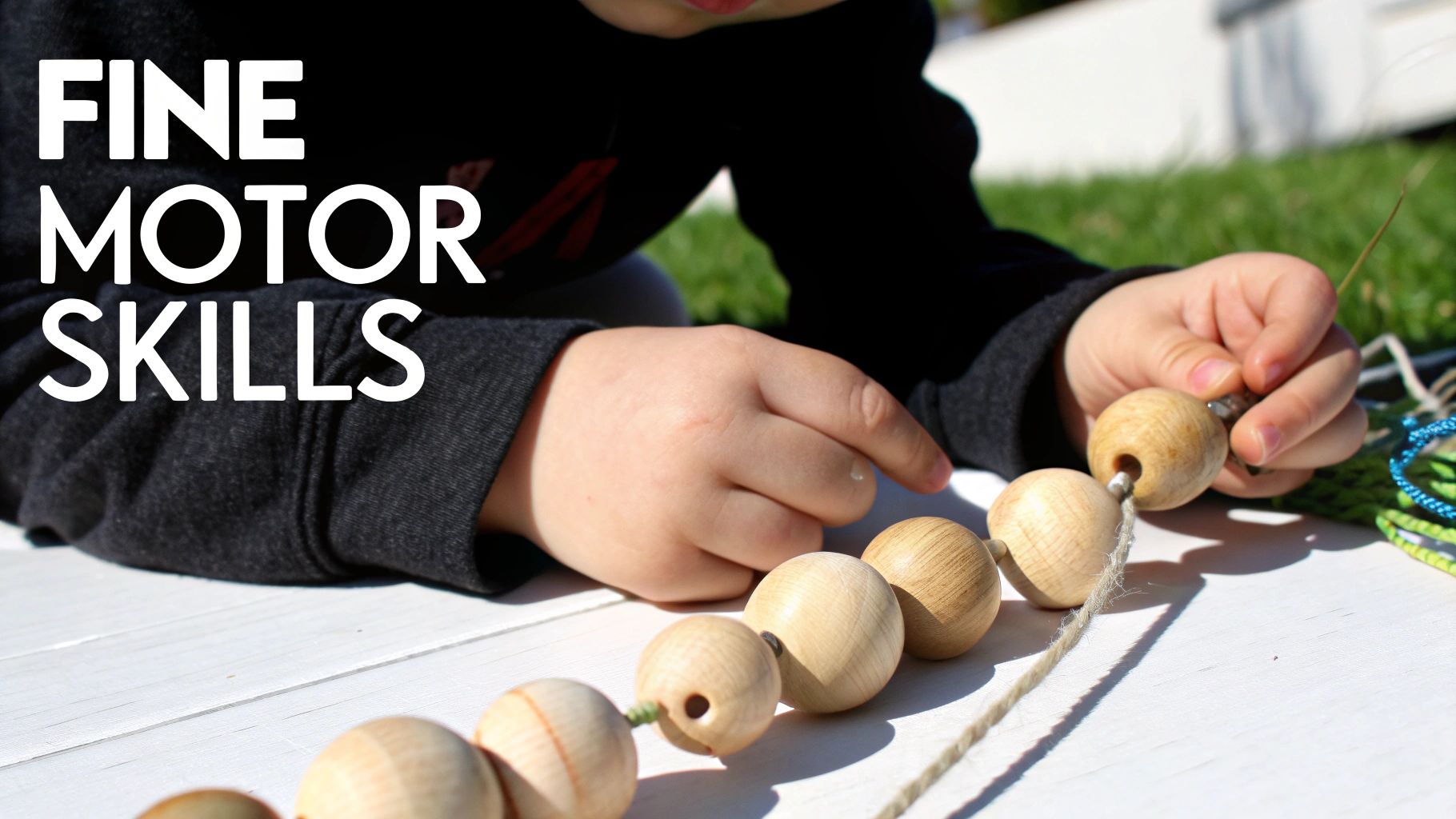
Engaging children in playful, hands-on tasks is the most effective way to build these muscles. Activities like sculpting with playdough, threading beads, or using tweezers to pick up small objects transform muscle-strengthening exercises into enjoyable games. This approach not only improves physical capability but also boosts concentration and hand-eye coordination.
For a fun, game-based approach, tools designed specifically to target these skills can be highly motivating. The Froggy Feeding Fun™ game, for example, encourages children to use a pincer grasp to "feed" a frog, strengthening hand muscles in a playful context. You can explore more about this engaging fine motor skills game at Sensory Poodle.
How to Implement Fine Motor Activities
- Age Range: 3-5 years
- Primary Learning Goals: Hand-eye coordination, pincer grasp development, hand strength, bilateral coordination, and pre-writing skills.
- Success Indicators: The child can hold a crayon or pencil with a functional grasp, use child-safe scissors to snip paper, and manipulate small objects like buttons or beads with increasing control.
Step-by-Step Guide
- Start with Whole-Hand Movements: Begin with activities that use the whole hand, such as squeezing sponges in water, rolling playdough into large balls, or tearing paper.
- Introduce Tools for Grasping: Provide child-safe tweezers, tongs, or pegs to pick up pom-poms or blocks, transferring them from one container to another.
- Practise Threading and Lacing: Use large beads and a stiff string or a shoelace to practise threading. You can also use pasta shapes and yarn for a simple, low-cost option.
- Incorporate Scissor Skills: Start with snipping the edges of paper or playdough. Progress to cutting along straight, thick lines before moving to curves and shapes.
- Make it Part of Daily Routines: Encourage zipping their own jacket, helping to button their shirt, or using utensils during mealtimes to build skills organically.
3. Social-Emotional Learning (SEL) Games
The ability to understand emotions, share with others, and navigate social situations is a critical component of school readiness. Social-emotional learning (SEL) provides the framework for these vital life skills. Concepts popularised by experts like Daniel Goleman and organisations such as CASEL emphasise that emotional intelligence is as important as academic knowledge. By engaging in SEL games, children learn to identify their feelings, develop empathy, and practise cooperation in a supportive environment.
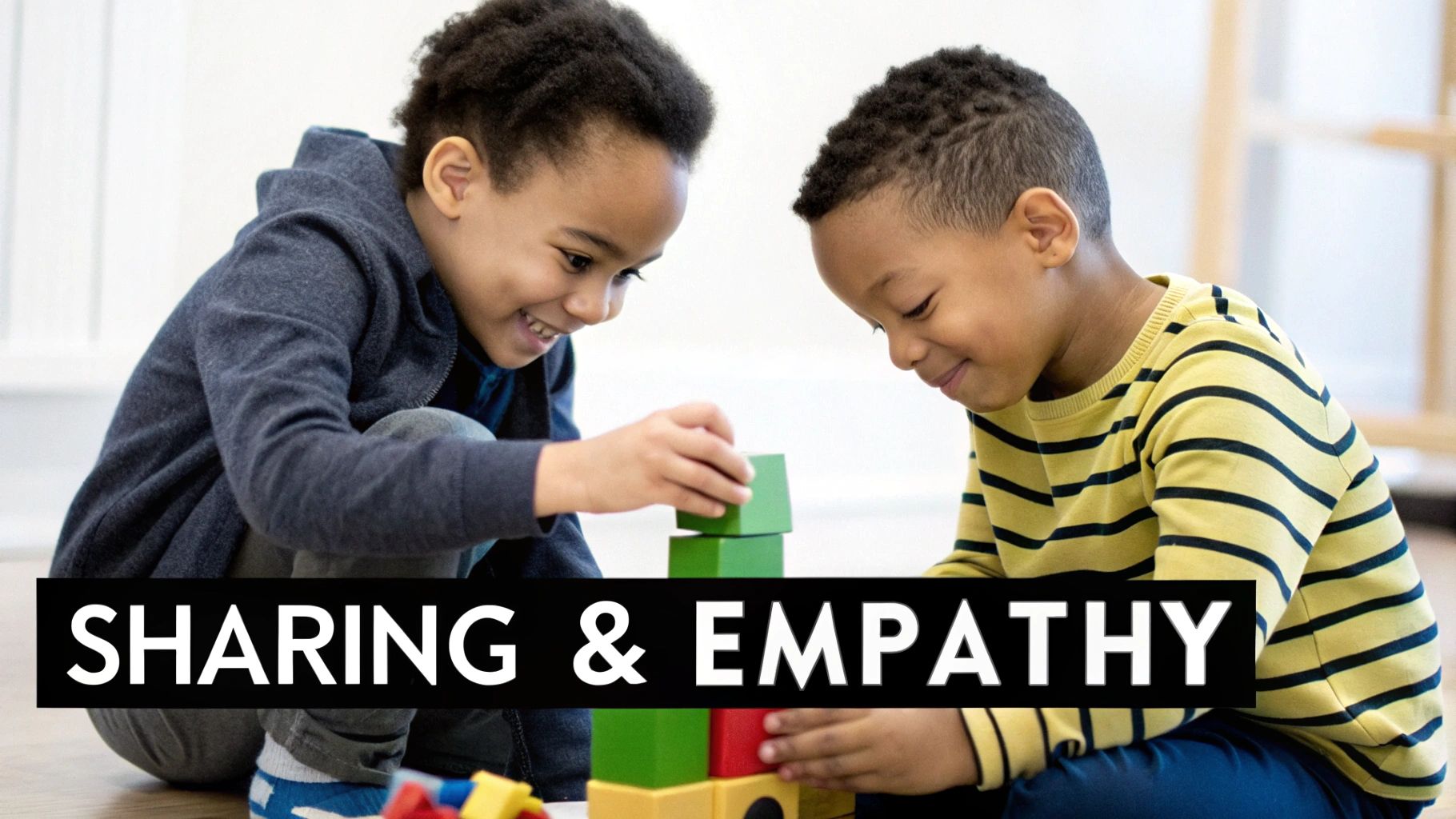
Interactive games make learning abstract social concepts tangible and fun. Role-playing common scenarios like asking to join a game or resolving a disagreement over a toy helps children build a script for real-life interactions. For targeted development in managing emotions and interacting positively with others, explore these engaging 10 Social Emotional Learning Activities to Build Real-World Skills from Kubrio.
Using structured tools can also build a strong emotional vocabulary. Resources like the Emotional Warriors Card Game provide a playful, character-based way for children to explore and discuss a wide range of feelings, turning a complex topic into an accessible activity. For a cuddly companion during these discussions, consider introducing one of the adorable Palm Pals Australia has to offer.
How to Implement Social-Emotional Learning Games
- Age Range: 3-6 years
- Primary Learning Goals: Emotional recognition and regulation, empathy, cooperation, turn-taking, conflict resolution, and developing positive peer relationships.
- Success Indicators: The child can name basic emotions (happy, sad, angry). They begin to show empathy for others, can take turns in a simple game, and may attempt to solve a minor disagreement with words.
Step-by-Step Guide
- Start with Emotion Identification: Use a feelings chart or emotion flashcards. Make a face corresponding to an emotion and ask the child to guess what it is. Talk about what might make someone feel that way.
- Introduce Cooperative Play: Choose games where players work together towards a common goal rather than competing against each other. This builds teamwork and communication skills.
- Use Puppets for Role-Playing: Act out common social scenarios with puppets, such as sharing a toy or giving a compliment. This allows children to explore situations from a safe distance.
- Model Emotional Language: Narrate your own feelings in simple terms throughout the day. For example, "I feel happy when we read books together," or "I am feeling a bit frustrated that I can't find my keys."
- Practise Problem-Solving: When a conflict arises, guide the children involved to talk about their feelings and brainstorm a fair solution together, rather than imposing one yourself. This empowers them to resolve future issues independently.
4. Phonological Awareness Activities
Before children can learn to read, they must first understand that spoken words are made up of smaller sounds. This auditory skill, known as phonological awareness, is a crucial predictor of future reading success. These school readiness activities focus entirely on listening and sound manipulation, helping children tune their ears to rhymes, syllables, and individual phonemes (the smallest units of sound). Research popularised by experts like Dr Marilyn Jager Adams highlights that a strong foundation in these skills prepares the brain to connect sounds with written letters, a process known as phonics.
Engaging children in playful sound games helps them develop an ear for the structure of language without the pressure of written text. The goal is to make listening an active and enjoyable experience. Simple activities like singing nursery rhymes, clapping out the syllables in names, or playing "I Spy" with beginning sounds build these essential pre-reading skills in a natural, stress-free way. By focusing on auditory input, these activities are inherently inclusive and can be adapted for all learning styles.
How to Implement Phonological Awareness Activities
- Age Range: 3-5 years
- Primary Learning Goals: Auditory discrimination, rhyming and alliteration recognition, syllable segmentation, and phonemic awareness (isolating, blending, and segmenting sounds).
- Success Indicators: The child can identify rhyming words in a song or story, clap the correct number of syllables in familiar words, and identify the initial sound of a word (e.g., "ball starts with /b/").
Step-by-Step Guide
- Start with Larger Sound Chunks: Begin with rhyming and alliteration, which are easier for young children to hear. Read rhyming books and sing songs, pausing to let them fill in the rhyming word.
- Move to Syllable Awareness: Make syllable counting a physical activity. Ask your child to clap, stomp, or jump for each syllable in their name, family members' names, or names of their favourite toys.
- Introduce Initial Sounds: Play "I Spy" focusing on the beginning sound of objects ("I spy with my little eye, something that starts with the sound /m/"). This helps children begin to isolate individual phonemes.
- Incorporate it into Daily Routines: Make sound games part of your day. During a car ride, create silly sentences where all words start with the same sound (alliteration). At the grocery store, find items that rhyme with "cat".
- Keep it Playful and Brief: Dedicate 5-10 minutes at a time to these sound games. The key is frequent, short, and fun exposure, not lengthy drills. Use funny voices and movement to keep them engaged.
5. Gross Motor Activity Programs
Gross motor skills involve the large muscles of the body that enable actions like walking, running, and jumping. Structured gross motor activity programs are crucial school readiness activities because they build the physical foundation for classroom success. Strong gross motor skills improve a child's ability to sit upright at a desk, navigate a busy playground safely, and participate in physical education, which directly impacts their confidence and social engagement.
Developing body awareness, balance, and coordination through movement is a concept championed by physical education specialists and early childhood researchers. These skills are not just about physical prowess; they are deeply connected to a child's ability to regulate their body and attention in a structured learning environment. Providing varied, engaging, and consistent opportunities for large-scale movement helps children build strength and control, preparing them for the physical demands of a typical school day. A sensory swing can be a fantastic tool for this, offering vestibular input while building core strength.
How to Implement Gross Motor Activities
- Age Range: 3-6 years
- Primary Learning Goals: Body awareness (proprioception), balance, coordination, strength, endurance, and motor planning.
- Success Indicators: The child can run without frequently falling, jump with both feet, climb simple play structures, and throw a ball with some accuracy. They show improved ability to navigate spaces without bumping into objects or people.
Step-by-Step Guide
- Create an Obstacle Course: Use pillows, chairs, and blankets indoors or playground equipment outdoors to create a simple course that involves crawling, climbing, jumping, and balancing.
- Incorporate Ball Skills: Start with rolling a large ball back and forth. Progress to gentle throwing and catching, which helps develop hand-eye coordination and motor planning.
- Play Movement Games: Organise classic games like "Simon Says" or "Red Light, Green Light" to practise starting, stopping, and following motor commands. Animal walks (bear crawls, crab walks) are also excellent for building strength.
- Schedule Daily Outdoor Play: Aim for at least 30-60 minutes of unstructured outdoor time where children can freely run, climb, and explore. This is essential for building endurance and confidence.
- Use Music and Dance: Put on some music and encourage free dancing, marching, or skipping. This makes movement fun and helps children develop rhythm and coordination in a playful context.
6. Story Reading and Narrative Comprehension
Developing strong language and comprehension skills is a cornerstone of school readiness, and nothing nurtures this more effectively than sharing stories. Interactive reading builds vocabulary, listening skills, and an understanding of narrative structure (beginning, middle, and end). This daily ritual, championed by literacy advocates like Jim Trelease, author of The Read-Aloud Handbook, transforms reading from a solitary task into a shared, connective experience that fosters a lifelong love of books.
Regularly engaging with stories helps children understand the world around them, develop empathy, and grasp complex concepts. Books with predictable patterns, such as Eric Carle’s Brown Bear, Brown Bear, or rhyming tales from authors like Dr. Seuss, provide a scaffold for early literacy. These activities are vital for print awareness and preparing children for the more structured reading instruction they will encounter in school. Even beloved characters like Snoopy can make storytime more engaging.
How to Implement Story Reading and Comprehension Activities
- Age Range: 2-5+ years
- Primary Learning Goals: Listening comprehension, vocabulary expansion, print awareness, narrative sequencing, and attention skills.
- Success Indicators: The child can answer simple "who," "what," and "where" questions about a story. They begin to predict what might happen next and can retell a basic version of a familiar story.
Step-by-Step Guide
- Establish a Daily Routine: Dedicate 20-30 minutes to reading aloud each day, such as at bedtime. Consistency makes it a cherished part of the day.
- Make it Interactive: Pause during the story to ask open-ended questions like, "What do you think will happen next?" or "How do you think that character feels?" Use expressive voices and gestures to bring the story to life.
- Encourage Participation: Allow the child to choose the book sometimes to foster a sense of ownership. Encourage them to turn the pages or point to pictures as you read.
- Use Props for Retelling: After reading, use puppets, dolls, or even simple drawings to act out the story. This solidifies their understanding of the sequence of events. For a calming, tactile companion during story time, a soft weighted animal toy can help children focus and settle in.
- Connect Stories to Life: Talk about how a story relates to the child's own experiences. If a book is about a trip to the zoo, discuss your own family visit. This makes comprehension more meaningful and concrete.
7. Classroom Routine and Behaviour Preparation
Transitioning into a structured school environment involves learning a new set of rules, routines, and social expectations. Practising these expected classroom behaviours systematically before school begins can significantly ease this transition, reducing anxiety for both children and parents. This proactive approach helps familiarise children with common procedures like lining up, following multi-step directions, and taking turns, transforming the unknown into a predictable and manageable experience. This method, championed by early childhood educators and programs, builds a child's confidence by equipping them with the skills to navigate their new environment successfully.
Creating a simulated classroom experience can be one of the most effective school readiness activities. This doesn't require a full classroom setup; simple, playful role-playing can make a significant difference. You can use visual schedules or timers to structure "work time" and "play time," helping children understand transitions and manage expectations for focused tasks.
For neurodiverse children or those who find sitting still a challenge, introducing supportive tools can be beneficial. A sensory wiggle seat or a discreet fidget tool can provide the necessary sensory input to improve focus during these practice sessions. Explore our range of aids designed for a supportive sensory classroom to find what works best for your child. For children sensitive to noise, a pair of noise cancelling earmuffs for kids can make a world of difference.
How to Implement Classroom Routine Practice
- Age Range: 4-6 years
- Primary Learning Goals: Following instructions, understanding transitions, developing self-regulation, turn-taking, and adapting to group settings.
- Success Indicators: The child can follow a two-step direction, wait their turn in a game, and transition between activities with minimal prompting. They show an understanding of basic classroom expectations like raising a hand to speak.
Step-by-Step Guide
- Set Up a "Mini-Classroom": Designate a small area for "school work." Use a small table and chair to simulate a desk.
- Practice Core Routines: Role-play specific scenarios like circle time, lining up to go outside, or packing and unpacking a school bag. Use dolls or toys as other "students."
- Use Visual Timers: Introduce a visual timer to signify the duration of a task, such as 10 minutes of "quiet work" or 5 minutes of clean-up time. This makes time a concrete concept.
- Play Direction-Following Games: Turn listening into a fun activity. Play "Simon Says" or give playful multi-step instructions like, "First, touch your nose, and then, hop on one foot."
- Visit the Real School: If possible, visit the school playground and walk around the outside of the building before the first day. This helps demystify the physical space and reduces first-day anxiety.
8. Self-Care and Independence Skills
Developing self-care and independence is a critical component of school readiness. These practical life skills, encompassing tasks like eating, dressing, toileting, and personal hygiene, empower children with confidence and autonomy. When a child can manage their basic needs, it reduces their reliance on teachers for constant supervision, allowing them to engage more fully in learning activities. This focus on practical life skills was championed by educators like Maria Montessori, who recognised that mastering these tasks builds a child's sense of capability and self-worth.
Fostering these skills is not about achieving perfection but about building a foundation for self-sufficiency. A child who can confidently attempt to put on their own shoes or wash their hands independently is developing problem-solving skills and resilience. These small victories are monumental for a young learner, proving to them that they are capable individuals ready to navigate the more structured environment of a classroom. Having fun Bluey merchandise, like a lunchbox or backpack, can motivate them to manage their own belongings.
How to Implement Self-Care and Independence Activities
- Age Range: 3-5 years
- Primary Learning Goals: Fine and gross motor skills, sequencing, body awareness, personal responsibility, and confidence.
- Success Indicators: The child can independently use the toilet, wash and dry their hands, manage most aspects of their lunchbox, and attempt to put on and take off clothing like jackets and shoes.
Step-by-Step Guide
- Break Down Complex Tasks: Deconstruct a skill into small, manageable steps. For dressing, this could mean starting with just pulling up their trousers after you've helped with their feet. For handwashing, create a visual chart showing each step: turn on tap, wet hands, add soap, scrub, rinse, and dry.
- Practise in a Low-Stress Environment: Dedicate relaxed time at home for practice, such as on a weekend morning. Rushing to get out the door is not the ideal time to learn how to zip up a jacket.
- Provide Adaptive Tools: Make tasks easier for little hands. A simple step stool at the sink, a faucet extender, and clothing with elastic waists or velcro closures can set a child up for success and reduce frustration.
- Use Routines and Visuals: Incorporate self-care into daily routines so it becomes a predictable habit. Visual schedules or checklists for morning and bedtime routines can provide helpful, non-verbal reminders.
- Celebrate Effort Over Perfection: Praise their attempts and successes, no matter how small. If they put their shoes on the wrong feet, praise them for getting them on by themselves before gently showing them the correct way. This positive reinforcement makes them eager to keep trying.
9. Pre-Writing and Pencil Control Activities
Before a child can write their name, they must first build the foundational hand strength and fine motor precision required for pencil control. Pre-writing activities are designed to develop these crucial skills, preparing a child’s hands and fingers for the complex task of forming letters. This approach, widely used by occupational therapists and in programs like Handwriting Without Tears, focuses on progressing from large, free-flowing arm movements to smaller, more controlled hand and finger motions, making the eventual transition to formal writing much smoother.
These school readiness activities transform a potentially frustrating task into a playful exploration of lines, shapes, and patterns. Instead of forcing a child to hold a pencil correctly from day one, pre-writing exercises encourage mark-making with a variety of tools, building strength, coordination, and confidence. This gradual, sensory-rich process ensures that children develop the physical capabilities and positive associations needed for successful handwriting. Using tactile fidgets like Needohs can be a great way to warm up hand muscles before writing practice.
How to Implement Pre-Writing and Pencil Control Activities
- Age Range: 3-5 years
- Primary Learning Goals: Fine motor strength, pincer grasp development, hand-eye coordination, spatial awareness, and visual-motor integration.
- Success Indicators: The child can hold a chunky crayon or pencil with a functional grip, intentionally draw vertical, horizontal, and circular lines, and trace simple shapes or patterns with increasing accuracy.
Step-by-Step Guide
- Start with Large Motor Movements: Begin with activities that use the whole arm. Encourage drawing large circles in the air, using sidewalk chalk on the pavement, or painting with water on an outdoor wall.
- Introduce a Variety of Mark-Making Tools: Offer chunky crayons, thick pencils, paintbrushes, and finger paints. This allows children to experiment and find tools that are comfortable for their developing hands.
- Incorporate Vertical Surfaces: Have children draw or colour on an easel or paper taped to a wall. Working on a vertical surface helps strengthen the wrist and shoulder muscles essential for pencil control.
- Practise Foundational Strokes: Introduce pre-writing patterns one at a time. Start with straight vertical and horizontal lines, then move to circles, crosses, squares, and diagonal lines before attempting more complex shapes.
- Make it Playful and Multi-Sensory: Use dotted line activities for tracing fun shapes, not just letters. Have children trace patterns in a tray of sand or shaving cream, or form lines with playdough, which adds a tactile element to the learning process.
10. Cooperative Play and Turn-Taking Games
Learning to play with others is a vital social skill and a cornerstone of school readiness. Cooperative play and turn-taking games provide a structured environment for children to practise essential social competencies like sharing, waiting, following rules, and managing emotions. These activities transform potential conflict into opportunities for positive peer interaction, building the foundation for successful classroom participation and friendships. The principles behind this approach, popularised by educators and child psychologists, emphasise collaboration over competition, nurturing empathy and teamwork.
Structured games help make abstract social rules concrete and understandable for young children. They learn that waiting their turn leads to a chance to play, and following the rules keeps the game fun for everyone. This direct experience with cause and effect in a low-stakes setting is crucial for developing social problem-solving skills and emotional regulation. Toys like Gravitrax are excellent for promoting cooperative building and problem-solving.
How to Implement Cooperative Play and Turn-Taking
- Age Range: 3-5 years
- Primary Learning Goals: Social competence, emotional regulation, turn-taking, rule-following, communication, and frustration tolerance.
- Success Indicators: The child can wait for their turn in a simple game with minimal prompting. They can follow 1-2 rules consistently and begin to show sportsmanship, such as saying "good game" or helping a friend with their turn.
Step-by-Step Guide
- Start Small and Simple: Begin with games involving just one or two other players to minimise overwhelm. Simple board games like Chutes and Ladders or cooperative activities like building a tower together are excellent starting points.
- Establish Clear Rules: Before starting, clearly and simply explain the rules. Use visual aids or demonstrate a round of play so everyone understands what is expected. For example, "First, I roll the dice, then it's your turn."
- Model Positive Behaviour: Actively model how to win and lose gracefully. If you lose, say something like, "Oh, you won! That was a fun game. Let's play again sometime." This teaches resilience and good sportsmanship.
- Keep it Short and Sweet: Keep initial game sessions brief, around 10-15 minutes, to match young children's attention spans and end on a positive note before frustration sets in.
- Praise the Process, Not Just the Win: Offer specific praise for cooperative behaviour, such as, "I love how you waited so patiently for your turn," or "It was great how we worked together to build that." This reinforces the social skills being practised.
School Readiness: 10-Item Comparison
| Activity | Implementation complexity | Resource requirements | Expected outcomes | Ideal use cases | Key advantages |
|---|---|---|---|---|---|
| Letter and Number Recognition Activities | Low–Medium: simple, progressive activities | Low: manipulatives, printables, household items | Symbol recognition, early literacy and numeracy readiness | Daily routines, preschool prep, name/letter focus | Builds foundational skills; easy to integrate |
| Fine Motor Skill Development | Medium: guided, repetitive progression | Moderate: beads, playdough, scissors, tweezers | Improved grip, hand strength, precision for classroom tasks | Writing readiness, occupational therapy, play-based practice | Essential for handwriting and independence |
| Social-Emotional Learning (SEL) Games | Medium–High: requires skilled facilitation | Low–Moderate: games, books, role-play props | Emotional regulation, empathy, cooperation, conflict resolution | Group settings, behavior support, classroom social lessons | Reduces behavioral issues; supports resilience and relationships |
| Phonological Awareness Activities | Low–Medium: brief, focused sessions | Minimal: songs, chants, oral games | Sound awareness, rhyming, strong predictor of reading success | Short daily routines, read-aloud follow-ups, language interventions | High impact on reading development; low material needs |
| Gross Motor Activity Programs | Medium: needs planning, supervision, space | Moderate: open space, play equipment or obstacle materials | Balance, coordination, endurance, improved attention | Recess, PE, daily active breaks, outdoor play | Improves focus and behavior; supports physical health |
| Story Reading and Narrative Comprehension | Low: routine read-aloud practice | Low–Moderate: books, props, time commitment | Vocabulary growth, listening skills, story structure understanding | Bedtime reading, classroom read-alouds, vocabulary building | Dramatically increases language skills; fosters love of reading |
| Classroom Routine and Behavior Preparation | Medium: consistent practice across contexts | Minimal: mock setups, teacher/parent guidance | Smooth transitions, following directions, reduced anxiety | Pre-kindergarten transition, home practice before school | Eases school entry; improves classroom readiness |
| Self-Care and Independence Skills | Medium: individualized, stepwise teaching | Minimal–Moderate: adaptive tools, supervision | Toileting, dressing, feeding independence, self-help skills | Home routines, pre-school readiness, daily life skills training | Increases autonomy; reduces teacher supervision needs |
| Pre-Writing and Pencil Control Activities | Low–Medium: progressive fine motor tasks | Low: paper, crayons, tracing sheets, chunky pencils | Tripod grip, controlled lines/shapes, writing readiness | Preschool prep, handwriting warm-ups, occupational therapy | Directly prepares for writing; prevents early struggles |
| Cooperative Play and Turn-Taking Games | Medium: facilitation and rule reinforcement | Low–Moderate: simple board/group games, play space | Turn-taking, rule following, social problem-solving | Small-group play, social skills groups, family game time | Builds peer relationships and social competence |
Building a Confident Start to a Lifelong Learning Journey
Navigating the path to school readiness can feel like assembling a complex puzzle, but as we've explored, each piece is an opportunity for connection, play, and growth. This comprehensive guide has offered a diverse collection of school readiness activities, moving far beyond simple letter and number recognition. We've delved into the foundational pillars that support a child’s successful transition into the classroom environment: the fine motor precision needed for writing, the gross motor coordination for playground adventures, the nuanced skills of social-emotional learning, and the practical routines that build independence.
The core takeaway is this: school readiness is not a singular checklist to be completed, but a holistic developmental process. It's about nurturing the whole child. By weaving activities that bolster communication, self-care, attention, and regulation into your daily interactions, you are not just preparing them for their first day of school; you are equipping them with the resilience, curiosity, and confidence to embrace a lifetime of learning.
The Power of Play-Based, Sensory-Informed Preparation
A recurring theme throughout these activities is the paramount importance of play. Children learn most effectively when they are engaged, joyful, and motivated. The pressure to "get ready" for school can sometimes overshadow this fundamental truth. Instead of focusing on rote memorisation, we've highlighted how building with Magna-Tiles can teach spatial awareness and pre-maths concepts, or how imaginative play with Little Potion Co kits can enhance language and sequencing skills.
Furthermore, integrating a sensory-inclusive approach is not just a special consideration for neurodiverse children; it is a best-practice strategy that benefits everyone. Recognising and honouring a child’s unique sensory profile allows you to adapt any activity to meet their needs. This could mean providing Kaiko Fidgets for a child who needs tactile input to focus during story time, or creating a quiet, calming corner with a sensory tent and a mesmerising jellyfish lamp for moments of overwhelm. These thoughtful adjustments create a supportive environment where a child feels safe, understood, and ready to learn. Creating inviting sensory spaces with tools like bubble tubes or a jellyfish aquarium lamp can be incredibly beneficial.
Your Actionable Roadmap to School Success
As you move forward, remember to prioritise connection over perfection. The goal of these school readiness activities is not to create a flawless student, but to foster a capable and adaptable learner. Here are your key next steps:
- Observe and Individualise: Pay close attention to your child's strengths, interests, and areas needing more support. Customise activities to match their developmental stage and temperament. If they love building, focus on fine motor and problem-solving through construction play. If they are constantly moving, integrate learning into gross motor games.
- Integrate, Don't Isolate: Weave these activities seamlessly into your everyday life. Practise self-care skills during morning routines, work on turn-taking during family game night, and build vocabulary during trips to the supermarket. Learning becomes natural and stress-free when it's part of your daily rhythm. Using fun showbags and blind boxes can be a great reward.
- Celebrate Progress, Not Just Milestones: Acknowledge and praise the small victories along the way. Celebrate their effort in trying to zip their own jacket, their patience in waiting for their turn, or their courage in trying a new activity. This positive reinforcement builds self-esteem and a positive attitude towards new challenges.
Ultimately, preparing a child for school is a journey you take together. It's a special time filled with discovery, growth, and countless small moments of achievement. By embracing a playful, patient, and individualised approach, you are providing the most powerful and enduring gift: a positive foundation and an authentic love for learning that will serve them well beyond the classroom doors.
Are you looking to enhance your child's learning and sensory experiences? Discover a curated collection of educational and therapeutic tools at The Sensory Poodle, your trusted source for sensory toys australia. From weighted animal toys to engaging Numberblocks sets and comforting weighted blankets like the Neptune Blanket, we have what you need. Equip your little one for a confident start to their school journey by exploring our supportive resources at The Sensory Poodle today.