


The Ultimate Guide to Sensory Swing Australia

Ever felt like you needed a gentle, supportive hug that could just rock away the day's stress? That’s the magic of a sensory swing. For families all over Australia, this simple tool is a game-changer, blending gentle movement with comforting pressure to create a quiet little haven for both kids and adults to find their calm. It’s so much more than a piece of play equipment; for many, it's the key to feeling grounded and in control.
What Is a Sensory Swing and How Does It Help?
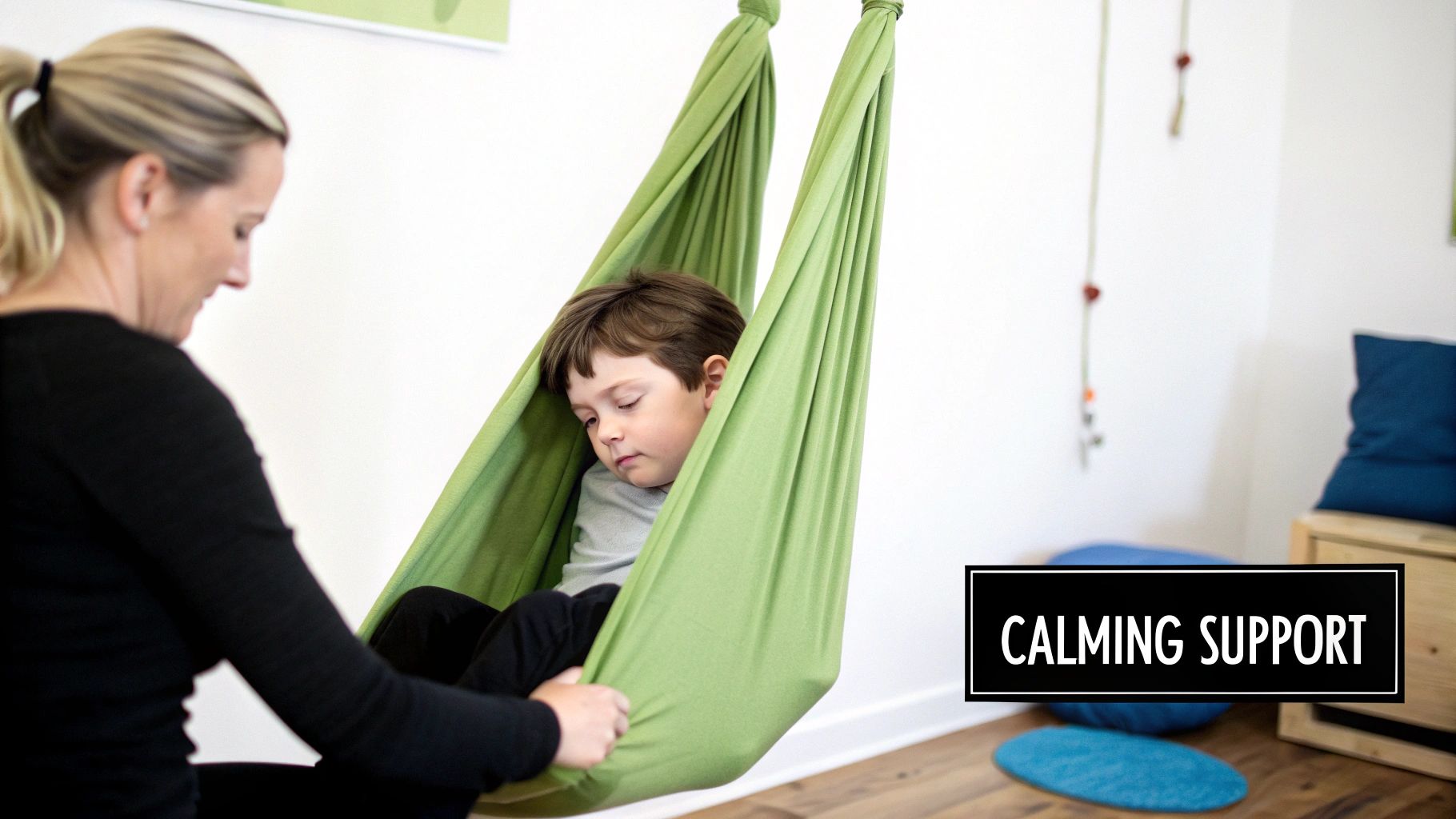
A sensory swing isn't like the one you'd find at the local park. It's a purposefully designed therapeutic tool that helps calm the nervous system by delivering two very specific types of sensory input at once: vestibular and proprioceptive.
Think of it like this: the gentle rocking, swaying, or spinning engages the vestibular system. That's the part of our inner ear that governs our sense of balance and spatial awareness. For a brain that's feeling a bit scrambled, this rhythmic movement can be incredibly organising and soothing.
At the same time, the stretchy, cocoon-like fabric of a deluxe sensory swing wraps snugly around the body, providing what we call deep pressure. This sensation lights up the proprioceptive system—the network of receptors in our muscles and joints that tells our brain where our body is. It’s that same secure, calming feeling you get from a perfectly weighted blanket or a firm, reassuring hug.
The Core Benefits of Sensory Input
This clever combination of inputs is what makes a sensory swing such an invaluable tool for people with sensory processing differences, autism, or ADHD. The gentle squeeze and rhythmic motion work in tandem to help the brain filter out all the overwhelming sensory "noise" from the environment, making it much easier to focus and regulate emotions.
Whether it's a child decompressing after a chaotic day at school or an adult needing a moment to quiet their anxiety, just a few minutes in a sensory swing can completely change their state of mind. It’s a safe retreat, a place to reset and find a sense of equilibrium. It's no wonder so many Australian parents and occupational therapists swear by them as a must-have in any sensory toolkit.
Here’s what that looks like in practice:
- A Calmer Nervous System: That deep pressure is brilliant for dialling down anxiety and easing that feeling of being completely overwhelmed.
- Better Focus and Attention: By giving the brain the organised input it craves, the swing helps improve concentration for things like homework or learning.
- Improved Body Awareness: The constant feedback from the swing's fabric helps users build a better internal map of their body, which is vital for coordination and movement.
- A Personal Safe Space: The enclosed, hug-like design provides a real sense of security, offering a break from a world that can sometimes feel too loud and bright.
A sensory swing isn’t just about the movement. It’s about giving the nervous system that "just right" amount of input to feel safe, organised, and ready to take on the world.
If you’re looking for a trusted sensory swing in Australia, The Sensory Poodle offers high-quality, durable options specifically designed with these therapeutic goals in mind. These aren't just products; they're tools that help create calmer, happier, and more regulated spaces, whether at home or in the classroom.
How Sensory Swings Actually Help Neurodiverse Aussies
A sensory swing is so much more than just a fun piece of equipment; for many neurodiverse Australians, it's a game-changing therapeutic tool. Its secret lies in delivering consistent, gentle sensory input that helps to organise a nervous system that’s feeling scrambled or overloaded.
For families across Australia, this translates into real, noticeable changes at home. The snug, cocoon-like pressure from a quality swing provides what’s known as deep proprioceptive input, which has an incredibly calming effect. Think of it like a firm, reassuring hug – it sends a signal of safety to the brain, helping to dial down anxiety. It’s the perfect sanctuary for a child after a chaotic day at school or during a moment of sensory overload.
This calming effect is the foundation for better emotional regulation. When the nervous system finds its equilibrium, it becomes far easier for a child (or an adult) to manage their emotions, reduce the frequency of meltdowns, and interact more peacefully with their surroundings.
Building Body Awareness and Fine-Tuning Motor Skills
Beyond its calming superpowers, a sensory swing is fantastic for developing essential physical skills. The back-and-forth motion is brilliant for improving proprioception—a fancy word for your internal sense of where your body is. As a child shifts their weight, pushes off, or twists around, they are literally building a better mental map of their own body.
This directly feeds into better motor planning, which is the brain's ability to come up with, plan, and execute a new movement. Simple actions like climbing into the swing, figuring out how to get it moving, or controlling the spin are all powerful exercises for building coordination and balance.
These physical gains create a positive ripple effect in other areas:
- Sharper Focus: A calm, regulated nervous system is a focused one. A few minutes in the swing before starting homework can make a world of difference.
- Steadier Balance: The gentle rocking and swinging motions activate the vestibular system, which is crucial for strengthening balance and spatial orientation.
- A Real Confidence Boost: Nailing a new physical skill, like learning to pump their legs to swing higher, can be a massive win for kids who might find motor tasks challenging.
Think of a sensory swing as a reset button for the nervous system. The predictable, rhythmic movement helps filter out the noise of the world, creating a peaceful space for a child to find their centre.
This understanding of sensory tools is growing fast here in Australia. More and more, parents and educators are seeking out high-quality sensory toys in Australia, recognising them not just as playthings but as vital developmental aids.
The numbers back this up. The broader Australian toy market, which includes these essential sensory tools, is expected to hit USD 3,033.6 million by 2033, growing at a steady 3.23%. This isn't just about fun; it's a shift towards prioritising products that actively support a child's development. With 67% of parents and therapists worldwide choosing sensory toys to aid development—a trend strongly mirrored in Australia, especially with rising autism diagnoses—it's clear these tools are becoming a cornerstone of supportive homes and classrooms. You can dive deeper into the Australian toy market's growth and trends on imarcgroup.com.
At the end of the day, bringing a sensory swing into a daily routine is a simple, effective way to meet a child's sensory needs. It helps build physical skills and fosters regulation, but more importantly, it creates a profound sense of safety and well-being for neurodiverse individuals.
How to Choose the Right Sensory Swing
Feeling a bit lost in the world of sensory swings? You're not alone. With so many options available in Australia, picking the right one can feel like a huge task. The secret is to match the swing's design to the specific sensory needs of the person who will be using it. Let's break down the different types, materials, and safety checks to make the choice a whole lot easier.
Understanding the Different Types of Swings
Sensory swings aren't a one-size-fits-all solution. Each design offers a completely different sensory experience, so it's worth getting to know the main players: lycra compression swings, pod swings, and platform swings.
A lycra compression swing is all about that deep, calming pressure. Think of it as a full-body hug. Made from a strong, stretchy fabric, it cocoons the user, providing a sense of security and calm that can be a game-changer for an overstimulated nervous system. Our Deluxe Sensory Swing is a perfect example of this soothing, cocoon-like design.
Then you have the pod swing. This one is less about full-body compression and more about creating a cosy, private retreat. It’s a snug little nook where a child can gently rock, read a book, or just have a quiet moment to themselves. They make a fantastic addition to a calming corner.
Finally, there’s the platform swing. This type offers a stable, flat surface, making it an excellent choice for anyone who struggles with balance or prefers not to be fully enclosed. It allows for all sorts of positions—sitting, kneeling, or lying down—and is brilliant for building core strength and coordination in a fun way.
Key Factors to Consider Before Buying
Once you have an idea of the type of swing you need, it's time to dig into the details. Getting the material, size, and weight capacity right isn’t just important—it’s essential for safety and for the swing to actually work its magic.
The goal is to find a swing that provides the 'just right' amount of sensory input. This means considering everything from the texture of the fabric to the way it moves, ensuring it meets the user's unique sensory profile.
Let's focus on three non-negotiables:
- Material and Durability: Always look for high-quality, non-toxic materials. Lycra and spandex blends are fantastic for compression swings because they offer a four-way stretch and are built to last. A huge plus is a fabric that's machine-washable—because life happens!
- Size and Space: Before you buy, grab a tape measure. You'll need to make sure you have enough clear space around the swing for it to move freely and safely. The swing itself also needs to be the right size for the user, giving them that secure feeling without being too restrictive.
- Weight Capacity: This is a critical safety check. Never guess. Always check the manufacturer's maximum weight limit and make sure it can comfortably support the user, keeping in mind that swinging creates extra force.
The right sensory swing can be so much more than just a piece of equipment; it's a tool that supports everything from emotional regulation to motor skills.
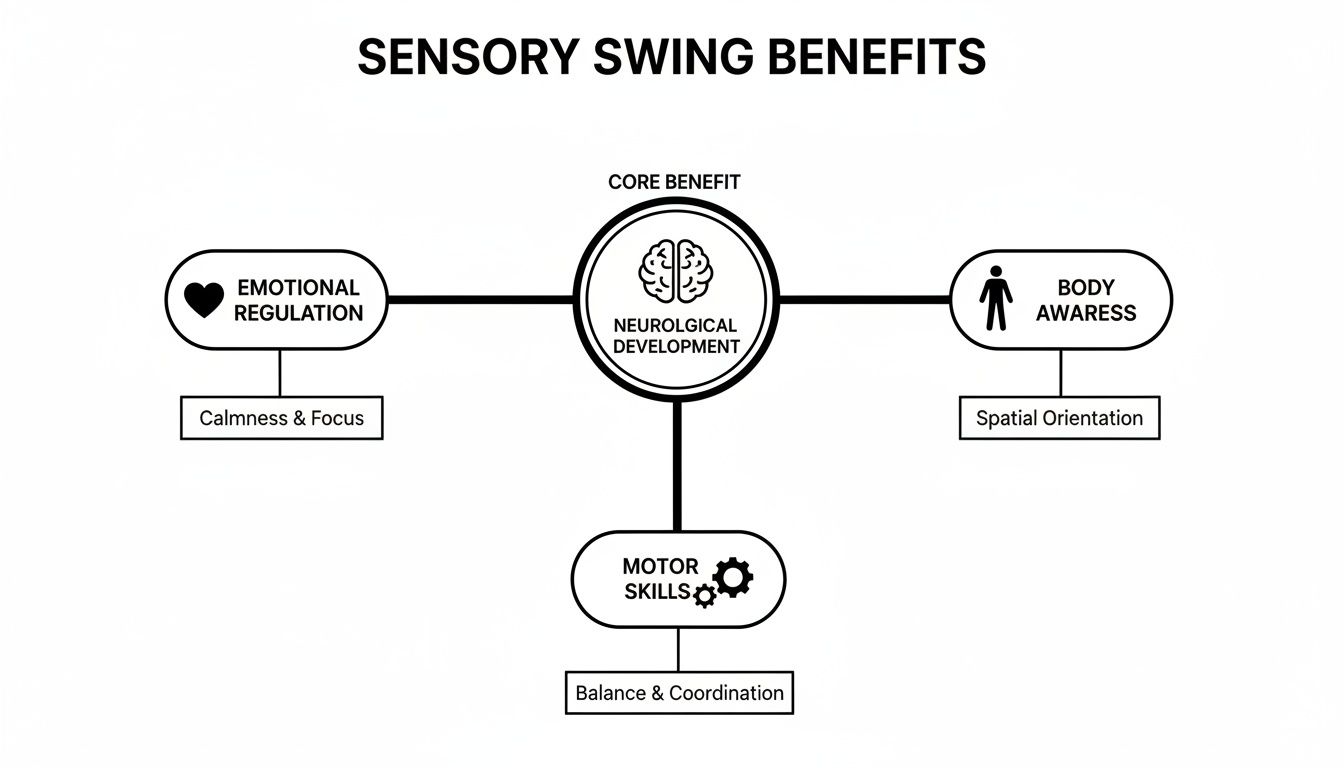
As you can see, a single swing can help in so many areas of a child's development, all by helping to regulate their nervous system. Getting the right one is the first step to unlocking all these benefits. For more ideas, take a look at our guide with tips for choosing the right sensory toys by age group.
A Quick Comparison to Help You Decide
To help simplify your decision, we've put together a quick comparison of the most common sensory swing types to help you choose the best fit for your sensory needs.
Sensory Swing Comparison Guide
| Swing Type | Primary Benefit | Material | Best For | Example from The Sensory Poodle |
|---|---|---|---|---|
| Lycra Compression Swing | Deep pressure and a calming "hug" sensation | Stretchy Lycra/Spandex | Children who seek constant pressure, have high energy, or feel secure when cocooned. | Our best-selling Deluxe Sensory Swing |
| Pod Swing | A secure and enclosed personal space | Cotton or Canvas | Kids who need a quiet retreat for reading or relaxing and prefer a defined seat. | A classic choice for creating a calm-down corner. |
| Platform Swing | Stability and balance training | Padded, durable fabric | Users with motor skill challenges or for therapy sessions needing varied positions. | A versatile swing for active sensory input. |
At the end of the day, the best sensory swing is one that safely meets the user’s needs and fits beautifully into your home or classroom. By thinking through these key points, you can feel confident in choosing a swing that will quickly become a favourite spot for calm, focus, and fun.
Your Guide to Safe Installation and Maintenance
Let’s be honest, a sensory swing is only as good as its setup. Getting the installation right isn't just a box-ticking exercise; it's the foundation for creating that safe, calming space your child needs. When a swing is securely mounted, you can breathe easy, and they can fully relax into the therapeutic experience.
We'll walk you through the essentials for a solid indoor setup and give you some simple tips to keep your swing in great shape for the long haul.
Step-by-Step Ceiling Installation
The gold standard for installing a sensory swing is to anchor it directly into a ceiling joist. These are the strong wooden beams running through your ceiling, and they provide the robust support needed to handle all the spinning, bouncing, and swinging.
Here’s how you can get it done safely:
- Find That Joist: First things first, you need to find a ceiling joist. A stud finder is your best friend here. Run it across the ceiling until it beeps, and mark the centre of the joist. Drilling into the plasterboard alone is a definite no-go – it simply can't hold the weight.
- Drill a Pilot Hole: Once you’ve marked your spot, drill a small pilot hole. This simple step makes it much easier to screw in the mounting hardware and, more importantly, stops the wood from splitting under pressure.
- Install the Eye Bolt: Now, take a heavy-duty, forged eye bolt and screw it firmly into the pilot hole. Keep going until it’s sitting completely flush against the ceiling. You’ll want to make sure it's rated to hold well above the user's weight to safely handle the forces of movement.
- Connect the Hardware: Use a high-quality carabiner to link the swing's straps to the eye bolt. If you've bought a good quality swing, like the Deluxe Sensory Swing from The Sensory Poodle, it will come with hardware that’s been specifically chosen for its strength and reliability.
- Give it a Test Run: Before you let anyone hop on, give the swing a good, firm tug with your entire body weight. It shouldn't move, creak, or show any signs of weakness. If it feels solid, you’re good to go.
Safety Check: Always, always double-check the weight capacity of every single component – the swing fabric, the straps, the carabiner, and the eye bolt. The total weight limit should be significantly higher than the person using it. This isn't a place to cut corners.
What If You Can't Drill Into the Ceiling?
Renting? Or just don't have an accessible ceiling joist where you need it? No problem at all. There are a couple of great workarounds that don't involve making any permanent marks.
- Dedicated Swing Stands: These are freestanding frames, usually made of steel, built specifically for hanging indoor swings. They're sturdy, easy to assemble, and you can move them from room to room. A fantastic option for renters.
- Doorway Bars: A sturdy, well-installed doorway pull-up bar can also work as a temporary hanging point. This setup is best suited for gentle back-and-forth swinging rather than really energetic spinning or bouncing. Just make sure the bar has a high weight rating.
Looking After Your Swing: Long-Term Care
Your job isn’t quite done once the swing is up. A little bit of regular TLC is key to keeping it a safe and reliable tool.
Try to get into this simple maintenance habit:
- Weekly Check-In: Take a quick look at all the hardware. Check the eye bolt, carabiners, and straps for any signs of wear, rust, or loosening. Give everything a little wiggle to make sure it’s still tight.
- Fabric Inspection: Give the swing's fabric a once-over. You’re looking for any small tears, frayed seams, or areas where the material looks a bit thin, especially where it connects to the hardware.
- A Quick Clean: Just follow the manufacturer's instructions. Most fabric swings can pop into the washing machine on a gentle cycle and then be air-dried. Keeping it clean isn't just about hygiene; it also makes spotting any potential wear and tear much easier.
By taking these steps, you can be confident you’re providing a safe and effective sensory swing in Australia that will be a source of comfort and fun for years to come.
Using NDIS Funding for Your Sensory Swing
For many Aussie families, the National Disability Insurance Scheme (NDIS) is the key to getting the tools that can genuinely change daily life for the better. Figuring out how to use your funding can sometimes feel like a puzzle, but when it comes to a sensory swing in Australia, it's often more straightforward than you think.
Under the NDIS, a sensory swing usually falls into the 'assistive technology' (AT) category. This is just the official way of saying it’s a tool recognised for helping someone achieve their goals—especially those around self-regulation, sensory processing, and emotional balance. Because it provides that all-important vestibular and proprioceptive input, it directly supports the skills needed for everyday living.
How to Use Your NDIS Plan
How you go about buying a sensory swing with your NDIS funding really comes down to how your plan is managed. There are three ways your funds can be handled, and each one has a slightly different path to follow.
Knowing your plan type is the first step.
- Self-Managed: If you’re self-managed, you’re in the driver's seat. You have the freedom to buy a sensory swing from any supplier you like, including The Sensory Poodle. You pay for it yourself and then claim the money back through the NDIS portal. Simple as that.
- Plan-Managed: Got a plan manager? Great! They’re there to take care of the finances for you. All you need to do is get a quote from an NDIS-registered provider like us, send it to your plan manager, and they'll handle the payment directly.
- NDIA-Managed (Agency-Managed): For those whose plans are managed by the National Disability Insurance Agency (NDIA), you’ll need to stick with NDIS-registered providers. The good news is, The Sensory Poodle is an NDIS provider, which makes it easy to access our range of sensory gear.
The real secret is to clearly link the sensory swing to your NDIS goals. For instance, if one of your goals is to "improve emotional regulation to participate in community activities," you can easily explain how the swing is a tool that helps create the calm focus needed to make that happen.
Making the Process Simple
We know that navigating NDIS funding can be another thing to add to an already full plate. That’s why our goal is to make getting what you need as smooth as possible. As an NDIS-registered provider, The Sensory Poodle is set up to help participants, support coordinators, and plan managers at every turn.
We can provide the official quotes you need for plan approvals and send invoices directly to your plan manager. It’s all about taking the admin work off your shoulders so you can concentrate on finding the right tools to support your child. You can learn more about the different sensory tools for autism and how they fit with developmental goals in our detailed guide.
As Australia puts more focus on neurodiversity, sensory aids are finally getting the attention they deserve. This local shift reflects what's happening worldwide—the global autism sensory toys market was valued at USD 32.9 million and is expected to hit USD 51.4 million by 2032. Here at home, more and more families are using their NDIS funding to get these vital tools. With online stores making up a 35.61% market share, getting this support is easier than ever for NDIS participants all across Australia. You can read more about these market trends and insights on intelmarketresearch.com.
At the end of the day, using the NDIS to get a sensory swing is all about empowering people with the right support. It’s an investment in a calmer, more regulated environment where they don't just cope—they can truly thrive.
Building the Ultimate Calming Corner
A sensory swing is a brilliant tool all by itself, but it truly shines when it becomes the heart of a dedicated calming corner. Think of this space as a personal retreat—a safe haven where a child can go to regulate their emotions, decompress after a long day, and simply find their centre again. It’s all about layering different sensory tools to create a rich, supportive, and comforting environment.
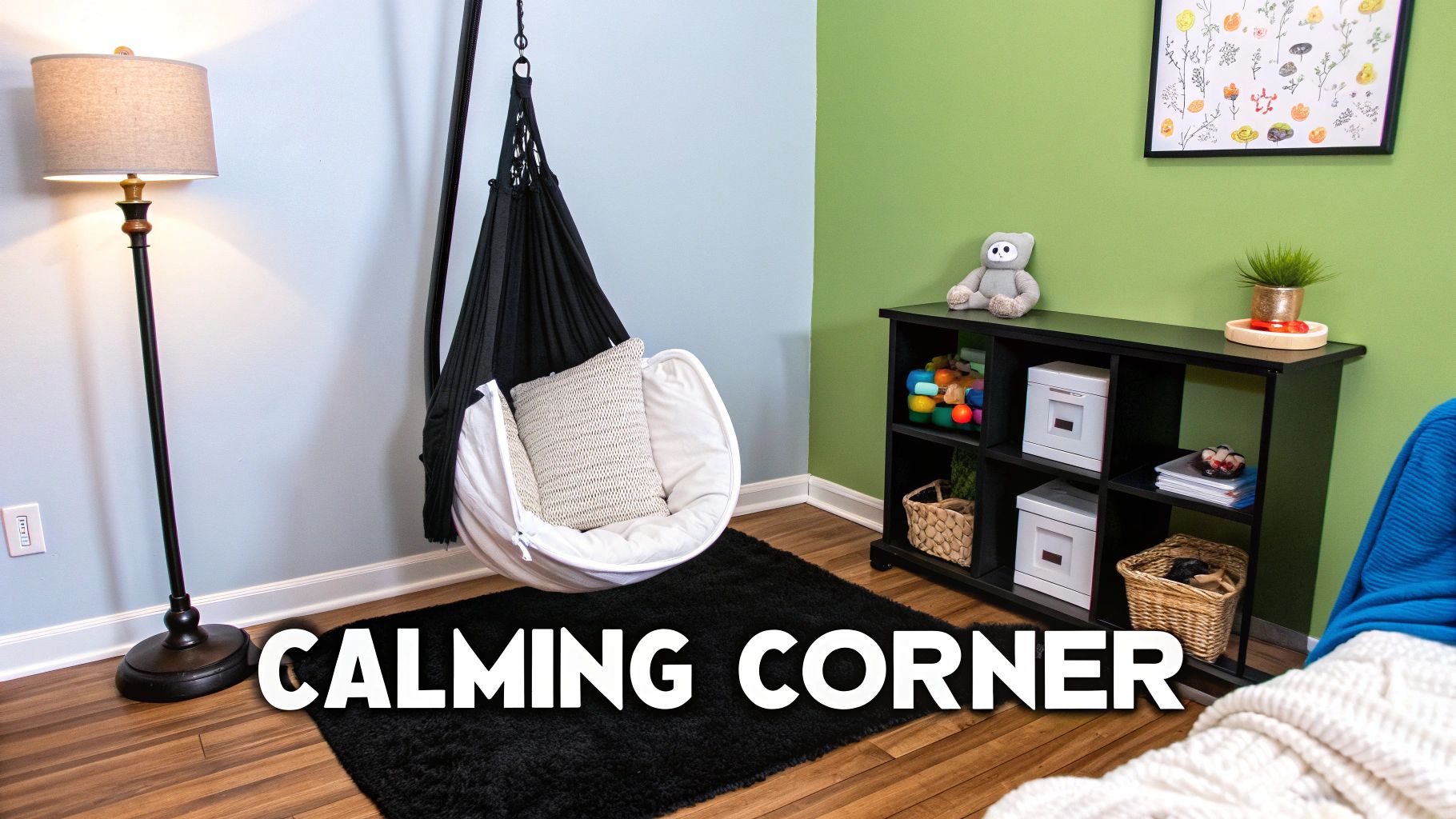
The idea is to build a multi-sensory experience that soothes rather than overwhelms. When you combine different types of sensory input, you give your child the power to choose exactly what their nervous system needs in that moment.
Essentials for Your Sensory Space
Once the swing is in place, it’s time to think about adding elements that appeal to sight, touch, and even sound. The right mix can transform a simple corner of a room into a genuinely therapeutic retreat.
A fantastic place to start is with soft, ambient lighting. The mesmerising dance of a jellyfish lamp can be incredibly calming, offering a gentle visual focus without the glare of harsh overhead lights. For a similarly captivating effect, you could look into the soft glow of other sensory lamps, which we cover in our guide to fibre optic lamps.
Next up, let's bring in some deep pressure tools. A Neptune blanket draped over a soft beanbag or kept in a basket nearby offers that comforting, grounding sensation that pairs so well with the gentle sway of a swing. For a more portable hug, weighted animal toys provide that same reassuring pressure in a friendly, cuddly form.
Fidgets and Tactile Tools
No calming corner is truly complete without a handpicked selection of tactile tools. Giving busy hands something to hold, squeeze, or manipulate provides a productive outlet, which is a game-changer for improving focus and dialling down anxiety.
- Kaiko Fidgets: These are great for older kids and adults, offering discreet and satisfying metal fidgets built to withstand plenty of use.
- Needohs: For anyone who loves a good squish, the soft, satisfying feel of a NeeDoh ball is tough to beat.
- Textured Mats: Placing a few textured floor tiles around the base of the swing can provide valuable tactile input for sensitive feet.
The demand for sensory toys, including swings that provide crucial tactile and vestibular input, is growing fast. In fact, the market is projected to reach USD 6.16 billion by 2035. Tactile toys—like the fidgets and blankets that perfectly complement a sensory swing in Australia—make up a massive 34% of this market. This growth reflects a major focus on creating safe, non-toxic, and autism-friendly products that Australian families can rely on. You can find more details in these global sensory toy market insights on businessresearchinsights.com.
A well-designed calming corner isn't just a collection of toys. It's a purposefully curated toolkit that empowers a child to understand and manage their own sensory needs, building a foundation for lifelong self-regulation.
Whether you're setting up a small nook at home or designing a dedicated area in a sensory classroom, The Sensory Poodle’s collections of sensory spaces and classroom resources have everything you need to build the ultimate calming corner.
Your Sensory Swing Questions, Answered
If you're new to the world of sensory swings, you probably have a few questions. That's completely normal! Here are the answers to some of the queries we hear most often from parents, carers, and therapists right here in Australia.
How Long Should My Child Use a Sensory Swing Each Day?
There isn't a strict rule for this, as every child is different. A great starting point, often recommended by occupational therapists, is to try short bursts of 15-20 minutes, maybe two or three times a day.
The key is to watch your child. Are they becoming calmer and more regulated? Or are they getting a bit too wound up? Their response is your best guide. The aim is gentle regulation, not overstimulation, so you can adjust the timing to find what works perfectly for them.
Can Adults Use Sensory Swings Too?
Of course! Sensory swings aren't just for kids. They can be an incredible tool for adults looking for a way to de-stress, manage anxiety, or get some much-needed sensory input. Many adults with ADHD or sensory processing differences find that gentle rocking and deep pressure helps them feel grounded and focused.
Just make sure you choose a swing designed to support an adult's size and weight. Safety and comfort are paramount.
What's the Difference Between a Sensory Swing and a Regular Swing?
It all comes down to the kind of sensory feedback they provide. A standard playground swing is great fun, but it mainly offers back-and-forth movement, which is what we call vestibular input.
A sensory swing in Australia, particularly the stretchy lycra or cocoon types, does so much more. It provides that same vestibular input, but it also delivers deep, calming pressure all over the body—that’s proprioceptive input. It’s this gentle, all-over "hug" that makes sensory swings so effective at helping an overwhelmed nervous system settle down.
Are Sensory Swings a Good Idea for the Classroom?
Absolutely. They are a fantastic addition to a sensory classroom or a dedicated 'calm-down corner'. A sensory swing provides a safe, predictable space where a student can take a break, regulate their body, and reset their mind before they're ready to learn again.
This kind of proactive support helps foster a more inclusive and effective learning environment for the whole class.
A sensory swing is a practical tool that empowers students by giving them a way to manage their own sensory needs, which is a vital step towards building self-regulation skills.
Ready to create a calming space? The Sensory Poodle is a trusted NDIS provider offering a wide range of high-quality sensory tools, including the Deluxe Sensory Swing, designed to support regulation and well-being at home and in the classroom.