


A Complete Guide to the Body Sock Sensory Tool

Ever felt like you needed a full-body hug to calm your busy mind? That's the feeling a sensory body sock delivers. Think of it as a personal, portable cocoon made from a stretchy, breathable Lycra fabric. When you climb inside, it provides a gentle, reassuring squeeze all over your body.
It’s this simple yet powerful deep pressure and resistance that works wonders, helping to ground and regulate an overstimulated nervous system. A body sock is one of the most effective sensory toys Australia has to offer for deep pressure input.
So, What Exactly Is a Sensory Body Sock?
At first glance, it might look like just a big stretchy bag. But a body sock is a meticulously designed sensory tool that acts as a portable safe space.
When a person slips inside, the elastic fabric provides resistance against their every move. This creates a calming sensation known as deep pressure stimulation. This constant, gentle feedback helps the brain get a clearer map of where the body is in space—a sense we call proprioception. For so many people, this "hug in a sack" fosters a profound sense of security and focus.
This makes it an incredibly valuable tool for anyone navigating sensory processing differences, autism, or anxiety. It's not just a piece of fabric; it's a dynamic aid for both quiet moments of regulation and active, creative play.
Who Can a Body Sock Help?
The beauty of the body sock lies in its versatility. It supports a wide range of needs across different environments:
- Children and Adults with Sensory Needs: It’s a fantastic way to self-regulate. It can help reduce that overwhelming feeling of sensory overload and provide a safe outlet for sensory-seeking behaviours.
- Classrooms and Therapy Settings: A body sock is a brilliant addition to any sensory space or calming corner. It offers students a quick and effective way to reset their nervous system and refocus on learning.
- At Home: It’s perfect for helping active minds unwind before bedtime. It can also be a fantastic tool for imaginative play that secretly builds core strength and coordination.
The need for tools like this is very real. According to Occupational Therapy Australia, it's estimated that 5-16% of Australian children experience sensory processing challenges. This is a key reason why body socks have become such a popular, drug-free tool for emotional regulation.
Here at The Sensory Poodle, we've seen first-hand how our tried-and-tested stretchy Lycra suits provide that essential gentle resistance and joint pressure. They're a firm favourite among neurodiverse kids and adults alike. You can explore more about these therapeutic tools and their benefits on our blog.
A body sock offers a tangible solution for sensory regulation. By providing consistent proprioceptive input, it allows the user to feel grounded and secure, turning potential moments of sensory overload into opportunities for calm and playful exploration. It’s an empowering tool that supports emotional and physical well-being.
A Quick Look at the Therapeutic Benefits
To make it even clearer, here’s a simple breakdown of how a body sock works its magic.
Body Sock Sensory Benefits at a Glance
| Benefit | How It Helps |
|---|---|
| Deep Pressure Stimulation | Provides a calming, hug-like sensation that soothes the nervous system and reduces anxiety. |
| Proprioceptive Input | Helps with body awareness, telling the brain where the body is, which can be very grounding. |
| Vestibular Input | Encourages movement like pushing and stretching, which stimulates the inner ear's balance system. |
| Tactile Feedback | Offers consistent, gentle contact with the skin, which can be organising for a sensitive system. |
| Motor Skill Development | Creates a fun environment to build core strength, coordination, and motor planning. |
| Emotional Regulation | Acts as a safe retreat to manage sensory overload and regain a sense of control. |
Essentially, it's a multi-sensory tool that gives the body and brain exactly what they need to feel safe, organised, and ready to engage with the world.
The Science Behind Deep Pressure and Body Awareness
So, how does a simple stretchy sack create such a profound sense of calm? It all comes down to the science of proprioception and the magic of deep pressure.
Think of proprioception as your body's built-in GPS. It's that subconscious sense that tells your brain where your arms and legs are in space, even when you're not looking. It's the reason you can touch your nose with your eyes closed.
For many people, particularly those with sensory processing differences, this internal GPS can feel a bit glitchy or unreliable. This can lead to a feeling of being ungrounded, anxious, or just plain clumsy. A sensory body sock steps in to help, providing consistent, gentle pressure across the entire body.
Recalibrating the Body's GPS
The snug fit of a body sock is like a firm, reassuring hug that never lets go. This constant physical feedback helps recalibrate that internal GPS. Every stretch, push, and lean against the fabric sends a flood of clear signals straight to the brain, sharpening body awareness and helping the user feel much more present and secure.
This is the same principle that makes weighted blankets so comforting. Deep pressure is a cornerstone of sensory therapy because it helps shift the nervous system from a high-alert "fight or flight" mode to a calm "rest and digest" state. If you're curious about this, our guide on how weighted blankets for anxiety work covers this in more detail. In fact, many people find that a body sock and a product like a Neptune blanket serve similar calming purposes in different situations.
It’s not just about physical awareness; the consistent input from a body sock actively calms the nervous system. The pressure helps trigger the release of neurotransmitters like serotonin and dopamine—the brain's natural "feel-good" chemicals that are essential for mood, focus, and a general sense of wellbeing.
This concept map breaks down how the physical experience of a sensory body sock translates into emotional benefits like calmness and security.
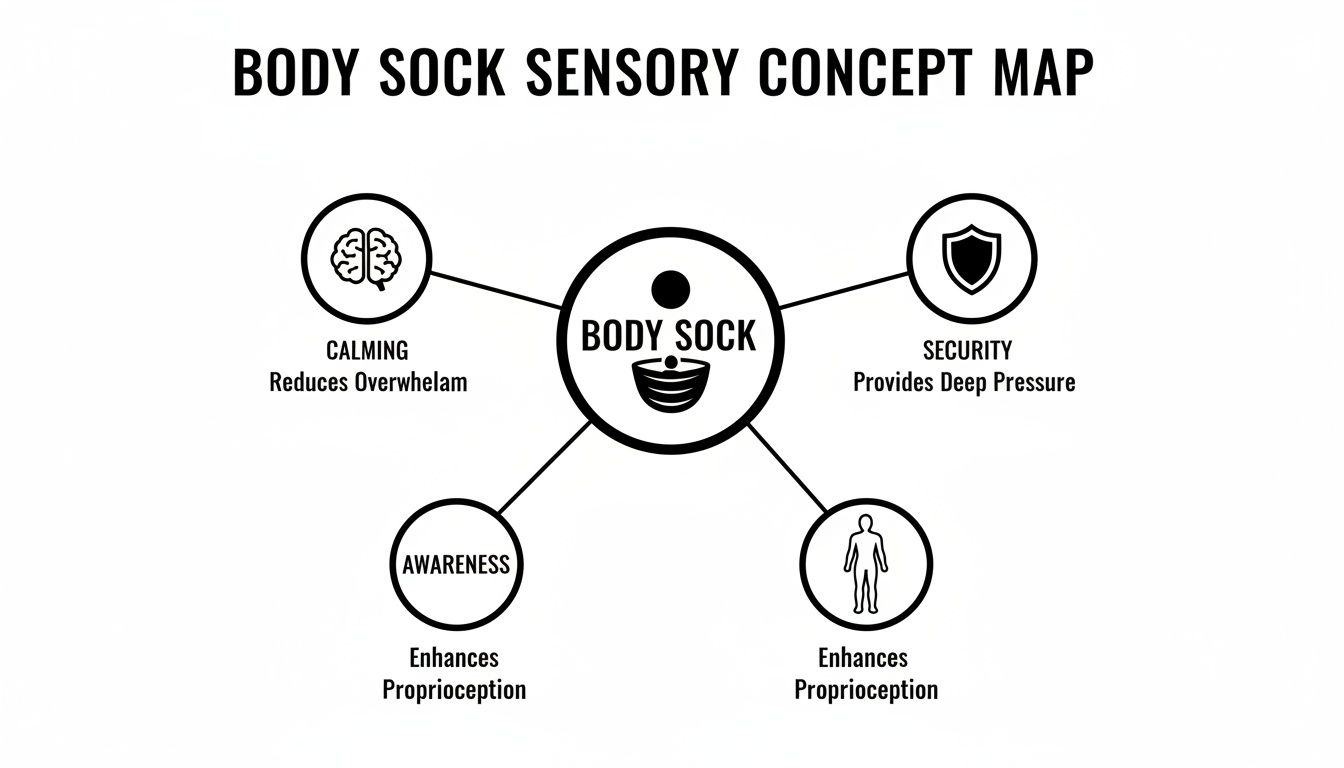
As you can see, the core function—providing pressure—branches out to support critical areas of self-regulation and body awareness.
From Pressure to Peace
By encouraging the brain to release these calming neurotransmitters, a body sock can help lower levels of cortisol (the stress hormone) while giving the happy chemicals a boost. The result? A powerful, non-invasive way to dial down stress, manage anxiety, and improve focus.
The benefits really work on two levels:
- Physical Grounding: The user feels more in tune with their body. This can reduce the need for sensory-seeking behaviours like crashing into furniture or constant fidgeting.
- Emotional Regulation: The biochemical shift helps create a calmer state of mind, making it easier to navigate overwhelming situations and big emotions.
Ultimately, the body sock isn't just a piece of fabric. It's a clever tool that works with the body's own sensory systems to help create a feeling of calm and control from the inside out.
Who Benefits Most From Using a Body Sock?
While pretty much anyone can enjoy the calming sensation of a body sock, some people find it absolutely life-changing. This simple piece of stretchy fabric often becomes a non-negotiable part of the day for those who experience the world a little differently. It’s the consistent, deep pressure it provides that makes it such a game-changer for so many.
For someone on the Autism Spectrum (ASD), a body sock can feel like a safe harbour in a stormy sea. It offers a welcome retreat from a world that can feel incredibly overwhelming, helping to dial down all that sensory noise. At the same time, it’s a brilliant way for sensory-seekers to get the deep physical feedback their bodies are constantly searching for, which can cut down on the need to crash into things or bump around.
Likewise, kids and adults with ADHD often discover that the gentle, all-over squeeze from a body sock helps to settle a restless body. That constant, calming input can make a real difference in reducing fidgeting and improving focus, making it a fantastic tool for homework time or any quiet activity. It’s like a physical anchor for a mind that's always on the go.
A Powerful Tool for Anxiety and Finding Calm
Looking beyond specific diagnoses, the body sock is an incredible resource for anyone who deals with anxiety. The feeling of being held securely has a powerful grounding effect that can help soothe stress and dial back feelings of panic. It’s a tangible sense of security you can access whenever you need it – almost like a portable hug.
Here in Australia, body socks have become a true staple for supporting neurodiverse children. This is particularly true for those with ASD, which affects about 1 in 70 children, according to the Australian Bureau of Statistics. This number really highlights the need for effective tools, like the ones we offer at Melbourne-based The Sensory Poodle, that deliver that crucial deep pressure to help calm the nervous system.
A body sock isn't about restriction; it's about freedom. It gives individuals the freedom to explore movement, the freedom to feel safe in their own skin, and the freedom to find calm in a world that can often feel too loud and fast.
Where You'll Find Body Socks in Action
One of the best things about a body sock is just how versatile it is. It slots easily into different routines and environments.
- In the Classroom: It’s the perfect addition to a sensory classroom or a calming corner. It offers students a quick and effective way to self-regulate and reset before they head back to their desk.
- At Home: A body sock can be a wonderful part of a bedtime routine, helping an active mind unwind and get ready for sleep. Curling up inside one with a book is a beautifully peaceful way to end the day.
- During Therapy: Occupational therapists use body socks all the time. They’re a fun, engaging tool for helping kids develop body awareness, motor planning skills, and strategies for managing their emotions.
For individuals on the autism spectrum, sensory tools like these are especially helpful for managing sensory overload and building self-regulation skills. This can be crucial in mitigating serious issues like autism burnout. By offering a reliable and safe way to meet their sensory needs, a body sock empowers users to move through their day with a little more confidence and a lot more calm.
Engaging Activities for Home and School
A sensory body sock is so much more than just a tool for settling down. Think of it as a launchpad for creative play that simultaneously builds a child's strength, coordination, and body awareness. To really get the most out of it, we need to look beyond quiet time and dive into joyful, purposeful movement. When we frame therapy as a game, it becomes a powerful and fun way for users to get the sensory input they crave.
The real magic happens when that deep pressure sensation from the body sock meets imaginative activities. This simple shift can turn a basic sensory tool into a thrilling adventure, which makes it much easier to introduce to a cautious child and far more effective for everyone.
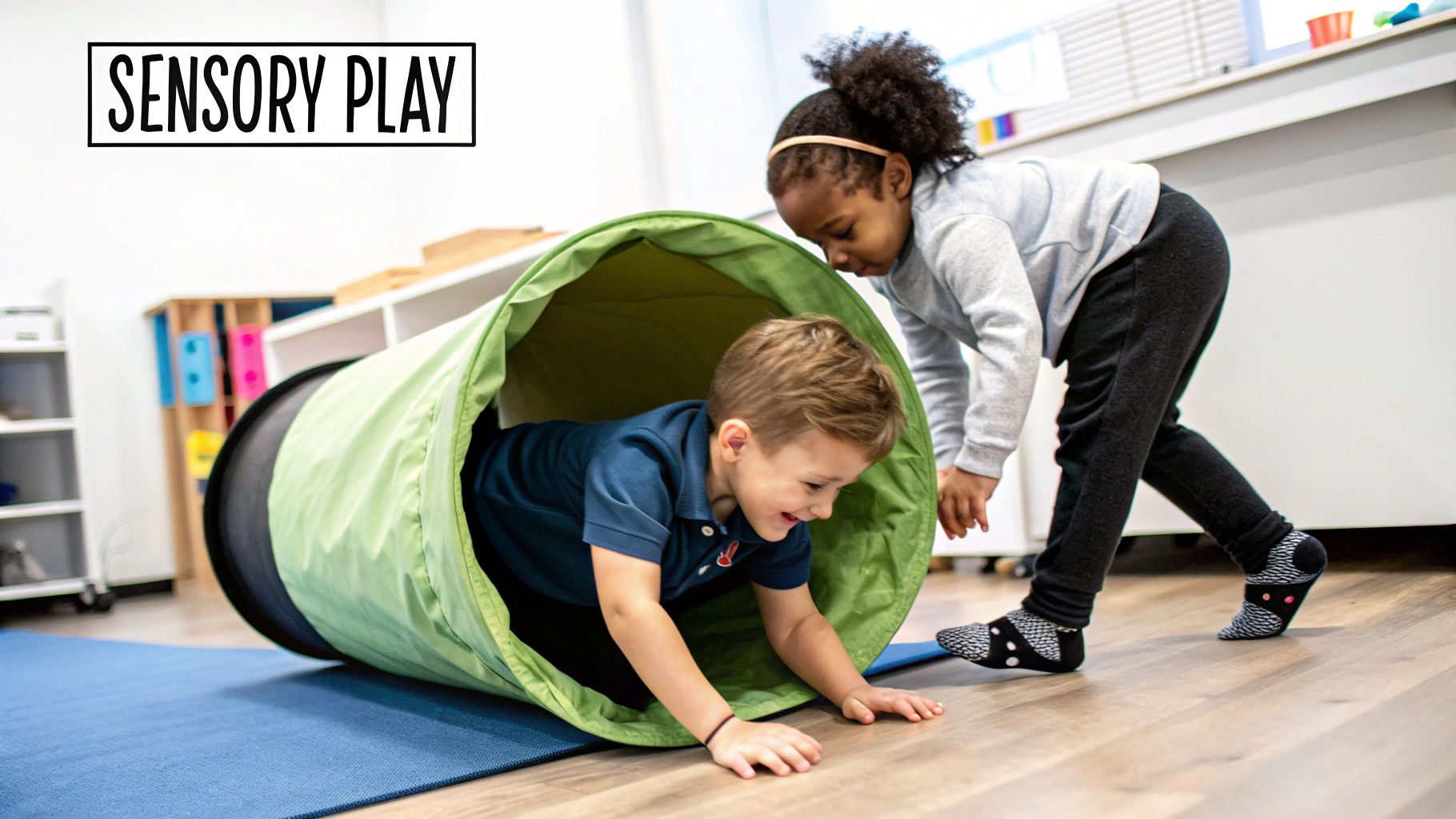
Fun and Functional Body Sock Ideas
At home, you can keep it simple. A body sock is perfect for gentle stretching while listening to music, or just for curling up with a book to hit the reset button. In a classroom setting, it’s a fantastic addition to a sensory space or calming corner. It gives students a quick, self-contained break to regulate their bodies before they head back to their desks.
Here are a few creative ways to get moving:
- Animal Walks: This one’s a classic for a reason. Ask kids to move like different animals—slither like a snake, waddle like a penguin, or hop like a kangaroo. Pushing against the fabric’s resistance is a brilliant way to build core strength without them even noticing.
- Shape Shifting: Call out different shapes—like a star, a ball, or a stick—and see if they can create them with their body inside the sock. It's a fantastic challenge for motor planning and figuring out where their body is in space.
- Secret Hideout: Sometimes, the best activity is no activity. The body sock can instantly become a private cave or cosy cocoon, offering a safe retreat from overwhelming sights and sounds. Combining it with a sensory tent can create an ultimate calming den.
The whole point is to make movement feel like play, not work. When a child is laughing and exploring inside the body sock, they are also developing crucial motor skills and regulating their nervous system—often without even realising it.
To spark your imagination, here are a few more ideas you can try at home, in the classroom, or during a therapy session.
Creative Body Sock Activities
| Activity | Main Benefit | Ideal Setting |
|---|---|---|
| Resistant Wall Pushes | Builds upper body strength and provides deep pressure. | Home or therapy clinic. |
| Yoga Poses | Enhances body awareness, balance, and focus. | Classroom or home. |
| Shadow Puppet Theatre | Encourages creativity and imaginative expression. | Any dimly lit room. |
| Tug-of-War (gentle) | Promotes cooperative play and proprioceptive input. | School playground or gym. |
These are just starting points, of course. The best activities will always be the ones that genuinely capture a child's interest.
Pairing with Other Sensory Tools
A body sock is brilliant on its own, but it really shines when combined with other sensory equipment. For an extra dose of "heavy work," try having a child push a large therapy ball across the room while they’re inside the sock. You can also use it on a soft, forgiving surface to encourage bigger, more dynamic movements safely. If you are putting together a sensory space, you can learn more about creating a safe landing zone with a sensory crash mat in our detailed guide.
While body socks deliver a unique kind of sensory feedback, it's always great to have a variety of screen-free activities that boost sensory development up your sleeve to enrich a child's day. For tactile input, consider adding some Kaiko Fidgets or popular Needohs to their sensory toolkit. The key is to offer a range of options that speak to their specific sensory needs. Whether it's through structured play or quiet relaxation, a body sock is an incredibly versatile tool that supports development in countless ways.
How to Choose the Right Body Sock
Picking the perfect body sock sensory tool is probably the most important step. It's what makes the difference between a tool that really works and one that just doesn't hit the mark. When you get it right, you'll find a sock that gives just the right amount of calming pressure while still allowing for joyful, unrestricted movement. It stops being just a piece of fabric and becomes a trusted therapeutic aid.
Getting this choice right is all about ensuring safety and unlocking the full therapeutic benefits. Let's walk through what you really need to look for.
Sizing for the Perfect Fit
I can't stress this enough: getting the size right is absolutely critical. You're aiming for a snug, comforting fit that delivers that consistent deep pressure without ever feeling constricting. If a body sock is too loose, it won’t provide enough sensory feedback to be effective. Go too small, and it becomes uncomfortable and even unsafe.
The best and most reliable way to choose a size is based on the user's height. This gives you the most accurate fit, making sure there’s plenty of room to stretch and move while still feeling that reassuring, all-over hug.
Always prioritise a height-based sizing chart over any recommendations based on age or weight. The sock should be roughly the same height as the user or just a little shorter to provide that gentle, effective resistance.
As a general rule of thumb, here’s what you can expect:
- Small: Typically for kids up to 100cm tall.
- Medium: Suited for users between 100cm and 120cm.
- Large: Designed for those from 120cm to 145cm.
- Extra Large: For anyone over 145cm tall.
Of course, always double-check the specific sizing chart for the brand you’re looking at, as measurements can differ slightly.
Material and Design Matter
The fabric quality makes a huge difference to comfort, durability, and the entire sensory experience. You want to look for a high-quality, four-way stretch Lycra. This kind of material is tough enough to handle lots of active play, but it’s also breathable, which is important to stop anyone from overheating inside.
Beyond the fabric itself, think about the design, especially how it closes. Most body socks use snaps, velcro, or sometimes just a simple opening. For younger children or anyone who might need to get out quickly, a wide, simple opening without any fiddly closures is usually the safest and easiest choice. It means the user can always get in and out on their own, whenever they want.
Caring for Your Body Sock
A little bit of proper care will go a long way in extending the life of your body sock, keeping it clean and ready for action. The good news is that most quality Lycra socks are machine washable.
- Washing: Just pop it in a gentle, cold water cycle.
- Drying: It’s always best to air dry it. This helps preserve the fabric’s elasticity. Try to avoid the machine dryer, as the high heat can damage the Lycra fibres over time.
By focusing on these three things—the right size, quality materials, and simple care—you'll be able to choose a body sock sensory tool that offers countless hours of calm, regulation, and good old-fashioned fun.
Using NDIS to Purchase a Body Sock in Australia
For many Aussie families, figuring out the National Disability Insurance Scheme (NDIS) can feel a bit overwhelming. But when it comes to getting funding for vital sensory tools like a body sock sensory aid, the process is often a lot more straightforward than it first appears. That’s because body socks are usually considered Assistive Technology (AT), making them a "reasonable and necessary" support for many participants.
With the right advice, you can use your NDIS plan to cover items that genuinely help with emotional regulation, sensory processing, and overall wellbeing. This makes getting your hands on helpful tools a much smoother ride.
How Funding Works for Sensory Tools
A body sock can usually be funded through the Consumables budget in your NDIS plan, as long as it clearly connects to your disability needs and goals. For self-managed and plan-managed participants, this is often a simple process.
Thankfully, Australia's NDIS framework has made sensory tools far more accessible. In fact, recent government data reveals a huge jump in funding, with over 120,000 paediatric participants now funded for various assistive technologies. This growth is fantastic for families looking for support from trusted suppliers like The Sensory Poodle, who offer NDIS-accepted body socks designed for deep pressure therapy. You can find more insights on how NDIS supports access to these tools on sensoryassist.com.au.
A handy tip: when you're ready to purchase, it’s a great idea to have a supporting letter from an allied health professional. An Occupational Therapist, for instance, can explain exactly how a body sock will help you or your child achieve specific NDIS goals. This documentation just makes everything clearer and ensures the purchase aligns perfectly with your plan.
Making a Purchase with The Sensory Poodle
We get it. Our goal is to make this process as easy and stress-free as possible for the entire NDIS community. We know how important it is to get the right tools into the right hands, without any unnecessary hassle.
Here’s how we can help you out:
- Easy Ordering: We provide NDIS-compliant invoices for self-managed participants, and we’re happy to work directly with your plan manager or support coordinator.
- Quotes for Schools and Clinics: We also make it simple for schools and therapy clinics. We can provide fast quotes and accept purchase orders to help you set up your sensory classrooms. For a deeper dive, check out our guide on sensory tools for autism.
- Fast Shipping: We don't mess around. All our orders are dispatched quickly from our Melbourne warehouse, so you get your items without a long wait.
Your Body Sock Questions, Answered
Got questions about body socks? You're not alone! Getting the details right is the key to making sure every session is safe, effective, and fun. Here are the answers to the questions we hear most often.
What Size Body Sock Should I Get?
This is probably the most important question, and the answer is simple: always choose a size based on the user's height, not their age or weight.
You're looking for a snug fit that provides a gentle, reassuring "hug" of pressure all over. It shouldn't be tight or restrictive in any way. The idea is to offer calming resistance while still allowing for total freedom of movement. If you're ever in doubt, check the height chart on the product page before you buy.
Are Body Socks Safe for Everyone?
Generally, yes! Body socks are incredibly safe tools when used as intended. That said, we always recommend adult supervision, particularly for younger children.
The golden rule of body sock safety is this: the user must be able to get in and out of it on their own, without any help. This is non-negotiable. It ensures they feel completely in control and can leave the moment they want to, which prevents any chance of them feeling trapped or overwhelmed.
How Long Should Someone Stay in a Body Sock?
There’s no magic number here, as it really comes down to the individual’s unique sensory needs and preferences. A good way to start is with short, focused sessions of around 5-10 minutes.
Pay close attention to how they respond. Are they visibly calmer? Are they engaged and exploring movement? Some people find immense comfort in longer, quiet sessions, while others get what they need from a quick, energetic burst of activity. Let their comfort and cues guide the duration.
At The Sensory Poodle, we're here to help you find the right tools to support regulation, exploration, and play. We've seen firsthand how the right sensory product can make a world of difference.
Explore our handpicked range of sensory products at SensoryPoodle.com.au