


A Parent's Guide to Fidget Spinners That Are Metal

Step away from the cheap plastic spinners that flooded the market years ago. Metal fidget spinners are in a league of their own—they’re high-quality sensory tools built for satisfying tactile feedback, with a satisfying weight and a seriously smooth spin. As a premier provider of sensory toys in Australia, we've seen first-hand how these tools can make a real difference.
Often crafted from durable materials like stainless steel, brass, or aluminium, these premium versions are all about longevity and performance. For many, their grounding effect is a game-changer for focusing the mind and calming anxiety.
Why Metal Fidget Spinners Are More Than Just Toys

Remember when fidget spinners first exploded onto the scene? It's easy to dismiss them as a fleeting fad, especially since the market was swamped with flimsy plastic versions that broke in a heartbeat. They felt more like throwaway distractions than genuine sensory supports.
But the conversation has changed, and a big part of that is thanks to the rise of high-quality metal fidget spinners.
These aren't the toys from the 2017 craze. They're precision-engineered tools designed to deliver a completely different sensory experience. The satisfying heft of a solid brass or stainless steel spinner provides a grounding, tangible feedback that plastic just can't match.
This move from plastic to premium materials isn't just a hunch; it's a recognised trend. After the initial fad cooled, a demand for higher-quality metal spinners emerged. Here in Australia and across the Asia-Pacific region—which accounts for over 36% of global fidget spinner revenue—users are actively seeking out durable, high-performing options made from materials like brass and stainless steel.
The Sensory Difference of Metal
The real magic of a metal spinner is its ability to support self-regulation and focus. A well-made bearing delivers a smooth, long-lasting spin, creating a predictable and mesmerising motion that can genuinely soothe an anxious or busy mind. Just like a weighted relaxing rabbit offers calming pressure, a metal spinner provides focused sensory input.
The weight and momentum of a metal spinner offer powerful proprioceptive input—that’s our sense of force and body position. This can be incredibly calming and organising for the nervous system, turning it from a simple toy into a tangible tool for managing sensory needs.
A Tool for Focus, Not Distraction
For so many people, especially within our neurodiverse community, fidgeting isn't a sign of distraction. It's an essential strategy for maintaining focus. A discreet metal spinner can be a quiet, effective way to channel that excess energy without disrupting others.
- Improved Concentration: The rhythmic, repetitive motion helps filter out overwhelming sensory noise, making it easier to concentrate on a task, whether that's listening in class or finishing a work project.
- Anxiety Reduction: In moments of stress or sensory overload, the predictable spin and the cool, smooth feel of the metal can act as a calming anchor, similar to how Warmies provide gentle comfort.
- Durable and Discreet: Unlike loud, clicky, or fragile plastic toys, a quality metal spinner is built to last. Many, like those from Kaiko Fidgets, are designed to be used quietly and unobtrusively.
If you're curious about how fidget tools can help with focus and self-regulation, especially for busy minds, it's worth exploring related strategies. This article, Mindfulness for ADHD: A Practical Guide to Taming a Busy Mind, offers some great insights.
By browsing our collection of metal fidgets, you can see for yourself how different these tools are from the plastic spinners of the past and find the right one to support your sensory needs.
How To Choose The Right Metal Fidget Spinner
Walking into the world of metal fidget spinners can feel a bit much at first. You're faced with all these different colours and shapes, but the real magic is in the sensory experience each one delivers. Honestly, choosing the right one has very little to do with how it looks; it's all about matching the tool to the user's specific sensory needs.
The weight, the material it's made from, and even the design all play a massive part in how the spinner feels and performs. For instance, a heavier brass spinner might be just the ticket for grounding a person and calming anxiety, while a feather-light aluminium model could be better for those quick, repetitive movements that help with focus. Getting your head around these differences is the key to picking a spinner that’s a genuine help, not just another forgotten gadget.
This simple decision path shows how a metal spinner can be a direct solution for achieving durable focus.

When focus is the end goal, the solid feel and satisfying feedback from a metal fidget spinner make it an incredibly reliable and effective tool.
Material and Weight: A Sensory Guide
The first thing you’ll want to think about is the material, because that directly controls the spinner's weight and the kind of tactile feedback it gives off. Each metal offers a completely unique experience.
I've put together this quick table to help you compare the most common materials at a glance.
Comparing Common Metal Fidget Spinner Materials
| Metal Type | Sensory Feel & Weight | Durability | Best For |
|---|---|---|---|
| Stainless Steel | Moderate weight, smooth, and balanced spin. | Excellent - very durable and rust-resistant. | An all-rounder. Great for daily use, providing consistent sensory feedback without being too heavy. Perfect for a classroom setting. |
| Brass | Heavy and substantial, with a warm, solid feel. | Very Good - can develop a patina over time. | Someone who needs strong proprioceptive input. The heft is grounding and can be very calming, similar to a small weighted object. |
| Aluminium | Lightweight and nimble, allowing for faster spins. | Good - can be prone to scratches or dents. | Users who prefer less weight and quicker, more active fidgeting. Ideal for keeping hands busy with fast, flicking motions. |
Think of it like choosing between a weighted blanket and a light throw. A heavier brass spinner offers that comforting, secure feeling, while a zippy aluminium one provides a more active, less intense form of engagement.
Design and Shape Considerations
Once you have a feel for the material, take a closer look at the spinner’s design. The shape, how many arms (or "wings") it has, and the overall ergonomics will completely change how it feels in the hand.
The goal is to find a spinner that feels like a natural extension of the hand, allowing for effortless, uninterrupted motion. The shape should be comfortable to hold and spin without requiring awkward finger placement or excessive thought.
Some designs are sleek and minimalist, perfect for discreet fidgeting. Others might have more intricate patterns that add another layer of tactile interest. There's really no single "best" design—it all comes down to personal preference and what works for the user's specific sensory profile.
Remember, selecting the right tool often depends on age and individual needs. For more guidance on that front, you can check out our tips for choosing the right sensory toys by age group.
Understanding The Engine Inside Your Spinner
Ever wondered what makes one metal fidget spinner glide silently for minutes on end, while another one rattles and stops after just a few seconds? It all comes down to a tiny, powerful component hidden at its core: the bearing.
Think of the bearing as the engine of the spinner. It's the critical mechanism that allows the arms to rotate freely around the centre. Just like a car's engine dictates its power and performance, the spinner's bearing is responsible for its spin time, noise level, and overall sensory feel.
Honestly, this small part is probably the single most important element in a high-quality spinner. Knowing a bit about how it works gives you the power to choose a tool that provides the exact sensory feedback you or your child needs.
Steel Bearings: The Reliable Classic
Most standard fidget spinners that are metal will have steel bearings inside. These are the workhorses of the spinner world—they're durable, reliable, and get the job done well.
A steel bearing usually gives off a satisfying, gentle whirring sound as it spins. For some people, this subtle auditory feedback is a huge part of the experience, helping them centre their focus and tune out distracting background noise. While they might not spin for quite as long as some other types, a good steel bearing offers a consistent and predictable feel that many users find incredibly grounding.
Ceramic Bearings: The Silent Performer
When silence is absolutely essential, ceramic bearings are the way to go. They are much harder and smoother than steel, which means there’s significantly less friction when they spin. This can be especially important in a sensory classroom.
This massive reduction in friction leads to two key benefits:
- Near-Silent Operation: The spin is often whisper-quiet. This makes them perfect for classrooms, the office, or any shared space where noise could be an issue.
- Longer Spin Times: With so little resistance, ceramic bearings can keep going for ages, sometimes for several minutes from just one flick. This extended, smooth motion can be mesmerising and deeply calming.
The choice between steel and ceramic isn't about which one is "better." It's about matching the sensory output to the person's needs. Someone who benefits from gentle auditory feedback might love a steel bearing, whereas a person needing a discreet tool for a quiet space will find a ceramic one much more suitable.
This is why paying attention to the bearing type is such a crucial step when you're looking for premium fidget spinners. It helps ensure the tool will actually be a welcome addition to a workspace, a school desk, or one of your calming corner ideas at home, providing the right support without causing a disruption.
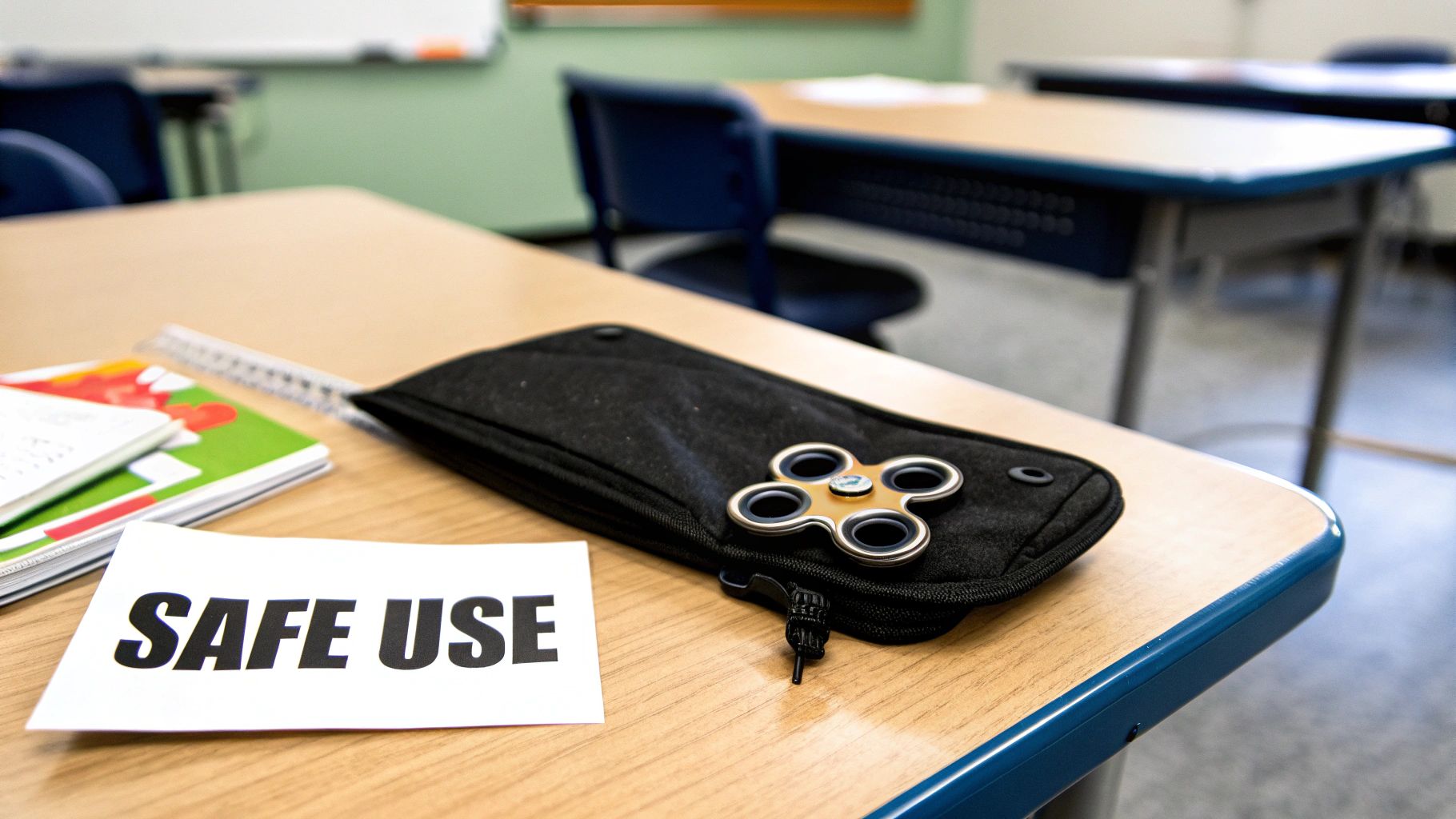
Using Metal Fidgets Safely In School And At Home
For parents, educators, and clinicians, switching to a more durable metal fidget spinner often starts an important conversation about how to use it responsibly. While their solid construction is a massive advantage, their weight and small parts mean that safety and clear boundaries are absolutely non-negotiable, both at home and in the classroom.
The first thing to consider is whether it's age-appropriate. Because of their heft and removable bits like bearing caps, most fidget spinners that are metal are a much better fit for older children, teenagers, and adults. Those small parts can be a serious choking hazard for little ones, so it's vital to always check the manufacturer’s recommended age before handing one over.
Setting Clear Boundaries For School Use
In a classroom, a fidget spinner needs to be a tool for focus, not a toy that causes distraction. Setting clear expectations right from the start helps make sure it actually supports learning for everyone involved. When you’re introducing a metal spinner at school, it’s always a good idea to have a chat with the teacher first.
Here are a few simple ground rules that can make all the difference:
- One-Hand Rule: The spinner should be easy to use with one hand, kept under the desk, leaving the other hand free for writing or typing.
- "Desk Only" Policy: The spinner stays on the desk or in the user's hand—it's never for throwing or spinning on other surfaces.
- Quiet Use: The whole point is silent focus. If the spinner starts making noise or becomes a visual distraction for others, it’s time to put it away. For those who need more sound protection, consider noise cancelling earmuffs for kids.
Talking about these boundaries helps the user understand their responsibility in making the tool work for them, not against them. For more in-depth strategies, you might find our guide on how to use fidget toys appropriately at school really useful.
Simple Cleaning And Maintenance Routines
Keeping a metal spinner in great shape is surprisingly easy and ensures it stays hygienic and works properly. A little bit of care goes a long way in keeping that smooth, satisfying spin alive.
A well-maintained spinner is a reliable sensory tool. Regular, simple cleaning prevents grit from building up in the bearing, which is what causes that dreaded rattling or shortened spin time.
Just follow these easy steps to keep it working perfectly:
- Wipe It Down: Grab a dry microfibre cloth to clean the body of the spinner. Steer clear of water or harsh cleaning chemicals, as any moisture can cause the bearing to rust.
- Clear The Bearing: If the spin starts to feel a bit gritty, a quick blast of compressed air can usually dislodge any dust or debris caught inside the bearing.
- Deep Clean (If Needed): For a more thorough clean, you can use a small amount of isopropyl alcohol directly on the bearing. Just make sure it has completely evaporated before you use the spinner again.
This focus on quality and durability isn't just a niche interest; it's reflected in the wider market. Even long after the initial craze faded, the global fidget spinner market was valued at around USD $0.915 billion in 2023. Premium metal options like stainless steel and aluminium were highlighted as leading segments, showing a lasting demand for well-made, effective sensory tools. You can dig into the numbers in this comprehensive market report on fidget spinners.
Building a Complete Sensory Toolkit
A fantastic metal fidget spinner can be a game-changer, but it’s really just one piece of a much larger puzzle. To truly support sensory needs, it helps to think less about a single item and more about curating a versatile and responsive sensory toolkit. The whole idea is to have a range of options on hand, so you can always grab the right support for any given moment or environment.
While a spinner is brilliant for keeping busy hands occupied and sharpening focus, it simply can’t meet every sensory need. Sometimes, what’s needed is the deep pressure of a weighted lap pad for calming, or some mesmerising visual stimulation to de-escalate, or even a completely different kind of tactile feedback. This is why building a broader toolkit, from weighted blankets to bubble tubes, is so crucial for providing well-rounded support at home, in the clinic, or in the classroom.
Expanding Beyond The Spin
Think of your sensory toolkit like a mechanic's toolbox. You wouldn't use a wrench for every single job, would you? Different situations call for different tools, each designed for a specific purpose. By gathering a thoughtful collection of sensory aids, you empower your child (or yourself!) with a variety of genuine strategies for self-regulation.
Here are a few complementary tools that work beautifully alongside a metal spinner:
- For Deep Pressure and Comfort: When anxiety is running high or a grounding presence is needed, weighted animal toys are incredible. That gentle, consistent pressure has a deeply calming effect on the nervous system, a lot like a comforting hug.
- For Visual Calming: A mesmerising Jellyfish Lamp is perfect for creating a soothing atmosphere in a quiet space or calm-down corner. The slow, graceful dance of the jellyfish provides a gentle, predictable visual input that can help an overwhelmed mind find its centre.
- For Tactile Exploration: Sometimes, the urge is for something squishy and satisfying to squeeze. A colourful collection of Needohs offers a completely different tactile experience from the smooth, cool feel of metal.
- For Vestibular Input: For those who really need to move their whole body to regulate, a deluxe sensory swing provides gentle swinging and swaying motions that are both organising and deeply calming.
A complete sensory toolkit isn't about having more toys; it's about having the right tools. It’s a proactive approach that ensures a person has agency over their own regulation by providing them with effective, appropriate choices.
Integrating metal fidget spinners into daily routines for focus is a fantastic step. For a more comprehensive look at well-being, you might also find it helpful to explore effective strategies to manage ADHD and Autism without medication.
By combining different types of support, you create a rich sensory environment that can adapt to changing needs on the fly. For more ideas on what to include in your collection, you might be interested in our guide to the best sensory tools for autism in Australia.
Got Questions About Metal Fidget Spinners? Let's Get Them Answered
It’s completely normal to have a few practical questions before adding a new tool to your sensory kit, and metal fidget spinners are no exception. We’ve pulled together the most common queries we hear from parents, educators, and clinicians to give you clear, straightforward answers. The goal is to help you feel confident you're making the right choice.
Will a Metal Fidget Spinner Be Too Loud for a Classroom?
Not necessarily! The sound a spinner makes actually comes down to its bearings, not the metal frame. This is one of those areas where quality really shines through.
Many high-quality spinners use ceramic bearings, which are often virtually silent. They’re a fantastic choice for quiet spaces like classrooms, libraries, or the office. On the other hand, some steel bearings produce a gentle, consistent whirring sound that many people find incredibly soothing and focusing.
When you're looking, keep an eye out for descriptions like "silent spin" or "ceramic bearings". Many of the spinners from Kaiko Fidgets, for instance, are designed specifically to be whisper-quiet for school and work.
How Do I Clean a Metal Fidget Spinner?
It's easier than you think! For general upkeep, a quick wipe-down of the body with a dry microfibre cloth is all it takes. The most important thing is to keep it away from water. Any moisture that gets into the bearing can cause it to rust, ruining that smooth, satisfying spin.
If the spin starts to feel a bit gritty, it’s usually just a bit of dust or pocket lint. A quick puff from a can of compressed air will often clear it right out. For a more thorough clean of the bearing itself, a tiny bit of isopropyl alcohol works wonders—just be absolutely sure it has evaporated completely before you use it again. A little care goes a long way.
What's the Best Metal Fidget Spinner for Anxiety?
This is a really personal choice, as what works best depends entirely on the individual. That said, a lot of people find that heavier spinners made from stainless steel or brass offer a more grounding and calming effect. The extra weight provides a noticeable proprioceptive input that can feel very organising for an overwhelmed nervous system.
The long, mesmerising spin of a heavier fidget spinner can create a focal point, helping to regulate breathing and quiet a busy mind. It acts as a physical anchor to the present moment.
The key is to find a weight and feel that is genuinely comforting to the person using it. We suggest having a look through our collection of metal fidgets to get a sense of the different options available.
Are Fidget Spinners That Are Metal Safe for Young Children?
Generally, most fidget spinners that are metal are a better fit for older kids, teens, and adults. Their weight and the small, removable parts—like the finger caps that cover the bearing—can be a choking hazard for younger children who are still inclined to put things in their mouths.
For little ones, it's always best to stick with fidgets and sensory tools designed specifically with their age and safety in mind, such as fun Numberblocks or engaging Bluey merchandise. Always double-check the manufacturer's recommended age before you buy. This ensures the tool isn't just helpful, but completely safe, too.
At The Sensory Poodle, we're all about finding just the right tools to support every person's unique sensory needs. Feel free to explore our full range of sensory toys and discover high-quality, effective aids chosen with care by our family for yours.