


Why a Fidget Spinner in Metal Is Your Ultimate Focus Tool

Remember the fidget spinner craze back in 2017? It felt like they were everywhere. While that initial plastic tsunami has long since receded, something much more refined and purposeful washed ashore in its wake: the fidget spinner in metal. This wasn't just a fleeting fad. It marked a real shift from a throwaway toy to a premium sensory tool built for serious performance and longevity.
The Enduring Appeal of Metal Fidget Spinners
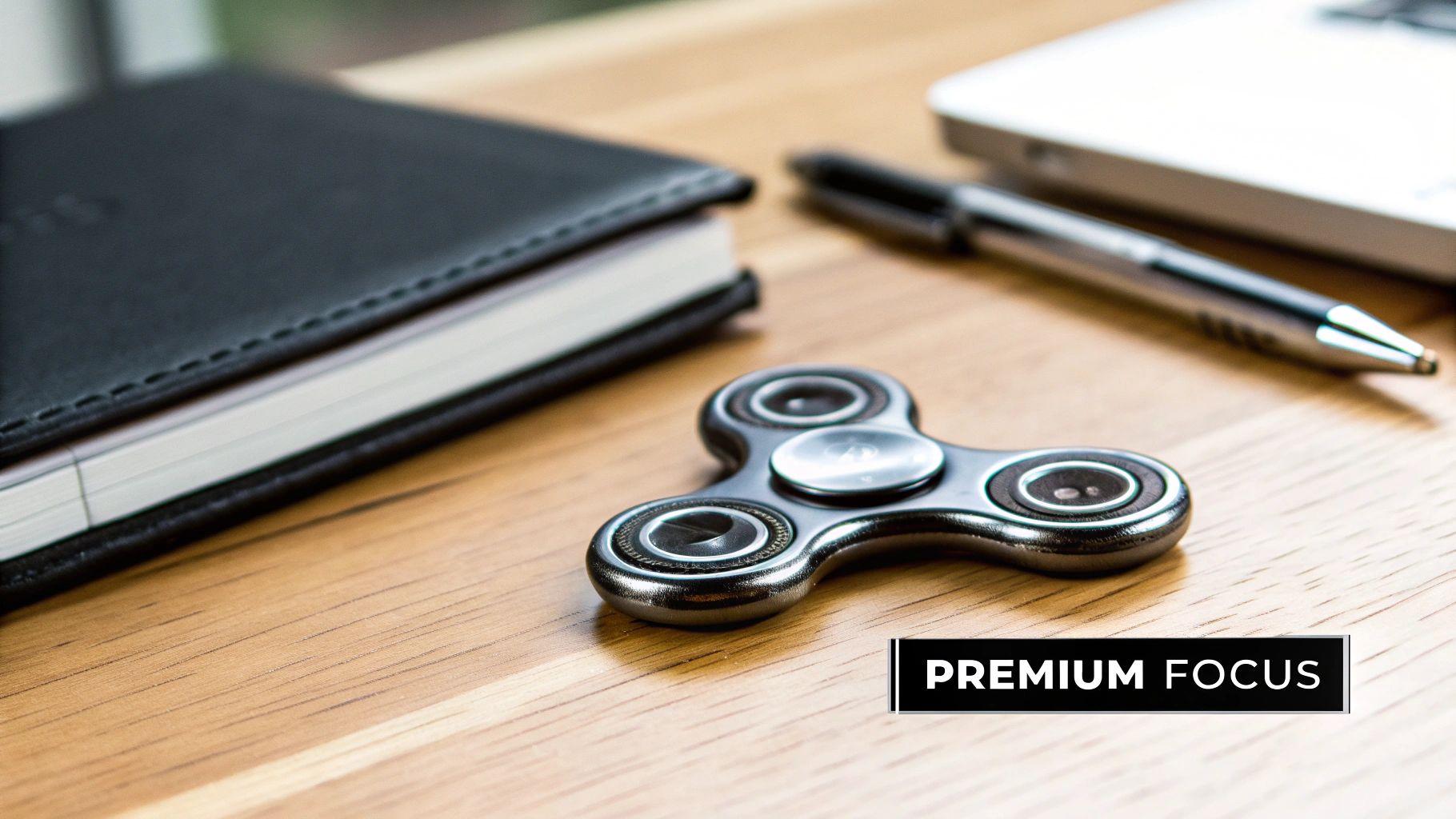
The first wave of spinners that flooded schools and offices was almost exclusively cheap plastic. They were bright, cheerful, and easy to get, but let's be honest—they often felt flimsy and lacked the satisfying feedback many people were actually searching for. Once the novelty wore off, a clear line was drawn in the sand between temporary toys and effective, long-lasting tools, much like the difference between a throwaway novelty and durable weighted animal toys.
This is where the fidget spinner in metal found its permanent place. Think of it like the difference between a disposable biro and a beautifully weighted fountain pen. Both get the job done, but the fountain pen offers a heft, feel, and smooth performance that transforms the simple act of writing. Metal spinners offer that same level of upgrade for fidgeting.
A Tool for Sustainable Focus
It didn't take long for enthusiasts, professionals, and therapists to catch on to the unique benefits of metal construction. The added weight, precision engineering, and tough materials turned the spinner from a passing distraction into a genuinely reliable focus aid. These high-quality metal fidgets aren't designed to be disposable; they're built to be a cornerstone of a personal sensory toolkit for years to come.
The real secret to their lasting popularity is simple: for so many of us, fidgeting isn't a distraction. It's a crucial part of how we concentrate. A well-made metal spinner channels that need into a quiet, controlled, and deeply satisfying motion.
The trend towards premium sensory tools is undeniable. People are no longer looking for a novelty item. They want effective, durable, and thoughtfully crafted fidgets that genuinely support their daily needs, whether at work, school, or home.
Why Metal Makes all the Difference
So, what is it about metal that makes it a cut above the rest? The key advantages come directly from the materials themselves. Unlike their plastic cousins, metal spinners deliver a completely different experience.
- Substantial Weight and Feel: That satisfying heft in your hand provides grounding proprioceptive input. This can be incredibly calming, helping to anchor a mind that tends to wander.
- Exceptional Durability: Crafted from materials like stainless steel, titanium, or brass, these spinners can handle drops and constant use without a scratch. They're a smart investment that outlasts countless plastic alternatives.
- Superior Spin Performance: When you pair a precision-machined body with a high-quality bearing, you get incredibly long, smooth, and whisper-quiet spins. They're mesmerising without being disruptive.
These qualities cement the metal fidget spinner's place not as a relic of a past trend, but as a top-tier choice among sensory toys in Australia. It’s a proven aid for focus and calm, perfectly at home in a professional office, a therapeutic setting like a sensory classroom, and anywhere else a moment of quiet concentration is needed.
Unpacking the Benefits of Weight and Spin
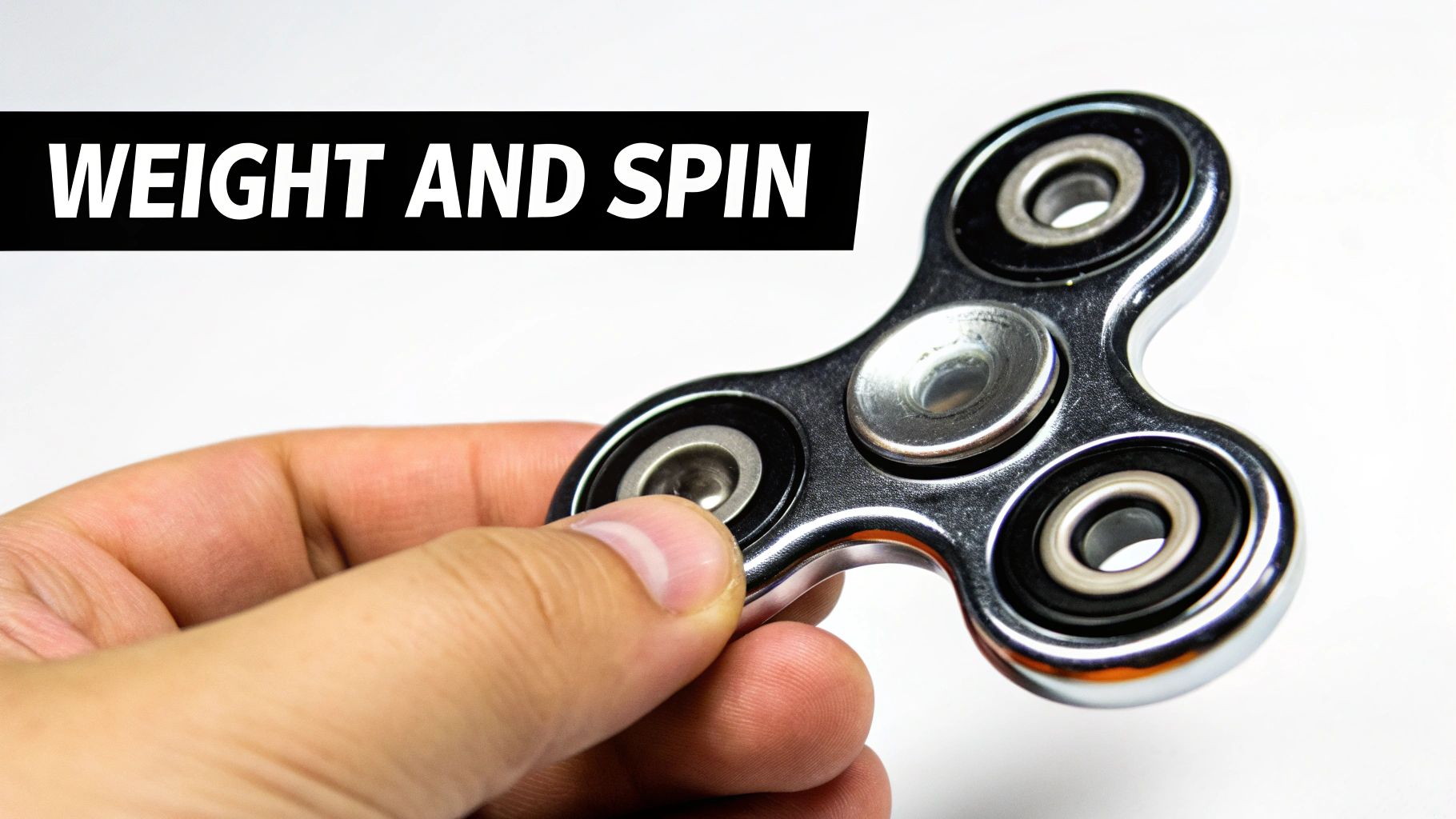
To really get why a metal fidget spinner is in a class of its own, you have to look past the sleek finish and get into how it actually works and feels. The gap between a quality metal spinner and a cheap plastic one isn't just about looks; it's about creating a genuinely better, more satisfying sensory experience. The weight, the durability, and the way it spins—these are the things that make metal the go-to for anyone serious about their fidget tools.
When plastic spinners first became a craze, they showed us there was a real need for these kinds of tactile tools. But the products themselves? They often missed the mark. They felt flimsy, made a racket, and broke easily. A metal spinner fixes all of that, taking a simple idea and turning it into a truly effective tool for finding focus and calm.
Satisfying Sensory Feedback
The very first thing you'll notice when you pick up a metal fidget spinner is its weight. This isn't just a minor detail—it's one of its most important therapeutic features. That heft, whether it's from stainless steel or titanium, gives you what’s known as proprioceptive input. It’s the feeling of pressure and weight that helps our brain get a sense of where our body is.
For anyone dealing with sensory processing differences, anxiety, or focus challenges, this grounding sensation can be incredibly calming. It’s like a physical anchor for a mind that tends to wander, gently pulling your attention back to the here and now. A feather-light plastic spinner just can't offer that same deep, satisfying feedback. The added weight makes every movement feel deliberate and controlled, helping you settle into a state of relaxed concentration. For a closer look at how different tools can provide this input, check out our guide on choosing the right sensory seeking toys.
Built to Last Through Daily Use
Another huge win for metal spinners is their durability. Let's be honest, fidgets are made to be used—and used a lot. They get dropped, shoved into pockets, and passed around. A plastic spinner might not even survive a single fall off a desk, leaving you with a cracked frame and loose bearings. They're basically disposable.
A metal fidget spinner, on the other hand, is built to go the distance.
- Resilience to Drops: Tough materials like stainless steel can handle daily knocks and tumbles without breaking a sweat.
- Wear Resistance: Metal holds up against the scratches, scuffs, and general wear that make plastic alternatives look tired and worn out fast.
- Long-Term Value: While they might cost a bit more upfront, a single metal spinner will easily outlast a whole bag of plastic ones. This makes it a smarter, more sustainable choice in the long run.
That robust construction means your sensory tool will be a reliable part of your kit for years, not just a few weeks.
Superior Spin Dynamics
The real magic of a spinner is, of course, the spin. And this is where metal models truly leave plastic in the dust. The combination of more mass and precision engineering creates a spin that's on another level entirely.
A well-balanced metal spinner doesn't just spin; it glides. The motion is smooth, stable, and almost silent, creating a mesmerising visual and tactile experience that promotes a state of flow and focus.
This incredible performance comes down to a few key things. The heavier weight of the metal arms generates more inertia, which means it can keep its momentum going for much, much longer. When you pair that with high-quality bearings (often ceramic or hybrid), you get minimal friction and ridiculously long spin times—often lasting for several minutes from just one flick.
This long, silent spin offers a predictable and non-disruptive way to channel restless energy, which is a must in a classroom, office, or any quiet space. The smooth gyroscopic force you feel in your hand is both soothing and engaging, delivering consistent sensory input without the distracting rattle and short, jerky spins you get from a cheap plastic toy.
How to Choose the Perfect Metal Fidget Spinner
Picking the right metal fidget spinner is less about finding the shiniest toy and more about discovering the perfect tool for your hands and mind. Unlike plastic spinners that are often here today, gone tomorrow, a quality metal spinner is an investment in focus and calm. To get it right, you need to consider a few key things: the metal it’s made from, the bearing that makes it spin, and the overall design.
Getting this choice right makes all the difference. It turns a simple distraction into a genuinely effective tool that can help you focus, settle your nerves, and find a moment of peace. Whether you need a subtle fidget for the office or a durable tool for a sensory kit, let’s break down what really matters.
Decoding the Metals
The body of the spinner is the foundation of its entire personality. The metal determines how heavy it feels, how tough it is, and even the subtle whirring sound it makes as it spins. Each material offers a completely different sensory experience, so there's no single "best" option—only what's best for you.
Here’s a quick rundown of the most popular choices:
- Stainless Steel: This is the classic all-rounder. Stainless steel has a satisfying heft that many people find incredibly grounding. It’s tough as nails, resists rust and scratches, and has a clean, modern look that just works.
- Titanium: If you love the idea of strength but prefer a lighter touch, titanium is your go-to. It’s remarkably strong but feels much lighter in the hand than steel, making it feel more nimble and less fatiguing during long fidgeting sessions.
- Brass and Copper: These metals are all about character and feel. They’re heavier than steel, offering a warm, dense weight that feels substantial and comforting. Over time, they develop a unique patina—a natural tarnish that tells the story of your use, making the spinner uniquely yours.
The World of Bearings
The bearing is the heart and soul of your fidget spinner. It’s the tiny engine inside that dictates the quality, length, and sound of every spin. While cheap spinners often use basic steel bearings that feel gritty and die out quickly, a premium bearing changes the game entirely.
A high-performance bearing is what gives a quality metal fidget spinner that almost magical, long-lasting rotation.
A great bearing doesn't just make a spinner spin longer; it makes the experience incredibly smooth and quiet. This is what transforms it from a noisy distraction into a silent, effective focus tool you can use anywhere, from a quiet library to a busy classroom.
You'll generally come across two main types:
- Full Ceramic Bearings: This is the top-shelf option for true enthusiasts. They’re exceptionally smooth, don't need any oil, and are resistant to corrosion. The result is the longest, quietest, and most satisfying spin you can get.
- Hybrid Ceramic Bearings: Offering a fantastic sweet spot between performance and price, these bearings use stainless steel races with ceramic balls. They're a massive step up from standard steel, giving you a much longer, smoother spin with very little noise.
Ergonomics and Design
Finally, the shape and size of the spinner—its ergonomics—determine how it actually feels in your hand. A spinner that doesn’t fit you properly will just feel awkward and clunky, defeating the whole purpose. The goal is to find a design that feels natural for one-handed flicks, table spins, or however you like to use it.
Think about the edges, the number of arms, and the overall size. Do you prefer sharp, defined lines or smooth, rounded curves that seem to melt into your palm? Do you like the stability of a classic three-armed spinner or the more compact feel of a two-armed "bar" design? There are no wrong answers here. It’s all about finding the tactile feedback that feels just right for you. Often, the best sensory tools are the ones that feel like they were made for your hands, like the thoughtfully designed range from Kaiko Fidgets.
To help you put it all together, this table breaks down the key differences between the materials and bearings.
Comparing Metal Fidget Spinner Materials and Bearings
This table compares common materials and bearing types for metal fidget spinners to help you choose the best option based on weight, durability, spin performance, and cost.
| Feature | Stainless Steel | Titanium | Brass/Copper | Ceramic Bearings | Steel Bearings |
|---|---|---|---|---|---|
| Weight | Heavy, substantial | Lightweight, nimble | Very heavy, dense | No impact on weight | No impact on weight |
| Durability | Very high | Extremely high | Medium (can scratch/dent) | Very high | Good |
| Feel | Solid, grounding | Agile, fast | Warm, comforting | Smoothest spin | Can be gritty |
| Spin Time | Good-Excellent | Good-Excellent | Good-Excellent | Longest | Shorter |
| Aesthetic | Modern, clean | Matte, technical | Vintage, patinas over time | N/A | N/A |
| Best For | Users seeking grounding weight and durability | Users wanting strength without the heft | Users who love a heavy feel and unique look | Performance seekers and silent operation | Budget-friendly or casual use |
Ultimately, choosing a spinner comes down to matching its characteristics to your personal preferences. Whether you prioritise a grounding weight, a silent spin, or a unique look, there's a perfect metal spinner out there waiting for you.
Keeping Your Spinner in Top Shape
Think of a quality metal fidget spinner as a finely tuned instrument. It's an investment in your focus, and just like any precision tool, a little care goes a long way. Keeping it clean ensures you get that smooth, satisfying spin every single time. It's really quite simple to do.
Over time, it's natural for dust, pocket lint, and oils from your hands to work their way into the spinner. This can make the spin feel a bit gritty, sound louder, or just not last as long. But don't worry, a quick clean is all it takes to bring it back to life.
A Quick Wipe-Down for the Body
The spinner's body—the part you hold—is the easiest to maintain. For robust materials like stainless steel, titanium, or brass, a simple wipe is usually enough to keep it looking sharp.
- Step 1: Grab a soft, microfibre cloth and gently buff away any fingerprints or dust.
- Step 2: If you've got some more stubborn grime, dampen the cloth just a little with water and wipe the surface down.
- Step 3: Make sure to dry it immediately and thoroughly with another clean, dry cloth. This prevents water spots, which can be particularly noticeable on metals like brass or copper.
Choosing the right material from the start influences how you'll care for your spinner down the track, as you can see below.
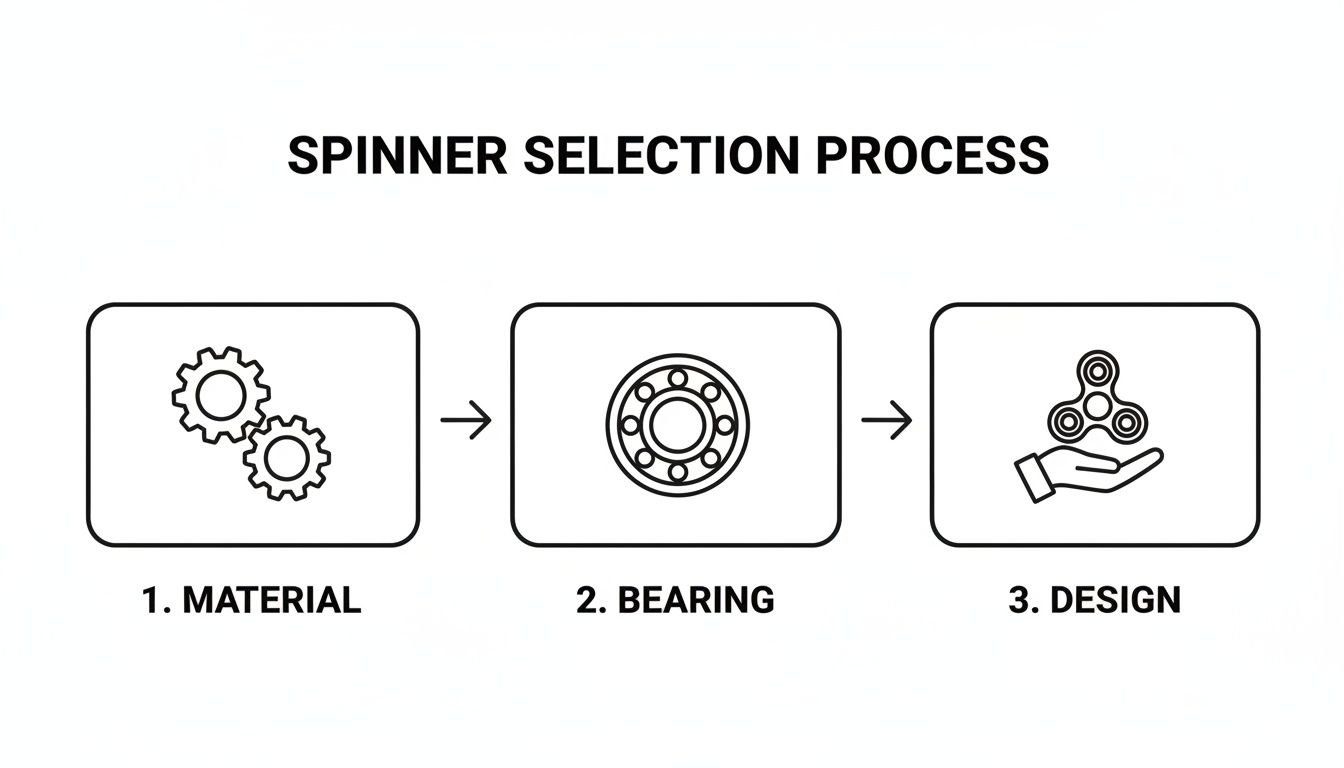
The material, bearing, and overall design are all connected, and thinking about them together helps you pick a spinner that perfectly suits your needs—and your willingness to maintain it.
Getting the Bearing Clean
The bearing is the heart and soul of your spinner. It's what makes the magic happen, so keeping it clean is the secret to getting those super long, whisper-quiet spins.
First, you’ll need to get the bearing out. Most high-quality spinners have caps that either unscrew or can be carefully popped off, allowing you to access and remove the bearing itself. Once it's out, you're ready to clean. If you're looking for more general tips, our guide on 4 tips for keeping sensory toys clean and hygienic has some great advice.
Heads Up: Whatever you do, never use water or oily lubricants like WD-40 on your bearing. Water will cause rust (especially in steel bearings), and oil is a magnet for even more dust and gunk, which will completely ruin the spin.
Here’s the best way to get it perfectly clean:
- Give It a Bath: Pop the bearing into a small jar or container and cover it with isopropyl alcohol (rubbing alcohol) or acetone. Let it soak for about 10-15 minutes.
- Swish it Around: Give the container a good swirl every now and then. This helps knock loose all the tiny bits of debris trapped inside.
- Dry it Out (Properly): Take the bearing out and place it on a paper towel. The absolute best way to dry it is with a can of compressed air—it blasts out any leftover cleaner and grit. No compressed air? Just let it air dry completely, but be patient, as this can take an hour or more.
- Put it Back Together: Once it's 100% dry, pop the bearing back into the spinner body, secure the caps, and give it a whirl. You should immediately notice it spinning faster, smoother, and longer.
Why Metal Fidgets Belong in a Sensory Classroom
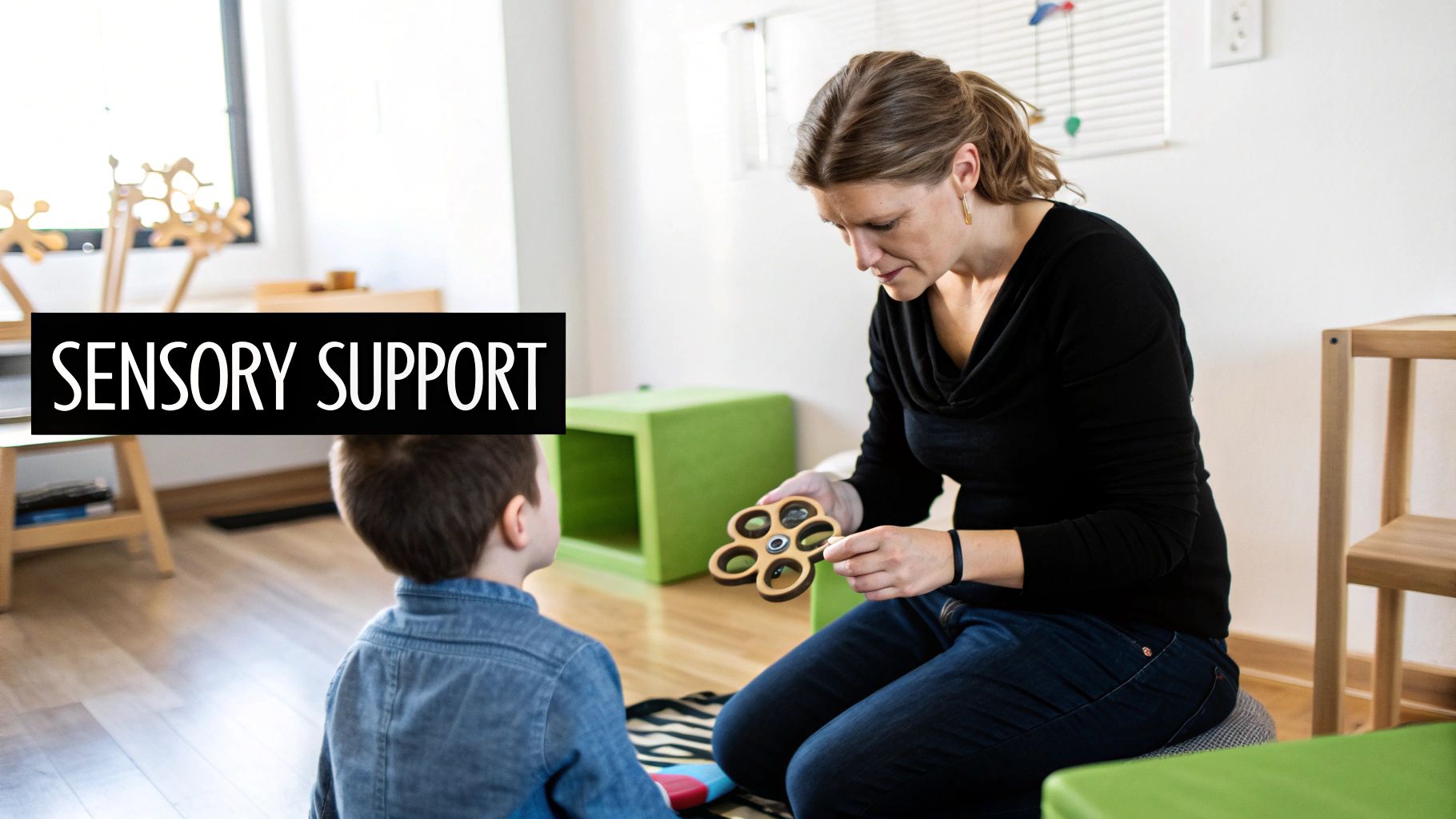
When you're trying to create a supportive therapeutic or educational space, having the right tools isn't just helpful—it's essential. While plastic fidgets are common, a high-quality fidget spinner in metal brings a completely different set of benefits to a sensory classroom or therapy session. This isn't just about keeping hands busy; it's about providing meaningful sensory input that genuinely supports learning and emotional regulation.
For many neurodiverse people, especially those with ADHD or on the autism spectrum, staying focused can feel like an uphill battle. The smooth, predictable spin of a metal fidget offers a quiet, non-disruptive way to channel that restless energy. It helps the brain filter out distracting background "noise" and tune into what’s important, whether that's listening to the teacher or working through a task.
There’s also the grounding effect of a metal spinner’s weight. That solid, tangible feeling in your hand provides proprioceptive feedback that can be incredibly calming, helping to ease anxiety and bring a sense of awareness back to the body—a cornerstone of self-regulation.
Integrating Metal Fidgets Effectively
Bringing a metal fidget spinner into a classroom or therapy setting needs a bit of thought. The idea is to make sure it remains a helpful tool, not a new distraction for the user or their peers.
- Set Clear Expectations: Right from the start, lay down some ground rules. Is it a "desk-only" tool? Is it for quiet work time? Clear guidelines help everyone.
- Emphasise Silent Use: One of the best things about a quality metal spinner is its whisper-quiet spin. Encourage users to spin it gently in their palm instead of trying to do tricks.
- Focus on Durability: Let's be honest, classrooms can be tough on equipment. Investing in durable, high-quality products from brands like Kaiko Fidgets means you're getting a tool that will stand up to daily use without falling apart.
By establishing these simple boundaries, educators and therapists can really unlock the spinner's potential as a powerful concentration aid.
A Reliable Tool for Sensory Regulation
The sheer consistency of a metal fidget spinner is one of its greatest therapeutic strengths. Unlike flimsy plastic versions that can feel different every time, its performance is reliable spin after spin. For individuals who thrive on routine and find unexpected sensory input jarring, this predictability is incredibly reassuring.
For many, the rhythmic, gyroscopic force of a spinning metal object is not just calming—it’s organising. It helps bring a sense of order to an overstimulated mind, creating a pocket of calm that makes learning and social interaction more accessible.
This idea—using quality materials for better sensory outcomes—is fundamental to providing effective support. A well-made tool delivers consistent, reliable feedback, which in turn builds trust and encourages kids to actually use it. Of course, the fidget is just one piece of the puzzle; exploring practical strategies for focusing with ADHD can offer a more holistic approach to support in the classroom.
At the end of the day, a metal fidget spinner is much more than a toy. It's a precision instrument designed to help manage sensory needs, dial down anxiety, and sharpen focus. Used the right way, it can become an indispensable part of a supportive learning environment, empowering students to regulate their bodies and engage more deeply with their education. For more ideas, check out our detailed article on the best fidget toys for school to see how different tools can support students in unique ways.
Australia's Growing Appetite for Quality Sensory Tools
Something has definitely shifted in the way we Aussies look at sensory tools. Gone are the days when a cheap, plastic novelty would do the trick. Now, there’s a real demand for well-made, effective, and durable products designed to support our mental wellbeing. This is exactly why a quality fidget spinner in metal isn't just a quirky gadget anymore; it’s a reflection of a much bigger movement.
This trend isn't just about toys for kids, either. We’re seeing adults in high-stress jobs, uni students staring down exams, and neurodiverse people from all walks of life looking for reliable tools to help them self-regulate. They’re after something that not only works but is also built to last—something that fits into their daily life without feeling like a flimsy distraction.
The Market is Screaming for Quality and Durability
The numbers tell a pretty clear story. In 2023, the Australian fidget spinner market pulled in a cool $11.407 million in sales, and metal spinners carved out a significant chunk of that pie thanks to their premium feel and toughness. This is all part of a larger trend across the Asia Pacific region, which made up over 36% of the entire global market.
By the middle of 2023, specialty shops in Sydney and Melbourne were reporting that metal spinners were outselling the plastic ones by up to 60%. This was partly fuelled by a surprising new customer: corporate wellness programs. You can dive deeper into these market insights on cognitivemarketresearch.com. It’s clear people are consciously choosing quality over quantity and stepping away from the throwaway culture that defined the first fidget craze.
A Practical Link to NDIS Support
This move towards better-quality sensory aids has real, practical benefits for a lot of Australian families, especially when it comes to the NDIS. A durable tool designed to help with focus and self-regulation, like a solid fidget spinner in metal, can often align with a person's National Disability Insurance Scheme (NDIS) goals.
When a sensory tool is identified as a necessary support to help an individual achieve their specific NDIS goals—like improving concentration in the classroom or managing anxiety in social situations—it may be claimable as low-cost assistive technology.
This connection is huge. It gives families a pathway to access higher-quality, more effective tools that genuinely make a difference. It reinforces that these items aren't just gadgets; they're essential aids that support wellbeing and daily function. Of course, it's always best to chat with your plan manager or support coordinator to make sure a specific purchase fits within your funded supports.
At the end of the day, the rise of premium sensory tools in Australia shows a much deeper appreciation for mental wellness and sensory needs. Choosing a quality fidget spinner in metal from a trusted local supplier like Sensory Poodle is more than just buying a product—it's an investment in a reliable, effective tool designed to provide genuine, long-lasting support.
Got Questions About Metal Fidget Spinners? Let's Get Them Answered.
Thinking about grabbing a fidget spinner in metal but still have a few things you're wondering about? You're definitely not the only one. As more people discover how good these premium spinners feel, some common questions tend to pop up.
Here are the straightforward answers you need, covering everything from safety to NDIS claims, so you can feel confident you're making the right choice.
Are Metal Fidget Spinners Safe for Kids?
For older kids, absolutely—as long as you choose a quality spinner and there's a bit of supervision. The key is to look for models with smooth, rounded edges and parts that are locked in tight. Always have a quick look at the manufacturer's age recommendation before buying.
If you’re sourcing one for a sensory classroom, going with trusted, safety-tested brands like Kaiko Fidgets is a smart move. It just gives you that peace of mind knowing you’ve got a reliable and appropriate tool in hand.
How Long Should a Good Metal Spinner Spin?
A well-made fidget spinner in metal should give you a solid spin time of 3 to 7 minutes. Some of the really high-end ones can even push past the 10-minute mark, which is pretty amazing. It all comes down to two things:
- The Weight: Heavier metals like stainless steel build up more momentum, which is what keeps it spinning for so long.
- The Bearing: A top-notch ceramic or hybrid bearing means less friction. Less friction equals a smoother, longer-lasting spin.
This long, hypnotic rotation is what provides that deeply satisfying sensory feedback, something the short, buzzy spins of a cheap plastic spinner just can't match.
Can a Fidget Spinner in Metal Be Claimed on an NDIS Plan?
There's a good chance it can be. A metal fidget spinner often falls into the category of low-cost assistive technology (AT) under an NDIS plan. This is especially likely if the spinner helps you or your child with goals related to managing sensory input, improving focus, or self-regulation.
Before you buy, it’s always best to have a chat with your plan manager, support coordinator, or occupational therapist. They're the experts who can confirm if a sensory tool, like one of our premium metal fidgets, lines up with your funded NDIS supports and goals.
Here at Sensory Poodle, we're all about sourcing high-quality, durable sensory tools that genuinely help. Take a look at our handpicked collection of metal fidgets and other sensory aids designed to support focus, calm, and regulation. Find the perfect addition to your sensory kit today at https://sensorypoodle.com.au.