


A Parent's Guide to Pen Grip Types

How a child holds their pencil is so much more than a simple habit—it’s a foundational fine motor skill that can shape their entire journey with writing. The different pen grip types they adopt have a direct impact on how clear their handwriting is, how comfortable they feel, and whether they can write for more than a few minutes without their hand getting tired.
Understanding how this skill develops is the key to giving them the right support at the right time.
Why Does a Pen Grip Matter So Much?
A child's grasp on a pencil naturally changes over time. It starts with that chunky, whole-fist grip we see in toddlers and, with practice, slowly refines into a much more nimble and controlled hold. This progression is a huge part of building the fine motor skills they need for school and, really, for life.
While many of us might have a picture of the "perfect" pencil grip in our minds, the real goal is to help a child develop a functional one.
A functional grip is simply any way of holding a pencil that lets a child write clearly and comfortably, without it causing pain or making them feel exhausted. The truth is, there isn't just one "correct" way to do it. Several different grip styles can lead to beautiful, neat handwriting. The focus should always be on what works for the child's individual hand anatomy and strength.
Knowing the difference between a grip that's still developing and one that's genuinely inefficient is what helps us figure out when a little extra support might be a good idea.
The Foundation of Good Handwriting
Think of an effective pen grip as the foundation for three crucial things: clear handwriting, physical comfort, and writing endurance. They're all connected. For example, a grip that feels comfortable prevents the hand from getting tired, which means a child can practise for longer and, in turn, improve their handwriting. Many fantastic sensory toys are actually designed to build the hand strength needed for these very skills.
The diagram below really breaks down the core benefits of getting that grip right.
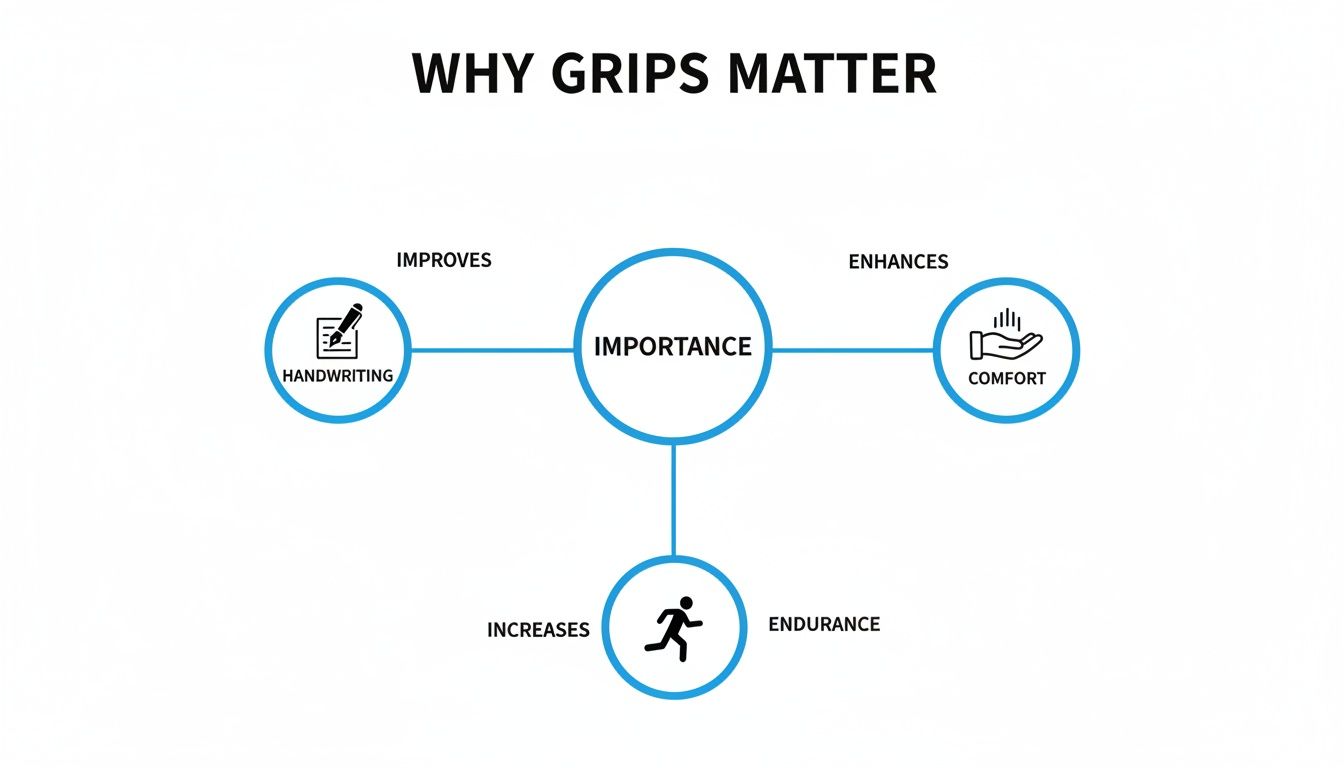
As you can see, a good hold directly supports legibility, stops those pesky hand cramps, and builds the stamina kids need for longer writing tasks in the classroom. When a child’s grip is inefficient, it can become a real roadblock, turning writing into a frustrating and exhausting chore.
A functional pen grip isn't about forcing every child into a single, ideal style. It’s about empowering them to write with confidence and ease, making sure the physical act of writing never gets in the way of their brilliant ideas.
By shifting our focus from perfection to function, we can better support each child’s unique developmental journey. This approach takes the pressure off and fosters a much more positive relationship with writing from an early age, setting them up for success long-term.
Exploring Effective and Functional Pen Grips
It’s easy to get hung up on the idea that there’s only one “correct” way to hold a pencil. But the truth is, what works is a lot more flexible than you might think. Several different grips can give a child the stability and control they need to write clearly, all without their small hands getting tired.
The real key is function, not form. If a grip lets the pencil move fluidly, produces legible writing, and doesn't cause any pain, it’s a good grip. Let's walk through the three most common functional grips that set children up for success.
The Dynamic Tripod Grip: The Classic Standard
This is the one most of us picture when we think of a "proper" pencil grip. The Dynamic Tripod Grip is often called the gold standard for a reason. Here, the pencil is held between the thumb and index finger, with the middle finger sitting just underneath to provide support. The ring and pinky fingers are curled up comfortably inside the palm.
Think of it like a sturdy, three-legged stool. The thumb and index finger are the "pinchers," guiding the pencil with small, precise movements that come right from the fingertips. The middle finger acts as the third leg, keeping the whole operation steady. It’s an efficient setup that gives a child great control and endurance, which is why it’s so often encouraged.
The Lateral Tripod Grip: A Powerful Variation
A very common and equally functional alternative is the Lateral Tripod Grip. It starts out almost the same as the dynamic tripod, but with one little twist: the thumb crosses over the pencil and rests against the side of the index finger. It might look a bit unconventional, but for many children, it works just as well.
This grip still uses three fingers to manage the pencil. The index and middle fingers are in charge of movement, while the thumb locks in to provide stability from the side. It creates a strong, secure hold that offers fantastic control and is just as effective at preventing hand fatigue. Plenty of people use this grip their entire lives without any problems at all.
The Dynamic Quadrupod Grip: Four-Fingered Support
Another highly functional grip you'll often see is the Dynamic Quadrupod Grip. As the name hints, this one brings four fingers into the action. The pencil is held by the thumb, index, and middle fingers, and the whole group rests on top of the ring finger. The pinky just tucks in neatly beside it.
You can think of this as adding an extra cushion of support. For some kids, particularly those still building up their finger strength, using three fingers to pinch the pencil feels much more stable and controlled. This grip allows for the exact same fluid, finger-driven movements as the tripod grips, making it a brilliant option for comfortable and clear handwriting.
The most important thing to remember is that there’s no single “best” grip for every child. Whether they naturally fall into a tripod or quadrupod style, what really matters is that the grip is dynamic—meaning the movement comes from the fingers—and that it allows them to write without strain.
Recognising these different but equally effective pen grip types helps us focus on what’s truly important. We want to nurture a comfortable and sustainable writing habit that lets a child’s ideas flow freely onto the page. From a classic tripod to a four-fingered hold, the end goal is always confident, pain-free writing.
Spotting Inefficient Pen Grips and What They Mean for Writing
Not all ways of holding a pencil are created equal. While a good, functional grip lets the fingers make tiny, precise movements for writing, some grips force the bigger muscles in the wrist and arm to do all the heavy lifting. This can make writing a tiring, frustrating experience for kids.
Learning to spot these less efficient holds is the first step toward gently guiding them to something more comfortable.
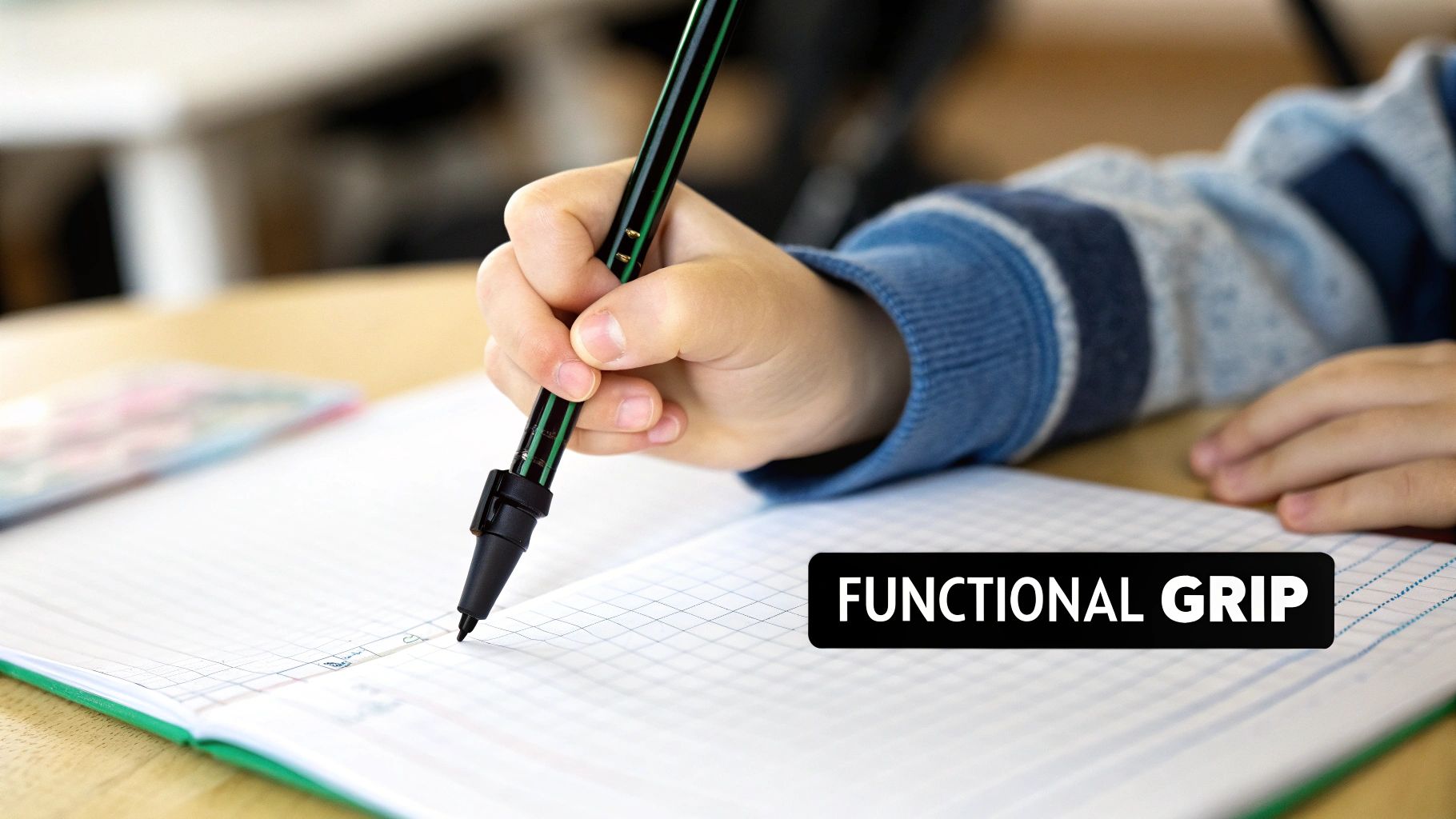
It’s worth remembering that many of these are just a normal phase of development. But if a child holds onto them as they get older, they can start to cause real trouble in the classroom.
Common Immature Pen Grips
While every child is different, a few common immature grips tend to show up again and again. Knowing what they look like and how they work makes them much easier to spot.
- Thumb Wrap Grip: You'll see the thumb wrapped tightly over the top of the index finger, sometimes hiding it completely. This is often a child's way of trying to get more control, but it actually locks the fingers in place, making it hard to write smoothly.
- Digital Pronate Grip: Think of how someone might hold a dagger or a screwdriver. The pencil is held in the palm with all the fingers curled around it, and the index finger often points straight down the shaft. All the writing movement comes from the shoulder and elbow, which is exhausting and not very precise.
- Thumb Tuck Grip: This one is a close cousin to the thumb wrap, but here the thumb gets tucked underneath the index finger. It’s another attempt to create stability that, unfortunately, just restricts the fingers' ability to move.
- Fisted Grip (Palmar Grasp): This is the classic toddler grip where the pencil is clutched in a closed fist. It’s a perfectly normal developmental stage for a one-year-old, but if it sticks around into school age, it becomes a problem because it relies on whole-arm movements to write.
The Flow-On Effect on Writing and Learning
When a child consistently uses one of these less efficient grips, the impact can show up in a few different ways. The goal here isn't to worry, but to understand the signs so you know when a child might need a little extra support.
An inefficient pen grip isn't a sign of laziness or a lack of trying. It's often a clever compensation for underdeveloped hand strength or fine motor skills. Getting to the root cause is always more effective than just correcting the hold itself.
The common results of a tiring grip often include:
- Messy or illegible handwriting: Without that fine finger control, forming letters neatly and consistently is a real struggle.
- Slow writing speed: Moving your whole arm to write is much slower than using the nimble, quick muscles in your fingers.
- Hand fatigue and pain: You might hear complaints that their hand hurts or see them stop writing to shake it out. They may also press down incredibly hard on the paper to get more feedback.
- Task avoidance: When something is physically hard, you avoid it. A child might start to resist homework or any classroom activity that involves writing.
Catching these signs early means you can introduce simple, play-based activities that build the foundational skills needed for a more comfortable and sustainable writing style. Sometimes, all it takes are a few clever adjustments or tools from a sensory classroom collection to make a world of difference.
How a Child's Pencil Grip Naturally Develops
Watching a child’s pencil grip evolve is a bit like watching them learn to walk. First come the wobbly, whole-body movements, and slowly, over time, that effort becomes more refined, controlled, and efficient. This progression is a natural journey, and each stage plays a vital role in building the strength and coordination needed for fluent handwriting.
Knowing what this developmental map looks like helps parents and teachers understand what’s typical for a child's age, so we can support them without rushing the process.
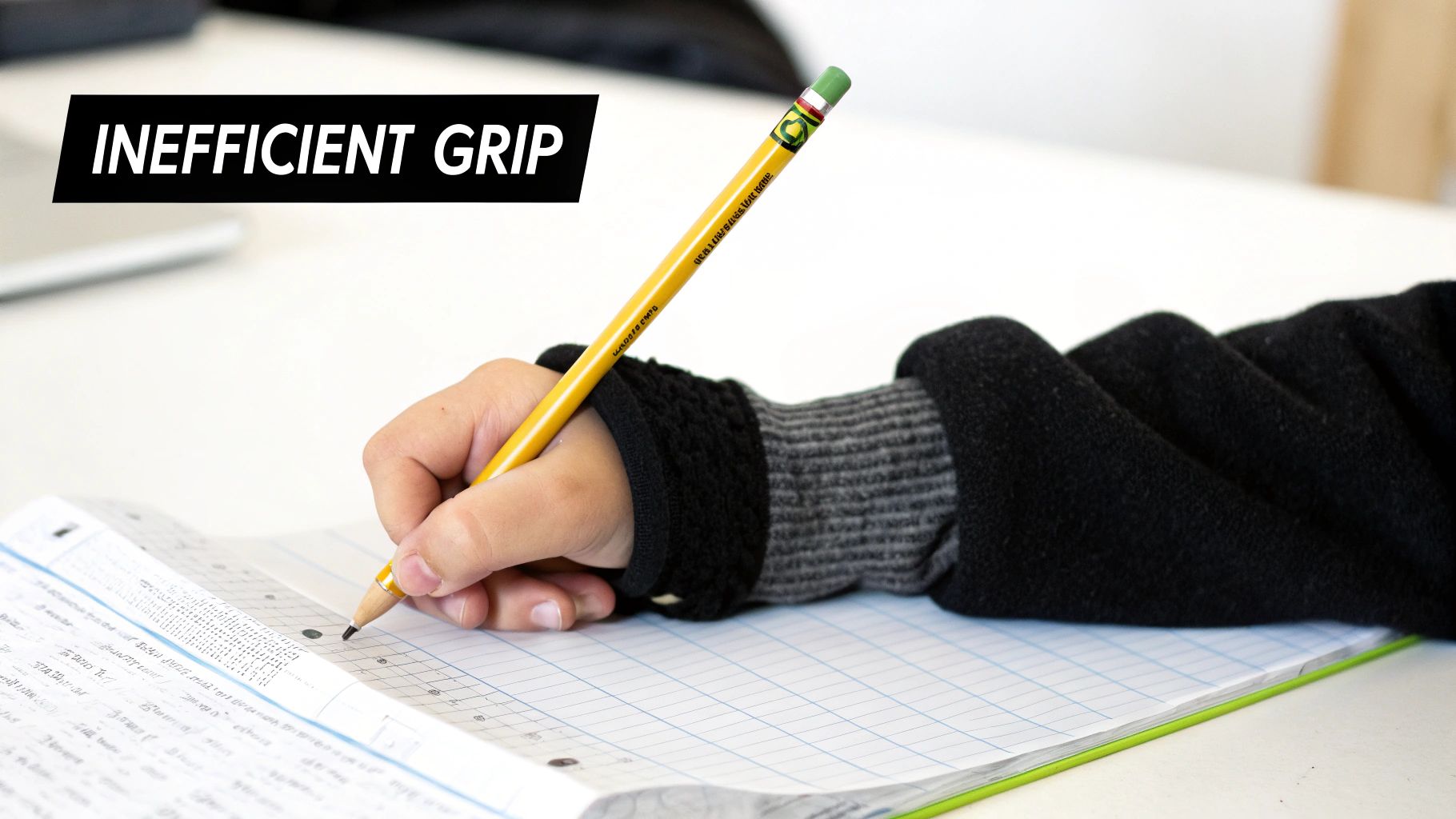
It all starts with big movements and a whole lot of enthusiasm. These early grips are crucial milestones, not habits that need fixing.
From a Whole-Hand Grasp to Fingertip Control
The journey begins with the large muscles of the shoulder and arm doing all the work, gradually shifting the effort down to the small, precise muscles in the hand and fingers. It’s a step-by-step building process.
-
Palmar Supinate Grasp (12-18 months): Think of this as the "dagger" grip. A toddler will clutch a crayon in their fist with their thumb pointed up, using their whole arm from the shoulder to make big, sweeping marks.
-
Digital Pronate Grasp (2-3 years): Now, you'll see the fingers start to point down towards the paper. The grip is still mostly in the palm, but it’s a sign that the brain is figuring out how to direct the tool more intentionally. Movement still comes from the elbow.
-
Static Tripod or Quadrupod Grasp (3-4 years): This is a huge leap! The child now holds the pencil with three or four fingers, looking much closer to a "grown-up" grip. The key difference is that the fingers stay stiff and move as a single unit, with the wrist and forearm creating the marks.
The Final Step: A Dynamic Grip Emerges
This is where everything clicks. The small muscles in the hand finally take the lead, allowing for the fluid, intricate movements needed for writing letters and numbers. This shift is what ultimately makes handwriting neat, fast, and far less tiring.
A child's grip development is a marathon, not a sprint. Each stage, no matter how clumsy it looks, is a necessary workout for the hands, strengthening muscles and improving dexterity for the next step.
By the time they are between 4 and 6 years old, most children settle into a Dynamic Tripod or Quadrupod Grip. In this mature stage, the pencil is controlled by the fingertips, not the whole hand. This allows for small, precise movements while the wrist stays stable and the arm is relaxed. To learn more about building these foundational skills, check out our guide on school readiness activities.
Understanding this natural progression helps us avoid stressing over a grasp that is perfectly normal for a child's age. Instead, we can focus on what truly helps: encouraging plenty of fine motor play that builds hand strength and prepares them for a lifetime of comfortable writing.
How to Support and Improve a Developing Pen Grip
Seeing a child struggle to hold their pencil can be a worry for any parent or teacher. The good news is that with a bit of gentle guidance and some fun, play-based activities, you can make a huge difference. The trick is to know when to step in and to focus on solutions that feel more like play than work.
So, when does a pen grip become a problem? There are a few key signs to watch for. Is the child writing much more slowly than their classmates? Do they frequently complain about a sore hand, or stop to shake out their fingers? Another classic signal is pressing down so hard that the paper rips or the pencil lead constantly snaps. These are all clues that their grip might be inefficient and causing them physical strain.
Building Strength Through Play
Before you jump in to correct their grip, which can often lead to frustration, it's far more effective to build up the small muscles in their hands and fingers. This approach creates the essential foundation they need for a functional grip to develop more naturally. And the best part? The kids just think they're playing.
Here are a few simple, powerful ideas:
- Squeezing and Squishing: Playing with therapy putty or play-dough is a fantastic workout for the hands, building both strength and dexterity.
- Spray Bottle Fun: Handing a child a spray bottle to water the plants or for water play gets them squeezing repetitively, which strengthens the whole hand.
- Building with Blocks: Things like LEGO, Magnatiles, or even colourful Numberblocks are brilliant for encouraging a precise pincer grasp and fine-tuning motor control.
Introducing Supportive Tools
Sometimes, all a child needs is a little tactile feedback to help them figure out their finger placement. This is where pencil grips can be an incredibly useful tool. Instead of forcing their hand into a certain position, a good grip gently guides their fingers into a more comfortable and efficient hold.
They essentially work by giving physical cues, helping a child feel where their fingers should be resting. Over time, this makes a functional grip feel more intuitive. These aids are a specialised part of the writing instruments market and are becoming more common as Australian schools recognise their value. For more on the market trends, you can read the full research on the topic.
For ongoing issues that are really getting in the way of a child's learning, it might be worth exploring an essential guide to SEN support for more structured help. But for many kids, a simple aid like a pack of colourful pencil finger grips provides just the right nudge to make writing a much more positive experience.
The Bigger Picture for Australian Schools and Homes
When we talk about the different ways kids hold their pencils, we're really touching on a much larger conversation about childhood development right here in Australia. With the national curriculum placing such a strong emphasis on writing skills, there's a real and growing need for tools that can genuinely support our young learners. This focus influences everything, from the resources teachers choose for their classrooms to what parents look for to help with homework.
It’s this educational landscape that's fuelling the demand for quality writing tools and ergonomic aids. We're seeing more and more products designed to make the physical act of writing more comfortable and less of a chore. This isn't just a trend; it shows that parents and educators are more invested than ever in giving children the best possible start.
The Growing Market for Supportive Tools
Australia's market for writing instruments is set to expand quite a bit. It’s interesting to note that New South Wales is currently the biggest player, making up around 31% of the total market share. This isn't too surprising given the state's large population and its extensive education system.
This growth points to a broader, welcome shift: we’re finally recognising just how important ergonomics are in the early years. By helping children build good writing habits from the very beginning—and giving them the right tools to do so—we're directly supporting the national goal of raising a generation of skilled and confident communicators. It’s a proactive approach that benefits everyone involved.
The increasing availability of supportive aids, from simple pencil grips to ergonomic pens, empowers parents and educators to address potential writing challenges early on, preventing them from becoming significant hurdles to learning.
Creating an Inclusive Learning Environment
Helping a child become a confident writer is a team effort. It involves teachers, parents, and educational support staff all working together. Understanding how each person contributes is the key to creating a learning space where every child feels encouraged. For those curious about the specifics of these support roles, this Teaching Assistant Course Guide provides some fantastic context on how learning is fostered in Australian schools.
At the end of the day, whether it's at the kitchen table or in the classroom, the goal is simple: remove any physical barriers that get in the way of learning. When a child is comfortable and their pen isn't fighting against them, they can finally focus on what truly matters—getting their brilliant ideas down on paper. Sometimes, other tools like fidgets can also help with concentration; our guide on using fidget toys for school has some practical tips. By championing good ergonomics and making sure supportive resources are available, we give every child the chance to express themselves clearly and with confidence.
Got Questions About Pen Grips? We’ve Got Answers.
When it comes to how your child holds a pencil, it's easy to get bogged down with questions. Parents and teachers often wonder what’s “normal” and when to be concerned. Let’s clear up some of the most common queries so you can feel confident in supporting your little writer.
Is the Tripod Grip Really the Only "Correct" Way?
Not at all. It's a common misconception that the dynamic tripod grip is the only one to aim for. While it’s often held up as the gold standard, it’s certainly not the only effective way to write.
In reality, both the lateral tripod and the dynamic quadrupod grips are perfectly functional. They allow for clear, comfortable, and efficient handwriting without putting extra strain on the hand. The true test of a good grip isn't how it looks, but how it works. If your child can write legibly without getting sore or tired, their grip is doing its job just fine. Function should always trump forcing a textbook-perfect style.
When Should My Child Have a Mature Grip?
Most kids settle into a mature, dynamic grip somewhere between the ages of 5 and 6, but this isn’t a hard and fast rule. Every child’s development is unique, so it’s completely normal for younger kids to still be figuring things out. It's a gradual journey, not a race.
Instead of focusing on age, it's far more helpful to encourage activities that build up those little hand muscles.
- Squishing and rolling modelling dough or putty is fantastic for strengthening hands.
- Cutting with scissors for craft projects hones hand-eye coordination.
- Building with small blocks or LEGO helps develop a precise pincer grasp.
These kinds of play naturally lay the groundwork for a strong, stable pencil grip to emerge when the time is right.
Can an Awkward Grip Lead to Other Issues?
Yes, an inefficient grip can definitely cause a few knock-on effects beyond just messy handwriting. It can often lead to physical discomfort in the fingers, hand, and even the wrist. When writing hurts, a child will naturally start to avoid it, which can create a lot of frustration around schoolwork.
An inefficient grip isn't just a physical issue; it can impact a child's confidence and engagement in school. Addressing the discomfort can help restore a more positive attitude toward learning and writing.
Over time, this reluctance can start to impact their academic performance and how they feel about themselves as a learner.
Do Those Special Pencil Grips Actually Work?
They can be incredibly helpful, but think of them as one tool in a bigger toolkit. A pencil grip provides tactile feedback, physically guiding a child's fingers into a more comfortable and efficient position. This helps a functional grip feel more natural and intuitive.
However, they work best when combined with activities that build the underlying hand strength we talked about earlier. If you’re thinking about trying one but aren't sure where to start, an occupational therapist can give you a professional recommendation based on your child's specific needs.
At Sensory Poodle, we know that having the right tools can make a world of difference in a child's developmental journey. Explore our wide range of supportive aids and sensory toys australia designed to build fine motor skills and make learning a more comfortable, positive experience.