


A Parent's Guide to Chewing Sensory Toys in Australia

At their core, chewing sensory toys are simply safe, purpose-built tools for kids who need to chew. What might look like just a habit is often a really effective way for them to self-regulate, calm their nervous system, and even sharpen their focus. This is especially true for neurodiverse children. As a leading provider of sensory toys in Australia, we understand the importance of finding the right tools to support your child.
Why Some Children Need to Chew

Ever seen a child gnawing on their shirt collar, a pencil top, or their own knuckles and wondered why? It's easy to mistake it for a "bad habit," but it's usually something much more important: a natural and powerful way for them to find balance. This behaviour is a type of "stimming" (self-stimulatory behaviour), and it's all about getting vital sensory feedback to the brain.
It’s really not so different from what adults do. Think about when you might jiggle your leg in a long meeting, click a pen when you're deep in thought, or even bite your nails when you’re a bit stressed. We all use small, repetitive actions to manage our energy levels and filter out distractions. For many kids, chewing does exactly the same job.
The Power of Oral Sensory Input
Our mouths are incredibly sensitive, packed with nerve endings that send a constant stream of information to the brain. The act of chewing delivers deep pressure to the jaw muscles, a specific type of sensory information called proprioceptive input. This input has a uniquely powerful organising and calming effect on the entire nervous system.
For a child feeling overwhelmed or anxious, this sensation can be incredibly grounding. On the flip side, for a child who is feeling under-stimulated and struggling to pay attention, it can actually help them become more alert. Chewing helps them find that "just-right" state where they can function at their best.
The sensory feedback from chewing simply feels good. It can calm an overwhelmed child or wake up an under-stimulated one. That’s why giving them a safe outlet to chew on is so critical for their overall wellbeing.
Who Benefits from Chewing
While most toddlers explore the world with their mouths, a strong need to chew that continues past those early years often points to a deeper sensory need. This is particularly common in children with:
- Sensory Processing Disorder (SPD): Kids with SPD can struggle to process and react to sensory information from their environment. Chewing helps them manage all that incoming stimulation, a topic we explore more in our guide on what is sensory processing disorder.
- Autism Spectrum Disorder (ASD): Stimming is a classic characteristic of autism, and seeking oral sensory input through chewing is one of its most common forms.
- Attention-Deficit/Hyperactivity Disorder (ADHD): The steady, repetitive rhythm of chewing can work wonders for improving focus and blocking out distracting sights and sounds, making it easier to stick with a task.
- Anxiety: For an anxious child, chewing can be a fantastic grounding technique. It provides a physical release that helps soothe stress and ease worried feelings.
Understanding these sensory drivers is a game-changer for parents. For those looking for more resources, this advice for parents of children with autism offers some great insights. When we recognise chewing as a need, we can stop trying to eliminate a "problem" and start providing the right support with safe, effective chewing sensory toys.
The Real Benefits of Oral Sensory Tools
Far from being just simple distractions, chewing sensory toys are powerful therapeutic tools that occupational therapists across Australia often recommend. They offer real, science-backed benefits that can help a child navigate their world with more comfort and confidence.
The secret behind how they work is a concept called proprioception. When a child chews, the action puts deep, steady pressure on their jaw muscles. This pressure sends calming signals straight to the brain, which helps to regulate their entire nervous system. Just like weighted blankets provide deep pressure to the body, chew toys focus this calming input on the jaw.
Think of it as a natural reset button. For a child who is right on the edge of sensory overload, this kind of input can be incredibly grounding. It can help head off meltdowns and dial down feelings of anxiety.
From Overwhelmed to Organised
Picture a child in a noisy, bright shopping centre. The overwhelming sights and sounds can quickly become too much to handle. A discreet chewable necklace gives them a safe and accessible way to manage that stress, providing the exact sensory input they need to stay calm and centred.
The benefits are just as clear in a classroom. A student who’s struggling to concentrate on a tricky lesson might find that a pencil topper chew helps them filter out all the background distractions. The simple, rhythmic motion of chewing can genuinely improve their focus and help them see a task through to the end.
These tools can turn challenging situations into manageable ones by giving children a way to control their own sensory environment.
Tangible Outcomes for Everyday Life
Using oral sensory tools often leads to measurable improvements in a child's day-to-day life. The biggest wins usually include:
- Improved Emotional Regulation: By giving them an outlet for stress and anxiety, chew toys help children manage big feelings before they become completely overwhelming. Creating a calming corner with these tools can be highly effective.
- Better Concentration: The calming proprioceptive input helps to quiet a "busy" brain, making it easier to focus at school and during homework.
- Increased Participation: When a child feels more regulated, they're in a much better position to engage in social situations, family activities, and community outings.
This changes the way we see chewing sensory toys. They’re not just objects, but essential aids that actively support a child’s sensory wellbeing and development. They aren’t a crutch, but a key that can unlock a child's potential to thrive.
A chew toy isn't just about stopping a child from chewing on their clothes. It's about giving them a safe and effective strategy to self-soothe, focus, and feel in control of their own body.
A Growing Recognition in Australia
The value of these tools is being recognised more and more by parents, therapists, and even national support systems. Here in Australia, both personal preference and official frameworks are highlighting the importance of sensory-based support. One market analysis found that 67% of parents and therapists preferred using tools like sensory toys to support children with developmental needs. This preference is backed by policy, too. Australian funding bodies like the NDIS include sensory supports in their evidence reviews for early intervention, creating clear pathways for families to access these vital resources. You can read more about Australian market trends and consumer insights on imarcgroup.com.
This widespread acceptance just confirms what many families have known for years: giving a child a safe way to meet their oral sensory need is a fundamental part of a holistic support plan. Just as some children benefit from weighted animal toys for deep pressure or Kaiko Fidgets for their hands, chewables are a specialised tool for a very specific and important need.
How to Choose the Right Chew Toy for Your Child
Picking the perfect chewing sensory toy isn't just about grabbing a fun shape or your child's favourite colour. The right choice is absolutely critical for safety, durability, and most importantly, making sure your child will actually use it. With so many options out there, it’s easy to feel a bit overwhelmed. Let's walk through the key things to consider, so you can confidently find a tool that truly supports your child's unique sensory needs.
Start With Your Child's Chewing Style
First things first: you need to honestly assess your child's chewing intensity. Think of it like a handshake—some are gentle, while others are incredibly firm. Kids are the same with chewing, and figuring out their style is the foundation for every other decision.
Are they a light nibbler, someone who mostly mouths or gently sucks on things? Or are they a power chewer, able to work through objects with some serious force? Being realistic about this will stop you from buying a toy that’s too soft and breaks in a day, or one that’s too tough and doesn't provide any satisfying sensory feedback.
Match Durability to Their Intensity
Once you know their chewing style, you can match it to the right durability level. Most reputable brands make this pretty easy by categorising their chewables.
- Light Chewers: These kids often do best with softer, more flexible materials. They don’t need something indestructible, so you can focus more on interesting textures and shapes that give them gentle oral feedback.
- Moderate Chewers: This is a very common group. You’ll want to look for products that are firm but still have a bit of "give." They need to be strong enough to handle regular use without showing signs of wear and tear right away.
- Aggressive Chewers: For these kids, safety is everything. They need the toughest, most resilient toys you can find—often labelled "extra tough" or "strong." These are typically made from dense, highly durable silicone designed to withstand intense jaw pressure.
This decision tree clearly shows the calming benefit a child gets from having the right chew toy when they need it.
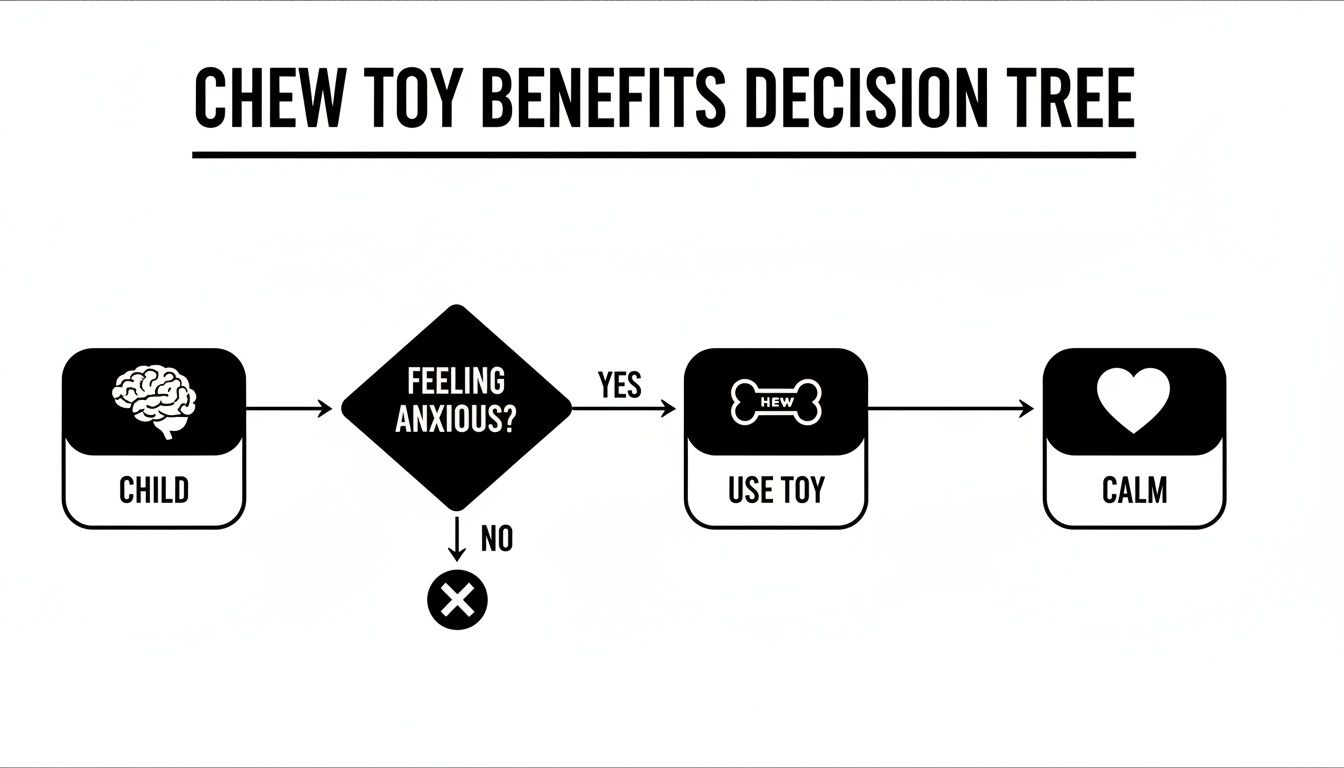
It's a simple but powerful idea: when a child's sensory needs are met with the right tool, like a chew toy, the result is a calmer, more regulated state.
Find the Right Design for Home, School, and Everywhere in Between
The best chewing sensory toy is one your child feels comfortable using wherever they are. The design plays a massive role in this. Think about where and when they’ll need it most—at their school desk, on the playground, or chilling out at home?
For school or public outings, discretion is often the name of the game. That’s where wearable solutions really shine:
- Chewable Necklaces: These look like cool jewellery but have a safe, chewable pendant. They’re perfect for giving kids immediate and discreet access to sensory input without drawing unwanted attention.
- Bracelet Chews: Just like necklaces, these offer a wearable option that’s always on hand (literally!).
- Pencil Toppers: A classroom classic for a reason. These fit onto the end of pencils or pens, safely redirecting chewing away from the writing tool itself.
At home, you have a bit more freedom. Handheld fidgets can be a fantastic choice, as they often have extra textures, bumps, and ridges. These engage both the mouth and the hands, creating a multi-sensory experience that can be incredibly grounding.
To help you narrow down the options, this table breaks down the best choices for different chewing styles and situations.
Matching Chew Toys to Chewing Styles and Needs
| Chewing Style | Recommended Toy Type | Material/Durability | Best For... | Example Product Type |
|---|---|---|---|---|
| Light/Gentle | Soft and pliable with interesting textures | Softer-grade silicone | Gentle oral exploration, mouthing, sucking for comfort | Textured bracelet, soft pendant necklace |
| Moderate | Firm but with some "give" | Mid-grade, durable silicone | Everyday use, focused chewing during tasks like homework | Firm pencil topper, moderately tough chew stick |
| Aggressive/Heavy | Extra tough and resilient | Highest-grade, dense silicone | Intense jaw pressure, redirecting destructive chewing | "Extra Tough" chew necklaces, solid handheld chews |
| Discreet/On-the-Go | Wearable or easily hidden | Varies by intensity | School, public outings, travel, immediate access | Chewable necklace/bracelet, zipper pulls, pencil toppers |
| Tactile/Fidgety | Handheld with multiple textures | Varies by intensity | Home use, therapy sessions, engaging hands and mouth | Textured "brick" or "T" shaped chews |
Choosing the right chew toy means finding a tool that fits seamlessly into your child's daily life, providing support exactly when and where they need it. For more detailed guidance, check out our comprehensive article on tips for choosing the right sensory toys by age group.
Remember, the goal is to provide a tool that integrates seamlessly into their day. If a child feels self-conscious about their chew toy, they are far less likely to use it when they need it most.
By taking a moment to think about your child’s chewing strength and daily routines, you can move past the guesswork. You’ll be making an informed choice that provides a safe, effective, and well-loved tool for self-regulation, ensuring your investment truly makes a positive difference.
Understanding Safety Standards for Chewable Toys
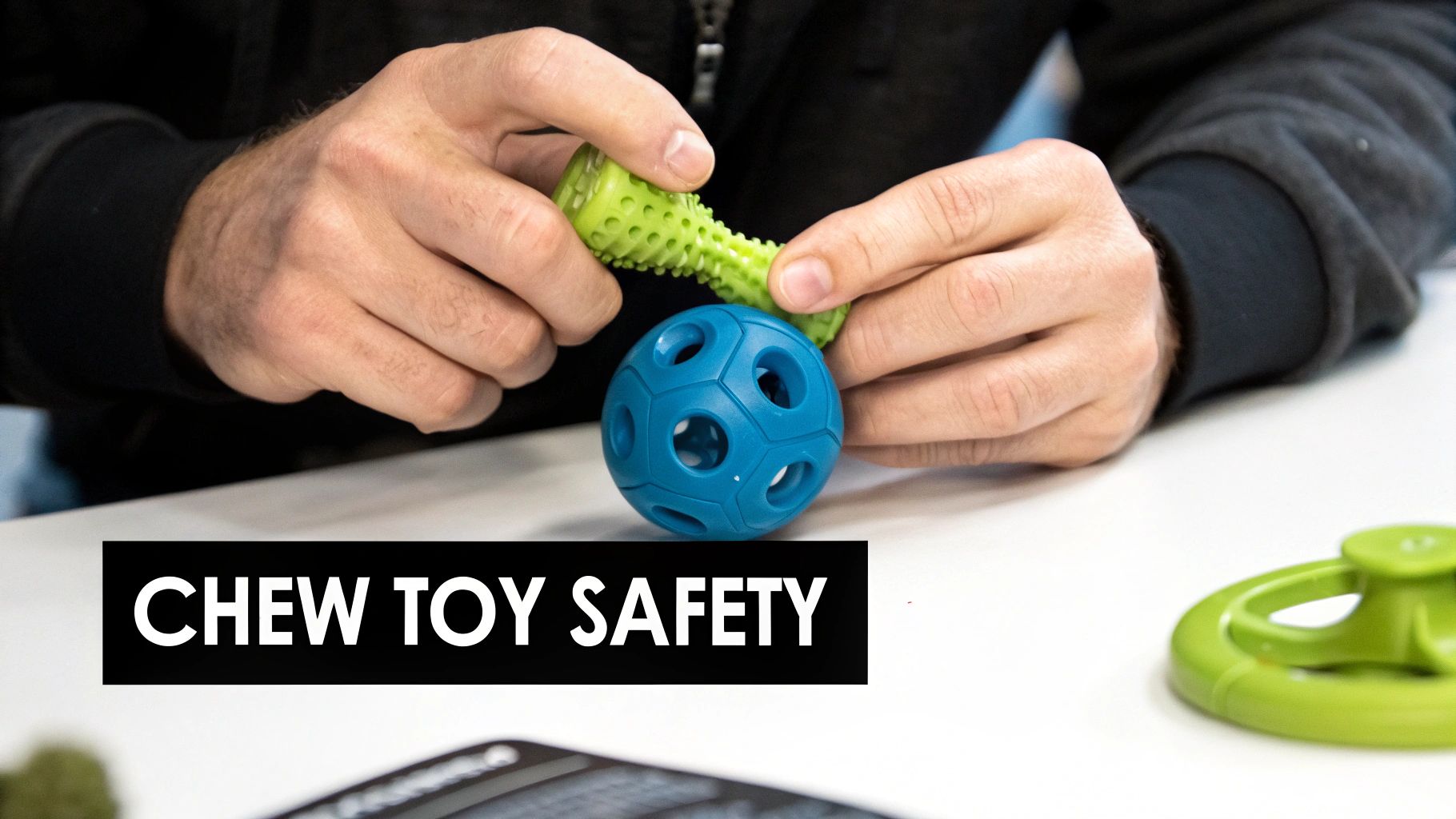
When a toy is specifically made to go into a child’s mouth, safety isn't just a feature—it's everything. For any parent, therapist, or teacher, getting a handle on what makes chewing sensory toys genuinely safe is the absolute first step. It goes far beyond just being tough; it's about the materials, the design, and the way you look after it.
The bedrock of a safe chew toy is what it's made from. It’s completely non-negotiable to choose products made from 100% food-grade, non-toxic silicone. This is the exact same high-quality stuff used to make baby bottle teats and many kitchen utensils, so you know it's free from nasty chemicals.
Always double-check that the product is clearly labelled as free from BPA, phthalates, lead, and PVC. These chemicals have no business being in a tool designed to provide safe oral sensory input.
Smart Design Features That Prevent Accidents
Beyond the material itself, the physical design of a chew toy plays a massive part in keeping things safe. There are two features in particular that are critical for avoiding common accidents.
First up, if you’re looking at a wearable chew like a necklace, a breakaway clasp is essential. This clever little mechanism is built to pop open when pulled on, which helps prevent any risk of strangulation if the necklace snags on something.
Second, try to find toys made from a single, solid piece of silicone. This simple design choice gets rid of the danger of small bits breaking off and becoming choking hazards. Toys with glued-on parts or multiple pieces fused together just introduce unnecessary risk, especially for kids who are aggressive chewers.
A well-designed chew toy anticipates potential risks. Features like breakaway clasps and single-piece construction aren't just extras; they are fundamental to creating a safe sensory experience for your child.
Keeping an Eye on Wear and Tear
Even the most durable chewing sensory toys aren't indestructible. Checking them regularly is a crucial part of keeping them safe. Before you hand the toy to your child each time, just give it a quick once-over.
Look for:
- Cracks or splits: Tiny fissures can harbour bacteria and could eventually lead to a piece breaking off.
- Thinning areas: Pay close attention to the parts that get chewed the most. If a spot looks stretched or worn down, it’s time to replace it.
- Signs of tearing: Give the toy a gentle pull to make sure its structure is still sound.
Arming yourself with this knowledge is key. When picking out any chewable toys, it helps to understand the general safety principles for all children's playthings. For instance, many of the same rules apply when Choosing the Best Educational Toys for Toddlers.
This intense focus on safety is pushing manufacturers to innovate, especially here in Australia. Market reports are showing strong growth for sensory toys, with a clear trend toward safety and sustainability. In fact, 46% of new sensory toy launches in 2024 have specifically focused on non-toxic materials and autism-friendly designs, which shows that companies are listening to what parents and carers want. By making informed choices, you can be confident that the tools your child relies on are always secure.
Weaving Chew Toys into Everyday Life
A chewing sensory toy works best when it's right there, ready to go the moment your child needs it. The real magic happens when you weave these tools into their daily routines, making them as normal and accessible as a favourite jumper or a comfy pair of shoes. The aim is to turn the chew toy into a trusted part of their personal toolkit for navigating the world, whether that’s at home, at school, or out on an adventure.
This all starts with making the tools easy to find. Just having them available in predictable spots can make a world of difference. Think about the parts of your child's day when they tend to get a bit overwhelmed or need to focus, and place their chewables strategically in those areas.
Creating Supportive Sensory Spaces at Home
Your home is the perfect practice ground for building positive connections with sensory tools. One of the best ways to do this is by setting up a dedicated 'calming corner' or sensory space. This doesn't have to be an entire room—a small, cosy nook in the living area or their bedroom works just as well.
Fill this space with things that help them regulate. A gentle sensory swing or a heavy Neptune Blanket can provide that soothing deep pressure, while a mesmerising Jellyfish Lamp offers some calming visual input. In this little haven, their chew toys should be kept in a special basket, presented as just another helpful tool alongside their other comforting items.
When you normalise chew toys in a calm, safe environment, you frame them as positive aids for self-regulation, not something to be hidden. This helps your child see them as a source of comfort and control.
Taking Sensory Support to School and Beyond
Getting chew toys into the school day just takes a bit of teamwork with your child's teachers. Kick things off with an open, positive chat with their teacher, explaining why your child uses a chewable and how it helps them concentrate. You'll often find that many teachers are already familiar with these tools and understand their role in creating an inclusive sensory classroom.
For the classroom, discreet options are usually the way to go:
- Pencil Toppers: A classic for a reason. They blend right into the school environment.
- Chewable Necklaces or Bracelets: These look like cool accessories but keep a sensory tool within easy reach.
- Zipper Pulls: Attach one to a jacket or backpack for subtle, on-the-go access.
For outings, long car rides, or appointments, it's a great idea to pack a small "sensory kit." You could include their favourite chewable, a few quiet Kaiko fidgets, and maybe a pair of noise-cancelling earmuffs for kids to help manage noisy or unpredictable places. Having this kit ready means you’re always prepared to offer support when they need it most.
Talking to Your Child About Their New Tool
The way you introduce a chew toy can completely shape how your child feels about it. The key is to have a positive, empowering chat that frames it as their own special helper for when things feel a bit much.
You could try saying something like, "You know how sometimes you chew on your shirt collar when you're thinking really hard? Well, this is a special tool made just for chewing that’s super strong and safe. It can help your body feel calm and your brain feel focused."
This is also the perfect time to set a few simple ground rules. Gently explain that the chew is just for their mouth and that it’s important to keep it clean. Reinforce that it's a tool to help them feel good, not just a regular toy. By including them in the conversation and respecting their ownership of it, you empower them to take charge of their own sensory needs, turning their chew toy into a trusted ally.
How to Clean and Maintain Your Sensory Chew Toys
Let’s be honest, anything that goes into a child's mouth needs to be kept clean. For chewing sensory toys, this is absolutely non-negotiable. The good news is that keeping them hygienic is actually pretty straightforward, and a simple routine will ensure these vital tools are always safe and ready for action.
Most quality chew toys, especially the ones made from food-grade silicone, are a breeze to clean. For everyday grime, a quick scrub in warm, soapy water does the trick. Just give it a good wash, rinse it well, and let it air dry completely before it goes back into circulation.
Deeper Cleaning and Regular Safety Checks
For those times when a deeper clean is needed (like after a cold, or when it’s been dropped on a questionable public floor), many silicone chews can be popped right into the dishwasher. Just place them on the top rack and run a normal cycle. Always double-check the manufacturer’s instructions first, just to be sure it can handle the heat.
Even more important than washing is doing a quick ‘safety check’ before each use. While these toys are built tough, nothing is truly indestructible. Take a second to give the chew a once-over from every angle.
A quick daily inspection is your best defence against potential accidents. Look for any signs of wear and tear, such as cracks, splits, or areas that appear thin or stretched. If you find any damage, it's crucial to discard the toy immediately.
Knowing When to Say Goodbye
Part of using these tools responsibly is knowing when it's time to retire them. How long a chew toy lasts really comes down to the individual child. An aggressive chewer might power through a toy in just a few weeks, whereas a gentle nibbler might get months of use out of the very same one.
Here’s your checklist for when it’s time for a replacement:
- Visible Damage: See any cracks, tears, or holes? The toy’s structural integrity is gone, and it's time to toss it.
- Missing Pieces: If any part of the toy has been bitten off, it's no longer safe.
- Changes in Texture: If the material starts to feel weirdly sticky or brittle, its time is up.
Building these simple checks into your routine means you can be confident that the tools your child relies on are always safe. For more great ideas on hygiene, have a look at our detailed guide on 4 tips for keeping sensory toys clean and hygienic.
Got Questions About Chewing Sensory Toys? We've Got Answers
If you're just diving into the world of chewing sensory toys, it's natural to have a few questions. Parents, teachers, and therapists often run into the same uncertainties, and getting clear answers makes all the difference. Let's walk through some of the most common queries we hear from our community here in Australia.
Is It Teething or a Sensory Need?
This is a classic puzzle, especially with little ones, because the actions look almost identical. The real difference comes down to the why.
Teething is a temporary, physical stage. It usually pops up between 6 and 24 months, and the chewing is all about soothing sore, swollen gums as teeth push through. You'll likely spot other tell-tale signs like extra drool, crankiness, and restless nights.
Sensory chewing, however, is a long-term strategy for self-regulation. It’s not about physical pain relief; it’s about finding calm, focusing the mind, or coping with big feelings. If you notice the chewing ramps up during homework, in a noisy room, or when your child is anxious, you’re almost certainly looking at a sensory need that will stick around long after the teething phase is over.
How Can I Get My Child to Chew a Toy Instead of Their Clothes?
Moving that chewing habit from a soggy shirt collar to a purpose-built toy is a common goal. It takes a bit of patience, but consistent, gentle redirection is your best friend here.
- Make the Toy the Easy Choice: The new chew has to be just as convenient as their shirt sleeve. This is where wearable options really shine. A chewable necklace or a cool bangle is always right there when they need it.
- Keep It Simple and Positive: When you see them chewing their clothes, gently step in. Avoid making a big deal out of it. A simple phrase like, "Here's your special chew, remember? That's what it's for," as you hand them the toy, works wonders.
- Notice the Good Stuff: When you see them using their chew toy on their own, offer a quiet, positive comment. A quick, "Hey, great job using your chew tool!" is all it takes to reinforce that new, healthier habit.
Are Chew Toys Just for Kids?
Not at all! Chewing is a powerful self-regulation tool for many adults, too. It’s particularly helpful for neurodivergent individuals or anyone managing anxiety.
A discreet chew can be a game-changer for maintaining focus during a long meeting, staying grounded in a crowded shopping centre, or simply having an outlet for nervous energy. Adult-friendly designs are often stylish and subtle, looking more like modern jewellery or a simple handheld fidget than a kid's toy.
Can We Use NDIS Funding for Chewing Sensory Toys?
Yes, this is often possible. In Australia, the National Disability Insurance Scheme (NDIS) can fund chewing sensory toys when they're shown to be a "reasonable and necessary" support for a participant's goals. These tools typically fit under 'Consumables' in your Core Supports budget or as 'Assistive Technology'.
Your best first step is always to chat with your occupational therapist (OT) or plan manager. They can write a support letter that clearly connects the chew toy to your child’s NDIS goals—like improving emotional regulation or participating more fully in the community. This paperwork is key to getting the funding approved.
There's no doubt that the value of these tools is being recognised. Here in Australia, chewing products have become a major part of the therapeutic market, now making up around 22% of all sensory toy sales. This really shows how much parents and therapists are embracing their benefits. You can read more about the growing sensory toys market on businessresearchinsights.com.
Here at The Sensory Poodle, we're committed to sourcing safe, durable, and effective sensory tools for families all over Australia. Our collection of chewing sensory toys has been carefully chosen to meet a huge range of needs, helping your child find their focus, their calm, and their happy place. Explore our full range of sensory solutions and find the perfect tool for your family today.