


A Parent's Guide to Sound Eliminating Ear Plugs in Australia

For a child with sensory sensitivities, the world can feel like a dozen TVs blaring at once—chaotic, confusing, and completely overwhelming. Sound-eliminating earplugs don't hit the mute button on life; they simply turn down the volume. This gives your child the power to dial back the background noise and tune into what’s important, helping them find their own pocket of calm in a loud world.
Creating a Calm Oasis for Your Child
Think about a typical day. A trip to the supermarket, a noisy classroom, even a lively family dinner can be a recipe for sensory overload for a child who hears the world differently. The low hum of fluorescent lights, the clatter of cutlery, and a dozen conversations all happening at once can quickly become too much to handle. This isn't just a minor annoyance; for many kids, this constant barrage of sound can trigger real anxiety, make it impossible to concentrate, and sometimes lead to a full-blown meltdown.
This is where sound-eliminating earplugs come in. They’re cleverly designed to filter out that distracting, ambient noise without blocking out everything. It’s like finally being able to tune that chaotic radio to one clear station. Your child can still hear their teacher’s voice or your instructions, but they're shielded from the overwhelming static of everything else going on around them.
Giving Kids the Power to Self-Regulate
When you give a child a tool to manage their own auditory environment, you're doing more than just giving them quiet. You’re handing them a powerful tool for self-regulation. Instead of feeling powerless in a noisy situation, they learn to recognise when they’re feeling overwhelmed and can do something about it. That’s a huge boost for their confidence and resilience.
Here are a few of the biggest wins when you reduce that auditory overload:
- Less Anxiety and Stress: Turning down the world's volume helps to soothe the nervous system, making it much easier for a child to feel safe and settled.
- Better Focus and Concentration: With fewer sounds competing for their attention, a child can properly engage with their work in a busy sensory classroom or follow along during a conversation.
- Fewer Sensory Meltdowns: Earplugs can be a game-changer for preventing overload. Popping them in before heading into a challenging environment like a shopping centre or a school assembly can stop a meltdown before it even starts.
When we provide a tool to manage overwhelming sounds, we're doing more than just offering comfort. We're teaching children how to advocate for their own needs and manage their emotions—a fundamental life skill. It allows them to create their own pocket of peace, no matter where they are.
It's About Inclusion, Not Isolation
It's a common misconception that earplugs are about shutting a child off from the world. In reality, it’s the exact opposite. They are a tool for inclusion. They make it possible for a child to comfortably join in on activities that would otherwise be too stressful or overwhelming. From actually enjoying a friend's birthday party to being able to focus during mat time, the right auditory support can make a world of difference.
For parents, teachers, and clinicians here in Australia, introducing simple tools like sound-eliminating earplugs is a fantastic step towards building a more accessible and neuro-affirming world. They offer a profound yet simple way to help a child move through their day with more confidence and less stress, turning overwhelming spaces into manageable ones. They’re a key piece of the sensory support puzzle, working beautifully alongside other strategies like weighted animal toys or a designated quiet corner with Warmies.
Choosing Between Ear Plugs and Earmuffs
When you're looking for ways to manage a child's auditory world, the two main options you'll come across are sound-eliminating ear plugs and noise-cancelling earmuffs. Deciding which one is right often comes down to your child's specific needs, the situations they'll be in, and what they find most comfortable.
Both are brilliant tools, but they work a bit differently and offer unique benefits. Getting to know these differences is the key to picking a solution your child will actually be happy to use.
Discretion and Social Comfort
One of the biggest wins for ear plugs is just how subtle they are. They’re small, fit right in the ear, and are often almost invisible. This can be a huge relief for a child who feels a bit self-conscious about using sensory tools at school or when they're out with friends.
On the other hand, earmuffs are much more obvious. While lots of kids absolutely love the fun colours and designs of modern noise-cancelling earmuffs for kids, others might feel uncomfortable with how much they stand out. It really boils down to your child's personality and what makes them feel secure.
Situational Effectiveness and Portability
The best choice can also shift depending on where you're going and what you're doing.
- For Extreme Noise: If you’re heading to a concert, fireworks display, or a loud footy match, earmuffs often have the edge. They cover the entire ear, offering serious protection against big, sudden sounds.
- For Everyday Noise: For the day-to-day hustle of a classroom, a busy shopping centre, or a noisy family car trip, ear plugs are fantastic. They’re designed to filter out that distracting background drone while still letting important sounds, like a teacher’s voice, come through.
Portability is another big one. Ear plugs are tiny and can be popped into a pocket, pencil case, or a small container on a keychain. This means they’re always on hand for those unexpected moments of overwhelm. Earmuffs are naturally bulkier and not quite as easy to carry around just in case.
This image really captures that feeling of an overwhelming auditory world and how a simple tool can make all the difference.
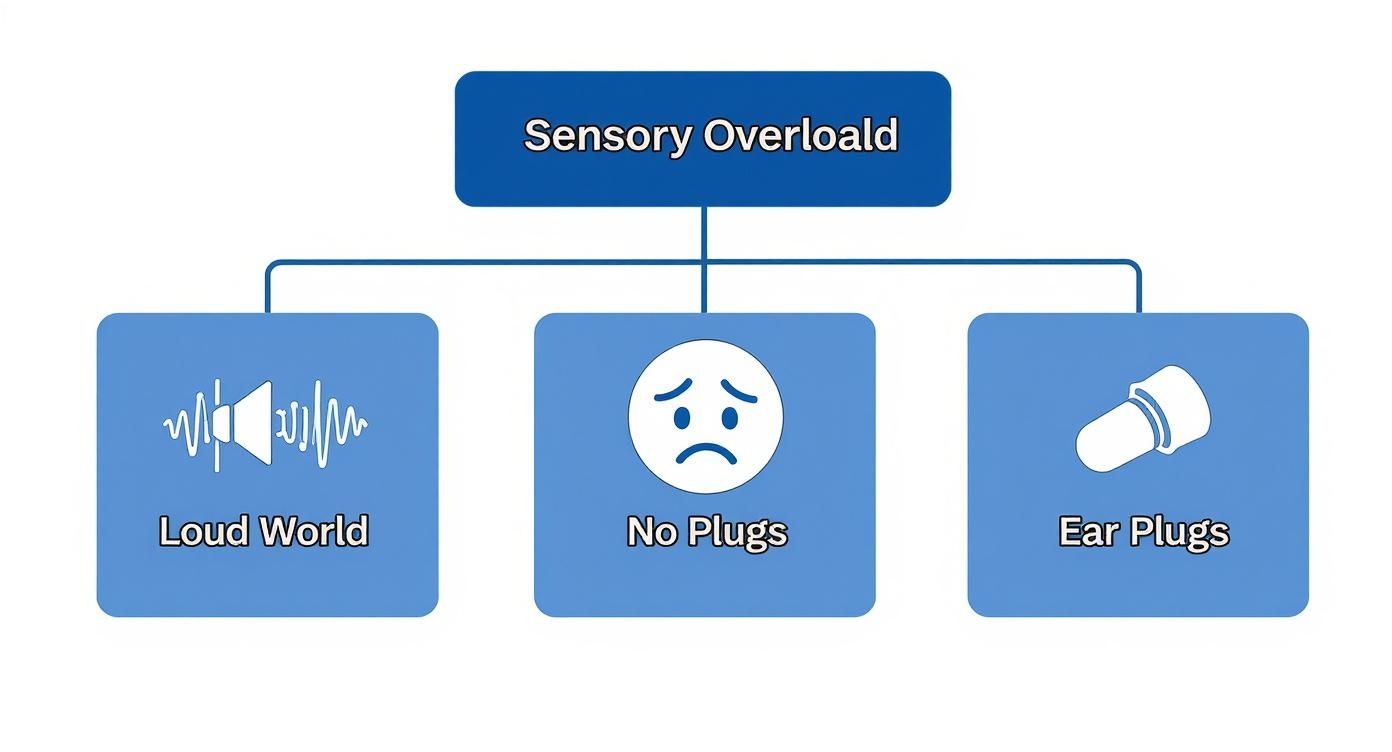
As the diagram shows, having a tool like ear plugs can provide a clear path away from the stress of sensory overload, offering a simple yet powerful solution.
Comfort for Extended Wear
Comfort is everything, especially for a child with sensory sensitivities. Because ear plugs sit inside the ear canal, getting the right size and material is crucial. Luckily, modern silicone ear plugs are soft, flexible, and made to be worn for hours without causing pressure or irritation.
Earmuffs sit over the ears, secured by a headband. Some children find this gentle pressure quite calming, a bit like a hug for their head. However, in warm Australian weather, they can get a bit sweaty and uncomfortable after a while. They can also get in the way of glasses, hats, or certain hairstyles.
Ear Plugs vs Earmuffs: A Quick Comparison Guide
To help you decide, here’s a simple table breaking down the key features of each option. Use it to find the best fit for your child's needs.
| Feature | Sound-Eliminating Ear Plugs | Noise-Cancelling Earmuffs for Kids |
|---|---|---|
| Discretion | Very discreet, almost invisible when worn. | Highly visible; can be a source of self-consciousness for some children. |
| Best For | Everyday environments like classrooms, shopping centres, and family gatherings. | High-volume events like concerts, fireworks, and sporting matches. |
| Noise Reduction | Reduces background noise while preserving clarity of close-range speech. | Provides broad-spectrum noise reduction, blocking out most sounds. |
| Portability | Extremely portable; easily fits in a pocket or on a keychain. | Bulky and less convenient for on-the-go use. |
| Comfort | Soft silicone designed for long wear; less noticeable in hot weather. | Padded cups can feel secure, but may cause sweating or interfere with glasses. |
| Child's Role in Choice | Great for kids who prefer a subtle solution to manage their sensory input independently. | Ideal for kids who don’t mind the visibility and prefer the feeling of full-ear coverage. |
Ultimately, there isn't a single "better" option—just the right one for your child.
Many families find it helpful to have both on hand: earmuffs for those planned loud events and ear plugs for the unpredictable noises of daily life. This flexible approach means your child always has the support they need to navigate their world with calm and confidence.
How Ear Plugs Help Calm a Sensory Brain
To really get why sound-eliminating earplugs are such a game-changer, we need to step inside a sensory-sensitive brain for a moment. Most neurotypical brains are like a brilliant sound engineer, automatically dialling down background noise. The whir of a fridge, traffic in the distance, a rustling page – it all gets filtered out without us even thinking about it.
For many neurodiverse children and adults, however, that internal filter just isn't there. Every single sound can hit with the same force and volume. Imagine trying to hear your teacher, but also hearing every single sniffle, chair scrape, and distant whisper at full blast. That’s sensory overload. It’s draining, confusing, and incredibly stressful.
Decoding the Technology of Quiet
This is where the simple genius of earplugs comes into play. Most sound-eliminating earplugs designed for daily life use what's called passive noise isolation. It’s a fancy term for a simple idea: the earplug creates a physical seal in your ear canal, blocking sound waves from getting to your eardrum. Think of it like shutting a window to dull the noise from a busy street.
This is quite different from active noise cancellation (ANC), which you’ll find in more expensive electronic headphones. ANC is a high-tech solution that uses tiny microphones and speakers to create an opposite sound wave to 'cancel out' incoming noise. For simply creating a calmer day-to-day environment, passive noise isolation is often the perfect tool – no batteries, no fuss, just effective relief from overwhelming sounds.
Earplugs can be a massive help for children who struggle with sensory overload, particularly those with autism. For a deeper understanding autism and its connection to sensory processing, dedicated resources can offer valuable insights.
Understanding the Noise Reduction Rating
As you shop for earplugs, you’ll see something called the Noise Reduction Rating (NRR). It sounds a bit technical, but it’s really just a 'quiet score'.
The NRR is measured in decibels (dB) and tells you exactly how much sound the earplugs can block. For example, a pair with an NRR of 22 will take an 90 dB sound (like a lawnmower) and bring it down to a much more comfortable 68 dB.
Think of the NRR as a volume dial. A higher NRR turns the world down a lot, which is great for loud concerts. A lower NRR just softens the edges, which is perfect for a classroom where a child still needs to hear their teacher.
Finding the right NRR is all about hitting that sweet spot. The goal isn't to create total, unnerving silence. It’s about dialling down the chaotic background noise so the brain can finally relax and focus. By turning down the static, you give a sensory brain the space it needs to thrive.
Your Practical Guide to Selecting the Perfect Pair
Choosing the right pair of sound-eliminating earplugs can feel like a big decision, but it’s actually much simpler than you might think. Once you know what to look for, you can easily find a pair that's safe, effective, and comfortable enough for your child to actually want to wear.
Let's walk through exactly what matters.
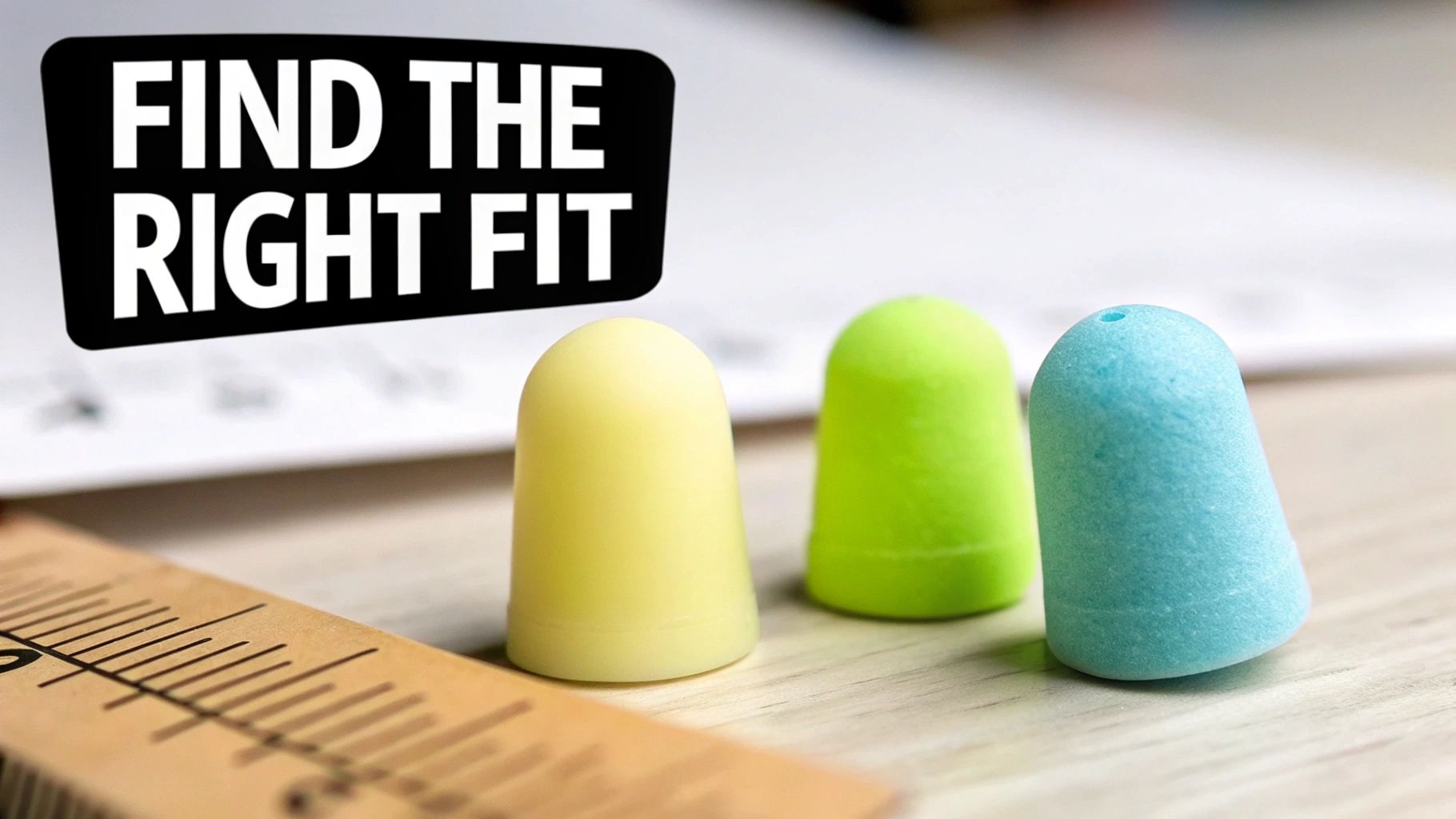
Finding the right sensory support isn't just about blocking out noise. It’s about creating a comfortable experience that helps your child feel more in control of their environment.
Material Matters Most
When you start looking at earplugs, you'll see two main types: foam and silicone. For kids, and especially for those with sensory sensitivities, soft silicone is almost always the way to go.
- Soft Silicone: This stuff is fantastic. It's hypoallergenic, flexible, and really gentle on the delicate skin inside the ear. It creates a great seal without that feeling of uncomfortable pressure, making it perfect for wearing all day at school or during a noisy family outing.
- Foam: While foam earplugs are great at blocking sound, they can be a real pain for kids. You have to squish them down, get them in the ear correctly, and wait for them to expand. This process can be fiddly and uncomfortable, and the constant outward pressure can get pretty annoying after a while.
For a reusable, easy-to-clean, and genuinely comfortable option, you can't beat high-quality silicone.
Finding the Right Fit for Small Ears
This is probably the most important part. An earplug that's too big will hurt, and one that's too small won't seal properly, making it useless. Sizing is everything.
Always look for earplugs made specifically for children or, at the very least, ones that come with a few different tip sizes to try. A good fit means the earplug slides in easily and creates a gentle but complete seal. It should feel secure, but never painful.
Brands like Vibes Reusable Ear Plugs are a great example of this, designed with a low profile that’s comfortable for smaller ears.
Durability and Hygiene
Let's be honest, anything a child uses needs to be tough and easy to clean. Earplugs are no different. Reusable silicone plugs are a breeze to maintain—a quick wash with a bit of mild soap and water, and they're hygienic and ready for another day.
It's also a great idea to find a pair that comes with a little carrying case. This simple addition keeps them from getting lost or squashed in a school bag and, just as importantly, keeps them clean.
A great tip is to involve your child in picking them out. If they get to choose a colour or style, it gives them a sense of ownership. They're far more likely to see the earplugs as their special tool, rather than something they have to use.
A Growing Trend in Australia
If you're thinking about getting these for your child, you're definitely not alone. The use of sound-filtering earplugs is becoming much more common across Australia as more parents and teachers see how much they can help with sensory regulation.
This shift shows a growing awareness of hearing protection and the need for tools that help kids concentrate and feel their best. In fact, the Australian earplug market was valued at USD 18.23 million in 2025 and is expected to keep growing. This isn't just about industrial use anymore; it's about everyday people using earplugs for everything from sleep to study.
By choosing this kind of support, you’re part of a forward-thinking community working to create calmer, more inclusive spaces for our kids.
Making Earplugs a Part of Your Child's Day
Bringing a new sensory tool like sound-eliminating earplugs into the mix is all about patience, positivity, and a gentle touch. The goal here isn't to force a solution, but to introduce a helpful friend that can make their world a little calmer. When you frame them as a special tool for comfort, you empower your child to see them as a good thing, not just another chore.
Your first introduction should be low-key, fun, and completely pressure-free. The worst time to try them for the first time is when you're already in a loud, stressful situation. Instead, pick a calm, happy moment at home. Maybe while they're playing with their favourite fidgets or deep into a quiet, focused activity.
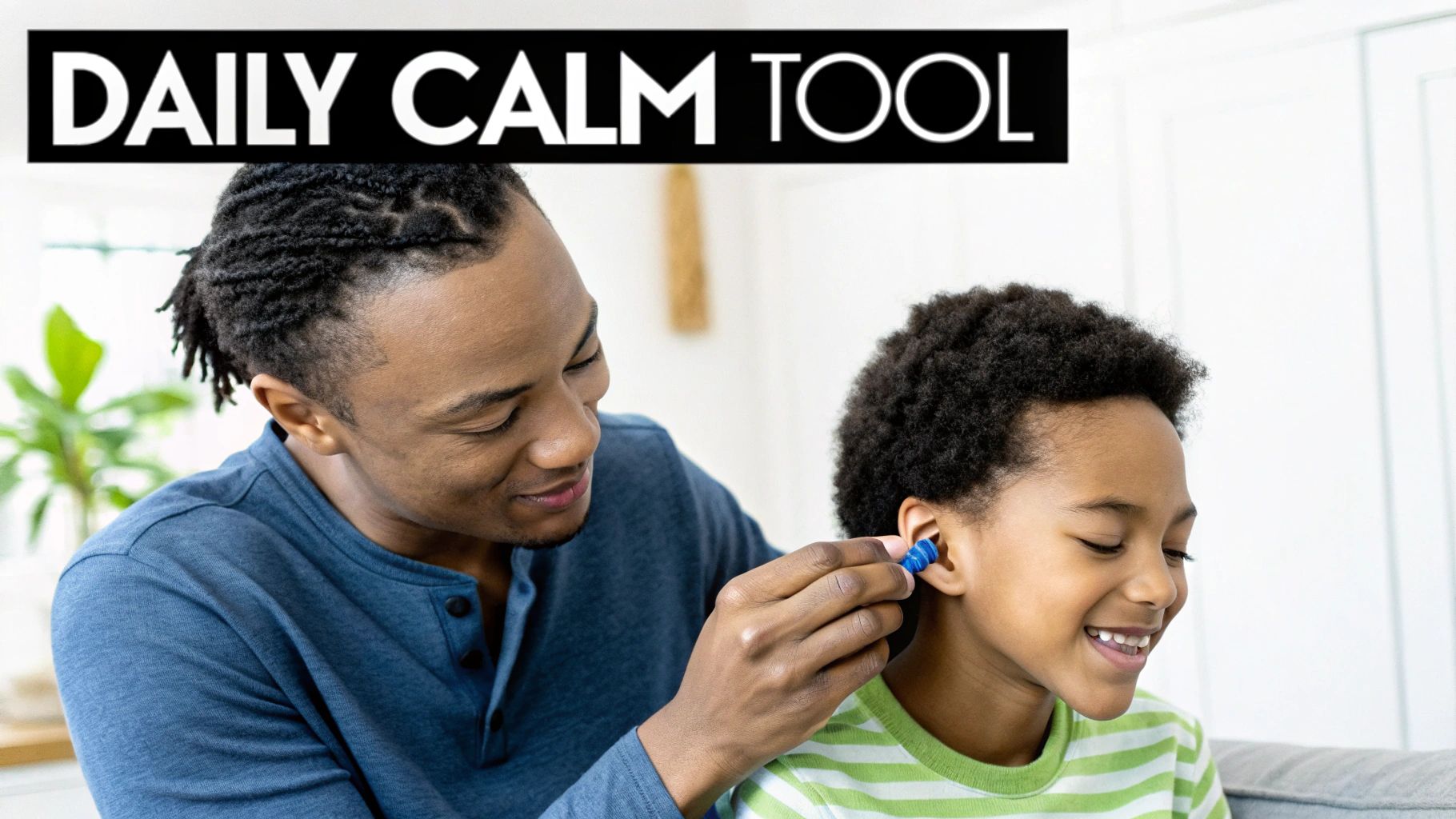
Let them simply explore the earplugs. They can touch the soft silicone, check out the colours, and just get used to them being around. It can be a huge help to pop a pair in your own ears to show that they’re safe and normal. This kind of easy-going start helps build a positive connection right from the get-go.
Practice Makes Perfect
Once your child seems okay with the idea of the earplugs, it's time for a little practice. Start with wearing them for just a minute or two at home during an activity they already enjoy. This lets them get used to the physical sensation in a space where they feel safe and in control.
You could even turn it into a game by setting a timer and having a little celebration when it goes off. From there, you can gradually add more time as they get more comfortable. Taking it step-by-step is the key to building their confidence without causing any overwhelm.
Next, start talking about when these little tools might come in handy. Use real-world examples they can connect with:
- "You know how the supermarket gets really noisy? We could try these next time to see if it helps."
- "School assemblies can be a bit much sometimes. How about we keep these in your pocket, just in case?"
- "That long car ride to Grandma's is coming up. These might make the engine sound a bit softer."
Bringing them into the conversation gives them a sense of ownership and helps them learn to recognise their own sensory needs. It’s a massive step towards teaching them how to self-regulate.
Working Through Common Hurdles
It’s totally normal to hit a few bumps in the road. Some initial resistance is really common, especially for kids with tactile sensitivities.
If your child says no, never force it. The best thing to do is take a step back and try again another day. The whole process needs to feel positive and supportive, reinforcing that the earplugs are there to help them feel better, not as a punishment.
Here are a few tips for navigating those tricky moments:
- Trouble Putting Them In: Stand in front of a mirror and practice together. You can show them how to gently pull the top of their ear up and back, which straightens out the ear canal and makes insertion much easier. Keep the language positive and praise them for trying, even if it doesn’t go in perfectly.
- Saying They're Uncomfortable: This is often a sign that the fit isn't quite right. Make sure you're using earplugs designed for kids' ears, which should fit snugly without any pain. If the pack came with different-sized tips, spend some time experimenting to find the one that feels best.
- Forgetting to Use Them: Visual cues are your best friend here. Get a small, labelled container for the earplugs and put it in their school bag, near the front door, or in the car. Having them visible and easy to grab serves as a great reminder before heading into a noisy place.
Ultimately, making sound eliminating ear plugs a regular part of your child's life is a team effort. It's all about giving them a tool that helps them navigate the world with a bit more comfort and confidence, turning potentially overwhelming spaces into manageable ones.
Getting NDIS and School Support Sorted in Australia
For Australian families, getting the right sensory tools for your child often means working with the National Disability Insurance Scheme (NDIS) and their school. Knowing your way around these systems can make all the difference, making sure your child has what they need to feel comfortable and confident, wherever they are. The good news is that items like sound-eliminating earplugs are often seen as essential supports.
When you're looking at the NDIS, these kinds of tools usually fit under the Low-Cost Assistive Technology category. This bucket is for items that are considered safe, likely to be beneficial, and don't cost a fortune. The trick to getting your request approved is to clearly show how the earplugs will help your child meet their specific NDIS goals.
Making the Case in Your NDIS Plan
The best way to frame your request is to focus on the real-world outcomes. Whether you're talking to your NDIS planner, Local Area Coordinator (LAC), or a therapist, explain exactly how the earplugs will help your child get closer to achieving their goals.
- For goals around community participation: You could say something like, "Loud shopping centres often trigger sensory overload and meltdowns. Earplugs would help reduce that overwhelm, meaning we can actually enjoy being out in the community for longer."
- For goals related to daily living skills: A great point to make is, "Learning to manage auditory input is a huge part of self-regulation. These earplugs give my child a practical way to control their environment themselves."
- For goals focused on education: You might explain, "My child finds it incredibly hard to focus in their noisy classroom, especially during Numberblocks activities. The earplugs will help them filter out those distractions so they can actually concentrate and learn."
By linking the earplugs to a tangible goal, you shift them from being just another "thing" to being a crucial piece of assistive technology.
Working Together With Your Child's School
Support at school is just as vital. Thankfully, more and more educators get it when it to comes to sensory needs and are open to using tools that help kids succeed. The most effective approach is to ask for the sound-eliminating earplugs to be officially included in your child’s Individual Education Plan (IEP) or learning support plan.
Putting it in writing makes their use official. It ensures every teacher, even the relief staff, knows why your child has them and when it's okay to use them. It's a great idea to give the teacher a spare pair for the classroom and gently explain they are a tool for focus, not a way to tune out. This kind of teamwork helps build a learning environment where your child feels truly supported. For more ideas on helpful aids, have a look at our complete guide on sensory tools for autism.
You can see the growing need for these kinds of sensory tools in the numbers. In Australia alone, the import of earplugs and similar hearing protection jumped by 8.56% between 2023 and 2024. This isn't just a statistic; it shows a real national shift in understanding auditory sensitivities and the need for proper solutions at home and in schools. Discover more insights about Australia's ear plug market on 6wresearch.com.
By confidently advocating through the NDIS and collaborating with your child's school, you can create a solid support network. This consistency helps your child feel secure, regulated, and ready to take on their world.
Frequently Asked Questions About Earplugs for Kids
It's completely normal to have questions when you're looking for the right sensory support for your child. Let's walk through some of the most common ones parents ask, so you can feel confident you're making the best choice.
Are Sound-Eliminating Earplugs Safe for My Child's Ears?
Absolutely. When you choose a pair designed for children and use them correctly, they are perfectly safe. The key is to select earplugs made for smaller ear canals and to always follow the fitting and cleaning instructions from the manufacturer.
It's also reassuring to know they don't create complete silence. They simply turn down the volume on overwhelming background noise, so your child can still hear important things like your voice, a teacher's instructions, or a fire alarm.
Will My Child Become Dependent on Earplugs?
This is a common worry, but it helps to think of earplugs like you would a pair of glasses. They aren't a crutch; they're a tool that helps a child engage more comfortably with their environment.
The real goal here is empowerment. By having earplugs available, your child learns to recognise when they're feeling overwhelmed and can take a positive step to manage it. This is a massive leap forward in developing self-awareness and self-regulation skills.
Can My Child Wear Earplugs While Sleeping?
For many kids, especially light sleepers, earplugs can be a game-changer for getting a restful night. Blocking out those little household noises can make all the difference.
If you're thinking about this, look for earplugs made from soft, pliable silicone that won't create uncomfortable pressure, even for side sleepers. As always, it’s a great idea to have a quick chat with your child's paediatrician or occupational therapist first, just to make sure it’s the right strategy for them.
Ready to find the perfect sensory tools to support your child? Explore the thoughtfully curated collection at The Sensory Poodle, your trusted Australian source for calming aids and educational resources. Visit Sensory Poodle today to discover a world of support.