


A Parent's Guide to Childrens Ear Plugs for Sensory Needs

Children's ear plugs are straightforward, comfy little devices made to lower the volume of the world around them. They’re a simple but effective barrier, dialling down the intensity of overwhelming sounds. This can be an absolute lifesaver for kids with sensory sensitivities.
Why Ear Plugs Are a Game Changer for Sensitive Kids
Try to imagine a world where the quiet hum of a fridge sounds like a rumbling engine, or the buzz of a classroom feels as loud as a rock concert. For many kids, particularly those with autism, ADHD, or sensory processing differences, this isn't a stretch of the imagination—it's what they experience every single day. Their brains are wired to process sound differently, turning everyday noises into something intense, distracting, and sometimes even physically painful.
This relentless barrage of noise can easily push them into sensory overload, a state where their nervous system is simply swamped and can't cope anymore. What does that look like? It often shows up as trouble focusing, a spike in anxiety, irritability, and what we often call meltdowns. It's crucial to understand this isn't a choice or a "behavioural problem"—it's a very real physiological reaction to an environment that feels chaotic and hostile.
Turning Down the Volume on a Noisy World
This is exactly where children's ear plugs step in as an incredibly powerful tool. We're not just talking about using them for swimming or loud concerts anymore; they've become an essential aid for sensory regulation. By muffling those overwhelming sounds, they create a much-needed buffer between the child and their surroundings.
A great way to think about them is like sunglasses for the ears. They don’t block out all sound to create total silence. Instead, they cut down the harsh "glare" of sharp, sudden, or constant background noise. This one simple change can make a world of difference.
- Helps Prevent Sensory Overload: By filtering out that extra noise, ear plugs can help a child’s sensory system stay in its comfort zone, stopping it from tipping over the edge.
- Boosts Focus and Attention: In a hectic classroom, ear plugs can help a child tune out the distracting hum of chatter and movement, making it easier to hear the teacher and focus on their work.
- Reduces Meltdowns and Anxiety: When a child has some control over their sensory world, they naturally feel safer and calmer. This can dramatically reduce stress-related anxiety and meltdowns.
- Empowers Children: Handing a child a pair of ear plugs gives them a concrete tool they can use themselves to navigate tricky situations. It’s a brilliant way to build independence and self-advocacy skills.
For many neurodiverse children, auditory hypersensitivity can be a major source of stress. A child's ears are especially sensitive because their smaller ear canals naturally intensify sounds. What feels loud to an adult can feel unbearable to a child.
This simple tool can turn difficult experiences into manageable ones. That dreaded trip to the shopping centre becomes less of an ordeal. A loud family get-together is suddenly more enjoyable. The noisy school assembly is finally tolerable.
While ear plugs are fantastic for managing sensory overload, some children might need a bit more support to handle anxiety. If you feel your child could benefit from more in-depth strategies, you can explore anxiety therapy options with qualified professionals. At the end of the day, children's ear plugs are more than just hearing protection—they're a key to unlocking a calmer, more focused, and more comfortable world for sensitive kids.
Finding the Perfect Fit for Your Child's Ears
Choosing the right ear plugs for a child is definitely not a one-size-fits-all situation. The best pair will depend entirely on your child's unique sensory needs, their day-to-day activities, and, most importantly, what feels comfortable for them.
Think of it like picking out a pair of shoes. Some are built for running a marathon, while others are just for lounging around the house. In the same way, some ear plugs are designed to block out as much noise as possible, while others are made to simply soften the sharp, overwhelming edges of a loud environment.
The real goal here is to find a tool that empowers your child, giving them a sense of control over their auditory world without causing any extra discomfort or frustration. Making that choice starts with getting to know the main types of ear plugs out there and figuring out how their features line up with what your child actually needs.
This simple decision tree shows how overwhelming sound can lead to an effective solution like ear plugs.
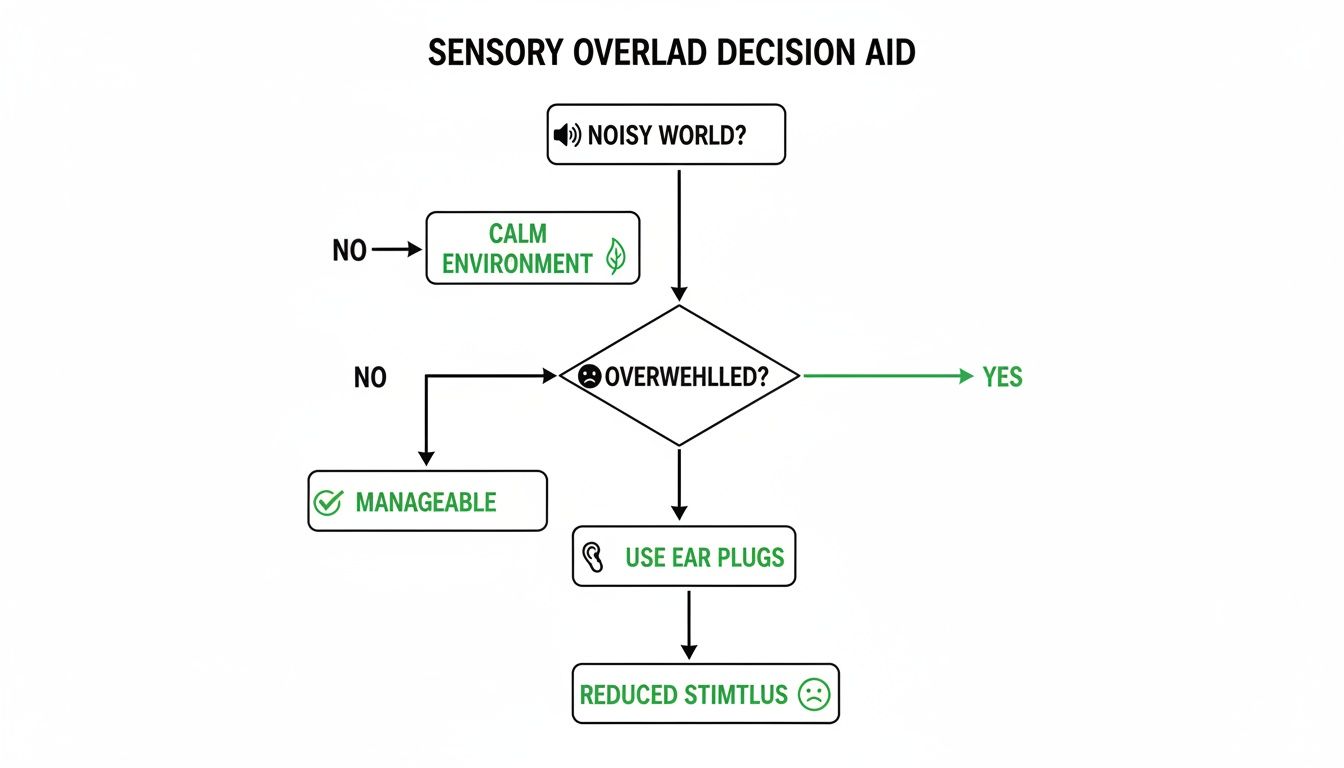
As you can see, when the world just feels too loud, ear plugs offer a direct path to dialling down that sensory input and helping restore a bit of calm.
Exploring the Different Types of Ear Plugs
Navigating all the options can feel a bit tricky at first, but it really boils down to three main categories. Each has its own strengths and weaknesses, and understanding these differences is the first step toward finding that perfect fit for your child.
- Soft Foam Ear Plugs: These are the ones most people think of first—they’re common and usually the most affordable. You simply roll the memory foam into a tight cylinder, pop it in the ear, and it expands to create a snug seal. They're fantastic for blocking out a significant amount of noise, making them a great choice for really loud situations.
- Mouldable Silicone Ear Plugs: Now, these are a bit different. Instead of going inside the ear canal, these soft, putty-like plugs form a seal over the outside. For many children, this is a much more comfortable and less invasive option, especially for those who can't stand the feeling of something deep in their ears. They are brilliant for swimming and for moderate noise reduction.
- Filtered (High-Fidelity) Ear Plugs: Think of these as the smart option. They have a special filter inside that lowers the overall volume of sound without muffling it or making everything sound distorted. This means your child can still hear conversations and important instructions clearly, but the harsh background buzz is turned way down. They're perfect for the classroom, social events, or any situation where awareness is still important.
As more people recognise the importance of hearing protection, the market in Australia has grown quite a bit. It's interesting to note that foam earplugs alone make up 45% of sales across the Asia Pacific region, mostly because they are so accessible and straightforward to use. This trend points to a bigger focus on hearing health for everyone, including children who need softer, correctly sized options. You can find out more about earplug market trends to see how the demand for quality protection is shaping what's available.
To make things a bit clearer, here's a quick comparison to help you weigh up the options.
Comparison of Childrens Ear Plug Types
| Ear Plug Type | Best For | Comfort Level | Reusability | Pros | Cons |
|---|---|---|---|---|---|
| Foam | Maximum noise blocking (e.g., loud events, travel, sleep). | Varies. Can be very comfortable once expanded, but some find the pressure unpleasant. | Single-use recommended. | Inexpensive, widely available, high Noise Reduction Rating (NRR). | Can be tricky for little hands to insert correctly. Can feel invasive. |
| Mouldable Silicone | Swimming, sleep, moderate noise reduction. Great for kids who dislike in-canal plugs. | High. Forms a seal over the ear canal, not inside it. | Reusable for a few times until they lose stickiness or get dirty. | Very comfortable, easy to use, creates a great waterproof seal. | Lower noise reduction than foam. Can attract lint and dirt. |
| Filtered (High-Fidelity) | School, social gatherings, music events. Situations where clarity is needed. | High. Often made from soft, hypoallergenic silicone with a rigid filter. | Highly reusable. Can last for years with proper care. | Reduces volume without muffling sound. Allows for clear conversation. | More expensive upfront. Small parts can be a choking hazard for very young children. |
This table is a starting point, but the best choice will always come down to your child's specific needs and preferences.
How to Choose the Right Pair
Selecting the best type of childrens ear plugs is all about matching the product to the situation. A child who needs to block out the roar of the school cafeteria might do brilliantly with foam plugs. On the other hand, a child who just needs to dial down distractions to focus in a quiet classroom would likely prefer filtered ones.
Think about the primary purpose. Is it for sleeping through the night? Concentrating on homework? Or surviving the noise at a cousin's birthday party? Your answer will point you straight to the most suitable type.
At the end of the day, comfort is non-negotiable. If the ear plugs are uncomfortable, your child simply won't wear them, and the battle is lost before it even begins. It might take a bit of trial and error to find the perfect match, but involving your child in the decision-making process can make a world of difference. It helps them feel more invested and willing to give their new sensory tool a real go.
Ear Plugs vs Earmuffs for Sensory Support
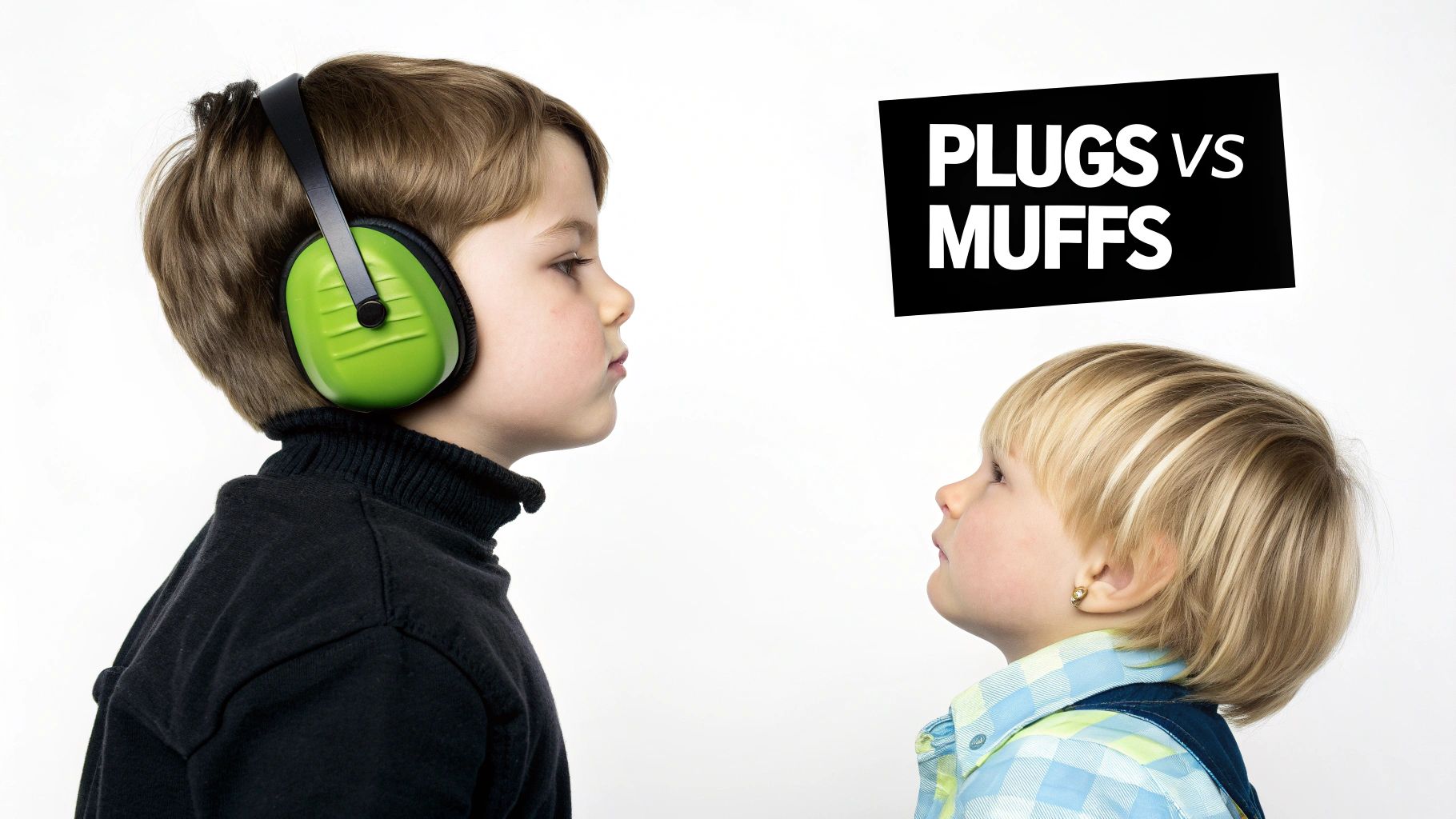
When you start exploring sensory support for your child, one of the first questions you’ll probably ask is: ear plugs or earmuffs? It’s a classic dilemma. Both are brilliant tools for helping kids turn down the volume on a world that can often feel too loud, but they excel in different ways.
Honestly, there’s no single “best” choice here. The right answer really hinges on your child’s unique sensory profile, their comfort, and the specific situations they need help navigating. Are you looking for something subtle for the classroom, or a heavy-duty sound blocker for a loud event? Answering that question is the perfect starting point.
Let's break down the head-to-head comparison between these two powerful options to help you feel confident in your decision.
The Case for Noise-Cancelling Earmuffs
Noise-cancelling earmuffs for kids are often the first thing parents reach for, and it’s easy to see why. Their biggest advantage is their sheer sound-blocking power. The cushioned cups create a complete seal around the ear, offering a high level of noise reduction that’s perfect for intensely overwhelming environments—think school assemblies, loud parties, or fireworks.
They’re also incredibly user-friendly. Young children can quickly learn to pop them on and off by themselves, which gives them a real sense of control over their environment. There’s no fiddly insertion to learn, making them a simple and dependable go-to. The main downside, of course, is their size. They are bulky and very noticeable, which can make some older kids feel self-conscious.
The Advantages of Children's Ear Plugs
On the other side, you have children's ear plugs. Their superpower is discretion. Because they’re small and sit inside the ear canal, they are virtually invisible. This is a game-changer for kids who worry about standing out or drawing attention to themselves, especially in social settings like school or birthday parties.
Ear plugs are also amazingly portable. You can tuck a pair into a pocket, a pencil case, or a tiny pouch, which means your child always has a sensory regulation tool within reach. The trade-off? They can be a bit trickier to fit correctly, particularly for little fingers, and some kids just don't like the feeling of having something inside their ear canal.
"A child’s ears are especially sensitive because their smaller ear canals intensify sounds. If it feels too loud for an adult, it’s definitely too loud for a child."
This is such a crucial point to remember. Both earmuffs and ear plugs are designed to tackle this exact issue by bringing sound down to a much more manageable level, protecting those sensitive ears from auditory overload.
Making the Right Choice for Your Child
The best way to decide is often to think about specific scenarios.
Here’s how it might play out in real life:
- For a loud school assembly: Earmuffs are probably the winner for maximum sound protection.
- For quiet focus time in class: Discreet, filtered ear plugs are ideal. They can muffle background chatter without blocking out the teacher's voice.
- For a hectic shopping trip: Portable ear plugs are easy to bring along and use whenever needed.
- For a child needing to self-regulate fast: Earmuffs are simple to grab and put on in a moment of overwhelm.
Ultimately, you might find you don't have to choose just one. Many families build a sensory toolkit that includes both, allowing their child to pick the right tool for the job. For a deeper dive, our complete guide to kids' ear muffs has even more information.
By understanding the unique strengths of both children's ear plugs and earmuffs, you can empower your child with the support they need to feel comfortable and confident, no matter the environment.
Getting the Most Out of Your Child's Ear Plugs: Safe and Effective Use
Let's be honest, introducing something like ear plugs should bring relief, not add another layer of worry. The good news is, once you get the hang of how to pop them in, take them out, and keep them clean, they can become a brilliant, stress-free part of your child’s sensory support system.
The secret to making them work is getting the fit just right. If an ear plug is just sitting there loosely, it won't do much to block sound and might even be uncomfortable. What you're aiming for is a gentle but complete seal that feels snug and secure, without putting any real pressure on their sensitive ear canal.
Step-by-Step: Getting the Fit Right
This is the most crucial part. Before you start, make sure your hands (and your child's, if they're helping) are clean to keep any unwanted germs out.
For Foam Ear Plugs:
- Roll it down: Pinch the foam plug between your thumb and forefinger and roll it into a tight, thin cylinder. Think of making it as skinny as a crayon, with no creases.
- Open the way: Use your other hand to gently pull the top of your child’s ear up and back. It feels a bit strange, but this simple trick straightens out the ear canal, creating a clear path for the plug.
- Insert and hold: As soon as it’s rolled, guide the skinny end into their ear canal. Then, just rest your fingertip on the end for 20-30 seconds. You'll feel it slowly expand to create that perfect, snug fit.
- Removing: To take it out, just give it a gentle twist and pull slowly. Never yank it out in a hurry.
For Mouldable Silicone Ear Plugs:
- Shape it: Roll the silicone putty into a ball. It’s important not to tear it into smaller bits; you need the whole piece.
- Cover, don't push: Place the ball over the opening of the ear canal and gently flatten it to create an airtight cover. The key here is that silicone plugs should never be pushed into the ear canal itself. They seal the outside.
- Removing: The easiest way to get it off is to press up on the back of the earlobe. This will loosen the edges, allowing you to peel the plug away easily.
Keeping Them Clean and Hygienic
Good hygiene is non-negotiable—it keeps ear infections at bay and helps the ear plugs last. How you clean them depends on the type.
- Foam Plugs: These are best treated as single-use. Because they're so porous, they can become a breeding ground for bacteria. It’s safest to just toss them after each wear.
- Silicone and Filtered Plugs: These are your reusable friends and need a quick clean after use. Wash them with a bit of mild soap and warm water, give them a good rinse, and let them air dry completely before popping them back in their case.
Keeping sensory tools clean is a habit that pays off for your child's health. For more tips that apply to all their gear, you can read our guide with 4 tips for keeping sensory toys clean and hygienic.
If there's one safety tip to remember, it's this: always use the right size. An ear plug that's too small could get stuck deep inside the ear canal, while one that's too big will just be uncomfortable and won't block sound properly.
When to Say Goodbye, and Final Safety Checks
Even the sturdiest reusable ear plugs have a lifespan. Give them a quick check before each use. If you notice they’re getting stiff, have cracks, or are looking a bit discoloured, it’s time for a fresh pair. If they don't seem to be sealing as well as they used to, that's another sign they're ready for retirement.
Ultimately, you are the best judge. Adult supervision, especially with younger kids, is essential. Make sure they know how to use them correctly and understand that ear plugs are a 'just for me' item, not for sharing. By following these simple guidelines, you can make ear plugs a genuinely helpful and safe tool in your child’s world.
Building a Complete Sensory Toolkit for Your Child
While children's ear plugs are fantastic for managing overwhelming sounds, they work best when they're part of a bigger picture. Think of them as one specialist player on a well-rounded team. By pairing ear plugs with other sensory aids, you can build a comprehensive toolkit that helps your child feel more confident and calm, no matter where they are.
This isn't about finding a single magic bullet. It's about creating a flexible system that adapts to your child's needs as they shift throughout the day. You could put together a portable sensory kit for when you're out and about, or create a dedicated calming corner at home for those moments when a full reset is needed. The aim is to give your child a range of tools that empower them to regulate their own senses effectively.
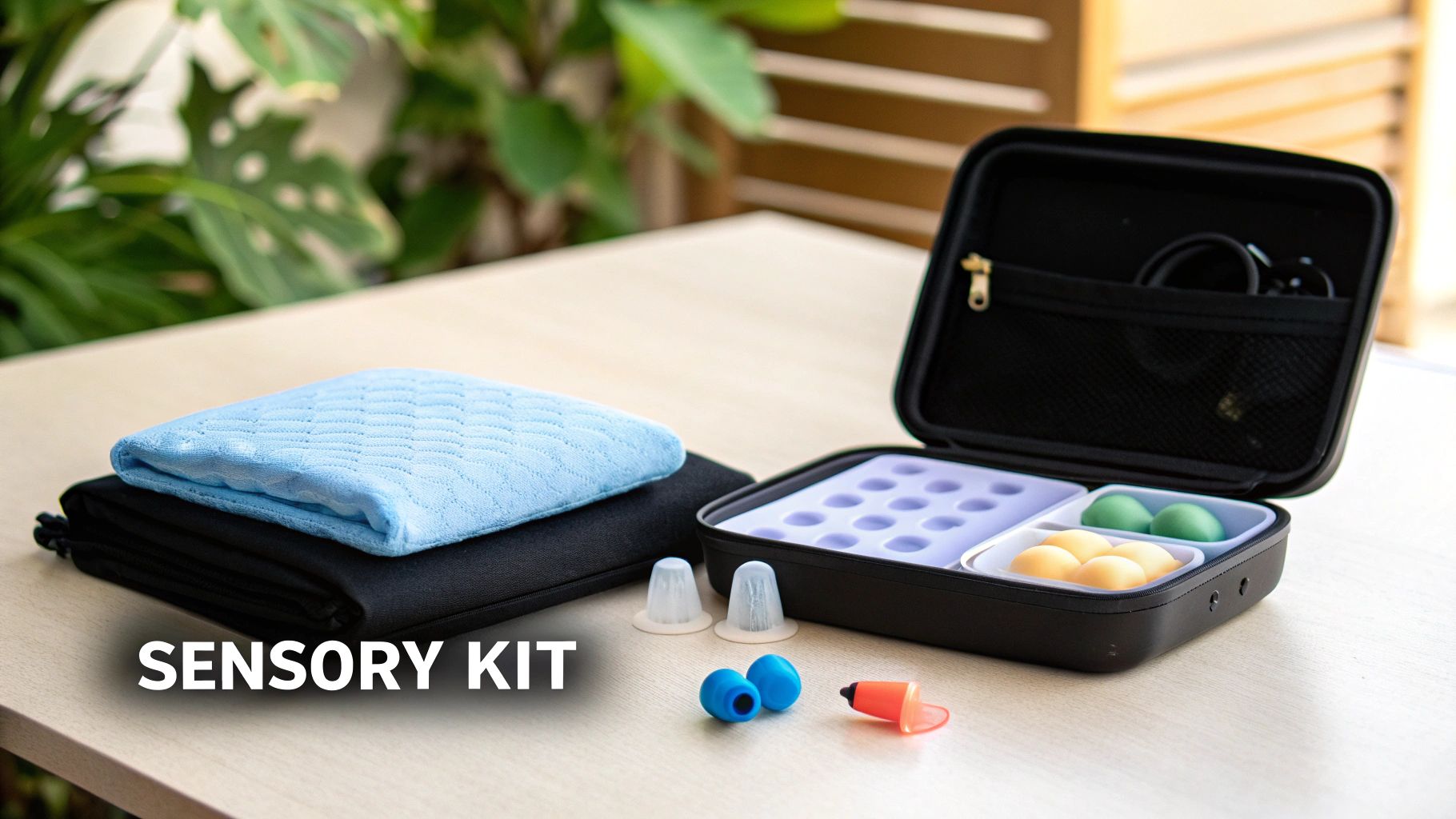
Creating a Portable Sensory Kit
A portable kit is like a first-aid pack for sensory overwhelm, always ready to go when you head out the door. It should be small enough to tuck into a backpack but stocked with a few reliable favourites that you know work for your child.
Here are a few ideas for what to pack alongside their ear plugs:
- Fidgets for Focus: Keeping hands busy can work wonders for an anxious mind. Having a couple of different textures, like smooth Kaiko fidgets or squishy Needohs, provides a quiet, tactile outlet for that restless energy.
- Weighted Lap Bags: The deep pressure from a weighted lap bag or toy can feel incredibly grounding and calming. It’s perfect for long car rides, appointments, or just sitting still in a busy waiting room.
- Chewable Jewellery: If your child finds chewing helps them regulate, a chewable necklace or bracelet offers a safe and discreet way to self-soothe when things get a bit much.
To really get the most out of a sensory toolkit, it helps to understand the fundamentals of sensory development itself. For some foundational knowledge, resources on understanding baby sensory development can provide valuable context for how these tools support a child's evolving needs.
Designing a Calming Corner or Sensory Space
A dedicated sensory space at home or in the classroom can be a real game-changer. It acts as a safe haven where a child can retreat to reset their nervous system. You don't need a whole room—a cosy corner is often all it takes.
A calming corner is a designated space designed to be a safe and comforting retreat. It empowers children to recognise their own feelings and proactively seek out tools that help them regulate their emotions before they become overwhelmed.
This is where ear plugs can be combined with larger sensory tools for a truly immersive calming experience. Imagine your child retreating to a quiet, darkened sensory tent with a heavy weighted blanket to block out all the overwhelming input from the outside world.
You might also consider adding elements like:
- Visual Aids: Sometimes, watching something mesmerising can help quiet a busy mind. The gentle glow of a jellyfish lamp or the slow, rhythmic dance of bubbles in a bubble tube can be incredibly soothing.
- Comforting Textures: Soft cushions, a fluffy rug, or a few plush toys like Palm Pals can provide that comforting tactile input.
- Gentle Movement: For some kids, gentle, rhythmic motion is deeply regulating. A sensory swing offers calming vestibular input that can help organise the nervous system.
Here in Australia, we're seeing a growing need for tools like children's ear plugs. This is partly due to rising noise levels in our cities and a much greater awareness of hearing health. It reflects a wider understanding that hearing protection isn't just for workplaces anymore; it's essential for families and children, too, helping prevent hearing issues from an early age.
By thoughtfully combining children's ear plugs with other sensory supports, you create a powerful, multi-layered system that addresses your child’s needs from every angle. If you're looking for more ideas, our guide on sensory tools for autism is a great place to start. This proactive approach doesn't just manage sensory overload in the moment—it teaches valuable self-regulation skills that will last a lifetime.
Got Questions? We’ve Got Answers.
It’s completely normal to have questions before you introduce a new sensory tool into your child’s life. After all, you want to feel confident that you’re making the best choice for them. Let's walk through some of the most common queries we hear from parents and caregivers about using ear plugs for sensory support.
We'll keep it straightforward and practical, covering everything from the classroom to the bedroom. The goal is to give you peace of mind so you can see this simple tool for what it is: a powerful way to help your child navigate their world.
Can My Child Wear Ear Plugs at School?
Absolutely. For many kids, a bustling school is a minefield of overwhelming noise. Think of the echoey gym, the chaotic lunch hall, or even just a chatty classroom. Ear plugs can be a game-changer in these situations. They dial down the distracting background buzz, which can make a huge difference to a child's focus and help them avoid sensory overload.
The key is to have an open chat with your child's teacher and the school. It’s helpful to frame the ear plugs as an essential support tool, just like someone might need glasses to see clearly. This helps everyone understand they are there to help your child learn, not to tune out.
Filtered ear plugs are often a brilliant pick for school. They're clever little things, designed to muffle the distracting chatter and clatter while still letting important sounds, like the teacher's voice, come through. This means your child can stay engaged without feeling swamped by the noise.
Are Ear Plugs Safe for My Child to Sleep With?
If your child is a light sleeper or sensitive to every little bump in the night, ear plugs can be a ticket to a more peaceful, uninterrupted rest. When it comes to using them for sleep, though, safety and hygiene have to come first.
Always, always use ear plugs designed specifically for children’s smaller ear canals to ensure they fit properly and safely. If you’re using reusable plugs, getting into a good cleaning routine is also non-negotiable to sidestep any risk of ear infections.
A balanced approach is often best. Many experts recommend using ear plugs on especially noisy nights or during unsettled periods, rather than every single night. This gives the ear canal a natural break.
You could also pair them with other sleeping aids to build a wonderfully calming bedtime routine. A weighted blanket offers grounding deep pressure, and a gentle night light can create a peaceful space to drift off in.
How Do I Know if My Child Has Auditory Sensitivity?
Often, the best way to know is simply by watching. Your child’s behaviour in different environments is a powerful clue to how they’re processing the sounds around them.
Keep an eye out for these common signs:
- Covering Their Ears: Is putting their hands over their ears a go-to reaction in noisy places?
- Sudden Mood Shifts: Do they get cranky, anxious, or seem to shut down at parties, in busy shopping centres, or during loud school events?
- Specific Complaints: Do they mention sounds that no one else seems to notice, like the hum of the fridge or the ticking of a clock?
If these behaviours sound familiar, you might be seeing signs of auditory hypersensitivity. Gently introducing ear plugs can be a simple but profoundly positive step. It gives them a tool they can control, helping them manage their environment and feel more secure.
Will Using Ear Plugs Harm My Child's Hearing Development?
This is a really common and fair question. But you can relax – when used correctly, children's ear plugs are perfectly safe and won't get in the way of their hearing development. Their job is simply to turn down the volume to a more manageable level, not to create total silence.
Think of them as sunglasses for the ears. They’re a protective filter you use when the world gets a bit too "bright" or overwhelming, not something worn all the time. It’s all about using them strategically in those challenging moments.
The most important thing is to choose high-quality ear plugs made specifically for children. These are designed with an appropriate Noise Reduction Rating (NRR) to make sure they’re both effective and completely safe for little, developing ears. Used properly, they’re a fantastic support for your child’s well-being.
At The Sensory Poodle, we know that the right sensory tools can truly change a child's world. Feel free to explore our curated collection of high-quality, child-safe sensory aids to build the perfect toolkit for your child's unique needs.