


Your Ultimate Guide to the Sensory Tent Australia

Think of it as giving your child their very own personal retreat—a quiet, safe spot away from a world that can often feel too bright, too loud, and just too much. For countless families across Australia, a sensory tent is exactly that. It's so much more than a simple play tent; it’s a purpose-built, low-stimulus space where a child can decompress, regulate their emotions, and find their calm.
What Is a Sensory Tent and Why Does Your Child Need One
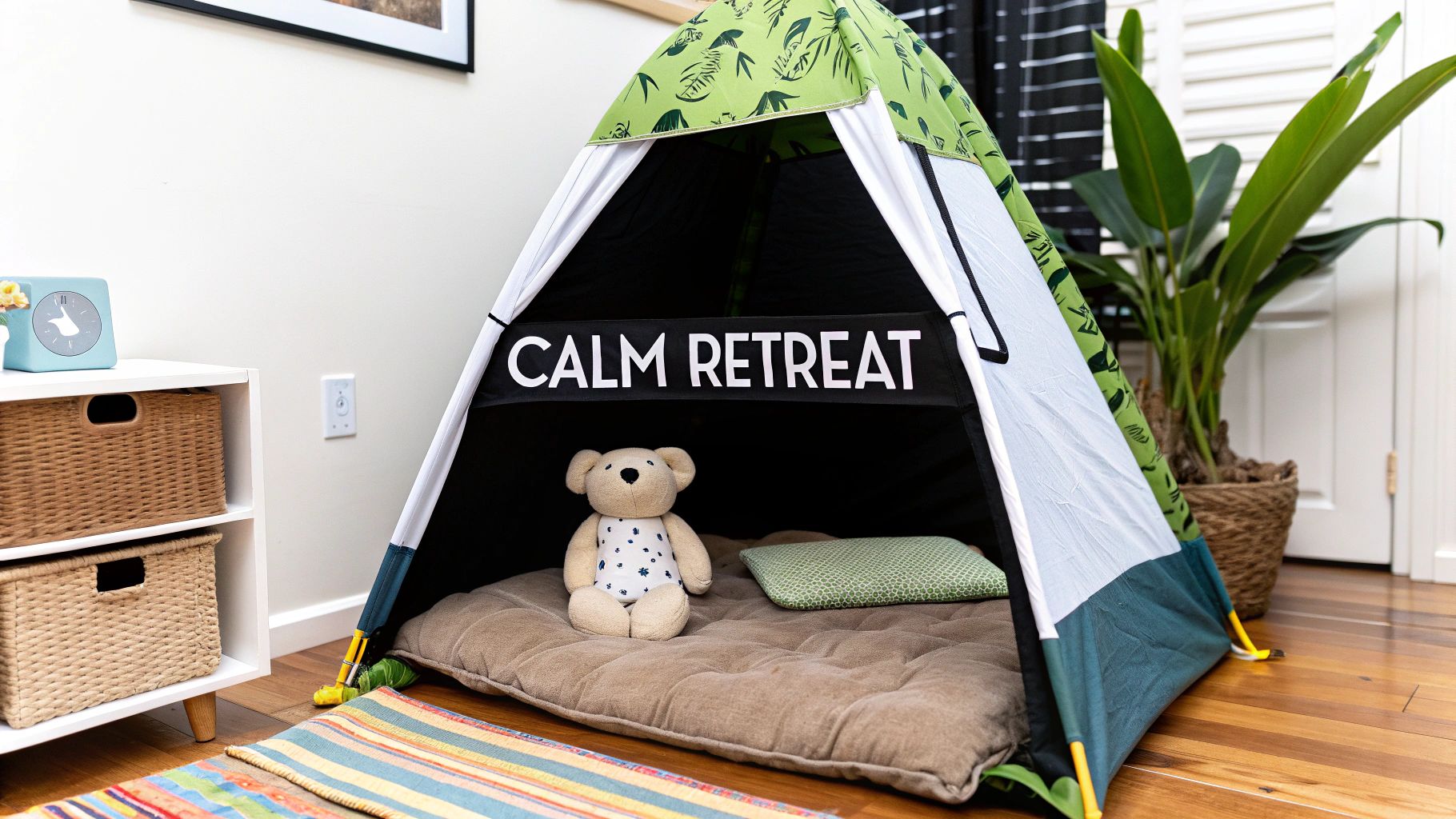
At its heart, a sensory tent is a portable, enclosed space designed specifically to reduce sensory input. It’s less of a toy and more like a pair of noise cancelling earmuffs for kids for the entire body. It creates a predictable and secure environment, dialling down overwhelming external distractions like harsh lights, background household noise, and the constant flurry of movement.
This kind of controlled space is a game-changer for kids and adults with sensory processing disorders (SPD), autism spectrum disorder (ASD), anxiety, or ADHD. When the nervous system gets overloaded, it can trigger distress, meltdowns, or shutdowns. A sensory tent acts as an immediate, accessible escape hatch from that overstimulation.
The Core Purpose of a Sensory Haven
The real magic of a sensory tent is that it works in two ways. It’s a proactive tool to help prevent sensory overload before it starts, and it's also a reactive space to help manage distress when it happens. By providing a dedicated calming corner, you’re giving your child the power to recognise their own sensory needs and start taking control of their regulation.
Instead of waiting until a situation becomes unbearable, a child can learn to go to their tent the moment they feel themselves becoming agitated. This simple choice helps build the self-regulation skills they’ll use for the rest of their lives, whether they’re navigating a chaotic school day or a loud family get-together. It’s a consistent, secure base they can always count on.
A sensory tent acts as a physical boundary from a chaotic world, allowing the brain and body a genuine opportunity to reset. It’s not about hiding, but about finding a private space to recharge and regain control in a safe, predictable way.
More Than Just an Empty Space
While the tent itself is the foundation, it becomes truly effective when you fill it with the right sensory tools. A simple pop-up sensory tent can be easily transformed into the ultimate calming zone, personalised with items that provide gentle, soothing input.
These portable havens are becoming essential resources in homes, schools, and clinics all over Australia. You’ll find them being used in:
- Homes: Creating a predictable "calm-down corner" in a bedroom or playroom.
- Classrooms: Offering an inclusive space for students to self-regulate without having to leave the learning environment.
- Therapy Clinics: Used by occupational therapists as a tool to help children feel grounded and focused during sessions.
Ultimately, a sensory tent is an investment in your child's emotional wellbeing. It provides them with the personal space they need to not just cope, but to truly thrive in a world that wasn't always designed for their unique sensory profile.
How a Calming Sensory Space Makes a Real Difference
A sensory tent is so much more than just a pop-up cubby house. Think of it as a purpose-built therapeutic tool that offers real, tangible benefits and can genuinely reshape daily life for someone who finds the world a bit too much. It’s designed to tackle the very real challenge of sensory overload head-on.
Imagine trying to focus while the fridge hums, the lights flicker, and a TV chatters in another room. For a sensitive nervous system, that’s not just background noise—it’s a sensory storm. A sensory tent Australia acts as a shield, creating a predictable sanctuary that instantly dials down the overwhelming noise, light, and visual clutter. It gives the brain and body a much-needed chance to reset.
This immediate break from the outside world is the key to unlocking self-regulation and focus.
Sharpening Focus and Mastering Emotions
When a child isn't constantly fighting off distracting sensory input, their ability to concentrate can improve dramatically. A sensory tent creates a wonderfully distraction-free zone, perfect for getting homework done, enjoying a book, or just focusing on a single toy or activity. This protected time helps build up their attention span and boosts their confidence in finishing tasks.
Even more importantly, having a safe, go-to retreat is a game-changer for learning emotional regulation. When children start to recognise the signs of feeling overwhelmed—that fizzy, anxious feeling—and learn to take themselves to their tent, they're practising a life skill. It empowers them to manage their big feelings constructively, rather than letting things escalate into a full-blown meltdown.
By providing a predictable safe space, you empower your child to move from reacting to their environment to responding to their own needs. This shift is the foundation of emotional resilience and self-awareness.
This whole process gets a supercharge when you pair the tent with the right sensory tools. Adding things like weighted animal toys introduces deep pressure input, which is incredibly calming for the nervous system. That gentle, steady pressure helps ground the body, encourages the release of calming brain chemicals, and dials down anxiety. Even something as simple as a weighted lap bag can turn a quick break into a deeply therapeutic experience.
Seeing it in Action: Everyday Scenarios
The real magic of a sensory tent becomes clear when you see how it smooths out the rough patches of daily family life.
- After-School Decompression: A busy, noisy school day can leave a child completely fried. The tent offers a soft landing, giving them a private space to decompress and recharge before they have to face family activities or homework.
- Navigating Social Gatherings: Family parties or even just having guests over can be a sensory minefield. A tent provides a nearby escape hatch where a child can take a breather from all the noise and social pressure without having to leave the event altogether.
- A Calmer Bedtime Routine: For kids who struggle to switch off at night, the dark, enclosed space of a sensory tent can be a powerful part of a wind-down routine. It sends a clear signal to the body that it’s time to rest, away from stimulating lights and sounds.
It’s no surprise that more and more people are recognising these benefits. The global demand for accessible sensory solutions is growing, and the market for specialised children's sensory calming tents is expanding right along with it. This shows a real shift, with families and schools actively looking for practical, portable tools to support kids with all kinds of needs. You can dig deeper into this trend in the full market report about calming sensory tents.
Finding the Right Sensory Tent for Your Family
Choosing a sensory tent isn't just about picking a cool-looking cubby house. It's about finding a genuine sanctuary for your child. The right tent can be a game-changer for emotional regulation, but the wrong one might just end up collecting dust in the corner. To make a great choice, you need to think about your child’s unique needs, the space you have at home, and how you see it being used.
Let's break down what really separates a therapeutic sensory tent from a simple play tent. A bit of thought now will help you find a space that truly supports your child and becomes their go-to calming corner.
Size and Space Considerations
First things first: where is this tent going to live? Before you even start browsing, grab a tape measure. Figure out the footprint you have available, whether it’s a nook in a bedroom, a spot in the playroom, or even a quiet corner of the classroom. You'll want to leave enough room around it so your child can get in and out easily.
Then, think about who will be using it. Is this a personal retreat for one, or will siblings be piling in? Maybe you want to be able to sit inside with your child for some co-regulation time. For a single child in a smaller room, a compact pop-up model like the Pop-up Block Out Sensory Tent is a fantastic fit. If you're planning for shared use or want to add more sensory tools inside, you'll need something a bit bigger.
- Compact Tents (approx. 1m x 1m): Perfect for one child. They’re great for creating a personal zone in a small bedroom or even within a larger, shared space.
- Larger Tents (1.2m+): A better bet for siblings, therapy sessions, or if you want to fit in things like a small bubble tube or a pile of comfy cushions.
Material and Durability
The fabric of a sensory tent is everything. You need something tough that can handle the reality of daily use—leaning, pulling, and all the wiggles. Look for high-quality, durable polyester with strong, reinforced seams that won't give way.
For kids who get overwhelmed by visual input, blackout capability is an absolute must-have. A proper sensory tent should block out almost all ambient light, creating that dark, cocoon-like environment that lets the nervous system take a deep breath and reset.
This is one of the biggest differences between a play tent and a sensory tent. The goal isn't just to hide; it's to significantly reduce sensory input and create a low-stimulus retreat.
Now, let's look at some key features side-by-side to help you weigh up what's most important for your family.
Sensory Tent Feature Comparison
This table breaks down the essential features to look for, helping you pinpoint the perfect tent based on your primary needs.
| Feature | What to Look For | Why It Matters |
|---|---|---|
| Blackout Fabric | High-density, dark-coloured material (e.g., 210D Oxford) | Creates a true low-stimulus environment by blocking out light, which is crucial for reducing visual overwhelm and promoting calm. |
| Ventilation | Mesh windows or vents, often with roll-down covers | Ensures good airflow to prevent the tent from becoming stuffy or too hot, while still maintaining a dark, enclosed feeling. |
| Portability | Pop-up design, lightweight materials, included carry bag | Makes it easy to set up in seconds, move between rooms, or take with you to a grandparent's house, providing a consistent safe space. |
| Durable Zippers | Sturdy, two-way zippers that are easy to use | Allows a child to easily open and close the tent from the inside, giving them a sense of control and preventing them from feeling trapped. |
| Frame & Seams | Flexible but strong poles (e.g., fibreglass), reinforced stitching | The tent needs to withstand leaning, pushing, and active play without collapsing or tearing, ensuring both safety and longevity. |
Thinking through these features will guide you to a tent that's not only functional but also a well-loved part of your home.
Portability and Ease of Use
One of the best things about modern sensory tents is how incredibly practical they are. How quickly can you get it set up and packed away? Most quality pop-up tents assemble in literally seconds, which is a lifesaver for busy parents or for those times when a calm space is needed right now.
Check if it comes with a good storage bag. A tent that packs down small can be tucked under a bed or into a cupboard, making it a brilliant option for smaller homes. This flexibility also means your child’s safe space can travel with you, offering comfort and predictability on holidays or visits.
Safety and Comfort Features
Finally, it’s the little details that make a big difference to safety and comfort.
- Ventilation: Always look for mesh windows or built-in vents. Good airflow is essential to keep the inside fresh and comfortable without letting in too much light.
- Zippers and Fastenings: Make sure the zippers are robust and easy for little hands to manage from both the inside and outside. This empowers your child to be in control of their own space.
- Floor Material: A built-in floor is great for creating a self-contained zone. Just make sure the material is comfortable to sit on and easy to wipe clean after any spills.
By carefully considering these key elements—size, material, portability, and safety—you can confidently choose a sensory tent in Australia that will become a powerful and much-loved tool in your family’s regulation toolkit.
Creating the Ultimate Calming Corner Inside Your Tent
An empty sensory tent is a bit like a blank canvas. On its own, it’s already great at cutting down on distracting light and visual clutter, but when you fill it with the right sensory toys Australia, it becomes something truly special: a personalised retreat. The whole idea is to layer different types of sensory input to build a space that soothes, engages, and helps your child feel grounded and in control.
Think of it like decorating a room, but your goal is to create sensory experiences, not just arrange furniture. You’re curating a collection of textures, gentle lights, and comforting items that speak directly to what your child needs to feel safe and regulated.
Layering the Sensory Experience
A really effective calming corner inside a sensory tent in Australia is one that caters to multiple senses at once. A balanced approach makes sure the space is both relaxing when needed and engaging when your child is ready for it, offering the right tools for different moments.
Start by building a foundation of pure comfort. Soft flooring, a pile of cushions, or a plush Neptune Blanket can make the space feel instantly inviting. This first layer provides that soft, secure feeling that encourages relaxation from the moment your child steps inside.
Next, think about gentle visual stimulation. Harsh, bright lights are out, but mesmerising, slow-moving lights can be incredibly calming. A hypnotic Jellyfish lamp or gently bubbling bubble tubes can provide a soft focal point that helps quiet a busy mind without ever being overwhelming.
This chart can help you figure out which tent features matter most before you even start thinking about what to put inside.
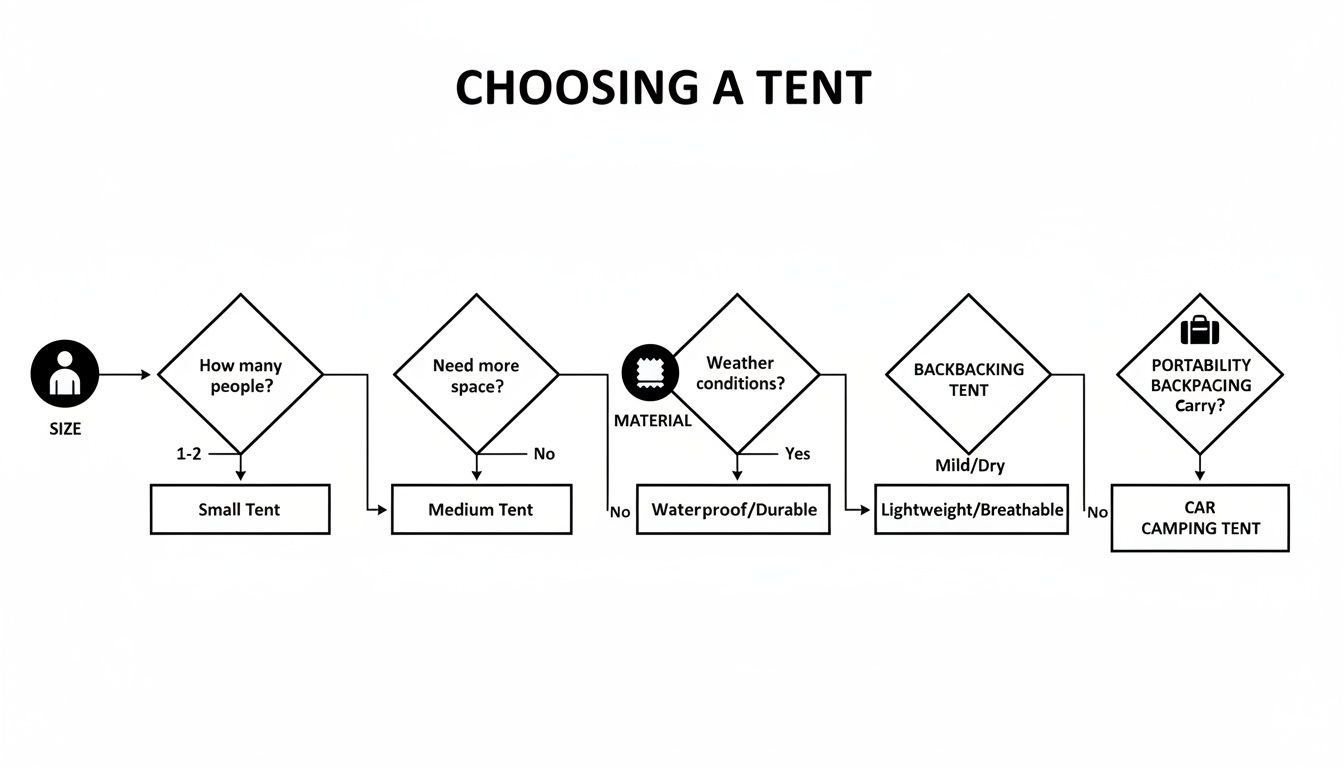
Breaking it down this way helps families focus on what’s important for them, whether it's size, material, or how easy the tent is to pack up and take with you.
Adding Tactile and Auditory Tools
Once you’ve got the comfort and visual layers sorted, it's time to bring in tools for touch and sound. These are the hands-on items that give direct, calming feedback to the nervous system.
For kids who seek out tactile input, having a variety of textures and fidgets is key. Small, quiet tools like Needohs are perfect for keeping hands busy, while the satisfying squish of a dough ball can be a brilliant stress reliever. And don’t forget the power of deep pressure! A comforting weighted animal or a huggable Palm Pals Australia plushie can provide that grounding pressure that feels just like a warm, secure hug.
A well-stocked sensory tent empowers a child to choose what their body needs in that moment. It's not just a collection of toys; it’s a toolkit for self-regulation and emotional awareness.
Finally, consider the soundscape. The tent itself will muffle outside noise, but adding a pair of noise-cancelling earmuffs for kids can create an even deeper pocket of quiet. This is a game-changer for children who are highly sensitive to background noise, allowing them to find a profound sense of calm. For more inspiration, you can explore all sorts of calm down corner ideas to see what other families have done.
By thoughtfully layering these elements, you’ll create a truly dynamic and supportive space. To see how these ideas come together, have a look at our guide on creating a soothing space with sensory toys Australia in our sensory tent.
How Sensory Tents Support Inclusive Australian Classrooms
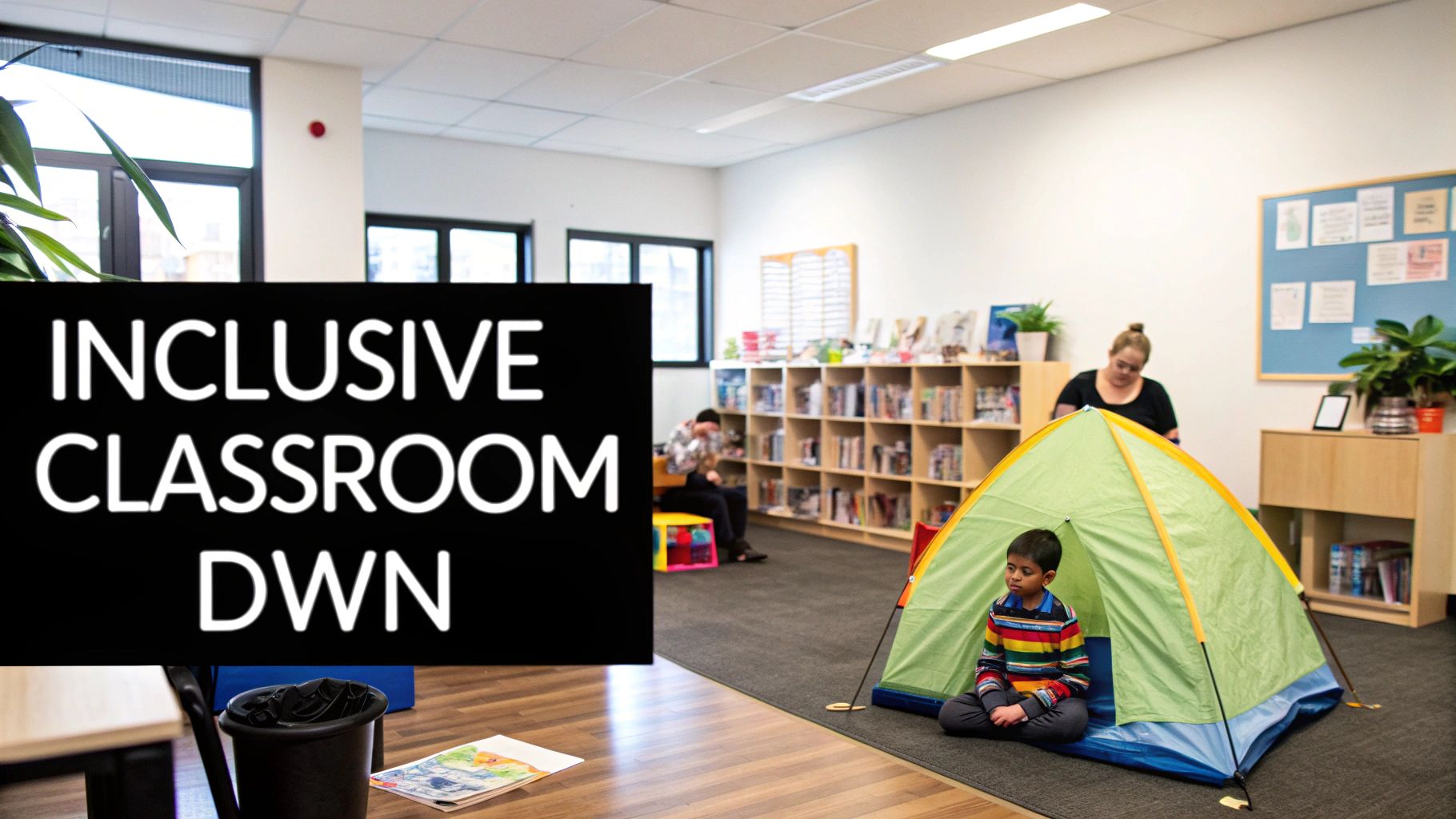
Sensory tents are popping up more and more in Australian schools, and for good reason. They're becoming a brilliant tool for building learning environments that are genuinely supportive and inclusive for every child. Once just seen as something for home, these portable havens are now being set up in classrooms and therapy centres as dedicated sensory spaces where kids can find a moment of peace and refocus.
For any teacher juggling the needs of a diverse classroom, a sensory tent is an incredibly practical, on-the-spot solution. It works as a 'calm-down corner' or a quiet zone, giving a student a safe space to regulate their emotions without having to be removed from the class. This is a massive step up from older methods, as it keeps the child included rather than separating them from their peers.
Helping Kids Self-Regulate and Stay Focused
Let’s be honest, a classroom can be a sensory minefield. You've got the hum of fluorescent lights, chairs scraping on the floor, and the constant chatter of 25 other kids. For a child with sensory sensitivities, this environment can quickly become overwhelming, making it almost impossible to learn. This is where a sensory tent Australia offers a much-needed escape from all that noise and stimulation.
When a child has access to this quiet retreat, they learn to manage their own needs proactively. Instead of letting frustration bubble over into a full-blown meltdown, they can choose to spend a few minutes in the tent to reset. This simple act is huge for building self-awareness and emotional regulation—skills that are the bedrock of successful learning.
In the classroom, a sensory tent isn't a timeout space; it's a 'time-in' space. It gives a student the chance to check in with their body, use their calming tools, and return to their desk ready to engage again.
This way of thinking is really catching on across the country. In fact, Australia’s market for sensory rooms is growing quickly, backed by government initiatives aimed at making education more inclusive. It’s clear that educators and therapists are widely recognising the therapeutic power these spaces hold.
Practical Ways to Use a Tent During the School Day
The beauty of a sensory tent is its versatility. It's so much more than just a quiet corner in an inclusive sensory classroom.
Here are just a few ways teachers are using them:
- A Private Reading Nook: The darker, distraction-free space is perfect for helping a child concentrate on their book.
- A Space for Fidget Tools: It gives a student a discreet spot to use their Kaiko Fidgets or a Needoh ball without bothering others.
- A Transition Aid: For kids who struggle with changing from one activity to the next, a few minutes in the tent can make that transition much smoother.
- A Focus Zone for One-on-One Work: A teacher or aide can sit with a student inside the tent, using the quiet to really improve concentration during a task.
By bringing a sensory tent into the classroom, teachers are better equipped to support every child's individual needs. If you're looking for more ways to create a truly inclusive learning space, it’s also worth exploring effective differentiated instruction techniques. At the end of the day, simple tools like these help build a more compassionate, sensory-friendly classroom where every student gets the chance to thrive.
Using Your NDIS Plan to Fund a Sensory Tent
For many Aussie families, a sensory tent is an absolute game-changer, but figuring out how to pay for one can feel a bit like navigating a maze. The great news is that the National Disability Insurance Scheme (NDIS) can often cover the cost of sensory equipment like tents, as long as it clearly supports a participant's goals.
The first step is understanding how to frame the purchase within your NDIS plan. A sensory tent isn't just a fun cubby house; it's a therapeutic tool. It's designed to help with emotional regulation, manage sensory processing challenges, and provide a safe retreat to prevent overwhelm. This lines up perfectly with the kind of goals you'll find in many NDIS plans.
Which NDIS Budget Category to Use?
When it comes to paying for a sensory tent with NDIS funds, the money will usually come from one of two budget categories. Which one you use depends on the price of the tent and how it's classified.
-
Consumables (Core Supports): This is often the simplest path for lower-cost sensory items. If the sensory tent is viewed as an everyday tool to help manage sensory needs, it can be purchased using this flexible budget. This gives you plenty of choice and control.
-
Assistive Technology (Capital Supports): For more specialised or expensive sensory gear, this category is often a better fit. Assistive Technology (AT) is all about items that help you do things you otherwise couldn't. A high-quality sensory tent that gives a child the ability to self-regulate absolutely falls under the banner of low-cost AT.
The secret is to make a direct connection between the tent and the goals in the NDIS plan. For instance, if a goal is "to improve emotional regulation in overwhelming environments," a sensory tent is a very clear and justifiable support to help make that happen.
How to Make the Purchase
The steps for buying your sensory tent will vary depending on how your NDIS plan is managed. Whether you're self-managed, plan-managed, or NDIA-managed, partnering with an NDIS-registered provider like The Sensory Poodle can make everything much smoother.
Your therapist or support coordinator can be your best ally here. They can write a letter of recommendation explaining exactly why a sensory tent is a "reasonable and necessary" support for your child's specific needs, which really strengthens your claim.
Here’s a quick rundown of how it works for each management type:
- Self-Managed: You have the most freedom. You can buy the sensory tent from any supplier you like, pay for it yourself, and then claim the money back through the NDIS portal.
- Plan-Managed: Your plan manager takes care of the payments. You find the perfect tent, give the invoice to your plan manager, and they’ll pay the supplier directly from your NDIS funding. Simple!
- NDIA-Managed (Agency-Managed): Your choices are limited to NDIS-registered providers. You’ll need to get a quote from a registered provider and have it approved before the purchase can go ahead.
The NDIS might seem a bit daunting at first, but it’s there to help you get the tools you need. By linking the purchase to clear goals and working with a provider who knows the ropes, you can successfully use your funding to create a vital safe space for your child.
For a bigger picture of how different tools can help, take a look at our comprehensive guide to sensory toys in Australia.
Your Sensory Tent Questions Answered
To wrap things up, let's tackle some of the most common questions we get from parents, teachers, and therapists. Think of this as the final piece of the puzzle, giving you that extra bit of confidence before you dive in.
What Age Is Best for a Sensory Tent?
This is a great question, but the answer isn't a specific number. Sensory tents are wonderfully versatile and can benefit everyone from curious toddlers right through to teenagers and adults who need a quiet corner to decompress.
The real focus isn't on age, but on need. If someone needs a low-stimulation space to regulate their emotions, a sensory tent can be a game-changer. The aim is to introduce it as a positive, safe place—their very own sanctuary where they can build self-regulation skills. And that's a skill worth nurturing at any stage of life.
Of course, for any child under three years old, it's essential to have an adult supervising to ensure they're safe.
How Do You Clean and Maintain a Pop-Up Tent?
Keeping your sensory tent clean and ready for action is surprisingly easy. Most are made from durable, wipeable fabrics like polyester.
- Quick clean-ups: For little spills or marks, a damp cloth with some mild, non-toxic soap will usually do the trick.
- Deeper cleaning: It's always best to check the manufacturer's care instructions first, just in case.
- Storing it away: This is the most important part! Make sure the tent is 100% dry before you fold it up. Taking this extra moment prevents any musty smells or mildew from forming, keeping it fresh for next time.
Can a Sensory Tent Help My Child Sleep Better?
Absolutely. For countless Australian families, a sensory tent has become an invaluable part of their collection of sleeping aids. The blackout material is brilliant at blocking out morning light or hallway lamps, creating a dark, cosy environment that tells the brain it's time to switch off and rest.
It's about creating a predictable, distraction-free bubble.
By providing an enclosed, consistent space free from visual clutter, a sensory tent can significantly lower bedtime anxiety. It helps a child’s mind and body to unwind, paving the way for a much more restful night's sleep.
You can make it even more effective by adding other soothing items. Pairing the tent with a weighted blanket like a Neptune Blanket for that calming deep pressure, or a warm, cuddly Warmie can really boost the feelings of safety and security. This simple combination transforms the tent from just a dark space into a multi-sensory retreat, making it far easier for a child to settle and drift off.
Ready to create a calming sanctuary for your child? At The Sensory Poodle, we offer a carefully selected range of sensory tents and tools to help you build the perfect retreat. Explore our high-quality, NDIS-friendly Pop-up Block Out Sensory Tent and discover how it can bring more peace and regulation into your home.