


Your Guide to Finding Calm with a Sensory Tent

Picture this: you have a pair of noise-cancelling headphones that block out overwhelming sounds. Now, imagine that same concept, but for all your senses. That’s the magic of a sensory tent. It's a personal, portable sanctuary designed to offer a much-needed break from the chaos of the outside world, creating a simple yet powerful safe space.
What Is a Sensory Tent and Who Needs One?
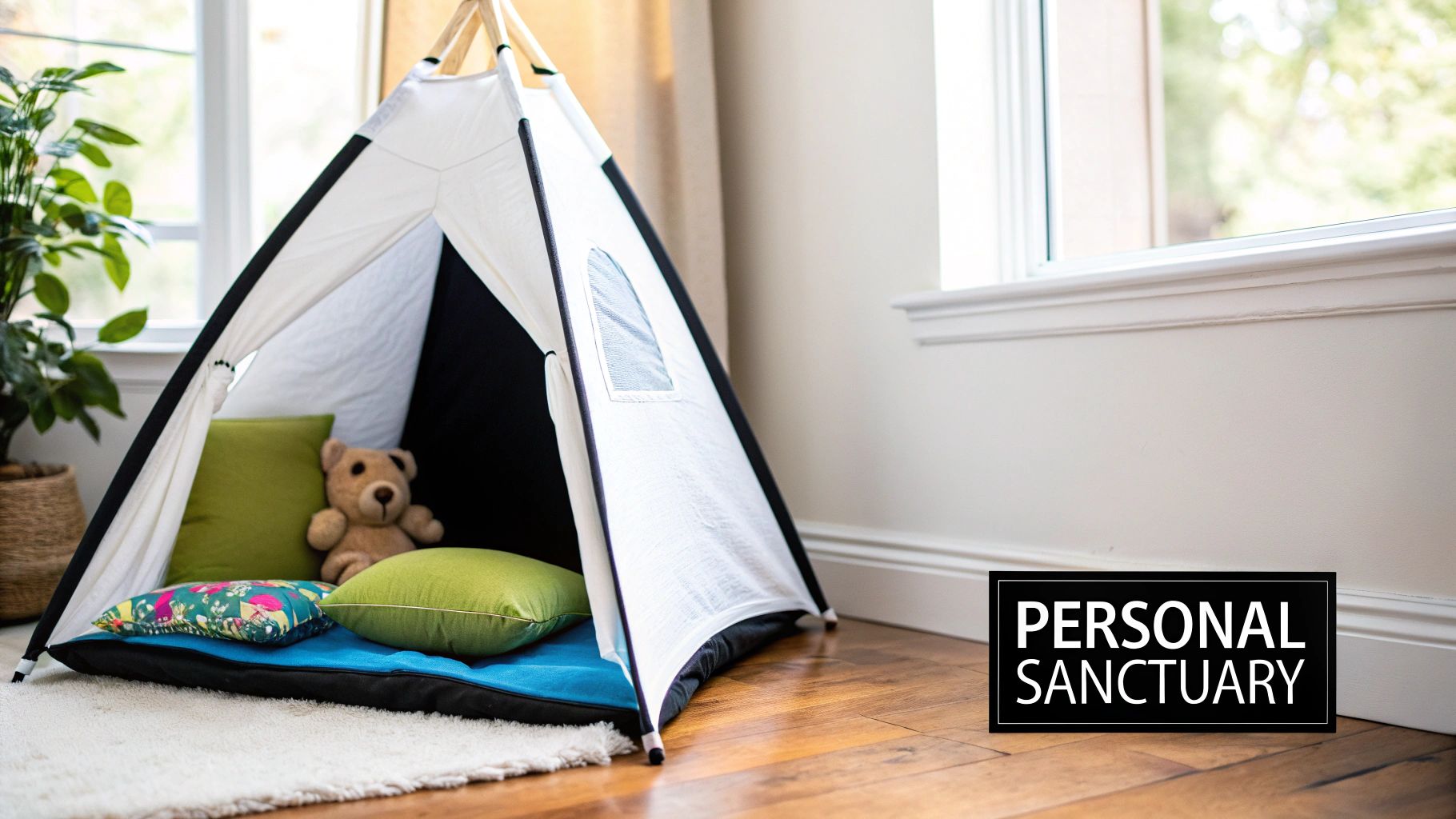
A sensory tent is so much more than just a play tent; it’s a purpose-built retreat. Think of it as a calming escape hatch. When a child or adult's brain gets stuck in a 'sensory traffic jam'—with too much information flooding in at once—this enclosed space offers an immediate sense of relief by dialling down the external world.
By blocking out harsh lights and muffling distracting noises, a sensory tent gives the nervous system a chance to decompress and reset. The simple act of stepping into a quiet, darkened space can be enough to head off emotional meltdowns, ease anxiety, and help someone regain a feeling of control over their environment.
Who Benefits Most From a Sensory Space?
These personal sanctuaries are a game-changer for anyone who easily feels overwhelmed by their surroundings. This includes a wide range of people who thrive when they have access to a dedicated calming zone.
Let’s break down who these tents are most helpful for.
| User Group | Primary Challenge | How a Sensory Tent Helps |
|---|---|---|
| Individuals with Autism Spectrum Disorder (ASD) | Heightened sensory sensitivity makes everyday environments feel chaotic and unpredictable. | Provides a predictable, low-stimulus refuge to retreat to and self-regulate. |
| Those with Sensory Processing Disorder (SPD) | The brain struggles to organise and respond to sensory input from the body and environment. | Offers a controlled setting where sensory input can be managed and regulated. |
| People with ADHD | Constant distractions make it difficult to focus, and hyperactivity can be hard to manage. | Minimises external distractions, creating a quiet space to improve focus and calm down. |
| Anyone Experiencing Anxiety | Feelings of stress and being overwhelmed can trigger a fight-or-flight response. | The feeling of being safely enclosed has a profound calming effect, much like a hug. |
As you can see, the benefits are clear and specific, offering targeted support where it's needed most.
The growing understanding of these benefits is undeniable. In Australia alone, the market for sensory rooms—which often feature sensory tents as a core component—hit USD 14.47 million and is projected to keep growing. This trend points to a major shift towards better support for neurodiverse individuals at home and in schools. For a deeper dive, you can explore more data on the Asia-Pacific sensory rooms market to see this growth for yourself.
These tents are incredibly versatile tools. Across Australia, they're being used to build calming corners in homes, create inclusive sensory classroom environments, and support therapeutic goals. Ultimately, they empower people by giving them a dedicated space to manage their sensory needs, turning a simple pop-up structure into a vital aid for daily well-being.
The Science Behind Calming Sensory Spaces
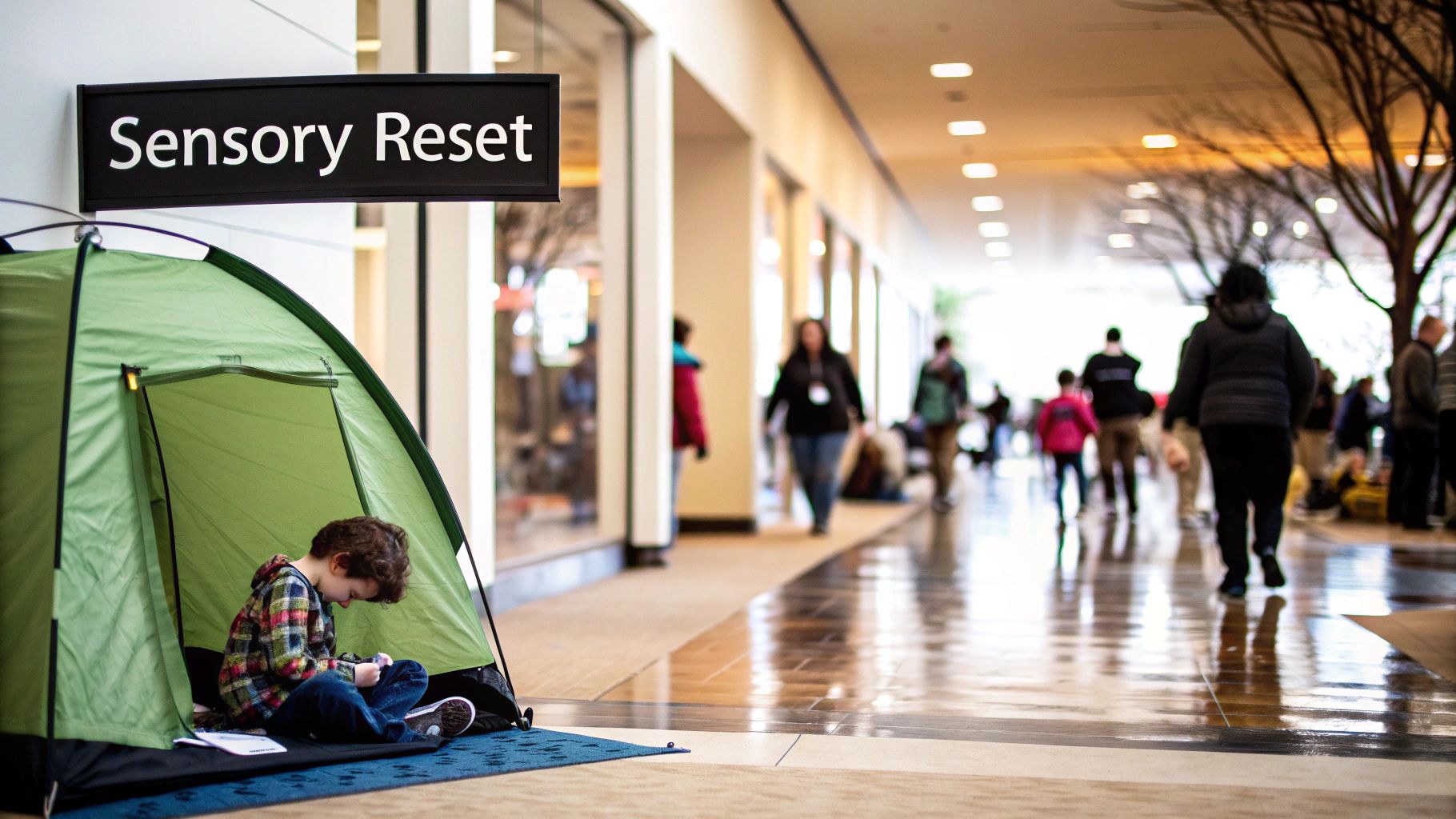
Ever wondered why hiding away in a simple tent can feel so deeply calming? The magic isn't just in the fabric; it's rooted in how our brains handle the constant flood of information from the world around us. For many of us, especially neurodiverse people, that stream of sights, sounds, and sensations can quickly become overwhelming.
Imagine your brain is like a busy traffic intersection. When things are running smoothly, signals get where they need to go without a hitch. But when too much information arrives at once—bright lights, background noise, unexpected touches—it causes a massive traffic jam. This is sensory overload. The brain simply can't process it all, which can lead to stress, anxiety, and meltdowns.
A sensory tent is like a quiet side street, offering a much-needed detour from all that chaos. It creates a controlled, low-stimulation space that drastically cuts down the visual and auditory data the brain has to juggle.
How a Sensory Tent Resets the Nervous System
When someone steps into a quiet, darkened tent, their nervous system gets the signal to shift down from high alert into a state of rest. This isn't just a vague feeling of calm; it's a real physiological change. The sudden drop in external stimuli allows the parasympathetic nervous system—our body's "rest and digest" mode—to kick in.
This calming effect is all about managing our eight senses. We all know the main five, but there are also our sense of balance (vestibular), body awareness (proprioception), and our internal body sense (interoception). When any of these get overloaded, it adds to that feeling of being completely overwhelmed.
A sensory tent simplifies this sensory landscape. It gives the brain a break from trying to track bright lights, tune out background chatter, and process constant movement. This space allows it to recalibrate and find its balance again, which is absolutely vital for learning self-regulation skills.
By intentionally limiting sensory input, a sensory tent empowers an individual to manage their internal state. It’s not about escaping the world, but about creating a safe base from which to re-engage with it more comfortably and confidently.
Tangible Benefits of a Calming Space
This neurological ‘reset’ leads to real, observable benefits that go far beyond the tent itself. Creating these dedicated sensory spaces is a practical way to build essential life skills.
Here’s what that looks like in real life:
- Improved Emotional Regulation: A child who comes home frazzled from a noisy school day can duck into the tent to unwind. This quiet time helps them process everything without hitting boiling point, teaching them to recognise their own needs and act on them.
- Reduced Anxiety and Stress: In a busy household, a few minutes in a sensory tent can be a sanctuary for an adult needing to decompress. The enclosed, secure feeling can lower stress hormones and bring a sense of peace, making daily challenges easier to face.
- Better Focus and Concentration: After a short break in the tent, the brain is far better prepared to focus. A student could use it between homework tasks, returning to their desk with a clearer head and renewed concentration.
At its core, a sensory tent is a practical tool that gives the nervous system a helping hand. Whether it's a child seeking a moment of peace or an adult needing a quiet retreat, this simple structure offers a powerful way to manage sensory input and find a calmer, more regulated state of being.
How to Choose the Perfect Sensory Tent
Picking the right sensory tent can feel like a big decision, but it doesn't have to be complicated. Think of it like finding the perfect pair of shoes—the best fit really depends on who will be using it and where it's going. A sensory tent isn’t a one-size-fits-all product, so the first step is to get clear on your specific needs.
Not all tents are made the same. The best choice will strike a balance between size, material, portability, and the little features that make a big difference. Get this right, and the tent will quickly become a cherished sanctuary rather than just another piece of equipment gathering dust.
Size and Space Considerations
First things first: where is the tent going to live? The amount of space you have in your home, classroom, or therapy clinic is going to be the biggest factor in your decision.
- For Smaller Spaces: If you're working with a corner in a bedroom or a nook in the living room, a compact pop-up tent is a fantastic option. They're designed to be set up in a flash and stored away just as easily, which is perfect for homes where floor space is at a premium.
- For Larger Areas: Got a bit more room to play with? You could go for a larger structure that can comfortably hold more sensory tools, or even have enough space for an adult and child to sit together. These work brilliantly in dedicated sensory rooms or spacious classroom calming corners.
The Sensory Poodle Pop-Up Block Out Sensory Tent, for instance, really hits that sweet spot. It’s roomy enough for a child to get comfy with their cushions and toys, but its 1.2-metre footprint fits easily into most standard rooms. And because it’s a pop-up, it’s ready to go in seconds and packs away just as quickly.
Material and Durability
The fabric of a sensory tent is absolutely critical—not just for how long it lasts, but for how well it works. You're trying to create a dark, quiet, and enclosed environment, so the material needs to do the heavy lifting.
Look for a durable, non-toxic, blackout fabric. This type of material is specifically designed to block out as much external light as possible, which is key to creating that instant dim, calming atmosphere. It also needs to be tough enough to handle regular use, especially in a busy classroom or therapy setting where it’s likely to see a lot of action.
Good ventilation is also non-negotiable. A tent must be a safe, breathable space. Look for designs that have mesh windows or adjustable flaps, which allow for airflow without flooding the space with light. This gives you complete control over the environment inside.
Portability and Ease of Setup
How easy is it to get the tent up and running? For most families and educators, convenience is a huge deal. If a tent is a hassle to assemble, it simply won't get used as often as it should.
A sensory tent should be an accessible tool for immediate regulation. If setup is a barrier, its primary purpose is defeated. Simplicity is a feature, not a compromise.
When it comes to portability and ease of use, pop-up designs are the clear winner. They require no poles, no confusing instructions—they literally pop into shape in an instant. This makes them ideal for moving between rooms, taking to a grandparent’s house, or simply packing away when not needed. Bed tents are another brilliant option, turning a bed into a permanent sensory haven without taking up any extra floor space. Think about where and how often you'll need to move the tent; for pure flexibility, a pop-up is hard to beat.
Key Design Features to Look For
Once you’ve got the basics sorted, it’s the smaller design details that can really elevate a sensory tent from good to great. When you're comparing different models, keep an eye out for these features.
- Adjustable Flaps: A tent with roll-up windows or door flaps is a game-changer. It gives the user control over how much light and sound gets in, allowing them to customise the space to meet their sensory needs in that exact moment.
- Compatibility with Other Items: Is there enough room inside for the essentials? Make sure the tent can comfortably fit other sensory tools like a cushion, a weighted lap pad, or a few favourite fidget toys.
- Sturdy Construction: Check the little things. Are the seams well-stitched? Does the frame feel resilient? A well-made tent will provide a safe, reliable space for years to come.
These features ensure the tent becomes a truly functional calming space, not just an empty shell. And their popularity is growing for a reason. In Australia's toy market, sensory tents are a high-growth niche. Sensory aids like these now account for 8-10% of educational toy sales in major cities, a trend that's also reflected in NDIS expenditure.
Creating The Ultimate Calming Corner
An empty sensory tent is really just a blank canvas. Its true potential is only unlocked when you thoughtfully fill it with the right sensory tools and supports. Transforming this simple space into a therapeutic haven is all about customisation. By carefully choosing a collection of items that cater to specific sensory needs, you can create the ultimate calming corner that feels personal, safe, and genuinely effective.
This is where the magic really happens. A well-equipped tent stops being just a hideout and becomes a proactive tool for self-regulation, offering exactly what a child or adult needs in those moments of overwhelm. It’s a fully-stocked reset station for the nervous system.
This handy decision tree can help you visualise the selection process based on your unique space and needs.
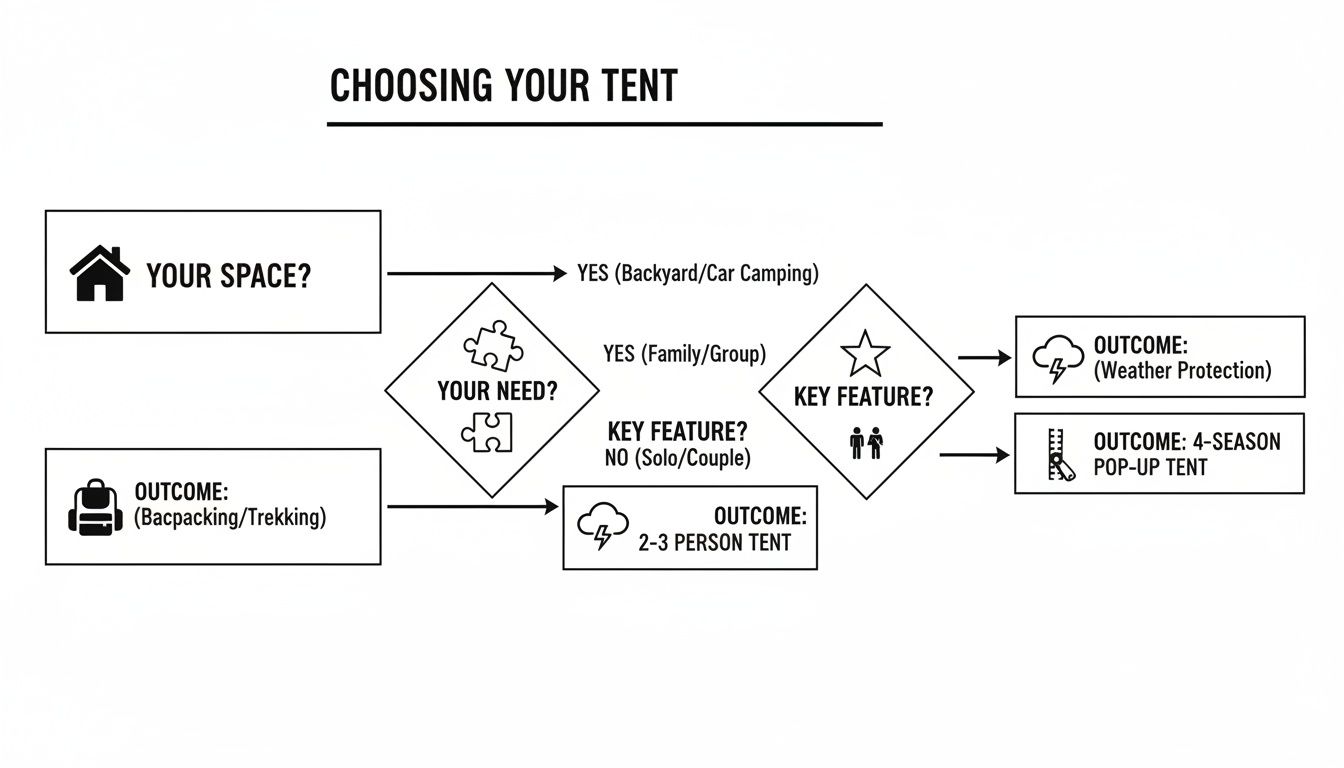
As the flowchart shows, the perfect tent is a balance between the physical space you have, the user's primary sensory requirements, and key features like portability or blackout capabilities.
Recipes for a Soothing Sanctuary
Building the perfect sensory space is a bit like following a recipe, where each ingredient serves a specific purpose. You can mix and match items based on what provides the most comfort and regulation for the user. A great starting point is to think about which senses need the most support and go from there.
A tent naturally creates an enclosed area, but sometimes you need to segment a larger room to define the calm-down zone. Resources on room screen dividers can offer some great ideas for creating these kinds of intimate spaces.
To get you started, here are a few "recipes" for outfitting your tent, focusing on different sensory systems.
For Visual Relaxation and Focus
The visual environment inside the tent should be calming, not chaotic. The aim is to swap out harsh, unpredictable external light for gentle, mesmerising visual input that soothes the mind.
- Fibre Optic Lights: These are wonderful because they offer a safe, tactile way to experience light without any heat. We have a whole guide on how to get the most out of a fibre optic lamp.
- Bubble Tubes: The gentle hum and steady stream of coloured bubbles from a sensory bubble tube with fish provide predictable, soothing stimulation for both the eyes and ears.
- Jellyfish Lamps: These can be a fantastic centrepiece. The slow, graceful movement of the jellyfish in a jellyfish aquarium lamp creates a hypnotic effect that can lower anxiety and help focus a scattered mind.
For Tactile Comfort and Grounding
Tactile input is absolutely vital for feeling grounded and secure. Items that provide deep pressure or interesting textures can be incredibly calming for an overwhelmed nervous system.
- Weighted Items: A weighted blanket like the Neptune Blanket II or a weighted animal toy provides deep pressure stimulation, which feels a lot like a firm, comforting hug. This type of input helps release calming neurotransmitters, promoting a real sense of security.
- Soft Furnishings: Fill the floor of the tent with plush cushions, soft blankets, or even a Calm Buddi Turtle. The goal is to create a comfortable and inviting nest that beckons you to relax.
- Fidgets: A small basket of quiet, tactile fidgets is a must. Tools like squishy Needohs or smooth, cool Kaiko Fidgets give busy hands something to do, which can significantly improve focus and burn off anxious energy.
The most effective calming corners are co-created. Whenever possible, involve the user in choosing the items for their tent. This sense of ownership fosters a much deeper connection to the space, making it a true personal sanctuary they will actively want to use.
For Auditory Calm and Blocking Out Noise
For many neurodivergent people, auditory overload is a major trigger for stress and meltdowns. The inside of a tent should be a quiet refuge, but you can enhance this with tools that offer even more control over the soundscape.
- Noise-Cancelling Earmuffs: A quality pair of noise cancelling earmuffs for kids is non-negotiable for anyone sensitive to sound. They can block out distracting background noise from the household or classroom, allowing for true peace and quiet.
- White Noise Machine: Sometimes, complete silence can be unsettling. A small machine that plays calming sounds like rain or gentle static can help mask startling external noises, creating a consistent and predictable auditory environment.
To help you get started, here's a quick checklist of essential items you might consider for your sensory tent.
Sensory Tent Essentials Checklist
| Sensory System | Recommended Item | Benefit | Example Product Link |
|---|---|---|---|
| Visual | Fibre Optic Lamp | Provides safe, tactile light for visual tracking and calm focus. | Sensory Poodle Fibre Optics |
| Tactile | Weighted Blanket | Offers deep pressure stimulation to soothe and ground the body. | Neptune Blanket II |
| Auditory | Noise-Cancelling Earmuffs | Blocks overwhelming external sounds, creating a quiet refuge. | Ems for Kids Earmuffs |
| Proprioceptive | Weighted Animal Toy | Combines deep pressure with the comfort of a soft toy. | Weighted Animal Toys |
| Tactile/Fidget | Kaiko Fidget | Provides a discreet, silent outlet for restless hands and anxiety. | Kaiko Fidgets |
By combining elements from each of these categories, you can build a comprehensive and effective calming corner inside your sensory tent. The goal is always to create a multi-sensory experience that is entirely supportive, empowering the user with the tools they need to find their calm.
Getting the Most Out of Your Sensory Tent
A sensory tent isn't just a pop-up fort; it's a proactive tool for emotional regulation. The real magic happens when it’s woven into daily life, not just pulled out when things get overwhelming. The goal is to make it a reliable sanctuary, whether that's at home, in a busy classroom, or during a therapy session.
How you introduce the tent is everything. It should always be framed as a positive, safe space—a personal hideout for finding a bit of peace. It's crucial that it's seen as a retreat, never a place for a time-out or punishment. This positive spin encourages kids to use it when they genuinely need that quiet moment.
Using a Sensory Tent at Home
At home, a sensory tent can become a central part of your family’s emotional toolkit. The first step is to make the setup a fun, shared activity. Build it together, let your child decorate it, and pop their favourite blanket or soft toy inside. This helps them feel a sense of ownership from the get-go.
It’s also powerful to model its use yourself. Try saying something like, "Wow, the TV is a bit loud for me. I'm going to take five in the calm tent." This demonstrates that taking a break is a healthy choice for everyone. Encourage your child to recognise their own early warning signs of feeling overwhelmed, so they can head to their tent before things escalate.
"We call ours the 'Reset Rocket.' When my son starts feeling overwhelmed, he says he needs to 'fly to the quiet planet' for a bit. It’s given him ownership over his own regulation, and that has been a complete game-changer for our family."
- Hypothetical quote from a parent
You can also fill the tent with quiet, engaging sensory activities for preschoolers, turning it into a little hub for focused, calming play.
Integrating a Tent in the Classroom
In a bustling classroom, a sensory tent can be an absolute lifeline for creating an inclusive learning environment. For it to be a success, though, you need clear and simple ground rules. It has to be a tool for learning, not a way to escape it.
Here are a few tips for making it work in a school setting:
- Set Clear Expectations: Create a few simple rules with your students. Things like, "One person at a time," "The tent is a quiet zone," and "Use the timer for your turn" help keep its use fair and predictable.
- Use Visual Cues: A laminated sign-up sheet or a visual sand timer helps students manage their turn independently and reduces the need for constant teacher intervention.
- Teach Its Purpose: Talk openly about the tent being a tool to help their brains get ready to learn. Frame it as a "brain break" spot where they can recharge before rejoining group activities.
By introducing it this way, the tent becomes a respected and valuable part of the classroom routine and a cornerstone of a functional sensory classroom.
Application in Therapy Sessions
For OTs and other therapists, a sensory tent is a fantastic way to create a controlled environment for teaching self-regulation skills. It’s incredibly versatile and can be used in a few different ways during a session.
A therapist might use the tent as:
- A Safe Starting Point: Kicking off a session in the tent can help a child ease into the therapy space, feel grounded, and get ready for the work ahead.
- A Mid-Session Reset: If an activity becomes a bit too much, the tent offers an immediate retreat to decompress without derailing the whole session.
- A Calming Conclusion: Wrapping up with a few quiet minutes in the tent can help a child down-regulate before they head back out into the noisy, busy world.
Ultimately, the tent acts as a safe home base. It allows therapists to gently nudge a child's boundaries, knowing there’s always a secure space they can retreat to. This empowers them to explore their sensory needs safely, building genuine confidence and resilience over time.
Buying Your Sensory Tent with NDIS Funding
Trying to figure out funding for sensory tools can feel a bit overwhelming, but getting a sensory tent through the National Disability Insurance Scheme (NDIS) is actually quite straightforward. Here at Sensory Poodle, we're a registered NDIS provider of sensory toys in Australia, which means we can make the whole process as simple and stress-free as possible for you.
A sensory tent usually falls under the category of low-cost assistive technology (AT). In simple terms, this means you can often buy one using your NDIS consumables budget without needing to get a special quote first, as long as it's under the set price limit. This makes it much faster and easier to get your hands on this fantastic calming tool.
How to Use Your NDIS Plan
How you go about it just depends on how your NDIS plan is managed. We're set up to help everyone, no matter what your plan looks like.
- Self-Managed: If you manage your own funds, you can buy directly from our website. Just place your order, pay at the checkout, and then use our invoice to claim the money back from the NDIS portal. Easy.
- Plan-Managed: For those with a plan manager, simply add what you need to your cart and choose the "NDIS Payment" option at checkout. You'll fill in the participant's details and your plan manager's email, and we'll send the invoice straight to them to sort out the payment.
- NDIA-Managed (Agency-Managed): As a registered provider, we can handle NDIA-managed orders too. Get in touch with us with the participant's details and the items you're after, and we’ll take care of everything from there.
We’re Here for Schools and Organisations Too
We also love working with Australian schools, therapy clinics, and other organisations. If you're setting up a sensory room or a therapy space, you can ask for a quote right on our website or just email us a purchase order. We ship everything quickly from our Melbourne warehouse, so you won't be left waiting.
Knowing which tools will work best is a huge part of creating a great sensory space. For more ideas on how a sensory tent can be part of a bigger picture, have a look at our guide on sensory tools for autism. Our aim is to take the hassle out of purchasing so you can get back to creating those supportive, calming environments.
Your Sensory Tent Questions Answered
It's completely normal to have a few questions before bringing a new sensory tool into your home or classroom. We've put together answers to some of the most common queries to help you feel confident that a sensory tent is the right choice for you.
How Can I Introduce a Sensory Tent to a Child Who Seems Unsure?
The trick is to make the tent feel like an exciting personal clubhouse, not a place for a time-out. Start by making the setup a fun, shared activity. Let them help you pop it open and decide which of their favourite soft toys or cosy blankets should live inside.
You can also lead by example. Try sitting in it yourself for a moment and saying something like, "I'm just going to relax in this quiet spot for a minute." When you frame it as a positive choice—a special hideaway—they'll be much more likely to see it that way too.
What's the Best Way to Clean a Pop-Up Sensory Tent?
Keeping your sensory tent fresh and inviting is straightforward. For most pop-up models, a simple wipe-down with a damp cloth and a little mild soap will take care of everyday smudges and spills. It's best to steer clear of harsh chemical cleaners, as they can damage the fabric over time.
For a deeper clean, it's always a good idea to check the manufacturer's care instructions first. The most important thing is to make sure the tent is completely dry before you pack it away to prevent any mildew from forming. A clean tent is a welcoming one!
Are These Tents Just for Kids, or Can Adults Use Them Too?
Absolutely! While they're often seen as a tool for children, sensory tents are fantastic for adults. Anyone who feels the strain of sensory overload, anxiety, or just the stress of a busy day can find a huge amount of relief in having a dedicated quiet space.
Many adults use them to decompress after work, escape the sensory chaos of a busy household, or even create a peaceful nook for meditation or focused thinking. The need for a sensory reset truly has no age limit.
Ready to create your own calming corner? Sensory Poodle offers a curated selection of high-quality tools to build the perfect sensory sanctuary.
Explore our Pop-Up Block Out Sensory Tent and start building a peaceful retreat today.