


Your Guide to Choosing a Weighted Lap Blanket in Australia

Ever found yourself needing a moment of calm amidst the chaos? A weighted lap blanket is a wonderfully simple sensory tool that does just that. Think of it as a portable, focused hug for your lap, designed to help settle an overstimulated nervous system, sharpen focus during quiet times, and ease those feelings of anxiety or restlessness.
For many seeking sensory support here in Australia, it’s become an absolute go-to.
Unlocking a World of Calm and Focus
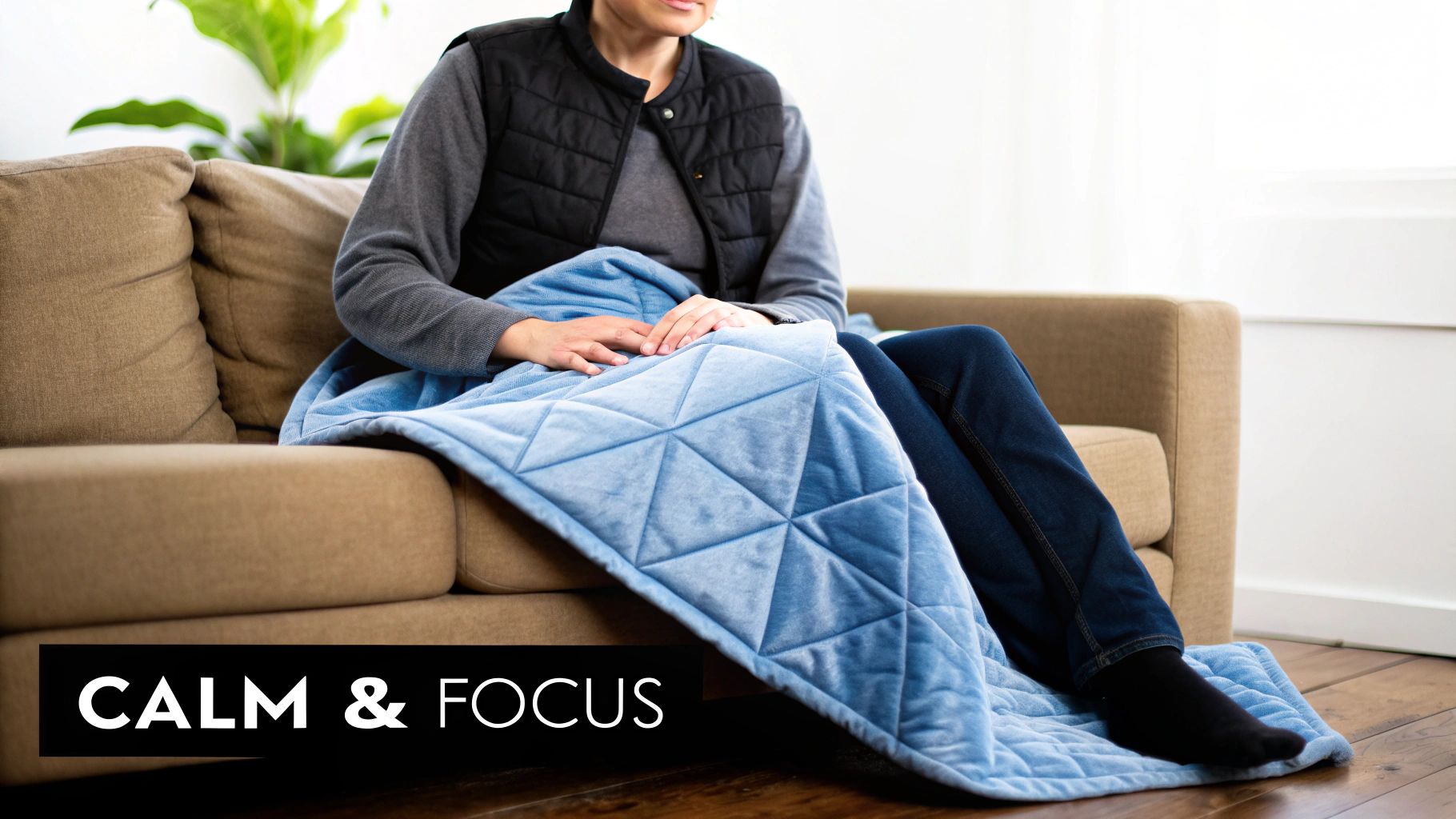
Remember the comforting weight of a cat curled up on your lap or the secure feeling of a really good hug? A weighted lap blanket works on that same principle, tapping into a concept called Deep Pressure Stimulation (DPS). This steady, gentle pressure sends calming signals to the brain, helping to ground both the body and the mind. It’s a simple idea with a profound effect.
For kids and adults with ADHD, anxiety, or sensory processing differences, the world can feel like a constant sensory bombardment. A weighted lap blanket offers a powerful but incredibly simple way to filter out some of that noise. By providing consistent, predictable sensory input, it helps the nervous system find its centre, which makes managing big emotions and staying on task so much easier.
Who Benefits from a Weighted Lap Blanket?
These wonderfully versatile tools aren't just for kids—they offer real support to people of all ages in all sorts of situations. The benefits we see time and again include:
- Improved Concentration: An absolute game-changer for students during classroom lessons, homework time, or even just sitting still for story time.
- Reduced Restlessness: It helps calm fidgety legs and the constant urge to move, which can make car rides, appointments, or long waits far more manageable.
- Emotional Regulation: A fantastic grounding tool during moments of stress, sensory overload, or rising anxiety. In fact, a weighted lap blanket is often a key part of creating effective calm down corners for children, giving them a safe and comforting sensory anchor.
- Portable Comfort: Its compact size means you can easily take it anywhere—from the car to the classroom, a therapist's office, or even on a family holiday.
Let's quickly break down the core features and benefits.
Weighted Lap Blanket at a Glance
This table offers a quick snapshot of what makes these blankets so effective.
| Feature | Primary Benefit |
|---|---|
| Compact & Portable | Easy to transport and use in various settings like school, car, or clinics. |
| Deep Pressure Stimulation | Provides a gentle, constant pressure that calms the nervous system. |
| Targeted Weight | Focuses the calming sensation on the lap and upper legs for seated activities. |
| Versatile Use | Supports focus, emotional regulation, and reduces fidgeting. |
Ultimately, it’s about giving someone a discreet and effective way to access the benefits of deep pressure whenever and wherever they need it.
The growing awareness of these benefits is pretty clear. The Australian market for therapeutic weighted blankets, which includes these handy lap pads, hit USD 13.39 million in 2024. This boom is driven by parents, educators, and clinicians who see the real-world difference these tools make. The market is even projected to more than double by 2033, which just goes to show how widely recognised their value has become.
Throughout this guide, we’ll dive into everything you need to know, from the science behind it all to choosing the perfect blanket. If you want to explore their use for anxiety more specifically, you can also read about how weighted blankets help with anxiety in our detailed article.
How Gentle Pressure Unlocks Calm and Focus
Have you ever wondered why a firm, comforting hug can instantly make you feel more grounded? Or why swaddling a baby helps them settle and sleep? The magic behind these experiences is a physiological response known as Deep Pressure Stimulation (DPS), and it’s the exact same principle that makes a weighted lap blanket so effective.
Think of the nervous system as a busy highway. For many neurodiverse individuals, especially those with sensory processing differences, ADHD, or anxiety, that highway is often jammed with overwhelming traffic—sights, sounds, and internal signals all competing for attention. This sensory traffic jam can lead to feelings of stress, restlessness, and an inability to focus.
A weighted lap blanket acts like a skilled traffic controller. By providing steady, gentle pressure to the lap, it sends a clear, calming signal directly to the brain, helping to manage the chaos.
The Science of the Soothing Sensation
So, what’s actually happening in the body? This gentle pressure encourages the brain to switch gears from its "fight or flight" mode to a more relaxed "rest and digest" state. This isn’t just a feeling; it’s a tangible shift in brain chemistry, creating a cascade of positive effects you can see and feel.
Specifically, DPS helps the brain release neurotransmitters that are essential for mood and regulation.
- Serotonin: Often called the "happy chemical," serotonin plays a huge role in stabilising our mood, promoting feelings of well-being, and creating a sense of calm.
- Dopamine: This is the "focus chemical" linked to motivation, pleasure, and concentration. A boost in dopamine can make it much easier to engage with a task and feel a sense of accomplishment.
While all this is happening, the gentle pressure also helps to lower levels of cortisol, the body's primary stress hormone. When cortisol levels are high, we feel anxious, agitated, and on edge. By bringing those levels down, a weighted lap blanket helps the body physically relax, easing muscle tension and slowing a racing heart.
"In my practice, I see the effects of Deep Pressure Stimulation every day. A weighted lap blanket can be the difference between a child being too overwhelmed to participate and one who is grounded enough to learn. It’s a simple tool that provides the predictable sensory input their nervous system craves to feel safe and regulated."
— Australian Occupational Therapist
Grounding an Overstimulated System
For someone experiencing sensory overload, this combination of increased "feel-good" chemicals and decreased stress hormones creates a profound grounding effect. It’s like an anchor in a stormy sea. It provides a constant, reliable sensation that helps the brain filter out the less important sensory noise.
This grounding is absolutely crucial for self-regulation. It can reduce the urge to fidget, wiggle, or seek out other intense sensory input in an attempt to feel settled. Instead of being distracted by that internal static, a person can finally direct their mental energy towards the task at hand, whether it's listening to a teacher, completing homework, or just enjoying a quiet moment with a calming Jellyfish lamp.
The focused nature of a weighted lap pad makes it an ideal tool for seated activities, delivering these benefits without the full-body envelopment of a larger blanket. To better understand how this targeted pressure works, you can learn more about the specific applications of a weighted lap pad in our comprehensive guide. This makes it a discreet yet powerful support in classrooms, clinics, and at home.
How to Choose the Perfect Weighted Lap Blanket
Picking the right weighted lap blanket is the key to unlocking all those calming benefits we've been talking about. But when you’re faced with a few different options, it can feel a bit overwhelming. The good news? It really just comes down to four things: weight, size, fabric, and what's inside. Get these right, and you’ll have a sensory tool that provides the perfect amount of gentle pressure for comfort, focus, and regulation.
Determining the Right Weight
First things first, let’s talk weight. This is the most important decision you'll make.
The general rule of thumb is to choose a blanket that's around 5-10% of the user's body weight. So, for a child who weighs 30kg, you'd be looking at a blanket somewhere between 1.5kg and 3kg. This range is designed to provide enough Deep Pressure Stimulation to be effective without feeling heavy or restrictive.
But remember, this is just a starting point. Every person's sensory system is unique. Some people love a bit more pressure, while others prefer a lighter touch.
It’s always a great idea to chat with an Occupational Therapist (OT) before buying a weighted lap blanket, especially for children or anyone with specific physical or sensory needs. An OT can do a proper assessment to make sure the weight is safe, appropriate, and will give the best possible therapeutic results.
Most importantly, the user must always be able to move the blanket off themselves without any help. Safety always comes first.
Considering Size and Portability
Unlike a big, heavy blanket for your bed, a weighted lap blanket is meant to be small and compact. That’s actually one of its biggest advantages. It’s designed to sit neatly on someone's lap while they're sitting down, delivering that targeted pressure right where it's needed without getting in the way.
This portability is what makes it such a brilliant sensory tool for all sorts of situations:
- In the classroom: It can rest discreetly on a student’s lap during lessons, helping them stay focused.
- During travel: It’s easy to pack for the car or a plane, taking the edge off travel-related anxiety.
- At appointments: It can be a calming anchor in a busy, unfamiliar waiting room.
The compact design means that the calming effects of deep pressure are always close at hand, no matter where the day takes you.
This decision tree shows how that gentle pressure sends signals to the brain that say, "Hey, it's okay, you can relax now," helping to regulate an overstimulated nervous system.
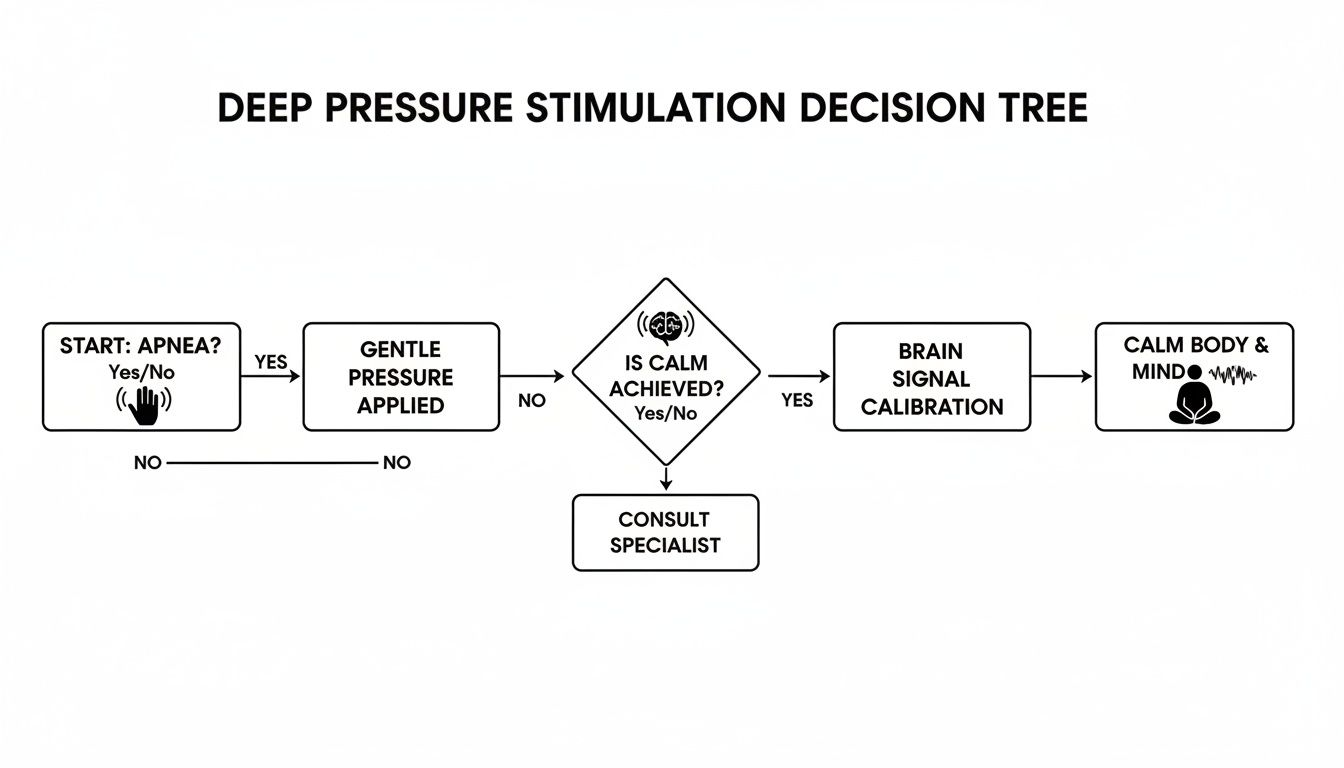
It’s a simple concept—physical pressure creating a profound neurological shift—but it can make a world of difference.
Selecting the Best Fabric and Filler
The look and feel of a weighted lap blanket are just as important as the weight. The materials play a huge role in the overall sensory experience, so it's worth thinking about what will feel best for the person using it.
When choosing your blanket's features, comparing materials side-by-side can make the decision much clearer.
Weighted Lap Blanket Feature Comparison
| Feature | Minky Fabric | Cotton Drill Fabric | Glass Bead Filler |
|---|---|---|---|
| Feel | Plush, velvety, and incredibly soft. | Smooth, sturdy, and breathable. | Creates a smooth, consistent texture. |
| Best For | Sensory seekers who love soft, comforting textures. | Classroom or clinical settings needing durability. | Users who are sensitive to lumpy textures. |
| Durability | Good, but requires gentle care to maintain softness. | Excellent. Very tough and resilient to wear. | High. Does not break down over time. |
| Care | Machine washable on a gentle, cool cycle. | Easy to clean and machine washable. | Contained within secure pockets. |
This comparison highlights how different materials cater to different needs, from tactile comfort to long-lasting use in busy environments.
Fabric Choices
The outer fabric is what the user will touch, so you want to get it right. The two most popular options offer very different sensory feedback:
- Soft Minky Fabric: This is that super soft, plush, almost velvety material. It's a fantastic choice for anyone who finds gentle, comforting textures soothing and regulating.
- Durable Cotton Drill: This is a much tougher, smoother fabric. It’s built to last and easy to clean, making it a practical pick for high-traffic places like schools. If you're curious about different weaves, you can explore the features of different cotton blankets to get a better sense of their texture and breathability.
Filler Material
So, what's making it heavy? The weight comes from fillers, and you want something non-toxic that spreads out evenly. Micro glass beads are the gold standard here. They’re tiny, smooth, and much denser than other fillers like poly pellets, so they create a consistent, gentle pressure without any weird lumps or bumps. This even distribution is what makes the Deep Pressure Stimulation so effective.
By taking a moment to think about these four key elements—weight, size, fabric, and filler—you can confidently choose a weighted lap blanket that’s a perfect match for the user's needs. This will help it become a trusted and effective tool for promoting calm and focus, day in and day out.
Weaving Your Blanket into Everyday Routines
The real magic of a weighted lap blanket happens when it becomes a normal, predictable part of the day. It’s not just a tool for crisis moments; it's a proactive support that provides consistent sensory input to help prevent overwhelm from building in the first place. The aim is to make it a familiar, go-to source of calm.
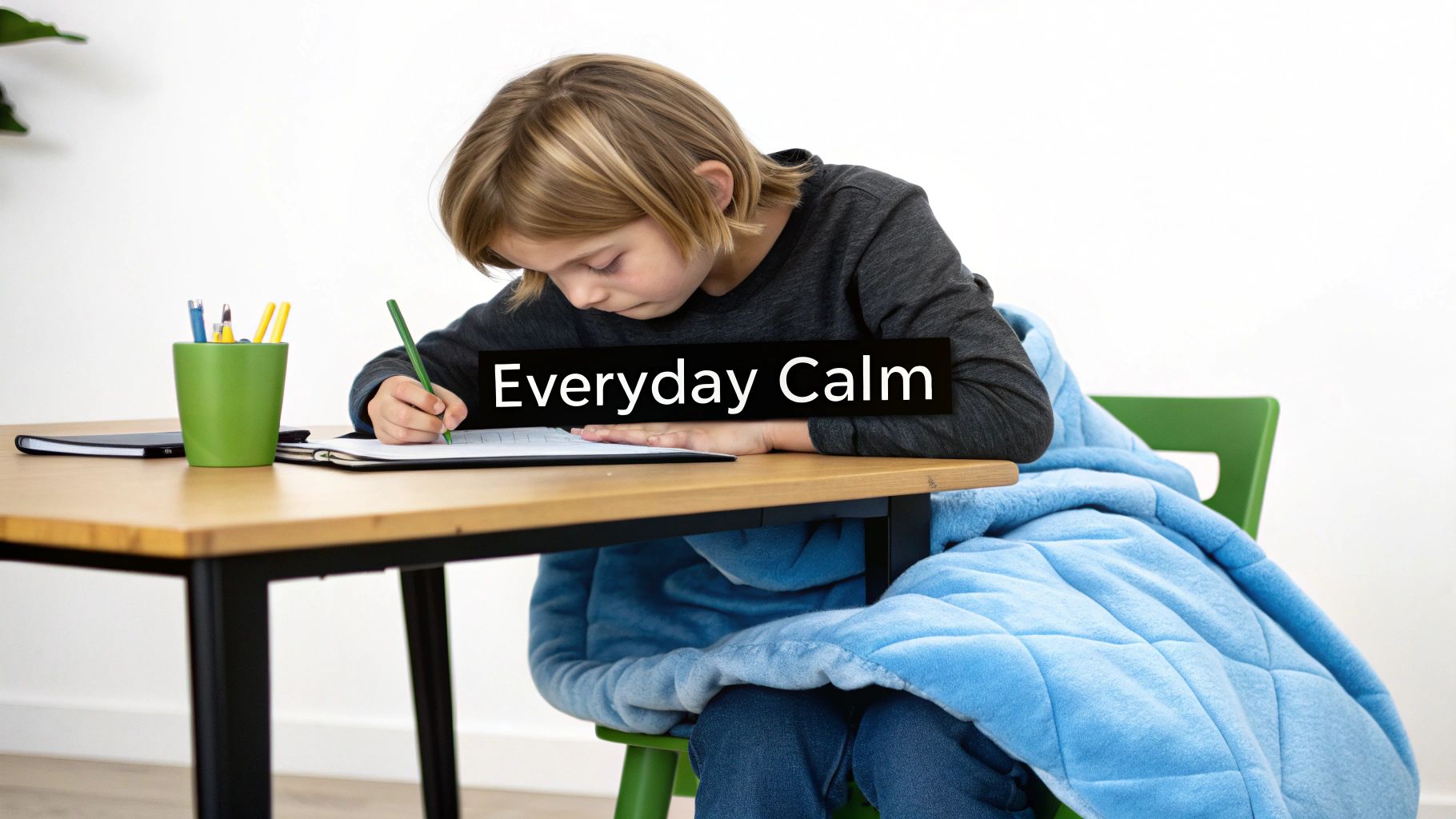
When the blanket is woven into regular activities, it transforms from a reactive fix into a reliable anchor. It helps ground the nervous system during tasks that demand focus, patience, or just sitting still.
Creating Calm and Focus at Home
At home, a weighted lap blanket can be a game-changer during those tricky parts of the day that often lead to restlessness or sensory overload. That gentle, grounding pressure makes challenging moments feel so much more manageable.
Take homework time, for instance. It can be a real source of frustration. Placing a weighted lap blanket on your child's lap as they sit down to work can help quiet a busy mind, reduce the urge to fidget, and make it easier to actually concentrate on the task.
Here are a few other simple ways to bring it into your home life:
- During Mealtimes: For kids who find it hard to stay seated at the dinner table, a lap blanket can provide just the right sensory input to help them stay calm and focused on their meal.
- For Screen Time: While screens are engaging, they can also be incredibly stimulating. The blanket offers a calming counterbalance, helping to stop overstimulation in its tracks.
- Story Time or Quiet Reading: The gentle weight makes reading even more relaxing, helping a child settle their body and really get lost in a book. It’s a beautiful way to wind down before bed.
- Car Journeys: Let’s face it, long car trips can be tough for everyone. A weighted lap blanket is an amazing portable tool that can make travel far less stressful.
For many families, the weighted lap blanket becomes a go-to tool for transitions. Having it ready before moving from a high-energy activity like playing outside to a quieter one like getting ready for bed can smooth over what is often a difficult shift.
Supporting Students in the Classroom
In a busy classroom, a weighted lap blanket is a wonderfully discreet and effective tool for helping students self-regulate. It allows them to get that calming sensory input without drawing unwanted attention, empowering them to manage their own needs. A well-designed sensory classroom will often have tools just like this to create a more inclusive learning space.
Think of a student like Mia. She finds whole-school assemblies completely overwhelming because of the noise and crowds. Her OT suggested a weighted lap blanket, and now she uses it during these events. The steady pressure helps her feel grounded and secure, allowing her to stay with her class instead of having to leave.
Classroom Integration Ideas
Teachers can easily introduce a weighted lap blanket as just another supportive resource in the classroom.
- Circle Time and Floor Activities: For students who struggle to sit still on the floor, the blanket gives them the input they need to stay in their space and participate with the group.
- Independent Work Sessions: Placing the blanket on a student's lap at their desk can make a huge difference in their ability to focus on assignments and tune out distractions.
- In the Calming Corner: It’s an absolute must-have for any classroom's quiet space or sensory tent. When a student feels overwhelmed, the blanket offers immediate comfort and a clear path back to feeling regulated.
- Reading Nooks: Just like at home, having a lap blanket in the reading corner encourages quiet relaxation and helps students settle into their books.
By making the weighted lap blanket a normal part of the classroom, it becomes just another helpful tool, like a pencil grip or a footrest. This completely removes any stigma and encourages students to use it whenever they feel the need, fostering incredible independence and self-awareness.
Keeping it Safe and Sound: Care and Guidelines
A weighted lap blanket is a fantastic sensory tool, but like any piece of therapeutic equipment, using it correctly is key to getting all the benefits without any of the risks. A little bit of know-how for safety and maintenance will also protect your investment, keeping the blanket clean, hygienic, and ready to go for years.
The number one, non-negotiable rule is this: the user must always be able to remove the blanket themselves. They need to be in control, free to move it whenever they want. This simple rule prevents any feeling of being trapped and ensures the experience is always a positive one.
Essential Safety Practices
Beyond that golden rule, a few other common-sense practices will ensure the blanket is a source of comfort, not concern.
- Stick to the Weight Guidelines: Aim for 5-10% of the user’s body weight. A blanket that’s too heavy can be more overwhelming than calming. If you're ever unsure, it's always best to chat with an Occupational Therapist for a personalised recommendation.
- Supervise When Necessary: It’s always a good idea to supervise young children or anyone with significant physical or cognitive challenges while they're using the blanket.
- Keep it Off the Head and Neck: These blankets are designed for the lap and upper legs only. Never place one near the user’s face, head, or neck to avoid any risk of suffocation.
- Do a Quick Seam Check: Every now and then, give the blanket a quick inspection. You're looking for any rips or tears, making sure the weighted filling (like tiny glass beads) stays securely tucked away in its pockets where it belongs.
I always tell parents to think of a weighted lap blanket like a life jacket or a bicycle helmet. It's a piece of safety equipment designed for a specific purpose, and it works best when used with intention and awareness, always putting the user's comfort first.
Looking After Your Weighted Lap Blanket
Keeping your blanket clean is pretty straightforward, but following the right steps will make a huge difference to its lifespan. A clean blanket is not only nicer to use but also vital for good hygiene, especially if it’s being shared in a classroom or clinic.
Most good-quality weighted lap blankets can go right in the washing machine, but it’s always smart to double-check the care tag first.
A Simple Step-by-Step Washing Guide
- Check for Damage: Before it goes in the wash, give the blanket a quick once-over for any loose threads or tiny holes. You don't want any of that weighted filling making a great escape in your machine!
- Go Gentle: Wash the blanket by itself on a gentle or delicate cycle using cold water. This is much kinder to the fabric and the stitching that holds all the beads in place.
- Use a Mild Detergent: A mild, non-toxic detergent is your best bet. Steer clear of fabric softeners and bleach, as they can break down the fibres over time and might irritate sensitive skin.
- How to Dry: The best way to dry your blanket is to air dry it. Lay it flat over a clothes airer or a few chairs. While some blankets might handle a tumble dryer on low heat, air drying is the gentlest option and helps it keep its shape perfectly.
Taking good care of sensory tools is just part of the routine to keep them safe and effective. For more ideas, you might find these tips for keeping sensory toys clean and hygienic helpful. By following these simple safety and care steps, your weighted lap blanket will remain a trusted source of calm and focus for a long time to come.
Your Weighted Lap Blanket Questions Answered
We’ve covered what a weighted lap blanket is, how to pick the right one, and ways to bring it into your daily routine. Now, let’s get into the nitty-gritty and answer some of the most common questions we hear from parents, educators, and therapists across Australia.
This FAQ is all about giving you clear, straightforward answers so you can feel completely confident about finding the right sensory tool.
Is a Weighted Lap Blanket Funded by the NDIS?
Yes, in many cases, it is. A weighted lap blanket usually falls under Assistive Technology (AT) within the National Disability Insurance Scheme (NDIS). It’s seen as a valuable sensory tool that helps with self-regulation and makes it easier to participate in daily activities.
For NDIS participants, these kinds of items can often be funded through the 'Consumables' budget as 'Low-Cost AT'. This means you might not even need a quote if the cost is below a certain amount. It's always a good idea to check your specific plan and have a chat with your Plan Manager, Support Coordinator, or Local Area Coordinator (LAC) to make sure it aligns with your goals. Many providers, like us, are set up to help with NDIS-funded purchases.
How Do I Know If My Child Needs One?
Figuring out if a weighted lap blanket is the right fit really comes down to observing your child’s sensory-seeking behaviours. It could be a brilliant addition if you notice your child:
- Is constantly fidgeting or can't seem to sit still during homework, at the dinner table, or during mat time at school.
- Seems to get overwhelmed easily in loud or busy places.
- Struggles to stay focused on a task for more than a few minutes.
- Actively seeks out deep pressure—think leaning hard on furniture, crashing into cushions, or asking for big, tight hugs.
- Has a tough time winding down after getting excited or overstimulated.
If any of that sounds familiar, a weighted lap blanket might just provide that grounding sensory input they're looking for. It works wonderfully in a calming corner alongside other sensory supports like Kaiko Fidgets or a cuddly Warmie.
What Is the Recommended Usage Time?
A great rule of thumb to remember is "little and often."
The sweet spot for using a weighted lap blanket is usually around 15-20 minutes at a time. The reason for this is that our nervous system gets used to the constant pressure after a while, and the calming effect can start to fade. By using it in short bursts, the sensory input stays fresh and effective.
The goal is to provide calming input during specific tasks or tricky transitions, not for continuous, all-day use. Think of it as a focused tool for homework, car rides, or settling down before a new activity.
After a 20-minute session, it’s best to put the blanket aside for at least an hour before the next use. This on-and-off approach ensures it remains a powerful and helpful sensory support.
What Is the Difference Between a Lap Blanket and a Full Blanket?
This is a fantastic question! While they both use Deep Pressure Stimulation, the main differences are all about size, purpose, and portability. They're designed for very different situations.
Let's break it down.
Weighted Lap Blanket vs. Full-Sized Weighted Blanket
| Feature | Weighted Lap Blanket | Full-Sized Weighted Blanket |
|---|---|---|
| Purpose | Designed for targeted pressure during seated activities to improve focus and calm fidgeting. | Designed for full-body pressure during rest or sleep to promote calm and better sleep. |
| Size & Portability | Compact and portable. Easy to take to school, appointments, or in the car. | Large and heavy. Best for use on a bed or sofa; not easy to transport. |
| Best Use Cases | Classrooms, homework, mealtimes, therapy sessions, travel. | Bedtime routines, relaxing on the couch, creating a calming "burrito wrap" for whole-body comfort. |
So, while a full-sized blanket like the popular Neptune Blanket is brilliant for improving sleep, a weighted lap blanket offers that focused, on-the-go support. For a similar, more playful effect on the lap, some kids also adore the comfort of a cuddly weighted animal toy.
Can Adults Use Weighted Lap Blankets Too?
Absolutely! While they're a huge hit with kids, weighted lap blankets are a fantastic tool for adults, too. Many adults find them invaluable for managing anxiety, improving focus at work, and staying grounded during stressful moments.
An adult might use a weighted lap blanket:
- At their office desk to stay focused and calm during a long workday.
- On public transport to make a busy commute less overwhelming.
- During appointments or in waiting rooms to keep restlessness at bay.
- While relaxing at home to help switch off after a hectic day.
The science of Deep Pressure Stimulation works just the same for adults, offering a discreet and effective way to self-regulate in just about any setting.
At Sensory Poodle, we are dedicated to providing high-quality, effective sensory toys in Australia that support the well-being of neurodiverse individuals and their families.
Explore our collection of calming and focusing aids, including our expertly designed weighted lap bags and toys, to find the perfect solution for your needs.