


Discover kaiko fidgets: Calming sensory tools for focus

You've probably seen a hundred different fidget toys on the market, but Kaiko Fidgets are in a league of their own. These aren't just toys; they're professionally designed sensory tools, created right here in Australia to help kids and adults find focus, stay calm, and regulate their emotions. As a premier destination for sensory toys Australia, we've seen firsthand how these tools can make a difference.
They're specifically engineered for durability and silent operation, which is why you’ll often spot them in classrooms, therapy clinics, and even workplaces. Alongside other focus aids like Numberblocks learning tools or calming weighted animal toys, kaiko fidgets are a key part of a comprehensive sensory toolkit.
More Than Just a Fidget: A Purpose-Built Sensory Solution
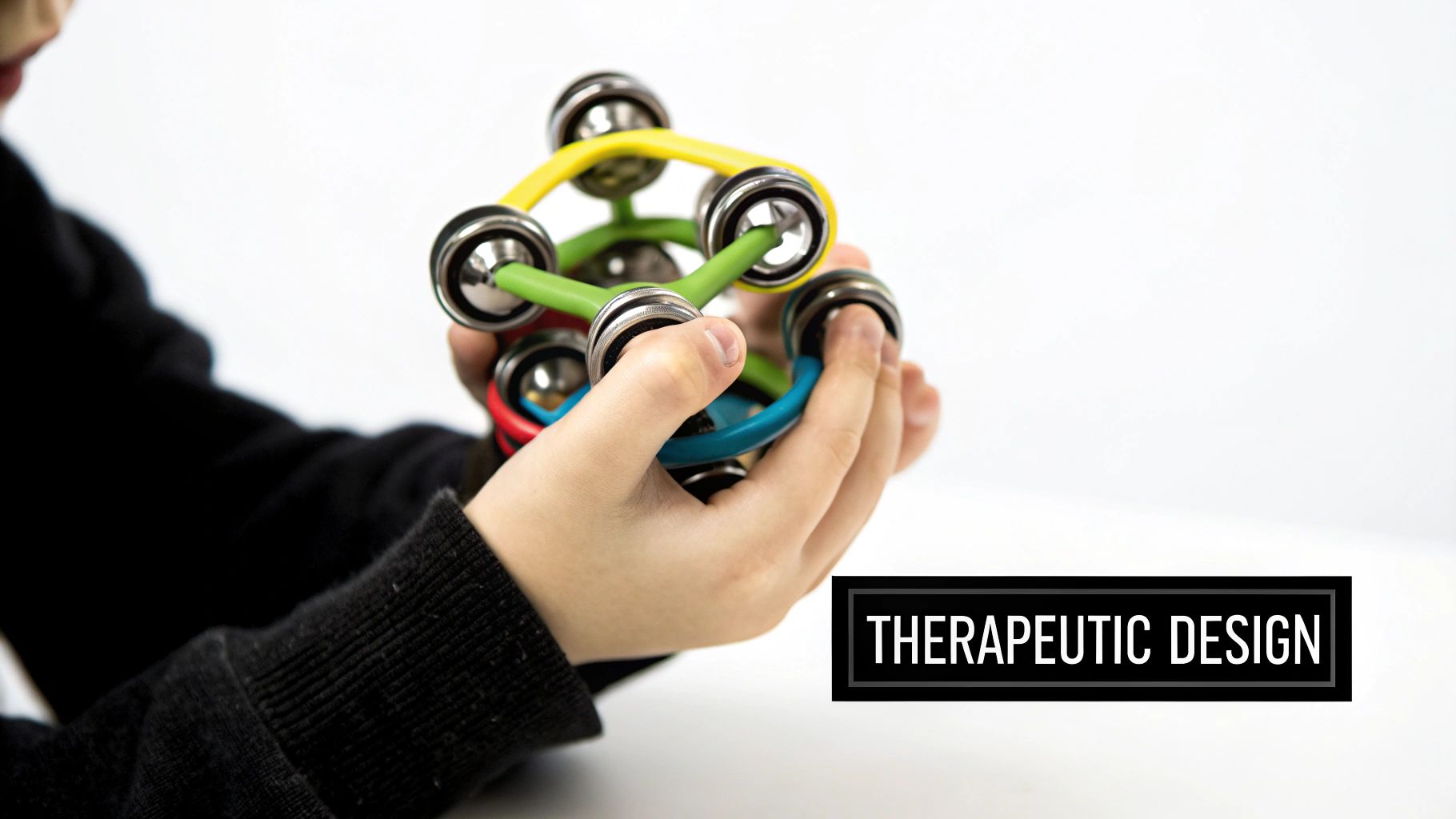
In a world full of flimsy, noisy fidgets that break in a week, Kaiko stands out. Their story isn't about jumping on a trend; it's rooted in real, personal experience. The whole thing started with founder Kai Seymon, who was navigating his own anxiety at school and realised he needed a sensory tool that was effective but also subtle and tough enough for everyday life.
What began as a solution for himself quickly grew into a trusted Australian brand. Kai founded Kaiko Fidgets in Melbourne back in 2017 when he was only 11 years old. Fast forward to today, and the company is selling around 250,000 products every year. That incredible growth really speaks to a bigger shift in how we’re starting to understand and support the sensory needs of neurodivergent people.
The Kaiko Difference
So, what makes a Kaiko fidget different from all the others? It really boils down to their thoughtful, therapy-informed design.
- Silent Operation: One of their biggest selling points is that they're almost completely silent. This makes them ideal for classrooms, offices, or any quiet environment where someone needs to self-regulate without distracting everyone else.
- Durable Construction: Made from top-notch materials like stainless steel and strong silicone, these fidgets are built to last. They can handle constant clicking, squeezing, and rolling, making them a reliable long-term tool for sensory support.
- Therapeutic Intent: Every single product is designed with a specific sensory need in mind. Whether it's the deep pressure of a metal fidget, the smooth, repetitive motion of another, or the satisfying tactile feedback of the popular Kaiko Spikey Set, each design has a clear purpose.
This dedication to quality and function is precisely why Kaiko Fidgets have become a staple for occupational therapists, teachers, and parents across Australia. They're not just playthings; they are genuine tools that make a real difference in managing sensory input, easing anxiety, and boosting concentration.
The Science Behind Fidgeting for Calm and Focus
Ever found yourself clicking a pen, jiggling your leg, or twirling a piece of paper and wondered why it feels so... right? That’s not just a random habit. It’s actually your brain’s smart, built-in way of keeping itself in check. Fidgeting is a surprisingly powerful, science-backed way to manage focus, soothe anxiety, and make sense of the world around you.
I like to think of the nervous system as a car engine. Sometimes it revs way too high, leaving you feeling overwhelmed and anxious. Other times, it’s idling too low, making you feel bored and zoned out. Rhythmic, repetitive movements are like the gearbox, helping that engine find its sweet spot. This is exactly where Kaiko fidgets shine—they offer a perfect, structured channel for that need to move.
When you use a fidget, you're tapping into two key sensory inputs: tactile stimulation and proprioceptive input. They might sound like complex terms, but they’re simply about the sensations that help ground your body and clear your mind.
How Sensory Input Calms the Brain
Let's break that down. Proprioceptive input is basically the feedback your muscles and joints send to your brain. It’s what tells you where your body is without you having to look. Squeezing a firm fidget or feeling the heft of a weighted one provides this deep pressure, which has an incredibly calming and organising effect on the nervous system. It’s a bit like giving your hands a firm, reassuring hug.
Then there’s tactile stimulation, which is all about your sense of touch. Running your fingers over the cool, smooth metal of a Kaiko fidget or the gentle texture of another can pull your focus away from overwhelming distractions—like a chaotic classroom or a stressful meeting—and anchor it to a single, simple sensation.
This sensory grounding actually helps lower cortisol and adrenaline, the body's stress hormones. As those levels dip, the prefrontal cortex—the part of your brain in charge of focus and executive functions—can get back to work. It's a foundational concept in many strategies for mental and emotional wellbeing designed to help us find that ideal state of calm alertness.
By offering a quiet and acceptable way to move, fidgets help the brain filter out overwhelming distractions so it can zero in on what’s important. It's not about adding another distraction; it's about using the right kind of sensory input to cancel out the bigger ones.
This is a game-changer for kids. A child who can quietly roll a metal fidget under their desk is in a much better position to absorb what their teacher is saying. For adults, a discreet fidget can be the difference between staying present in a long meeting and completely zoning out. Learning to use movement purposefully is a huge part of developing self-regulation in children, a skill we dive into deeper in our guide.
At the end of the day, these little movements are far more than just "wiggles." They are a scientifically supported tool for finding emotional and mental balance. Kaiko fidgets, in particular, are thoughtfully designed to deliver this essential sensory input, making them an invaluable support for anyone looking for a little more calm and focus.
Choosing the Right Kaiko Fidget for Your Child
Navigating the world of sensory tools can feel a bit overwhelming, but I promise, finding the perfect Kaiko Fidget doesn't have to be a chore. The real secret is to stop focusing so much on the fidget itself and start thinking about the why—what specific sensory need is your child trying to meet? By watching their natural behaviours, you can find a tool that gives them exactly the right kind of input to feel calm, grounded, and ready to take on their day.
Every child has a completely unique sensory profile. Some are sensory seekers, who seem to have a motor that never stops; they're the ones crashing, spinning, and touching absolutely everything to feel regulated. On the other hand, you have sensory avoiders, who can feel easily overwhelmed by loud noises, bright lights, or certain textures. The best fidget is always one that matches this profile, providing that “just right” amount of stimulation without tipping them over the edge.
A great way to start is just to observe. Do they chew on their shirt collar when they're a bit anxious? A safe, durable chew tool could be a game-changer. Do they constantly tap their fingers on the desk, driving everyone a little mad? A quiet, repetitive metal fidget could give them that same satisfying feedback without causing a distraction.
This little decision guide is a fantastic starting point for figuring out whether the main goal is to find calm or sharpen focus.
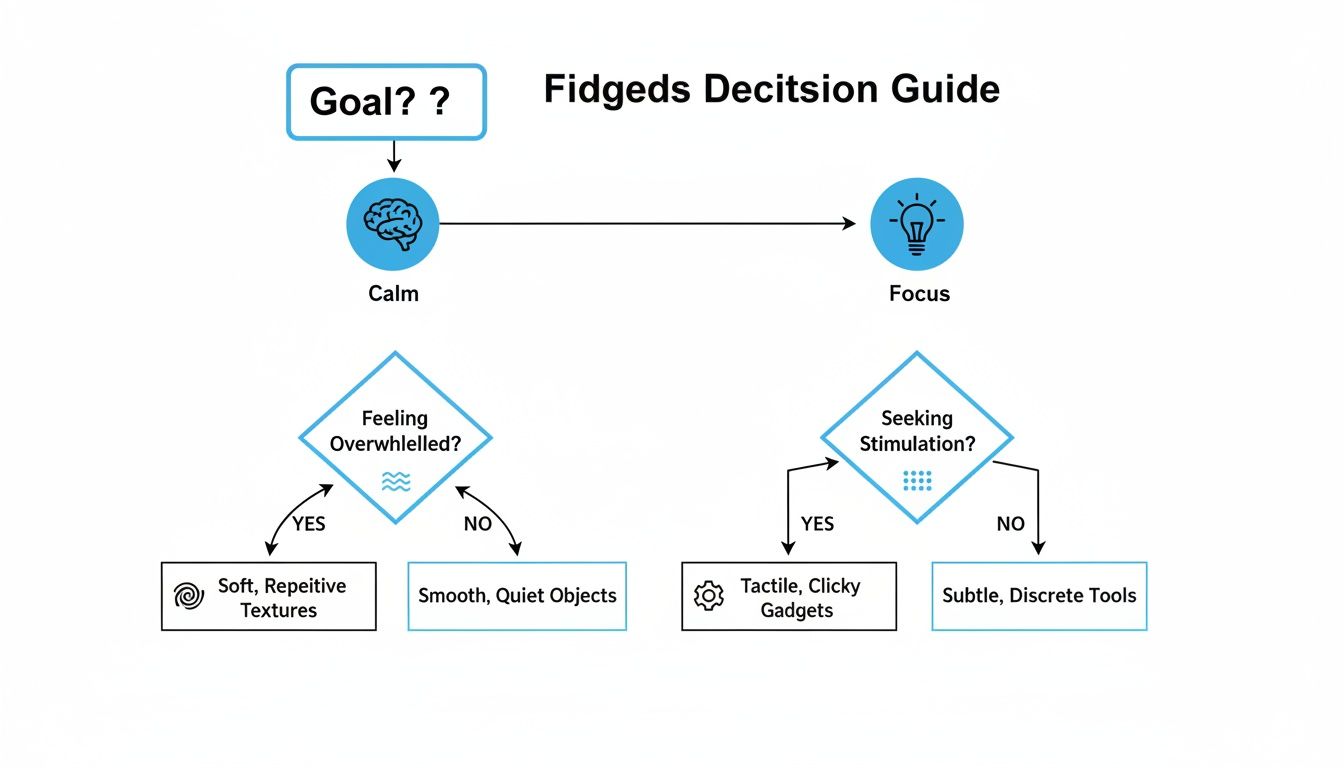
As you can see, something with a smooth, rhythmic motion might be ideal for calming, whereas a tool with more texture could be just the thing to help with focus.
Matching Fidgets to Sensory Needs
To make it even clearer, let's break things down by the type of sensory input different Kaiko Fidgets provide. This approach helps you connect what you see your child doing with a specific tool that can genuinely support them.
-
For Proprioceptive Input (Grounding & Calming): If your child is constantly seeking deep pressure—think tight hugs, snuggling under heavy blankets, or squishing into small spaces—they're likely looking for proprioceptive input. Fidgets with a bit of heft or resistance are perfect for this. The heavy hand rollers or weighted metal fidgets are brilliant because they provide a satisfying, grounding sensation right in the palm of their hand.
-
For Tactile Input (Focus & Seeking): Does your child love touching everything? Are they fascinated by different textures, from rough to smooth to spiky? That's a classic sign of someone seeking tactile input. Fidgets that are bumpy, textured, or have interesting surfaces can satisfy this need beautifully. The Kaiko Spikey Fidget Rings or a textured roller are excellent for giving that strong tactile feedback that can sharpen focus or keep busy minds engaged.
-
For Vestibular Input (Rhythmic & Soothing): This sense is all about balance and movement. While a fidget can't replace something like a sensory swing, tools that offer smooth, predictable, and rhythmic motions can be incredibly soothing. Think about the fluid movement of a good spinner fidget or the satisfying loop of a bike chain fidget—they provide that calming, repetitive motion many kids crave.
To help you narrow down the options even further, this table matches specific Kaiko Fidgets to different sensory needs and situations. It’s a handy cheat sheet for finding your perfect fit.
Kaiko Fidgets Selector Guide
| Kaiko Fidget Type | Primary Sensory Input | Best For This Need | Ideal Environment | Example Product |
|---|---|---|---|---|
| Metal Fidgets | Proprioceptive, Tactile | Calming deep pressure, grounding, repetitive motion for focus, discreet stimming | Classroom, office, quiet spaces, travel | Kaiko Hand Roller |
| Spikey Fidgets | Tactile | High sensory seeking, tactile exploration, keeping hands busy, increasing focus | Home, therapy sessions, outdoor play | Kaiko Spikey Fidget Ball |
| Spinner Fidgets | Vestibular, Visual | Soothing rhythmic motion, visual stimulation, reducing anxiety through repetition | Waiting rooms, car trips, personal downtime | Kaiko Cog Spinner |
| Bike Chain | Tactile, Proprioceptive | Quiet and subtle fidgeting, fine motor skill practice, satisfying repetitive loop | School (under the desk), meetings, public transport | Kaiko Bike Chain Fidget |
Think of this table as a starting point. Every child is different, so what works for one might not work for another, but it's a great way to understand how each tool functions.
Considering the Environment
Of course, the right fidget also depends heavily on the situation. A tool that's perfect for unwinding at home might not be the best choice for a quiet classroom.
When it comes to school, silent and discreet are the two golden rules. Small, handheld metal fidgets that can be used under a desk without making a sound are absolutely ideal. For long car trips or louder environments, a fidget with more robust tactile feedback or even a quiet, satisfying click might be perfectly fine. As you explore what might work, looking into specific types of fidgets like Pop It Fidget Toys can give you a broader idea of what might suit their needs across different settings.
Ultimately, choosing the right Kaiko Fidget is a journey of observation and a little bit of trial and error. By tuning into your child's unique sensory language, you can give them a powerful tool that not only validates their needs but also empowers them to self-regulate with confidence.
Using Fidgets Effectively in the Classroom
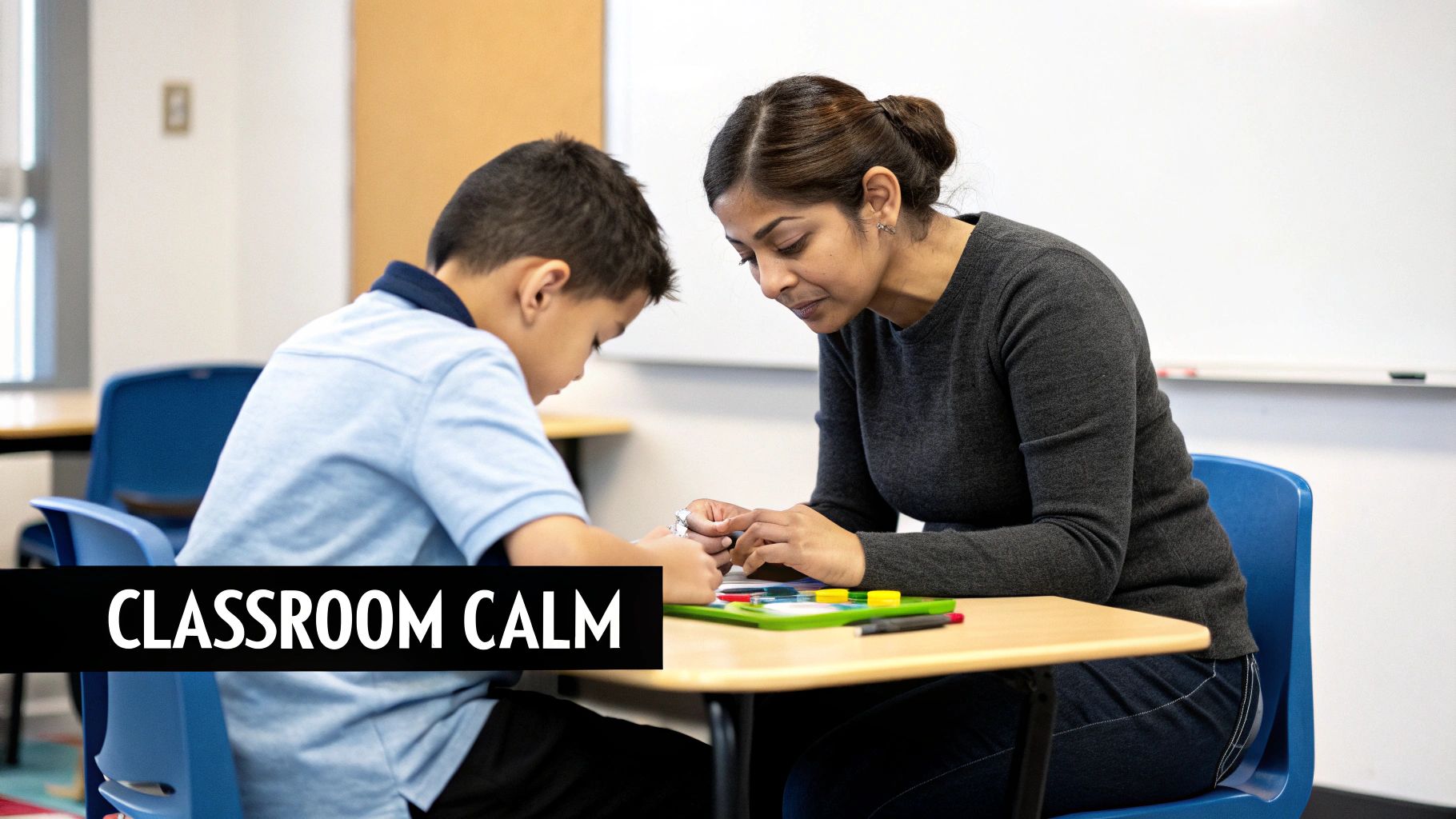
Bringing a fidget into a classroom can be a massive win, but it all comes down to one thing: laying the groundwork first. If you don't set clear expectations, a brilliant tool can quickly turn into a distracting toy. The secret is to frame Kaiko fidgets as learning aids—just like a pencil, a ruler, or a calculator—that help the brain get ready to work.
When you introduce them this way from day one, students immediately understand their real purpose. It stops the fidget from becoming a novelty or a distraction for others and instead cements it as a valuable part of the classroom environment.
Setting Clear Boundaries for Fidget Use
A few simple rules make all the difference, ensuring everyone knows how these tools should be used. This clarity empowers students to be responsible and helps teachers feel confident managing them. I've found that creating a visual "fidget contract" with a student (or even the whole class) works wonders.
This simple agreement can spell out the when, where, and how of fidget use. Some great ground rules include:
- One-Hand Rule: The fidget needs to be used in one hand, keeping the other free for writing or class activities.
- Eyes on the Teacher: The tool shouldn't need to be looked at, so the student’s eyes and attention can stay on the lesson.
- Desk Level Only: Fidgets stay on the desk or in the lap—never in the air where they can distract classmates.
- Silent Tools: Only quiet tools are for focused work time. This is where many of the Kaiko fidgets really shine.
These guidelines are fantastic for keeping the classroom productive while giving kids the sensory input they need. It’s also a sneaky way to teach self-awareness and respect for everyone else’s learning.
Creating a Supportive Sensory Classroom
Looking beyond just individual tools, weaving sensory strategies into the very fabric of your classroom helps every single learner. A well-thought-out calming corner or a dedicated sensory space can be a real sanctuary for a child who is starting to feel overwhelmed, and fidgets are a perfect addition here.
A dedicated sensory space provides a safe, predictable environment where a child can go to regulate their emotions and nervous system, making it easier to return to learning. It's a proactive strategy that builds emotional intelligence and self-management skills.
When building out a supportive sensory classroom, try to include a variety of tools. This could be as simple as a small basket of approved fidgets, a comfy cushion for wiggles, or a set of noise-cancelling earmuffs for sound sensitivity.
For therapists, these tools are worth their weight in gold. They help build rapport and support clients in managing anxiety during sessions. This clears the way for more focused, productive work on everything from fine motor skills to emotional regulation goals.
How to Look After Your Fidgets (and Keep Them Safe)
When you invest in a quality sensory tool like a Kaiko fidget, you want it to last. A little bit of care not only helps your fidgets go the distance but also keeps them clean and safe for anyone who uses them. It only takes a few simple steps to keep them in fantastic shape for years.
More than anything, regular cleaning stops dirt and germs from building up, which is especially important for things that are held so often. A quick wipe-down really does make all the difference.
Simple Cleaning for Different Materials
Keeping your fidgets clean is pretty straightforward. The method you use really just depends on what they’re made of, but trust me, none of it is tricky.
-
Metal Fidgets: Got a stainless steel hand roller or cog spinner? All you need is a quick wipe with a damp cloth and a touch of mild soap. Just make sure you dry it properly afterwards to avoid any water spots.
-
Silicone and Plastic Fidgets: These are the easiest of the lot. A simple wash in warm, soapy water will do the trick. Rinse them well and let them air dry completely. They’re built tough, so they can handle regular washing without a problem.
If you need a deeper clean, particularly for fidgets used in a classroom or therapy clinic, a mix of water and white vinegar works wonders. Just be sure to give them a good rinse with plain water when you're done.
Safety First: Always choose fidgets that are right for the user's age. Smaller tools or any with parts that could come off can be a choking risk for little ones. It's always best to supervise, especially when a child is getting used to a new sensory tool.
Key Safety and Storage Tips
Beyond a good clean, a few simple safety checks will give you total peace of mind. Give your fidgets a quick once-over every now and then to check for signs of wear and tear, like cracked plastic or loose bits. If you spot any damage, it’s safest to replace the tool.
It’s also really important to remember that most fidgets aren't designed for chewing. Unless a tool is specifically sold as a "chew" or an oral motor tool, it shouldn't go in the mouth.
Finally, having a dedicated spot to store your fidgets can stop them from getting lost or broken. A little pouch, a small box, or a designated spot in a calming corner keeps them organised and ready to go. It’s also a great way to teach kids how to look after their own things.
Buying Kaiko Fidgets and Using NDIS Funding
When you're ready to find the right Kaiko fidgets, buying from a dedicated Australian store like The Sensory Poodle really does make a difference. You get a hand-picked collection, quick shipping from our Melbourne warehouse, and a team that truly gets the sensory needs of our community. We take care of the logistics so you can focus on finding the perfect tool.
For many families here in Australia, the National Disability Insurance Scheme (NDIS) is a huge help for accessing these kinds of essential sensory tools. We know that navigating NDIS funding can feel a bit complicated at times, so we’re here to make the process as simple and clear as possible.
How to Use Your NDIS Plan
The great news is that Kaiko Fidgets can often be funded through an NDIS plan. They typically fall under the Consumables budget, specifically as Low-Cost Assistive Technology. The main thing is to make sure the purchase aligns with the goals in the participant's plan, like improving self-regulation, focus, or emotional wellbeing.
Here’s a quick look at how it works depending on how your plan is managed.
-
Self-Managed Participants: This is the most straightforward option. You can simply buy the items you need from our store and then claim the expense back from the NDIS portal. We'll send you a tax invoice with all the details you need to make the process smooth.
-
Plan-Managed Participants: If a plan manager looks after your funding, it's just as easy. All you need to do is give them the invoice from your purchase at The Sensory Poodle, and they'll sort out the payment directly from your NDIS funds.
-
NDIA-Managed Participants: For participants whose plans are managed by the NDIA, we're all set up to process your orders. As a registered provider, we can handle the purchase directly, making sure everything is compliant and completely hassle-free for you.
The need for high-quality sensory tools has grown enormously, and it’s amazing to see the market respond. When Kaiko Fidgets shifted its focus to e-commerce, its online revenue shot up by over 1153% in just three months. This incredible growth just goes to show how strong the Australian demand for tools like these has become.
We are committed to helping you on your NDIS journey. If you ever need a quote or have questions about using your funding, our team is always here to help. For more tips on finding tools locally, have a look at our complete guide to sensory toys in Australia.
Your Kaiko Fidget Questions, Answered
Got a question about Kaiko fidgets? You're not alone! Here are some of the most common things people ask us about these incredible sensory tools.
Are Kaiko Fidgets Just for Kids?
Absolutely not! While they are a lifesaver for many kids, Kaiko fidgets are just as popular with adults. We see them used all the time for boosting focus at work, managing anxiety during a commute, or staying grounded through a long university lecture.
Their high-quality, discreet designs mean they don’t look like toys. They're perfect for any situation where you need quiet, calming sensory input to stay present and engaged. Think of them as regulation tools for all ages.
What Makes Them Worth the Price Tag?
It really comes down to three things: quality, purpose, and thoughtful design. Unlike the cheap, plastic fidget toys you see everywhere, Kaiko fidgets are built to last from durable materials like stainless steel. They're designed by an occupational therapist specifically for therapeutic benefit.
This means they are silent, effective, and won’t break after a week of use. They’re an investment in a tool that actually helps with regulation, rather than a noisy distraction that can cause more problems in a quiet classroom or office.
Can We Claim Kaiko Fidgets Through an NDIS Plan?
Yes, in many cases, you can. If sensory tools are linked to a participant's NDIS goals—like improving self-regulation, focus, or emotional management—they can often be claimed. Usually, this falls under either Consumables or Low-Cost Assistive Technology.
As a registered NDIS provider, The Sensory Poodle can help families navigate this process. We’re here to make it easier for you to access the tools that make a real difference.
Ready to find the perfect tool to bring a bit of calm and focus into your day? Explore the complete collection of durable, silent, and expertly designed tools right here at The Sensory Poodle.