


A Guide to the Lap Weighted Blanket for Calm and Focus

Ever felt the soothing comfort of a firm, gentle hug? That's precisely the sensation a lap weighted blanket is designed to replicate. It's a clever, portable sensory tool that delivers targeted Deep Pressure Therapy (DPT) right to your lap, offering a simple but powerful way to feel calm and focused without being wrapped up in a full-sized blanket. Its go-anywhere design makes it an absolute lifesaver for managing sensory needs on the move, making it a staple in any collection of sensory toys in Australia.
What Is a Lap Weighted Blanket?
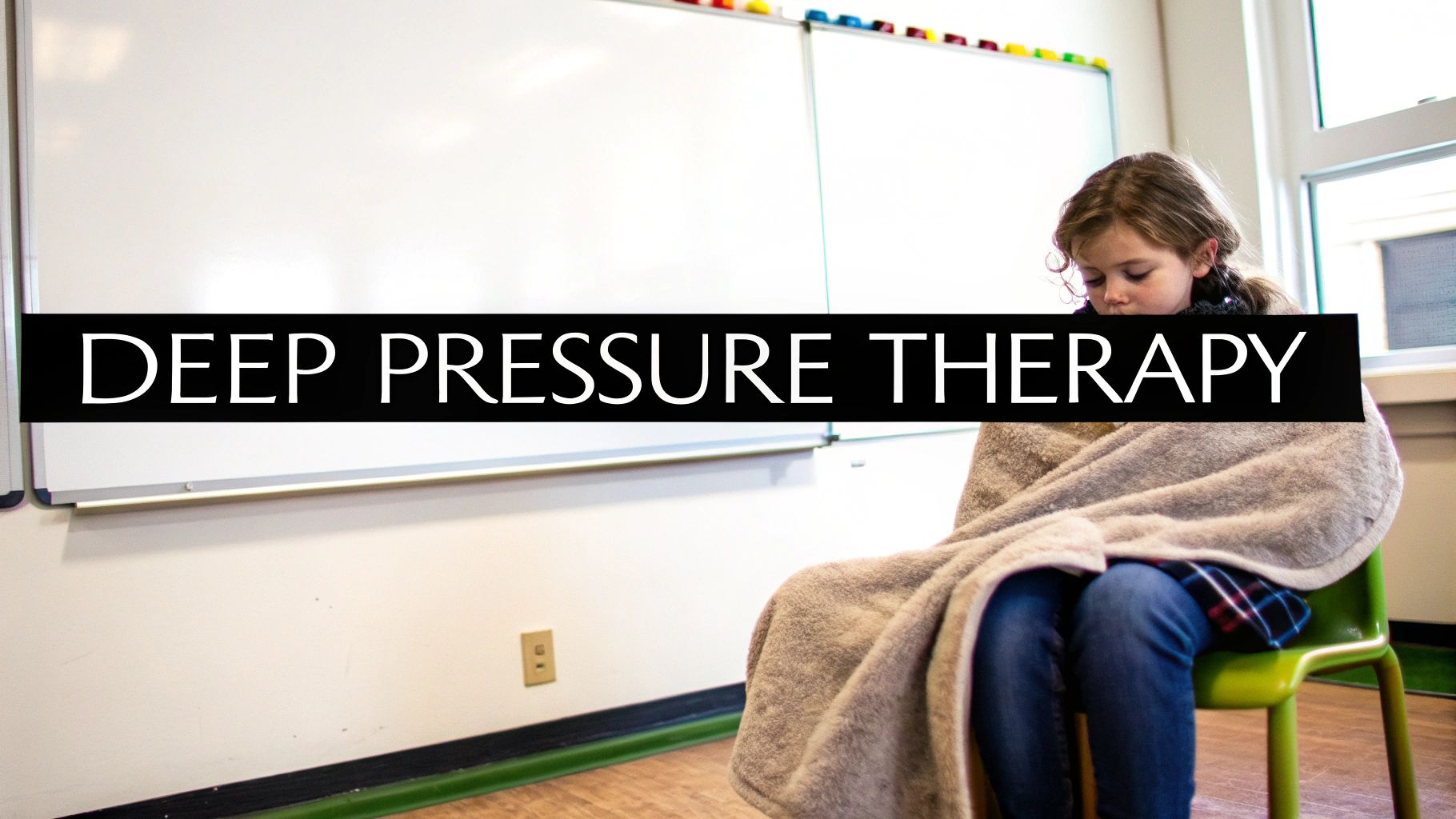
Think of a lap weighted blanket as a mini, more targeted version of a full-body weighted blanket. It's a compact, weighted pad that rests neatly on your lap while you're sitting down, giving you all the therapeutic goodness of Deep Pressure Therapy in a much smaller, more convenient size. This makes it perfect for focused activities, travel, or just sitting at a desk.
The real magic is in the science. That gentle, consistent pressure on the lap sends calming signals up to the nervous system. This nudges the brain to release "feel-good" neurotransmitters like serotonin and dopamine, which in turn helps to:
- Ease feelings of anxiety or stress with a comforting, grounding sensation.
- Sharpen focus and attention during schoolwork, reading, or office tasks.
- Settle restlessness and fidgeting, helping the body feel still and organised.
It’s much more than just a comfy accessory; it’s a practical tool that helps people self-regulate, no matter where they are.
A Hug in Your Lap
At its core, a lap weighted blanket mimics the deeply reassuring feeling of being held or hugged. For a nervous system that’s on high alert, this sensation can be incredibly grounding. It helps the body shift out of that stressful "fight or flight" mode and into a much calmer "rest and digest" state. For children and adults who get easily overwhelmed by sensory input, this gentle pressure is a game-changer, similar to the focused calm provided by quality Kaiko fidgets.
The growing demand for these tools really tells the story. In Australia, the market for therapeutic weighted blankets (including lap pads) was valued at USD 13.39 million in 2024. It’s expected to shoot up to USD 31.13 million by 2033, which shows just how many people are realising their benefits for the neurodiverse community.
To help you see the key features at a glance, here's a quick summary.
Lap Weighted Blanket At a Glance
| Feature | Description & Benefit |
|---|---|
| Targeted DPT | Applies gentle, firm pressure specifically to the lap, promoting calm and focus without full-body confinement. |
| Compact & Portable | Small size makes it easy to take to school, the office, therapy sessions, or on car trips. A sensory tool on the go! |
| Improves Focus | Helps reduce fidgeting and restlessness, allowing for better concentration during seated activities like homework or work. |
| Reduces Anxiety | The "hug-like" pressure provides a grounding effect that can soothe an overstimulated or anxious nervous system. |
| Discreet Support | Offers discreet sensory input in public settings, making it a subtle yet effective self-regulation tool. |
| Versatile Use | Ideal for use in classrooms, clinics, at home during mealtimes or desk work, and even in waiting rooms. |
This table highlights just how practical and effective these simple tools can be.
Because it's so portable, a lap blanket is incredibly versatile—it can be a helpful companion everywhere from the classroom to the car. If you'd like to dive deeper into how this kind of pressure therapy supports emotional wellbeing, our guide on weighted blankets for anxiety is a great next step.
The Real-World Benefits for Focus and Regulation
The gentle, steady pressure from a lap weighted blanket is more than just a comforting feeling—it brings real, practical benefits for focus and self-regulation. For many people, this simple tool is the key to calming an overstimulated nervous system, turning abstract therapy concepts into concrete, everyday help. It’s like turning down the volume on background noise so the brain can finally pay attention to what's important.
You can really see this in action in busy places like a classroom. Think about a child who gets overwhelmed by all the chatter, bright lights, and constant movement. They might find it almost impossible to sit still and learn. A lap weighted blanket can act as a grounding anchor, helping them feel secure and settled. This reduces the need to fidget and allows them to concentrate on the lesson at hand.
Improving Attention and Reducing Restlessness
One of the first things people notice is a big improvement in their ability to focus. The Deep Pressure Therapy (DPT) delivered by the blanket helps to filter out all that distracting sensory information, making it easier to concentrate on tasks that require you to sit still. This can be a complete game-changer for kids and adults with ADHD, Autism, or Sensory Processing Disorder.
Think about these everyday situations:
- For a child doing homework: The blanket can calm a restless body, making it much easier to finish assignments without getting up every two minutes.
- For an adult in a meeting: It provides a subtle, discreet sensory input that can ease anxiety and stop the mind from wandering, helping them stay engaged.
- During travel or appointments: A portable lap pad offers a consistent source of comfort when you're in unfamiliar or stressful environments.
The real-world benefits of lap weighted blankets, particularly for focus and regulation in conditions like autism, often align with the goals of specialized occupational therapy for autism and development. This therapeutic input helps create a foundation for improved engagement and learning.
A Powerful Tool for Emotional Regulation
Beyond just improving focus, a lap weighted blanket is also an incredibly effective tool for emotional self-regulation. When those big feelings of anxiety, frustration, or overwhelm start to bubble up, the grounding pressure gives an immediate physical sensation to concentrate on. This acts like a reliable "reset button" for the nervous system.
It helps anchor the user in the present moment, which makes it easier to process and manage emotions before they escalate. Instead of reacting impulsively, a child might learn to reach for their lap blanket as a go-to calming strategy. This kind of proactive approach is absolutely fundamental to building emotional resilience, just as learning with Numberblocks can build mathematical confidence.
Learning to manage these responses is a critical life skill. If you'd like to dive deeper into this, our guide on understanding and supporting self-regulation in children offers some great insights. A lap blanket is a practical, hands-on tool that directly supports these developmental goals, empowering people to navigate their sensory and emotional worlds with a bit more confidence and calm.
How to Choose the Right Lap Weighted Blanket
Picking the right lap weighted blanket is the most important step in making sure it actually works its magic. When you get it right, the blanket feels like a secure hug, not a heavy weight. Let's walk through the key things to consider—from getting the weight just right to picking fabrics and fillers that suit your needs.
This simple decision tree can help you figure out when a lap blanket might be the perfect tool for the moment.
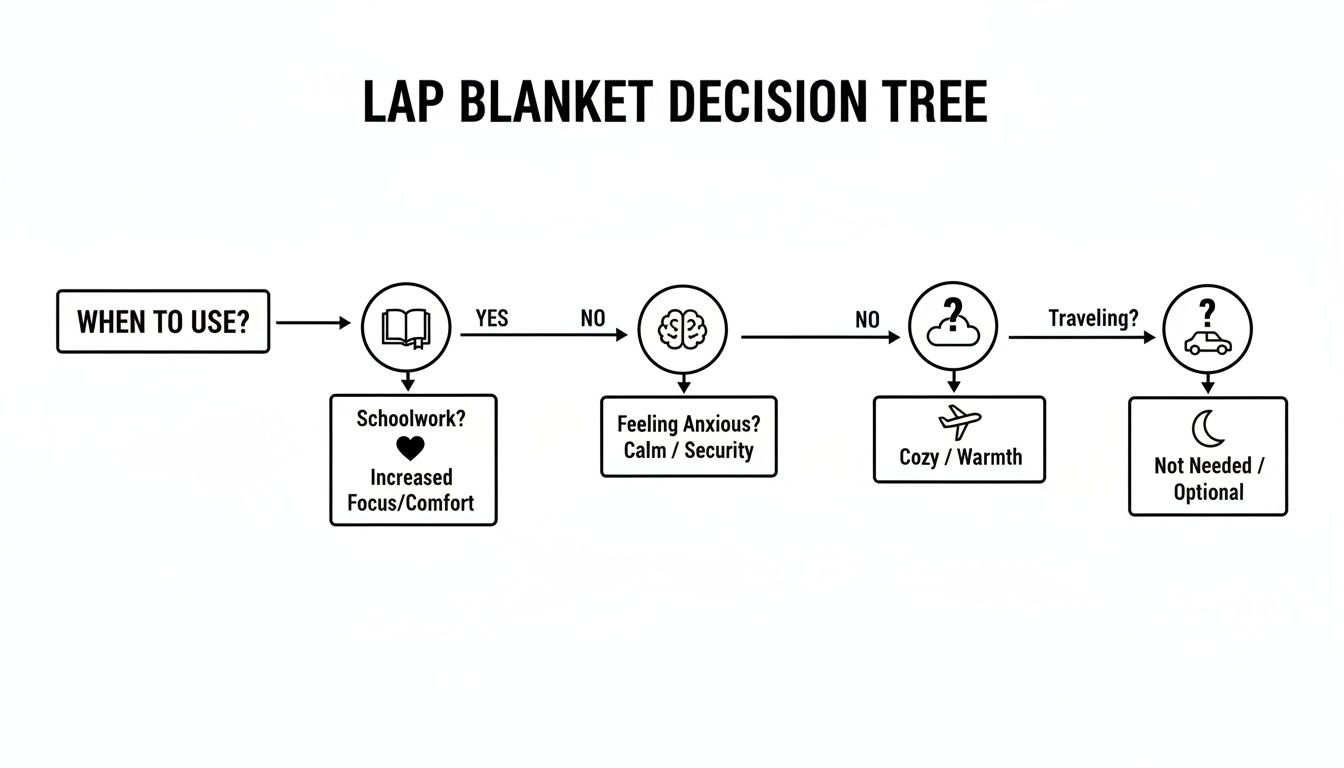
As you can see, whether it's for focusing on homework, soothing anxious feelings, or staying settled on a car trip, a lap blanket is an incredibly versatile tool.
Getting the Weight Just Right
Nailing the weight is crucial. The go-to rule of thumb, backed by therapists, is to choose a lap weighted blanket that is 5–10% of the user's body weight. This simple calculation provides that therapeutic deep pressure without ever feeling restrictive. For those who prefer a different kind of weighted comfort, weighted animal toys can also be a wonderful alternative.
For instance, a child who weighs 20kg would feel most comfortable with a blanket between 1kg and 2kg. Staying in this range ensures the pressure is effective while also meeting the golden rule of safety: the user has to be able to move it themselves.
Safety First: The user must always be able to lift and remove the lap weighted blanket on their own. If they can't, it is too heavy.
Choosing the Best Fabric
The feel of the fabric can make or break the experience. Since this is a sensory tool, the texture plays a huge role in how calming it is. Think about where it'll be used most.
- Soft and Cuddly Fabrics: For home or quiet time, materials like plush minky or soft fleece are fantastic. They add an extra layer of tactile comfort and make the blanket feel extra cosy and soothing.
- Durable, Easy-Clean Fabrics: In a busy classroom or therapy clinic, practicality is key. Hard-wearing, wipeable fabrics like cotton or certain polyester blends can handle frequent use and are easy to sanitise between users.
Comparing Filler Materials Glass Beads vs Poly-Pellets
What’s on the inside counts, too. The filler material affects how the weight feels and distributes across the lap. The two most popular options are micro glass beads and poly-pellets, and they offer quite different sensory experiences.
| Feature | Micro Glass Beads | Poly-Pellets |
|---|---|---|
| Texture & Feel | Smooth and sand-like. Conforms closely to the body for even pressure. | More noticeable, lumpy texture. Some users enjoy the tactile feedback. |
| Sound | Virtually silent. Perfect for quiet environments like classrooms or libraries. | Can make a soft rustling or swishing sound when moved. |
| Bulkiness | Less bulky and more discreet due to higher density. | Lighter and require more volume, making the blanket slightly puffier. |
| Weight Distribution | Excellent, consistent distribution for a sleek, flowing feel. | Good, but can shift a bit more inside the pockets. |
| Ideal For | Users sensitive to noise and texture, or those who prefer a streamlined feel. | Users who enjoy tactile input and aren't bothered by a little sound. |
Ultimately, deciding between glass beads and poly-pellets comes down to personal preference. If the user is sensitive to noise, the silence of glass beads is a clear winner. If they enjoy a more distinct tactile sensation, poly-pellets might be the way to go.
For a deeper dive into all the options, you can find more detail in our complete guide to choosing a weighted lap pad. Taking a moment to think through these choices will help you find a lap blanket that becomes a trusted and loved calming companion.
Integrating a Lap Blanket into Daily Routines
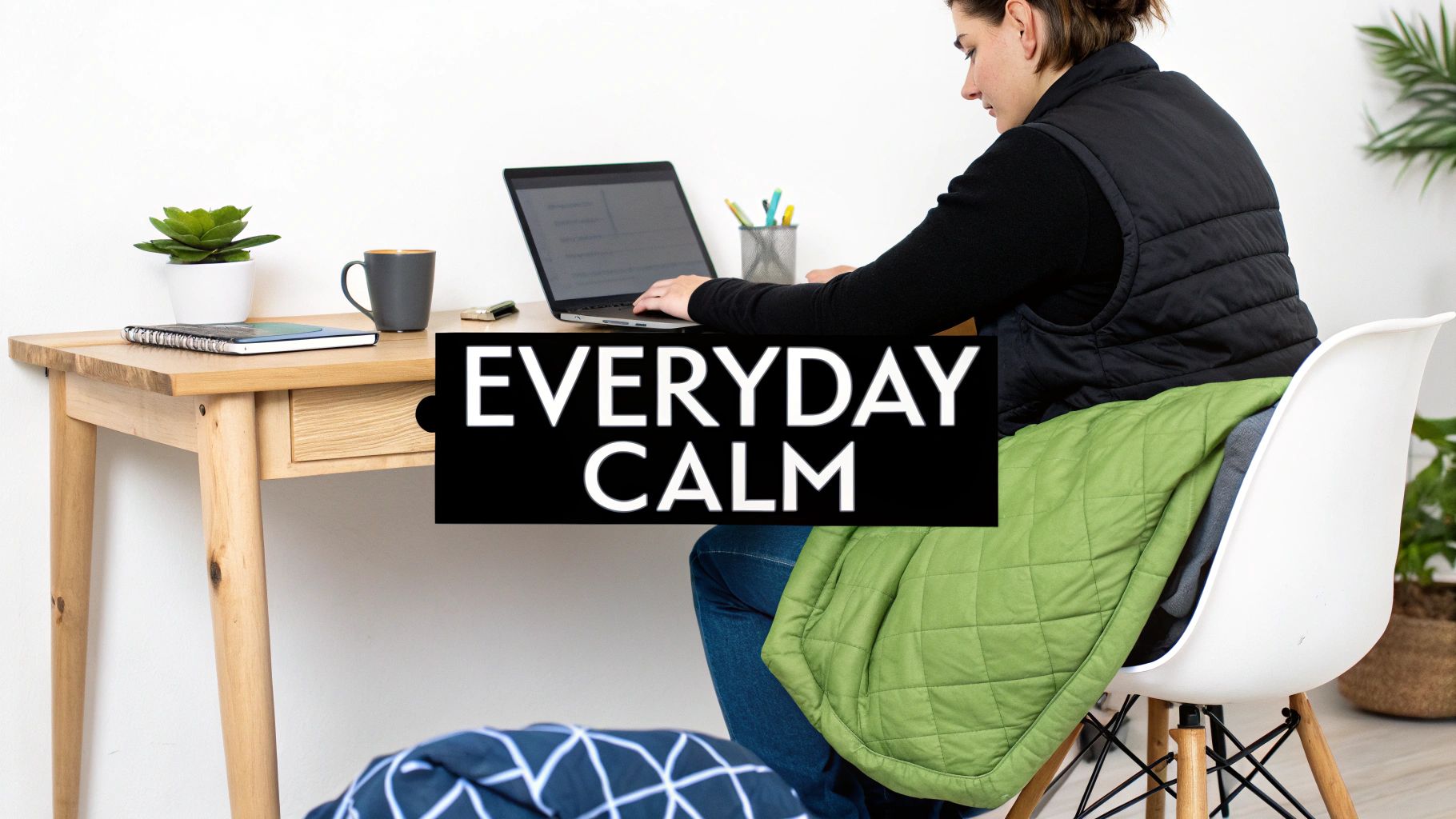
A lap weighted blanket really shines when it becomes a seamless part of a person's day. Rather than just pulling it out during a moment of overwhelm, think of it as a proactive tool that helps set the stage for calm and focus from the get-go. The trick is to weave it into established routines, turning it into a predictable and easily accessible source of comfort.
A great way to start is by introducing the blanket during quiet, happy times. This helps build a really positive connection, so when it's needed during more stressful moments, it's already seen as a welcome friend.
Practical Ideas for Parents at Home
At home, a lap blanket can be a game-changer, turning tricky parts of the day into much calmer, more connected experiences. And because it's so portable, it offers that consistent sensory support no matter where you are.
Here are a few moments where it can make a real difference:
- Homework and Reading Time: Does your child have trouble settling into their schoolwork? Placing the blanket on their lap before they start can help quiet a restless body and make it much easier to focus. The gentle pressure acts like a grounding anchor, taking away the urge to fidget.
- Travel and Outings: Car trips, a busy supermarket, or a family gathering can quickly become sensory minefields. A lap weighted blanket provides a familiar, comforting sensation that helps a child feel secure and regulated, even in overwhelming new places.
- Family Movie or Game Nights: During shared downtime, the blanket’s soothing input can help a child sit comfortably for longer. This small change can make family activities more enjoyable for everyone involved.
By weaving a lap blanket into these routines, it becomes a reliable calming companion. This proactive approach helps manage sensory needs before they escalate, fostering a more peaceful home environment. It's a simple strategy that empowers children by giving them a tangible tool for self-regulation.
Strategies for Educators in the Classroom
In a busy classroom, a lap weighted blanket is an absolute gem for helping students stay engaged and regulated. It’s a wonderfully discreet yet powerful tool that supports a more inclusive learning environment for everyone.
Educators can try these strategies:
- Establishing a Calming Corner: A designated quiet space, stocked with sensory tools like a lap blanket, gives students a safe spot to retreat to when they feel overwhelmed. Pairing it with one of our sensory tents can make this space even more effective.
- Independent Work and Group Activities: During mat time, quiet reading, or group discussions, offering a lap blanket can be a huge help for students who struggle with sitting still. That steady pressure allows them to focus their attention on learning, not on fighting their own sensory system.
- Supporting Transitions: Moving from one activity to the next can be a real point of stress for some kids. Using a lap blanket during these in-between moments provides a consistent point of comfort, easing anxiety and helping them prepare for the next task with a much calmer mindset.
Caring For Your Lap Weighted Blanket
A lap weighted blanket is a fantastic sensory tool, and with a little bit of care, it can stay hygienic and effective for years. Keeping it clean isn't just about freshness; it's about protecting the fabric and the weighted filling inside, making sure it keeps that comforting quality we love.
Most are designed to be pretty low-maintenance, but it's always smart to check the specific care tag from the manufacturer before you do anything.
For little spills and everyday marks, spot cleaning is your best friend. Simply grab a damp cloth and a gentle, mild detergent to dab the area, then just let it air dry completely. It’s a quick and easy way to handle messes without having to throw the whole thing in the wash.
Washing and Drying Your Blanket
When your blanket needs a proper, deep clean, you'll be happy to know most can go right into the washing machine. Just follow a few simple steps to protect both your blanket and your machine.
- Go Gentle: Always choose a cool, gentle cycle. This prevents any unnecessary stress on the stitching and the fabric.
- Mild Detergent is Key: Stick with a mild, bleach-free detergent. This is kinder to the material and helps avoid any potential skin irritation.
- Give it Space: Wash the blanket on its own or with other soft, similar items to stop it from snagging or getting worn out.
For a bit more general advice that applies to many household items, you can find some great tips for machine washable covers that can be really helpful.
The best way to dry your blanket after a wash is to lay it flat. While some might handle a tumble dryer on a low or no-heat setting, air drying is definitely the gentlest option. It also stops the weighted filler from bunching up.
Regular Maintenance Checks
It's a good habit to give your lap weighted blanket a quick once-over every now and then. Look for any signs of wear and tear, especially along the seams.
Catching any loose threads or tiny holes early means the weighted filler stays safely tucked inside. This is particularly important for blankets that get a lot of love in busy classrooms or therapy clinics, ensuring they stay safe and in top shape for every single use.
How to Use NDIS Funding for a Lap Blanket in Australia
If you're navigating the NDIS for your family, you'll know that figuring out what's covered can feel like a puzzle. The good news is that essential sensory tools like a lap weighted blanket are often a straightforward purchase using your child's NDIS plan.
Think of it this way: a lap blanket isn't just a comfort item. It's a practical aid that directly supports key goals around self-regulation, improving focus, and helping your child participate more comfortably at school or in the community. That's why it fits so neatly into an NDIS plan.
How to Fund Your Purchase
Most of the time, a lap blanket will fall under one of two budget categories in your NDIS plan.
- Consumables (Core Supports): This is your most flexible funding pool. If you have funds in this category, you can usually buy low-cost sensory items like a lap blanket directly. It’s often the simplest path.
- Low-Cost Assistive Technology (Capital Supports): This category is for items under $1500 that make daily life easier. A lap blanket is a perfect example of a tool that assists with participation and regulation, so it fits right in here.
In Australia, with over 120,000 autistic participants receiving NDIS funding, sensory aids are a well-established support. Lap blankets are frequently recommended by occupational therapists because the gentle compression can reduce fidgeting and body movement by up to 30%, allowing for better focus and rest. To see how these tools align with NDIS goals, you can find some great additional insights on therapeutic blankets.
While you don't always need one, getting a letter of recommendation from an Occupational Therapist (OT) can be a huge help. This letter clearly explains why the lap blanket is a necessary support, linking it directly to your child's specific NDIS goals.
How you make the purchase depends on how you manage your NDIS plan:
- Self-Managed: The most direct route. You can buy the blanket from a provider like Sensory Poodle, pay for it yourself, and then claim the money back through the NDIA portal.
- Plan-Managed: Super simple. Just send the invoice from your supplier to your Plan Manager, and they'll take care of the payment for you.
- NDIA-Managed: For this, your supplier must be an NDIA-registered provider. They will claim the payment directly from the agency once you've chosen your blanket.
Got Questions? We’ve Got Answers
Still curious about lap weighted blankets? Let's tackle some of the most common questions we hear from parents, educators, and therapists.
Can a Lap Weighted Blanket Be Used for Sleep?
It’s a great question, and the short answer is no. While a lap blanket is a brilliant tool for calming down during the day or as part of a wind-down routine before bed, it’s not designed for overnight use. For a full-body sleep solution, a high-quality Neptune blanket is a far better choice.
Because of its smaller size, it can easily shift or fall off the bed, which means it won't provide consistent pressure. For safe and effective deep pressure therapy throughout the night, a full-sized weighted blanket is what you need. Think of the lap blanket as your daytime and pre-bedtime companion.
Are Lap Weighted Blankets Safe for All Children?
For most kids, yes, but safety always comes first. There's one golden rule that you absolutely can't ignore: the user must be able to remove the blanket by themselves.
They are generally not recommended for children under two years old. It’s also important to be cautious if there are any underlying respiratory, circulatory, or other health conditions. The best first step is always a chat with an Occupational Therapist (OT) or your family doctor to make sure a weighted product is a good fit for your child's specific needs.
How Long Should a Lap Blanket Be Used in One Go?
There’s no magic number, but a good starting point is what OTs often suggest: intervals of 15 to 30 minutes. This little burst of deep pressure is usually enough to give the nervous system that calming input it’s looking for, without the body getting so used to it that it loses its effect.
That said, every person is different. The real key is to watch and learn. Pay attention to how your child responds. Their own comfort and regulation will be your best guide. Some kids do better with short, frequent sessions, while others might find a slightly longer period more settling.
At Sensory Poodle, we've put a lot of care into selecting high-quality lap weighted blankets and other sensory tools to support focus and calm. Come and see our collection to find the perfect aid for your family or classroom today.
Discover our range of weighted lap bags and toys at Sensory Poodle