


The Ultimate Guide to Metal Fidget Spinner Sensory Toys

When you think of a metal fidget spinner, don't picture the lightweight plastic toys that were a flash in the pan a few years ago. We're talking about a completely different beast: a substantial, durable, and highly effective sensory tool designed for focus and calm. These are precision-engineered gadgets built for satisfying tactile feedback and long-lasting performance.
Why Metal F fidget Spinners Are More Than Just a Trend
Remember that worldwide fidget spinner craze? Colourful plastic versions were everywhere, and then they seemed to vanish just as quickly. But in their wake, something far more refined and purposeful stuck around. The metal fidget spinner has proven itself to be a serious sensory aid for kids and adults alike, not just a fleeting fad.
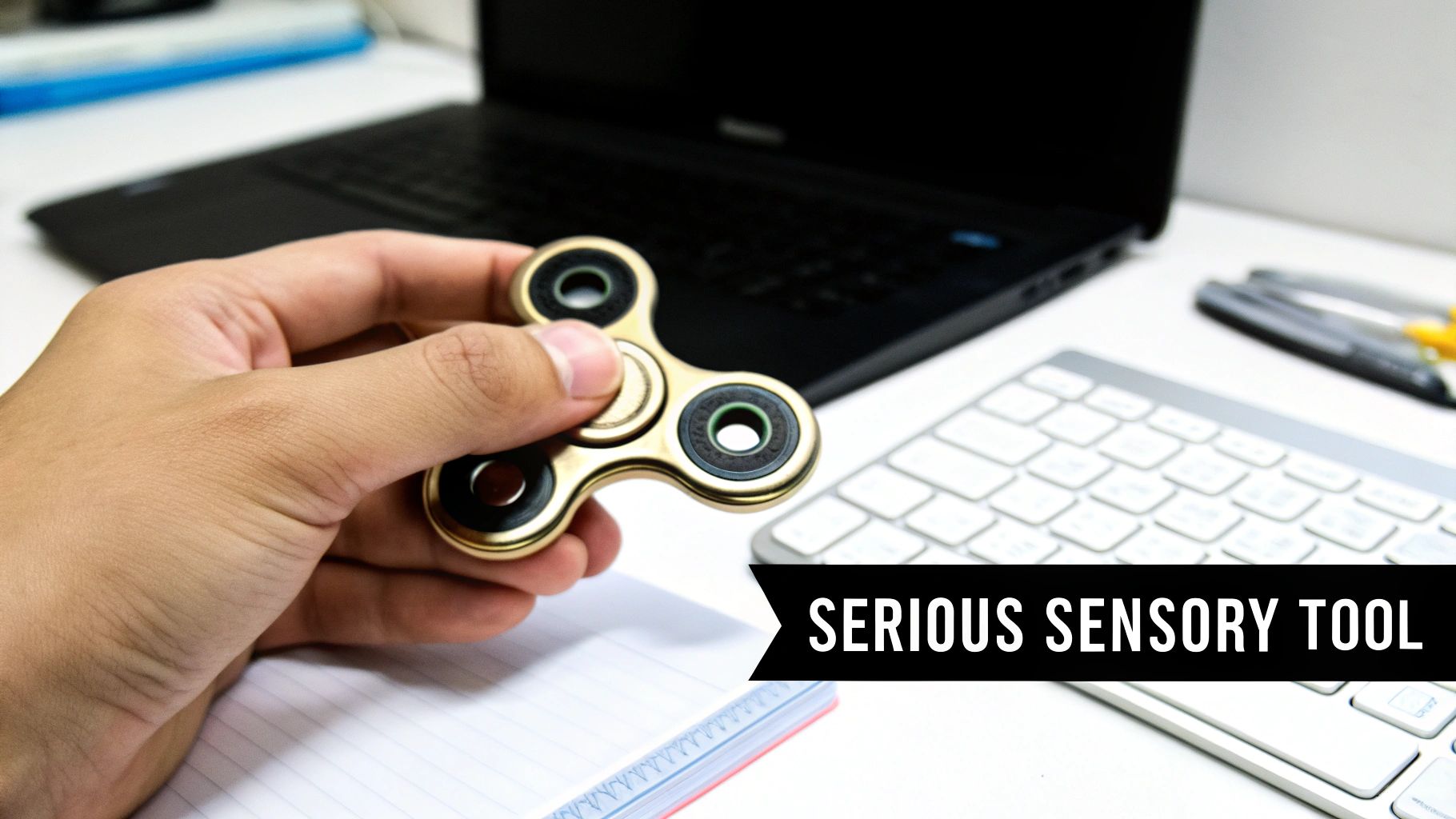
The best way to understand the difference is through feel. It's like comparing a cheap plastic pen to a solid, weighted fountain pen. One just gets the job done, but the other offers a deliberate, grounding experience that feels significant in your hand. That's the real appeal of a metal spinner, one of the most effective sensory toys in Australia.
A Lasting Investment in Calm and Focus
Their lasting popularity here in Australia isn't a surprise; people are choosing quality. In fact, the Australian fidget spinner market saw sales revenue hit $11.407 million, and it was the metal spinners that really drove this, thanks to their superior durability and genuine stress-relief benefits. Models made from stainless steel, which are known for resisting corrosion and spinning forever, are clear market leaders. You can dig into more insights on the fidget spinner market if you're curious.
So, what really makes them stand out? It comes down to a few key things:
- Satisfying Weight: That heft in your hand provides what we call proprioceptive input—a grounding sensation that can be incredibly calming for an overstimulated or anxious nervous system. Many weighted animal toys offer a similar benefit on a larger scale.
- Incredibly Long Spin Times: Good quality bearings mean you get a smooth, almost silent spin that can go for minutes on end. This offers a consistent, predictable motion to focus on, which is perfect for tuning out distractions.
- Enhanced Durability: These spinners are built tough from materials like stainless steel, brass, or titanium. They’re made to handle daily use and the occasional drop without missing a beat.
For all these reasons, a quality metal spinner is a genuine investment in a reliable sensory tool. It’s a game-changer for anyone looking for a discreet way to manage stress, sharpen concentration, or just find a quiet moment in a hectic day. At The Sensory Poodle, we've handpicked a selection of our premium metal fidgets for exactly this purpose. You can also explore the full fidget spinners collection to find your perfect match.
When it comes to fidget spinners, the choice between metal and plastic goes far beyond simple looks. It’s a decision that completely changes the sensory feedback you get, and for anyone seeking real therapeutic benefits, metal is almost always the better way to go.
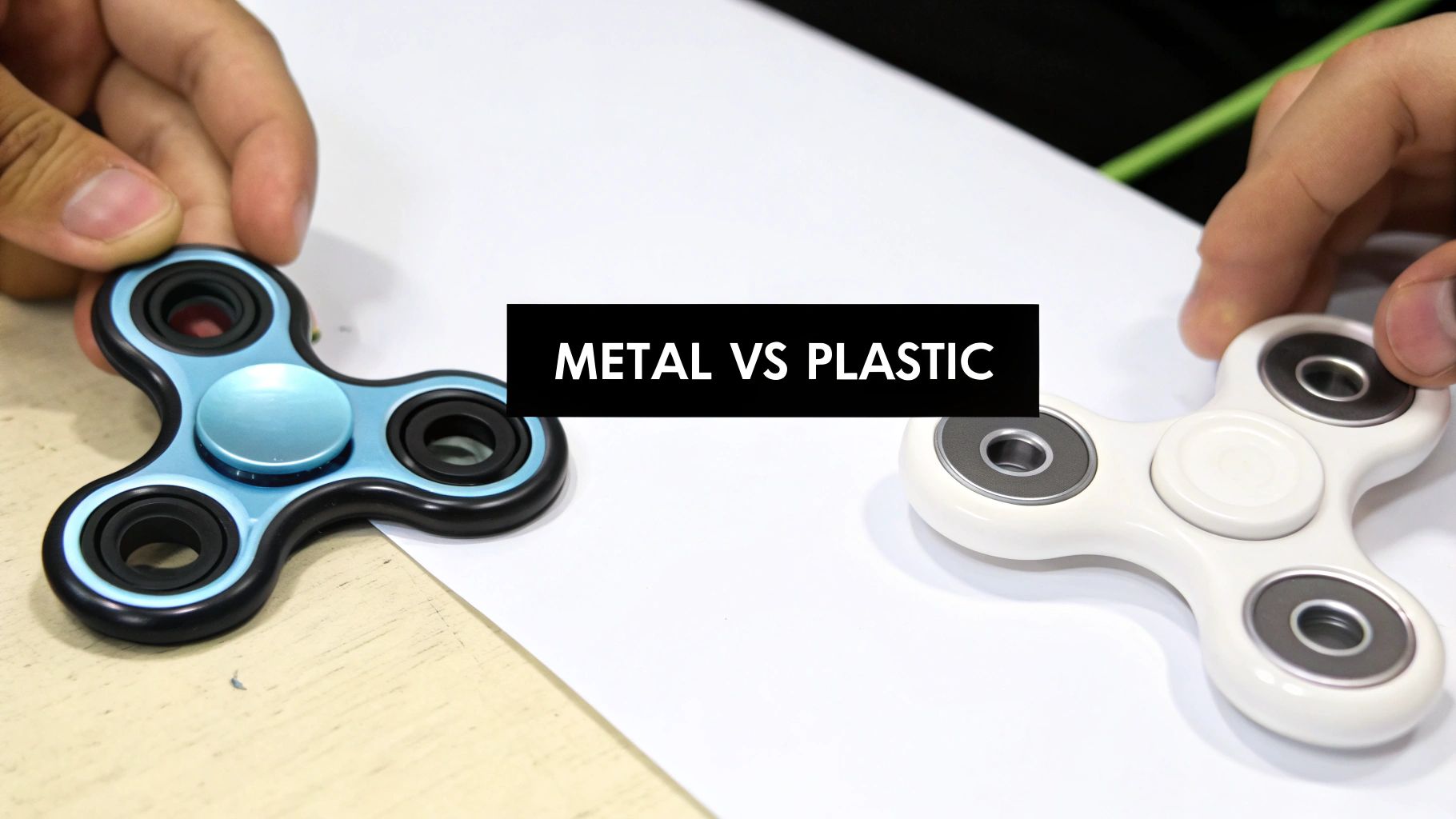
Think about holding a cool, solid metal spinner in your hand. That noticeable weight isn't just for show; it provides what we call proprioceptive input. This is the deep pressure sensation that helps to ground and calm a nervous system that’s feeling anxious or overwhelmed. It's a kind of physical reassurance that a feather-light plastic spinner just can't deliver, similar to the comfort offered by a Neptune Blanket.
This kind of tactile engagement is at the heart of how sensory tools work their magic. If you're keen to understand more about why the feel of an object is so important, learning about sensory play and its role in development really helps to connect the dots. It makes it crystal clear why the material of a fidget tool is such a big deal.
Metal vs Plastic Fidget Spinner A Sensory Comparison
Here's a side-by-side look at the key differences to help you choose the right fidget spinner for your needs.
| Feature | Metal Fidget Spinner | Plastic Fidget Spinner |
|---|---|---|
| Durability | Built to last; resists drops and daily wear. | Prone to cracking or breaking easily. |
| Spin Time | Exceptional (often 4-7+ minutes). | Limited (typically under 2 minutes). |
| Weight & Feel | Substantial, grounding, cool to the touch. | Lightweight, can feel less satisfying. |
| Aesthetics | Sleek, professional, and sophisticated. | Often colourful and toy-like in appearance. |
| Investment | Higher initial cost for long-term use. | Lower cost, more disposable. |
When you look at it this way, it’s easy to see that a metal spinner is a long-term investment in a more effective and satisfying sensory experience. It's built to withstand being dropped and used daily without losing its smooth spin. A plastic spinner, on the other hand, is often more of a cheap toy than a reliable tool.
Why Weight and Spin Quality Matter Most
For sensory regulation, two things stand out above all others: the spinner's weight and the quality of its spin.
The satisfying heft of a metal fidget spinner delivers a constant, gentle pressure that can help centre a busy mind. This makes it a fantastic tool for improving focus during homework or calming down during a stressful moment.
Then there’s the spin itself. The long, smooth, and almost silent rotation of a well-made metal spinner provides a predictable, rhythmic motion. This visual consistency is incredibly soothing for the brain, helping to filter out distracting background noise and movement. It’s this powerful combination of tangible weight and hypnotic spin that elevates a metal spinner from a simple toy to an essential part of a sensory toolkit, much like how a Jellyfish Lamp can create a calming visual focus in a room.
The Science Behind Calming a Busy Mind
So, how exactly does a simple spinning toy help quieten a racing mind, dial down anxiety, and sharpen focus? The real magic of a metal fidget spinner lies in the way it delivers predictable, rhythmic sensory input. Think of it as a gentle, reliable anchor for a nervous system that’s feeling a bit stormy and overstimulated.
When you give a metal fidget a good spin, two key things are happening. First, you get that smooth, repetitive motion. Our brains are hardwired to find comfort in patterns, and the consistent, whirring rotation of the spinner offers a predictable experience you can see and feel. This simple rhythm can be just enough to interrupt a runaway train of anxious thoughts, giving your mind a single, calming thing to focus on instead of a dozen worries all competing for attention.
The second element at play is a gyroscopic force. As the spinner picks up speed, it creates a subtle resistance and a feeling of stability in your hand. This is a very real, tangible sensation that helps pull your awareness back into your body and the present moment—a core principle of mindfulness and many effective grounding techniques for anxiety.
Why This Works So Well for ADHD and Sensory Needs
For people with ADHD, Autism, or sensory processing differences, this kind of predictable input can be a game-changer. When the world feels too loud, too bright, or just too chaotic, the brain can quickly become overwhelmed. A metal fidget spinner offers a controlled, self-regulated source of stimulation that helps filter out all that background noise.
By channelling excess energy into the simple act of spinning, the user can find a state of calm alertness. It allows them to stay present and engaged with what they need to do—like listening in class or concentrating in a meeting—without feeling completely overwhelmed or zoning out.
Putting It Into Practice: Real-World Scenarios
The beauty of this is how practical it is. Let's look at how it works in everyday situations:
- In the Classroom: A student who finds it tough to sit still can use a spinner discreetly under their desk. The quiet, repetitive motion helps them manage their restlessness and tune into the teacher. It’s a fantastic addition to any collection of sensory classroom resources. Tools like Numberblocks can also aid focused learning.
- During a Stressful Meeting: An adult feeling a wave of anxiety can hold a metal spinner. The cool weight and smooth spin act as a grounding point, helping them stay centred and focused on the conversation at hand.
- While Studying: The spinner can work as a "focus anchor." It provides just enough sensory input to keep the mind from wandering off, helping to boost concentration and get more done.
The demand for these kinds of tools in Australia is huge, with the market reaching USD 97.17 million. A big reason for this is durability; a whopping 62% of Australian consumers prefer metal over plastic because it simply lasts longer. High-quality stainless steel options, like those in our Kaiko Fidgets range, are built to handle constant use while providing the long, reliable spin times needed for effective regulation. You can dig deeper into the numbers in the full fidget toys market report.
How to Choose the Right Metal Fidget Spinner for You
Picking the right metal fidget spinner is a very personal decision. What feels perfectly calming for one person might be distracting for another. It really boils down to your own unique sensory preferences, because the subtle differences in weight, material, and the parts inside can completely change how it feels in your hand.
The goal is to find one that feels like a natural extension of you, something that helps you focus or calm down without you even having to think about it. Are you after a heavy, grounding sensation or something light and zippy? Do you need something that spins in near silence, or is the gentle whirring sound part of the appeal?
To help you navigate these choices, we've put together a simple decision tree. It's designed to guide you based on what you want to feel, how much weight you prefer, and the sound it makes.
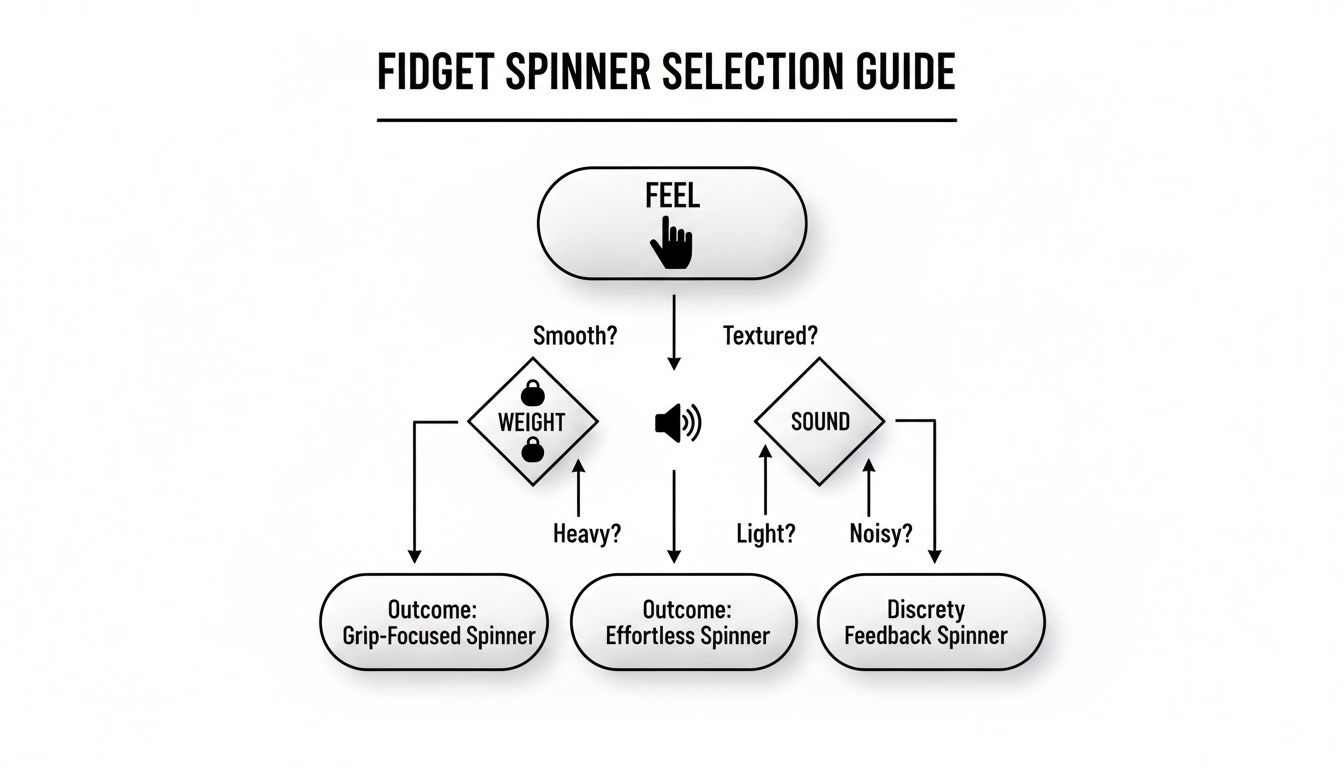
As you can see, it all starts with the kind of tactile feedback you're looking for. Once you know that, choosing the right material and internal bearing becomes much clearer.
Material and Weight Considerations
The material a spinner is made from is probably the biggest factor in how it feels. It dictates the weight, which in turn provides that all-important proprioceptive input—the sense of pressure and feedback to your muscles and joints. A heavier spinner often feels more substantial and grounding, which can be incredibly calming.
Here’s a quick rundown of the common metals you’ll find:
- Stainless Steel: This is a fantastic all-rounder. It strikes a great balance between being weighty and durable, feeling solid in your hand without being too heavy. Plus, it’s tough against rust and scratches.
- Brass and Copper: If you want some serious heft, these are your go-to options. They're denser than steel and provide significant grounding feedback. A neat bonus is that they develop a unique patina over time, giving them a bit of character.
- Titanium and Aluminium: These are the lightweights. If you prefer speed and agility over a heavy, grounding feel, these are perfect. They’re great for practising tricks or for anyone who finds heavier spinners a bit tiring to use for long periods.
The Heart of the Spinner: The Bearing
Think of the bearing as the engine of your fidget spinner. It’s what determines how long it spins, how smoothly it glides, and how much noise it makes. A cheap, low-quality bearing is a recipe for a wobbly, loud, and frustratingly short spin—the exact opposite of what you want.
You’ll generally come across two main types:
- Steel Bearings: These are the industry standard and for good reason. They're durable, reliable, and can give you a nice, long spin time. They might need a clean every now and then to keep them running smoothly, but they get the job done well.
- Ceramic Hybrid Bearings: These are the premium choice. They have ceramic balls inside a steel casing, which creates far less friction. The result? An incredibly long, smooth, and virtually silent spin. This makes them the perfect choice for quiet places like the classroom or the office.
Getting your head around these different components will set you up to choose a spinner that genuinely works for you. If you’re interested in a broader look at matching sensory tools to different needs, our article on tips for choosing the right sensory toys a guide by age group is a great resource.
Looking After Your Fidget Spinner
Think of a quality metal fidget spinner as a trusty tool—it's built to last, but a bit of care now and then will keep it spinning smoothly and silently for years. Over time, things like pocket lint, dust, and even the natural oils from your hands can find their way into the central bearing. When that happens, you might notice it feels a bit gritty, slows down, or gets noisy.
Looking after your spinner isn't just about protecting your investment; it’s about making sure it’s always ready to go when you need it for focus or a moment of calm. The good news? It's really simple to do.
Quick Clean-up for the Spinner Body
For day-to-day upkeep, cleaning the spinner's body is a breeze. A quick wipe with a soft, dry microfibre cloth is usually all you need to get rid of fingerprints and dust. Just be sure to avoid any harsh cleaners or rough cloths that could scratch the finish.
If you’ve got some stubborn grime, you can lightly dampen the cloth with a little water, give it a gentle wipe, and then dry it straight away. This stops water spots from forming and keeps the metal looking its best. For more great tips, check out our guide on 4 tips for keeping sensory toys clean and hygienic.
When (and How) to Clean the Bearing
The bearing is the real heart of your spinner, and it's the part that needs the most attention. You'll know it’s time for a clean when you start to notice a few tell-tale signs:
- Shorter spin times: The spinner just doesn't keep going like it used to.
- A gritty feeling or sound: You can actually feel or hear a grinding noise as it turns.
- It gets louder: A once-silent spinner suddenly starts making a whirring or rattling noise.
This is where the durability of a metal spinner really shines. In Australia, studies between 2019 and 2023 showed metal spinners outperformed plastic ones by a huge 40% in durability tests. They also kept 95% of their spin efficiency even after 500 uses! Interestingly, 58% of the buyers driving this trend were adults who valued that long-lasting performance. You can dig into these fascinating fidget spinner market findings to see why keeping that bearing clean is so important for maintaining that incredible performance.
Using Spinners Effectively at School, Home, and Work
A metal fidget spinner can be an amazing tool for focus, but it can just as easily become a huge distraction. The secret lies in how you use it. Weaving this sensory tool into daily routines at home, school, or even the office takes a bit of thought and some clear ground rules. The goal is always to tap into its calming benefits without disrupting everyone else.
By setting clear expectations from the start, you can help transform the spinner from a simple toy into a genuine aid for self-regulation. This is how you make sure it's actually helping with concentration, not getting in the way of it.
Setting Fidget Rules at Home
For parents, a spinner can be a fantastic ally during homework sessions or quiet reading time. The trick is to establish some basic ‘fidget rules’ so it remains a tool for focus, not just another plaything.
Here are a few simple guidelines that work wonders:
- The One-Hand Rule: The spinner should be held and spun in one hand, keeping the other free for writing, typing, or turning pages. This keeps the user on-task.
- The Desk-Only Zone: Keep the spinner on the desk or table. This simple rule stops it from being thrown around or becoming a visual distraction for others in the room.
- Eyes on the Prize: The idea is to keep your eyes on your work, not the spinner. The sensory input should be a subtle background hum, not the main event.
These boundaries help kids understand that the spinner is there to help them focus on what they need to do.
Spinners in the Classroom and Office
In a classroom or office environment, being discreet is everything. A loud, clunky, or flashy spinner can derail an entire group in seconds. This is where a high-quality metal spinner with a silent bearing truly shines. Models like those in the Kaiko Fidgets range are designed for this very purpose – they're quiet and unobtrusive, making them perfect for shared spaces.
Teachers often find success by creating a 'fidget contract' with students. This simply outlines when and how spinners can be used so they don't distract classmates. In the same way, an adult at work can easily use a small, silent metal spinner in their pocket or under a desk during a long meeting to stay grounded and engaged without anyone even noticing.
The real secret is to treat the spinner as a background tool. Its gentle weight and smooth, repetitive motion should provide just enough sensory input to help the mind settle, allowing you to stay present and productive. For more in-depth strategies, our guide on fidget toys for school has some fantastic advice.
Got Questions About Metal Fidget Spinners? We've Got Answers.
We get a lot of questions about our metal fidget spinners, and that's great! It means people are thinking carefully about finding the right sensory tool. Here are some of the most common queries we see, with straightforward answers to help you choose with confidence.
Are Metal Fidget Spinners Safe for Little Kids?
While they're built to last, we generally recommend metal fidget spinners for older kids, teens, and adults. The main reason for this is their construction – they have small parts like bearings and screw-on caps that could become a choking hazard for younger children.
It's always best practice to check the specific age recommendation on any product you're considering. If you're shopping for a younger child, we have a fantastic range of larger, one-piece sensory toys designed with their safety as the top priority. And remember, no matter what toy it is, active supervision is always the best policy.
How Noisy Are Metal Fidget Spinners?
You'd be surprised how quiet a good quality metal spinner can be. When the bearing is clean and in good shape, all you'll hear is a soft, gentle whirring sound – the kind of feedback that's satisfying without being distracting.
If you notice your spinner getting louder or making a gritty sound, that's its way of telling you the bearing needs a quick clean. For places where silence is golden, like a classroom or a quiet office, look for spinners with ceramic hybrid bearings. They're specifically designed for a super smooth, near-silent spin. The Kaiko Fidgets range has some brilliant quiet options that are perfect for discreet fidgeting.
Can I Use My NDIS Funding to Buy a Metal Fidget Spinner?
Yes, in many cases, you absolutely can. Sensory tools like metal spinners often fit under 'Low-Cost Assistive Technology' or 'Consumables' within an NDIS plan. This is especially true if the spinner helps with goals around managing anxiety, improving focus, or sensory regulation.
Of course, it’s always a good idea to have a chat with your plan manager or support coordinator first to make sure it lines up perfectly with your individual plan goals. As an NDIS-registered provider, we aim to make this process as simple as possible. You can find all the details on our Sensory Poodle NDIS information page.
Here at The Sensory Poodle, we're passionate about sourcing high-quality sensory tools that genuinely support our customers. Take a look through our full collection of satisfying, long-lasting metal fidget spinners to find the one that’s just right for you.
Shop the Metal Fidget Spinner Collection at The Sensory Poodle