


Your Guide to Choosing the Best Sensory Light Bulb

A sensory light bulb is a special kind of light designed to be gentle, calming, and completely adjustable. It’s perfect for anyone who finds standard lighting a bit too much. Unlike your average household bulb, a sensory light bulb lets you control its colour, brightness, and warmth, which is a game-changer for creating a predictable and soothing space for neurodiverse people. For those looking for a comprehensive range of supportive tools, you can find many options among the best sensory toys in Australia.
How a Sensory Light Bulb Creates a Calmer World
Imagine walking into a room and being able to swap a harsh, buzzing fluorescent light for a soft, warm glow that you can tune to the perfect shade. That’s the magic of a sensory light bulb. But what really makes it so different from a standard LED?
Think of a regular light bulb as a radio that’s stuck on one loud, static-filled station. It’s on, it’s bright, and you can’t do a thing about it. A sensory bulb, on the other hand, is like a high-end sound system where you’re in complete control of the volume, tone, and even the playlist. For many neurodiverse individuals, having that level of control is everything, much like the tactile feedback from quality fidgets can be.
The visual world can be incredibly overwhelming. The almost invisible flicker of a standard light, the cold glare of a cool white bulb, or just the sheer brightness can be enough to trigger sensory overload, leading to stress and anxiety. A sensory light bulb essentially acts as a filter, letting you turn down the volume on all that visual "noise."
This is a quick look at why sensory lighting is so effective at creating a calmer atmosphere.
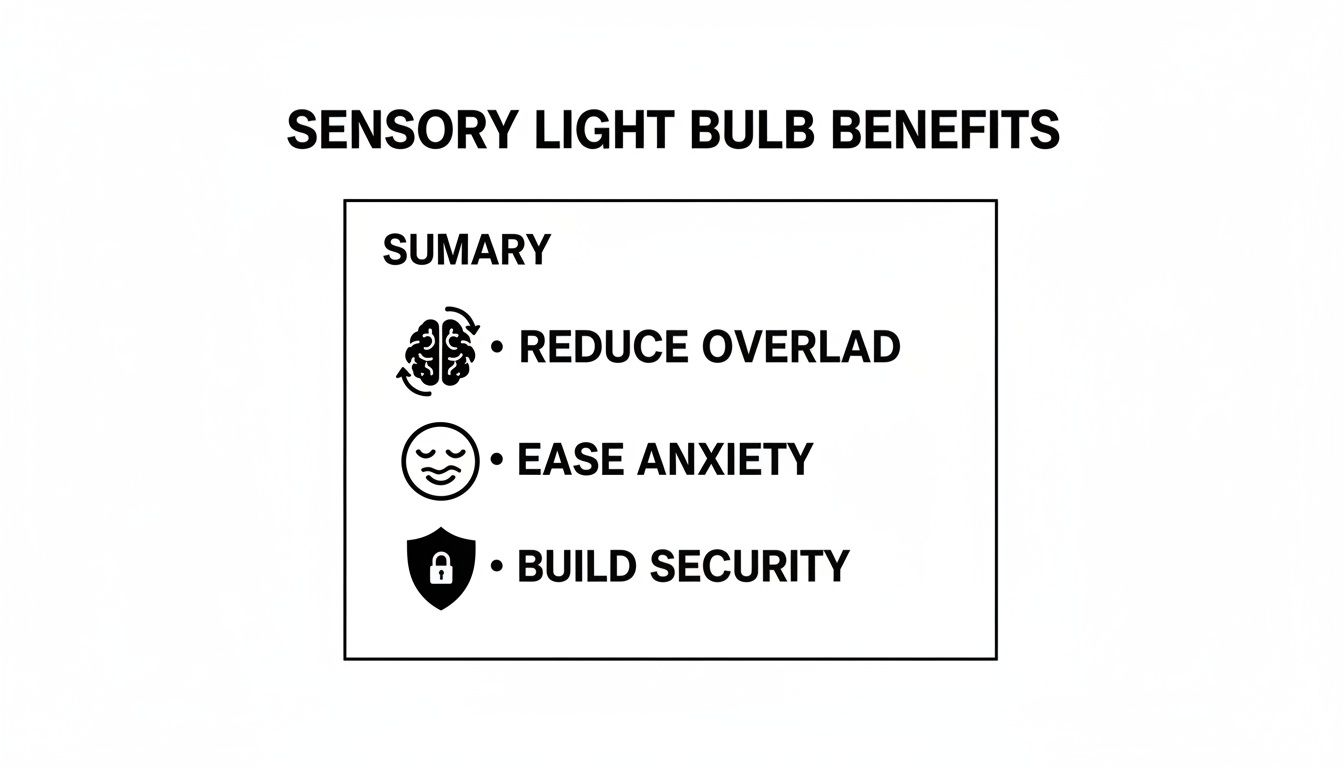
As you can see, the ability to fine-tune the lighting in a room directly helps to reduce that feeling of being overwhelmed, eases anxiety, and helps build a space that feels genuinely safe and secure.
To help you see the difference more clearly, here’s a quick comparison.
Standard Bulb vs Sensory Light Bulb at a Glance
| Feature | Standard Light Bulb | Sensory Light Bulb |
|---|---|---|
| Brightness Control | Usually fixed (On/Off) | Fully dimmable to very low levels |
| Colour Options | One fixed colour (e.g., warm white) | Multiple colour and warmth options |
| Flicker | Can have a subtle, often imperceptible flicker | Designed to be flicker-free |
| Diffusion | Can create harsh shadows and glare | Soft, diffused light to reduce harshness |
| Control | Limited to a wall switch | Controlled via remote or app |
| Purpose | General-purpose illumination | Creating a specific sensory environment |
The table really highlights that while a standard bulb is built just to light up a room, a sensory bulb is designed from the ground up to shape an environment.
Building a Predictable and Secure Environment
Giving someone control over their lighting helps them build a world that feels predictable and safe. When a person can adjust their surroundings to fit their sensory needs, it gives them a sense of control and dials down the anxiety that often comes with unpredictable environments. This is so powerful for creating calming corners or easing into transitions like bedtime. You can see how other lights, like a fibre optic lamp, also work to create this calming effect.
The power of a sensory light bulb isn't just in the light it produces, but in the control it gives back to the individual. It transforms a potentially stressful space into a personal sanctuary where they feel safe, understood, and regulated.
Taking this idea even further, there are now advanced concepts like adaptive lighting systems that respond to emotional cues, which shows just how much technology can help create personalised calm. At its core, it’s this principle of gentle, responsive light that makes sensory lighting such an incredible tool for parents, therapists, and educators trying to support the well-being of neurodiverse people.
What to Look for in a High-Quality Sensory Bulb
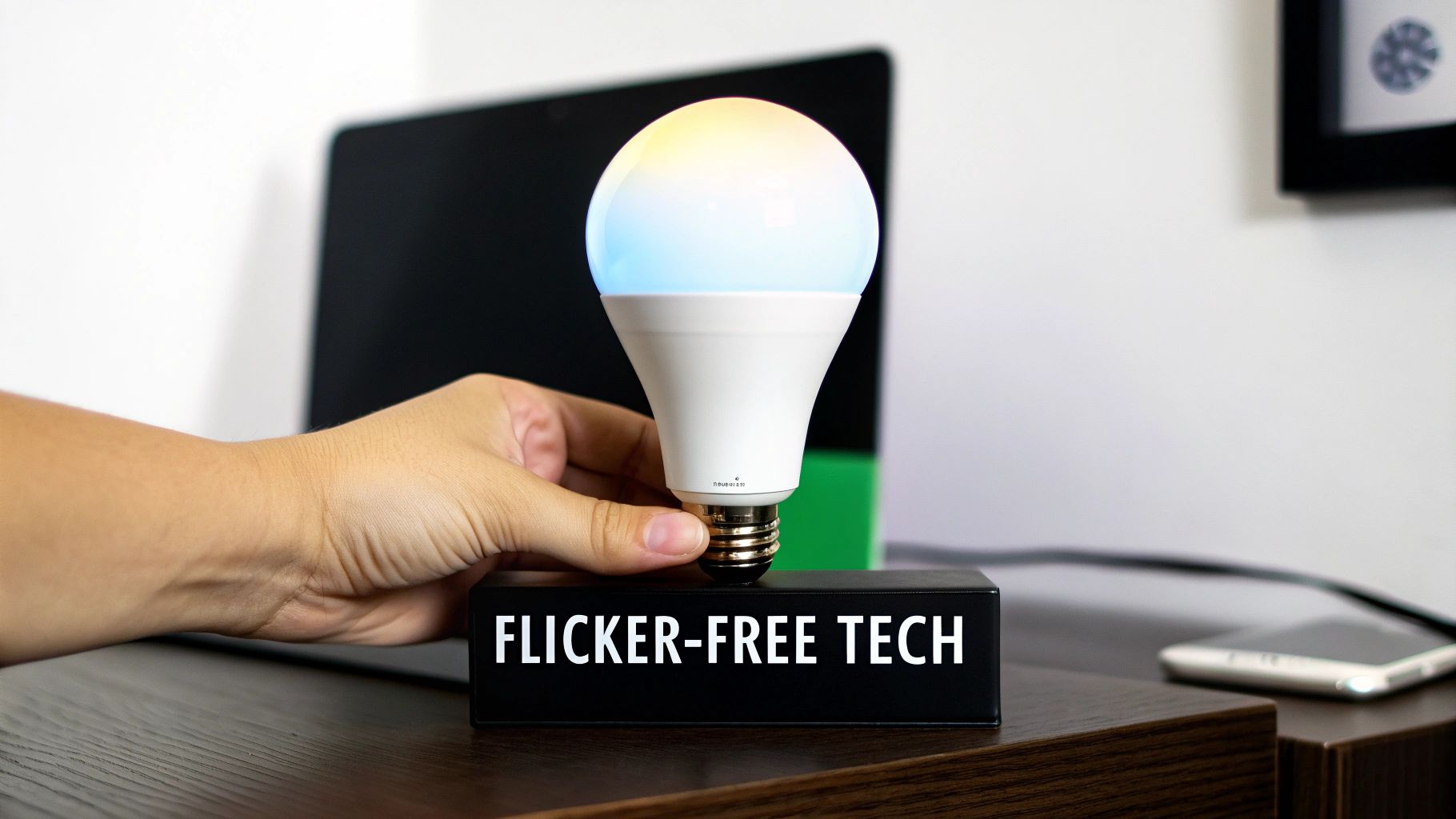
It’s easy to think all colour-changing bulbs are created equal, but that’s rarely the case. When you're looking for a sensory light bulb, a few key features make the difference between a helpful tool and just another flashy gadget. We need to look past the marketing to find what truly creates a supportive, regulating environment.
One of the first things to consider is how the bulb transitions between colours. A genuine sensory bulb will blend hues seamlessly, avoiding any abrupt, jarring flashes that can shatter a calm atmosphere. This gentle phasing creates a much more natural and less startling visual experience, which is absolutely vital for someone prone to sensory overload.
Of course, the colours themselves matter immensely. Different hues can guide our moods and energy levels. Think of soft reds and warm oranges to help calm the mind before sleep, or gentle blues and greens to encourage focus. A good bulb will offer a rich, true spectrum of colours, not just pale, washed-out versions.
Fine-Tuning the Ambiance
A wide dimming range is another non-negotiable. You need the ability to bring the brightness right down to a barely-there, gentle glow. This is essential for winding down at night or for anyone with high light sensitivity. Many standard "dimmable" bulbs just don't go low enough, leaving behind a distracting level of light that gets in the way of true rest.
Just as important is flicker-free technology. You can’t see it, but many standard LED lights have a constant, tiny flicker. For neurodiverse people, this invisible strobing can be a one-way ticket to headaches, eye strain, and a general feeling of being on edge. A true sensory bulb is engineered to eliminate this, giving you a completely stable and consistent light source that’s easy on the eyes and the nervous system.
The final piece of this puzzle is soft diffusion. A bulb that creates a harsh, direct glare with sharp shadows does more harm than good. Instead, look for bulbs designed to diffuse light evenly. You want a soft, ambient glow that fills the space without feeling intense or overwhelming.
Safety and Practicality in Design
Beyond the quality of the light itself, the physical bulb needs to be safe for everyday use, especially in places like a child's bedroom, a classroom, or inside a sensory tent.
- Low-Heat Output: Top-tier LED sensory bulbs produce very little heat, so they stay cool to the touch. This makes them safe for enclosed spaces and for curious hands that might wander.
- Durable Materials: The bulb should be made from shatter-resistant, non-toxic materials. It needs to hold up to the occasional accidental bump without creating a safety hazard.
- Energy Efficiency: A well-designed sensory bulb is also incredibly energy-efficient, meaning you can leave it on for long periods without worrying about the power bill.
These practical points ensure the bulb isn't just effective, but also a safe and reliable part of any sensory space. The technology here is getting more sophisticated all the time, particularly in Australia's growing Light Sensor market, which is fuelling smart lighting that can adjust brightness automatically. This trend is part of a wider lamps and lighting sector tipped to hit US$1.50 billion in revenue by 2025, which is great news for creating more responsive sensory environments.
A fantastic, simple example of these features working together is an LED colour changing night light. It combines those smooth colour shifts and a gentle glow in a safe, easy-to-use package. By keeping these essential features in mind, you can feel confident you’re choosing a light that genuinely supports sensory well-being.
Practical Ways to Use Sensory Lighting at Home and School
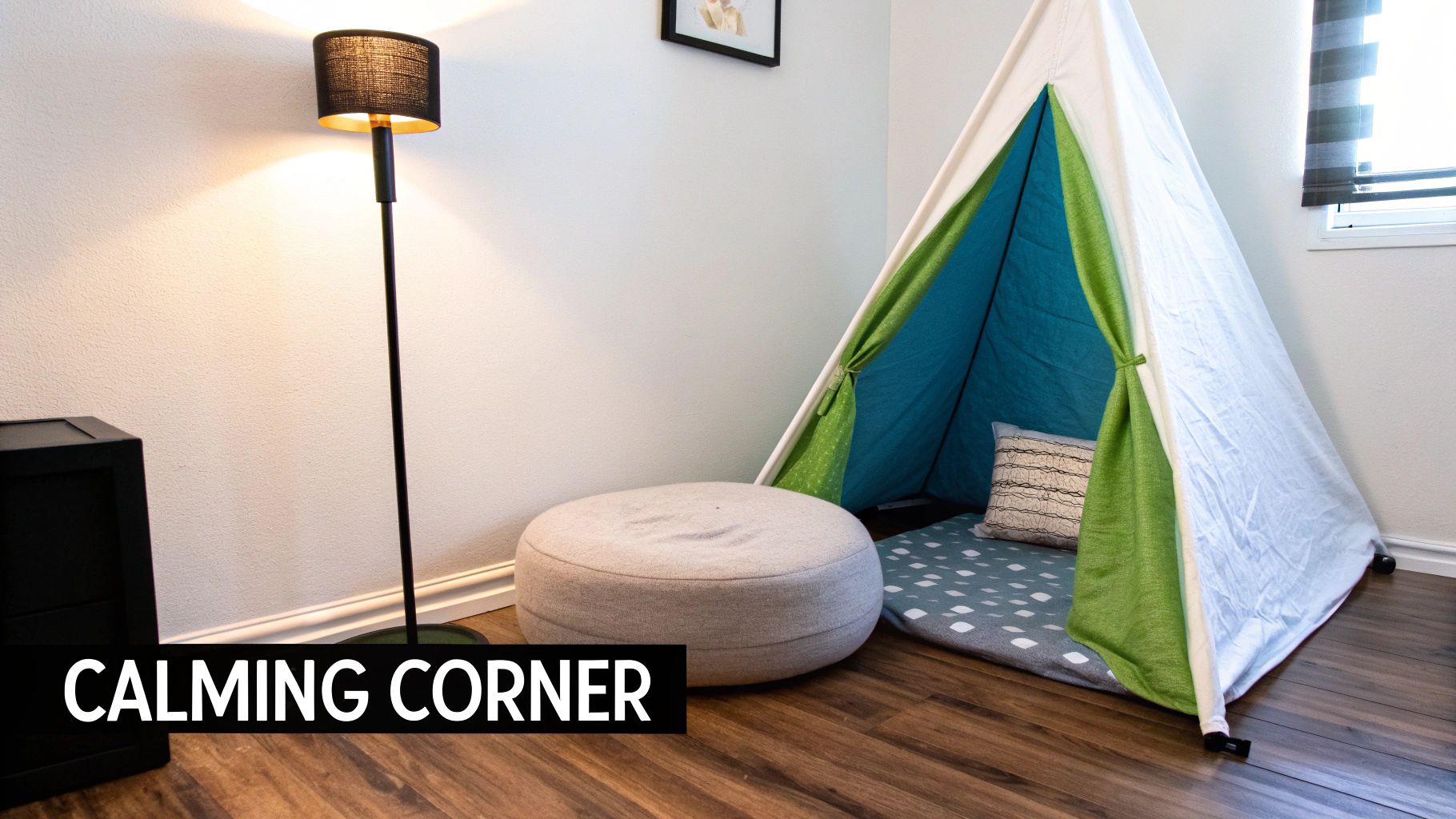
Knowing the specs of a good sensory light bulb is a great start, but the magic really happens when you see it in action. By weaving this kind of adaptable lighting into daily routines, you can turn everyday spaces into genuinely supportive, regulating environments that work with specific sensory needs, not against them.
Nowhere is this more powerful than at bedtime. A sensory bulb can become the centrepiece of a soothing evening ritual, giving the body and mind clear signals that it's time to wind down. Shifting the light to a warm, gentle colour like orange or a soft red and dimming it right down helps to encourage the natural production of melatonin, the hormone that tells our bodies it's time to sleep.
When you pair this controlled lighting with other sleeping aids, you create a powerful, multi-sensory cue for rest. Think about a room filled with a soft, warm glow, layered with the comforting pressure from a Neptune blanket or one of our other popular weighted blankets. This combination can help settle an overstimulated nervous system, making the whole process of falling asleep feel much smoother. For more ideas on crafting that perfect sleep-friendly space, you can explore our guide on choosing a projector night light.
Creating Calming Corners and Sensory Spaces
One of the best ways to support emotional regulation is to set up a dedicated calming corner or a larger sensory space. A sensory light bulb is the perfect anchor for this safe haven, offering an instant and reliable way to completely change the atmosphere.
When a child starts to feel overwhelmed, they can head to their corner and choose a light colour that feels calming to them. This simple act of being in control is incredibly empowering. It helps them learn to self-regulate and manage big feelings in a healthy way.
A sensory bulb works brilliantly inside a sensory tent. The dark, enclosed space minimises outside distractions and allows the light's colour and brightness to have the maximum effect. This setup creates a personal, immersive retreat that feels safe, predictable, and entirely manageable.
The point of a calming corner isn’t just to have a quiet spot. It's about filling it with tools that actively help a person regulate. A sensory light bulb is one of the quickest and most effective tools for shifting the sensory input of an entire space with just the press of a button.
Sensory Lighting in Classrooms and Therapy
The benefits of sensory lighting absolutely extend beyond the home. In a sensory classroom, those harsh fluorescent overhead lights can be a huge source of discomfort and distraction. Swapping them out or adding lamps with sensory bulbs can dramatically reduce visual overstimulation, helping students focus better and feel more comfortable.
Teachers can even use different colours to signal transitions throughout the day—maybe a soft green for quiet work time, or a warm yellow for group activities. This provides a clear, predictable visual schedule that supports every student in the room.
For therapists, a sensory light bulb is an incredibly versatile tool for setting the tone of a session. It can help create an engaging, stimulating environment when used alongside interactive tools like bubble tubes, or it can foster a calm, trusting atmosphere for one-on-one connection. Being able to instantly adapt the lighting makes the therapeutic space feel more responsive and welcoming from the moment someone walks in.
Here's the rewritten section, designed to sound completely human-written and natural.
Getting Your Sensory Lighting Setup Just Right
Choosing the right sensory light bulb is only half the battle. How you set it up is just as crucial for creating that perfect, calming atmosphere. A thoughtful setup means you get all the benefits without any of the risks, so let’s walk through how to do it safely and effectively.
First things first, you need a good, stable home for your sensory light bulb. While most will fit a standard lamp, I’ve found that pairing them with fixtures specifically designed for sensory spaces works best. Think about something with a solid, sturdy base, like you might find with a Jellyfish lamp. The last thing you want is for it to be easily knocked over, especially in a child's bedroom or a dynamic classroom.
Placement matters, too. You want the light to wash gently across the room, creating an ambient glow rather than a harsh spotlight. Try to position it so the light doesn't cause glare on screens or shine directly into anyone's eyes.
How to Create a Safe Sensory Space
When it comes to anything electrical, safety is non-negotiable. It only takes a few simple steps to make sure your sensory lamp is a source of calm, not a hazard.
- Tame those cords: Nobody wants a tripping hazard. Run any cables snugly along walls or behind furniture. You can use simple cord clips or covers to keep everything tidy and out of the way.
- Don't overload your power points: It’s always best to plug your sensory lamp directly into a wall socket. Steer clear of daisy-chaining extension cords, as that can be a fire risk.
- Keep it out of reach: If you have curious little ones around, make sure the bulb and the lamp itself are placed where they can't be easily touched or pulled down.
Following these simple rules gives you peace of mind, allowing everyone to relax and soak up the calming vibes without a worry.
Making Sure Your Bulb and Lamp are a Good Match
I get this question all the time: "Can I use a sensory bulb in my regular lamp?" The short answer is usually yes, but you need to check a couple of things first. Most sensory bulbs are designed with standard fittings, so they'll physically screw into most lamps. The key is to double-check the lamp's maximum wattage rating to make sure it can safely power the bulb.
Thankfully, the huge shift towards energy-efficient lighting in Australia has made this much simpler. The Aussie LED bulb market, already valued at USD 204 million, is expected to more than double to USD 476.71 million by 2033. This is fantastic news for families with neurodiverse kids, as it means low-wattage, sensory-friendly LEDs are now the norm. They fit easily into modern lamps and can cut your lighting energy costs by up to 80% compared to old-school halogens. You can read more about Australia's LED market trends and growth if you're interested.
Expert Tip: To get the most beautiful effect from your bulb, pop it in a lamp that has a light-coloured, translucent shade. A dark or heavy shade will just dull the colours and can trap heat. An open-style lamp works brilliantly too, as it lets that soft light fill the entire room.
Unlocking Advanced Control with Smart Technology
Today’s smart home technology takes a sensory light bulb from a helpful tool and turns it into a genuinely responsive part of your support system. Instead of being tied to a physical remote, you can now fine-tune every aspect of your lighting with a simple tap on a smartphone app, a quick voice command, or even fully automated schedules. This is about so much more than convenience—it’s about empowerment.
This level of control gives a person the independence to shape their own environment, moment by moment, to match their sensory needs. Imagine a child who is starting to feel overwhelmed being able to say, "Hey Google, make my light calm blue," or tap a pre-set 'calm down' scene on an app. It offers a tangible, immediate way to regain a sense of control over their surroundings, which is a massive step in building self-regulation skills.
Creating Predictable and Empowering Routines
One of the most powerful benefits of smart control is the ability to create predictable, automated routines that help take the anxiety out of daily transitions. By creating a reliable rhythm, these schedules can be incredibly comforting for anyone who finds comfort in structure.
- Gentle Wake-Up: You can program the bulb to mimic a natural sunrise, slowly brightening with warm, gentle colours. This eases the body into the day far more peacefully than a jarring alarm clock.
- Winding Down for Bed: An hour before bedtime, an automated scene can dim the lights and shift the colours to warm, sleep-friendly reds, signalling to the brain that it's time to rest.
- Transition Cues: You can use specific colours to signal what’s coming next. A soft green light could mean "quiet time," while a cheerful yellow could mean "playtime," making the shift between activities much smoother.
The Australian Smart Home market is booming, expected to grow from US$2.72 billion to a massive US$10.15 billion by 2033. This explosion in 'Comfort and Lighting' tech means sensory-friendly tools are more accessible than ever for neurodiverse families. It also means that devices like night lights and Jellyfish lamps can now be easily integrated into a home’s smart ecosystem for truly customised calming effects. You can read more about Australia's smart home market growth on renub.com.
By integrating a smart sensory light bulb into daily life, you're not just installing a new gadget. You are building a responsive, personalised support system that adapts to an individual's needs, making their world feel safer and more predictable.
To get more inspiration on how lighting can completely transform a room, check out these brilliant bedroom lighting ideas that show how smart lights can help create the perfect sanctuary. When used thoughtfully, technology can make sensory support feel more personal and empowering, woven seamlessly into the fabric of everyday life.
Your Sensory Light Bulb Questions Answered
Diving into sensory tools can feel a little overwhelming, and it's natural to have questions. When it’s about something as fundamental as the light in your home, classroom, or therapy space, you want to get it right. Let’s walk through some of the most common questions we hear from parents, teachers, and NDIS participants.
My aim here is to clear up the practical stuff so you can feel confident you’re making the best choice.
Can I Use a Sensory Light Bulb in Any Regular Lamp?
Yes, for the most part, you absolutely can! Most sensory light bulbs are made with the same standard fittings you’ll find all over Australia (like the common E27 or B22 screw and bayonet types). This means they’re designed to pop straight into your existing lamps.
That said, there are a couple of things to keep in mind for the best experience. First, double-check the lamp's maximum wattage rating to make sure it’s a good match for the bulb. Second, think about the lampshade. A lamp with an open top or a light-coloured, translucent shade works wonders because it helps spread the light evenly, giving you that lovely, soft ambient glow. A really dark or enclosed shade, on the other hand, can trap heat and mute those beautiful, calming colours.
How Can I Use a Sensory Bulb to Improve a Bedtime Routine?
This is one of my favourite uses for them. A sensory light bulb can be a game-changer for building a predictable, calming bedtime routine. It's all about using light to send a clear signal to the brain that it's time to slow down.
About 30 to 60 minutes before bedtime, switch the light to a warm, soothing colour. Think gentle reds, soft oranges, or even just a very dim warm white. These colours have longer wavelengths, which are less likely to mess with the body's natural production of melatonin—the hormone that tells us it's time to sleep. Dimming the brightness right down really helps to reinforce that message. Definitely steer clear of bright white or blue lights in the evening.
This simple switch works brilliantly alongside other calming activities, like getting some deep pressure from weighted animal toys or listening to soft music. When you put them all together, you create powerful, consistent cues that can make drifting off to sleep so much easier.
Are Sensory Light Bulbs Covered by NDIS in Australia?
Yes, they often are. Depending on your plan, sensory lighting products like a specialised bulb or even a fixture like a Jellyfish lamp can be funded under categories like 'Assistive Technology for Recreation' or 'Consumables'.
These tools are well-recognised for helping with sensory and emotional regulation by creating safe, calming spaces, which is exactly what the NDIS is there to support. If your NDIS plan is self-managed or plan-managed, you can usually use your funds for these kinds of items. As a registered NDIS provider, we can help make this process simple, so you can get the tools you need for your sensory toolkit.
A key takeaway is that the NDIS often supports tools that enhance daily living and well-being. A sensory light bulb is a perfect example of a simple, effective aid that can make a significant difference in managing sensory needs.
What Makes a Sensory Bulb Different from a Normal LED Bulb?
They might look similar on the shelf, but the real difference is in the details—the ones that matter most for sensory wellbeing. A true sensory light bulb is specifically engineered to be flicker-free. This is huge, as the subliminal flickering in many standard LEDs can be a trigger for headaches, eye strain, and sensory overload.
You’ll also notice they offer much smoother colour transitions and a more precise, wider dimming range. This lets you dial the light down to a very gentle, low-level glow that most standard dimmable bulbs just can't manage. Finally, sensory-focused products are built with safety as a priority, using low-heat LEDs and durable, non-toxic materials—perfect for children's rooms and sensory classroom environments.
At The Sensory Poodle, we know that creating a supportive environment is at the heart of wellbeing. Our curated collection of sensory lighting is designed to help you build a calmer, more comfortable world for the people you care about.